CH 6 HOW ANIMALS STAY ALIVE LESSON 1
- Slides: 16
CH. 6 HOW ANIMALS STAY ALIVE LESSON 1 HOW ANIMALS GET AND DIGEST THEIR FOOD
REMEMBER… • Unlike plants, algae, and some bacteria, animals cannot make their own food. • Animals must get their food from other organisms by consuming, or eating, them. • Animals have different ways of getting their food.
FILTER FEEDING • Many animals living in water get food though filter feeding. – Filter Feeding- A way of getting food by straining it out of water. • For example, sponges strain bacteria and protists out of water that passes through their body. • Sponges cannot move from place to place, so filter feeding allows them to consume food without chasing it. • https: //www. youtube. com/watch? v=T 7 E 1 rq 7 z. HLc
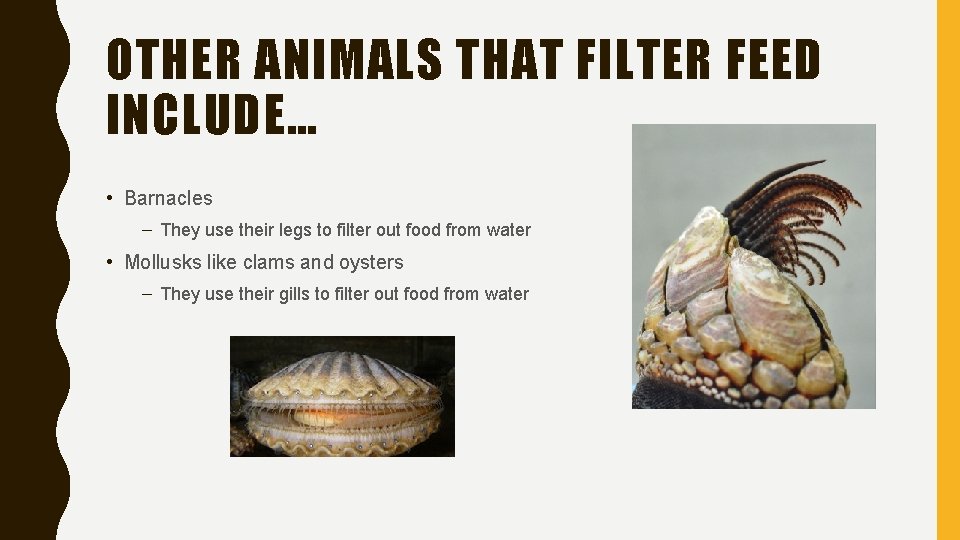
OTHER ANIMALS THAT FILTER FEED INCLUDE… • Barnacles – They use their legs to filter out food from water • Mollusks like clams and oysters – They use their gills to filter out food from water
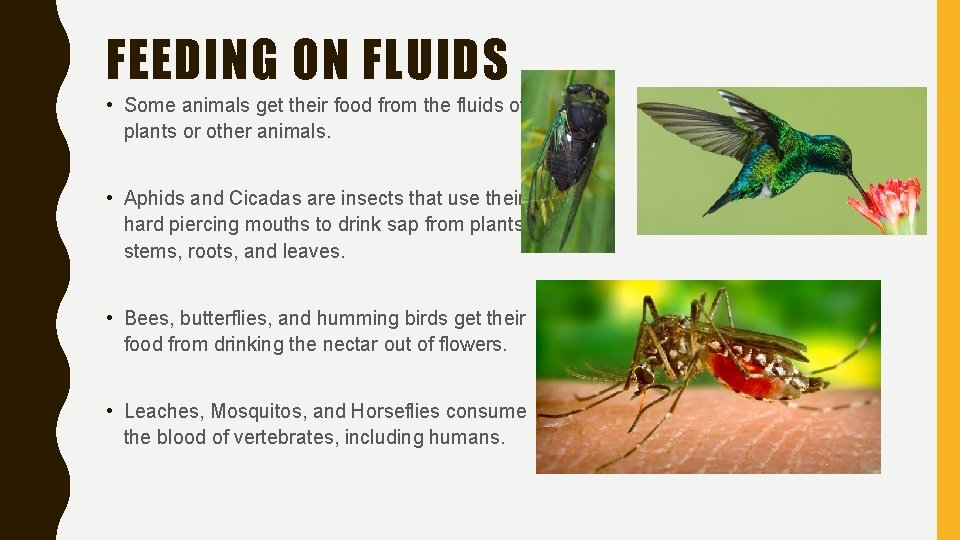
FEEDING ON FLUIDS • Some animals get their food from the fluids of plants or other animals. • Aphids and Cicadas are insects that use their hard piercing mouths to drink sap from plants’ stems, roots, and leaves. • Bees, butterflies, and humming birds get their food from drinking the nectar out of flowers. • Leaches, Mosquitos, and Horseflies consume the blood of vertebrates, including humans.
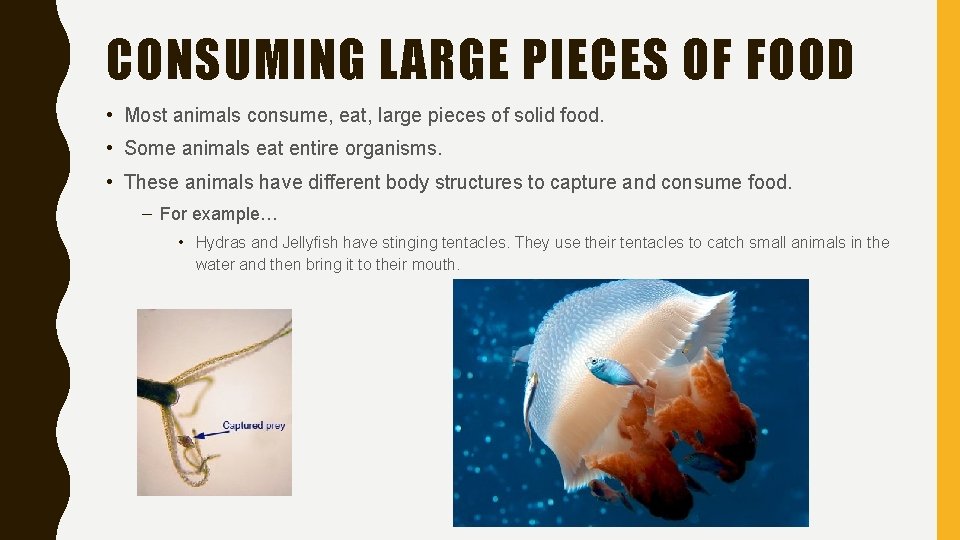
CONSUMING LARGE PIECES OF FOOD • Most animals consume, eat, large pieces of solid food. • Some animals eat entire organisms. • These animals have different body structures to capture and consume food. – For example… • Hydras and Jellyfish have stinging tentacles. They use their tentacles to catch small animals in the water and then bring it to their mouth.
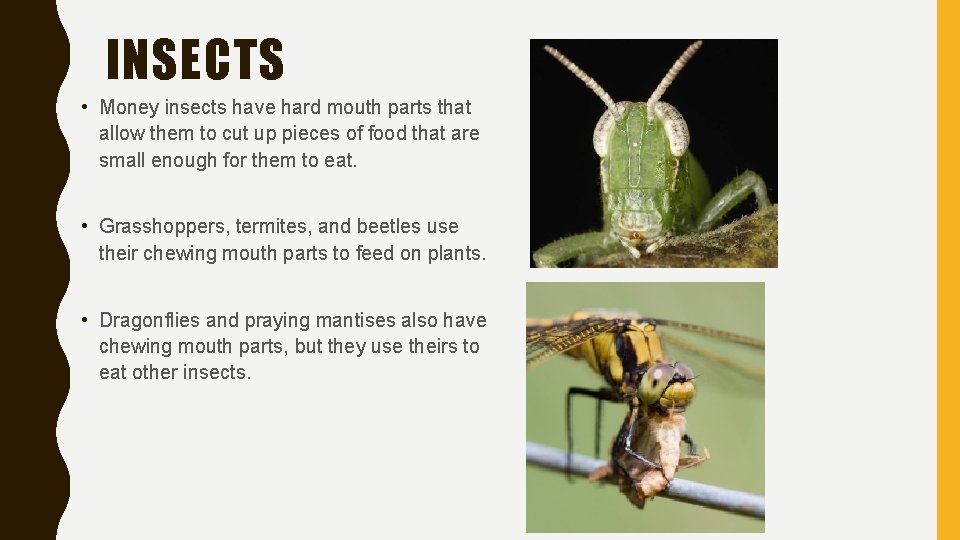
INSECTS • Money insects have hard mouth parts that allow them to cut up pieces of food that are small enough for them to eat. • Grasshoppers, termites, and beetles use their chewing mouth parts to feed on plants. • Dragonflies and praying mantises also have chewing mouth parts, but they use theirs to eat other insects.
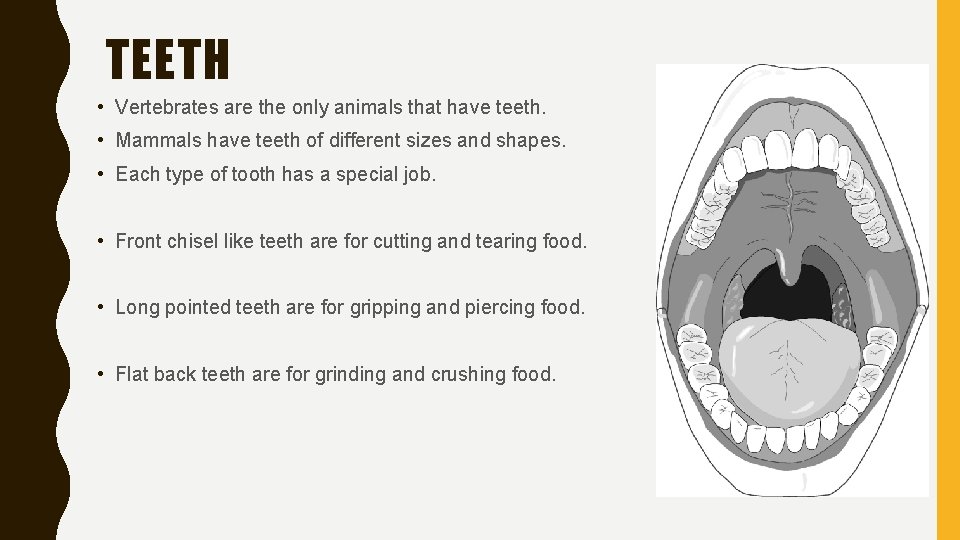
TEETH • Vertebrates are the only animals that have teeth. • Mammals have teeth of different sizes and shapes. • Each type of tooth has a special job. • Front chisel like teeth are for cutting and tearing food. • Long pointed teeth are for gripping and piercing food. • Flat back teeth are for grinding and crushing food.
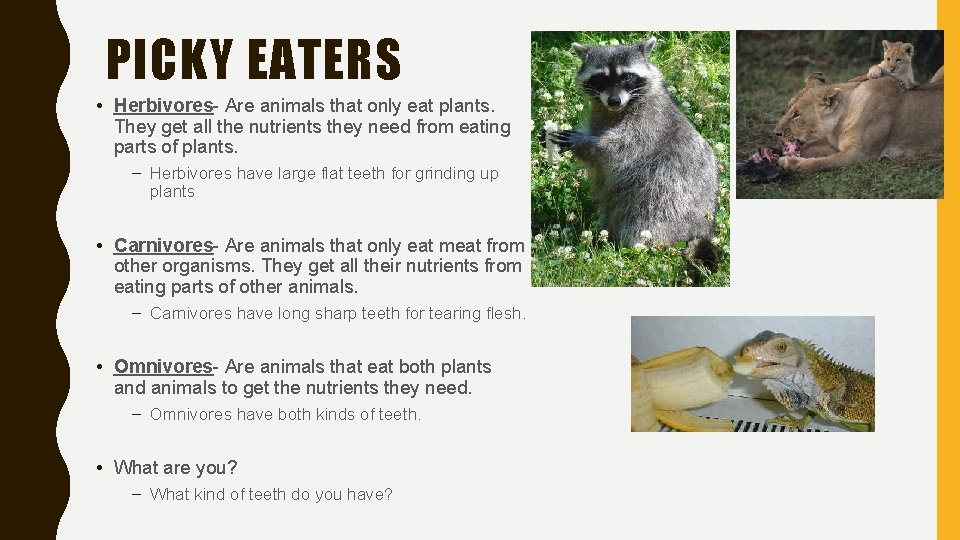
PICKY EATERS • Herbivores- Are animals that only eat plants. They get all the nutrients they need from eating parts of plants. – Herbivores have large flat teeth for grinding up plants • Carnivores- Are animals that only eat meat from other organisms. They get all their nutrients from eating parts of other animals. – Carnivores have long sharp teeth for tearing flesh. • Omnivores- Are animals that eat both plants and animals to get the nutrients they need. – Omnivores have both kinds of teeth. • What are you? – What kind of teeth do you have?
DIGESTING FOOD • Remember: foods contain fats, proteins, and carbohydrates. • These chemicals give animals the energy they need to live. • These chemicals are often too large for animal cells to use right away. • So the chemicals have to be broken down before they can be used. • The process of breaking down food into chemicals is called Digestion.
BREAKING IT DOWN • Animals digest food by secreting digestive enzymes. – Secreting- To form and release, or give off. – Enzyme- A substance that speeds up chemical change. • Animals like sponges digest food inside their cells. • But, most animals, including humans, digest their food outside their cells.
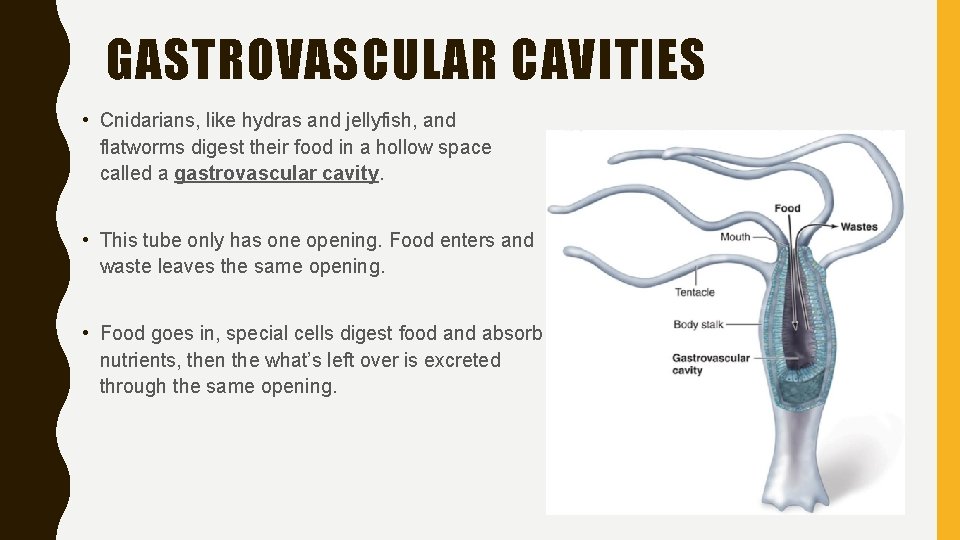
GASTROVASCULAR CAVITIES • Cnidarians, like hydras and jellyfish, and flatworms digest their food in a hollow space called a gastrovascular cavity. • This tube only has one opening. Food enters and waste leaves the same opening. • Food goes in, special cells digest food and absorb nutrients, then the what’s left over is excreted through the same opening.
DIGESTIVE TRACTS • Animals that are more developed have a digestive tract. – Digestive Tracts- A tube-like digestive space with an opening at each end. • Food moves through the digestive tract one way through the body. • https: //www. youtube. com/watch? v=Jnzwbip. Ju. AA
THE MAIN FUNCTIONS OF THE DIGESTIVE TRACT ARE… • Storing food • Digesting food • Absorbing nutrients
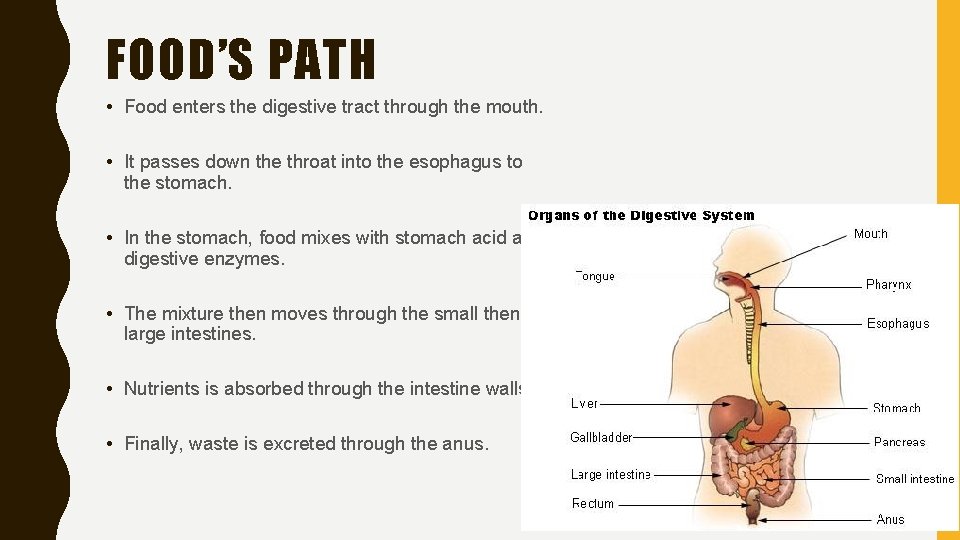
FOOD’S PATH • Food enters the digestive tract through the mouth. • It passes down the throat into the esophagus to the stomach. • In the stomach, food mixes with stomach acid and digestive enzymes. • The mixture then moves through the small then large intestines. • Nutrients is absorbed through the intestine walls • Finally, waste is excreted through the anus.
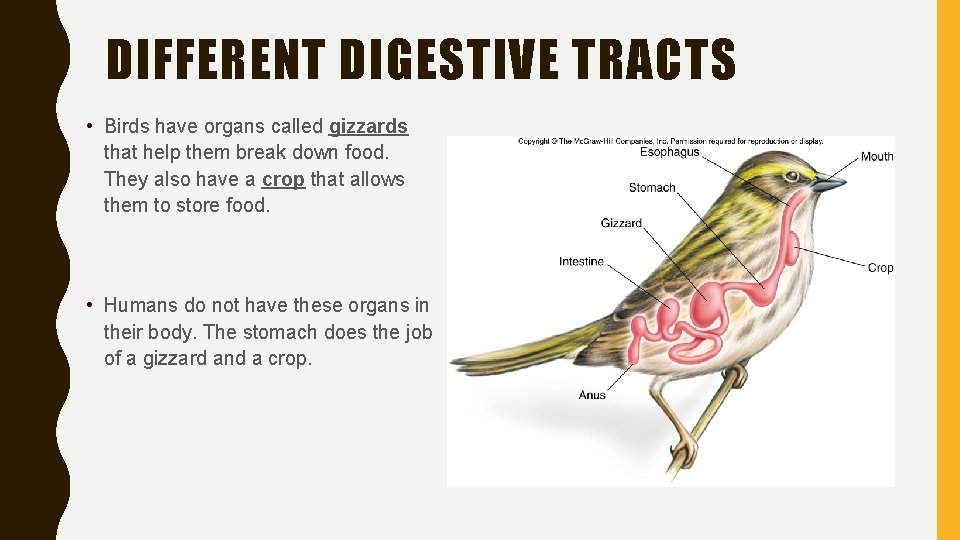
DIFFERENT DIGESTIVE TRACTS • Birds have organs called gizzards that help them break down food. They also have a crop that allows them to store food. • Humans do not have these organs in their body. The stomach does the job of a gizzard and a crop.