
Ch 6 Bonding 6 2 Covalent Bonding Molecular
Ch. 6 Bonding 6. 2 Covalent Bonding
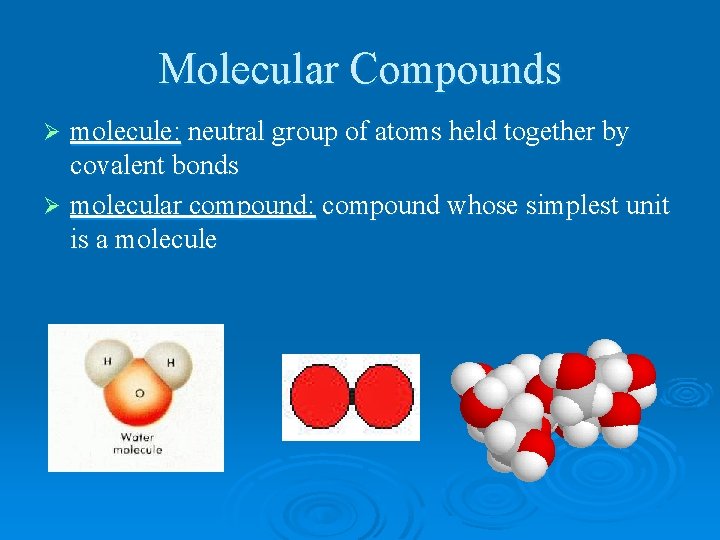
Molecular Compounds molecule: neutral group of atoms held together by covalent bonds Ø molecular compound: compound whose simplest unit is a molecule Ø
Formulas Ø chemical formula: tells the number of each type of atom in a compound Ø molecular formula: tells the number of each type of atom in a molecular compound Ø ex. H 2 O, Cl 2, C 6 H 12 O 2
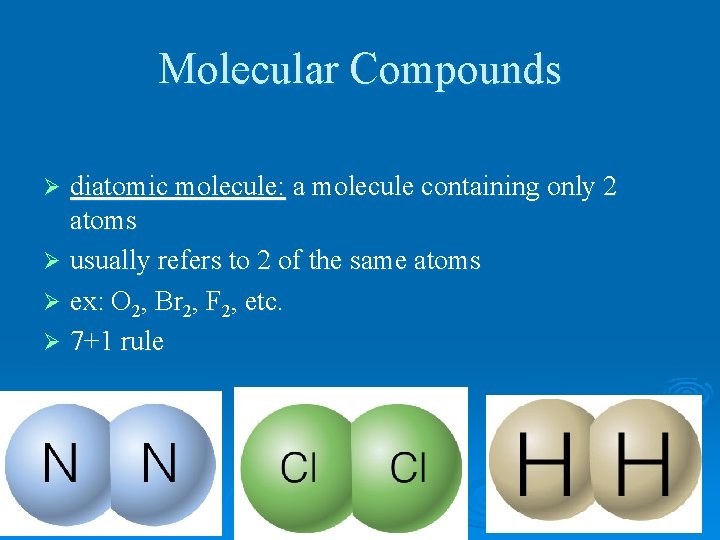
Molecular Compounds diatomic molecule: a molecule containing only 2 atoms Ø usually refers to 2 of the same atoms Ø ex: O 2, Br 2, F 2, etc. Ø 7+1 rule Ø
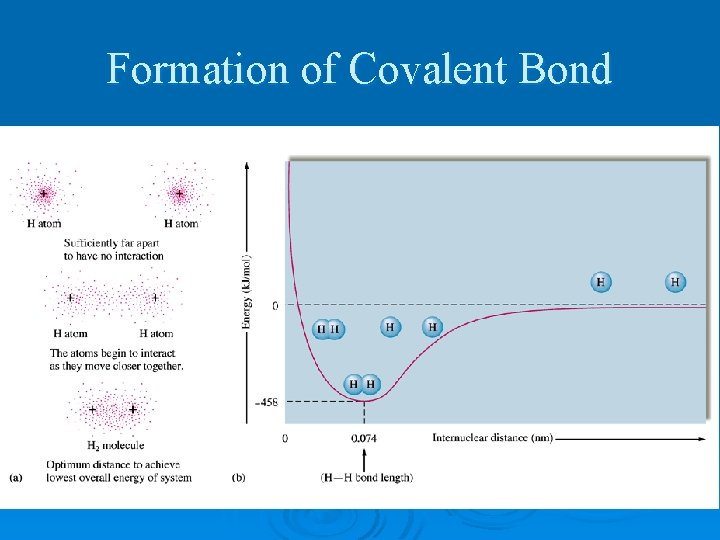
Formation of Covalent Bond
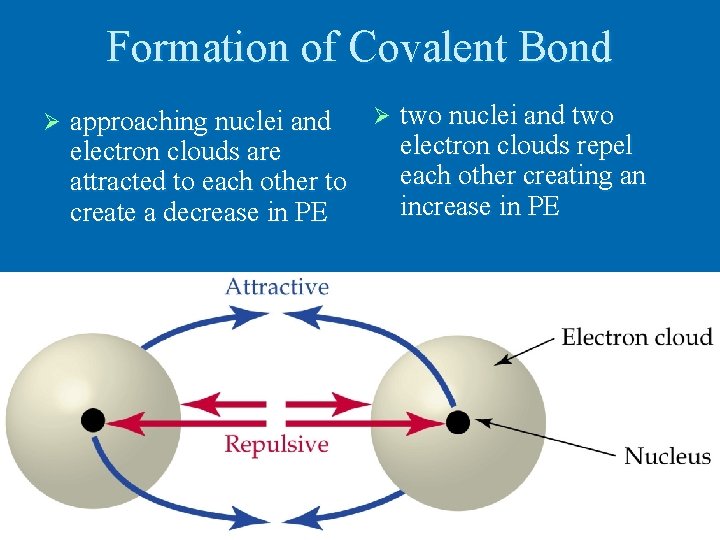
Formation of Covalent Bond Ø approaching nuclei and Ø two nuclei and two electron clouds repel electron clouds are each other creating an attracted to each other to increase in PE create a decrease in PE
Formation of Covalent Bond Ø a distance between the nuclei is reached in which l l l repulsion and attraction forces are equal potential energy is at the lowest point possible at the bottom of the curve on PE graph
Covalent Bonds Ø Bond Length l l distance between two bonded atoms at their lowest PE average distance since there are some vibrations measured in pm (1012 pm = 1 m) stronger the bond, shorter the bond
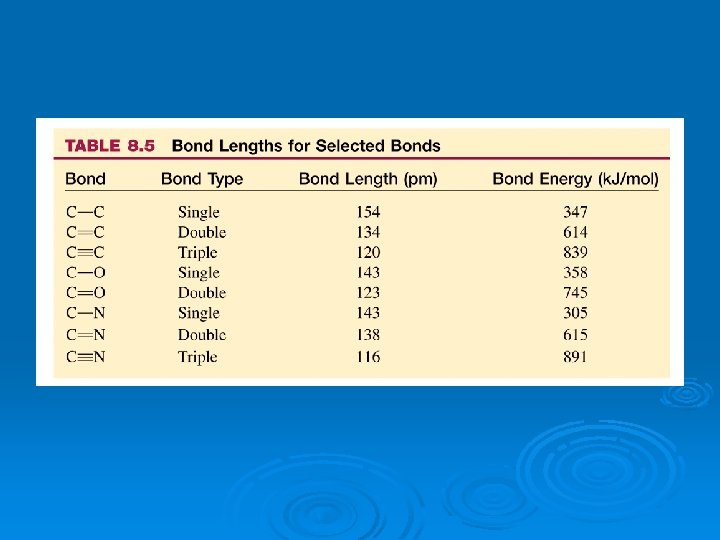
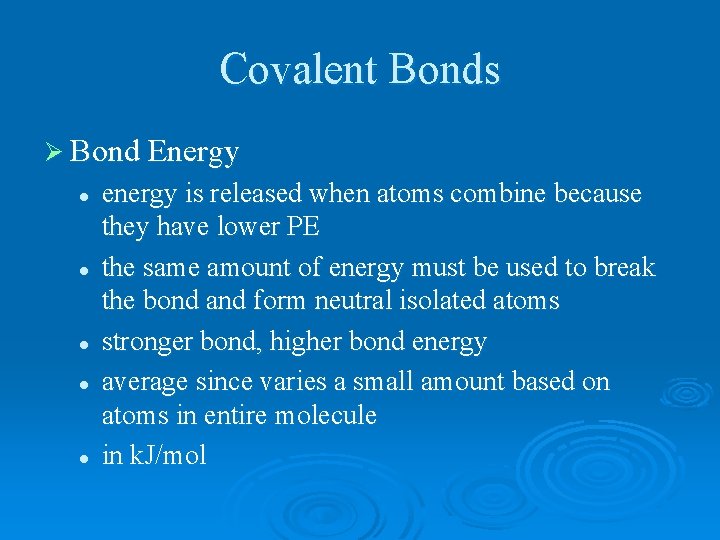
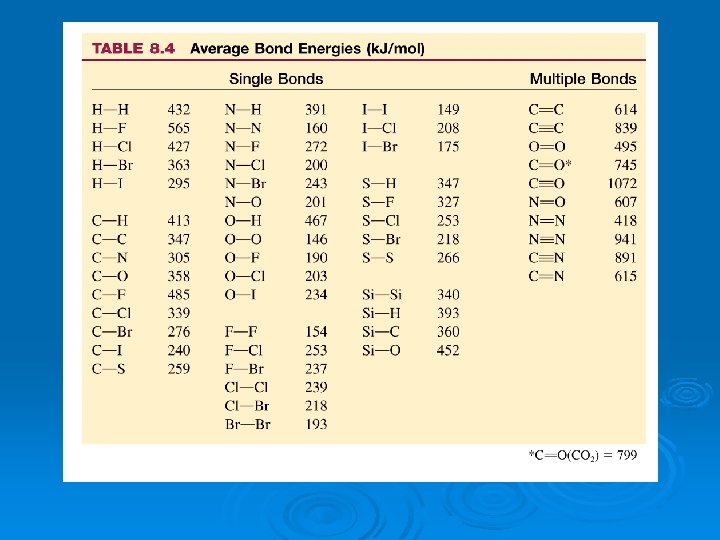
Covalent Bonds Ø Bond Energy l l l energy is released when atoms combine because they have lower PE the same amount of energy must be used to break the bond and form neutral isolated atoms stronger bond, higher bond energy average since varies a small amount based on atoms in entire molecule in k. J/mol
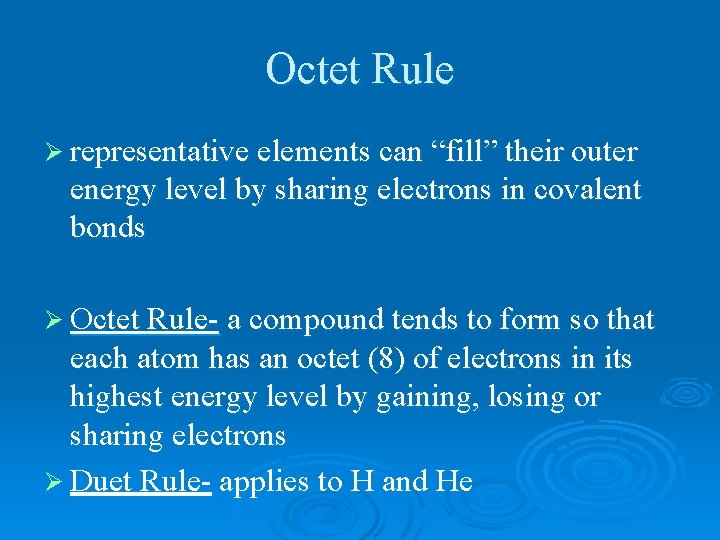
Octet Rule Ø representative elements can “fill” their outer energy level by sharing electrons in covalent bonds Ø Octet Rule- a compound tends to form so that each atom has an octet (8) of electrons in its highest energy level by gaining, losing or sharing electrons Ø Duet Rule- applies to H and He
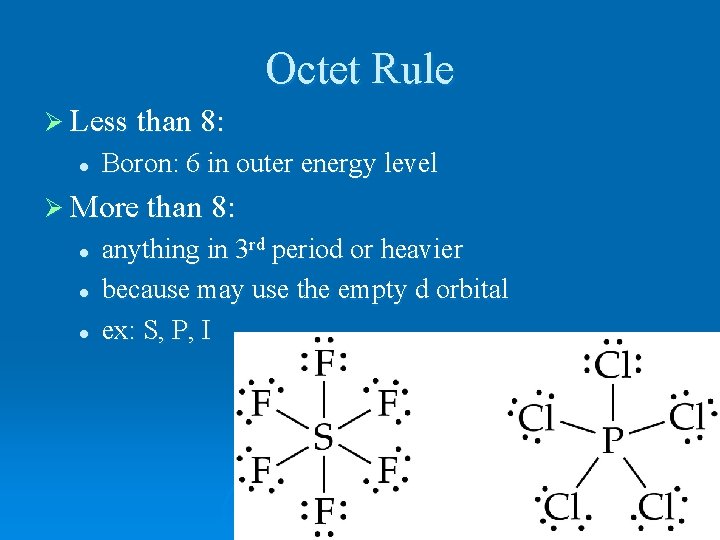
Octet Rule Ø Less than 8: l Boron: 6 in outer energy level Ø More than 8: l l l anything in 3 rd period or heavier because may use the empty d orbital ex: S, P, I
Electron Dot Diagrams Ø Ø 1. 2. 3. 4. a way to show electron configuration identifies the number and pairing of valence electrons to show bonding will occur write the noble gas notation identify the number of valence identify how many are paired and how many are alone do not go by Figure 6 -10
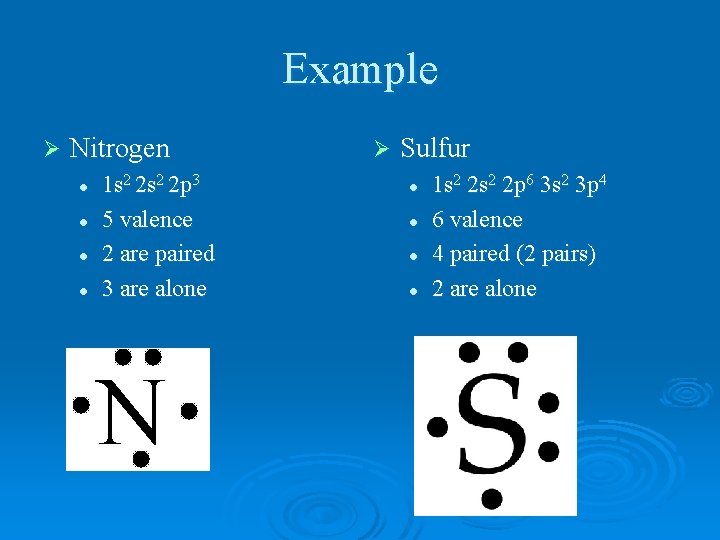
Example Ø Nitrogen l l 1 s 2 2 p 3 5 valence 2 are paired 3 are alone N Ø Sulfur l l 1 s 2 2 p 6 3 s 2 3 p 4 6 valence 4 paired (2 pairs) 2 are alone
Lewis Structures Ø like dot diagrams but for entire molecules Ø atomic symbols represent nucleus and core electrons and dots or dashes represent valence electrons l l unshared electrons: (lone pairs) pair of electrons not involved in bonding written around only one symbol bonding electrons: written in between 2 atoms as a dash
Types of Bonds Ø single- sharing of one pair of electrons l weakest, longest Ø double- sharing of 2 pairs of electrons l stronger and shorter Ø triple- sharing of 3 pairs of electrons l strongest and shortest Ø multiple bonds include double and triple bonds
Drawing Lewis Structures find the number of valence electrons in each atom and add them up 2. draw the atoms next to each other in the way they will bond 3. add one bonding pair between each connected atoms 4. add the rest of the electrons until all have 8 1. (consider exceptions to octet rule)
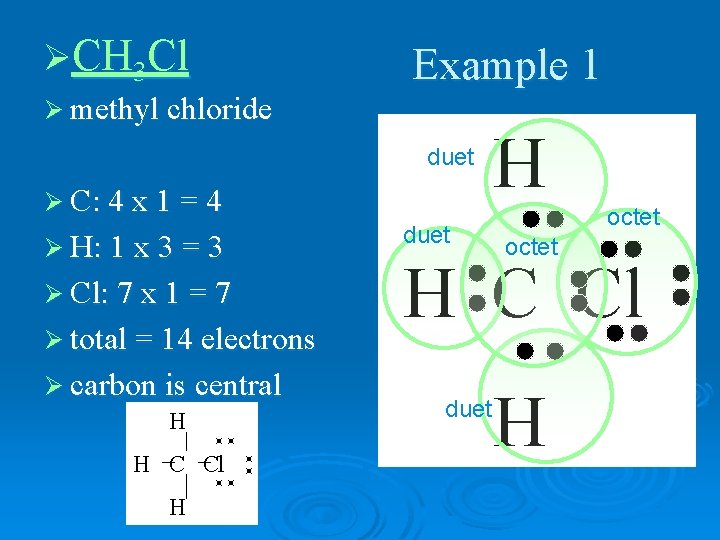
ØCH 3 Cl Example 1 Ø methyl chloride duet Ø C: 4 x 1 = 4 Ø H: 1 x 3 = 3 Ø Cl: 7 x 1 = 7 Ø total = 14 electrons Ø carbon is central H H C Cl H duet H octet H C Cl duet H
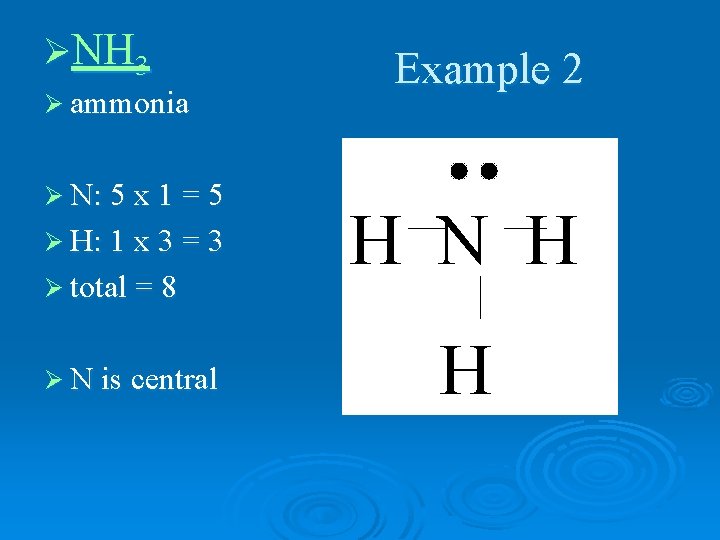
ØNH 3 Ø ammonia Ø N: 5 x 1 = 5 Ø H: 1 x 3 = 3 Ø total = 8 Ø N is central Example 2 H N H H
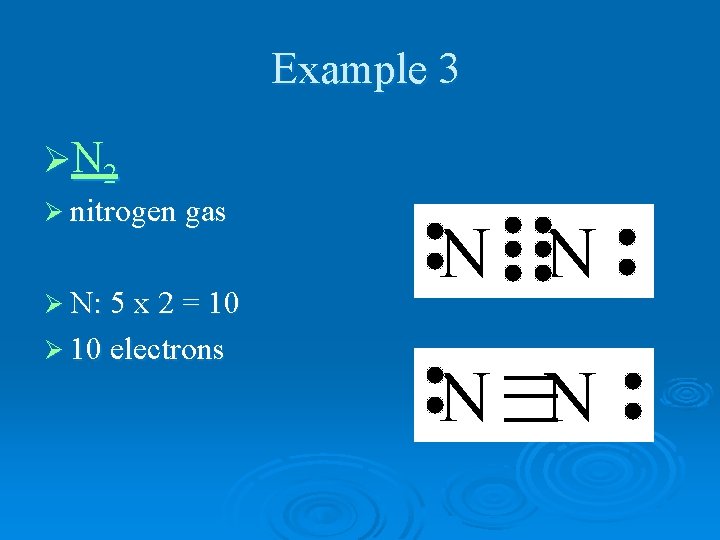
Example 3 Ø N 2 Ø nitrogen gas Ø N: 5 x 2 = 10 Ø 10 electrons N N
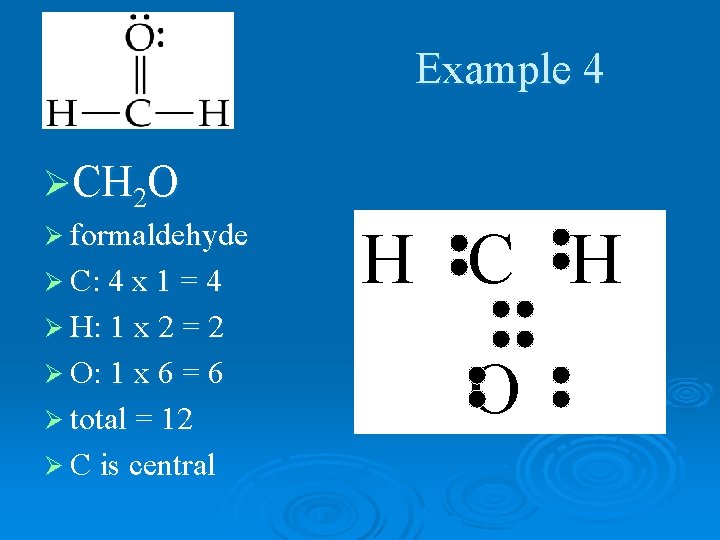
Example 4 ØCH 2 O Ø formaldehyde Ø C: 4 x 1 = 4 H C H Ø H: 1 x 2 = 2 Ø O: 1 x 6 = 6 Ø total = 12 Ø C is central O
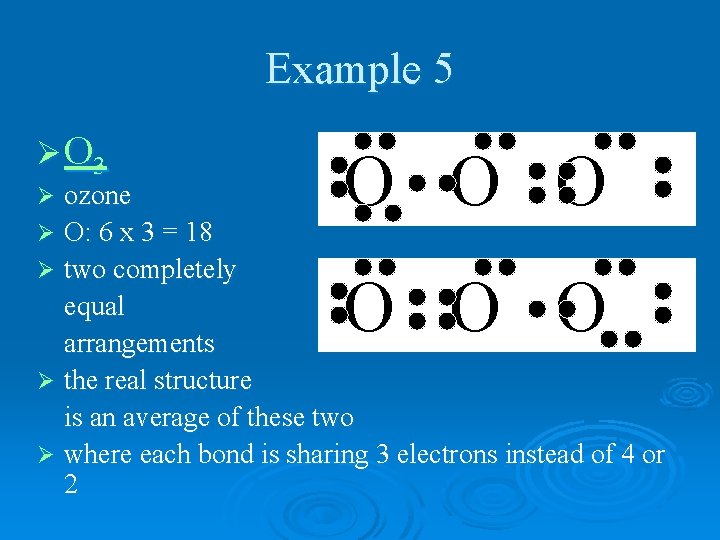
Example 5 Ø O 3 O O O ozone Ø O: 6 x 3 = 18 Ø two completely equal arrangements Ø the real structure is an average of these two Ø where each bond is sharing 3 electrons instead of 4 or 2 Ø O O O
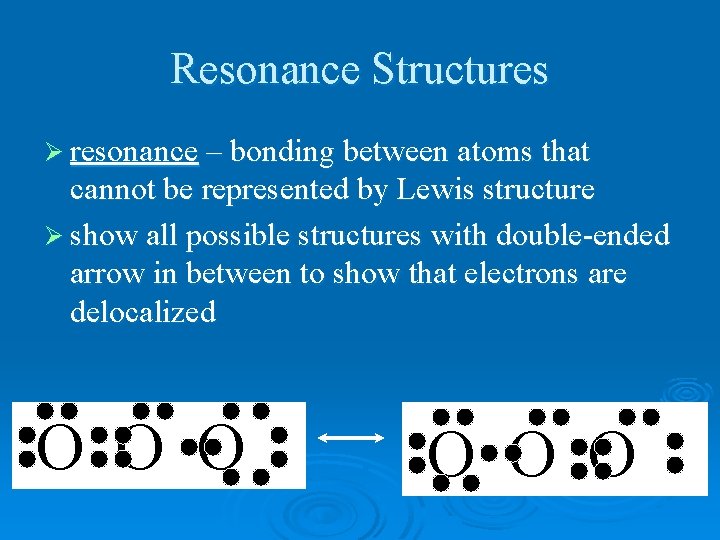
Resonance Structures Ø resonance – bonding between atoms that cannot be represented by Lewis structure Ø show all possible structures with double-ended arrow in between to show that electrons are delocalized O O O
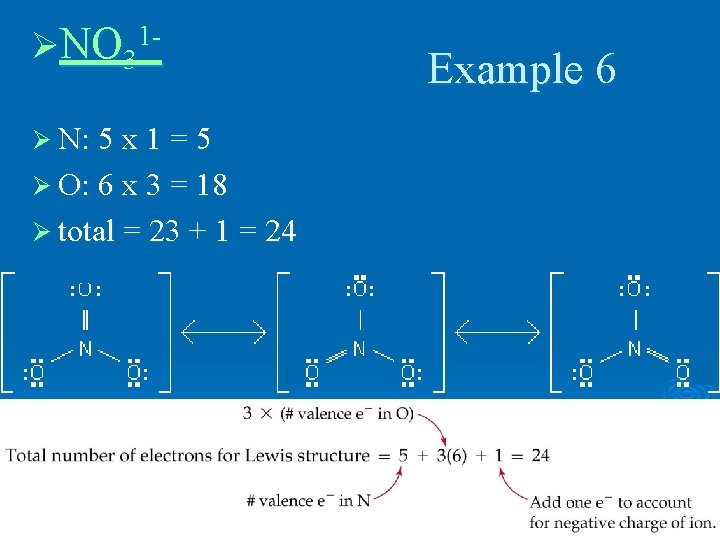
ØNO 31Ø N: 5 x 1 = 5 Ø O: 6 x 3 = 18 Ø total = 23 + 1 = 24 Example 6
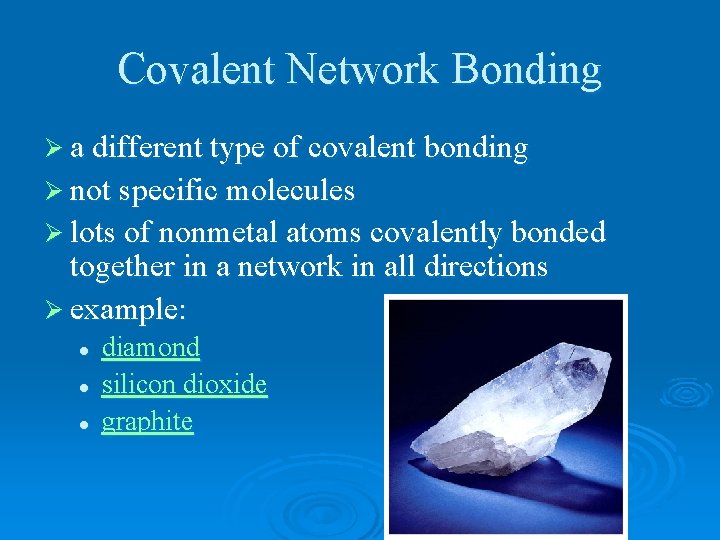
Covalent Network Bonding Ø a different type of covalent bonding Ø not specific molecules Ø lots of nonmetal atoms covalently bonded together in a network in all directions Ø example: l l l diamond silicon dioxide graphite
- Slides: 26