
Ch 6 Adaptations Over Time Ecology Section 1
- Slides: 40
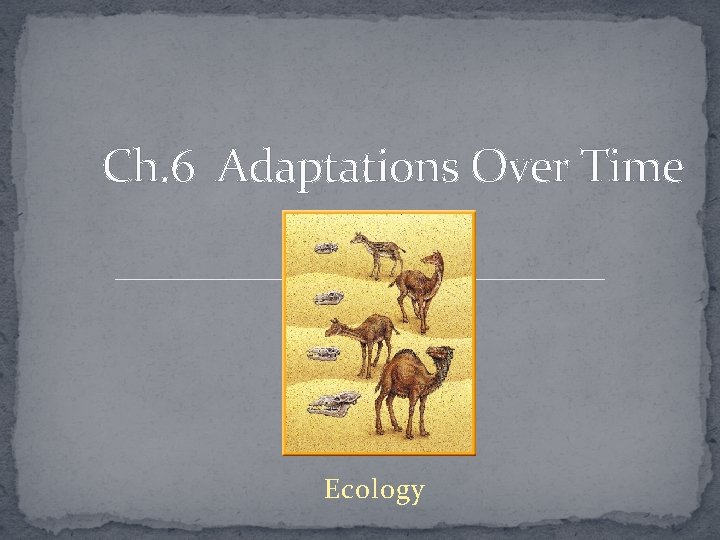
Ch. 6 Adaptations Over Time Ecology
Section 1 – Ideas About Evolution �A. Evolution – changes in inherited characteristics of a species over time 1. A species is a group of organisms that share similar characteristics and can reproduce among themselves. 2. Lamarck’s theory of acquired characteristics was not supported by evidence.
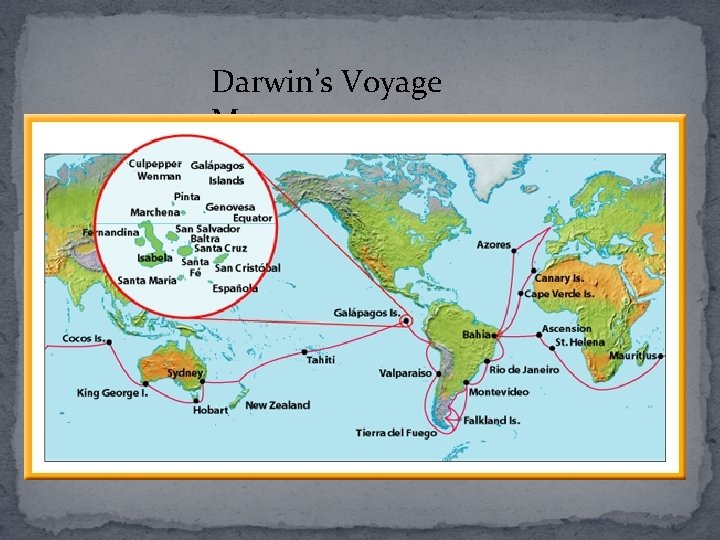
Darwin’s Voyage Map
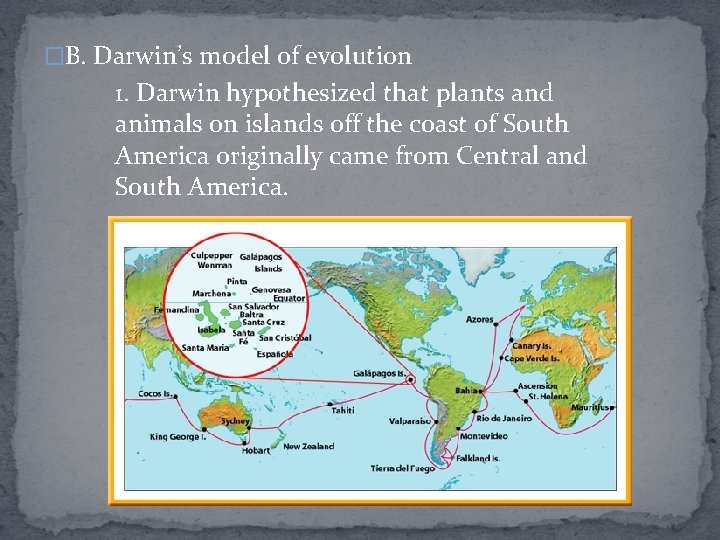
�B. Darwin’s model of evolution 1. Darwin hypothesized that plants and animals on islands off the coast of South America originally came from Central and South America.
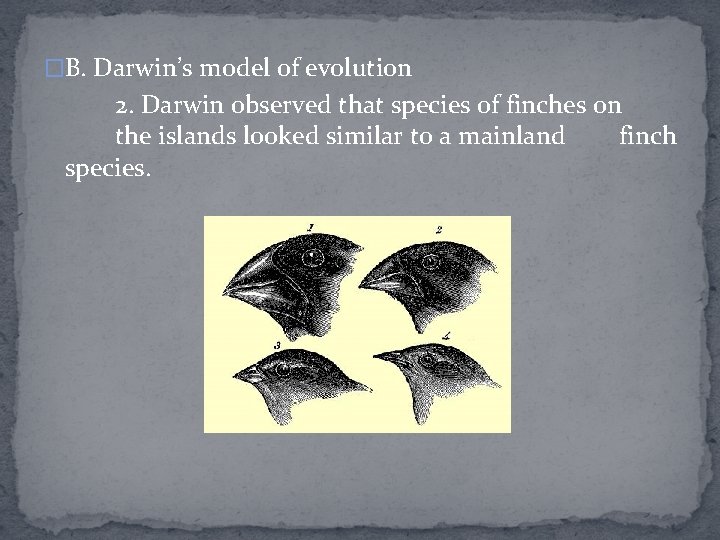
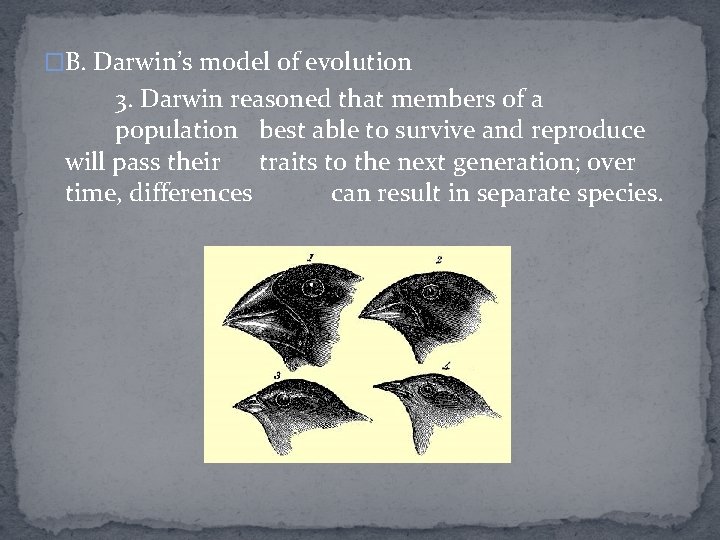
�B. Darwin’s model of evolution 2. Darwin observed that species of finches on the islands looked similar to a mainland finch species.
�B. Darwin’s model of evolution 3. Darwin reasoned that members of a population best able to survive and reproduce will pass their traits to the next generation; over time, differences can result in separate species.
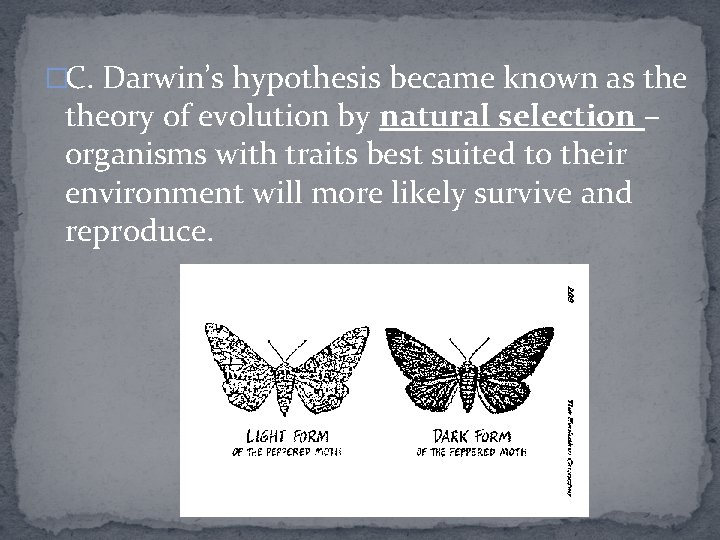
�C. Darwin’s hypothesis became known as theory of evolution by natural selection – organisms with traits best suited to their environment will more likely survive and reproduce.
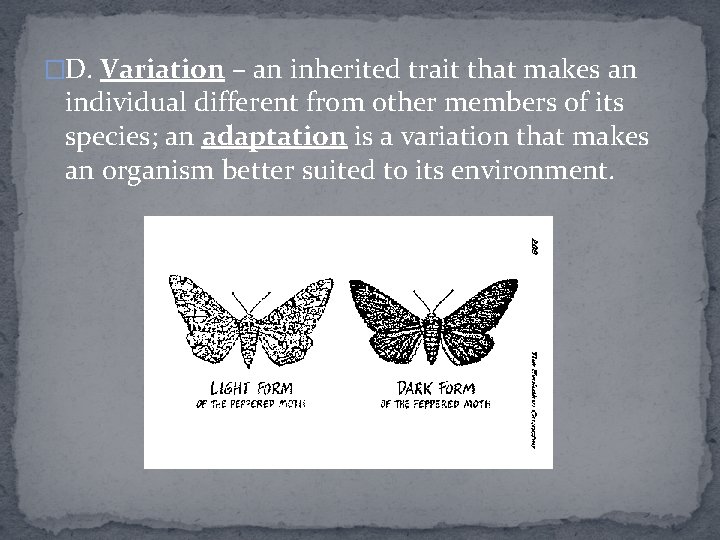
�D. Variation – an inherited trait that makes an individual different from other members of its species; an adaptation is a variation that makes an organism better suited to its environment.
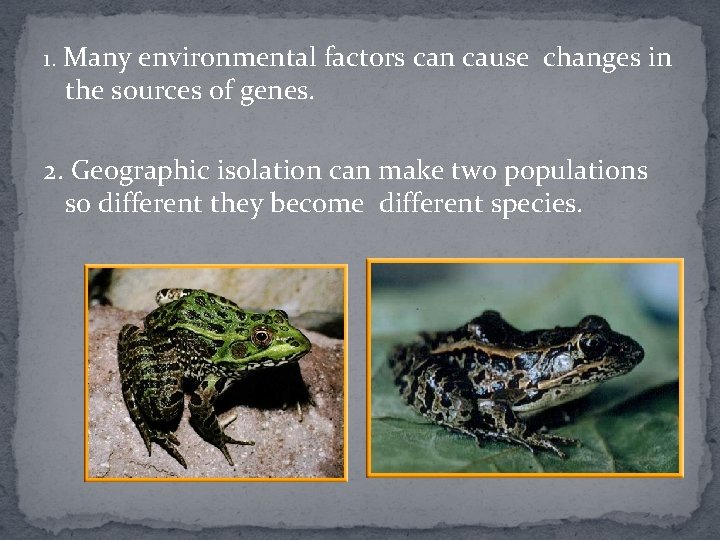
1. Many environmental factors can cause changes in the sources of genes. 2. Geographic isolation can make two populations so different they become different species.
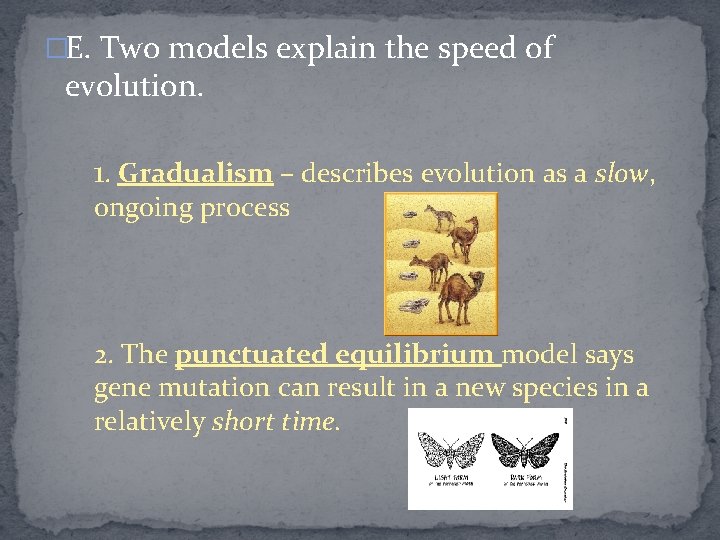
�E. Two models explain the speed of evolution. 1. Gradualism – describes evolution as a slow, ongoing process 2. The punctuated equilibrium model says gene mutation can result in a new species in a relatively short time.
Discussion Question: �Why are there two models to explain the speed of evolution?
Discussion Question: �Why are there two models to explain the speed of evolution? �Answer: Some scientists support gradualism (slow amount of time), some support punctuated equilibrium (short time), and some say evidence supports both models.
Stated Clearly – 1 st: Evolution, 2 nd: Natural Selection �https: //www. youtube. com/watch? v=Gh. HOj. C 4 oxh 8 �https: //www. youtube. com/watch? v=0 SCjh. I 86 gr. U
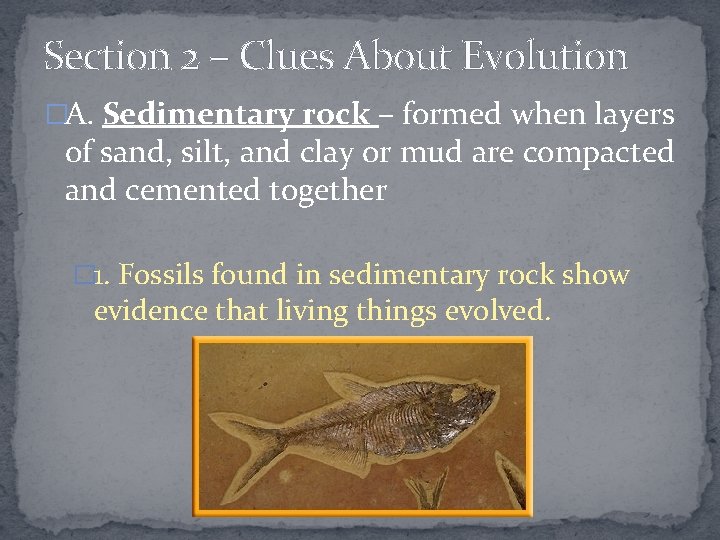
Section 2 – Clues About Evolution �A. Sedimentary rock – formed when layers of sand, silt, and clay or mud are compacted and cemented together � 1. Fossils found in sedimentary rock show evidence that living things evolved.
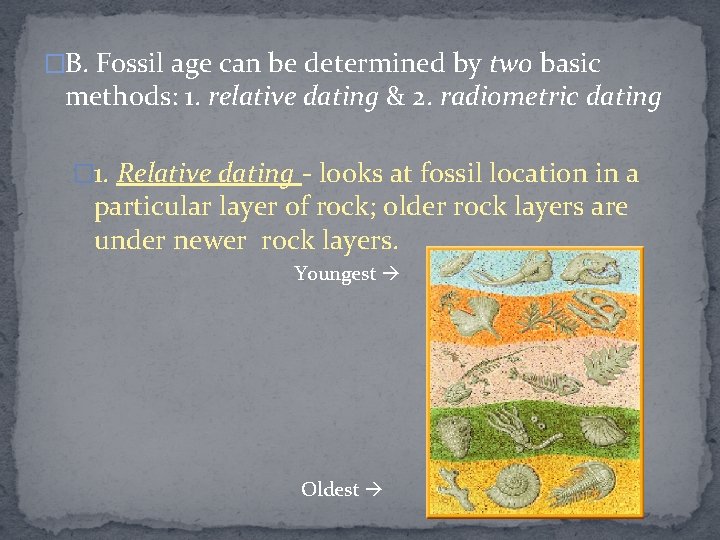
�B. Fossil age can be determined by two basic methods: 1. relative dating & 2. radiometric dating � 1. Relative dating - looks at fossil location in a particular layer of rock; older rock layers are under newer rock layers. Youngest Oldest
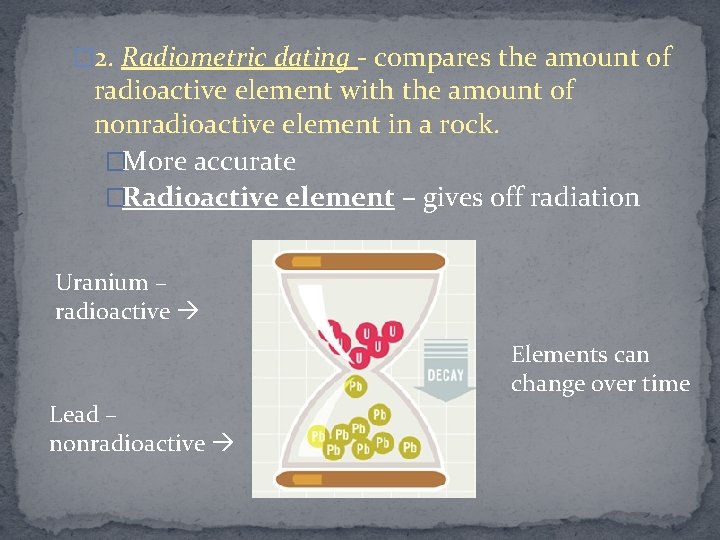
� 2. Radiometric dating - compares the amount of radioactive element with the amount of nonradioactive element in a rock. �More accurate �Radioactive element – gives off radiation Uranium – radioactive Elements can change over time Lead – nonradioactive
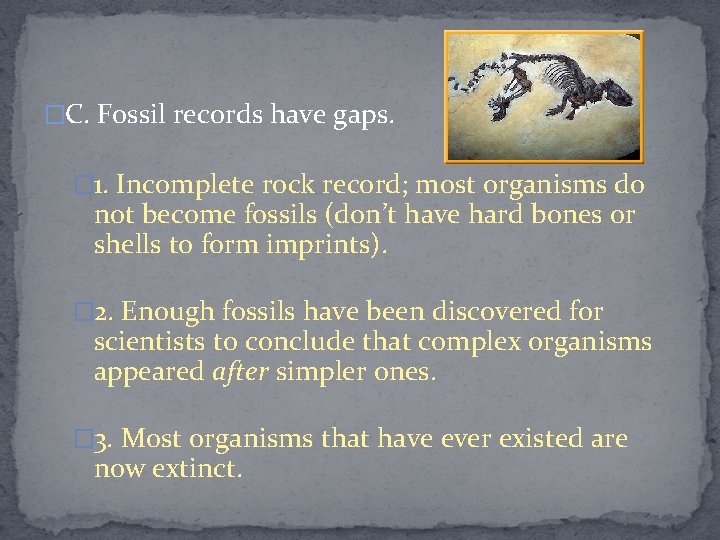
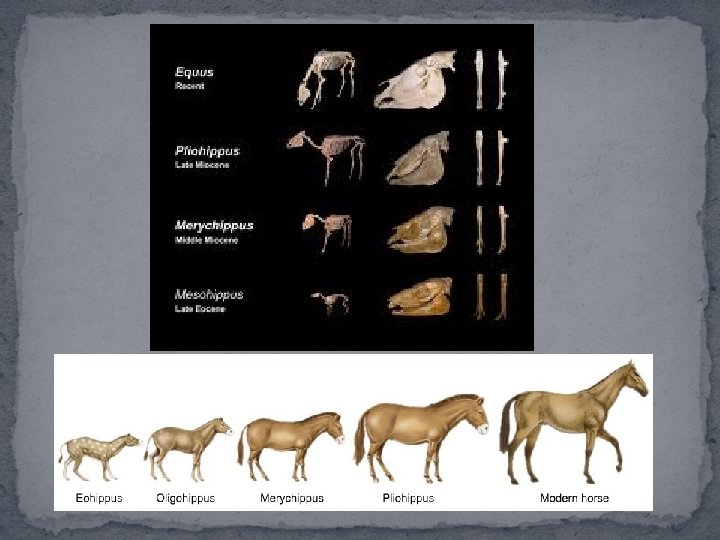
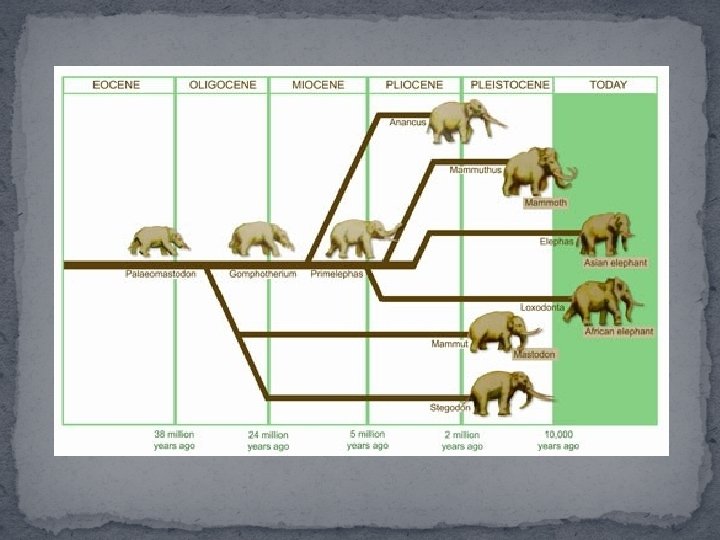
�C. Fossil records have gaps. � 1. Incomplete rock record; most organisms do not become fossils (don’t have hard bones or shells to form imprints). � 2. Enough fossils have been discovered for scientists to conclude that complex organisms appeared after simpler ones. � 3. Most organisms that have ever existed are now extinct.
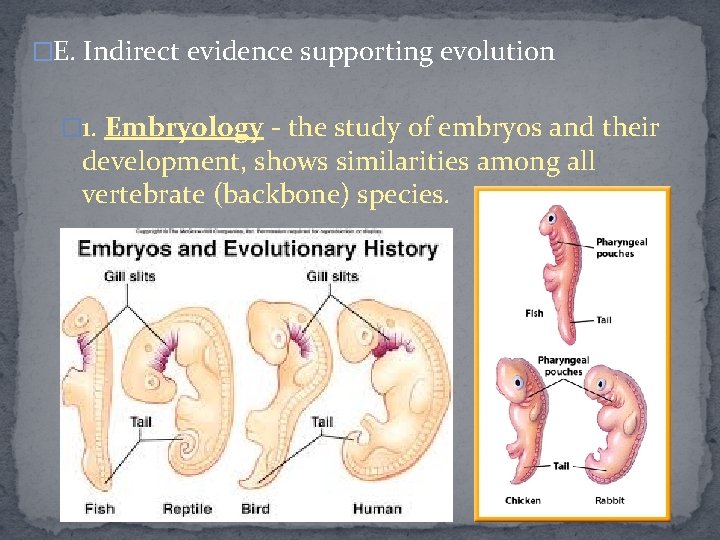
�E. Indirect evidence supporting evolution � 1. Embryology - the study of embryos and their development, shows similarities among all vertebrate (backbone) species.
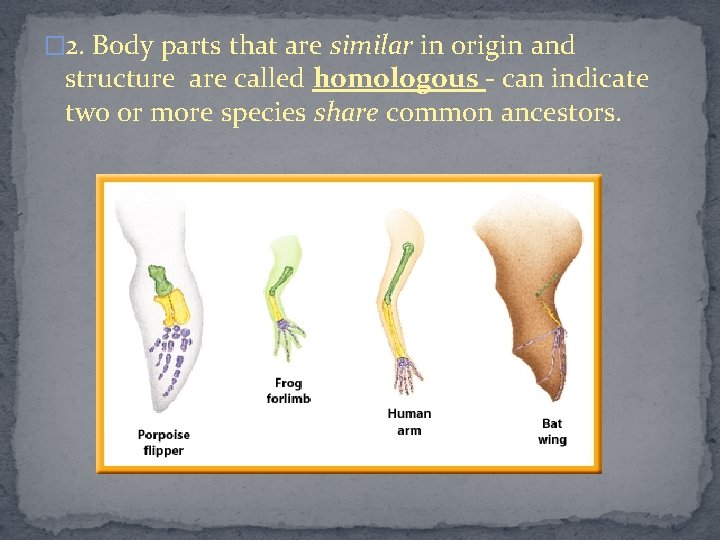
� 2. Body parts that are similar in origin and structure are called homologous - can indicate two or more species share common ancestors.
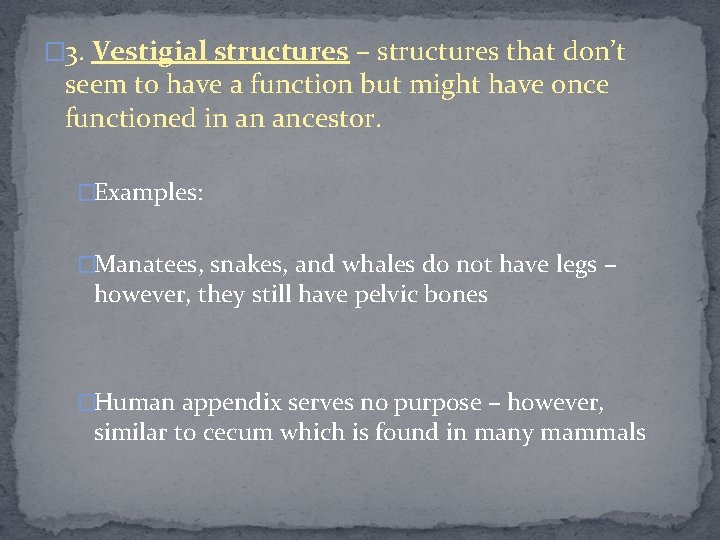
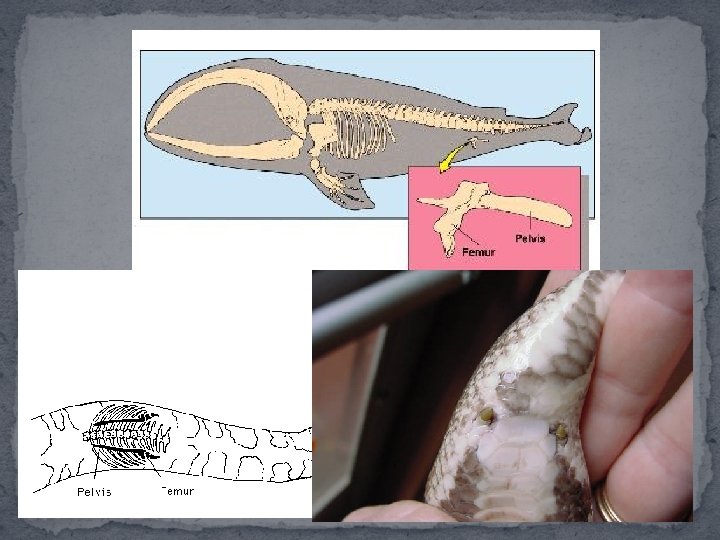
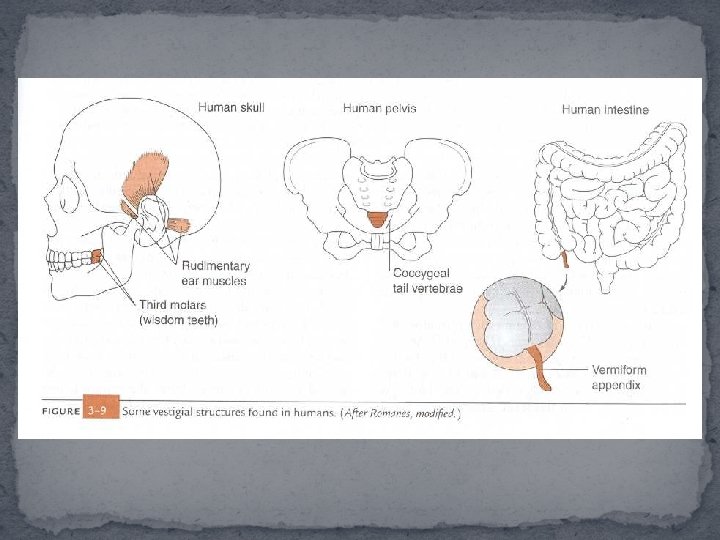
� 3. Vestigial structures – structures that don’t seem to have a function but might have once functioned in an ancestor. �Examples: �Manatees, snakes, and whales do not have legs – however, they still have pelvic bones �Human appendix serves no purpose – however, similar to cecum which is found in many mammals
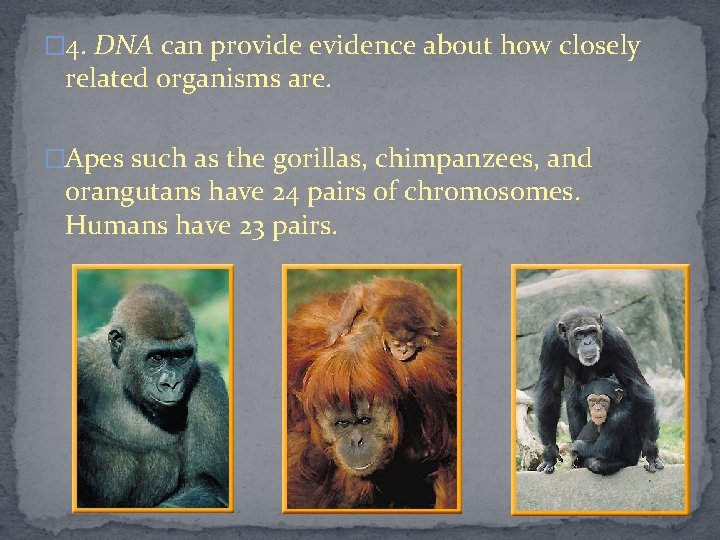
� 4. DNA can provide evidence about how closely related organisms are. �Apes such as the gorillas, chimpanzees, and orangutans have 24 pairs of chromosomes. Humans have 23 pairs.
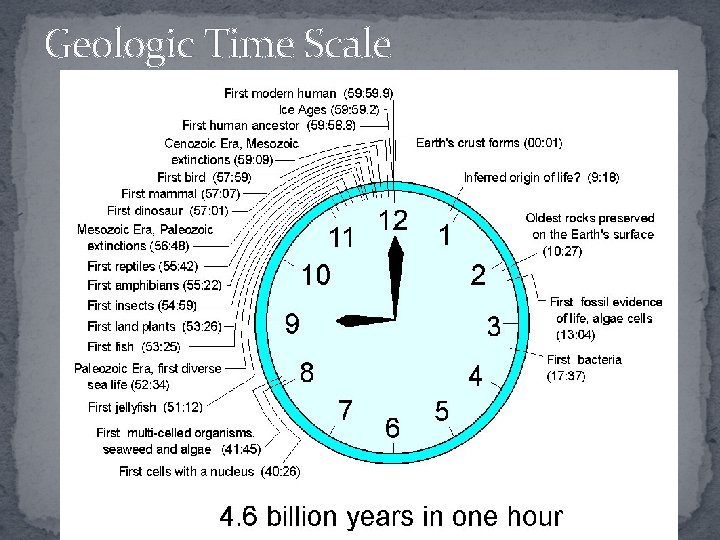
Geologic Time Scale
Discussion Question: �What are some types of evidence supporting evolution?
Discussion Question: �What are some types of evidence supporting evolution? �Answer: �Fossils �Antibiotic resistance in bacteria �Embryology �Homologous body parts �Vestigial structures �DNA
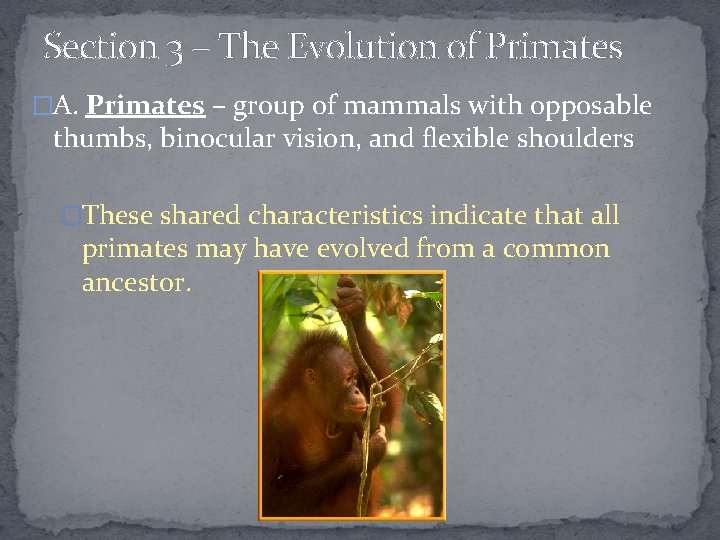
Section 3 – The Evolution of Primates �A. Primates – group of mammals with opposable thumbs, binocular vision, and flexible shoulders �These shared characteristics indicate that all primates may have evolved from a common ancestor.
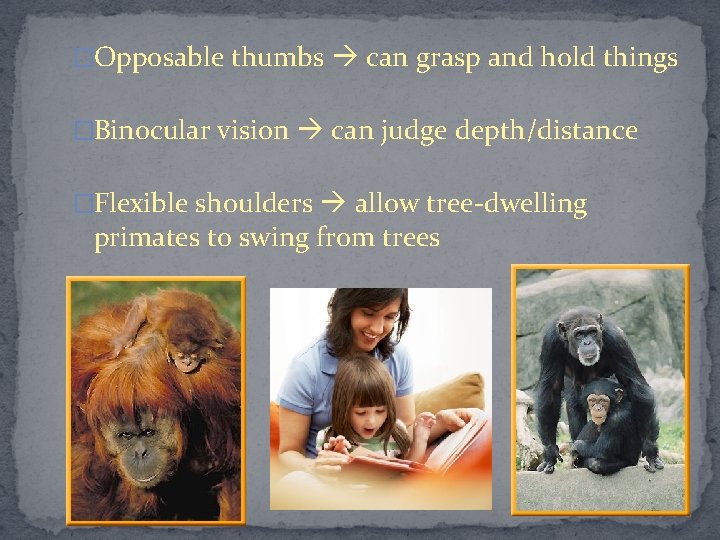
�Opposable thumbs can grasp and hold things �Binocular vision can judge depth/distance �Flexible shoulders allow tree-dwelling primates to swing from trees
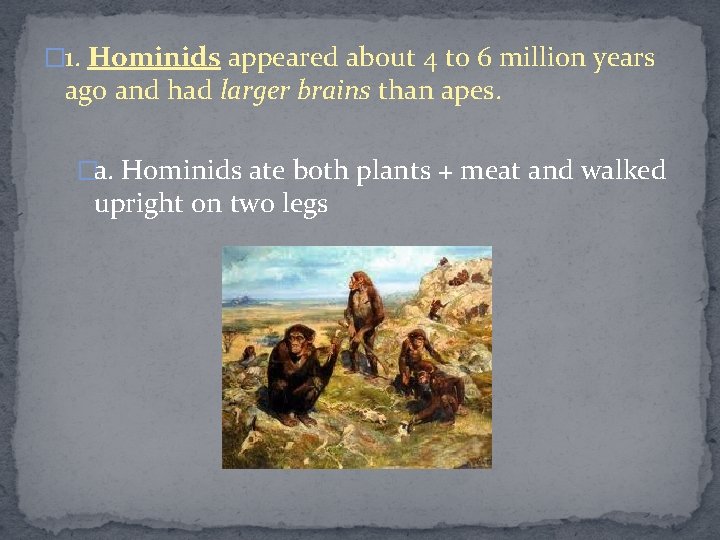
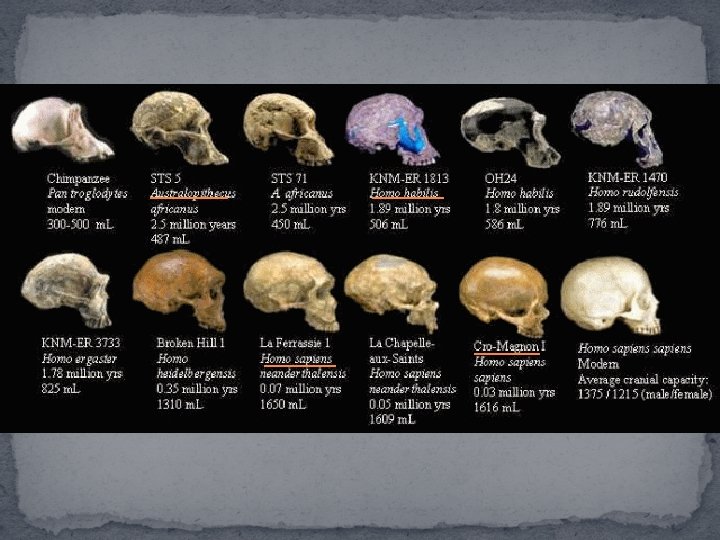
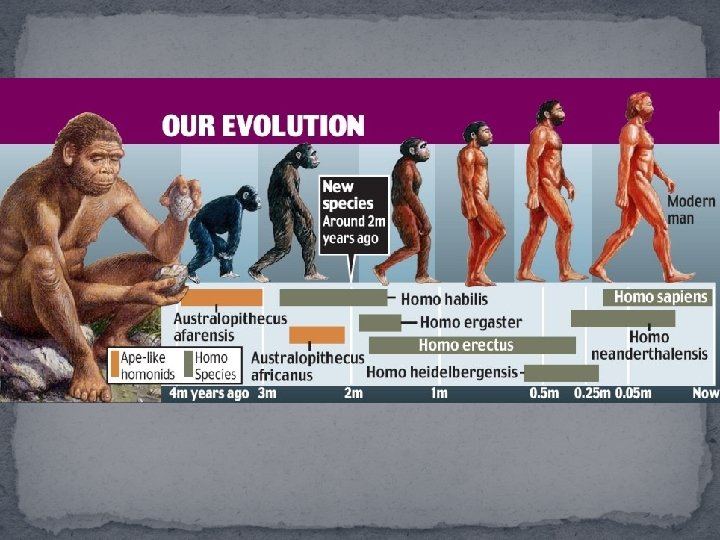
� 1. Hominids appeared about 4 to 6 million years ago and had larger brains than apes. �a. Hominids ate both plants + meat and walked upright on two legs
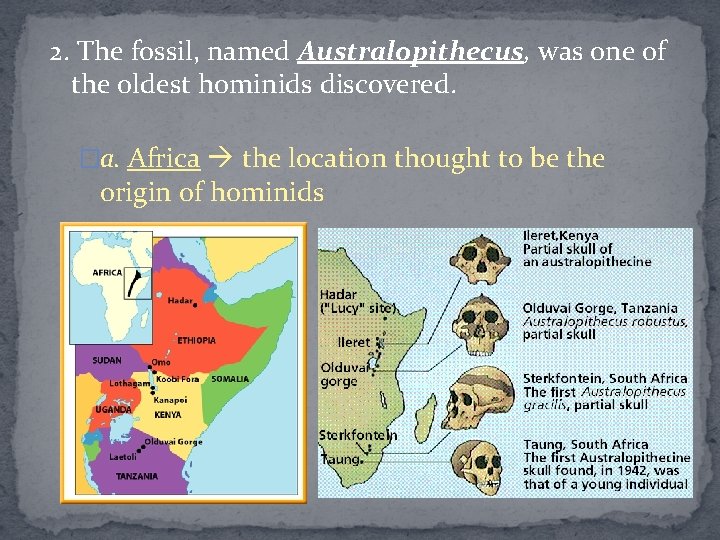
2. The fossil, named Australopithecus, was one of the oldest hominids discovered. �a. Africa the location thought to be the origin of hominids
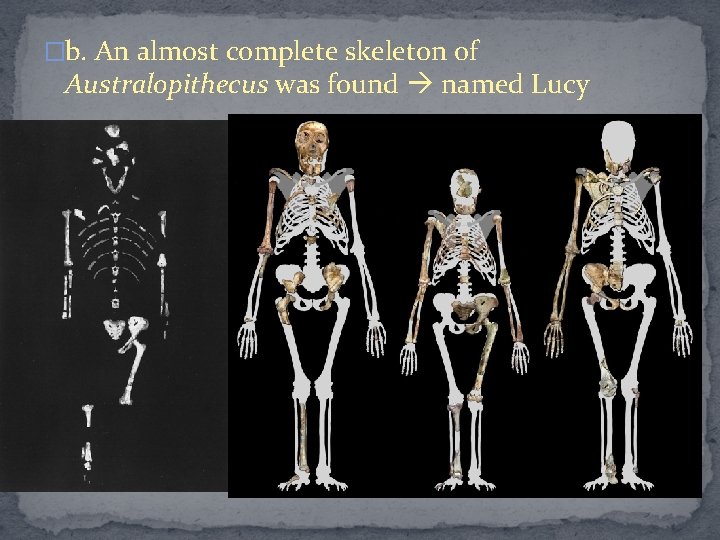
�b. An almost complete skeleton of Australopithecus was found named Lucy
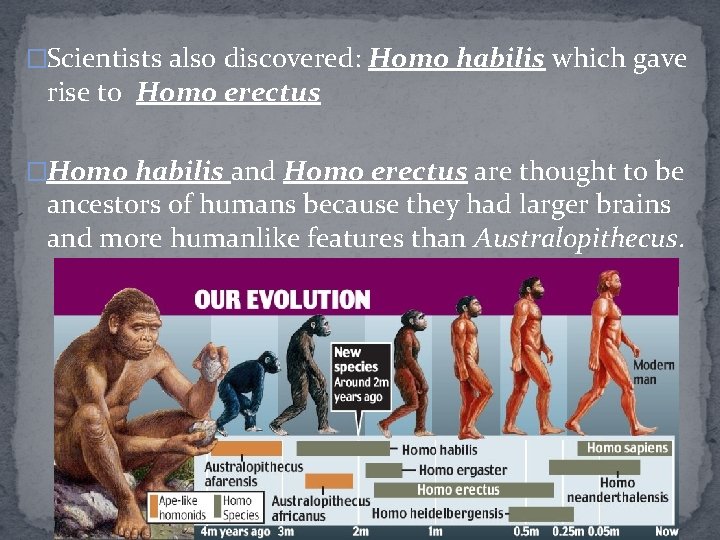
�Scientists also discovered: Homo habilis which gave rise to Homo erectus �Homo habilis and Homo erectus are thought to be ancestors of humans because they had larger brains and more humanlike features than Australopithecus.
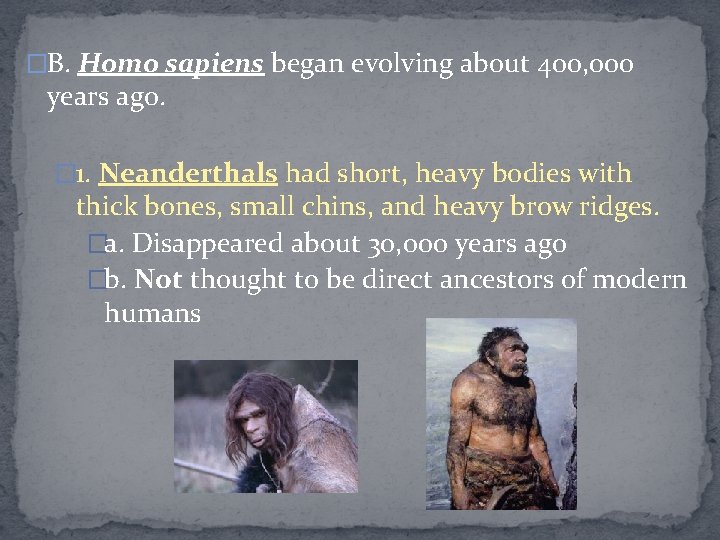
�B. Homo sapiens began evolving about 400, 000 years ago. � 1. Neanderthals had short, heavy bodies with thick bones, small chins, and heavy brow ridges. �a. Disappeared about 30, 000 years ago �b. Not thought to be direct ancestors of modern humans
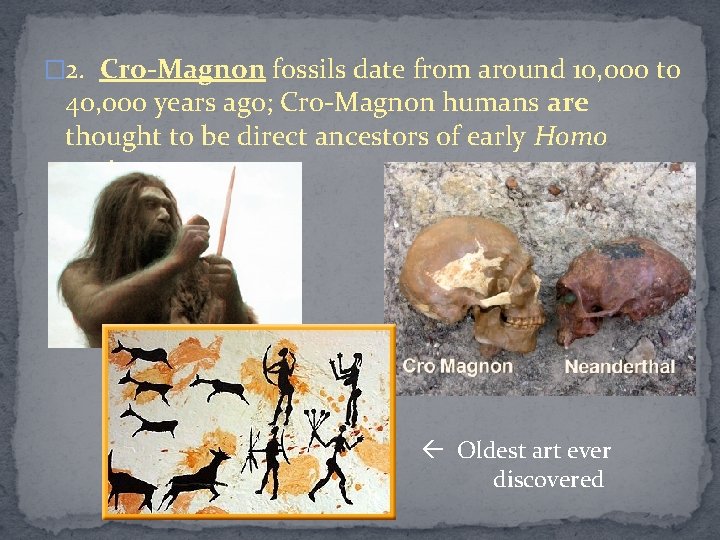
� 2. Cro-Magnon fossils date from around 10, 000 to 40, 000 years ago; Cro-Magnon humans are thought to be direct ancestors of early Homo sapiens. Oldest art ever discovered
Discussion Question �On what continent are humans thought to have originated and what is the evidence?
Discussion Question �On what continent are humans thought to have originated and what is the evidence? �Answer: Africa �Some of the oldest hominid fossils have been found in Africa. Although not all of the hominid fossils found in Africa are thought to be direct ancestors of modern humans, many scientists think the fossils indicate that modern hominids might have evolved from similar ancestors.