
Ch 6 3 Types of Social Interaction Five



- Slides: 11
Ch. 6. 3 Types of Social Interaction
Five types of Group Social Interaction – (Robert Nisbert) • Cooperation – combining of effort to reach some goal. – Survivors of a plane crash, kids agreeing to the rules of a game • Conflict – interaction aimed at defeating an opponent – What are the Societal benefits of Conflict? • The promotion of cooperation and unity w/in opposing groups (Simmel) • Draws attention to social inequities – Ex. Civil Rights protestors • Can lead to a change in norms, beliefs, and values
• Social Exchange – a voluntary action performed in the expectation of getting a reward in return – The basis of an exchange relationship is reciprocity, the idea that you should do for others as they have done for you – The difference in cooperation and social exchange? • _____________________________ _ • How can we reach our Goal? Or What’s in it for me? • Coercion – interaction in which individuals or groups are forced to behave in a particular way – The central element is domination – Ex. Parents curfews, guards having more power than prisoners, speed limits
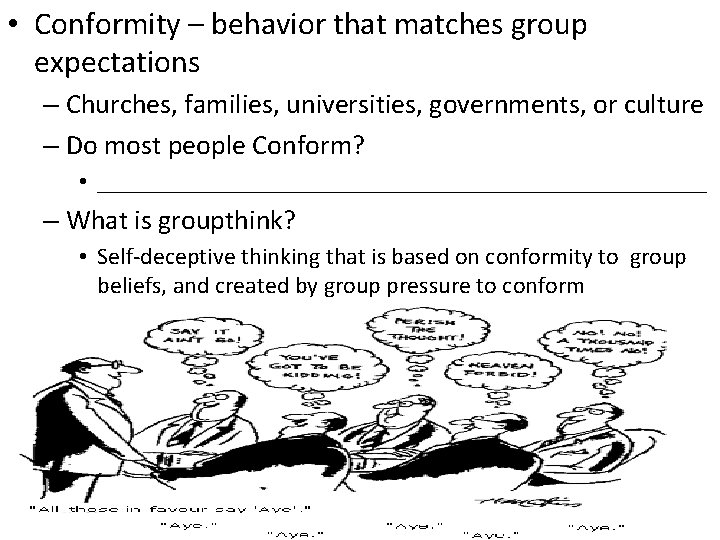
• Conformity – behavior that matches group expectations – Churches, families, universities, governments, or culture – Do most people Conform? • __________________________ – What is groupthink? • Self-deceptive thinking that is based on conformity to group beliefs, and created by group pressure to conform
Ch. 6. 4 Formal Organizations • Formal Organization – a group deliberately created to achieve on or more long-term goals • Ex. High schools, colleges, corporations, government agencies, and hospitals • Bureaucracy – a formal organization based on rationality and efficiency • Not all formal organizations are bureaucracies
Major Characteristics of bureaucracies – A division of labor based on the principle of specialization • Each member is responsible for a certain function – Hierarchy of authority • Authority is the exercise of legitimate power • These organization’s authority structure is like a pyramid – A system of rules and procedures • Rules and procedures for how work is to be done and provide a framework for decision making – Written records of work and activities • Written records are made and kept on file – Promotion on the basis of merit and qualifications • Norm is equal treatment to all
Max Weber and Bureaucracy • Weber was the first to analyze the nature of bureaucracy • Advantages? – – – – Steadiness Precision Continuity Speed Efficiency Minimum cost Rationalization – the mind-set emphasizing knowledge, reason, and planning • Designed to protect individuals
Informal Structure within organizations • Informal organization – groups w/in a formal organization in which personal relationships are guided by norms, rituals, and sentiments that are not part of the formal organization – Exist to meet needs ignored by the formal organization • Offer personal affection, support, humor, or protection
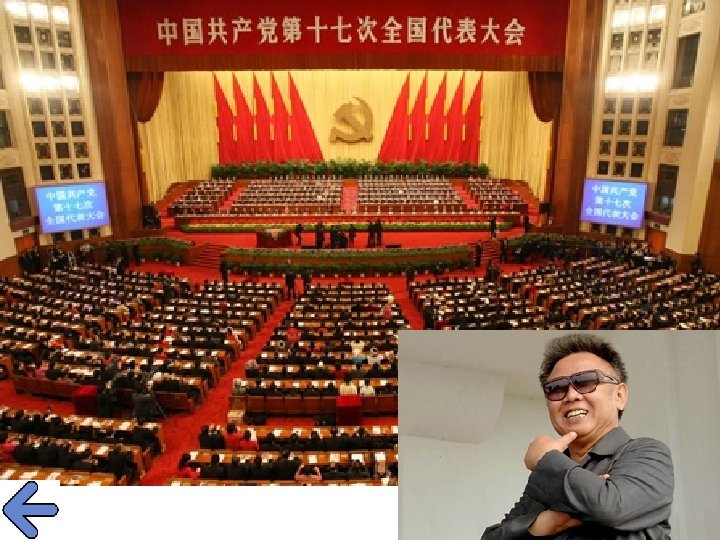
• Iron Law of Oligarchy – theory that power increasingly becomes concentrated in the hands of a few members of any organization (Robert Michels) • Ex. Chinese government • 3 organizational factors encourage oligarchy – Organizations need a hierarchy of authority to delegate decision making – The advantages held by those at the top allow them to consolidate their power – Other members of the organization tend to defer to leaders