
CH 5 USE AN APPROPRIATE VOICE AJ Caitlyn
- Slides: 9
CH. 5 – USE AN APPROPRIATE VOICE AJ, Caitlyn, Andrew, Camron
Introduction � When using e-mail you need to know your reader and use an appropriate voice depending on who you are writing to. � In this chapter you learn how to do this effectively.
Know Your Reader � What does my reader already know about this subject? � What does the person need to know? � Do I want the person to do something? What? � Am I writing “up” to management, “down” to other employees, “across” to associates, or “out” to customers and suppliers?
Example � You just finished reading “The Hunger Games” and you want to tell your best friend about it. Your friend has never read the book though. Use the previous questions to analyze what you would tell your friend about the book.
Use a Professional Voice �A professional voice sounds… � Specific � Positive � Reasonable
Make your voice sound personal �A direct voice using personal pronouns such as you, I, we, us, yours, mine, and ours � Used To: Support, influence, or persuade others
Creating Different Voices � Formal (ex. your boss) � No Contractions � Few Personal Pronouns � Objective Words � Specific Terminology � Informal (ex. your coworkers) � Friendly, but professional � Occasional contractions and personal pronouns � Conversational (ex. your friends) � Frequent Contractions � Appropriate Humor � Some Jargon or Slang
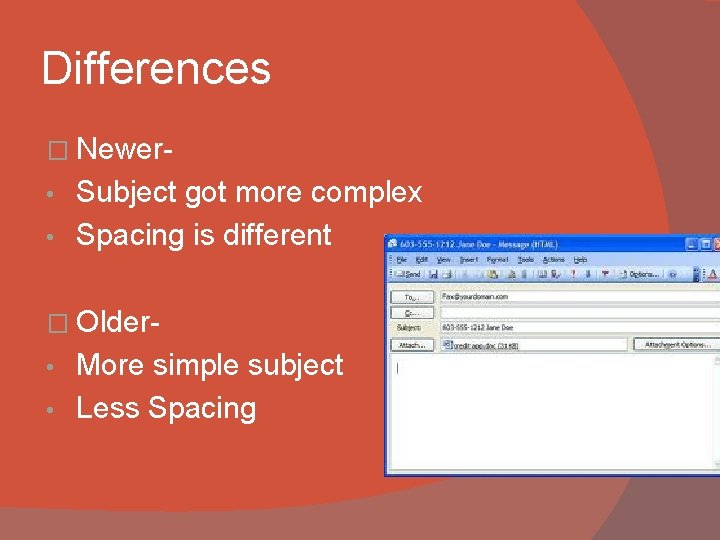
Differences � Newer- Subject got more complex • Spacing is different • � Older- More simple subject • Less Spacing •
Conclusion � Know your reader. �Use different voices depending on your reader. � Use a professional voice while making your voice sound personal.