
Ch 5 The Periodic Table III Periodic Trends
Ch. 5 - The Periodic Table III. Periodic Trends (p. 140 - 154) I II III
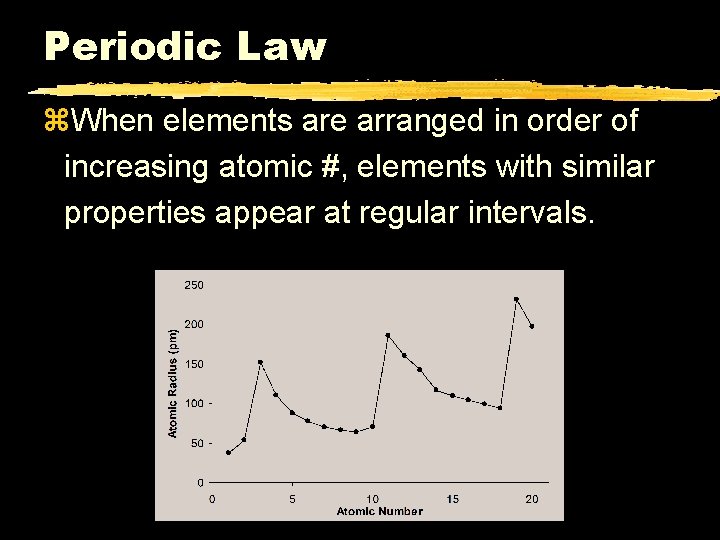
Periodic Law z. When elements are arranged in order of increasing atomic #, elements with similar properties appear at regular intervals.
Periodic Trends z. Three rules apply to all periodic trends y 1. Electrons are attracted to the protons in the nucleus y 2. Electrons are repelled by other electrons in an atom y 3. Completed shells are very stable
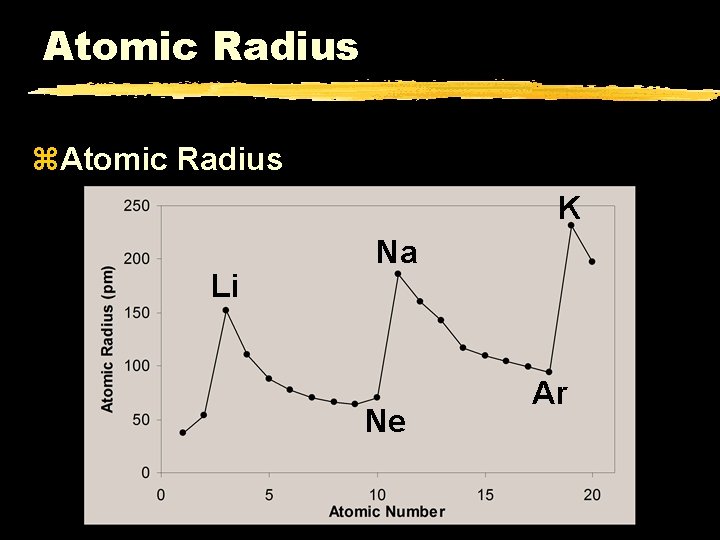
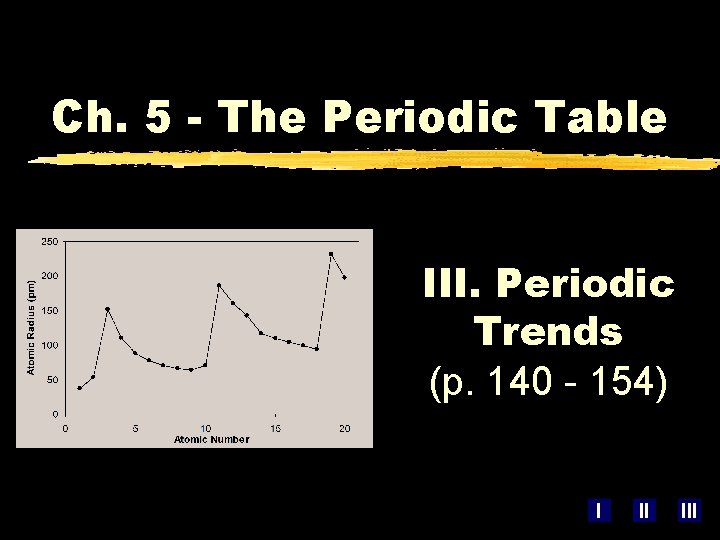
Atomic Radius z. Atomic Radius K Li Na Ne Ar
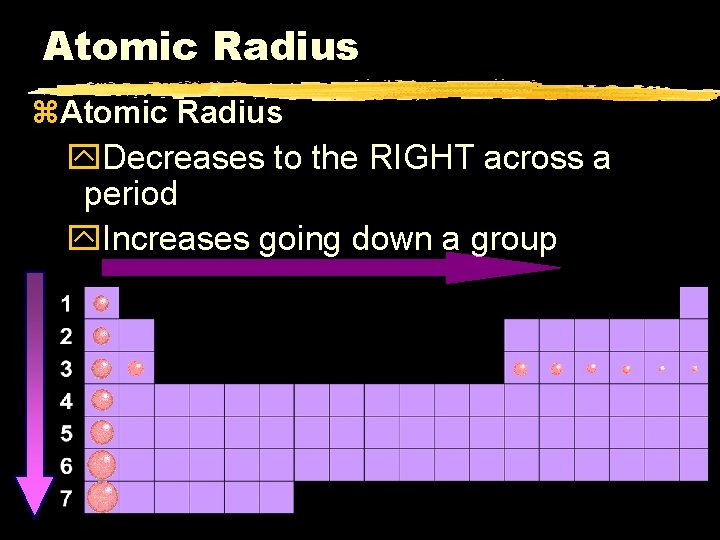
Atomic Radius z. Atomic Radius y. Decreases to the RIGHT across a period y. Increases going down a group
Atomic Radius z. Why larger going down? y. Higher energy levels have larger orbitals y. Shielding - core e- block the attraction between the nucleus and the valence ez. Why smaller to the right? y. Increased nuclear charge without additional shielding pulls e- in tighter
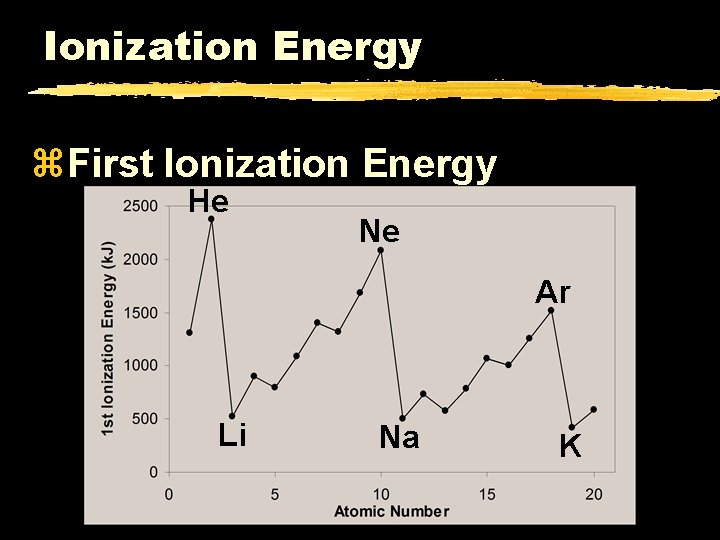
Ionization Energy z. First Ionization Energy He Ne Ar Li Na K
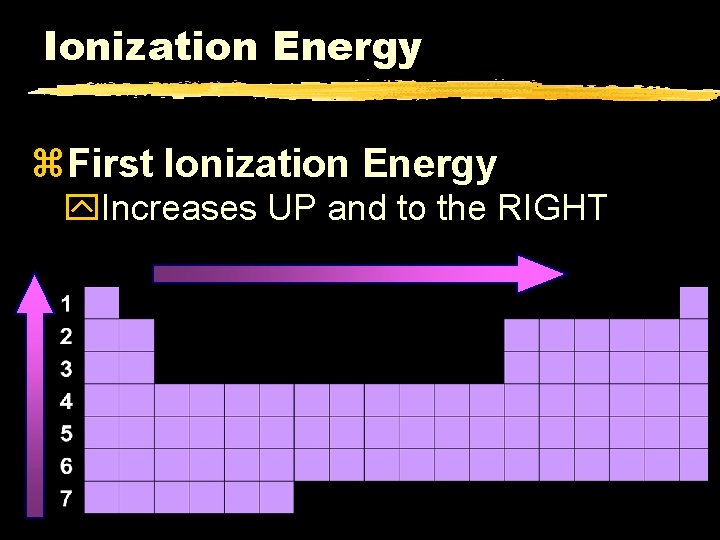
Ionization Energy z. First Ionization Energy y. Increases UP and to the RIGHT
Ionization Energy z. Why does it increase as we move right? y. As more protons are added to nucleus, the negatively charged e- are more strongly attracted which increases the energy required to remove them z. Why decrease down a group? y. Inner shells shield the outer valence electrons from the pulling power of the nucleus, making them easier to remove
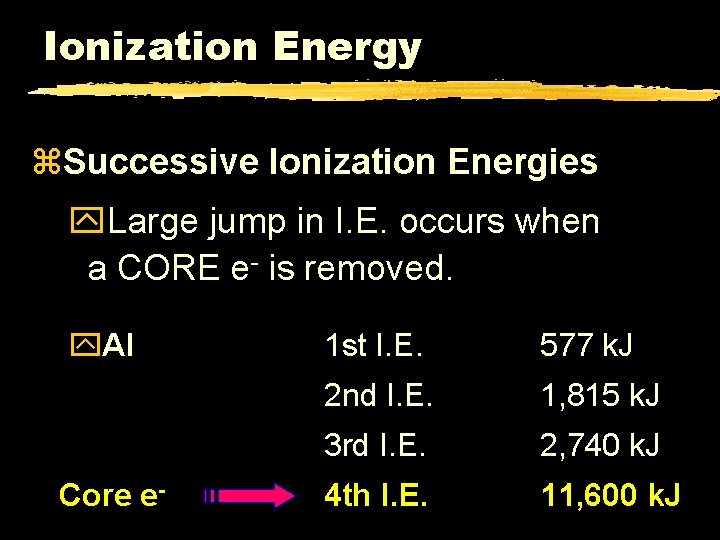
Ionization Energy z. Successive Ionization Energies y. Large jump in I. E. occurs when a CORE e- is removed. y. Al Core e- 1 st I. E. 577 k. J 2 nd I. E. 1, 815 k. J 3 rd I. E. 2, 740 k. J 4 th I. E. 11, 600 k. J
Electronegativity z. Moving across a period from left to right, electronegativity INCREASES. z. Moving down a group, electronegativity DECREASES.
Electron Affinity z. Electron Affinity – The energy change that occurs when an electron is acquired by a neutral atom. y. Most atoms release energy (negative values) y. If the electron causes the atom to have a more stable configuration then it releases a lot of energy.

Melting/Boiling Point z. Melting/Boiling Point y. Highest in the middle of a period.
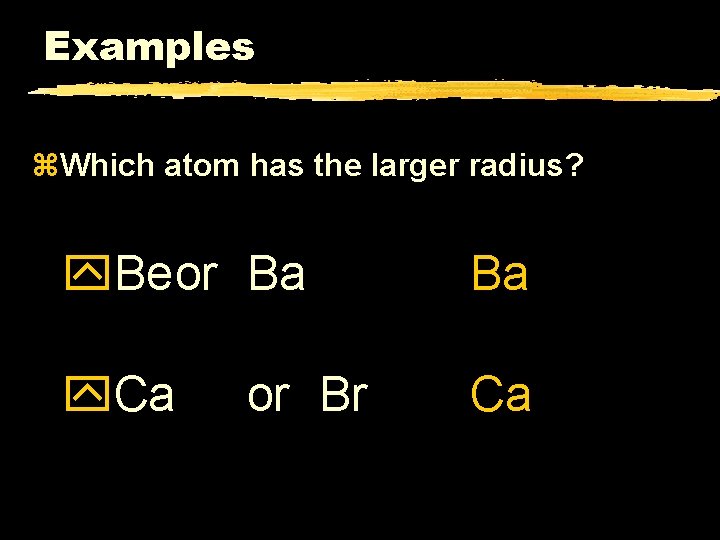
Examples z. Which atom has the larger radius? y. Beor Ba Ba y. Ca Ca or Br
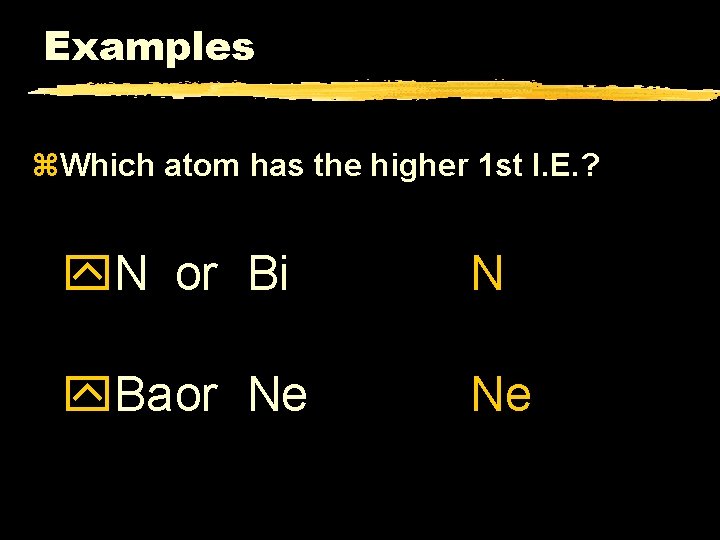
Examples z. Which atom has the higher 1 st I. E. ? y. N or Bi N y. Baor Ne Ne
Ch. 5 - The Periodic Table I. History I II III
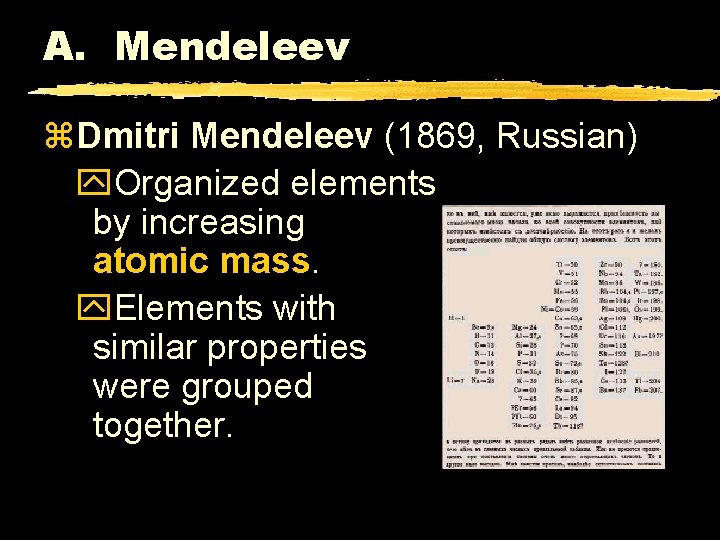
A. Mendeleev z. Dmitri Mendeleev (1869, Russian) y. Organized elements by increasing atomic mass. y. Elements with similar properties were grouped together.
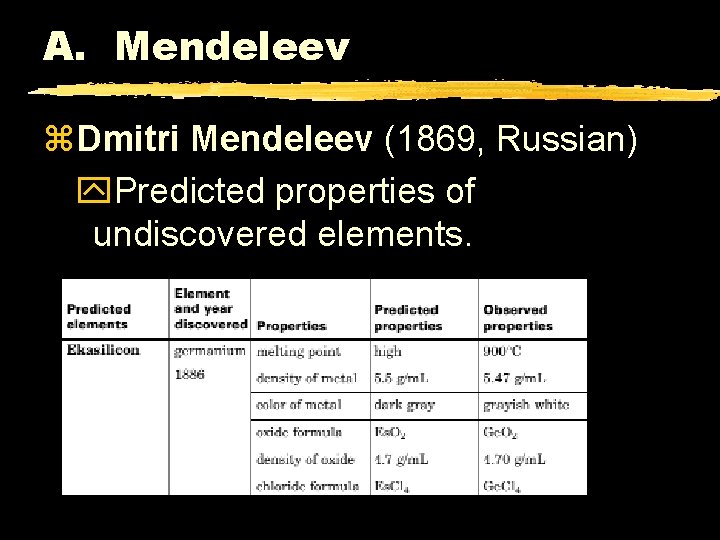
A. Mendeleev z. Dmitri Mendeleev (1869, Russian) y. Predicted properties of undiscovered elements.
B. Moseley z. Henry Mosely (1913, British) y. Organized elements by increasing atomic number. y. Resolved discrepancies in Mendeleev’s arrangement.
Quick Review z. Who organized the elements according to atomic mass? z. Dimitri Mendeleev z. Correctly predicted properties of new unknown elements
What are Chemical Families? z. Elements with similar chemical properties z. Alkali Metals z. Alkaline Earth Metals z. Transition Metals z. Halogens z. Noble Gases
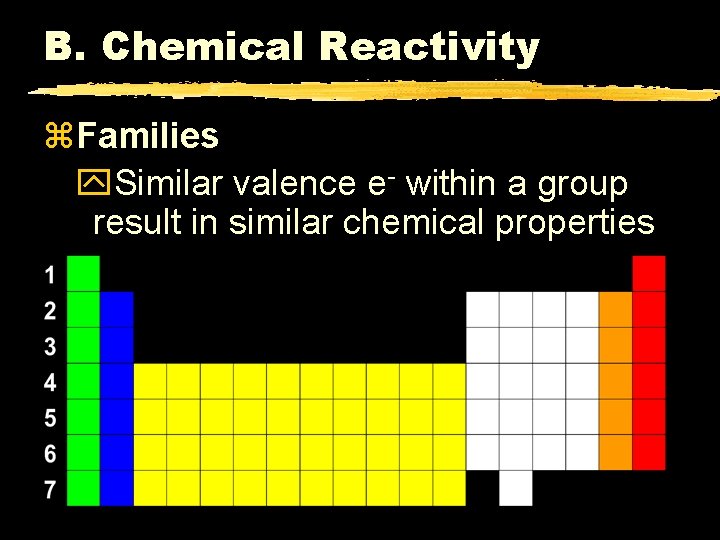
B. Chemical Reactivity z. Families y. Similar valence e- within a group result in similar chemical properties
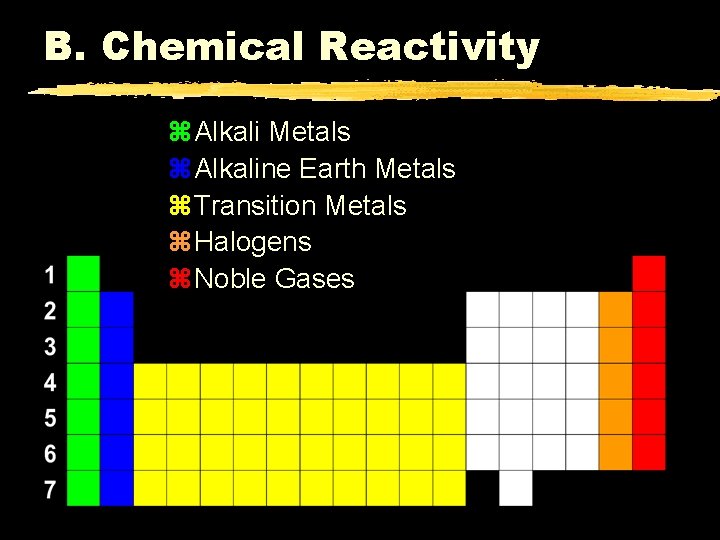
B. Chemical Reactivity z. Alkali Metals z. Alkaline Earth Metals z. Transition Metals z. Halogens z. Noble Gases
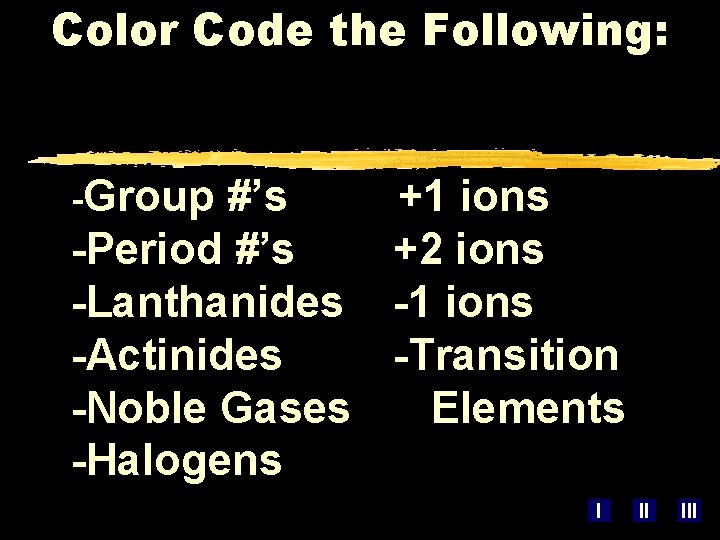
Color Code the Following: -Group #’s +1 ions -Period #’s +2 ions -Lanthanides -1 ions -Actinides -Transition -Noble Gases Elements -Halogens I II III
- Slides: 24