
CH 5 MOTIVATION EMOTION WHAT DO THESE HAVE

- Slides: 11
CH. 5: MOTIVATION & EMOTION
WHAT DO THESE HAVE TO DO WITH MOTIVATION & EMOTION? • Hypothalamus: Getting pleasure and avoiding pain are major MOTIVATORS – the hypothalamus controls these! It also controls other motivators like fear, rage, hunger, thirst, and sex. • Amygdala: Controls aggression and fear – these are both EMOTIONS and also huge motivators of behavior. • Reticular formation: Emotions and motivation require ACTION – which is controlled by the reticular formation.
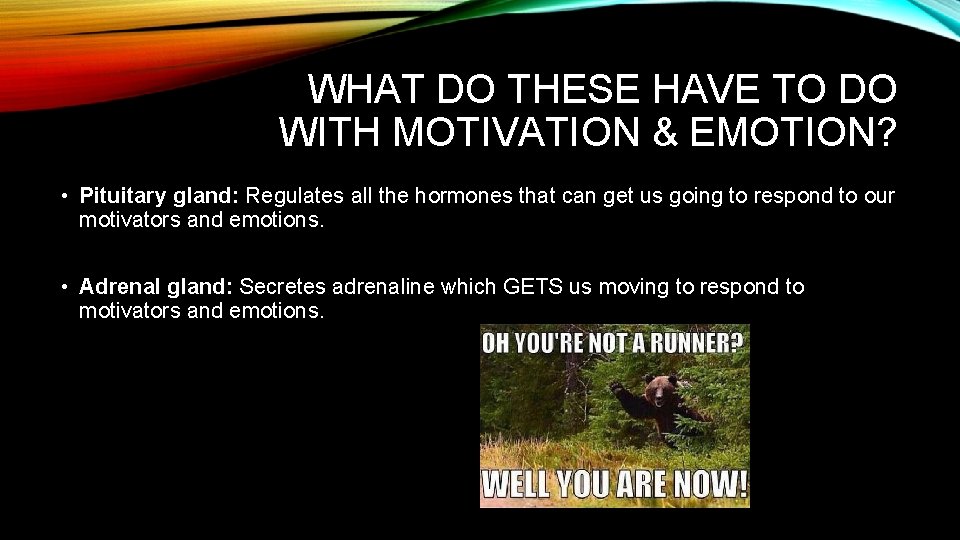
WHAT DO THESE HAVE TO DO WITH MOTIVATION & EMOTION? • Pituitary gland: Regulates all the hormones that can get us going to respond to our motivators and emotions. • Adrenal gland: Secretes adrenaline which GETS us moving to respond to motivators and emotions.
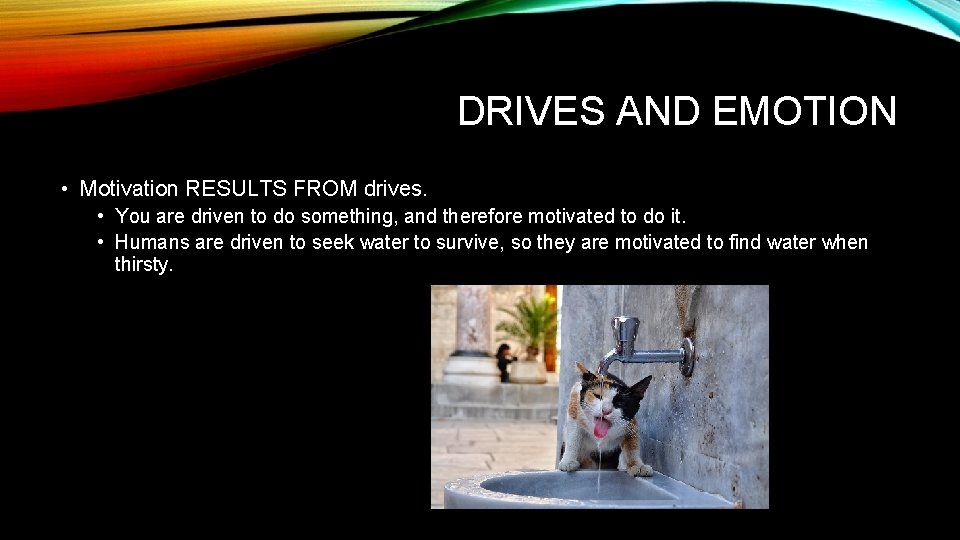
DRIVES AND EMOTION • Motivation RESULTS FROM drives. • You are driven to do something, and therefore motivated to do it. • Humans are driven to seek water to survive, so they are motivated to find water when thirsty.
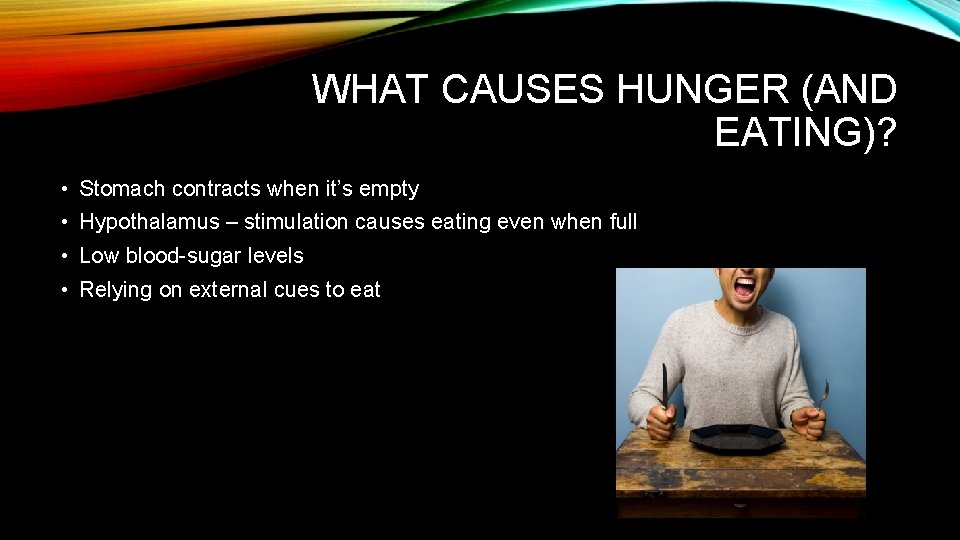
WHAT CAUSES HUNGER (AND EATING)? • Stomach contracts when it’s empty • Hypothalamus – stimulation causes eating even when full • Low blood-sugar levels • Relying on external cues to eat
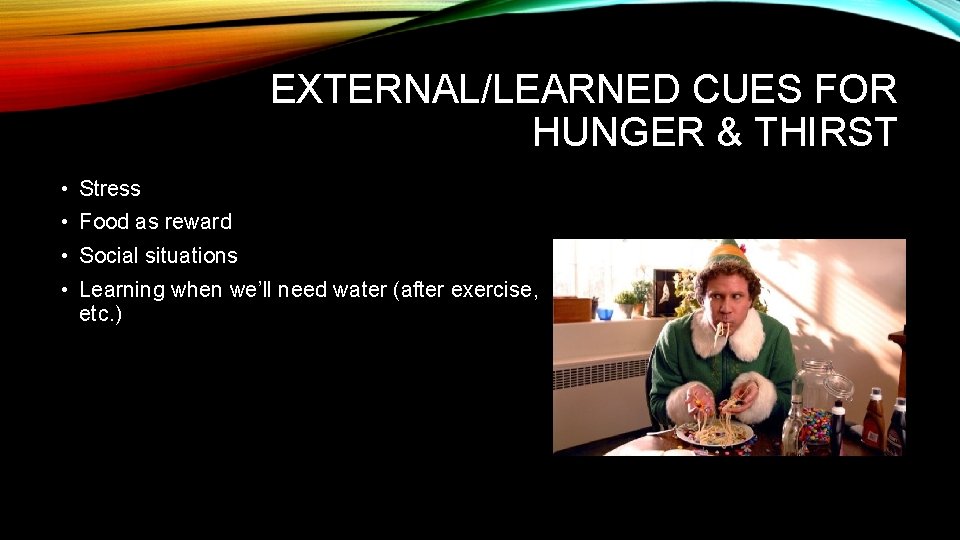
EXTERNAL/LEARNED CUES FOR HUNGER & THIRST • Stress • Food as reward • Social situations • Learning when we’ll need water (after exercise, etc. )
CONTACT COMFORT • All animals (including us) need physical contact to develop properly (particularly cerebellum) • Shown by Harry Harlow and monkey babies • 37% of infants raised without touching and holding died within a year
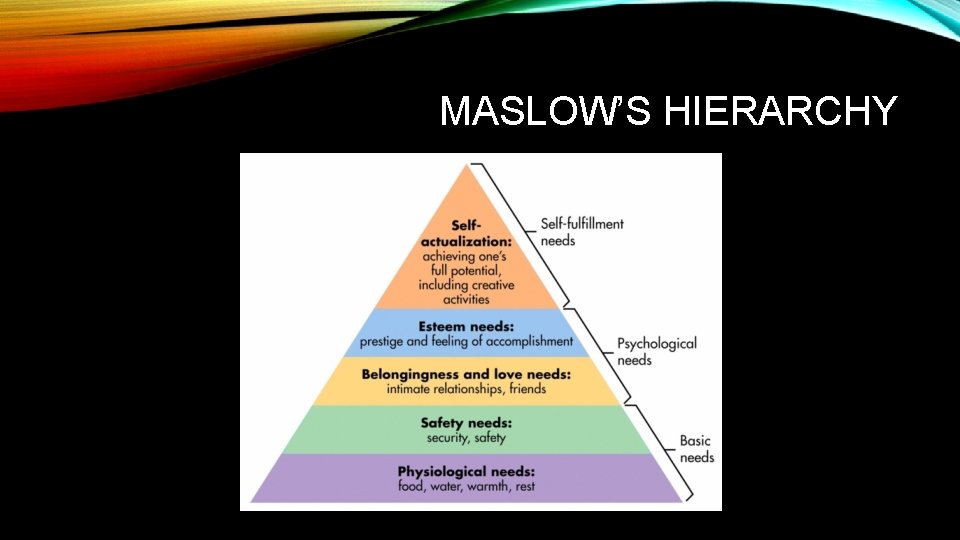
MASLOW’S HIERARCHY
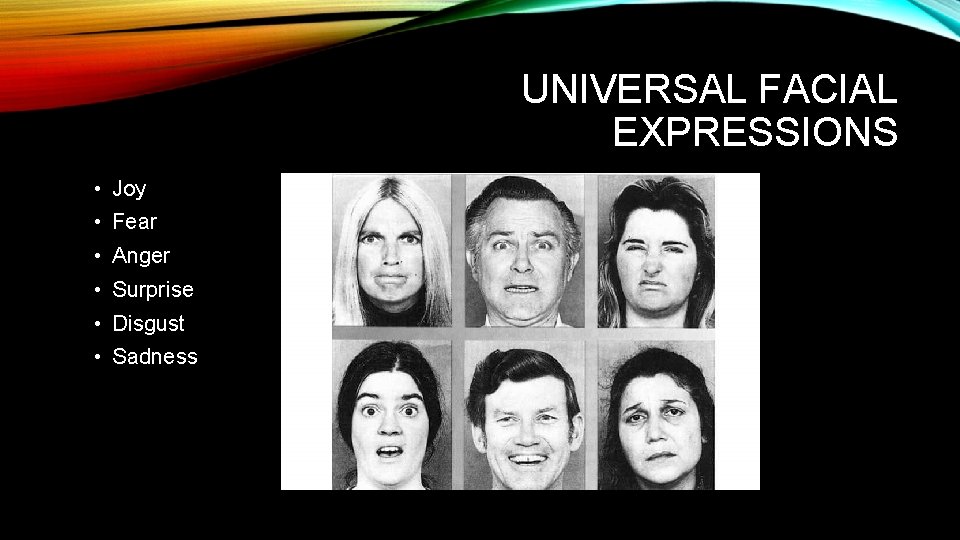
UNIVERSAL FACIAL EXPRESSIONS • Joy • Fear • Anger • Surprise • Disgust • Sadness
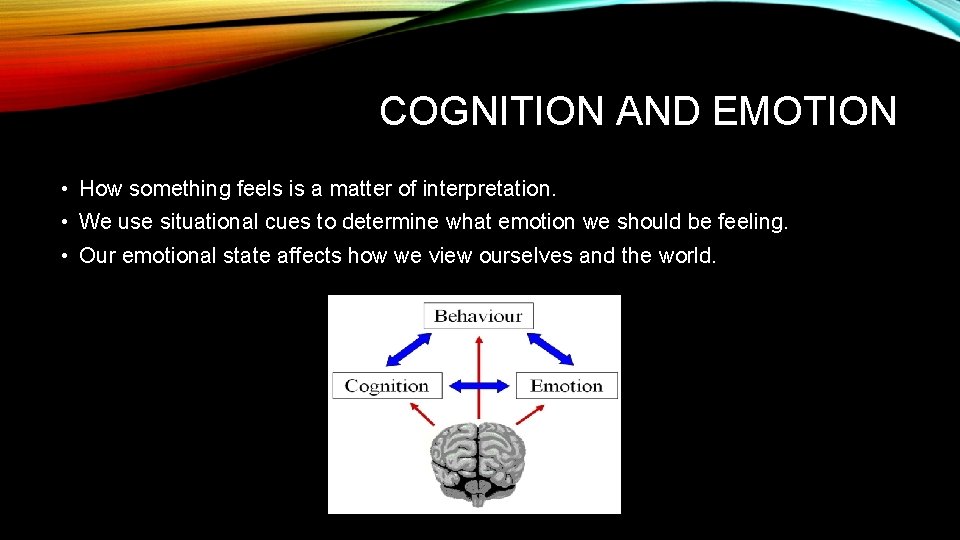
COGNITION AND EMOTION • How something feels is a matter of interpretation. • We use situational cues to determine what emotion we should be feeling. • Our emotional state affects how we view ourselves and the world.
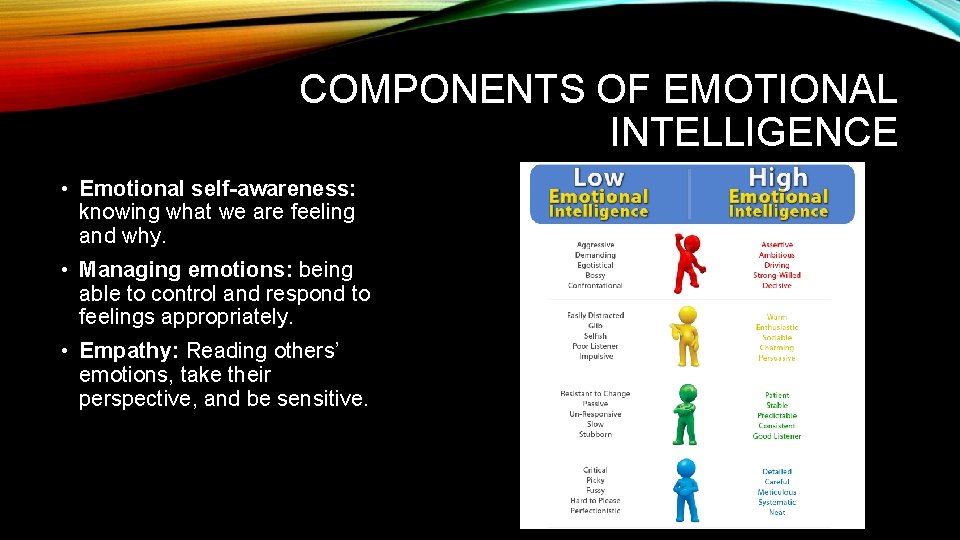
COMPONENTS OF EMOTIONAL INTELLIGENCE • Emotional self-awareness: knowing what we are feeling and why. • Managing emotions: being able to control and respond to feelings appropriately. • Empathy: Reading others’ emotions, take their perspective, and be sensitive.