
Ch 5 Enlightenment Section 2 Enlightenment Ideas Spread
- Slides: 9
Ch 5 Enlightenment Section 2: Enlightenment Ideas Spread Main Idea: Enlightenment ideas spread across Europe and prompted some rulers to make reforms Learning Targets: • What roles did censorship and salons play in the spread of new ideas? • How did philosophes influence enlighten despots? • How did the Enlightenment affects arts and literature? • Why were the lives of the majority unaffected?
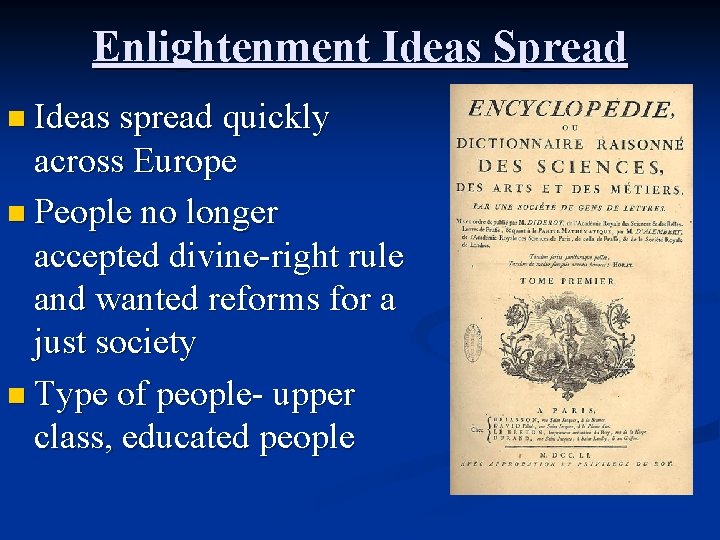
Enlightenment Ideas Spread n Ideas spread quickly across Europe n People no longer accepted divine-right rule and wanted reforms for a just society n Type of people- upper class, educated people
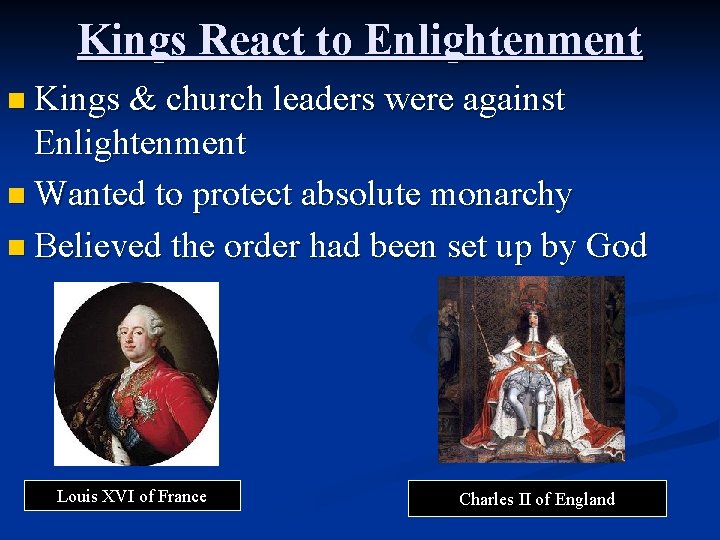
Kings React to Enlightenment n Kings & church leaders were against Enlightenment n Wanted to protect absolute monarchy n Believed the order had been set up by God Louis XVI of France Charles II of England
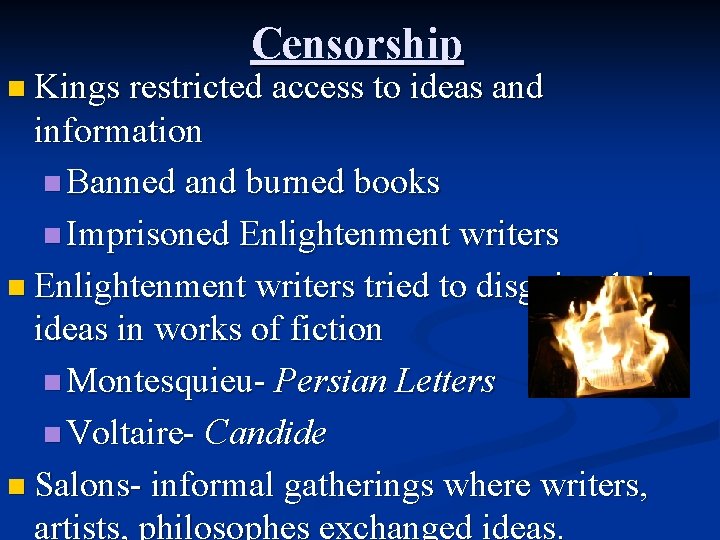
Censorship n Kings restricted access to ideas and information n Banned and burned books n Imprisoned Enlightenment writers n Enlightenment writers tried to disguise their ideas in works of fiction n Montesquieu- Persian Letters n Voltaire- Candide n Salons- informal gatherings where writers, artists, philosophes exchanged ideas.
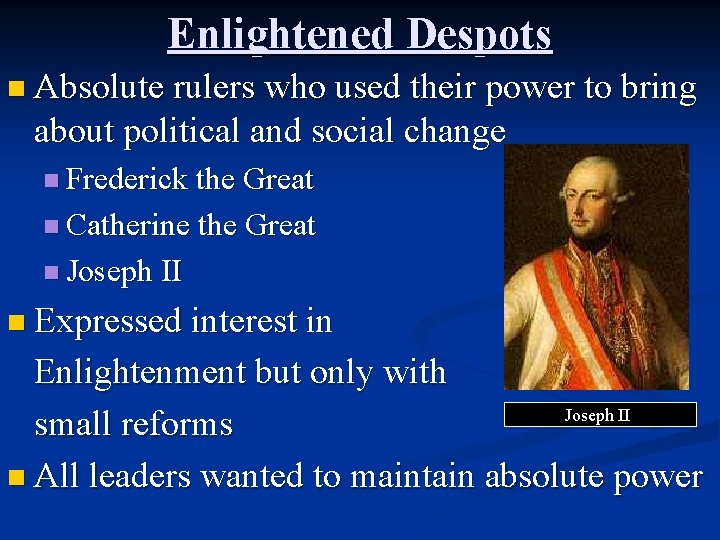
Enlightened Despots n Absolute rulers who used their power to bring about political and social change n Frederick the Great n Catherine the Great n Joseph II n Expressed interest in Enlightenment but only with Joseph II small reforms n All leaders wanted to maintain absolute power
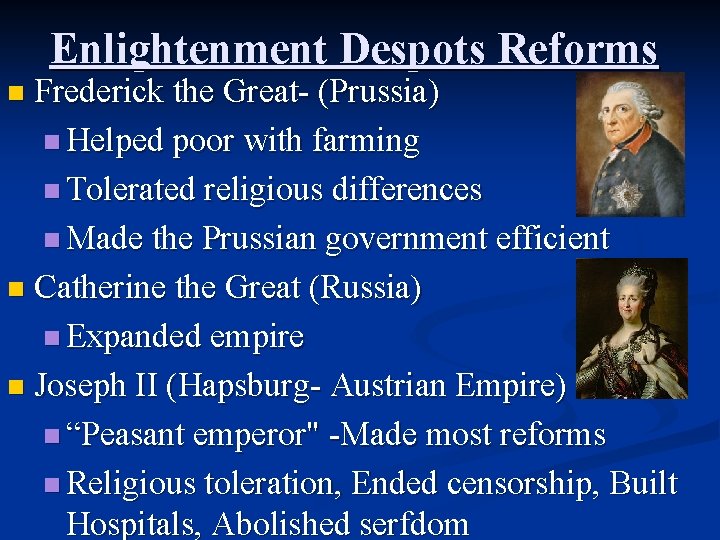
Enlightenment Despots Reforms Frederick the Great- (Prussia) n Helped poor with farming n Tolerated religious differences n Made the Prussian government efficient n Catherine the Great (Russia) n Expanded empire n Joseph II (Hapsburg- Austrian Empire) n “Peasant emperor" -Made most reforms n Religious toleration, Ended censorship, Built Hospitals, Abolished serfdom n
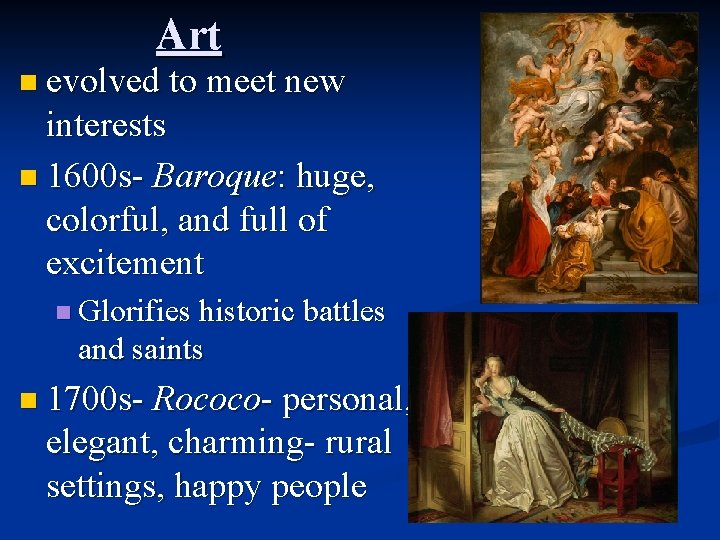
Art n evolved to meet new interests n 1600 s- Baroque: huge, colorful, and full of excitement n Glorifies historic battles and saints n 1700 s- Rococo- personal, elegant, charming- rural settings, happy people
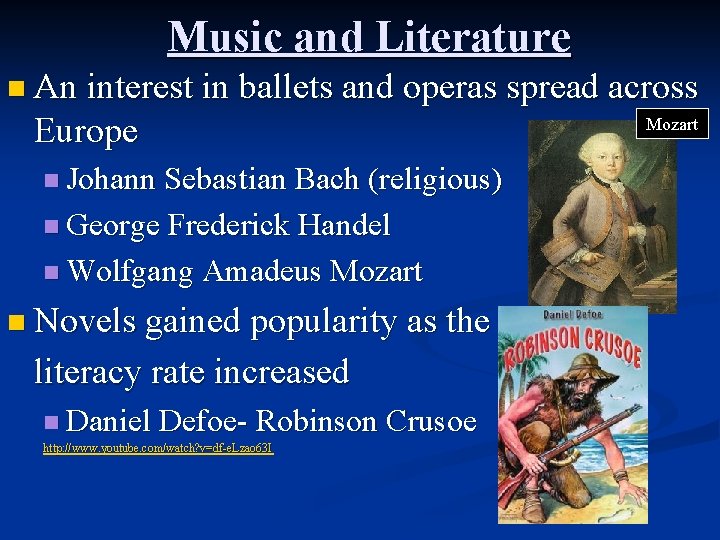
Music and Literature n An interest in ballets and operas spread across Europe n Johann Sebastian Bach (religious) n George Frederick Handel n Wolfgang Amadeus Mozart n Novels gained popularity as the literacy rate increased n Daniel Defoe- Robinson Crusoe http: //www. youtube. com/watch? v=df-e. Lzao 63 I Mozart
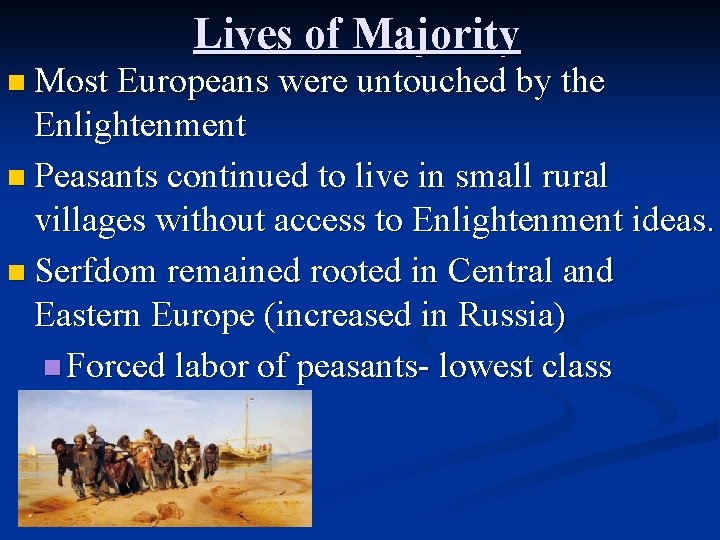
Lives of Majority n Most Europeans were untouched by the Enlightenment n Peasants continued to live in small rural villages without access to Enlightenment ideas. n Serfdom remained rooted in Central and Eastern Europe (increased in Russia) n Forced labor of peasants- lowest class