
Ch 5 2 Why is English Related to
- Slides: 39
Ch 5. 2 Why is English Related to Other Languages?
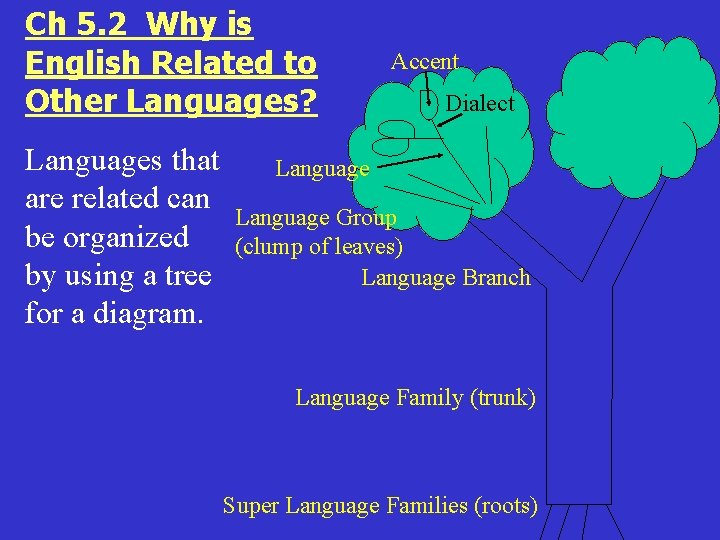
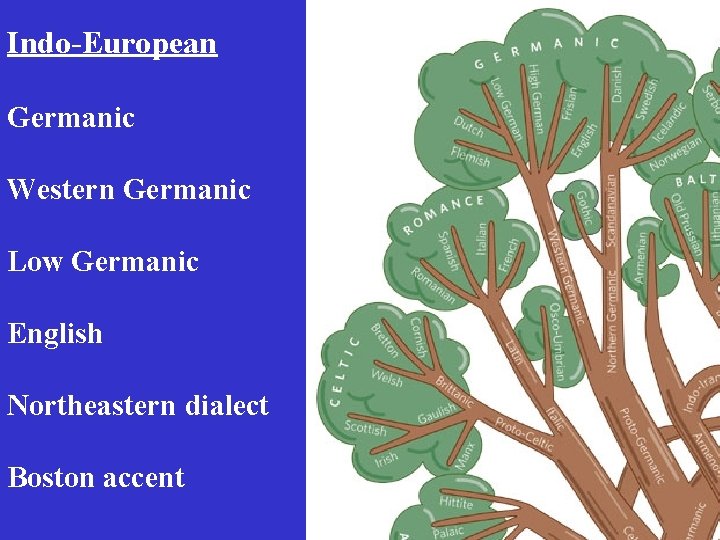
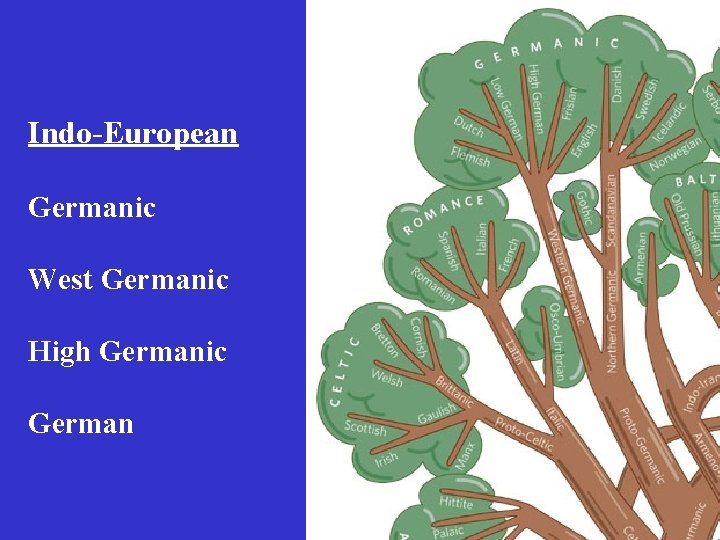
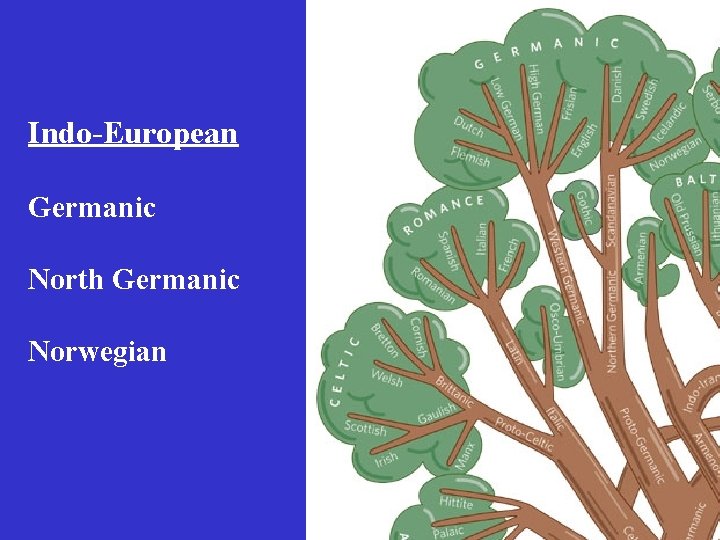
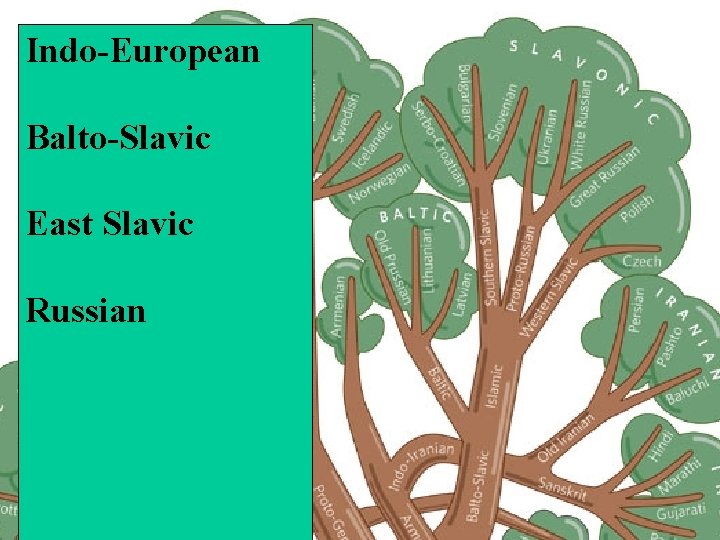
Ch 5. 2 Why is English Related to Other Languages? Languages that are related can be organized by using a tree for a diagram. Accent Dialect Language Group (clump of leaves) Language Branch Language Family (trunk) Super Language Families (roots)
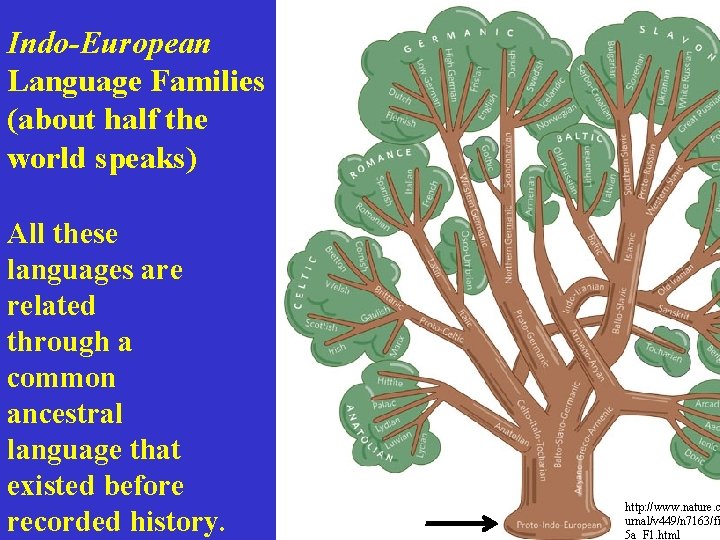
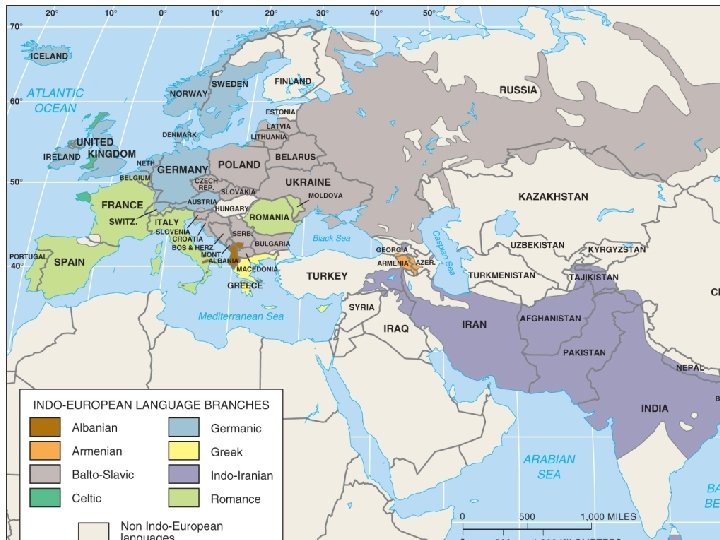
Indo-European Language Families (about half the world speaks) All these languages are related through a common ancestral language that existed before recorded history. http: //www. nature. c urnal/v 449/n 7163/fi 5 a_F 1. html
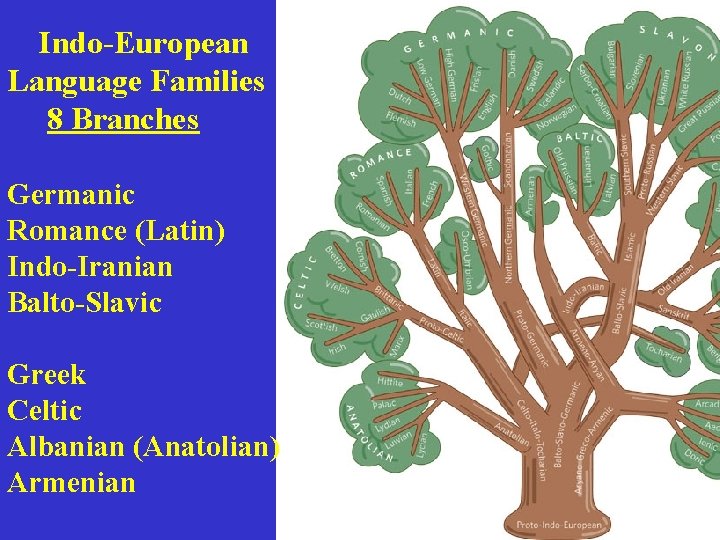
Indo-European Language Families 8 Branches Germanic Romance (Latin) Indo-Iranian Balto-Slavic Greek Celtic Albanian (Anatolian) Armenian
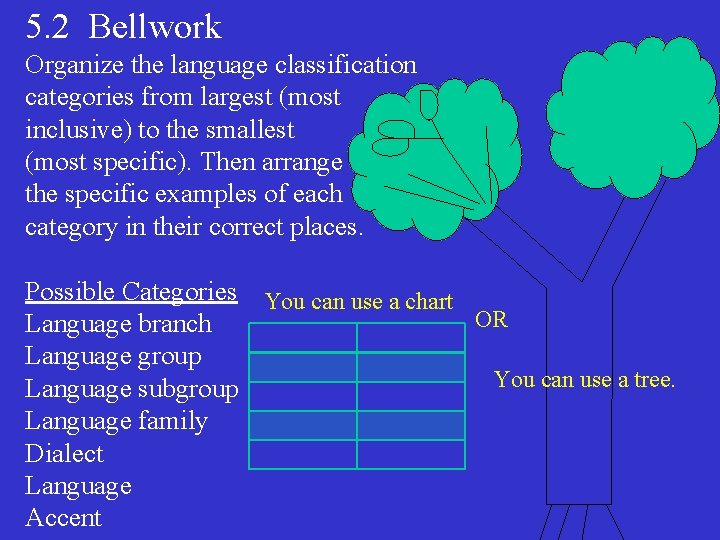
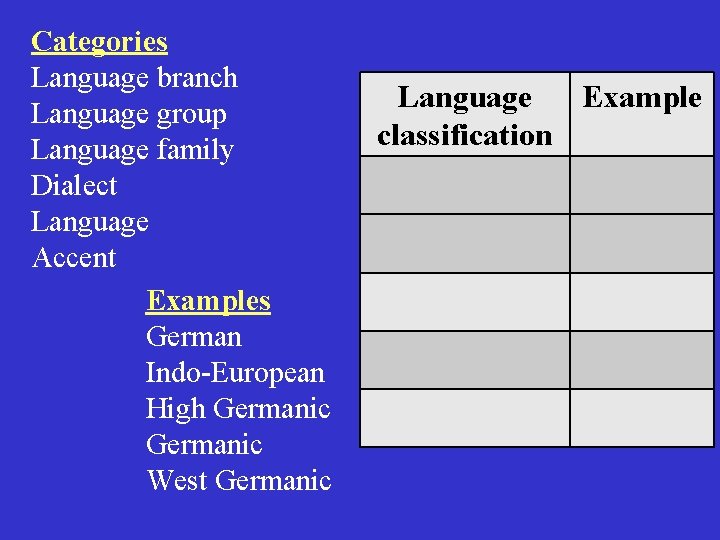
5. 2 Bellwork Organize the language classification categories from largest (most inclusive) to the smallest (most specific). Then arrange the specific examples of each category in their correct places. Possible Categories You can use a chart OR Language branch Language group You can use a tree. Language subgroup Language family Dialect Language Accent
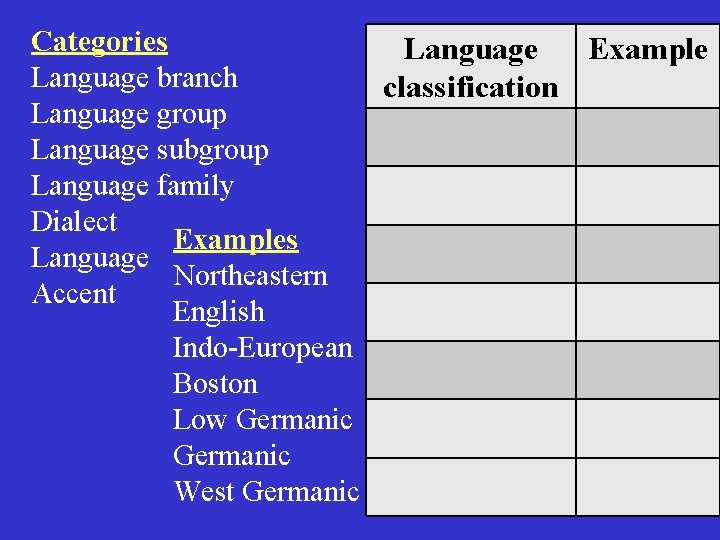
Categories Language Example Language branch classification Language group Language subgroup Language family Dialect Examples Language Northeastern Accent English Indo-European Boston Low Germanic West Germanic
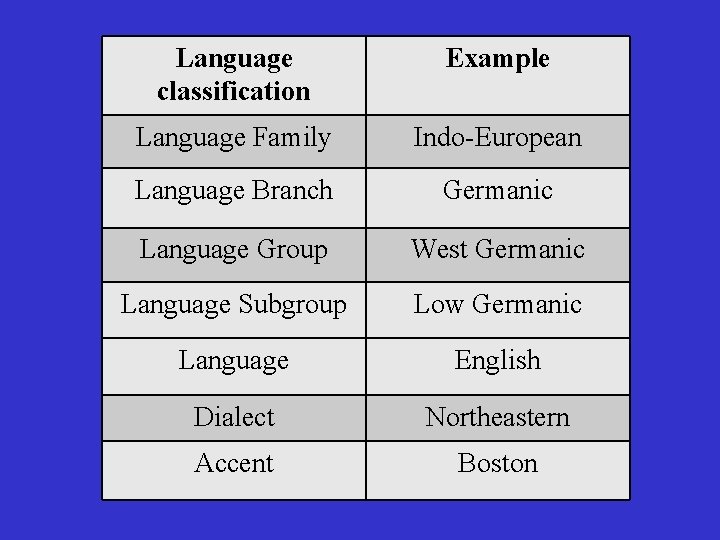
Language classification Example Language Family Indo-European Language Branch Germanic Language Group West Germanic Language Subgroup Low Germanic Language English Dialect Northeastern Accent Boston
Indo-European Germanic Western Germanic Low Germanic English Northeastern dialect Boston accent
Categories Language branch Language group Language family Dialect Language Accent Examples German Indo-European High Germanic West Germanic Language Example classification
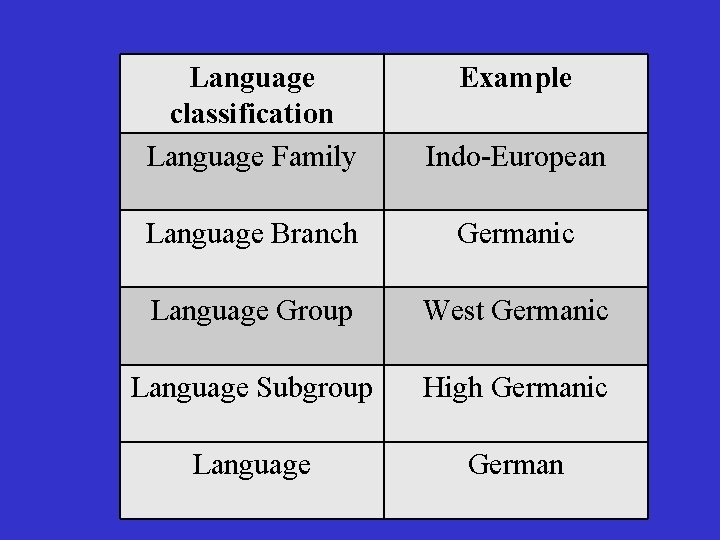
Language classification Language Family Example Indo-European Language Branch Germanic Language Group West Germanic Language Subgroup High Germanic Language German
Indo-European Germanic West Germanic High Germanic German
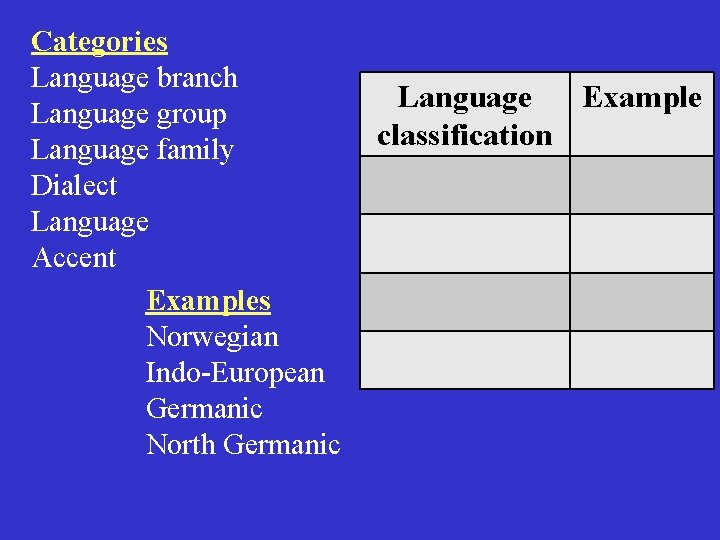
Categories Language branch Language group Language family Dialect Language Accent Examples Norwegian Indo-European Germanic North Germanic Language Example classification
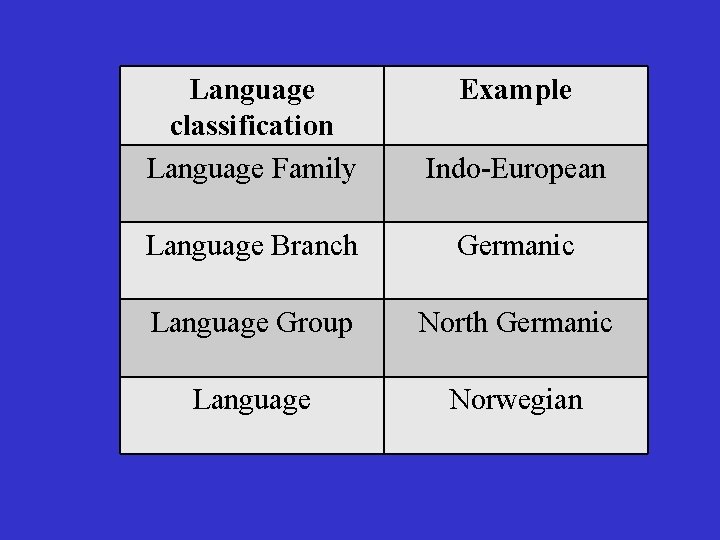
Language classification Language Family Example Indo-European Language Branch Germanic Language Group North Germanic Language Norwegian
Indo-European Germanic North Germanic Norwegian
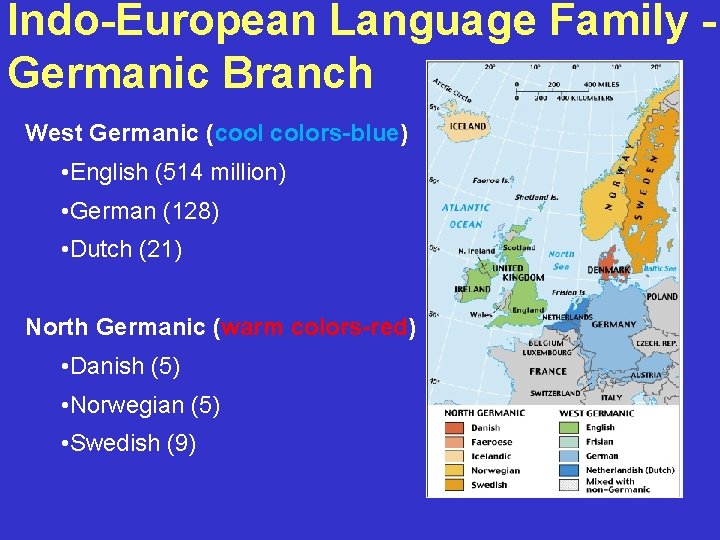
Indo-European Language Family Germanic Branch West Germanic (cool colors-blue) • English (514 million) • German (128) • Dutch (21) North Germanic (warm colors-red) • Danish (5) • Norwegian (5) • Swedish (9)
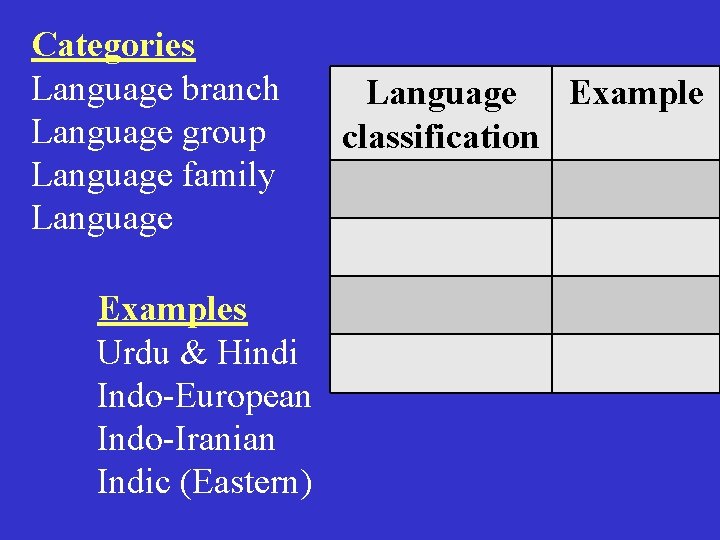
Categories Language branch Language group Language family Language Examples Urdu & Hindi Indo-European Indo-Iranian Indic (Eastern) Language Example classification
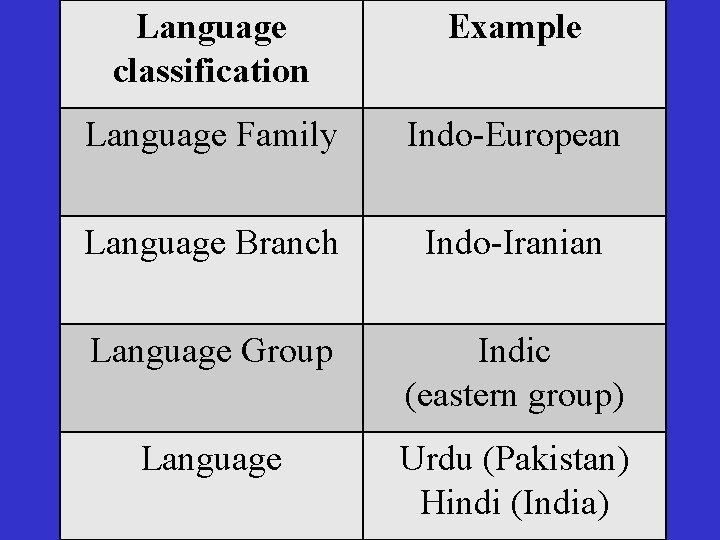
Language classification Example Language Family Indo-European Language Branch Indo-Iranian Language Group Indic (eastern group) Language Urdu (Pakistan) Hindi (India)
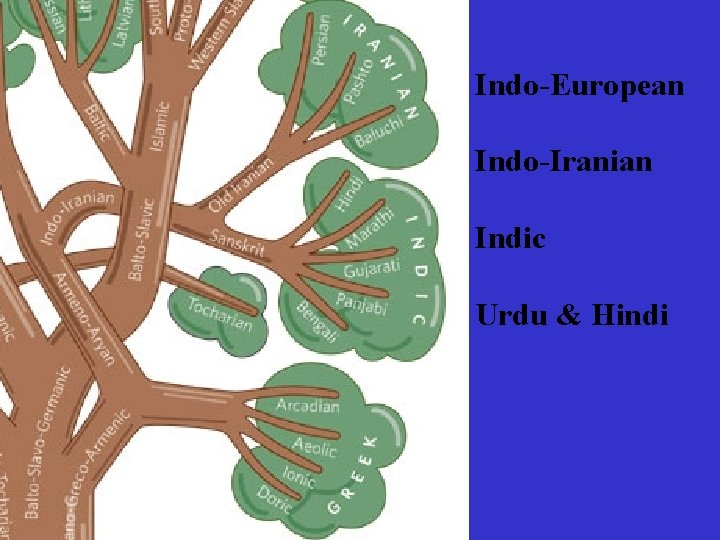
Indo-European Indo-Iranian Indic Urdu & Hindi
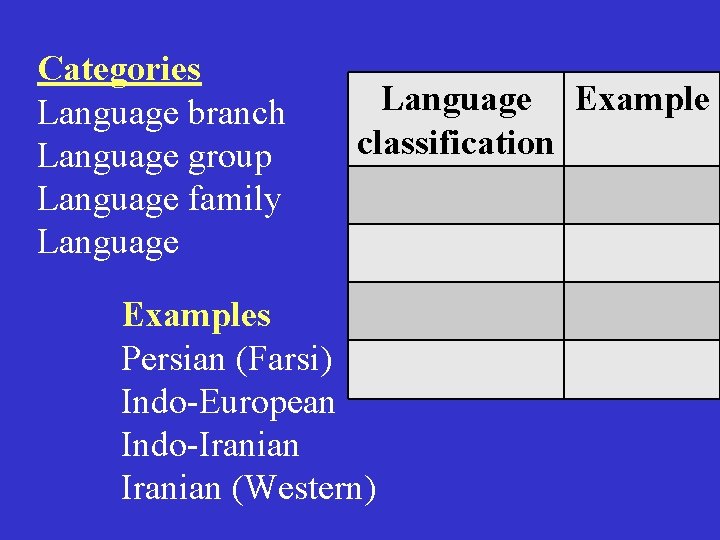
Categories Language branch Language group Language family Language Example classification Examples Persian (Farsi) Indo-European Indo-Iranian (Western)
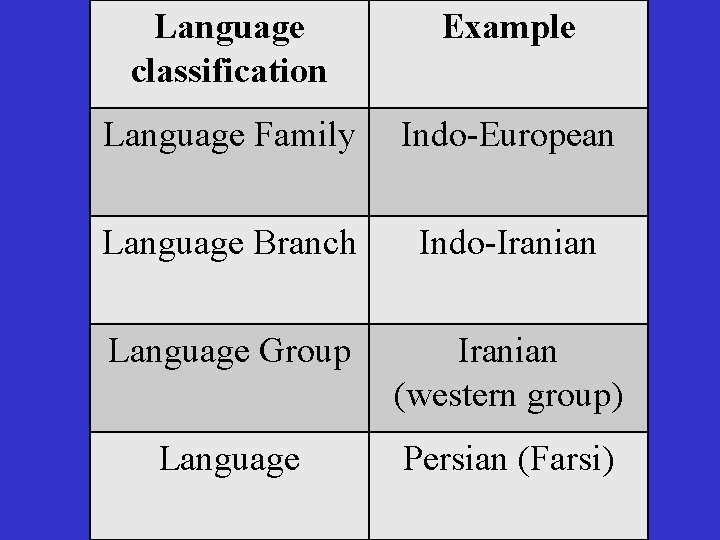
Language classification Example Language Family Indo-European Language Branch Indo-Iranian Language Group Iranian (western group) Language Persian (Farsi)
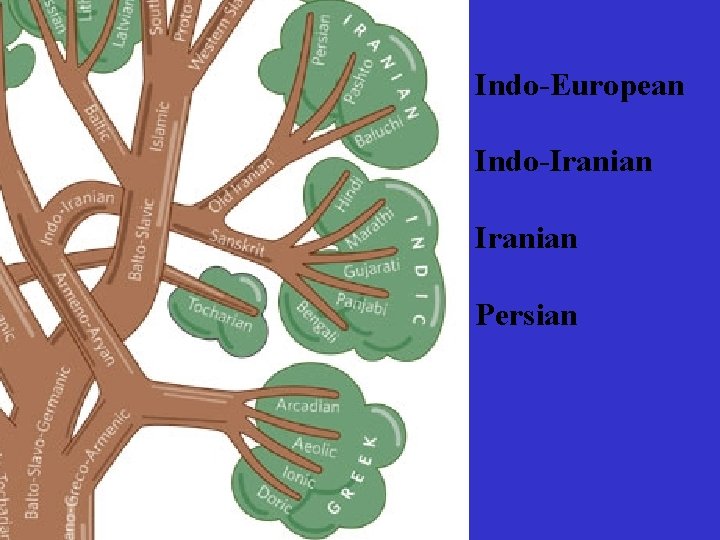
Indo-European Indo-Iranian Persian
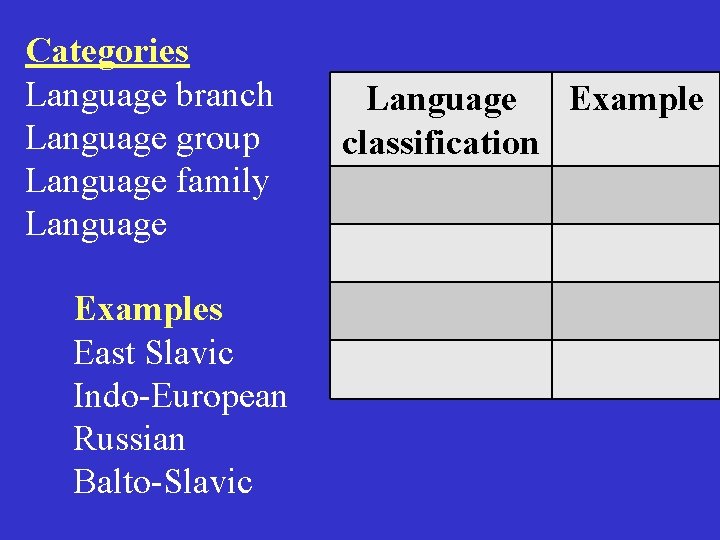
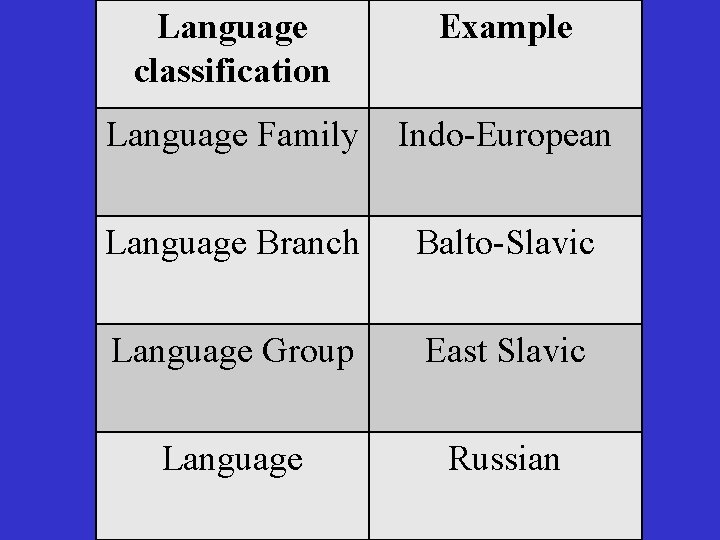
Categories Language branch Language group Language family Language Examples East Slavic Indo-European Russian Balto-Slavic Language Example classification
Language classification Example Language Family Indo-European Language Branch Balto-Slavic Language Group East Slavic Language Russian
Indo-European Balto-Slavic East Slavic Russian
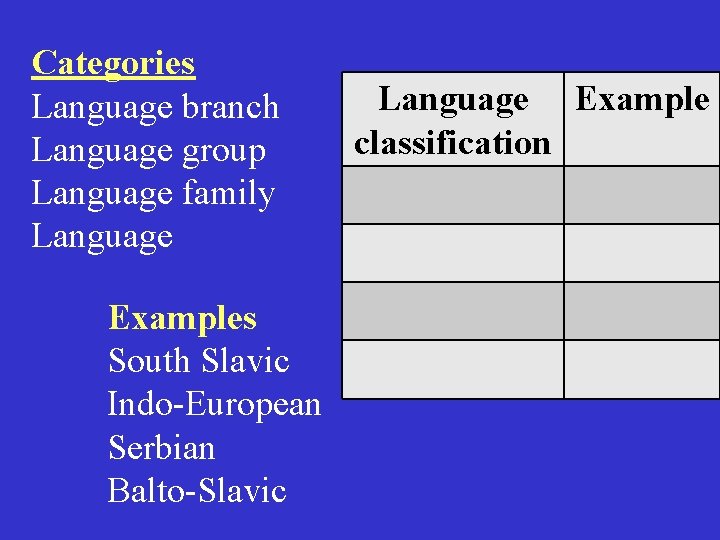
Categories Language branch Language group Language family Language Examples South Slavic Indo-European Serbian Balto-Slavic Language Example classification
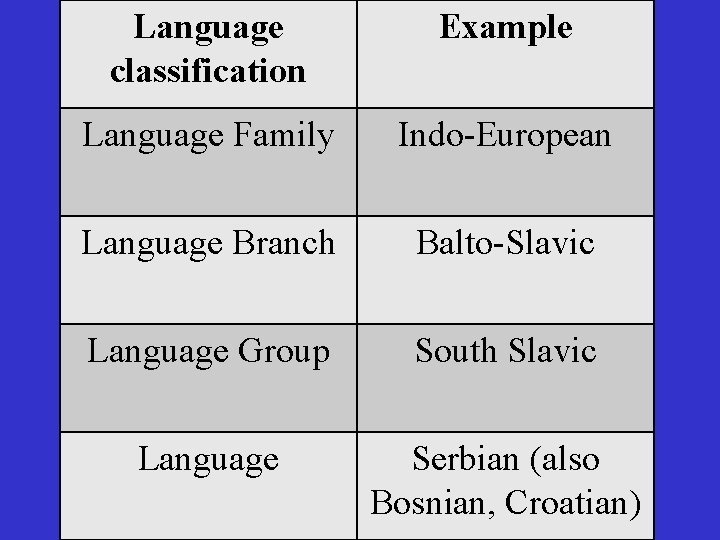
Language classification Example Language Family Indo-European Language Branch Balto-Slavic Language Group South Slavic Language Serbian (also Bosnian, Croatian)
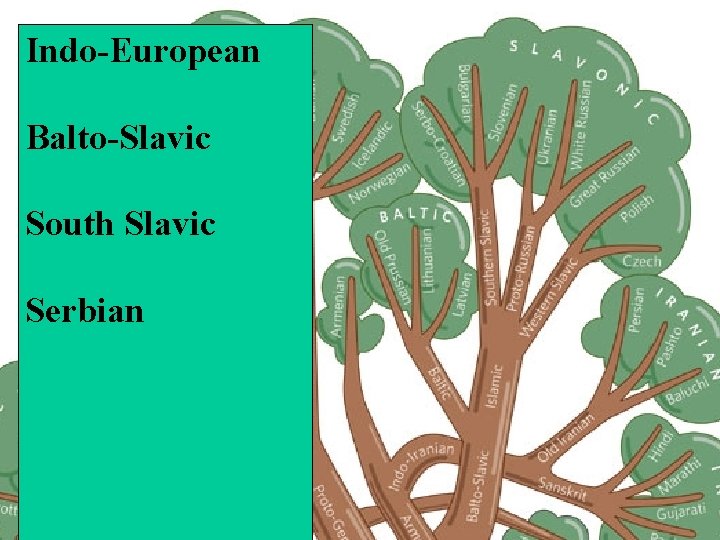
Indo-European Balto-Slavic South Slavic Serbian
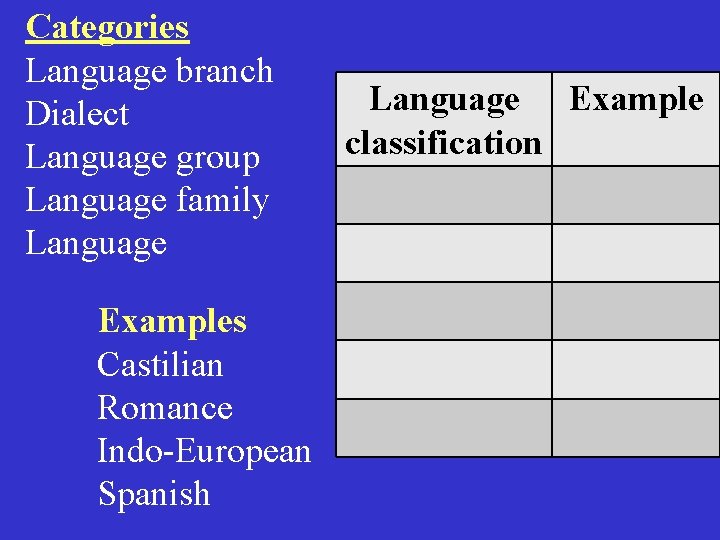
Categories Language branch Dialect Language group Language family Language Examples Castilian Romance Indo-European Spanish Language Example classification
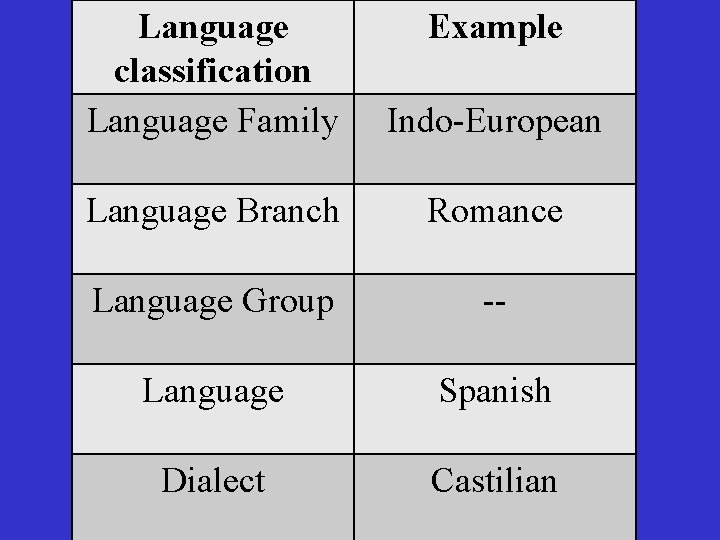
Language classification Language Family Example Indo-European Language Branch Romance Language Group -- Language Spanish Dialect Castilian
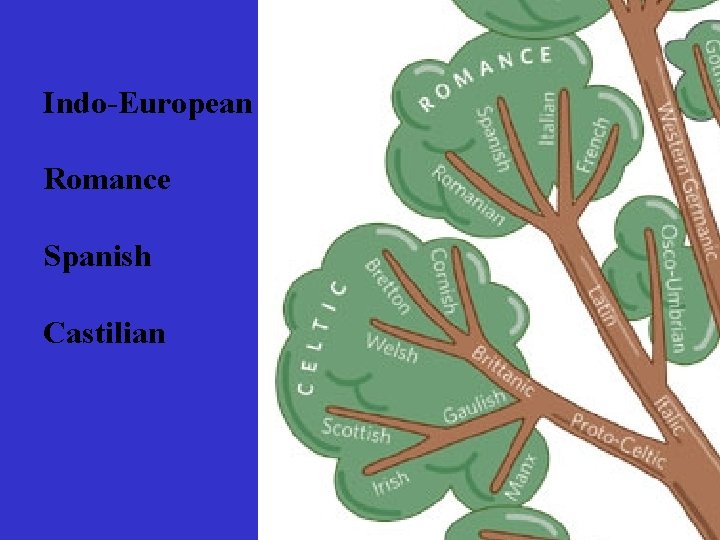
Indo-European Romance Spanish Castilian
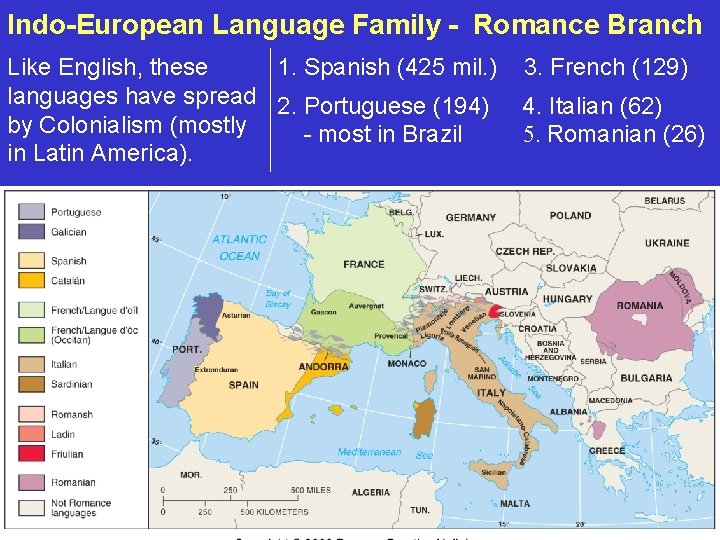
Indo-European Language Family - Romance Branch Like English, these 1. Spanish (425 mil. ) languages have spread 2. Portuguese (194) by Colonialism (mostly - most in Brazil in Latin America). 3. French (129) 4. Italian (62) 5. Romanian (26)
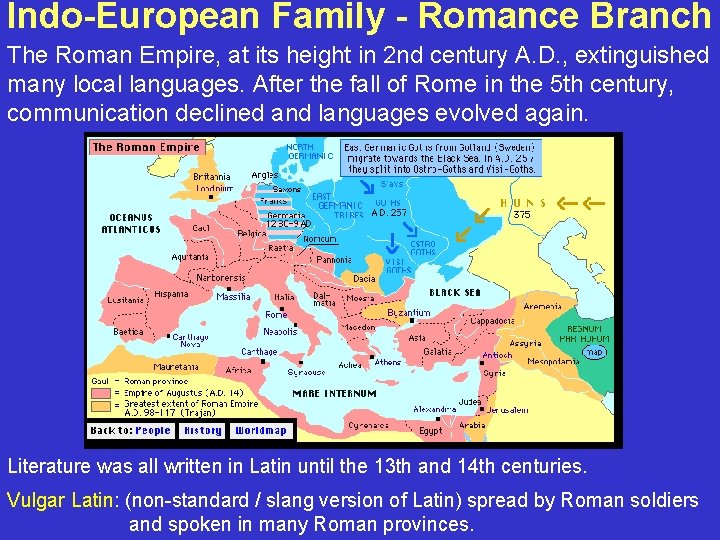
Indo-European Family - Romance Branch The Roman Empire, at its height in 2 nd century A. D. , extinguished many local languages. After the fall of Rome in the 5 th century, communication declined and languages evolved again. Literature was all written in Latin until the 13 th and 14 th centuries. Vulgar Latin: (non-standard / slang version of Latin) spread by Roman soldiers and spoken in many Roman provinces.
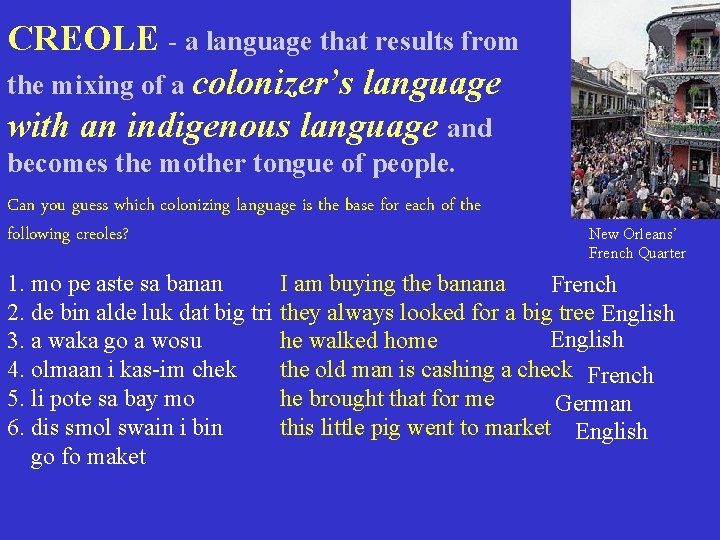
CREOLE - a language that results from the mixing of a colonizer’s language with an indigenous language and becomes the mother tongue of people. Can you guess which colonizing language is the base for each of the following creoles? 1. mo pe aste sa banan 2. de bin alde luk dat big tri 3. a waka go a wosu 4. olmaan i kas-im chek 5. li pote sa bay mo 6. dis smol swain i bin go fo maket New Orleans’ French Quarter I am buying the banana French they always looked for a big tree English he walked home the old man is cashing a check French he brought that for me German this little pig went to market English
Origin and Diffusion of Indo-European Languages 1. It can not be proven that there was a single ancestor to the Indo-European language family but there is evidence that a Proto-Indo-European language did exist. 2. Evidence is found in similar words in different languages such as oak, bear, deer, and pheasant and other words that could have been a part of daily life. 3. Indo-European languages share similar words for winter and snow, but not for ocean. Linguists believe that the Proto-Indo-European language came from a cold climate that did not have contact with the ocean.
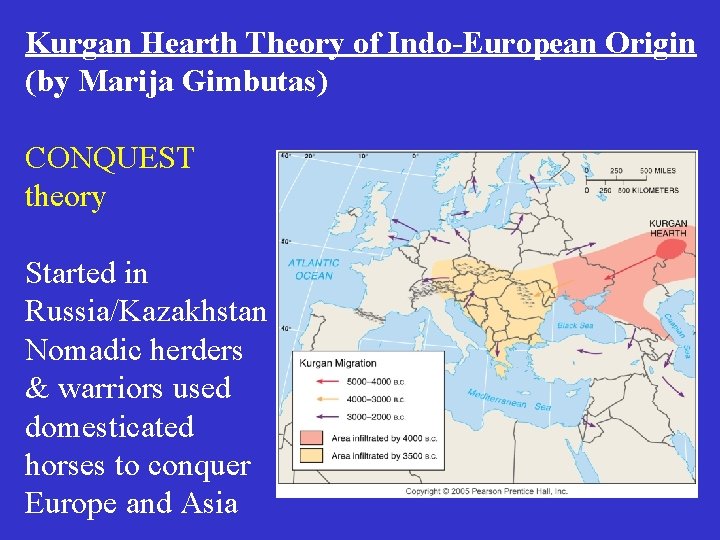
Kurgan Hearth Theory of Indo-European Origin (by Marija Gimbutas) CONQUEST theory Started in Russia/Kazakhstan Nomadic herders & warriors used domesticated horses to conquer Europe and Asia
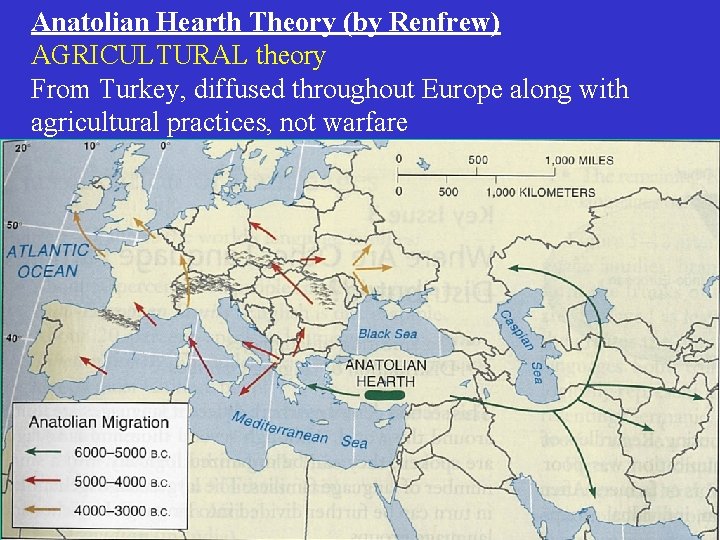
Anatolian Hearth Theory (by Renfrew) AGRICULTURAL theory From Turkey, diffused throughout Europe along with agricultural practices, not warfare
Origin and Diffusion of Indo. European Language Theories Because language groups were isolated, distinct languages developed.