
Ch 5 1 Cell Cycle and Cancer Cells
- Slides: 12
Ch. 5. 1 - Cell Cycle and Cancer Cells
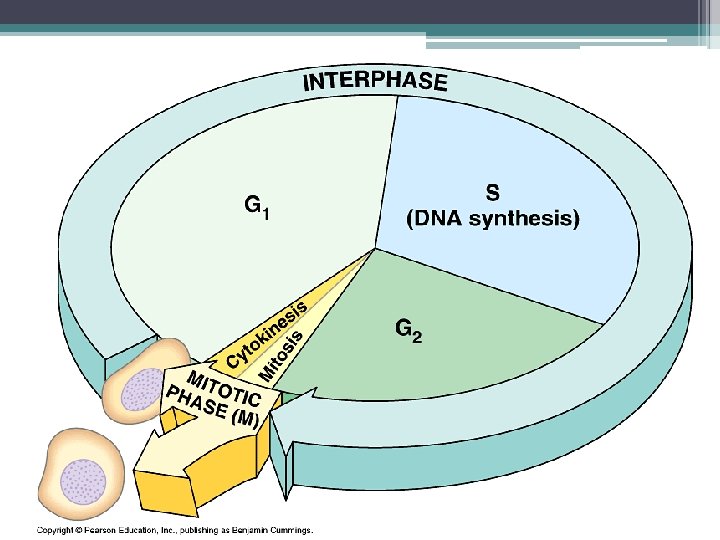
Stages of the cell cycle • 4 stages ▫ ▫ Gap 1 (G 1) Synthesis Gap 2 (G 2) Mitosis • A cell won’t proceed through the cycle until it’s ready ▫ Prevents errors (cancer)
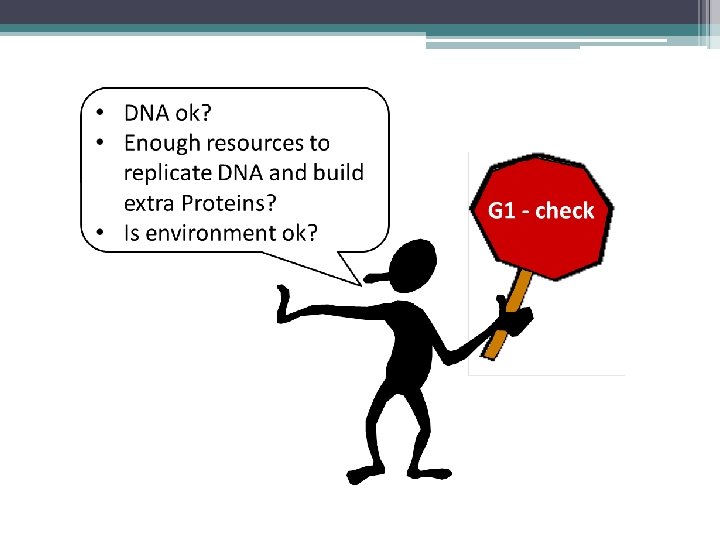
Gap 1 (G 1) • First stage of cell cycle • Cell carries out its normal function ▫ Skeletal cells contracts to move joints ▫ Adrenal cells secrete hormones ▫ Intestinal cells absorb nutrients, etc. • Cells increase in size & organelles increase in number • Cells must pass critical checkpoint before proceeding to DNA synthesis
Synthesis (S) • • Second stage Synthesis=“combining of parts to make a whole” Cell makes a copy of its nuclear DNA Contains 2 complete sets of DNA by end of the S stage
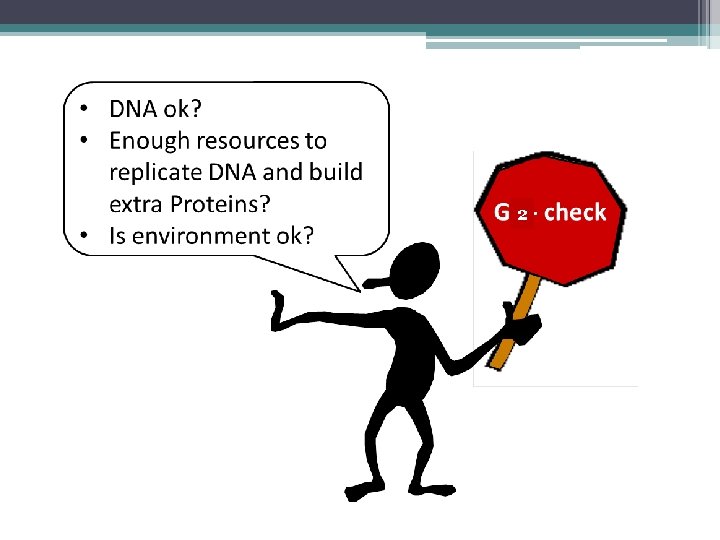
Gap 2 (G 2) • • Third stage Continues to carry out normal functions Additional growth occurs Another critical checkpoint to ensure adequate cell size and that DNA is undamaged.
2
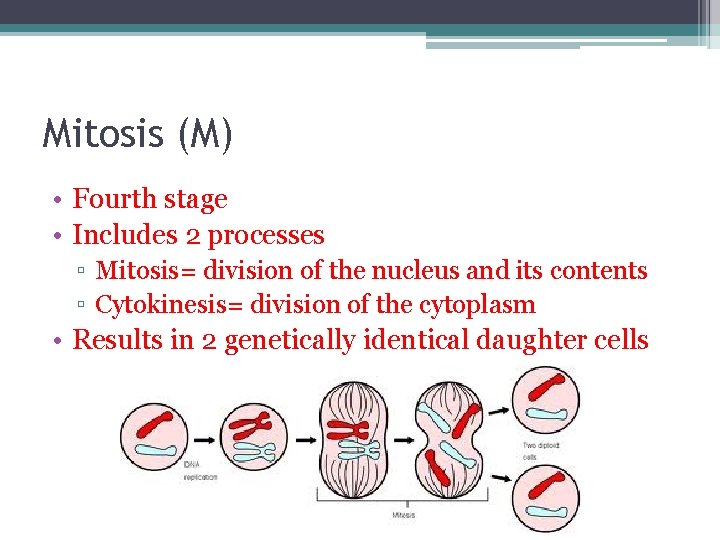
Mitosis (M) • Fourth stage • Includes 2 processes ▫ Mitosis= division of the nucleus and its contents ▫ Cytokinesis= division of the cytoplasm • Results in 2 genetically identical daughter cells
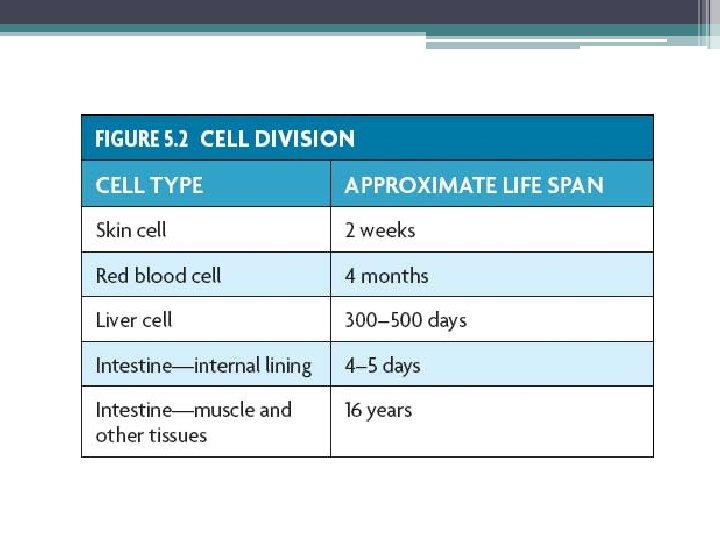
Cells divide at different rates • Aligned to your body’s need for those cells • In human cells: S, G 2, and M stages together take about 12 hours • Cell division is greater in children than adults ▫ Their cell cycles are also shorter • Certain cells, such as neurons and lymphocytes, divide rarely ▫ Usually in G 0 stage
Exit Slip • Ch. 5. 1 assessment pg. 137 ▫ # 1, 2, 3, 5, & 6 ▫ MUST BE IN COMPLETE SENTENCES AND YOUR OWN WORK!