
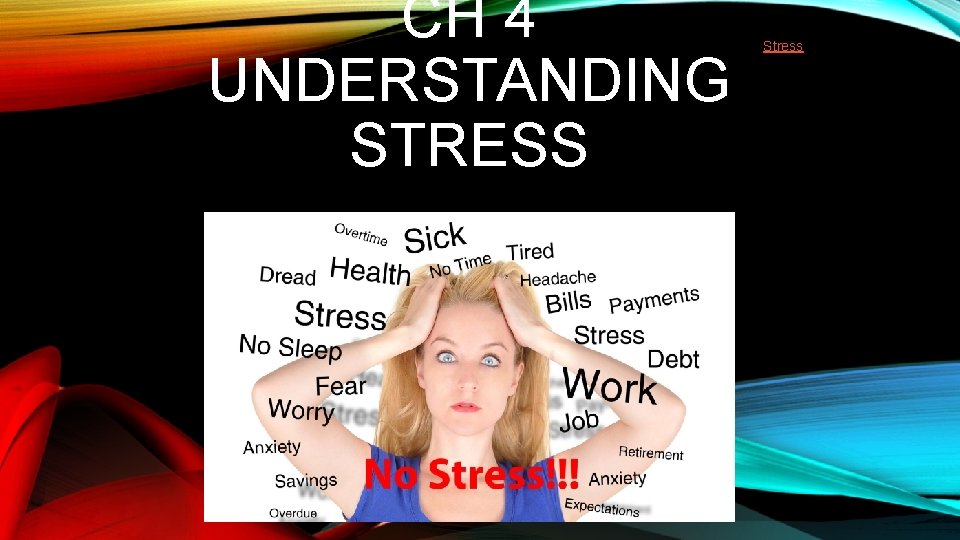
CH 4 UNDERSTANDING STRESS Stress WHAT IS STRESS

- Slides: 26
CH 4 UNDERSTANDING STRESS Stress
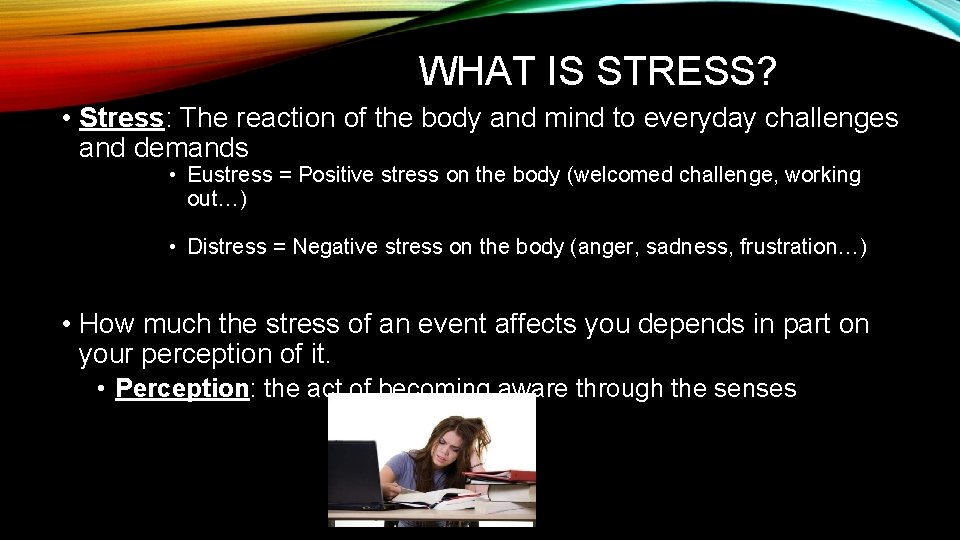
WHAT IS STRESS? • Stress: The reaction of the body and mind to everyday challenges and demands • Eustress = Positive stress on the body (welcomed challenge, working out…) • Distress = Negative stress on the body (anger, sadness, frustration…) • How much the stress of an event affects you depends in part on your perception of it. • Perception: the act of becoming aware through the senses
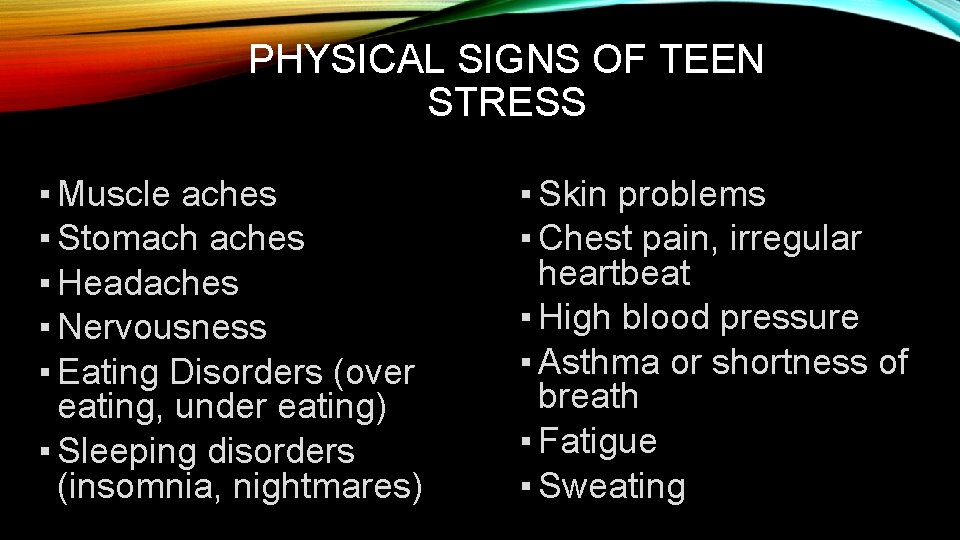
PHYSICAL SIGNS OF TEEN STRESS ▪ Muscle aches ▪ Stomach aches ▪ Headaches ▪ Nervousness ▪ Eating Disorders (over eating, under eating) ▪ Sleeping disorders (insomnia, nightmares) ▪ Skin problems ▪ Chest pain, irregular heartbeat ▪ High blood pressure ▪ Asthma or shortness of breath ▪ Fatigue ▪ Sweating
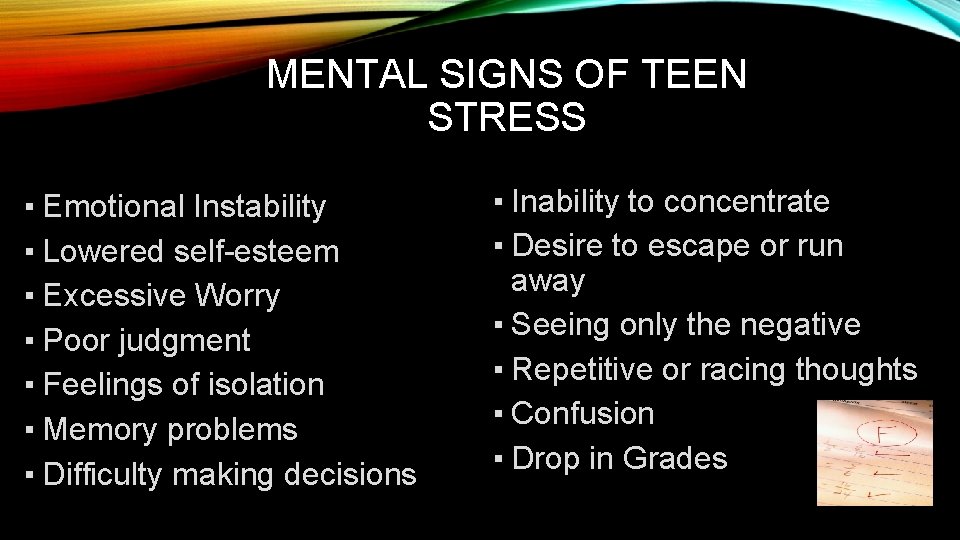
MENTAL SIGNS OF TEEN STRESS ▪ Emotional Instability ▪ Lowered self-esteem ▪ Excessive Worry ▪ Poor judgment ▪ Feelings of isolation ▪ Memory problems ▪ Difficulty making decisions ▪ Inability to concentrate ▪ Desire to escape or run away ▪ Seeing only the negative ▪ Repetitive or racing thoughts ▪ Confusion ▪ Drop in Grades
EMOTIONAL SIGNS OF TEEN STRESS ▪ Moody and hypersensitive ▪ Restlessness and anxiety ▪ Depression ▪ Anger and resentment ▪ Easily irritated and “on edge” ▪ Sense of being overwhelmed ▪ Lack of confidence ▪ Urge to laugh or cry at inappropriate times
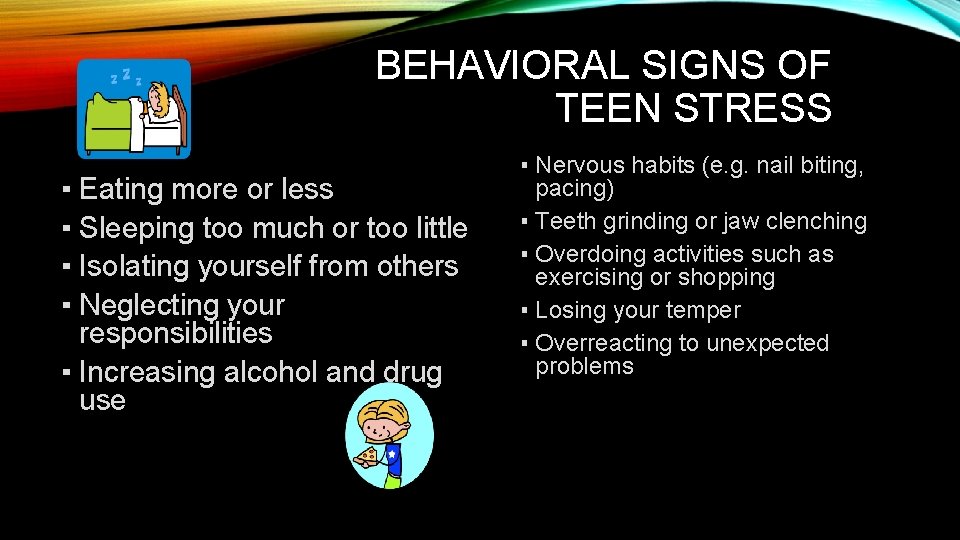
BEHAVIORAL SIGNS OF TEEN STRESS ▪ Eating more or less ▪ Sleeping too much or too little ▪ Isolating yourself from others ▪ Neglecting your responsibilities ▪ Increasing alcohol and drug use ▪ Nervous habits (e. g. nail biting, pacing) ▪ Teeth grinding or jaw clenching ▪ Overdoing activities such as exercising or shopping ▪ Losing your temper ▪ Overreacting to unexpected problems
REACTING TO STRESS • Positive Stress can motivate you • Examples? ? ? • Negative Stress can harm your health: It can interfere with your ability to perform • Examples? ? ? • Can stress make you sick?
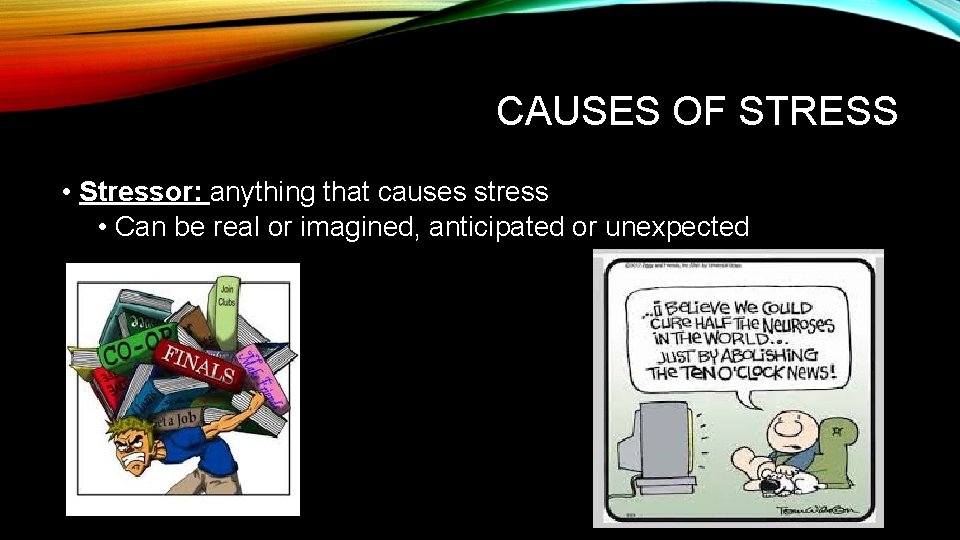
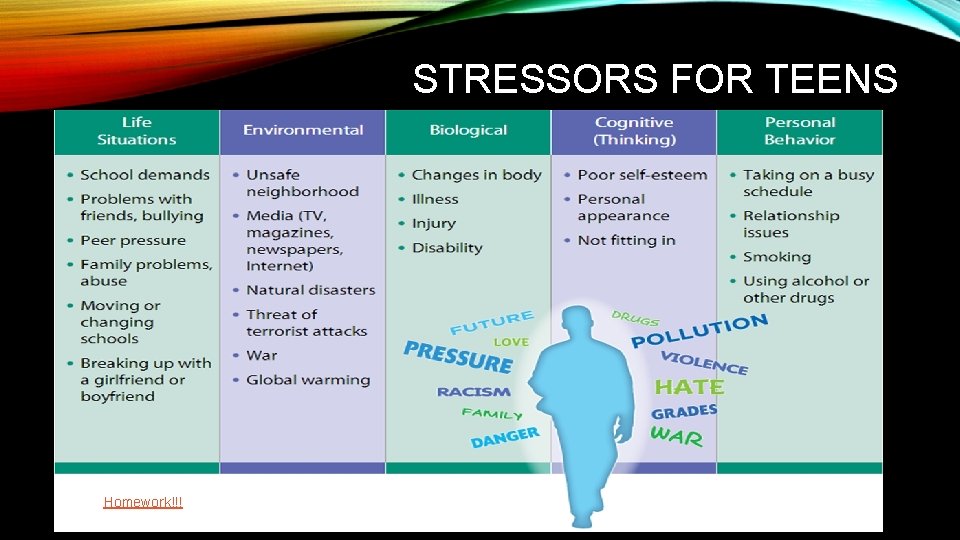
CAUSES OF STRESS • Stressor: anything that causes stress • Can be real or imagined, anticipated or unexpected
STRESSORS FOR TEENS Homework!!!
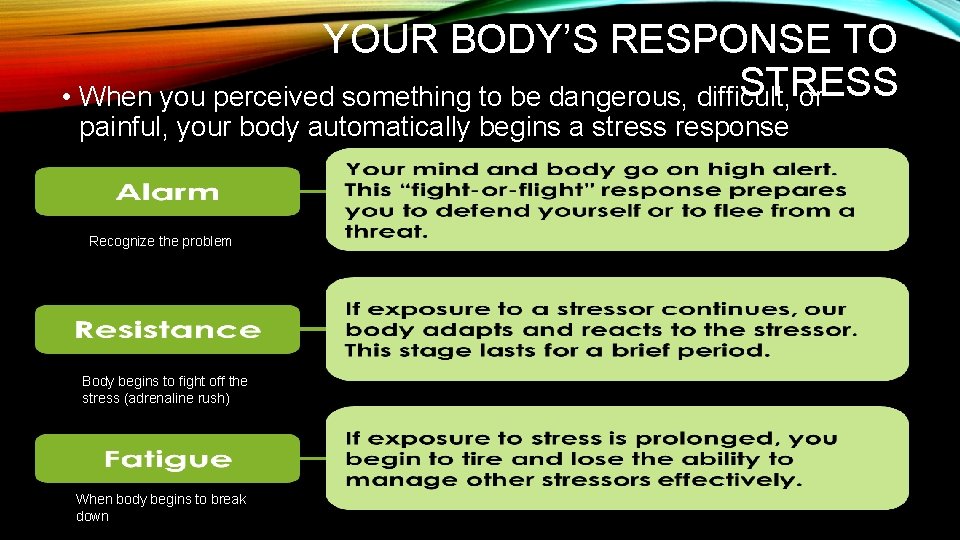
YOUR BODY’S RESPONSE TO STRESS • When you perceived something to be dangerous, difficult, or painful, your body automatically begins a stress response Recognize the problem Body begins to fight off the stress (adrenaline rush) When body begins to break down
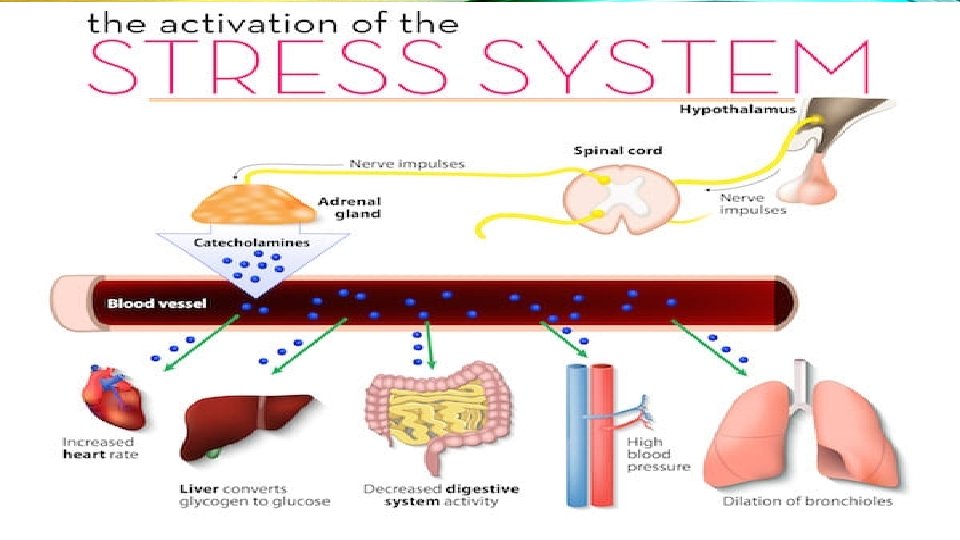
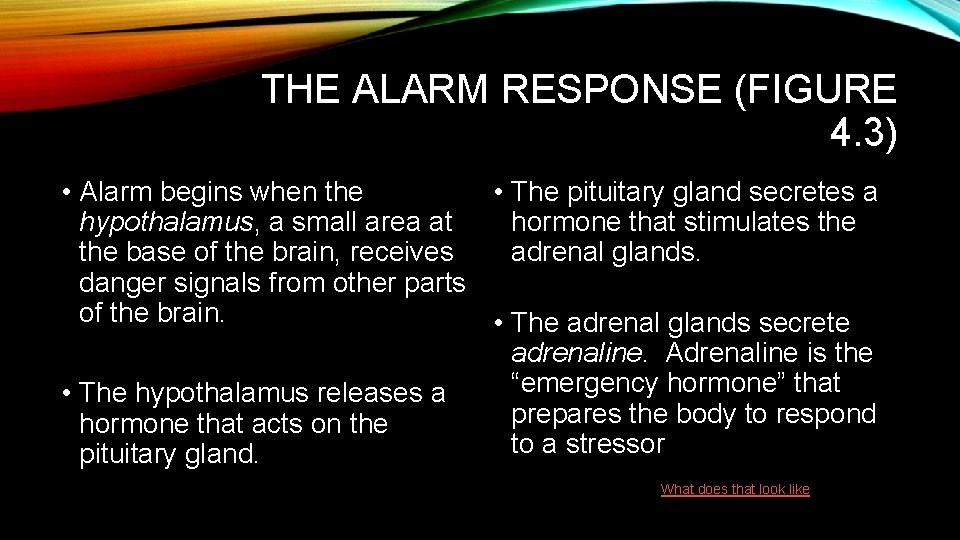
THE ALARM RESPONSE (FIGURE 4. 3) • Alarm begins when the • The pituitary gland secretes a hypothalamus, a small area at hormone that stimulates the base of the brain, receives adrenal glands. danger signals from other parts of the brain. • The adrenal glands secrete adrenaline. Adrenaline is the “emergency hormone” that • The hypothalamus releases a prepares the body to respond hormone that acts on the to a stressor pituitary gland. What does that look like
THE ALARM RESPONSE (FIGURE 4. 3) Physical symptoms of a stress response include: • • • Dilated pupils Increase in perspiration Faster heart rate and pulse Rise in blood pressure Faster respiration rate
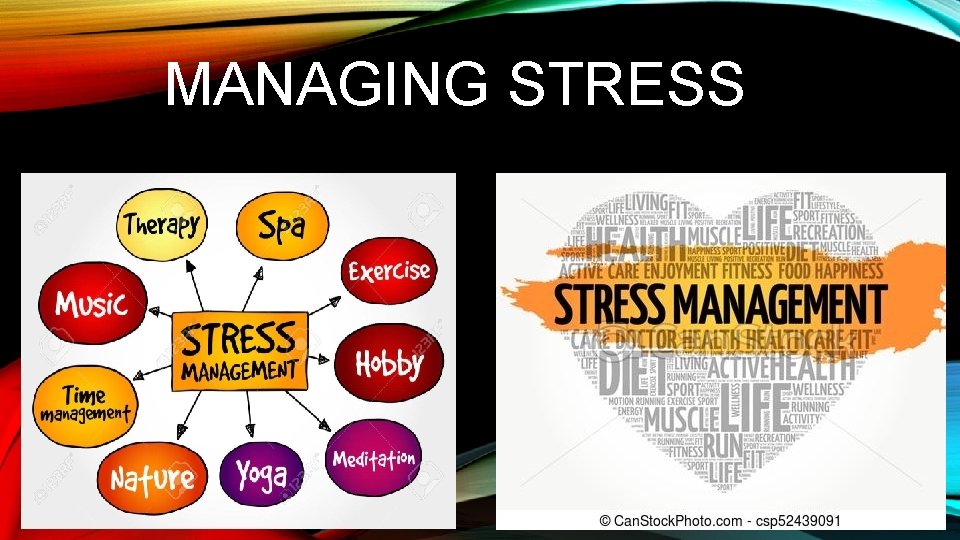
MANAGING STRESS
Unhealthy Ways to deal with stress -Denial - Put Blame on others - Selective Forgetting - Withdrawal – Avoiding people and social situations Tips to manage stress https: //www. youtube. com/watch? v=ENqcr. Qa 5 jno
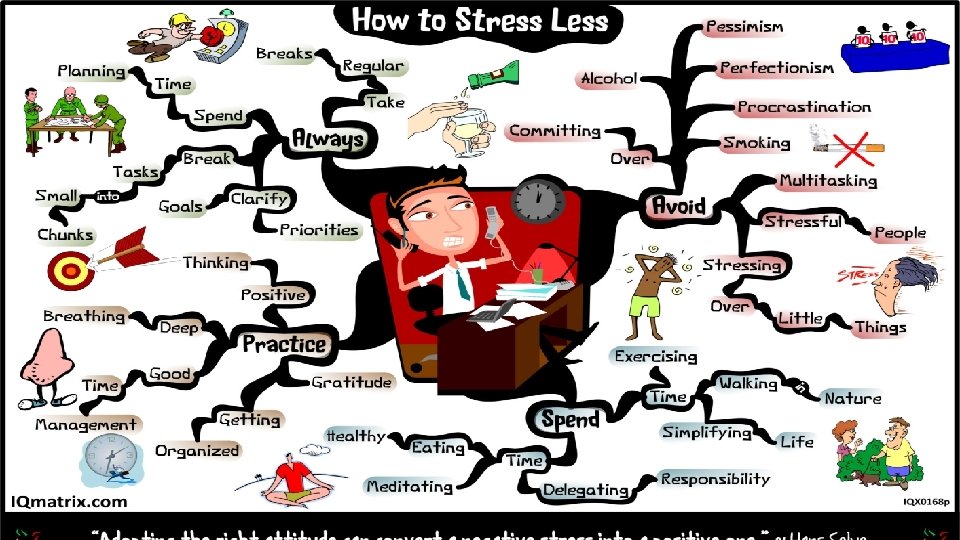
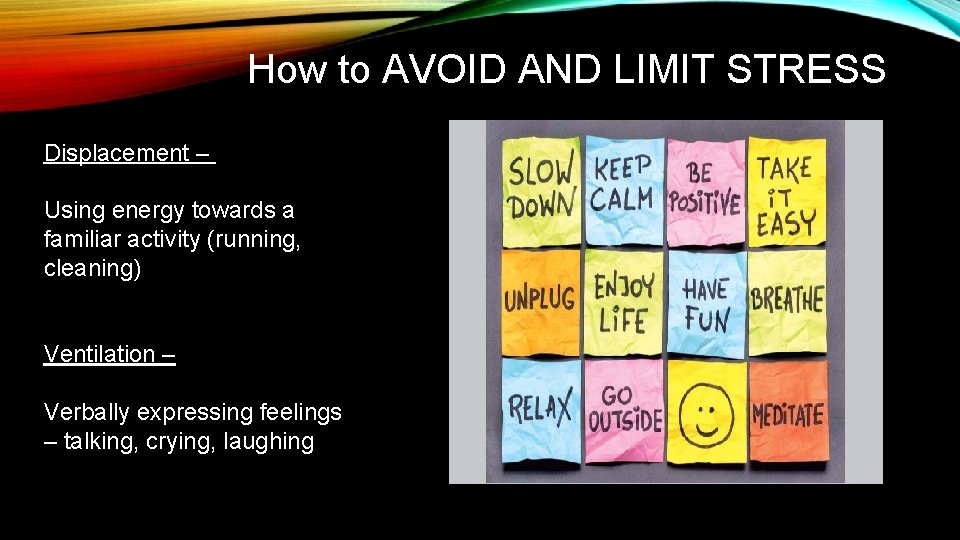
How to AVOID AND LIMIT STRESS Displacement – Using energy towards a familiar activity (running, cleaning) Ventilation – Verbally expressing feelings – talking, crying, laughing
Relaxation Techniques Bio-feedback - Monitor body measurements to help relaxation Progressive Muscle Relaxation - Tightening and relaxing of muscles throughout the body Exercise - Releases endorphins in the brain Time Management - Organize your tasks, check lists, and scheduling time to complete tasks Visualization - Think of positive thoughts, imagine completing a skill/task, and being in a relaxing place.
HOW CAN I CHANGE MY LIFESTYLE HABITS TO MANAGE STRESS BETTER? ▪ Get enough sleep ▪ Connect with others: Develop a support system ▪ Exercise regularly ▪ Eat a balanced, nutritious diet ▪ Reduce caffeine and sugar ▪ Don’t self-medicate with alcohol or drugs ▪ Do something for yourself everyday
HOW CAN I CHANGE MY THINKING AND EMOTIONAL RESPONSES TO HANDLE STRESS BETTER? ▪ Have realistic expectations ▪ Reframe problems ▪ Maintain your sense of humor ▪ Express your feelings instead of bottling them up ▪ Don’t try to control events or other people ▪ Ask yourself “Is this my problem? ”
HOW CAN I MEET THE CHALLENGES OF STRESSFUL SITUATIONS? ▪Manage time ▪Schedule time for both work and recreation ▪ Give priority to the most important tasks and do those first ▪Delegate tasks and break up big projects
STEPS TO RELAXATION/ DEEP BREATHING To relax at will… 1) Assume a comfortable sitting position. 2) When ready, close your eyes. 3) Be aware of breathing/ breathe in deeply, hold the breath, then breathe out. Breathe through your nose. 4) Allow each muscle to relax deeply, one after another. 5) Maintain a passive attitude. Permit relaxation to occur at its own pace. Allow thoughts to pass through without resistance.