
Ch 4 Project Organization Organize to form into
- Slides: 30
Ch 4 Project Organization “Organize - to form into an association for a common purpose or arrange systematically” Chapter 4 Project Organization 1
Project Organization n n Specialization of the human elements Different types = functional, product line, geographical location, production process, type of customer, subsidiary organization, time, vertical or horizontal organization How to tie project to the parent firm How to organize the project itself Chapter 4 Project Organization 2
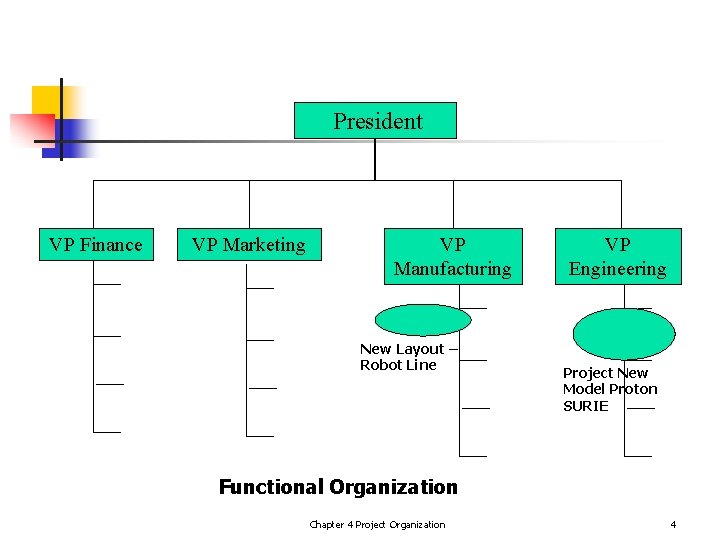
Project as Part of Functional Organization n E. g. new technology project – under vice president of engineering Introduction of new product line – under vice president of marketing Project assigned to the functional unit that has most interest Chapter 4 Project Organization 3
President VP Finance VP Marketing VP Manufacturing New Layout – Robot Line VP Engineering Project New Model Proton SURIE Functional Organization Chapter 4 Project Organization 4
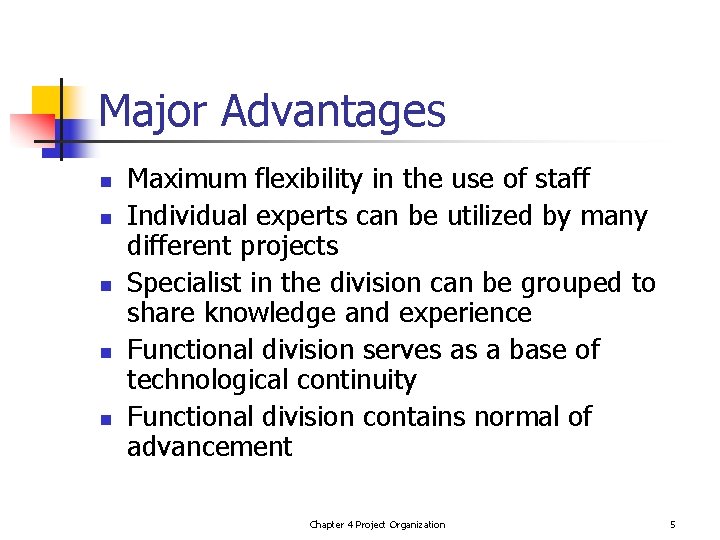
Major Advantages n n n Maximum flexibility in the use of staff Individual experts can be utilized by many different projects Specialist in the division can be grouped to share knowledge and experience Functional division serves as a base of technological continuity Functional division contains normal of advancement Chapter 4 Project Organization 5
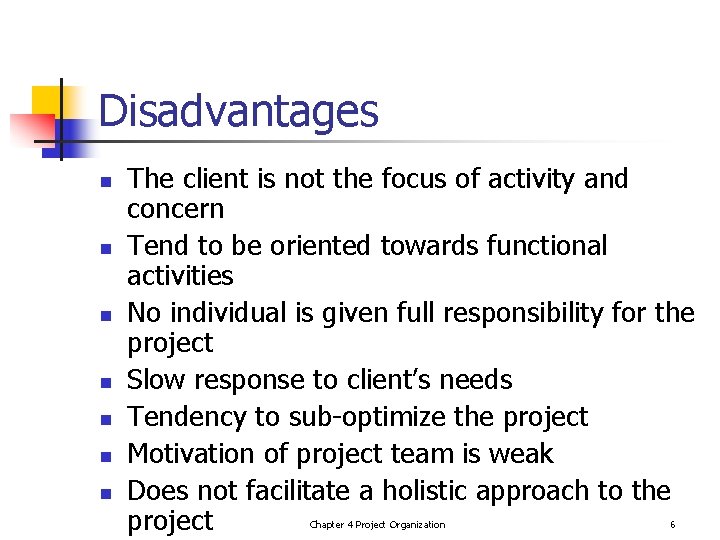
Disadvantages n n n n The client is not the focus of activity and concern Tend to be oriented towards functional activities No individual is given full responsibility for the project Slow response to client’s needs Tendency to sub-optimize the project Motivation of project team is weak Does not facilitate a holistic approach to the project Chapter 4 Project Organization 6
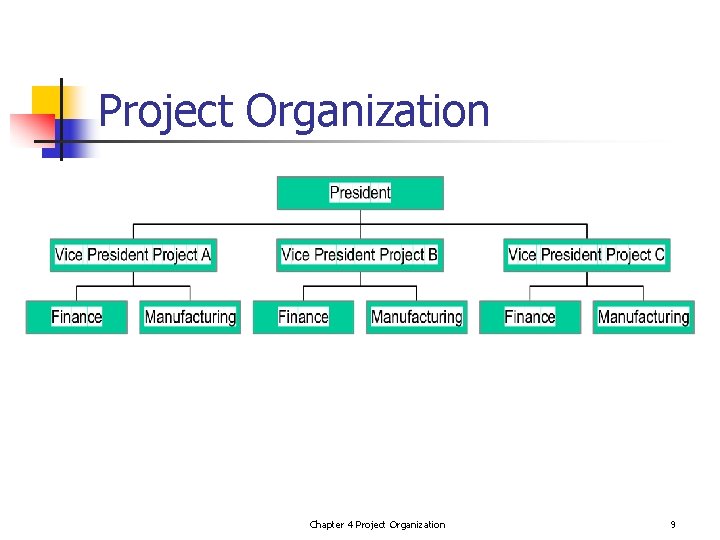
Pure Project Organization n n Project is separated from the rest of the parent system Becomes self contained unit Chapter 4 Project Organization 7
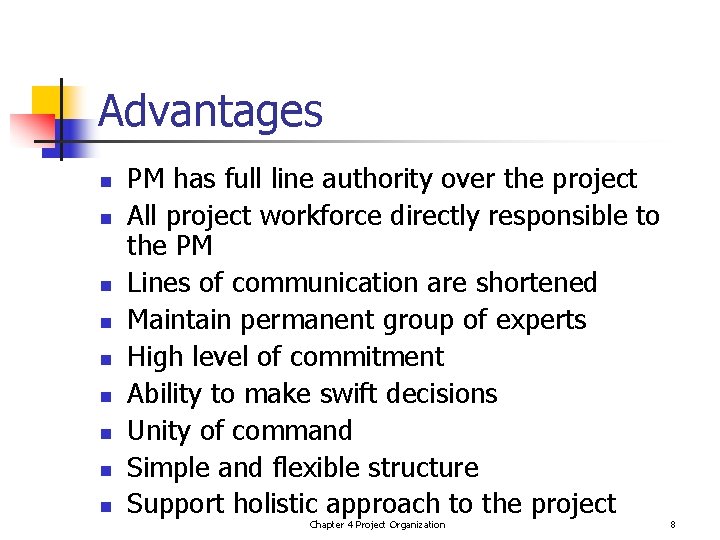
Advantages n n n n n PM has full line authority over the project All project workforce directly responsible to the PM Lines of communication are shortened Maintain permanent group of experts High level of commitment Ability to make swift decisions Unity of command Simple and flexible structure Support holistic approach to the project Chapter 4 Project Organization 8
Project Organization Chapter 4 Project Organization 9
Disadvantages n n n Duplication of effort Stockpile equipment and technical assistance “just in case” Lack of expertise in high technology project Foster inconsistency and cutting corners Project takes on a life of its own Worry about “life after project ends” Chapter 4 Project Organization 10
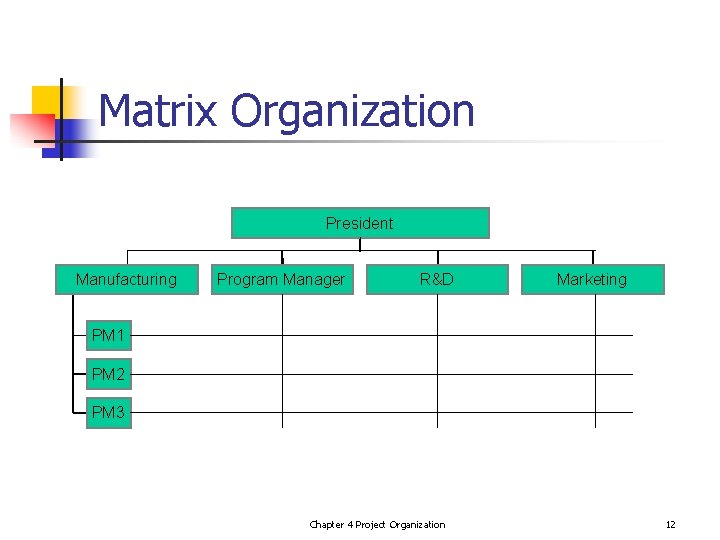
Matrix Organization n Combination of functional and pure project organizations Matrix project is not separated from parent organizations Individuals come from respective functions divisions and are assigned to the project full time or part time Chapter 4 Project Organization 11
Matrix Organization President Manufacturing Program Manager R&D Marketing PM 1 PM 2 PM 3 Chapter 4 Project Organization 12
Matrix Organization n n n Cross-functional team members Draw temporarily on technological expertise of relevant functions High technology areas – integrate functional specialties Iterations in adapting “over the wall” approach Systems approach – integrity of product design Close coordination and communication among all parties Chapter 4 Project Organization 13
Advantages of Matrix Approach n n n n The project is the point of emphasis Reasonable access t pools of technical talents Less anxiety about what happens after project completion Rapid response to client needs Access to administrative units of the parent firms Better balance of company resources in multiple projects Flexibility in control Chapter 4 Project Organization 14
Disadvantages n n n Delicate balance of power Movement of resources – conflict Projects resist death Complex division of authority and responsibility Violates the principle of unity of command Chapter 4 Project Organization 15
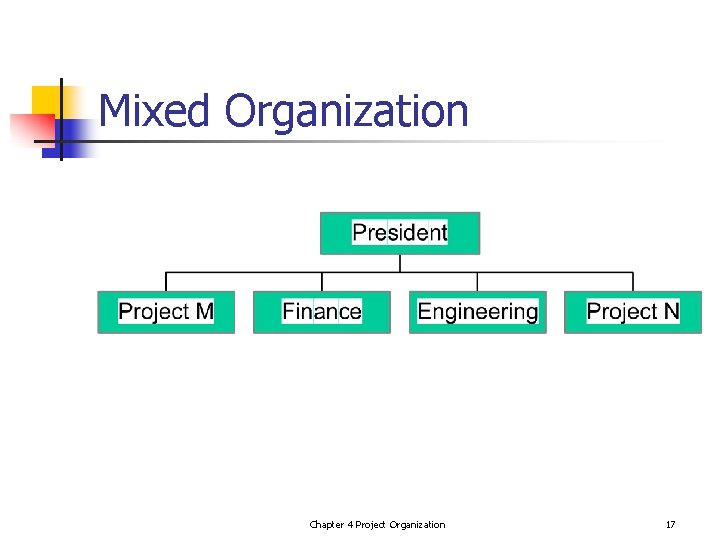
Mixed Organizational Systems n n n Divisionalization – breaking down large organization into smaller more flexible units Spin-off the large projects as subsidiaries or independent operations Allow formation of venture team Hybrid leads to flexibility Dissimilar groupings encourage overlap, duplication and friction Chapter 4 Project Organization 16
Mixed Organization Chapter 4 Project Organization 17
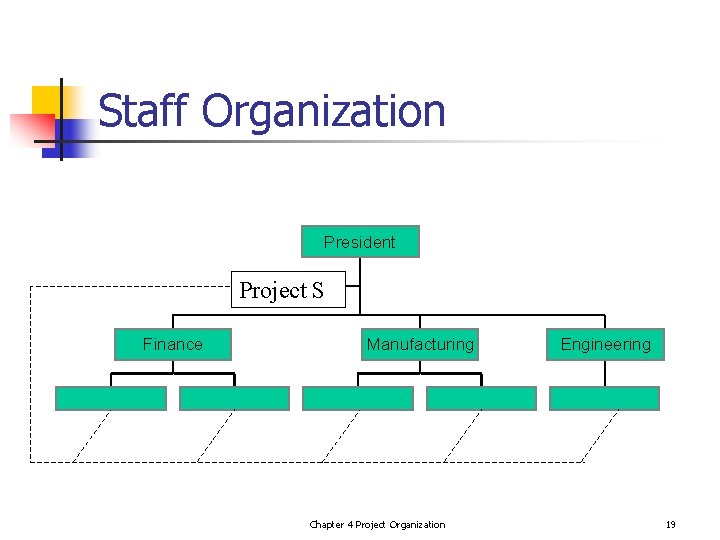
Staff Organization n Set up like functional organization Adds a staff office to administer projects Used for small, short run projects Chapter 4 Project Organization 18
Staff Organization President Project S Finance Manufacturing Chapter 4 Project Organization Engineering 19
Choosing an Organizational Form n n Functional form – major focus on in-depth technology, require large capital investment Pure project – large number of similar projects Matrix organization – require integration of inputs from several functional areas and involves reasonably sophisticated technology and several projects must share technical expertise Matrix organizations are complex Chapter 4 Project Organization 20
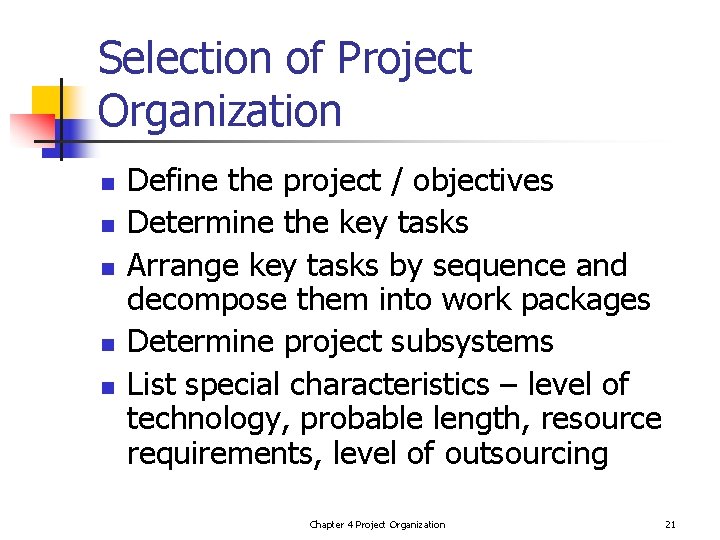
Selection of Project Organization n n Define the project / objectives Determine the key tasks Arrange key tasks by sequence and decompose them into work packages Determine project subsystems List special characteristics – level of technology, probable length, resource requirements, level of outsourcing Chapter 4 Project Organization 21
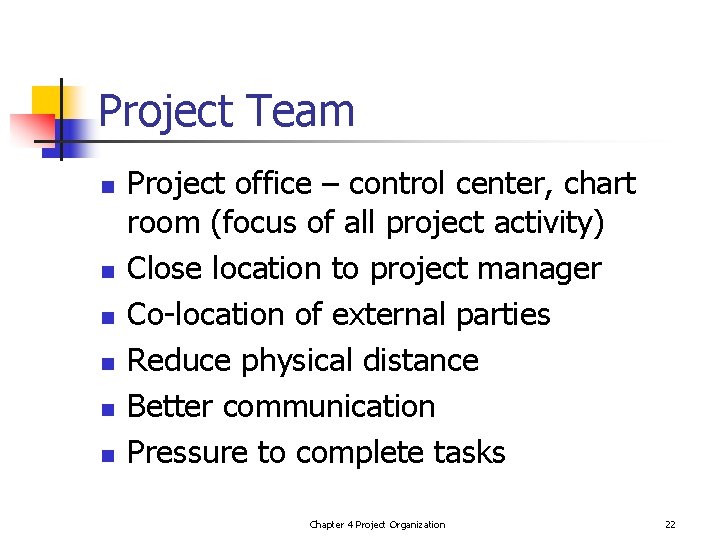
Project Team n n n Project office – control center, chart room (focus of all project activity) Close location to project manager Co-location of external parties Reduce physical distance Better communication Pressure to complete tasks Chapter 4 Project Organization 22
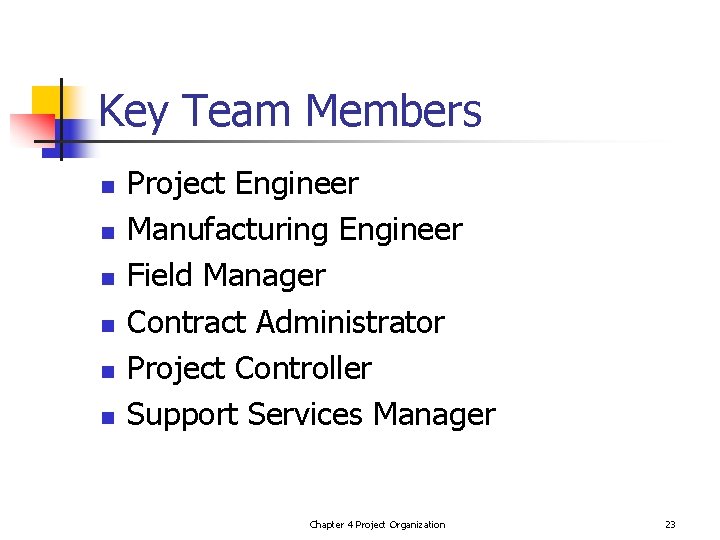
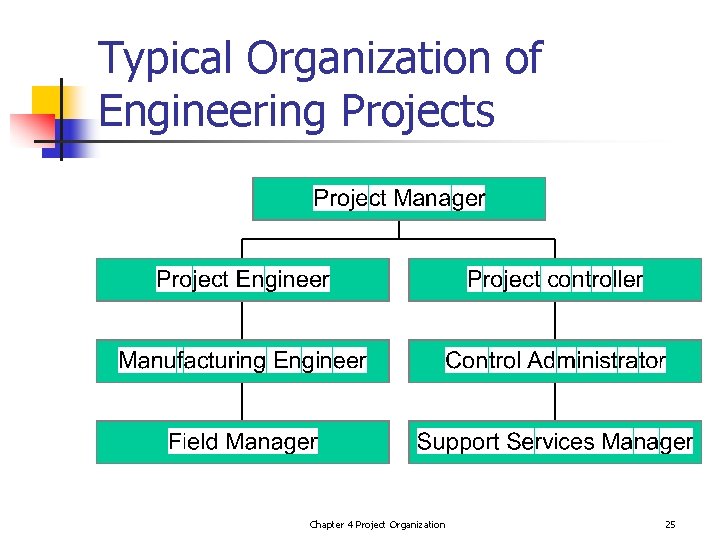
Key Team Members n n n Project Engineer Manufacturing Engineer Field Manager Contract Administrator Project Controller Support Services Manager Chapter 4 Project Organization 23
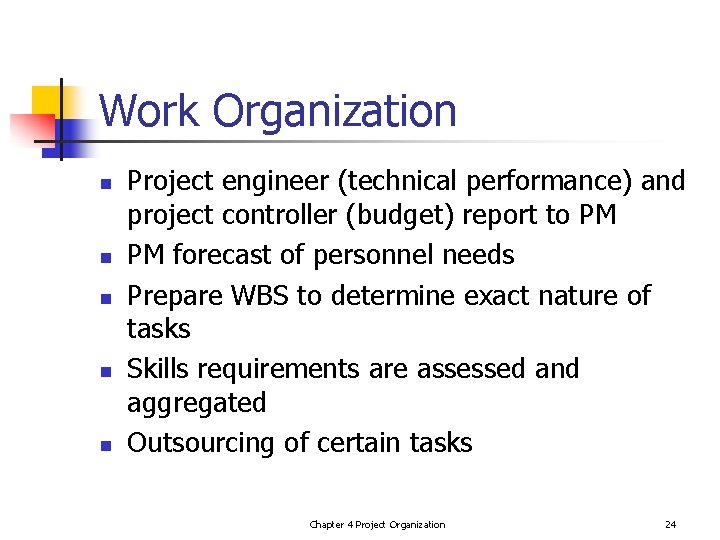
Work Organization n n Project engineer (technical performance) and project controller (budget) report to PM PM forecast of personnel needs Prepare WBS to determine exact nature of tasks Skills requirements are assessed and aggregated Outsourcing of certain tasks Chapter 4 Project Organization 24
Typical Organization of Engineering Projects Chapter 4 Project Organization 25
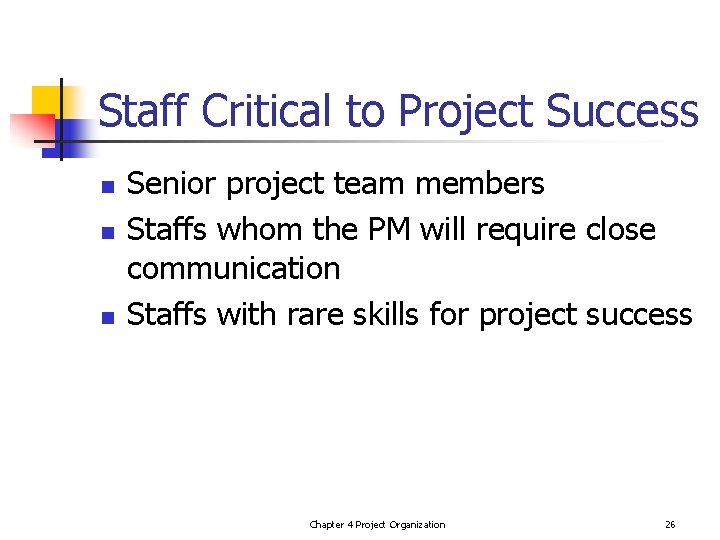
Staff Critical to Project Success n n n Senior project team members Staffs whom the PM will require close communication Staffs with rare skills for project success Chapter 4 Project Organization 26
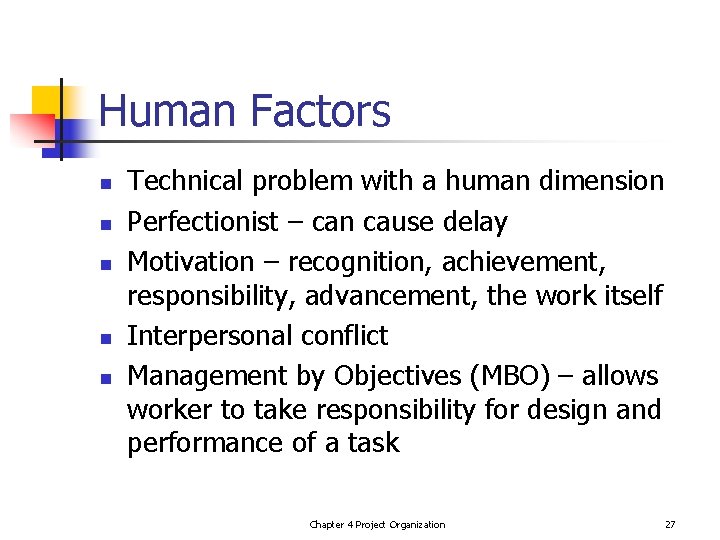
Human Factors n n n Technical problem with a human dimension Perfectionist – can cause delay Motivation – recognition, achievement, responsibility, advancement, the work itself Interpersonal conflict Management by Objectives (MBO) – allows worker to take responsibility for design and performance of a task Chapter 4 Project Organization 27
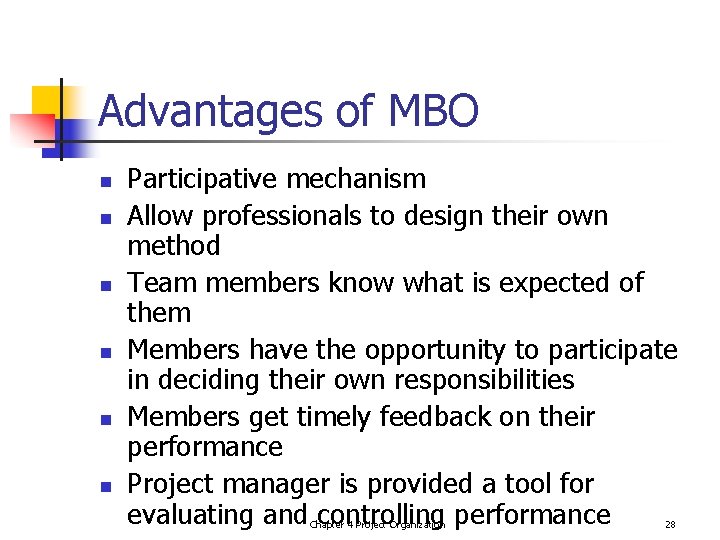
Advantages of MBO n n n Participative mechanism Allow professionals to design their own method Team members know what is expected of them Members have the opportunity to participate in deciding their own responsibilities Members get timely feedback on their performance Project manager is provided a tool for evaluating and controlling performance Chapter 4 Project Organization 28
MBO n n n Superior set objectives in consultation and agreement with subordinates Subordinate develops action plan, a detailed plan and scheduled that will result in achieving the objective Final plan becomes a contract Chapter 4 Project Organization 29
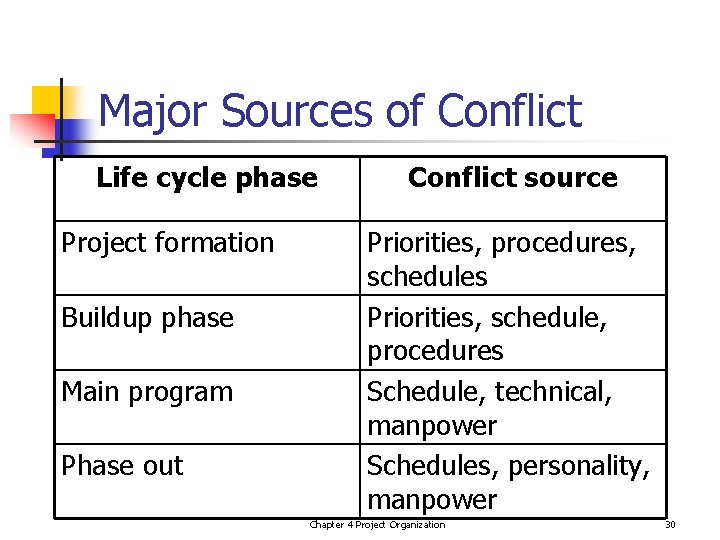
Major Sources of Conflict Life cycle phase Project formation Buildup phase Main program Phase out Conflict source Priorities, procedures, schedules Priorities, schedule, procedures Schedule, technical, manpower Schedules, personality, manpower Chapter 4 Project Organization 30