
CH 4 ORGANIZATION OF LIFE 4 2 EVOLUTION
- Slides: 21
CH 4 ORGANIZATION OF LIFE 4 -2 EVOLUTION
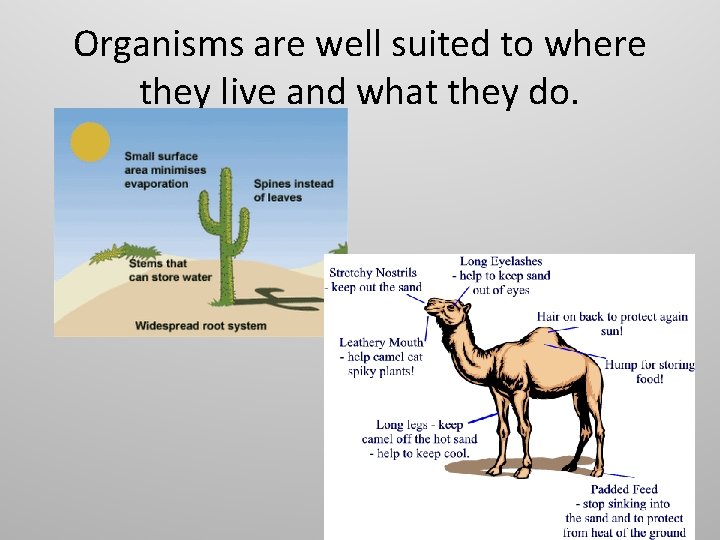
Organisms are well suited to where they live and what they do.
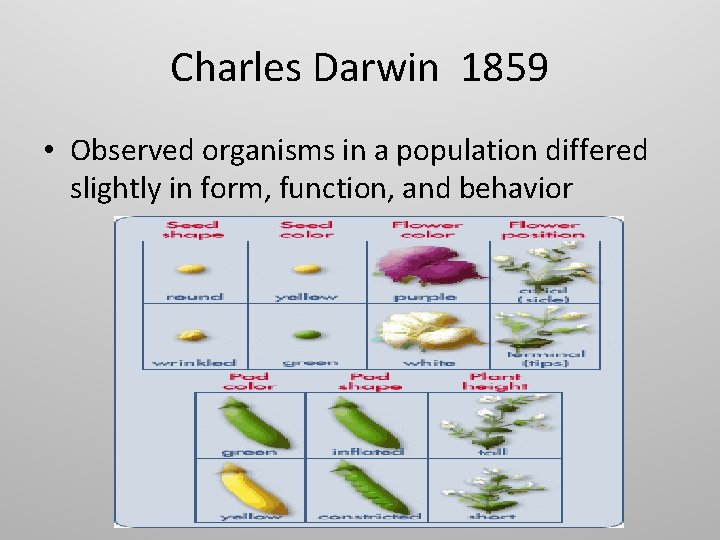
Charles Darwin 1859 • Observed organisms in a population differed slightly in form, function, and behavior
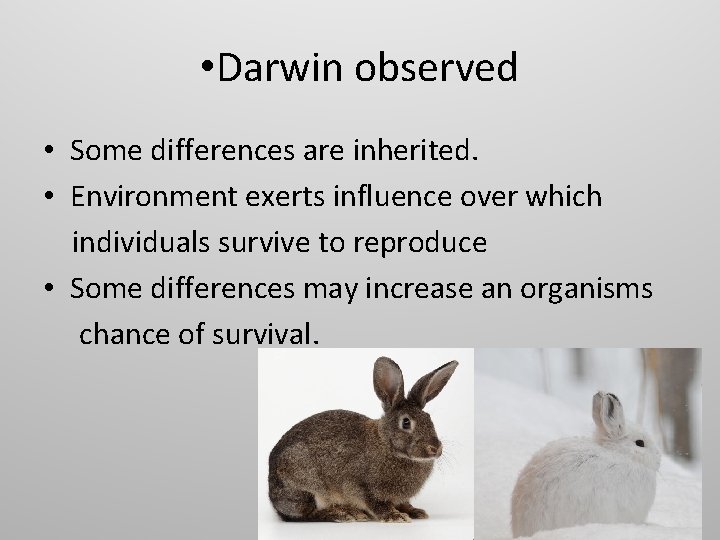
• Darwin observed • Some differences are inherited. • Environment exerts influence over which individuals survive to reproduce • Some differences may increase an organisms chance of survival.
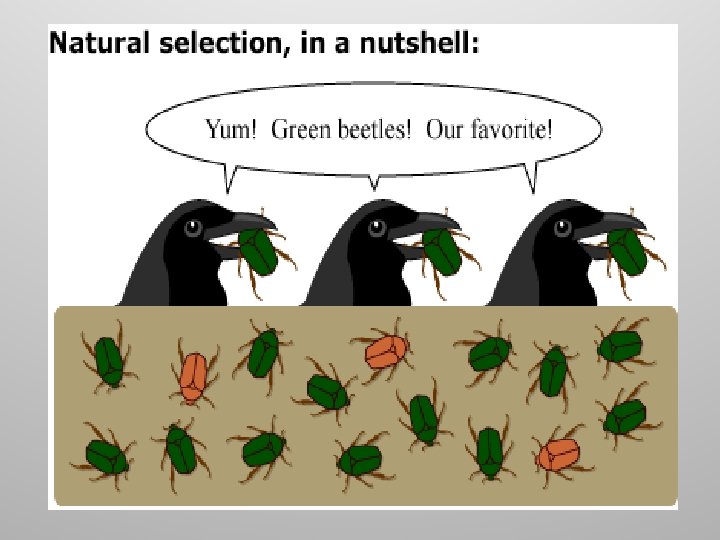
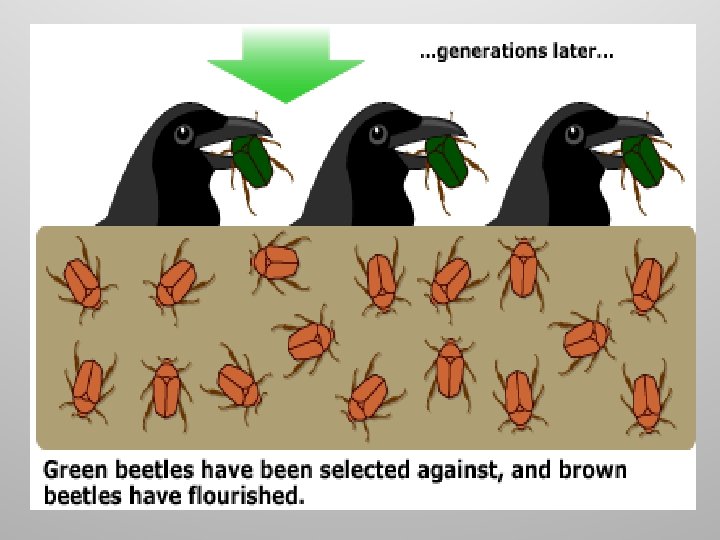
Darwin’s Hypothesis • The survival and reproduction of organisms with certain traits is called Natural Selection • Over many generations natural selection causes the characteristics of a population to change. • A change in genetic characteristics of a population from one generation to the next is evolution
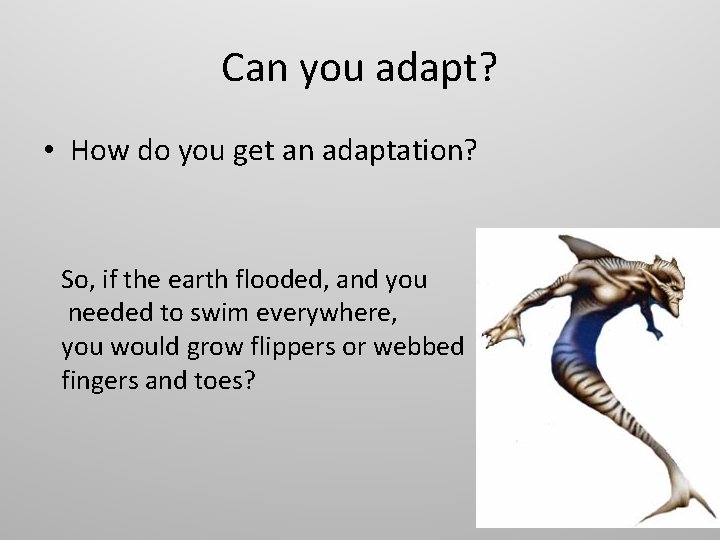
Can you adapt? • How do you get an adaptation? So, if the earth flooded, and you needed to swim everywhere, you would grow flippers or webbed fingers and toes?
Darwin hypothesized: • Environment determines which individual will survive to produce offspring (survival of the fittest) • Hypothesis is now a theory. • Theory of Natural Selection – nature selects for certain traits that ensure survival
Natural Selection • Over many generations changes in the characteristics of a population will change. • Changes in genetic characteristics of a population over time is EVOLUTION
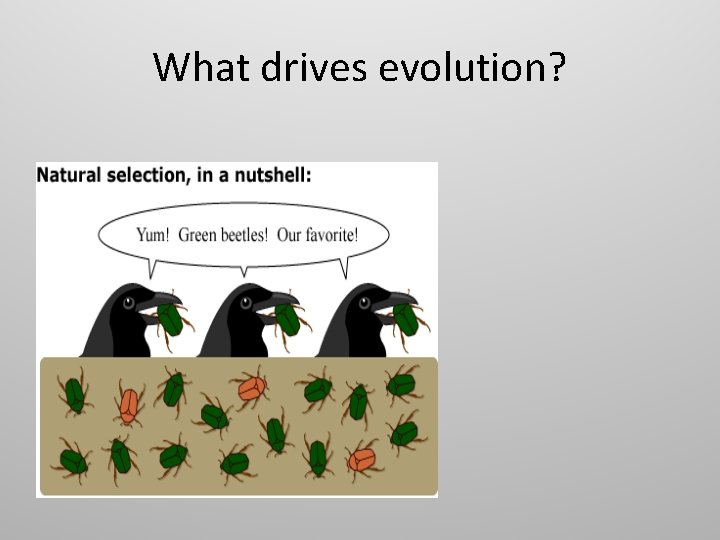
What drives evolution?
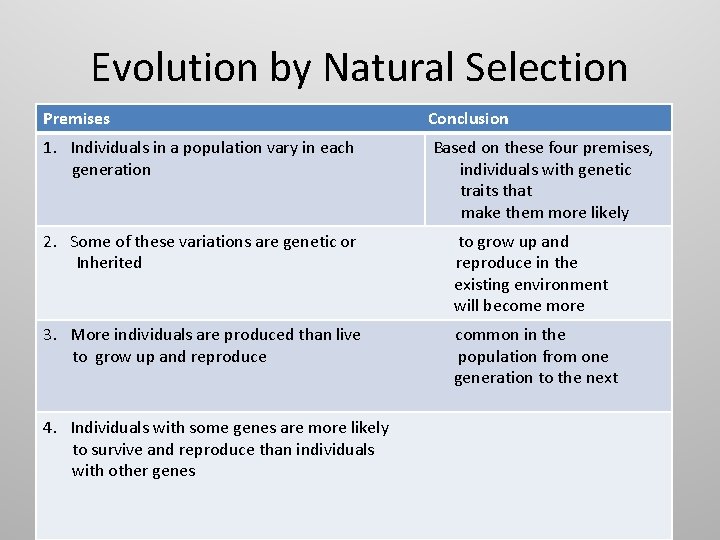
Evolution by Natural Selection Premises Conclusion 1. Individuals in a population vary in each generation Based on these four premises, individuals with genetic traits that make them more likely 2. Some of these variations are genetic or Inherited to grow up and reproduce in the existing environment will become more 3. More individuals are produced than live to grow up and reproduce common in the population from one generation to the next 4. Individuals with some genes are more likely to survive and reproduce than individuals with other genes
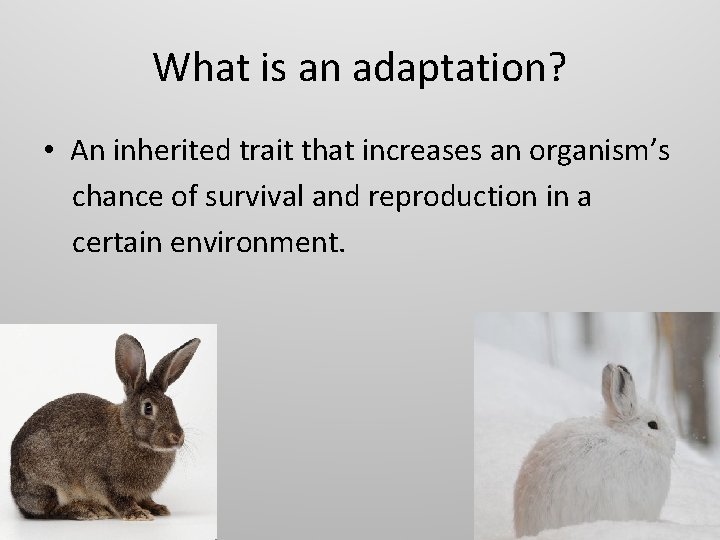
What is an adaptation? • An inherited trait that increases an organism’s chance of survival and reproduction in a certain environment.
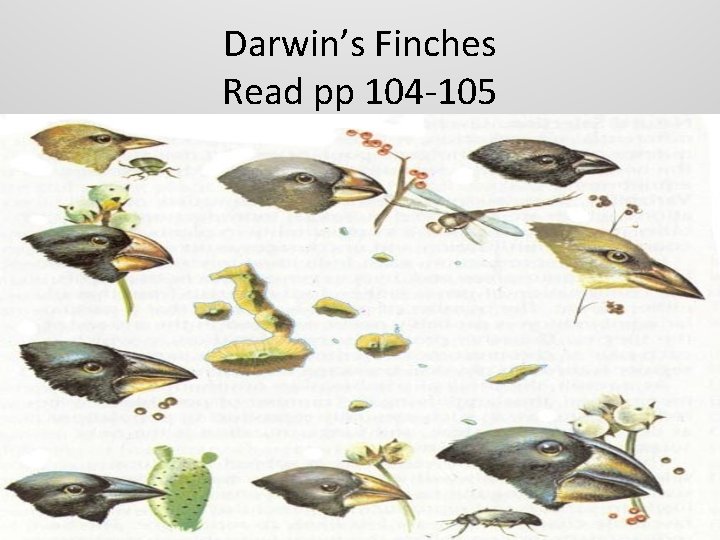
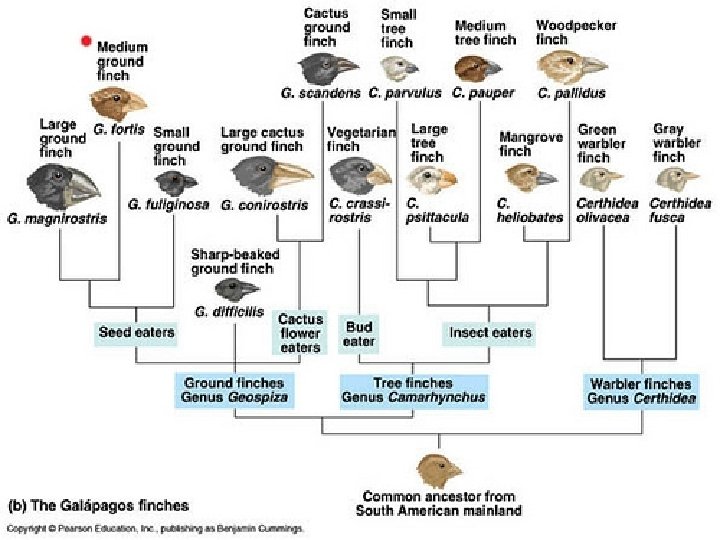
Darwin’s Finches Read pp 104 -105
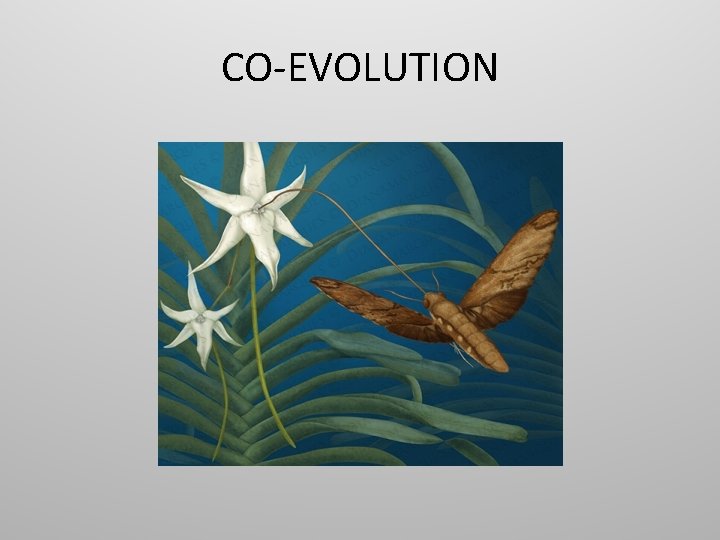
CO-EVOLUTION
COEVOLUTION • 2 DIFFERENT SPECIES EVOLVE DUE TO LONG INTERACTION TOGETHER
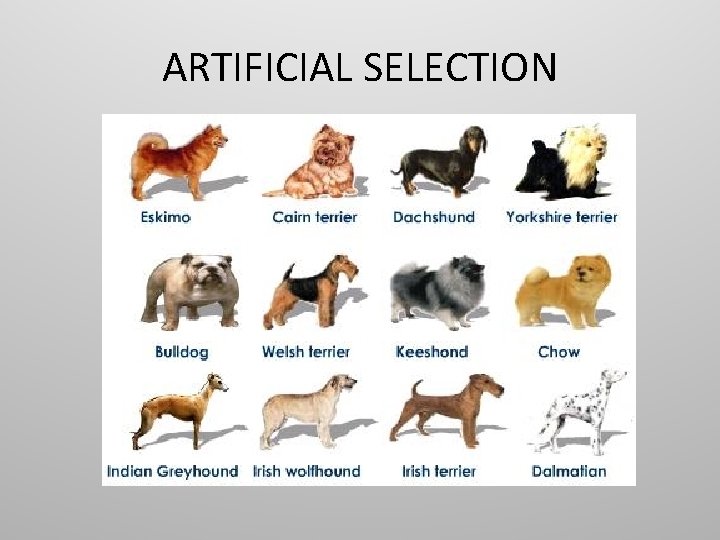
ARTIFICIAL SELECTION
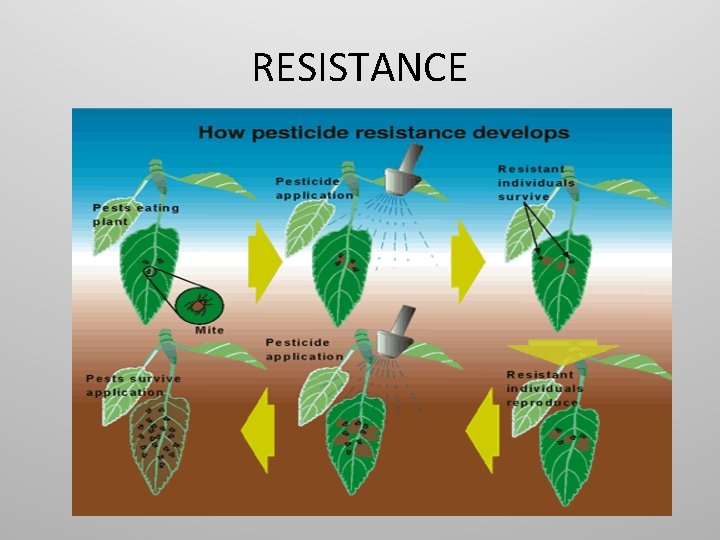
RESISTANCE
Why did some pests survive? • They had a genetic variation (a gene) that made them resistant to the pesticide. • They survived and reproduced. • The next generation was now resistant to that pesticide.