
Ch 4 Demand Section 1 Understanding Demand Consumers


- Slides: 33
Ch. 4: Demand
Section 1: Understanding Demand • Consumers shape markets through their demands.
Demand • Demand: the desire to own something and ability/willingness to pay for it. • Consumer demand dictates what is produced.
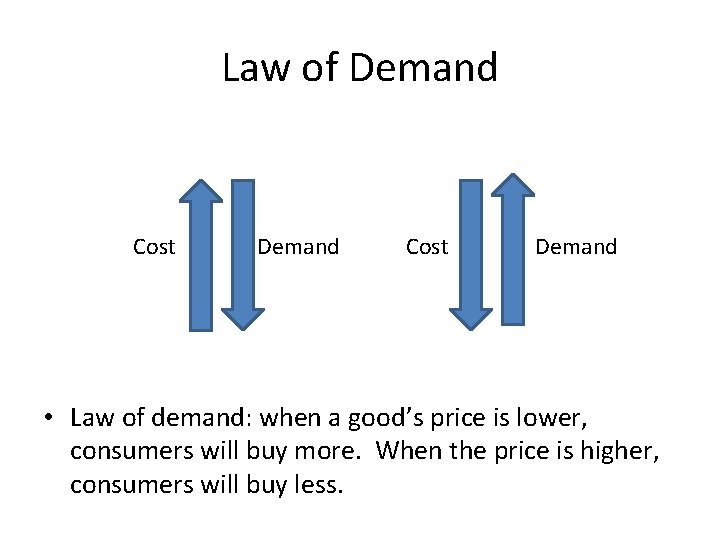
Law of Demand Cost Demand • Law of demand: when a good’s price is lower, consumers will buy more. When the price is higher, consumers will buy less.
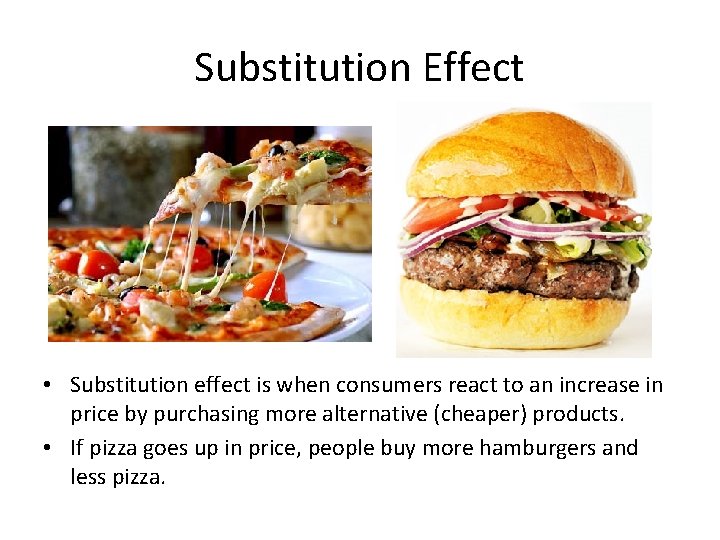
Substitution Effect • Substitution effect is when consumers react to an increase in price by purchasing more alternative (cheaper) products. • If pizza goes up in price, people buy more hamburgers and less pizza.
Income Effect • Income effect is when consumers demand less because of a change in real income. • If all clothing prices rise, and your income does not, you will consume/demand less clothing.
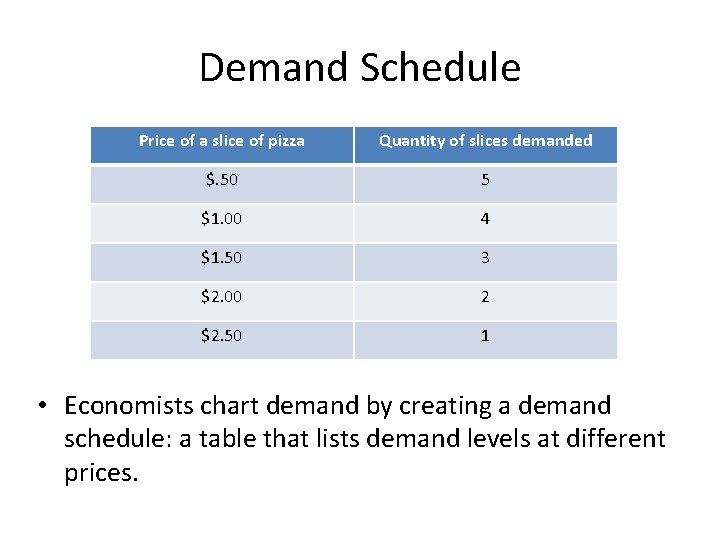
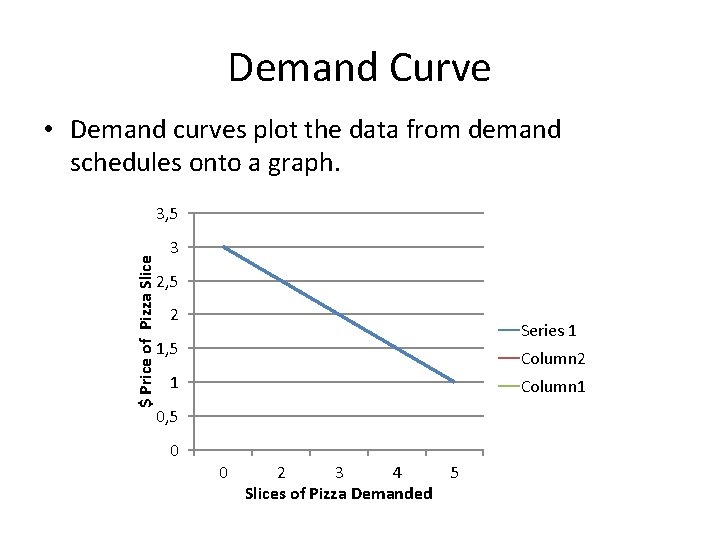
Demand Schedule Price of a slice of pizza Quantity of slices demanded $. 50 5 $1. 00 4 $1. 50 3 $2. 00 2 $2. 50 1 • Economists chart demand by creating a demand schedule: a table that lists demand levels at different prices.
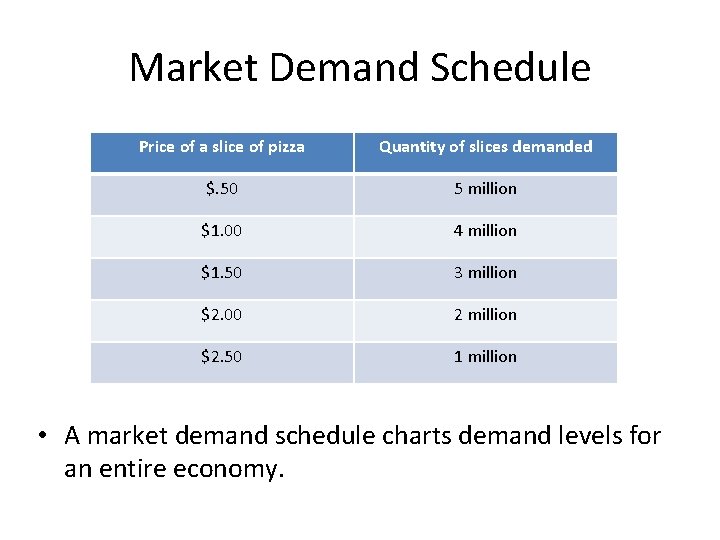
Market Demand Schedule Price of a slice of pizza Quantity of slices demanded $. 50 5 million $1. 00 4 million $1. 50 3 million $2. 00 2 million $2. 50 1 million • A market demand schedule charts demand levels for an entire economy.
Demand Curve • Demand curves plot the data from demand schedules onto a graph. $ Price of Pizza Slice 3, 5 3 2, 5 2 Series 1 1, 5 Column 2 1 Column 1 0, 5 0 0 2 3 4 5 Slices of Pizza Demanded
Creating our own demand schedule How much are you willing to pay for an ipad?
Thinking about demand • Why might the law of demand only apply in a free market economy? • What about a centrally planned economy?
Section 2: Shifts in the Demand Curve • Demand Curves can change as the result of many different circumstances.
Why does demand change? Excluding price, what kind of circumstances, events, or environments might cause demand to shift?
Why does demand change? • Factors that can shift demand… – Economic projections – Popularity – Weather – Consumer taste – Advertising – Changes in income
Ceteris Paribus • Ceteris paribus: Latin for, “all other things held constant. ” • Demand curves take only price into account, holding all other things constant. – Many other factors, beside price, affect demand.
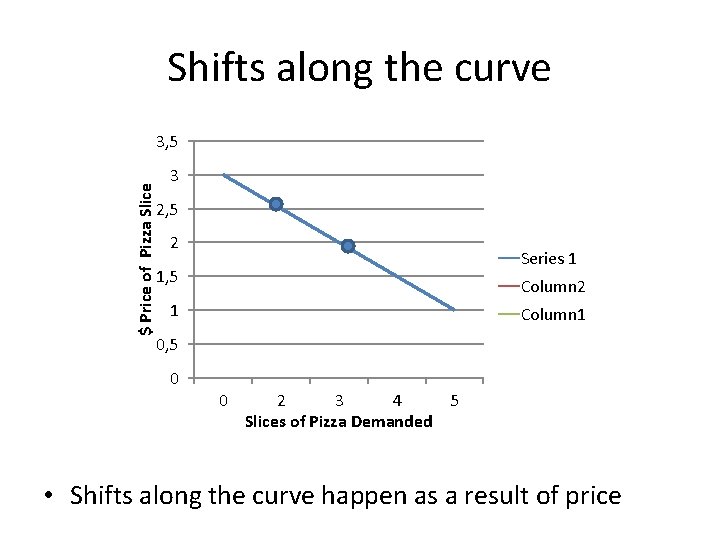
Shifts along the curve $ Price of Pizza Slice 3, 5 3 2, 5 2 Series 1 1, 5 Column 2 1 Column 1 0, 5 0 0 2 3 4 5 Slices of Pizza Demanded • Shifts along the curve happen as a result of price
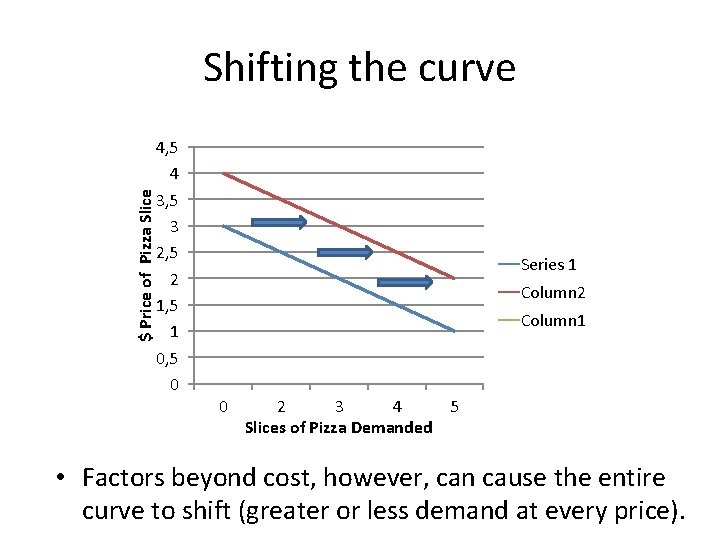
$ Price of Pizza Slice Shifting the curve 4, 5 4 3, 5 3 2, 5 2 1, 5 1 0, 5 0 Series 1 Column 2 Column 1 0 2 3 4 5 Slices of Pizza Demanded • Factors beyond cost, however, can cause the entire curve to shift (greater or less demand at every price).
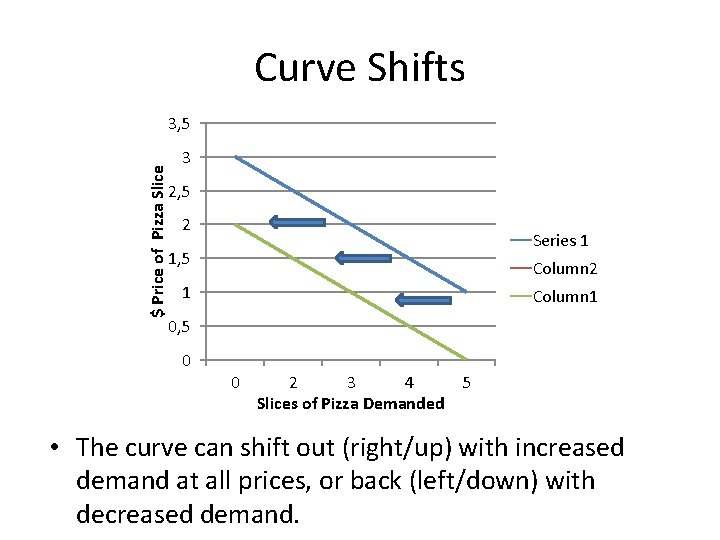
Curve Shifts $ Price of Pizza Slice 3, 5 3 2, 5 2 Series 1 1, 5 Column 2 1 Column 1 0, 5 0 0 2 3 4 5 Slices of Pizza Demanded • The curve can shift out (right/up) with increased demand at all prices, or back (left/down) with decreased demand.
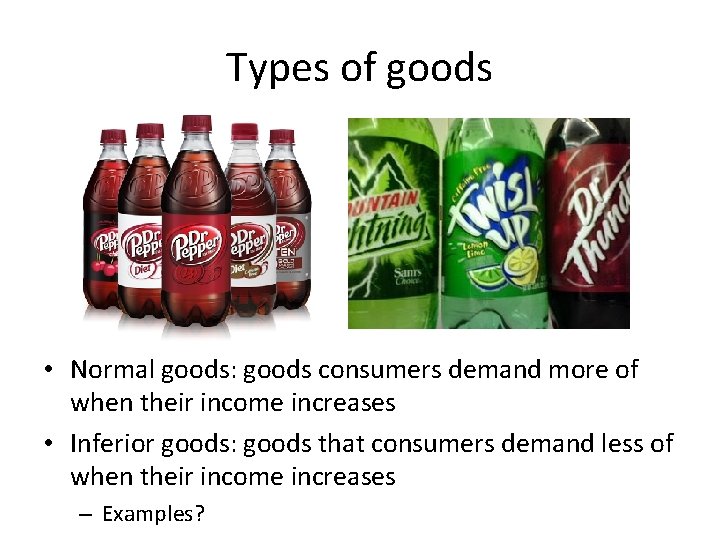
Types of goods • Normal goods: goods consumers demand more of when their income increases • Inferior goods: goods that consumers demand less of when their income increases – Examples?
Changes in demand • Thousands of simultaneous factors influence demand. – Consumer expectations: economic forecasts, perception of value changes – Populations: Baby boomers – Consumer tastes and advertising: what is “in”?
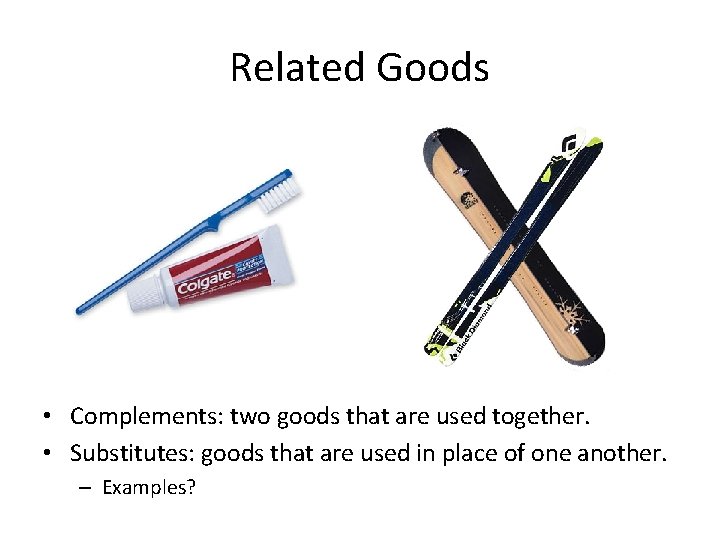
Related Goods • Complements: two goods that are used together. • Substitutes: goods that are used in place of one another. – Examples?
Section 3: Elasticity of Demand • Price changes affect demand for some goods/services more than others.
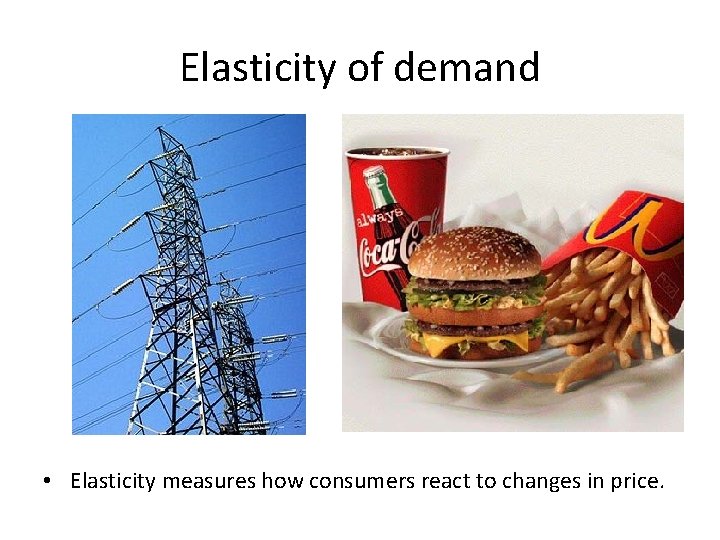
Elasticity of demand • Elasticity measures how consumers react to changes in price.
Cost/Demand What would you still demand, regardless of price change? What would you quickly stop demanding, with even a small price change?
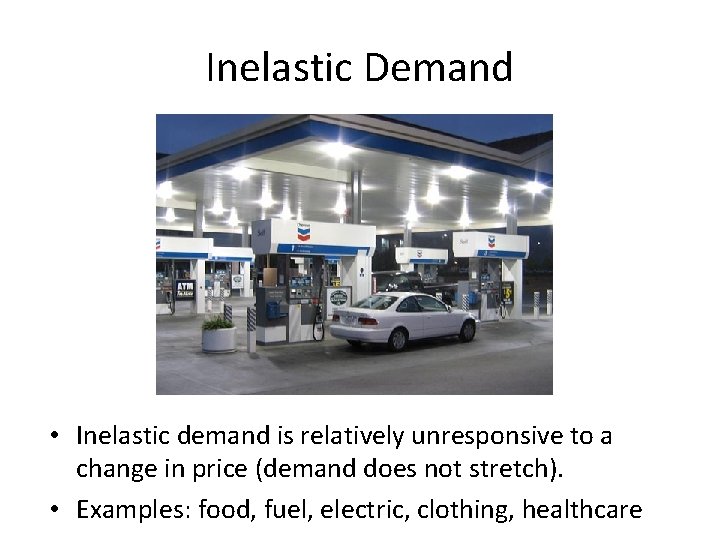
Inelastic Demand • Inelastic demand is relatively unresponsive to a change in price (demand does not stretch). • Examples: food, fuel, electric, clothing, healthcare
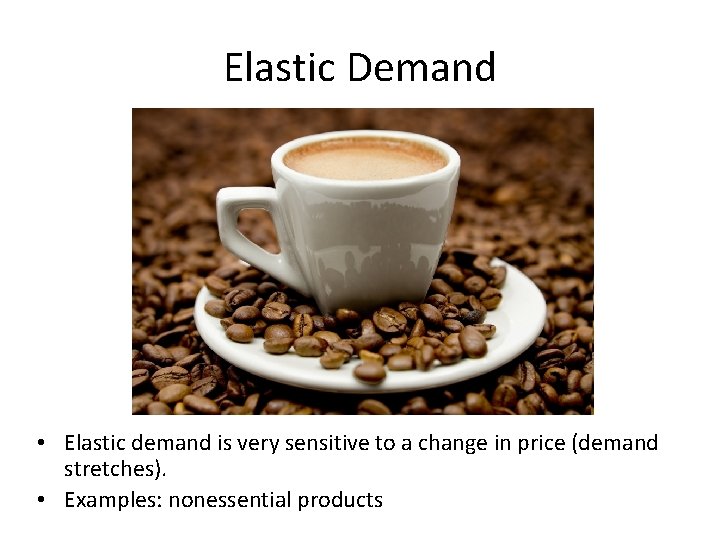
Elastic Demand • Elastic demand is very sensitive to a change in price (demand stretches). • Examples: nonessential products
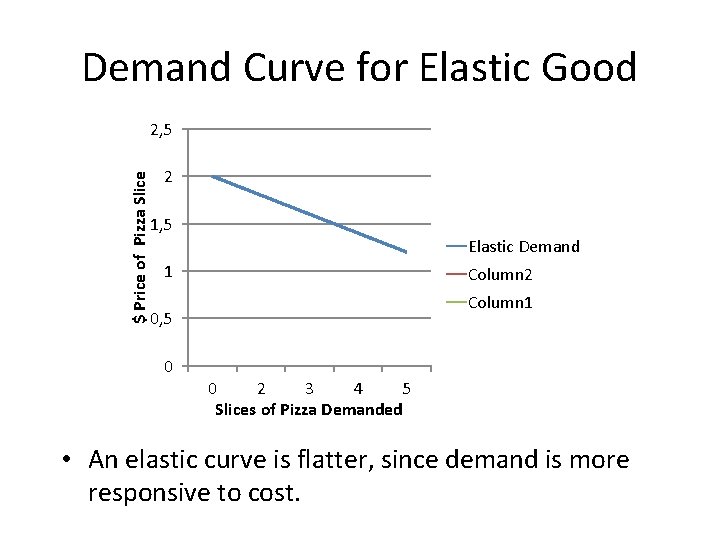
Demand Curve for Elastic Good $ Price of Pizza Slice 2, 5 2 1, 5 Elastic Demand 1 Column 2 Column 1 0, 5 0 0 2 3 4 5 Slices of Pizza Demanded • An elastic curve is flatter, since demand is more responsive to cost.
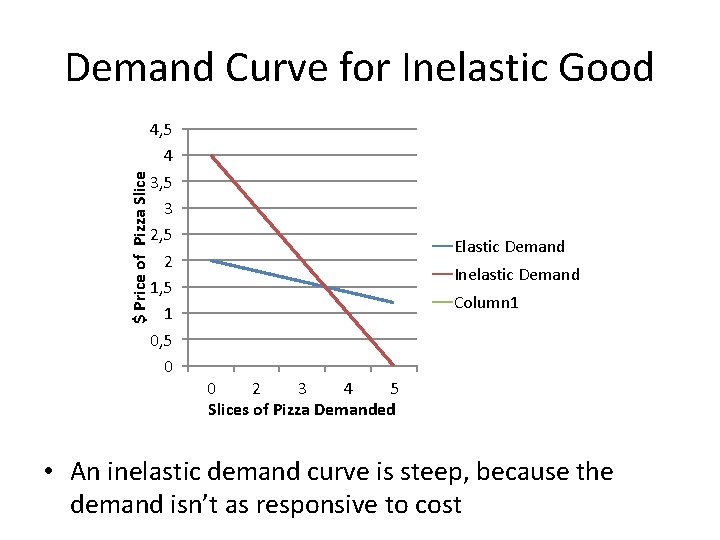
$ Price of Pizza Slice Demand Curve for Inelastic Good 4, 5 4 3, 5 3 2, 5 2 1, 5 1 0, 5 0 Elastic Demand Inelastic Demand Column 1 0 2 3 4 5 Slices of Pizza Demanded • An inelastic demand curve is steep, because the demand isn’t as responsive to cost
Necessities vs. Luxuries • Is this good/service a necessity to survive, or a luxury?
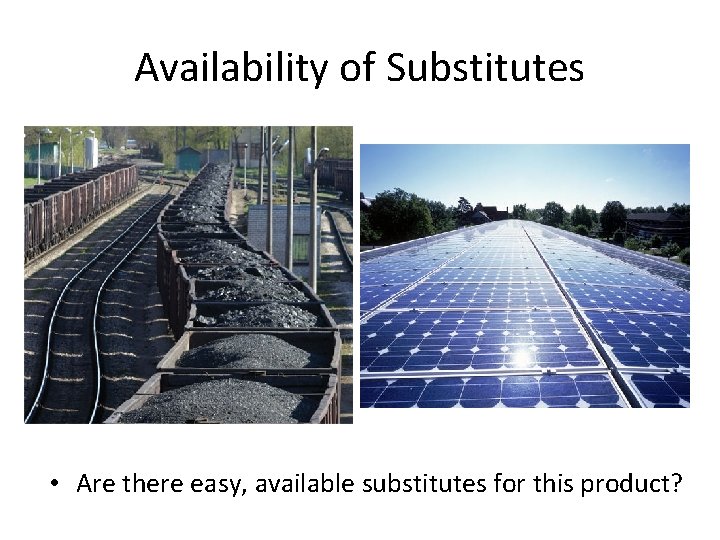
Availability of Substitutes • Are there easy, available substitutes for this product?
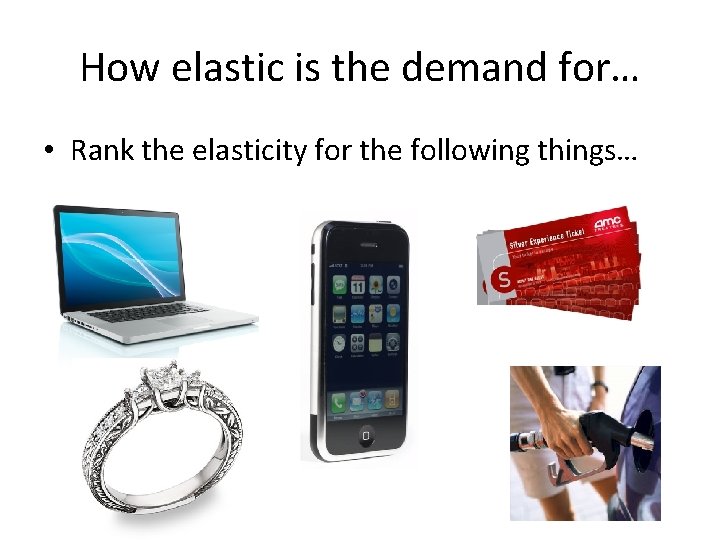
How elastic is the demand for… • Rank the elasticity for the following things…
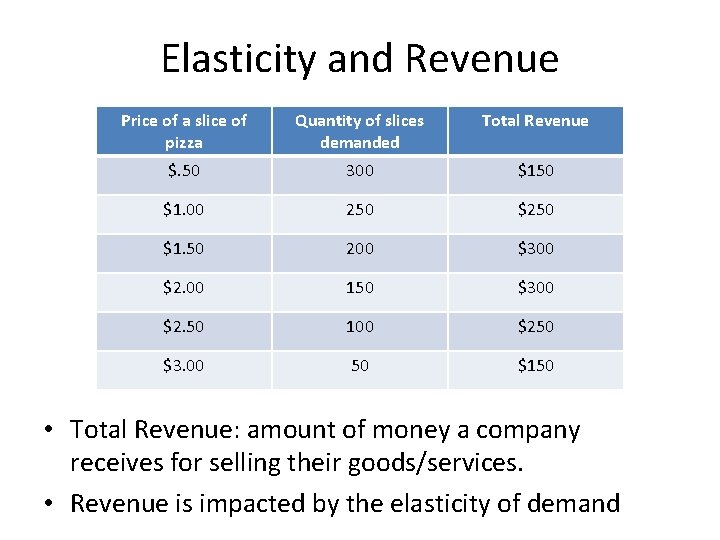
Elasticity and Revenue Price of a slice of pizza Quantity of slices demanded Total Revenue $. 50 300 $150 $1. 00 250 $1. 50 200 $300 $2. 00 150 $300 $2. 50 100 $250 $3. 00 50 $150 • Total Revenue: amount of money a company receives for selling their goods/services. • Revenue is impacted by the elasticity of demand
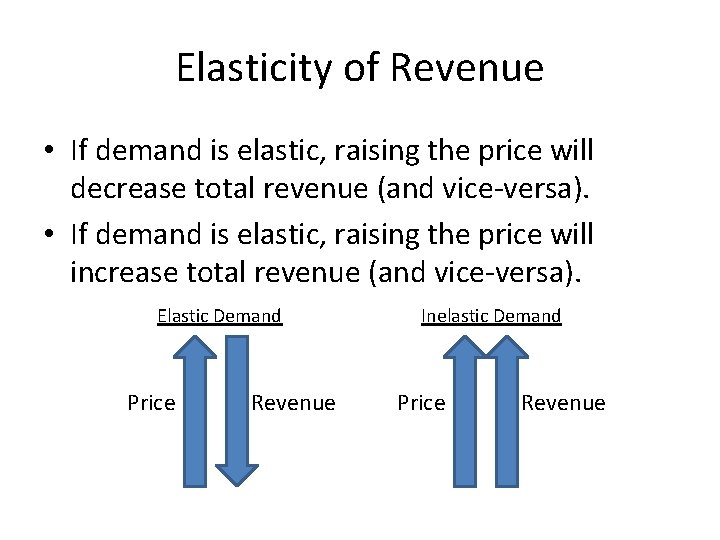
Elasticity of Revenue • If demand is elastic, raising the price will decrease total revenue (and vice-versa). • If demand is elastic, raising the price will increase total revenue (and vice-versa). Elastic Demand Price Revenue Inelastic Demand Price Revenue