
Ch 4 continued Soil Properties Soil Color Munsell
- Slides: 16
Ch. 4 continued Soil Properties
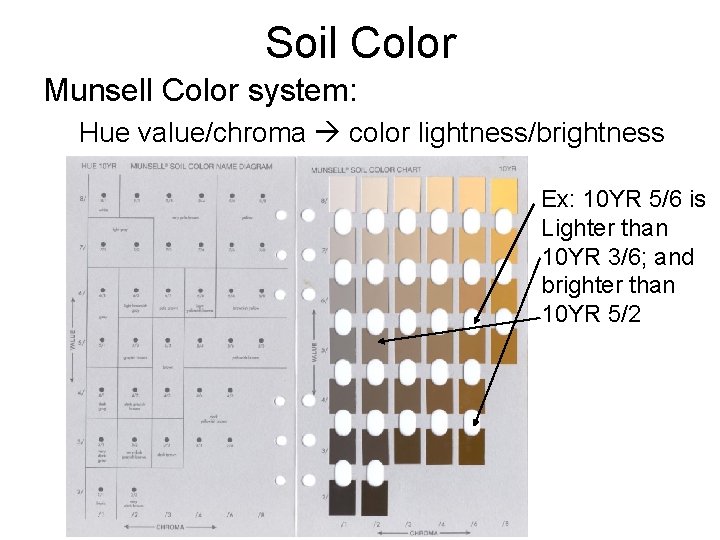
Soil Color Munsell Color system: Hue value/chroma color lightness/brightness Ex: 10 YR 5/6 is Lighter than 10 YR 3/6; and brighter than 10 YR 5/2
Causes or sources of color in soil • Humus or decomposed organic matter black • Wet soils are darker than dry soils • Oxidized Fe oxides (Fe+3) are redder and brighter than reduced Fe minerals (Fe+2) gleyed • Carbonates, gypsum, salts white masses or nodules in soil and overall lighter values • Mn oxides black; usually associated with red Fe oxides • Other minerals yellow, green, white, etc…
Color as indicator of environment • Bright colors indicate oxidized (aerobic or oxygen-rich) environment • Dull, grayed or bluish colors indicate reduced (anaerobic or water-logged) environment • Pale yellow jarosite indicates oxidized (and now acidified) sulfidic soils
Soil Texture (proportion of different-sized particles)
Master Variable Because it affects so many other soil properties and variables Basic Soil Property Because it is not readily subject to change
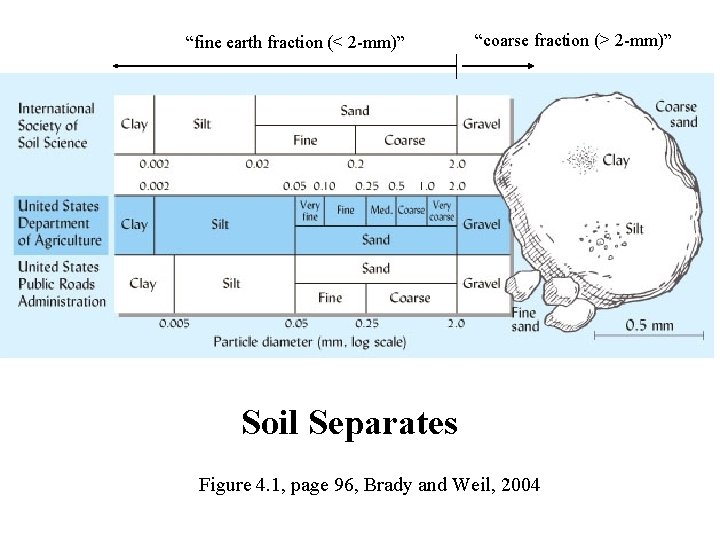
“fine earth fraction (< 2 -mm)” “coarse fraction (> 2 -mm)” Soil Separates Figure 4. 1, page 96, Brady and Weil, 2004
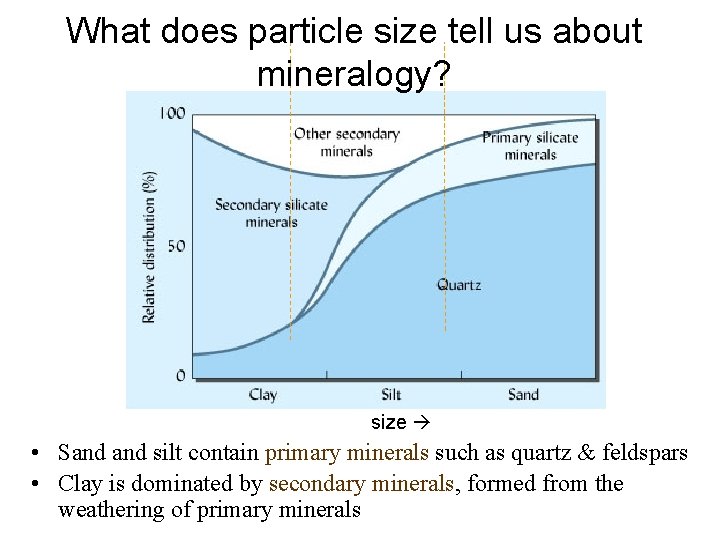
What does particle size tell us about mineralogy? size • Sand silt contain primary minerals such as quartz & feldspars • Clay is dominated by secondary minerals, formed from the weathering of primary minerals
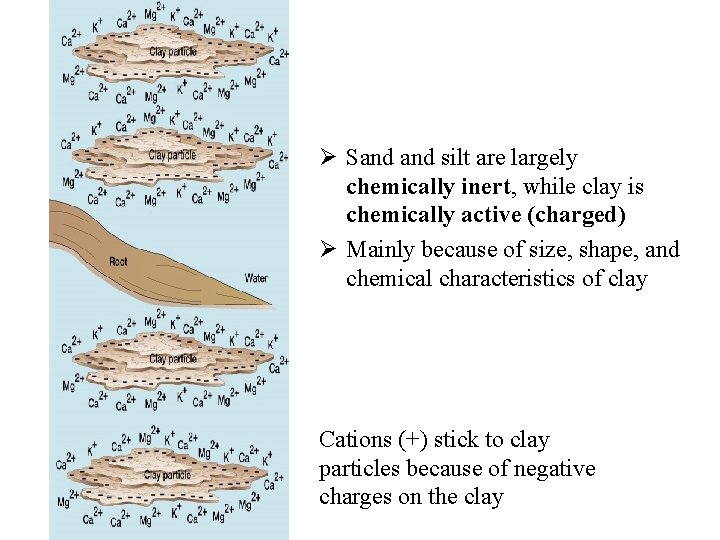
Ø Sand silt are largely chemically inert, while clay is chemically active (charged) Ø Mainly because of size, shape, and chemical characteristics of clay Cations (+) stick to clay particles because of negative charges on the clay
Heavy or Light Soils These terms actually refer to texture, not weight • A heavy soil is a clayey soil – called ‘heavy’ because of the soil's ability to retain moisture and the difficulty in working the soil (and it’s heavy after rain or irrigation) • A light soil is a sandy soil – called ‘light’ because it is usually easy to work in the field and drains quickly • Actually, a clayey soil weighs less than a sandy soil when dry
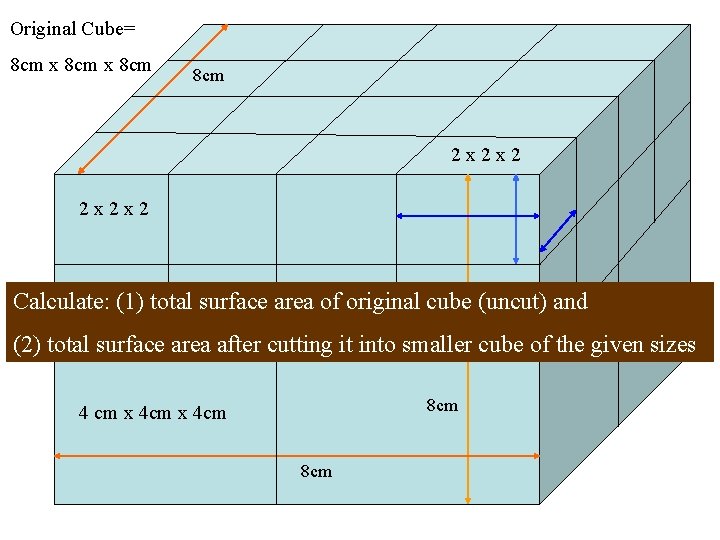
Original Cube= 8 cm x 8 cm 2 x 2 x 2 Calculate: (1) total surface area of original cube (uncut) and (2) total surface area after cutting it into smaller cube of the given sizes 8 cm 4 cm x 4 cm 8 cm
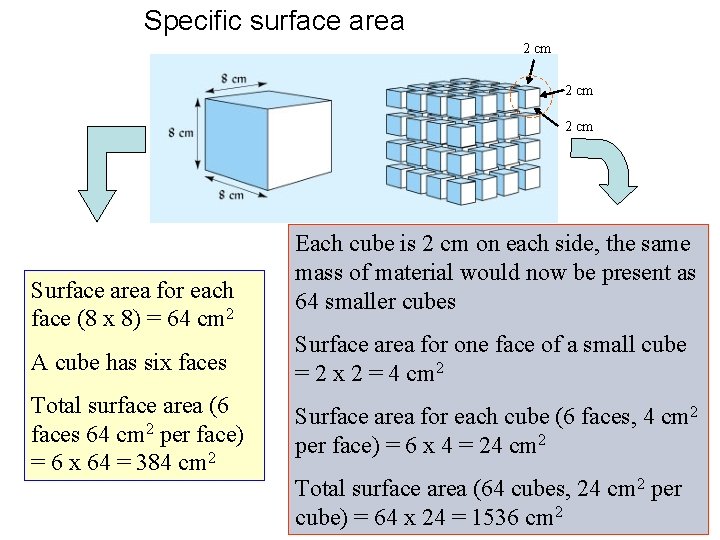
Specific surface area 2 cm Surface area for each face (8 x 8) = 64 cm 2 Each cube is 2 cm on each side, the same mass of material would now be present as 64 smaller cubes A cube has six faces Surface area for one face of a small cube = 2 x 2 = 4 cm 2 Total surface area (6 faces 64 cm 2 per face) = 6 x 64 = 384 cm 2 Surface area for each cube (6 faces, 4 cm 2 per face) = 6 x 4 = 24 cm 2 Total surface area (64 cubes, 24 cm 2 per cube) = 64 x 24 = 1536 cm 2
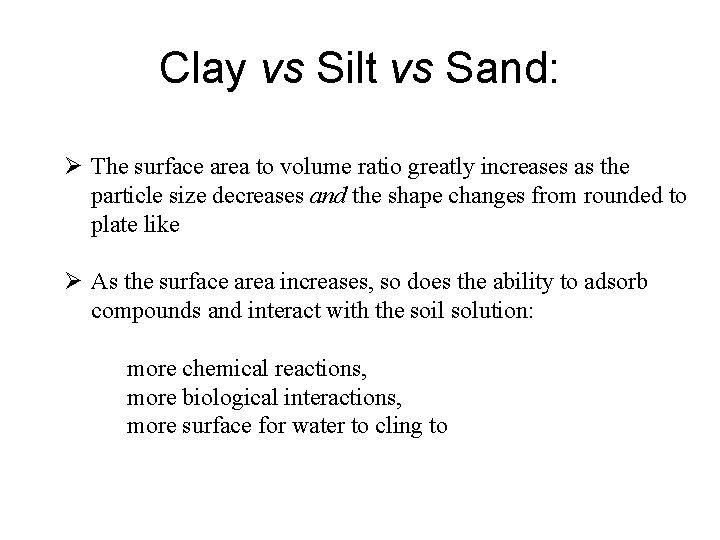
Clay vs Silt vs Sand: Ø The surface area to volume ratio greatly increases as the particle size decreases and the shape changes from rounded to plate like Ø As the surface area increases, so does the ability to adsorb compounds and interact with the soil solution: more chemical reactions, more biological interactions, more surface for water to cling to
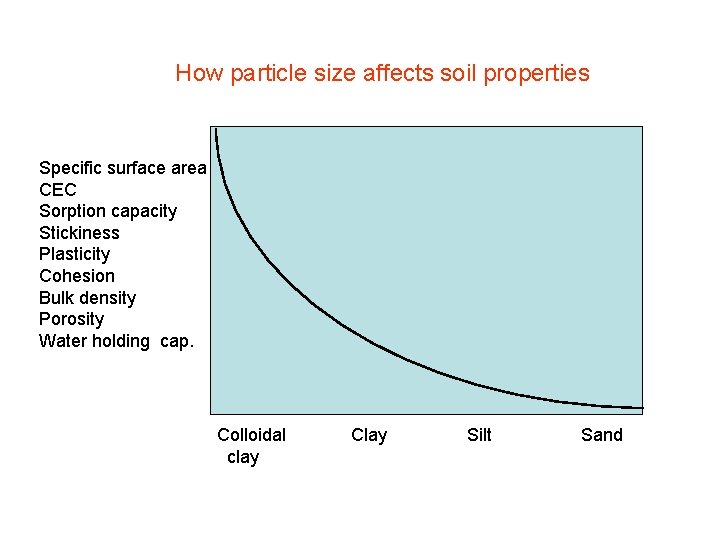
How particle size affects soil properties Specific surface area CEC Sorption capacity Stickiness Plasticity Cohesion Bulk density Porosity Water holding cap. Colloidal clay Clay Silt Sand
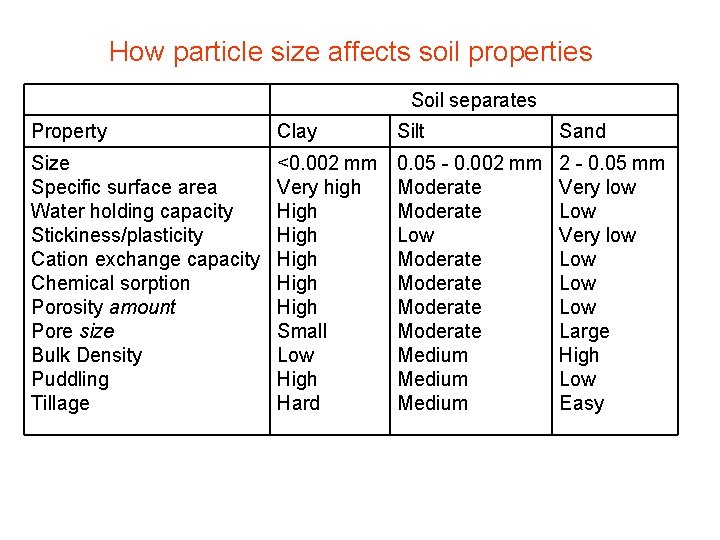
How particle size affects soil properties Soil separates Property Clay Silt Sand Size Specific surface area Water holding capacity Stickiness/plasticity Cation exchange capacity Chemical sorption Porosity amount Pore size Bulk Density Puddling Tillage <0. 002 mm Very high High High Small Low High Hard 0. 05 - 0. 002 mm Moderate Low Moderate Medium 2 - 0. 05 mm Very low Low Low Large High Low Easy
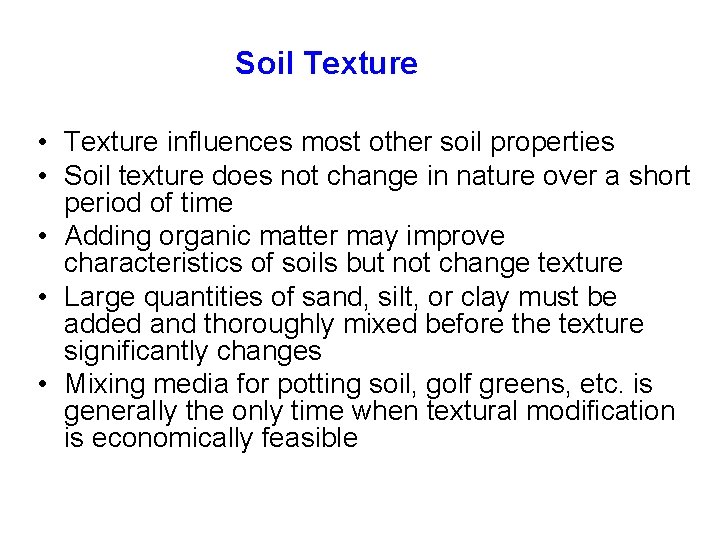
Soil Texture • Texture influences most other soil properties • Soil texture does not change in nature over a short period of time • Adding organic matter may improve characteristics of soils but not change texture • Large quantities of sand, silt, or clay must be added and thoroughly mixed before the texture significantly changes • Mixing media for potting soil, golf greens, etc. is generally the only time when textural modification is economically feasible