
Ch 35 Population Change Higher Human Biology Population
Ch 35: Population Change Higher Human Biology
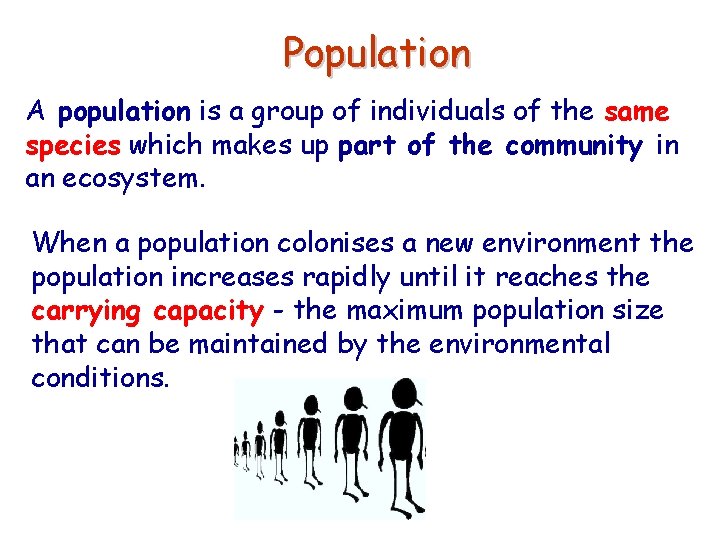
Population A population is a group of individuals of the same species which makes up part of the community in an ecosystem. When a population colonises a new environment the population increases rapidly until it reaches the carrying capacity - the maximum population size that can be maintained by the environmental conditions.
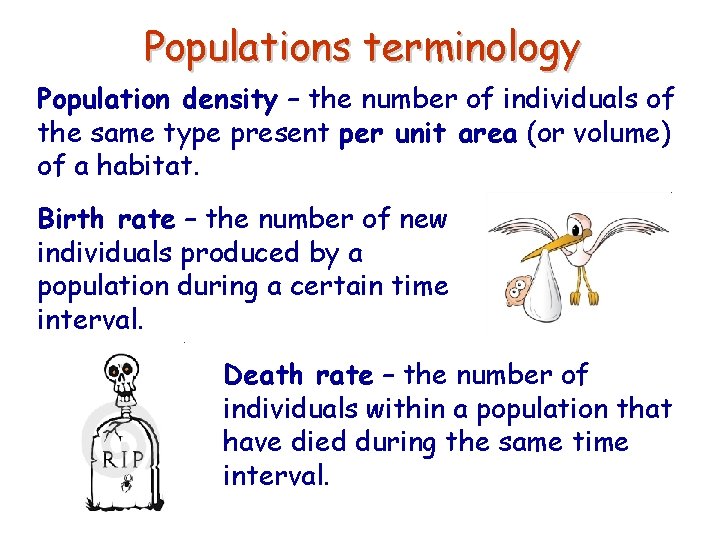
Populations terminology Population density – the number of individuals of the same type present per unit area (or volume) of a habitat. Birth rate – the number of new individuals produced by a population during a certain time interval. Death rate – the number of individuals within a population that have died during the same time interval.
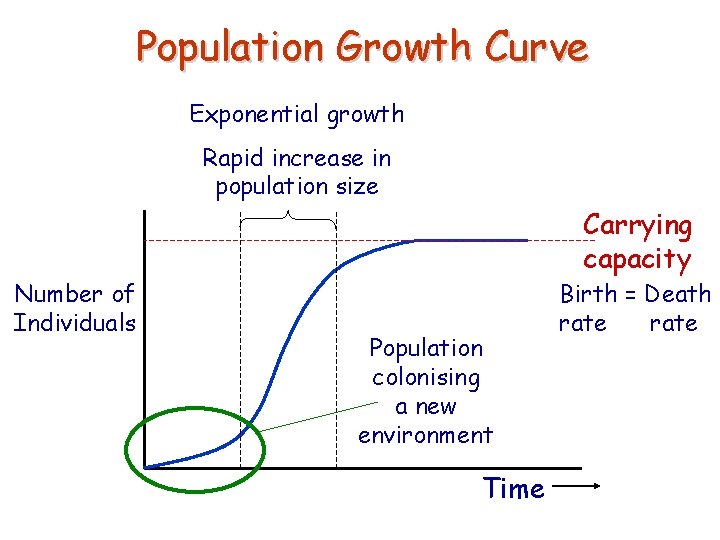
Population Growth Curve Exponential growth Rapid increase in population size Carrying capacity Number of Individuals Population colonising a new environment Time Birth = Death rate
Population Stability When the population reaches the level that the available environmental recourses can just maintain the population becomes stable. At this stage it is in a state of dynamic equilibrium (there are very slight changes but overall it is relatively balanced) and the population has reached its carrying capacity and birth rate equals death rate. Human interference has caused many populations to become unstable or threatened.

Population Regulation The carrying capacity is determined by: • Food • Oxygen • Water • Space Death by…. If one is limited it prevents the population increasing • Predation • Disease Regulatory Effect Population decrease • Pollution by organism’s waste
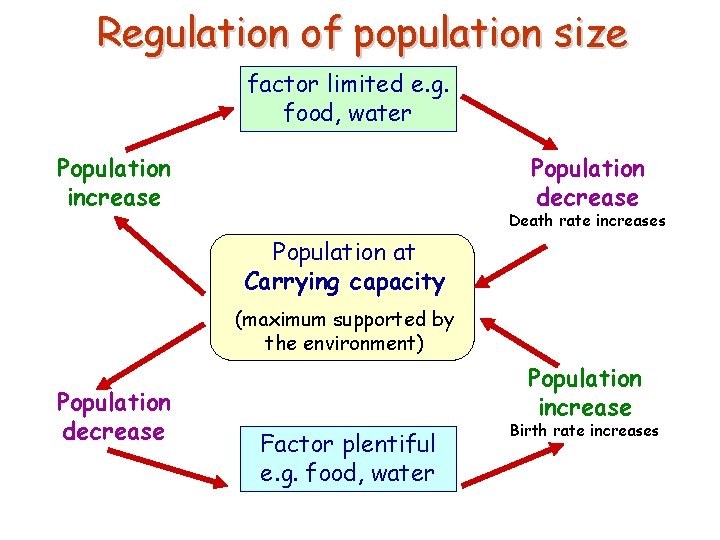
Regulation of population size factor limited e. g. food, water Population increase Population decrease Death rate increases Population at Carrying capacity (maximum supported by the environment) Population decrease Population increase Factor plentiful e. g. food, water Birth rate increases

Human Population Explosion Humans have overcome causes of mortality (e. g. predation) so have increased our carrying capacity & have increased exponential growth. Revolutionary changes Agricultural Industrial Rapid population increase
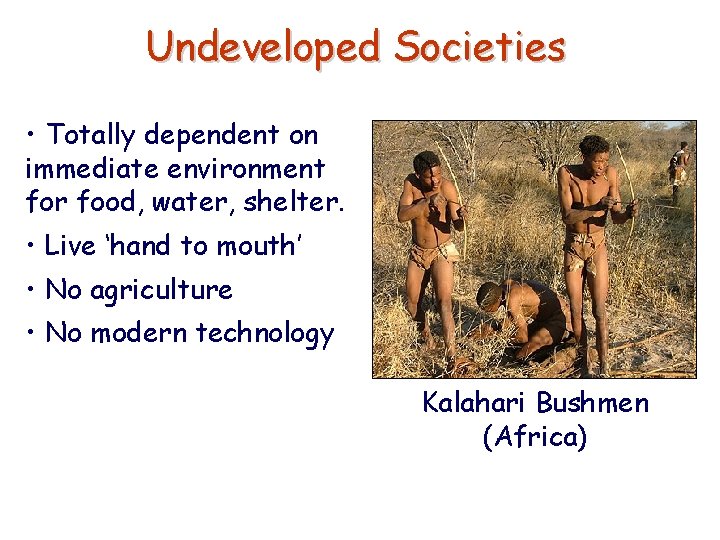
Undeveloped Societies • Totally dependent on immediate environment for food, water, shelter. • Live ‘hand to mouth’ • No agriculture • No modern technology Kalahari Bushmen (Africa)
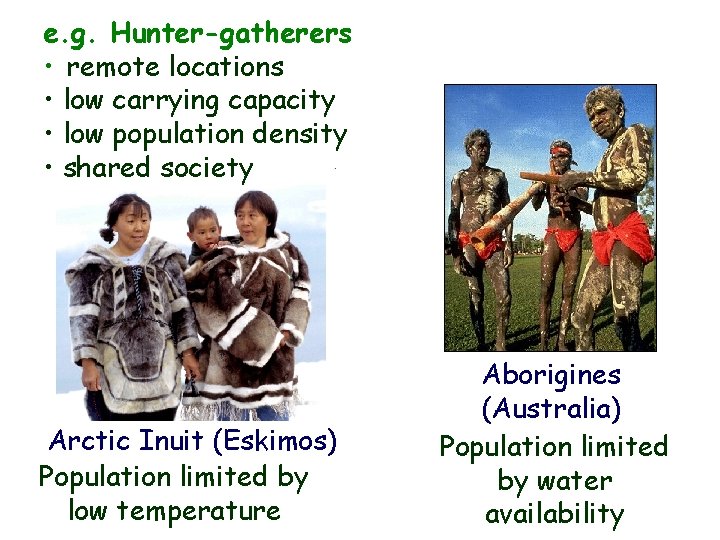
e. g. Hunter-gatherers • remote locations • low carrying capacity • low population density • shared society Arctic Inuit (Eskimos) Population limited by low temperature Aborigines (Australia) Population limited by water availability
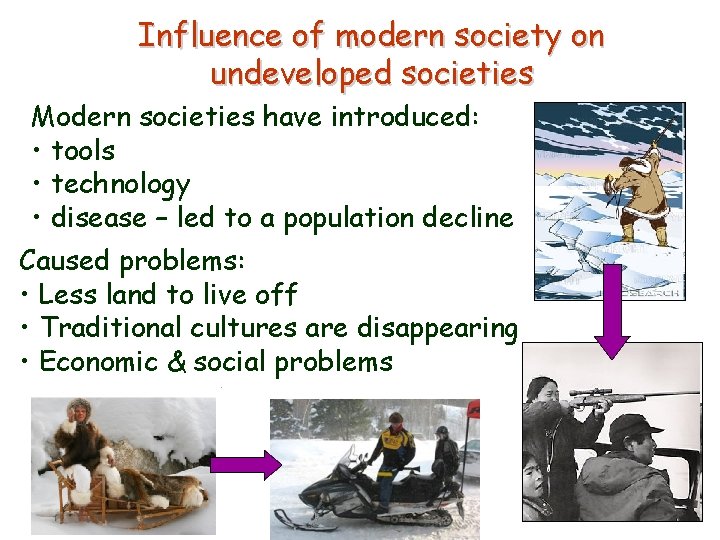
Influence of modern society on undeveloped societies Modern societies have introduced: • tools • technology • disease – led to a population decline Caused problems: • Less land to live off • Traditional cultures are disappearing • Economic & social problems
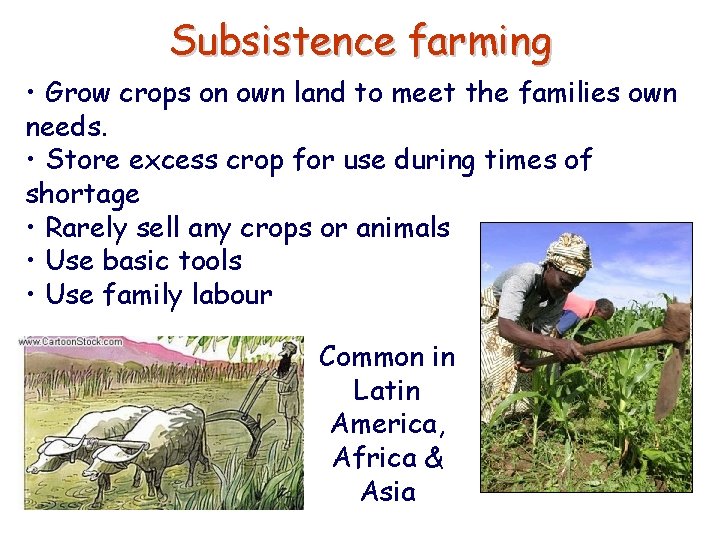
Subsistence farming • Grow crops on own land to meet the families own needs. • Store excess crop for use during times of shortage • Rarely sell any crops or animals • Use basic tools • Use family labour Common in Latin America, Africa & Asia
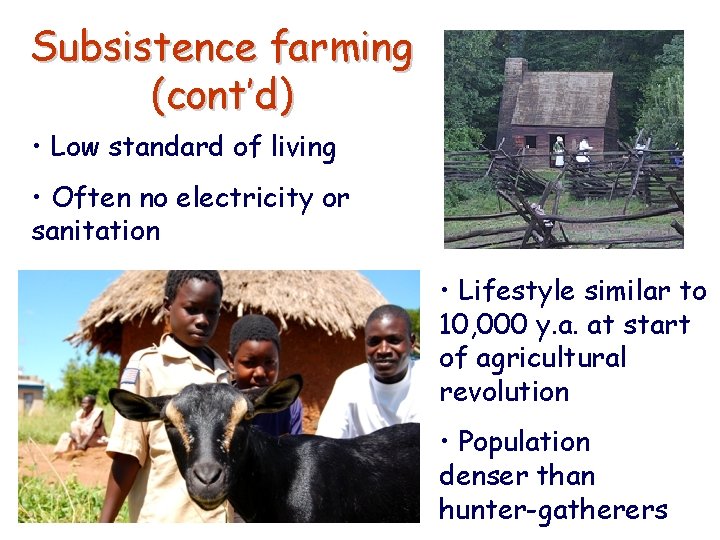
Subsistence farming (cont’d) • Low standard of living • Often no electricity or sanitation • Lifestyle similar to 10, 000 y. a. at start of agricultural revolution • Population denser than hunter-gatherers
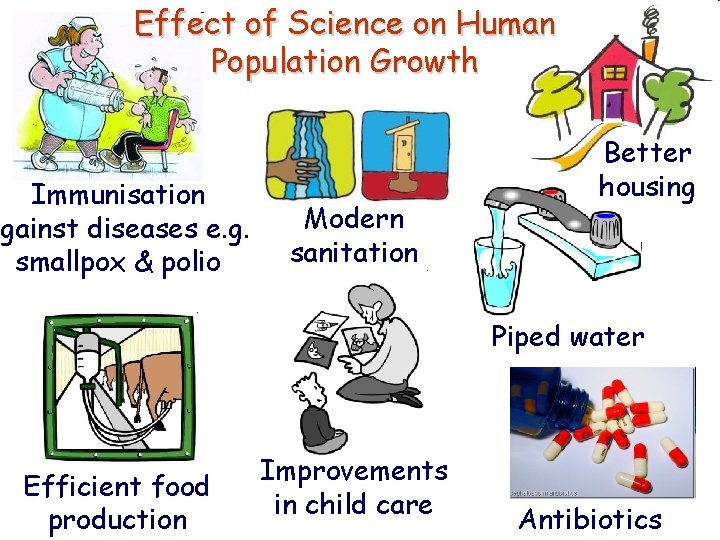
Effect of Science on Human Population Growth Immunisation against diseases e. g. smallpox & polio Modern sanitation Better housing Piped water Efficient food production Improvements in child care Antibiotics
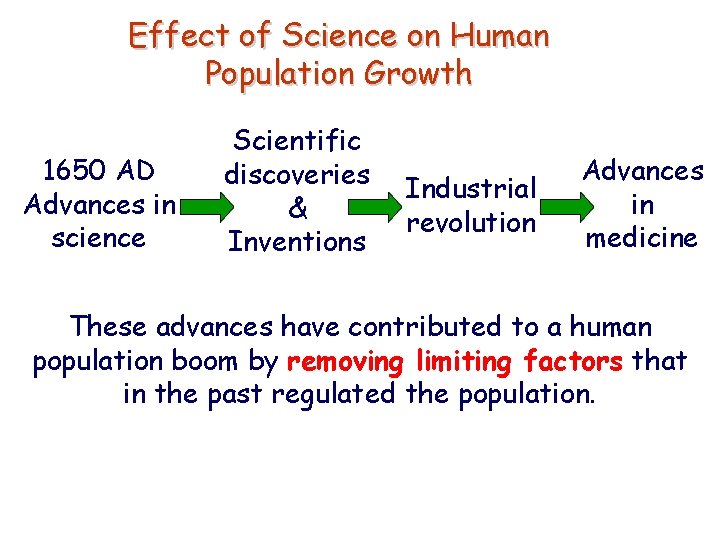
Effect of Science on Human Population Growth 1650 AD Advances in science Scientific discoveries & Inventions Industrial revolution Advances in medicine These advances have contributed to a human population boom by removing limiting factors that in the past regulated the population.
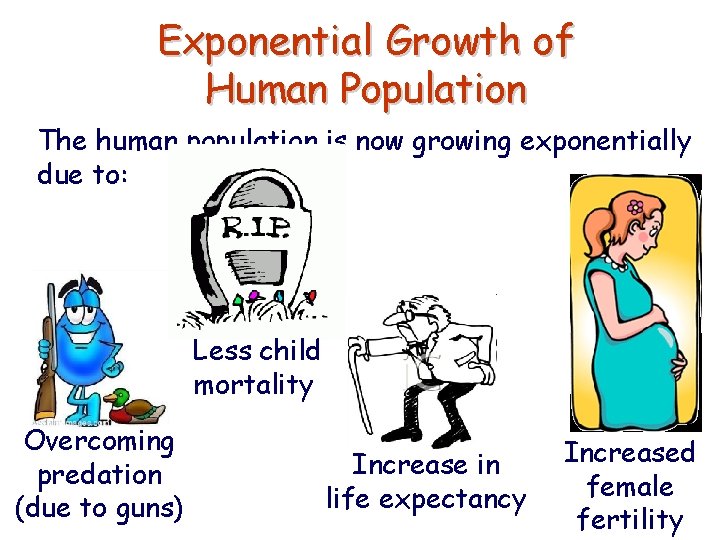
Exponential Growth of Human Population The human population is now growing exponentially due to: Less child mortality Overcoming predation (due to guns) Increase in life expectancy Increased female fertility
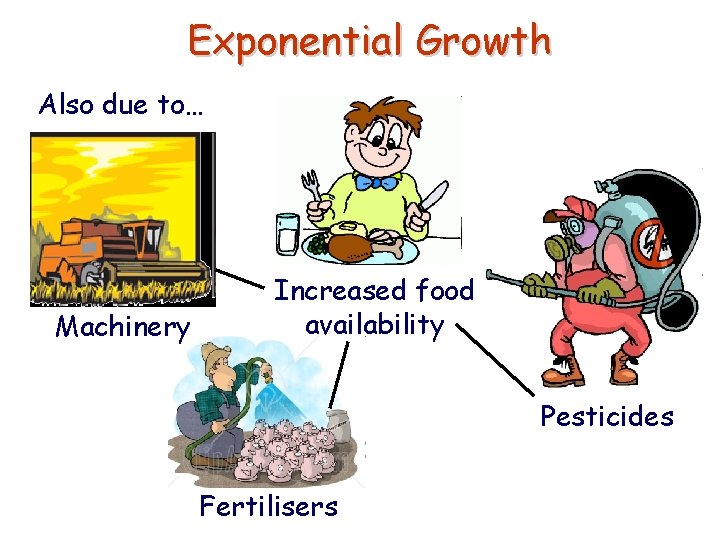
Exponential Growth Also due to… Machinery Increased food availability Pesticides Fertilisers
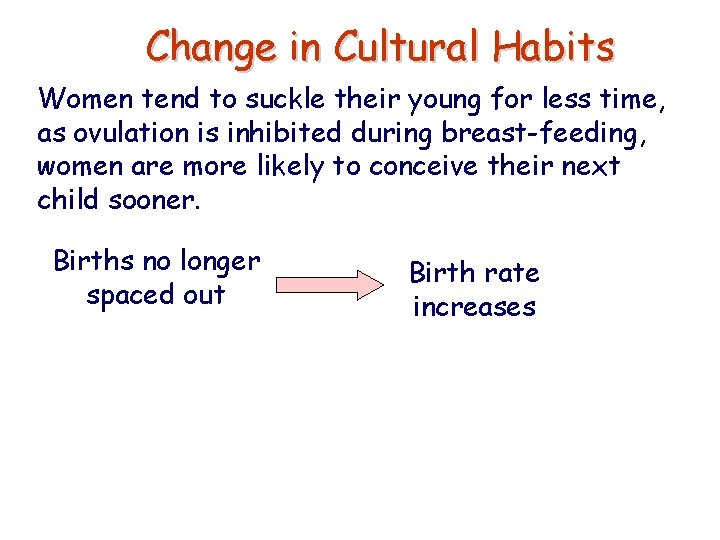
Change in Cultural Habits Women tend to suckle their young for less time, as ovulation is inhibited during breast-feeding, women are more likely to conceive their next child sooner. Births no longer spaced out Birth rate increases
Doubling time … the length of time for the worlds population to double. Actually the population In 1980 s growth rate is slowing doubling time down due to… was decreasing steadily thus • use of contraception the world • social pressures (e. g. China) population was • deaths from AIDS rapidly increasing
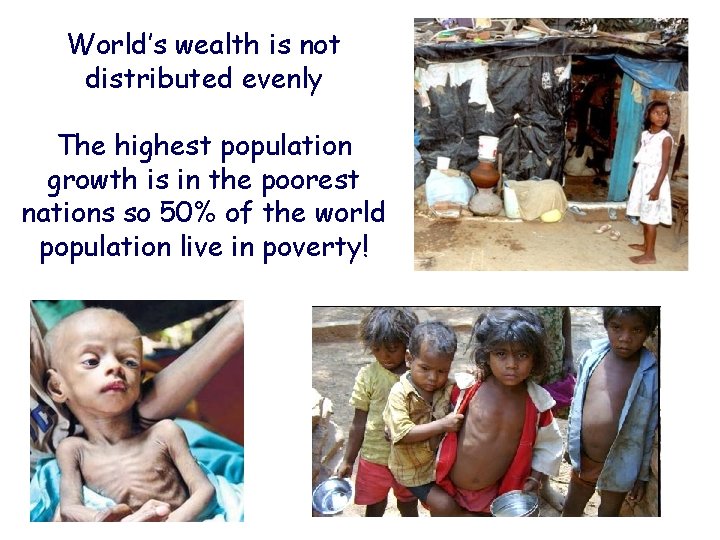
World’s wealth is not distributed evenly The highest population growth is in the poorest nations so 50% of the world population live in poverty!
- Slides: 20