
Ch 3 The Biosphere 3 1 What Is
Ch. 3 The Biosphere
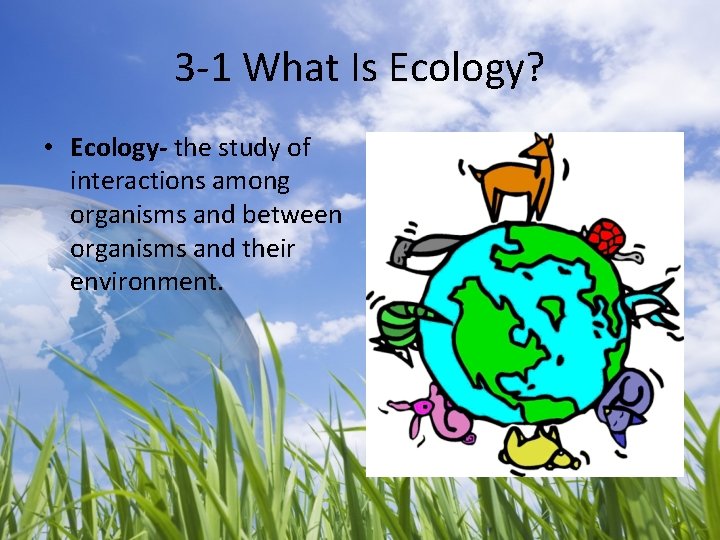
3 -1 What Is Ecology? • Ecology- the study of interactions among organisms and between organisms and their environment.

3 -1 What Is Ecology? • Biosphere- the combined portions of the planet in which all life exists, including land, water and air.
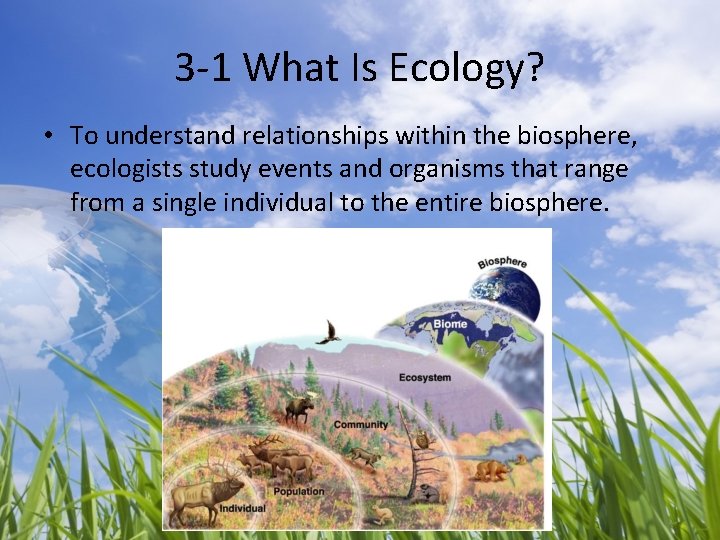
3 -1 What Is Ecology? • To understand relationships within the biosphere, ecologists study events and organisms that range from a single individual to the entire biosphere.
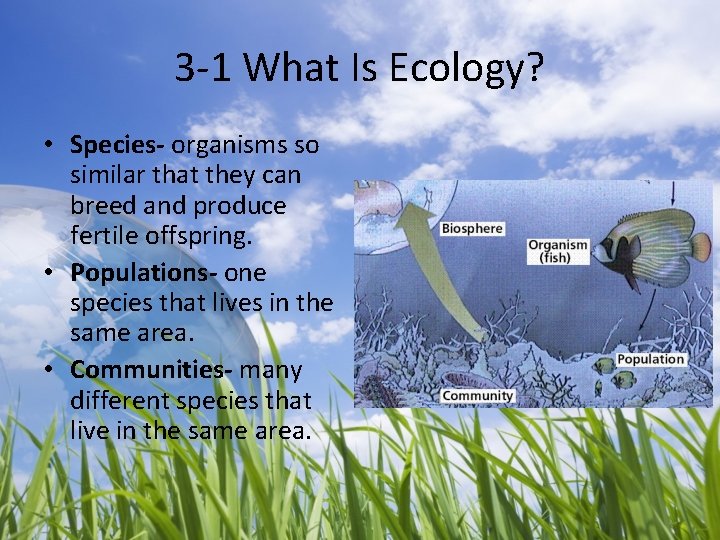
3 -1 What Is Ecology? • Species- organisms so similar that they can breed and produce fertile offspring. • Populations- one species that lives in the same area. • Communities- many different species that live in the same area.
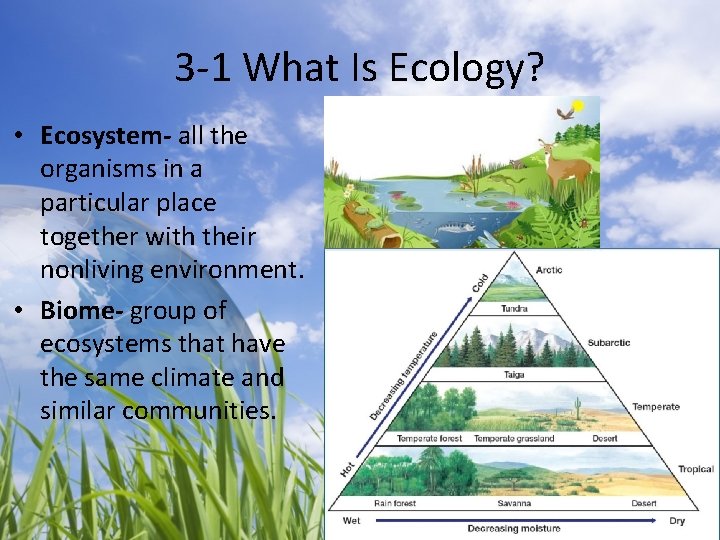
3 -1 What Is Ecology? • Ecosystem- all the organisms in a particular place together with their nonliving environment. • Biome- group of ecosystems that have the same climate and similar communities.
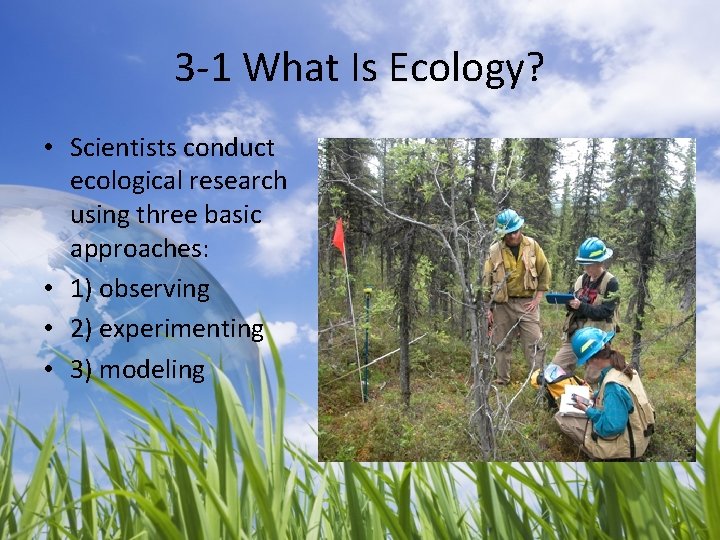
3 -1 What Is Ecology? • Scientists conduct ecological research using three basic approaches: • 1) observing • 2) experimenting • 3) modeling
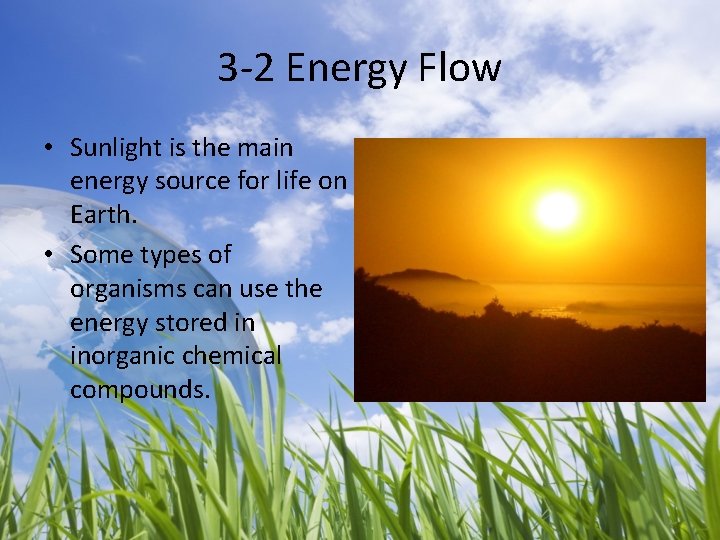
3 -2 Energy Flow • Sunlight is the main energy source for life on Earth. • Some types of organisms can use the energy stored in inorganic chemical compounds.
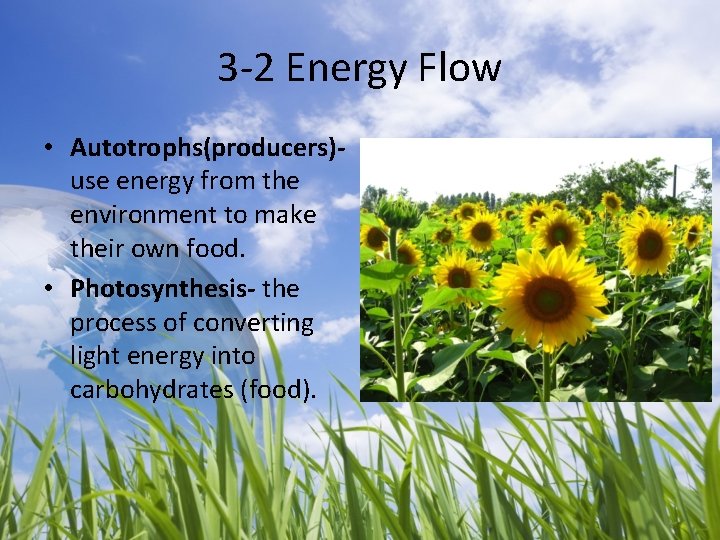
3 -2 Energy Flow • Autotrophs(producers)use energy from the environment to make their own food. • Photosynthesis- the process of converting light energy into carbohydrates (food).
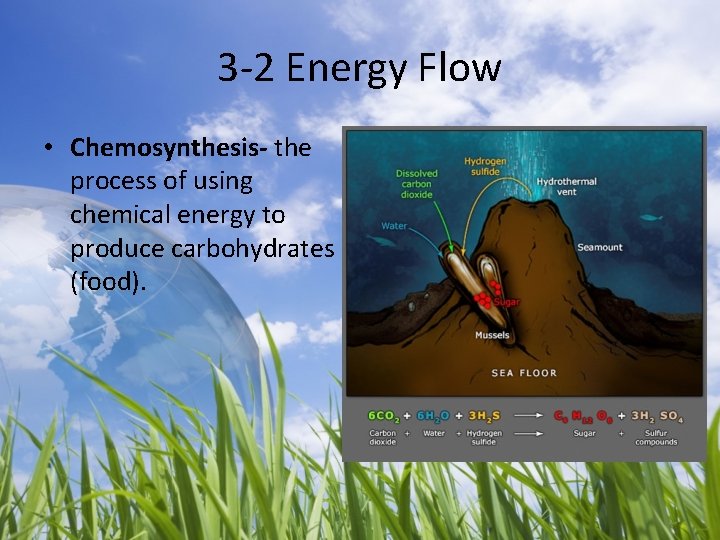
3 -2 Energy Flow • Chemosynthesis- the process of using chemical energy to produce carbohydrates (food).
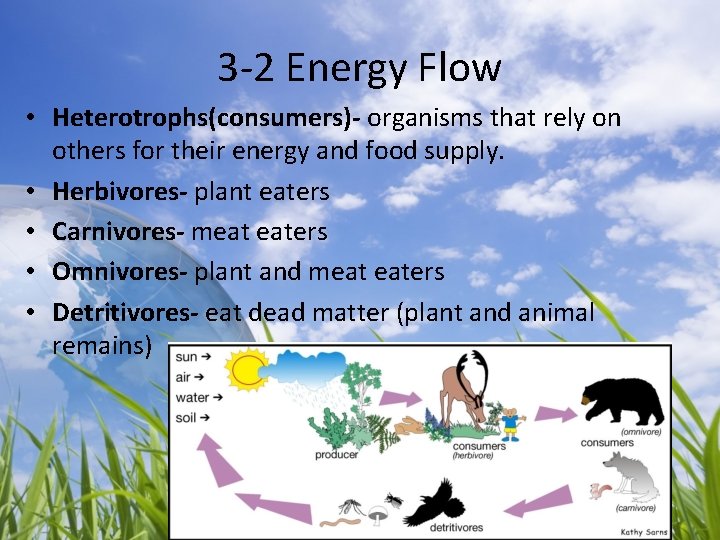
3 -2 Energy Flow • Heterotrophs(consumers)- organisms that rely on others for their energy and food supply. • Herbivores- plant eaters • Carnivores- meat eaters • Omnivores- plant and meat eaters • Detritivores- eat dead matter (plant and animal remains)
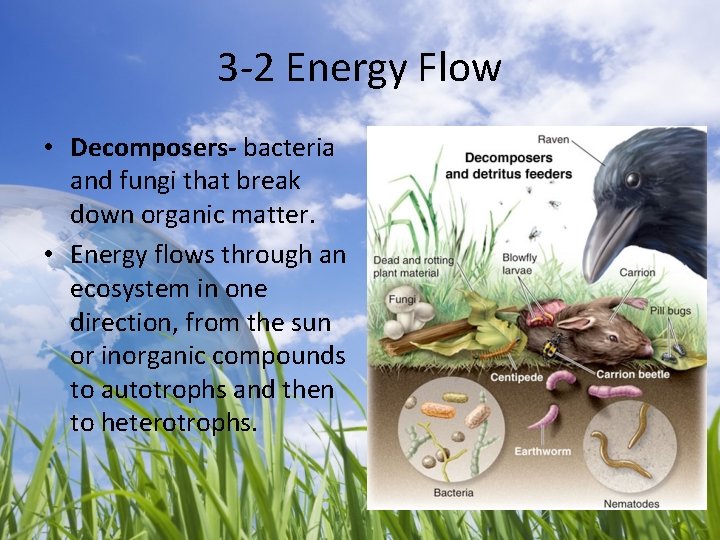
3 -2 Energy Flow • Decomposers- bacteria and fungi that break down organic matter. • Energy flows through an ecosystem in one direction, from the sun or inorganic compounds to autotrophs and then to heterotrophs.
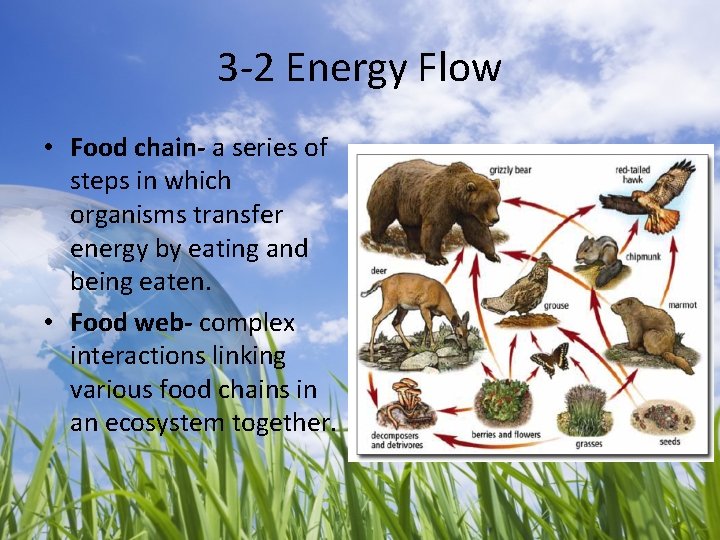
3 -2 Energy Flow • Food chain- a series of steps in which organisms transfer energy by eating and being eaten. • Food web- complex interactions linking various food chains in an ecosystem together.
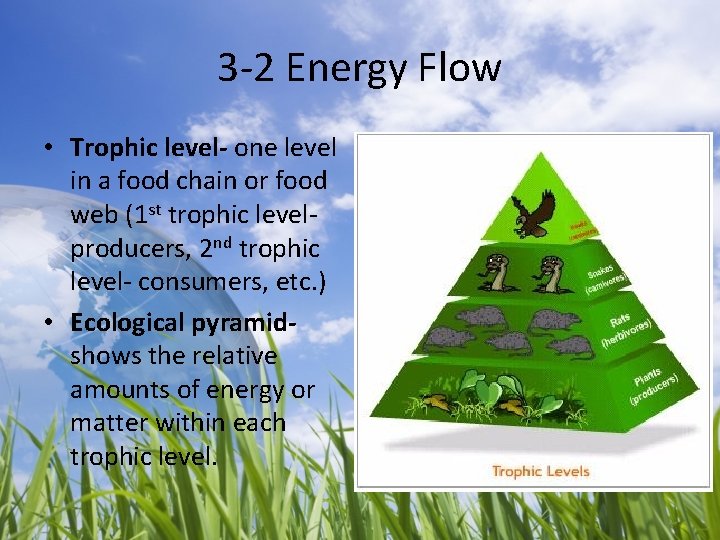
3 -2 Energy Flow • Trophic level- one level in a food chain or food web (1 st trophic levelproducers, 2 nd trophic level- consumers, etc. ) • Ecological pyramidshows the relative amounts of energy or matter within each trophic level.
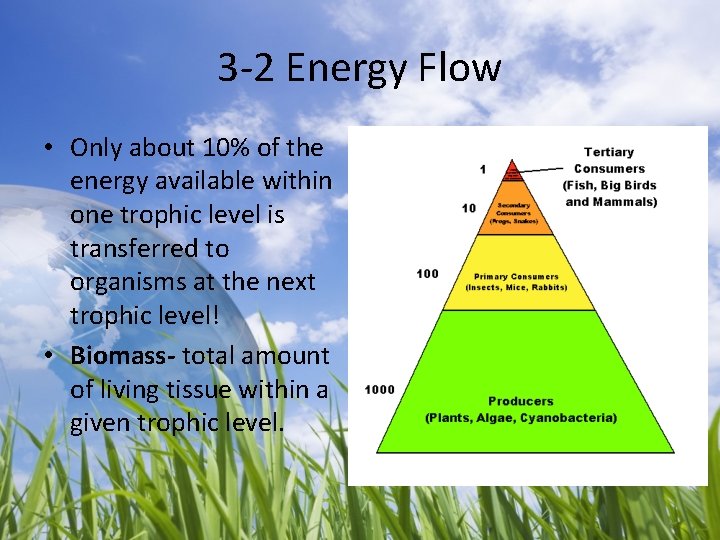
3 -2 Energy Flow • Only about 10% of the energy available within one trophic level is transferred to organisms at the next trophic level! • Biomass- total amount of living tissue within a given trophic level.
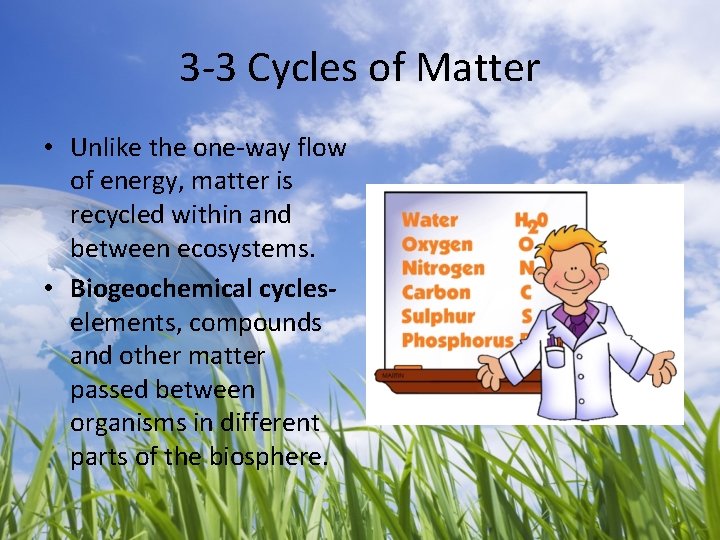
3 -3 Cycles of Matter • Unlike the one-way flow of energy, matter is recycled within and between ecosystems. • Biogeochemical cycleselements, compounds and other matter passed between organisms in different parts of the biosphere.
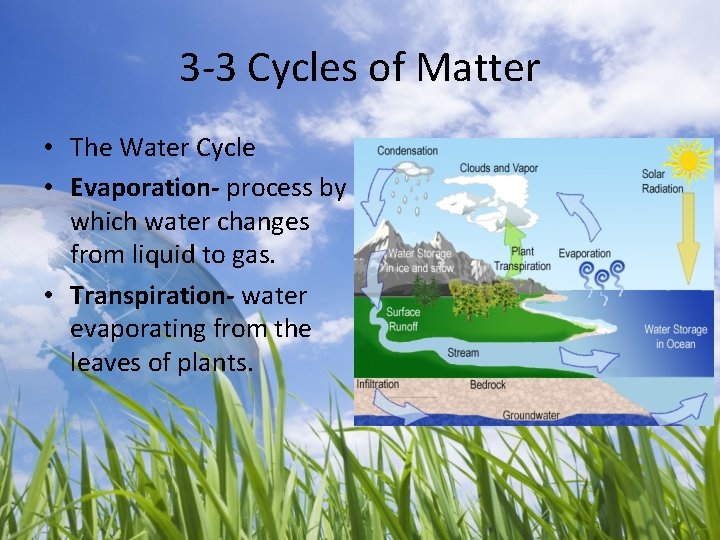
3 -3 Cycles of Matter • The Water Cycle • Evaporation- process by which water changes from liquid to gas. • Transpiration- water evaporating from the leaves of plants.
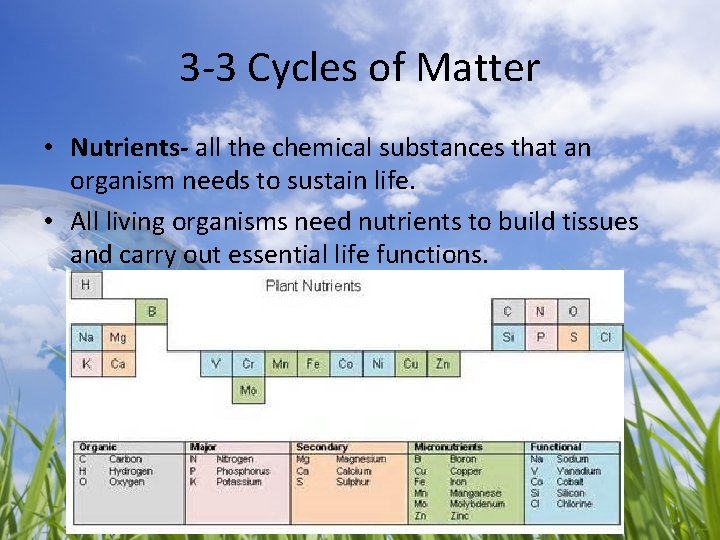
3 -3 Cycles of Matter • Nutrients- all the chemical substances that an organism needs to sustain life. • All living organisms need nutrients to build tissues and carry out essential life functions.
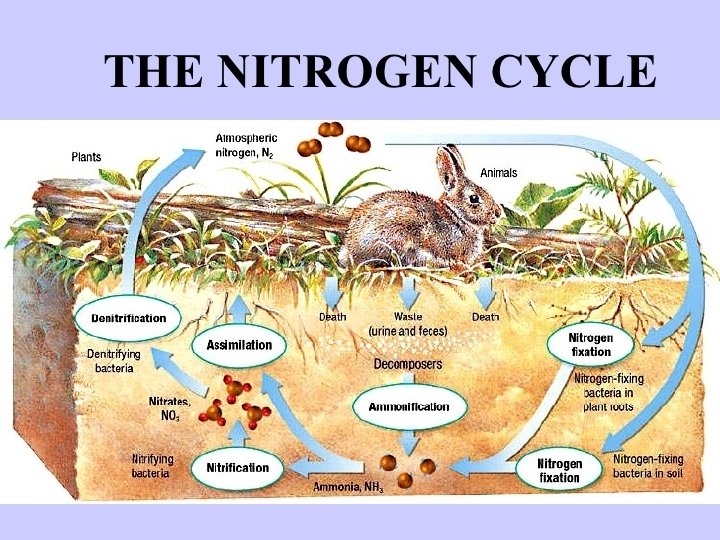
3 -3 Cycles of Matter • Nitrogen fixation- process by which certain bacteria convert atmospheric nitrogen into ammonia, nitrates, and nitrites to be used by producers to make proteins. • Denitrification- process by which some soil bacteria convert nitrates into nitrogen gas.
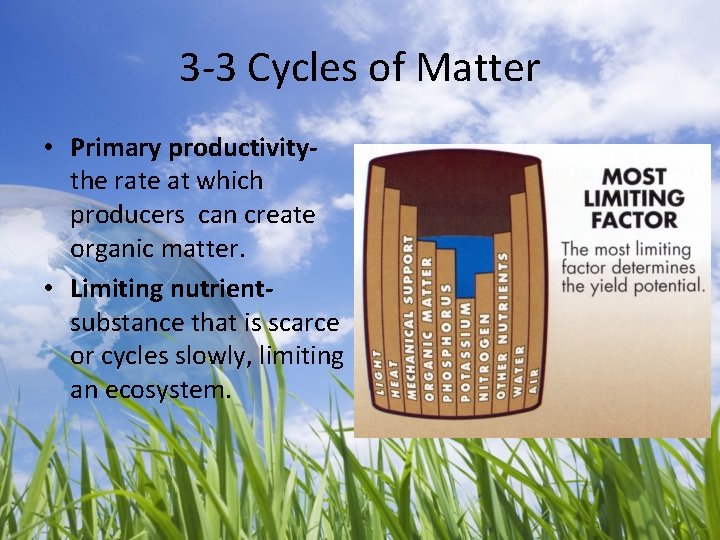
3 -3 Cycles of Matter • Primary productivitythe rate at which producers can create organic matter. • Limiting nutrientsubstance that is scarce or cycles slowly, limiting an ecosystem.
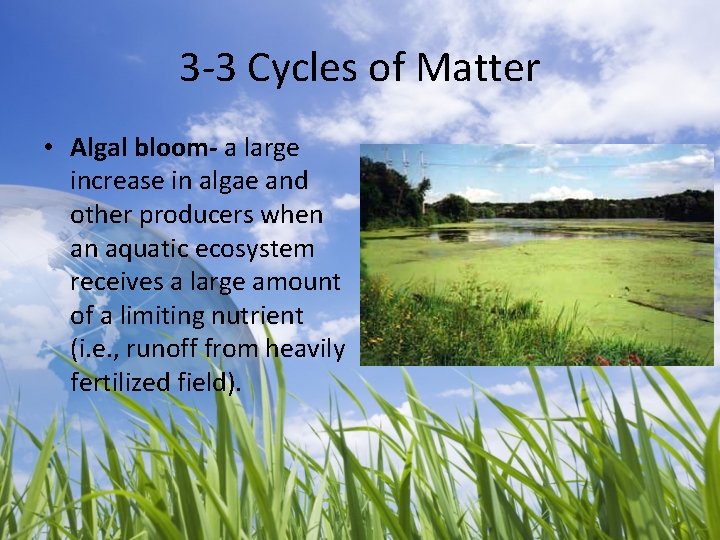
3 -3 Cycles of Matter • Algal bloom- a large increase in algae and other producers when an aquatic ecosystem receives a large amount of a limiting nutrient (i. e. , runoff from heavily fertilized field).
- Slides: 22