
Ch 3 3 Sedimentary Rock Sedimentary rock is

- Slides: 9
Ch. 3. 3 Sedimentary Rock
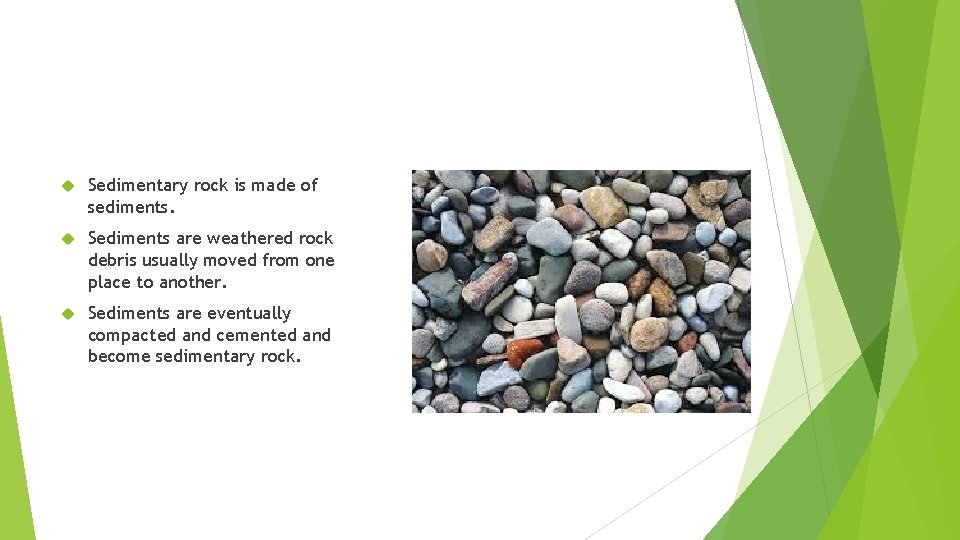
Sedimentary rock is made of sediments. Sediments are weathered rock debris usually moved from one place to another. Sediments are eventually compacted and cemented and become sedimentary rock.
Formation of Sedimentary Rock Sedimentary rock forms when solids settle out of fluids like air or water. There are several processes that form sedimentary rock.
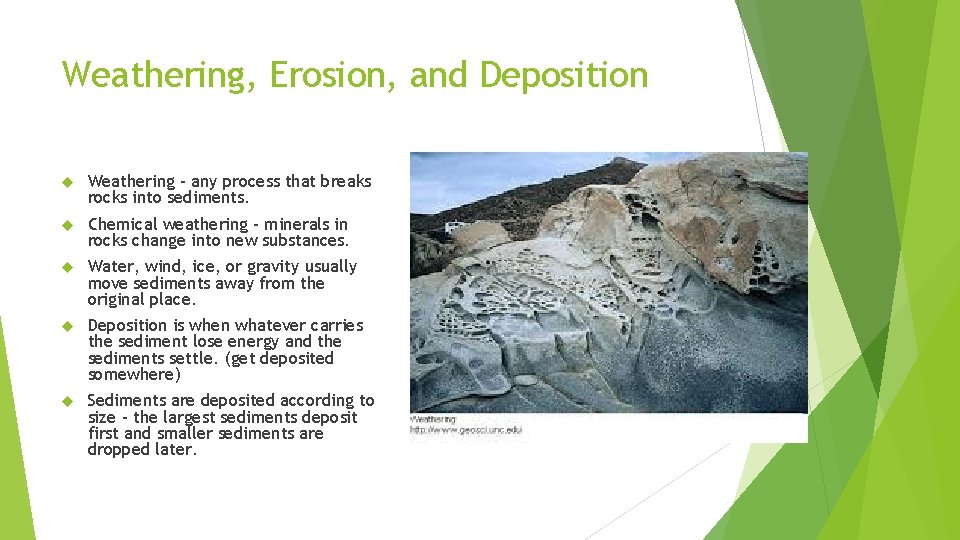
Weathering, Erosion, and Deposition Weathering – any process that breaks rocks into sediments. Chemical weathering – minerals in rocks change into new substances. Water, wind, ice, or gravity usually move sediments away from the original place. Deposition is when whatever carries the sediment lose energy and the sediments settle. (get deposited somewhere) Sediments are deposited according to size – the largest sediments deposit first and smaller sediments are dropped later.
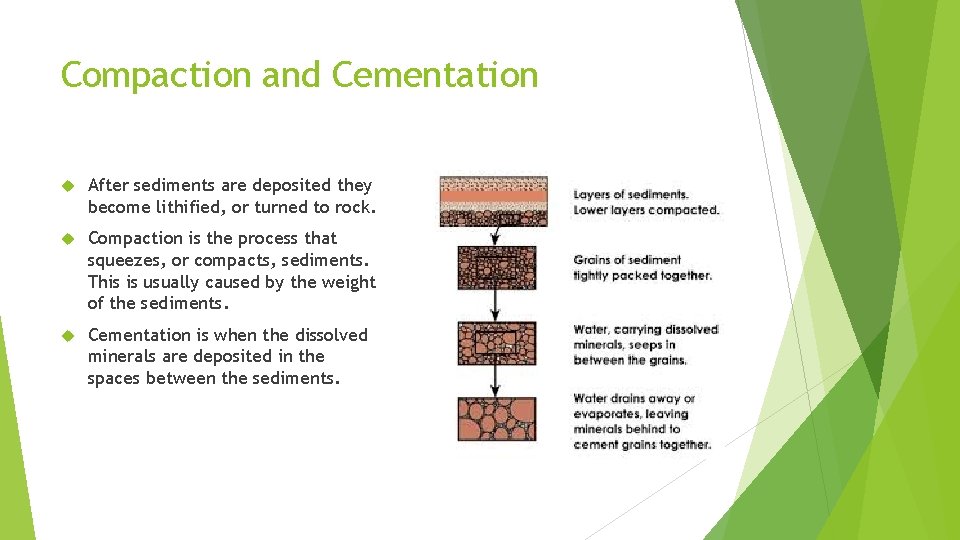
Compaction and Cementation After sediments are deposited they become lithified, or turned to rock. Compaction is the process that squeezes, or compacts, sediments. This is usually caused by the weight of the sediments. Cementation is when the dissolved minerals are deposited in the spaces between the sediments.
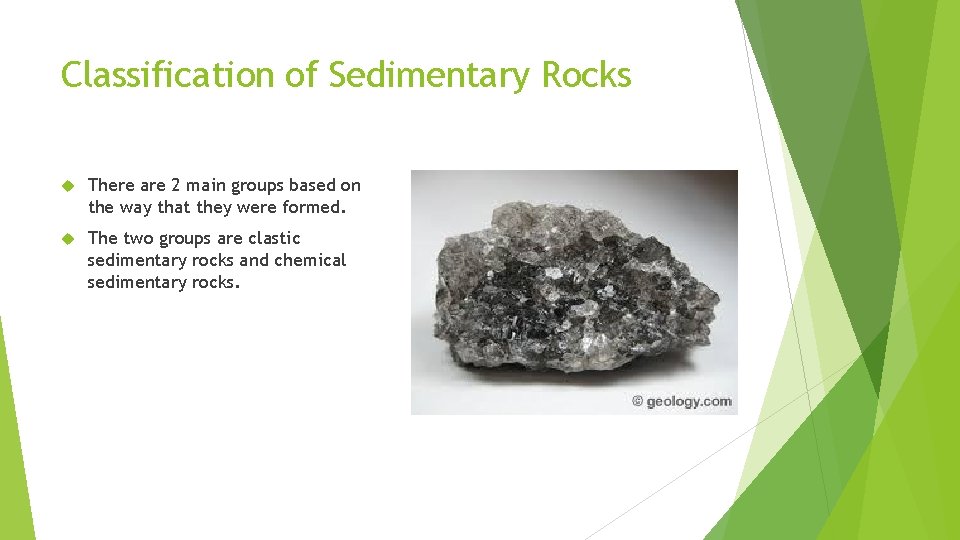
Classification of Sedimentary Rocks There are 2 main groups based on the way that they were formed. The two groups are clastic sedimentary rocks and chemical sedimentary rocks.
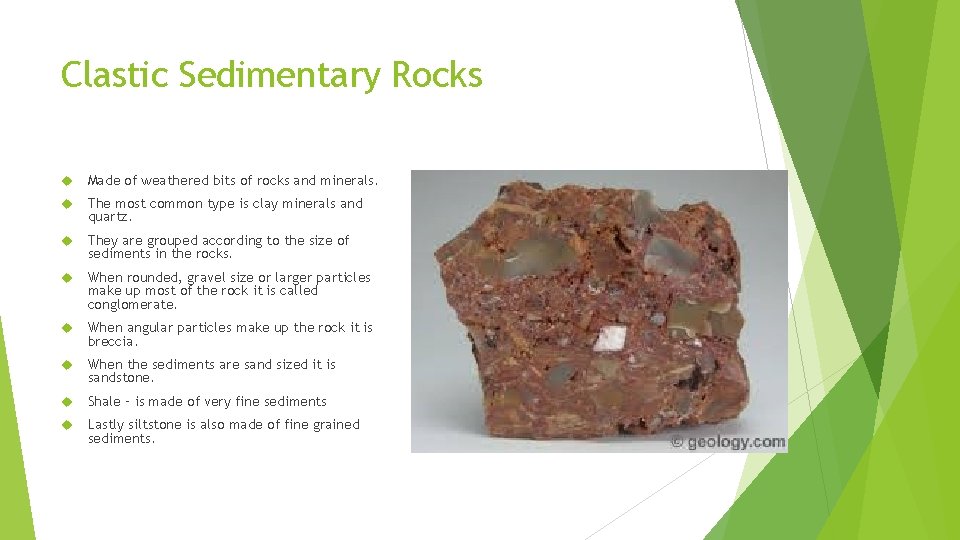
Clastic Sedimentary Rocks Made of weathered bits of rocks and minerals. The most common type is clay minerals and quartz. They are grouped according to the size of sediments in the rocks. When rounded, gravel size or larger particles make up most of the rock it is called conglomerate. When angular particles make up the rock it is breccia. When the sediments are sand sized it is sandstone. Shale – is made of very fine sediments Lastly siltstone is also made of fine grained sediments.
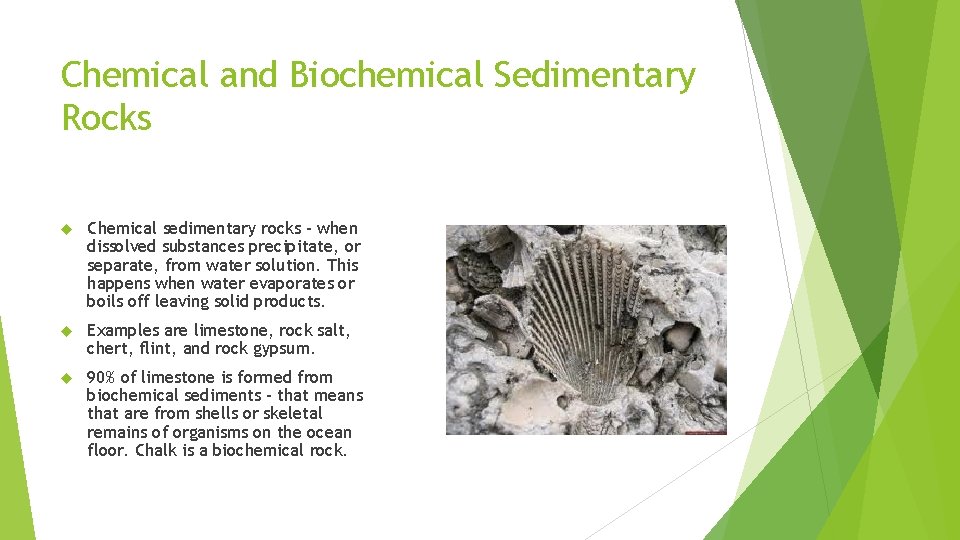
Chemical and Biochemical Sedimentary Rocks Chemical sedimentary rocks – when dissolved substances precipitate, or separate, from water solution. This happens when water evaporates or boils off leaving solid products. Examples are limestone, rock salt, chert, flint, and rock gypsum. 90% of limestone is formed from biochemical sediments – that means that are from shells or skeletal remains of organisms on the ocean floor. Chalk is a biochemical rock.
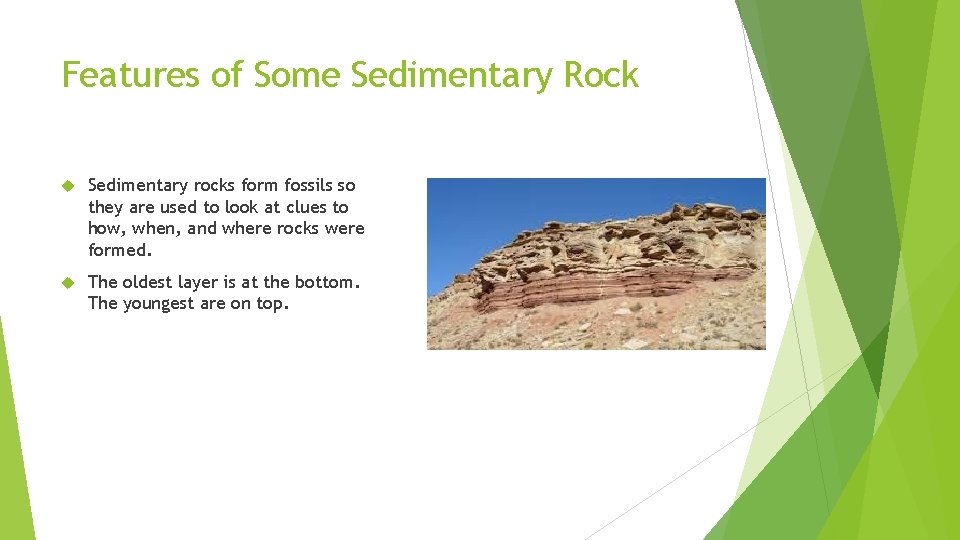
Features of Some Sedimentary Rock Sedimentary rocks form fossils so they are used to look at clues to how, when, and where rocks were formed. The oldest layer is at the bottom. The youngest are on top.