
Ch 28 Simple Invertebrates Section 28 1 Sponges

Ch. 28 – Simple Invertebrates

Section 28. 1 Sponges
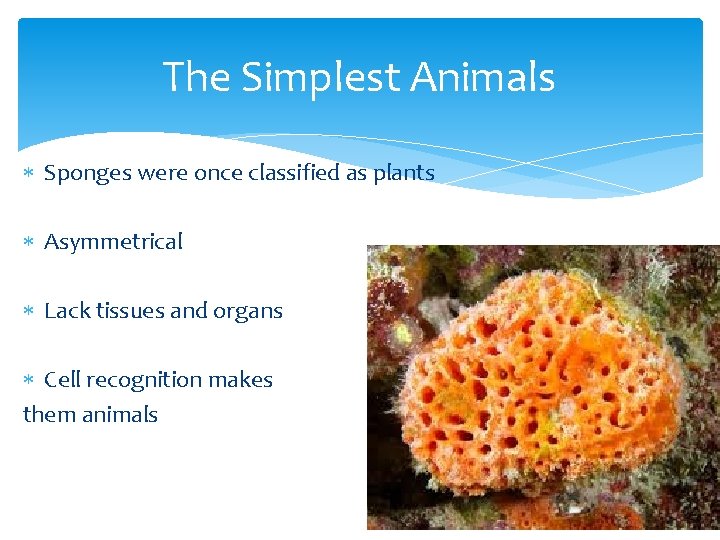
The Simplest Animals Sponges were once classified as plants Asymmetrical Lack tissues and organs Cell recognition makes them animals
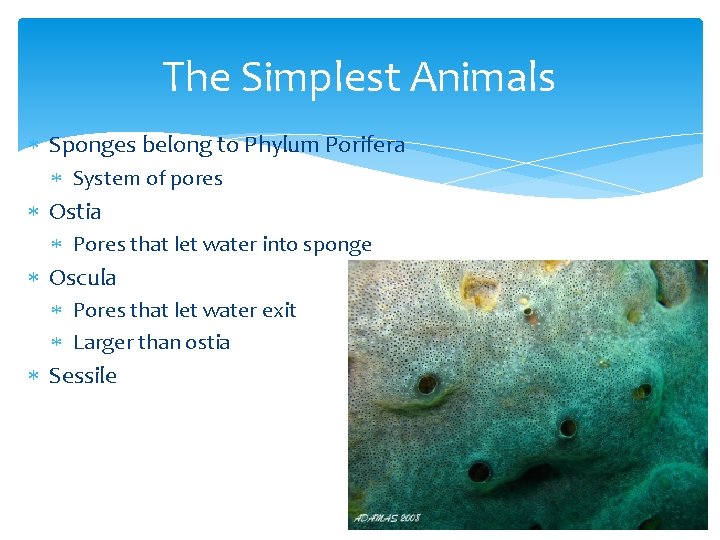
The Simplest Animals Sponges belong to Phylum Porifera System of pores Ostia Pores that let water into sponge Oscula Pores that let water exit Larger than ostia Sessile

Sponge Skeletons Prevent sponge body from collapsing on itself Composed of spicules Tiny needle composed of silica or calcium carbonate Some sponges contain spongin Flexible protein fiber
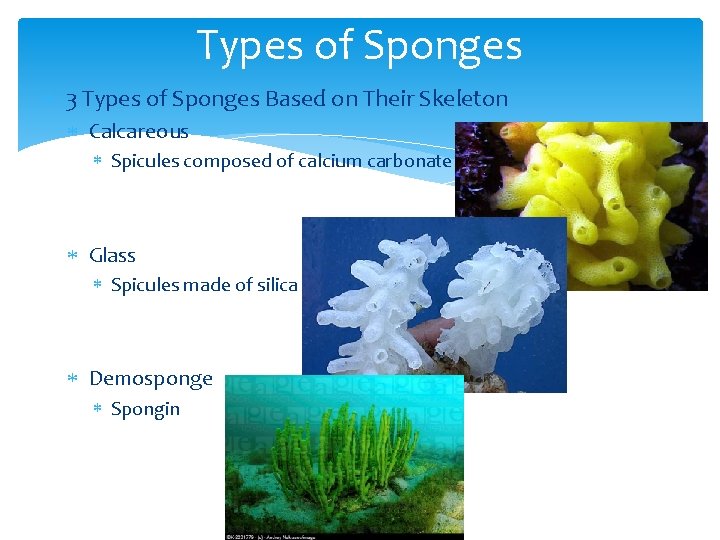
Types of Sponges 3 Types of Sponges Based on Their Skeleton Calcareous Spicules composed of calcium carbonate Glass Spicules made of silica Demosponge Spongin
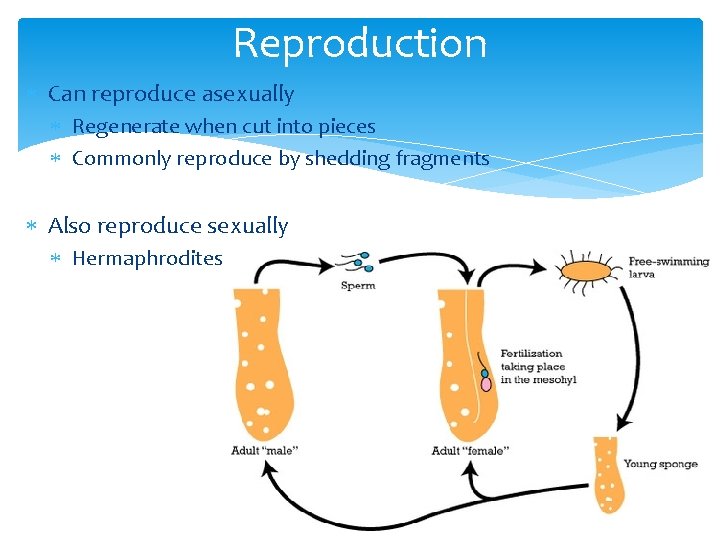
Reproduction Can reproduce asexually Regenerate when cut into pieces Commonly reproduce by shedding fragments Also reproduce sexually Hermaphrodites

Section 28. 2 Cnidarians
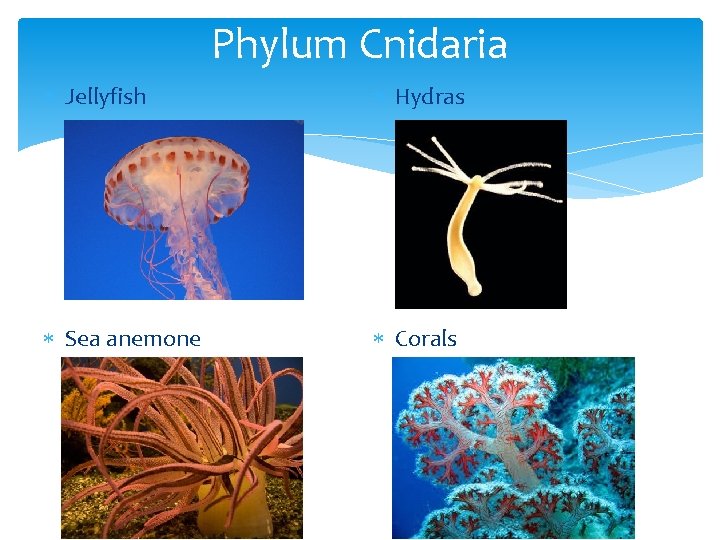
Phylum Cnidaria Jellyfish Hydras Sea anemone Corals
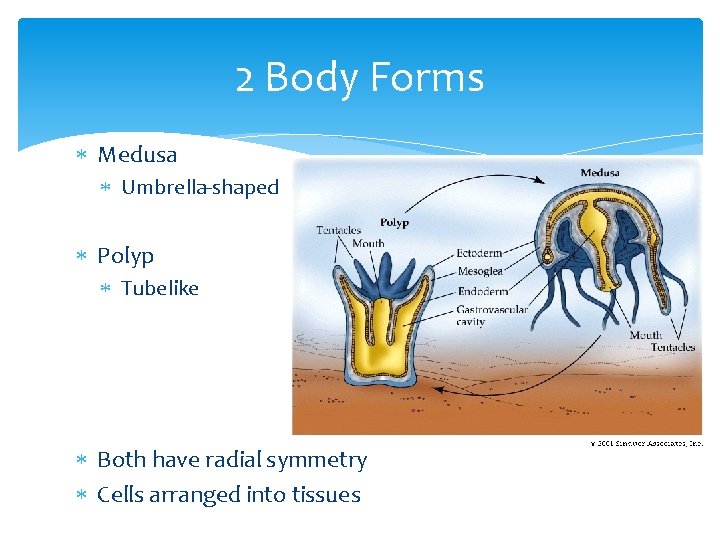
2 Body Forms Medusa Umbrella-shaped Polyp Tubelike Both have radial symmetry Cells arranged into tissues
Cnidocytes Characteristic specific to Cnidarians Stinging cells found on tentacles Nematocyst Barbed harpoon within cnidocytes Some contain deadly toxins
Hydrozoans Most primitive cnidarians Life cycle contains polyp and medusa stages Some found in freshwater Hydra Use basal disk to attach to objects Marine Hydrozoans More complex than freshwater forms Form colonies Reproduction Sexual and asexual reproduction Some species are hermaphrodites
Scyphozoans True jellyfish Range in size from a few cm to several feet in diameter Medusas Reproduce sexually
Anthozoans Largest class of cnidarians Polyps Brightly colored sea anemones and corals Tubelike body topped with tentacles Reproduce sexually and asexually Sea Anemones Feed on fish that swim near their tentacles Reproduce asexually by pulling self in half Corals Found in colonies Stonelike outer skeleton of calcium carbonate Only outer layer of coral is alive
Section 28. 3 Flatworms and Roundworms
Flatworms Largest group of acoelomate worms Tissues organized into organs Bilateral symmetry Belong to phylum Platyhelminthes Turbellaria Cestoda Trematoda
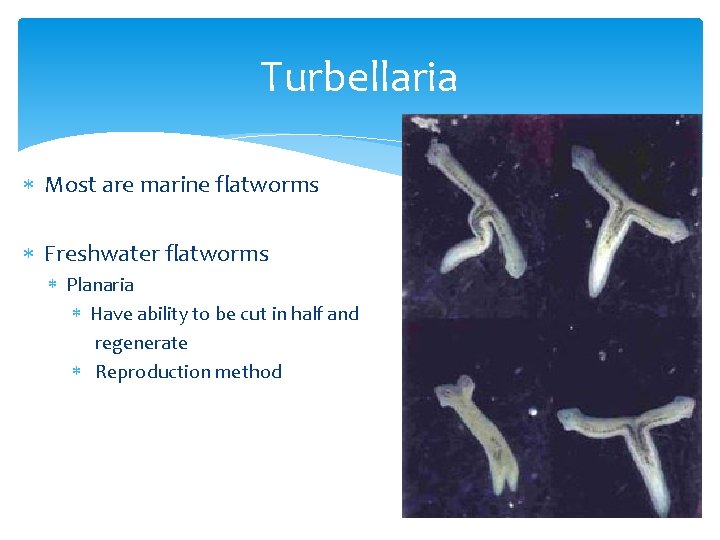
Turbellaria Most are marine flatworms Freshwater flatworms Planaria Have ability to be cut in half and regenerate Reproduction method
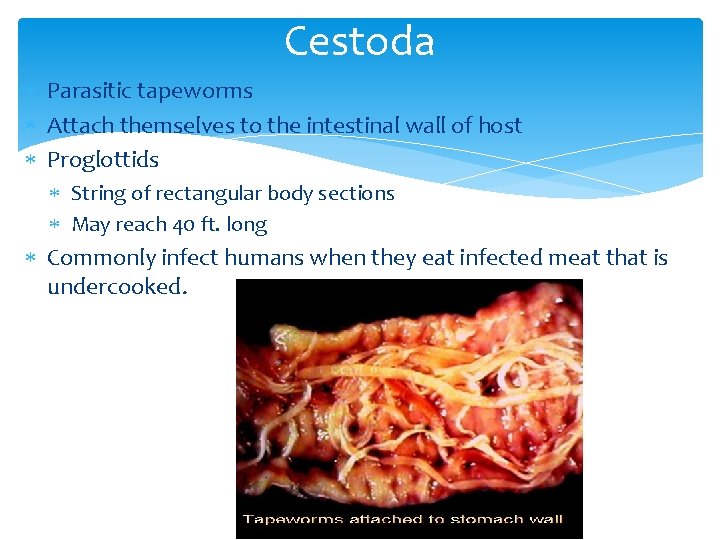
Cestoda Parasitic tapeworms Attach themselves to the intestinal wall of host Proglottids String of rectangular body sections May reach 40 ft. long Commonly infect humans when they eat infected meat that is undercooked.
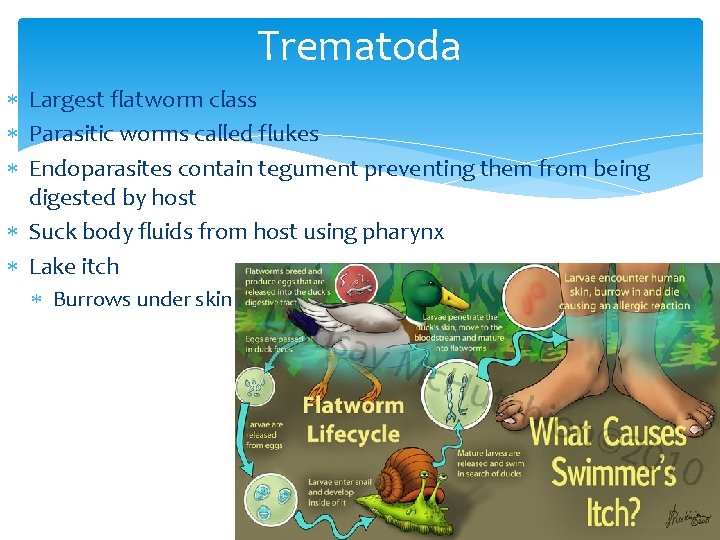
Trematoda Largest flatworm class Parasitic worms called flukes Endoparasites contain tegument preventing them from being digested by host Suck body fluids from host using pharynx Lake itch Burrows under skin
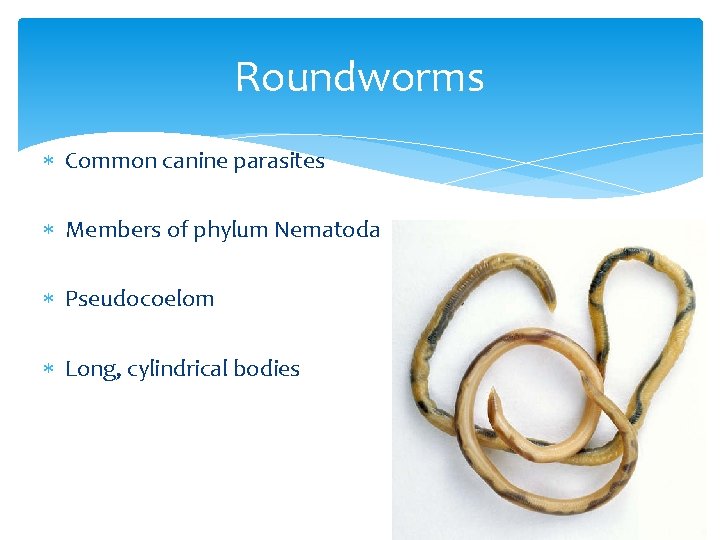
Roundworms Common canine parasites Members of phylum Nematoda Pseudocoelom Long, cylindrical bodies
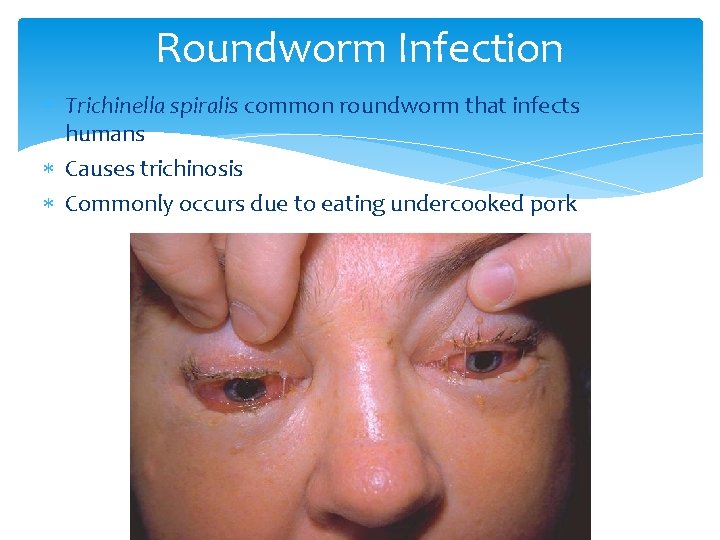
Roundworm Infection Trichinella spiralis common roundworm that infects humans Causes trichinosis Commonly occurs due to eating undercooked pork
- Slides: 21