
Ch 27 Phylum Mollusca Outline Forms Feeding Respiration
- Slides: 29
Ch 27: Phylum Mollusca
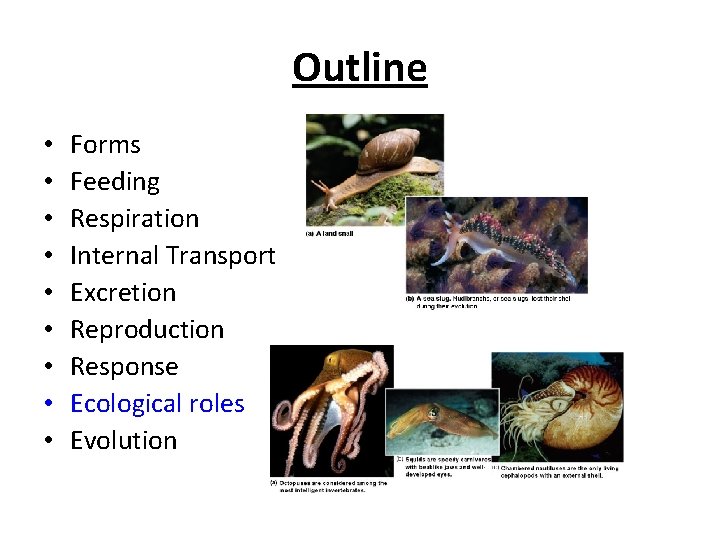
Outline • • • Forms Feeding Respiration Internal Transport Excretion Reproduction Response Ecological roles Evolution
Introduction to Mollusks • • Higher Invertebrates (smarter!!!) Total of 7 classes More than 112, 000 species They are found almost anywhere – Ex. Ocean, mountains, trees, etc. • Size ranges from a grain of sand to a giant squid (20 m)
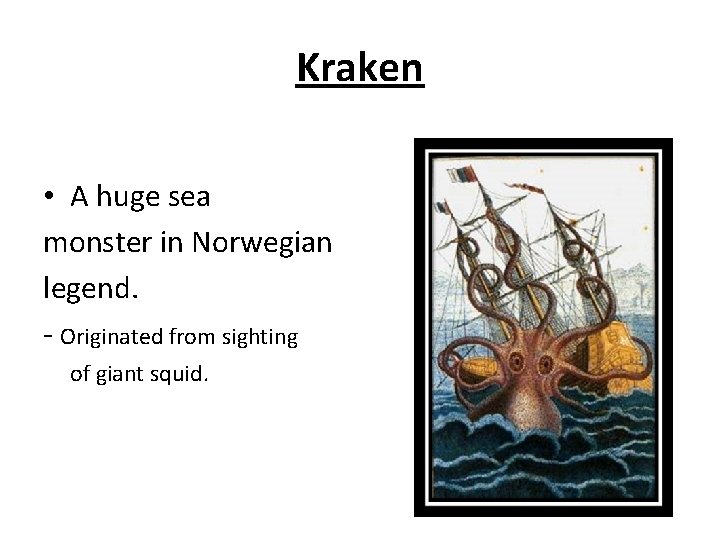
Kraken • A huge sea monster in Norwegian legend. - Originated from sighting of giant squid.
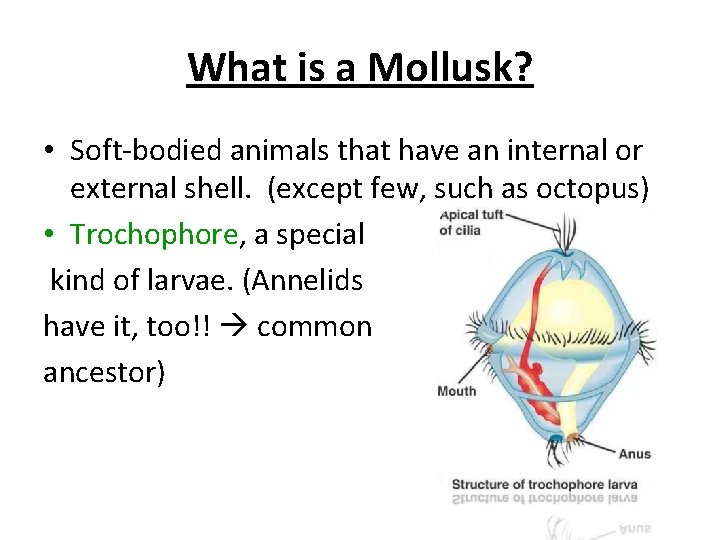
What is a Mollusk? • Soft-bodied animals that have an internal or external shell. (except few, such as octopus) • Trochophore, a special kind of larvae. (Annelids have it, too!! common ancestor)
Forms • Four basic parts of (most) mollusks: – Foot: soft and muscular, contains mouth, comes in different shapes. (ex. Flat or tentacles) – Mantle: thin, delicate tissue that covers most of a mollusk’s body. – Shell: made of Ca. CO 3 (calcium carbonate) secreted from glands in the mantle. – Visceral mass: contains the internal organs
Feeding • Herbivores, Carnivores, Filter feeders, Detritus, or parasites • Complete digestive system (mouth to anus) • Radula: tongue shaped feeding structure, with hundreds of tiny teeth (feel like sandpaper!!!)
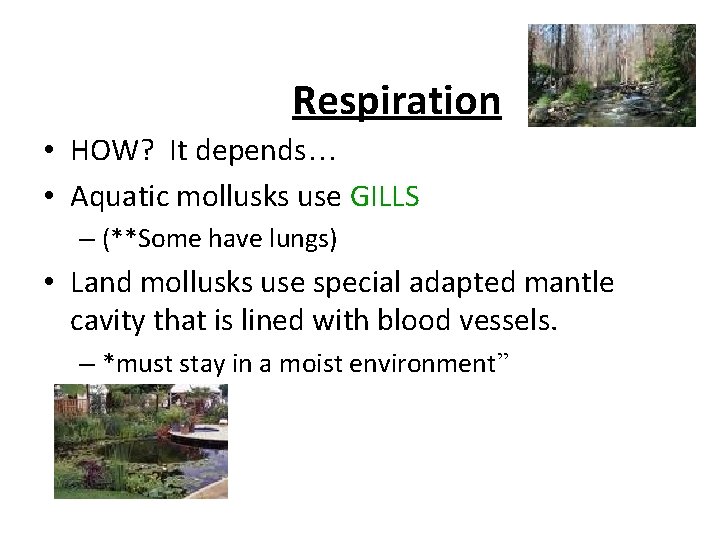
Respiration • HOW? It depends… • Aquatic mollusks use GILLS – (**Some have lungs) • Land mollusks use special adapted mantle cavity that is lined with blood vessels. – *must stay in a moist environment”
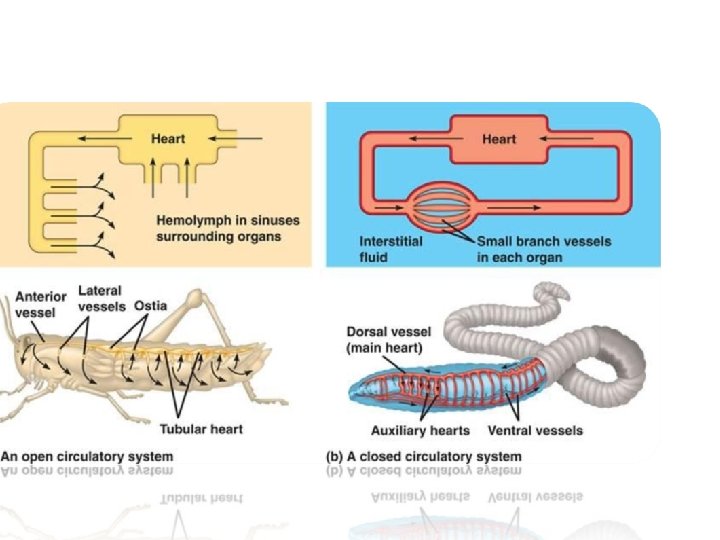
Internal Transport • Nutrients are carried by the blood to all parts • Open Circulatory System – Blood is pumped by a simple heart, the blood travels through body tissues in open spaces called sinuses, then to tissues -> gills -> heart – Good for slow moving mollusk (ex. snails and most other mollusks) • Closed Circulatory System – The blood always travels inside blood vessels. – Good for fast moving mollusk (ex. squid & octopus)
Excretion • Solid waste leaves through ANUS in the form of feces. • Liquid waste, ammonia, which is a nitrogenous waste, is removed by NEPHRIDIA.
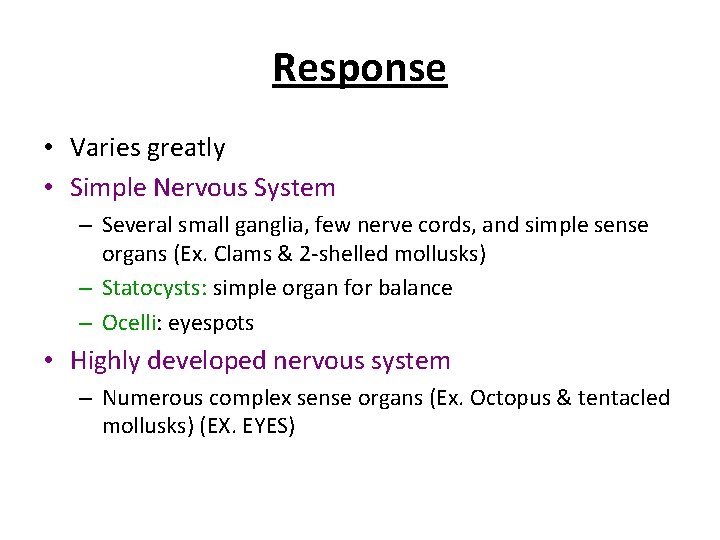
Reproduction • Sexes are separated and fertilization is external – Ex. Most mollusks (some snails & 2 -shelled mollusks) – Some release enormous #’s of eggs and sperms into open water • Internal fertilization in females – Ex. Tentacled Mollusks and some snails • Hermaphrodites – Snails • Switch sexes – Oysters
Response • Varies greatly • Simple Nervous System – Several small ganglia, few nerve cords, and simple sense organs (Ex. Clams & 2 -shelled mollusks) – Statocysts: simple organ for balance – Ocelli: eyespots • Highly developed nervous system – Numerous complex sense organs (Ex. Octopus & tentacled mollusks) (EX. EYES)
Their Ecological roles in our Society • Positives: – Important source of food – They are used to warn biologist about public health, b/c bivalves (filter feeders) may have “filter” dangerous pollutants. – Research for cancer prevention • Negatives: – Damage to garden and crops (slugs) – Poisonous bivalves – Shipworms destroys wooden boats, and docks.
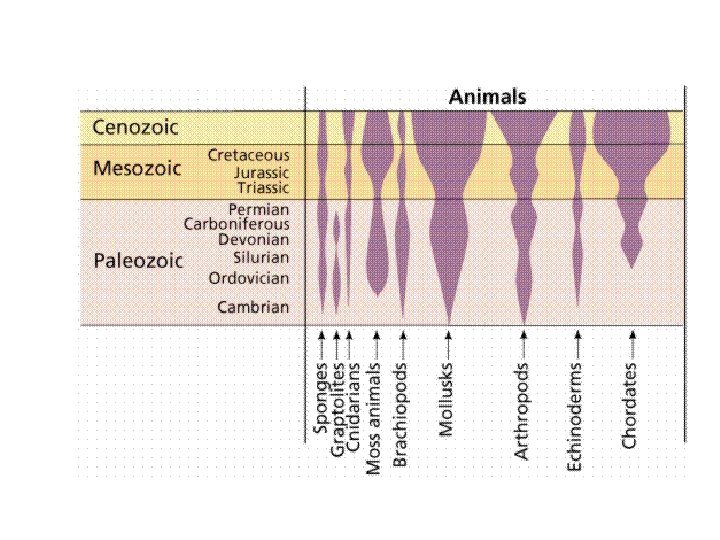
Evolution • Early Cambrian period (530 mi yrs ago) – First fossil of mollusk • Ordovician period (480 mi yrs ago) – Classes Gastropoda, Bivalvia, and Cephalopoda had increased greatly in number and diversity • Triploblastic protostome: During the first opening of embryonic development, the blastopore becomes the mouth. • Coelomates: true coelom, which means body cavity that is completely lined with mesoderm. More ADVANCED (comparing to Acoelomate and Pseudocolemate.
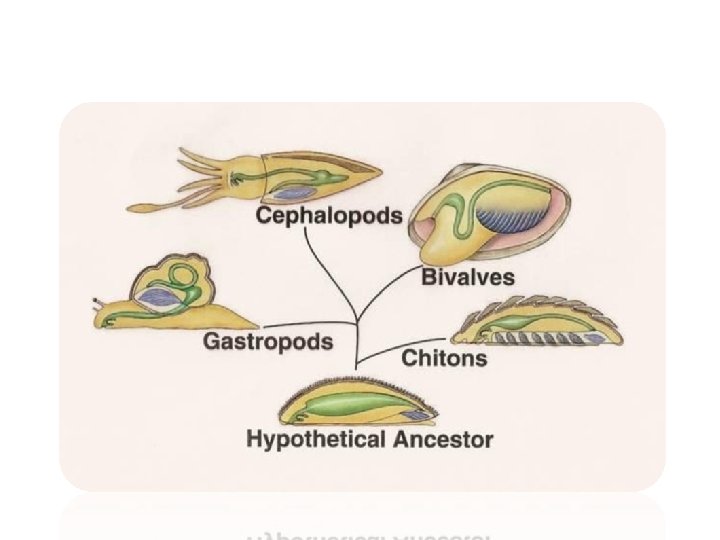
Evolution (contin’d) • Bilateral Symmetry • It is believed that the ancestors of the octopuses and squids – shelled mollusks – lost their shell in later evolution to adapt to a predatory life style
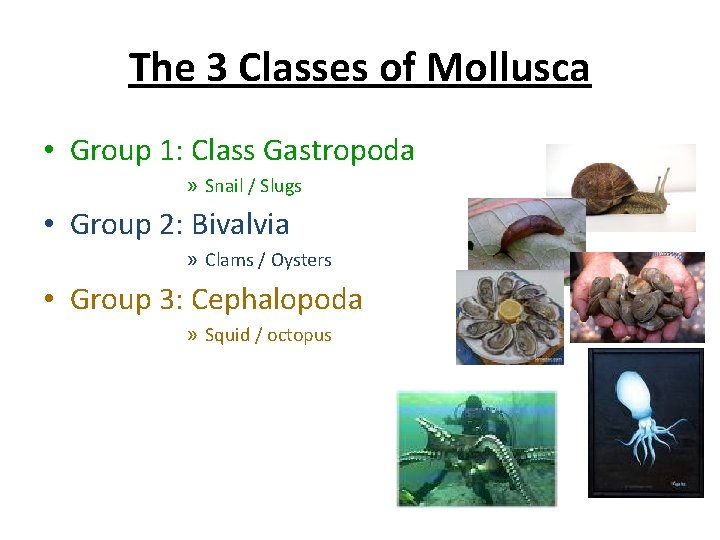
The 3 Classes of Mollusca • Group 1: Class Gastropoda » Snail / Slugs • Group 2: Bivalvia » Clams / Oysters • Group 3: Cephalopoda » Squid / octopus
Instructions: • For each GROUP: – Divide into 3 little groups – Answer the following: • 1) The characteristics of your Class • 2) Common strategies of defense • 3) At least 2 -3 specific examples (including defensive strategy) – Group 2: describe how pearls are formed!!!
Class Gastropoda
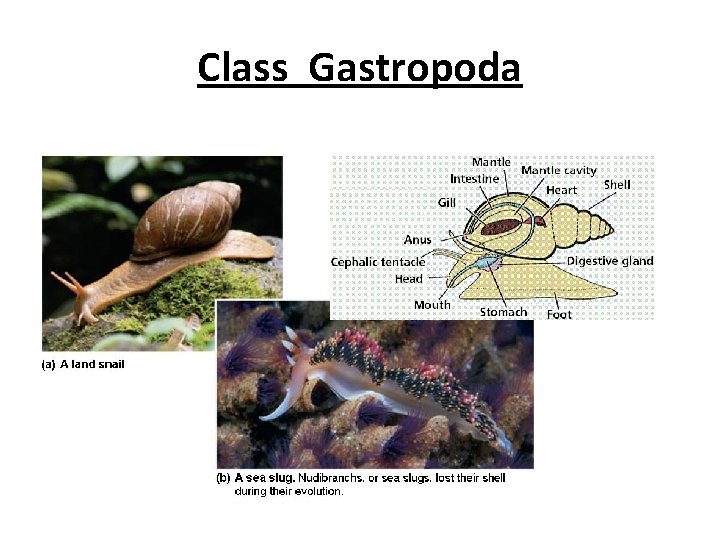
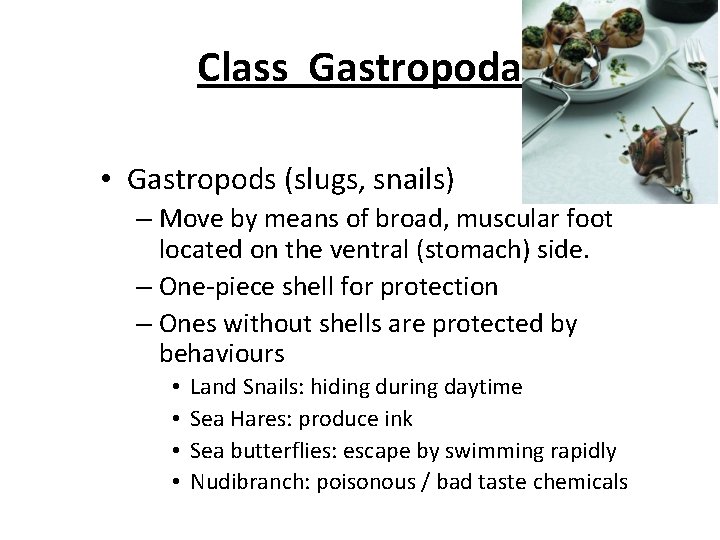
Class Gastropoda • Gastropods (slugs, snails) – Move by means of broad, muscular foot located on the ventral (stomach) side. – One-piece shell for protection – Ones without shells are protected by behaviours • • Land Snails: hiding during daytime Sea Hares: produce ink Sea butterflies: escape by swimming rapidly Nudibranch: poisonous / bad taste chemicals
Class Bivalvia
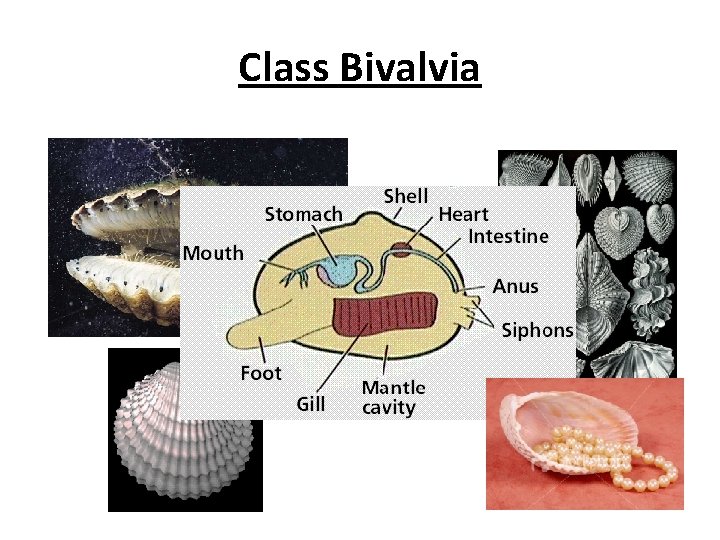
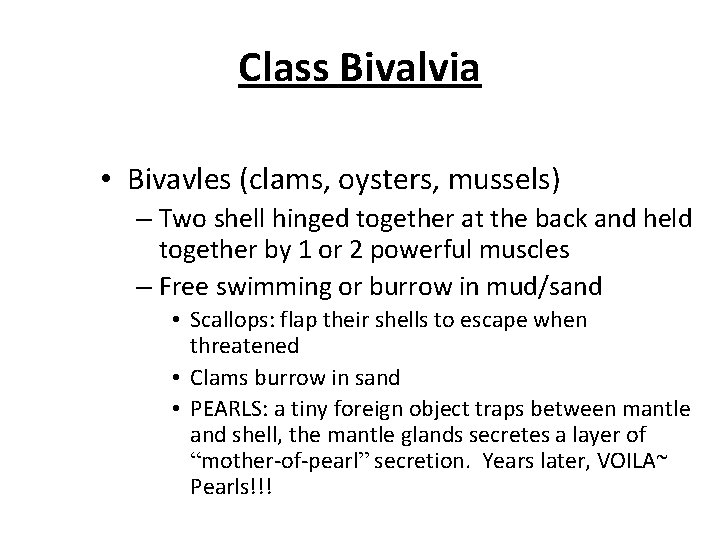
Class Bivalvia • Bivavles (clams, oysters, mussels) – Two shell hinged together at the back and held together by 1 or 2 powerful muscles – Free swimming or burrow in mud/sand • Scallops: flap their shells to escape when threatened • Clams burrow in sand • PEARLS: a tiny foreign object traps between mantle and shell, the mantle glands secretes a layer of “mother-of-pearl” secretion. Years later, VOILA~ Pearls!!!
Class Cephalopoda
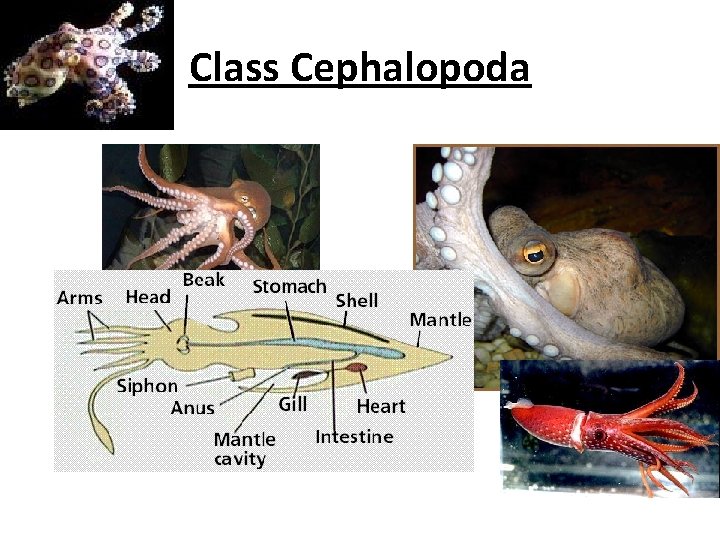
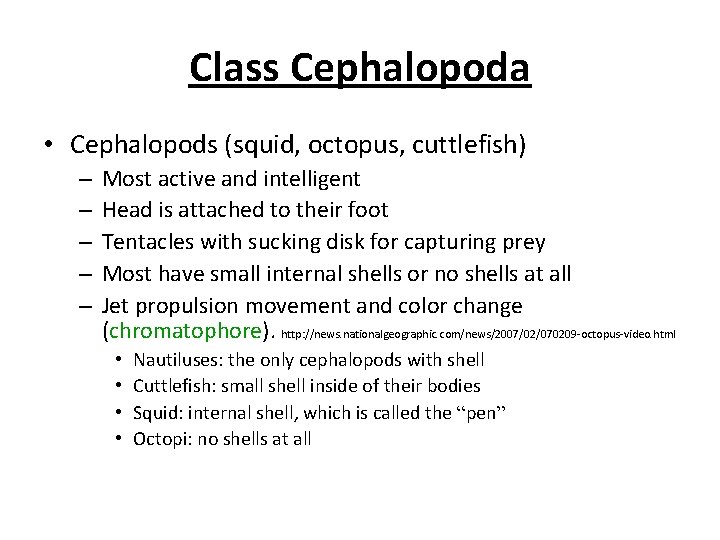
Class Cephalopoda • Cephalopods (squid, octopus, cuttlefish) – – – Most active and intelligent Head is attached to their foot Tentacles with sucking disk for capturing prey Most have small internal shells or no shells at all Jet propulsion movement and color change (chromatophore). http: //news. nationalgeographic. com/news/2007/02/070209 -octopus-video. html • • Nautiluses: the only cephalopods with shell Cuttlefish: small shell inside of their bodies Squid: internal shell, which is called the “pen” Octopi: no shells at all
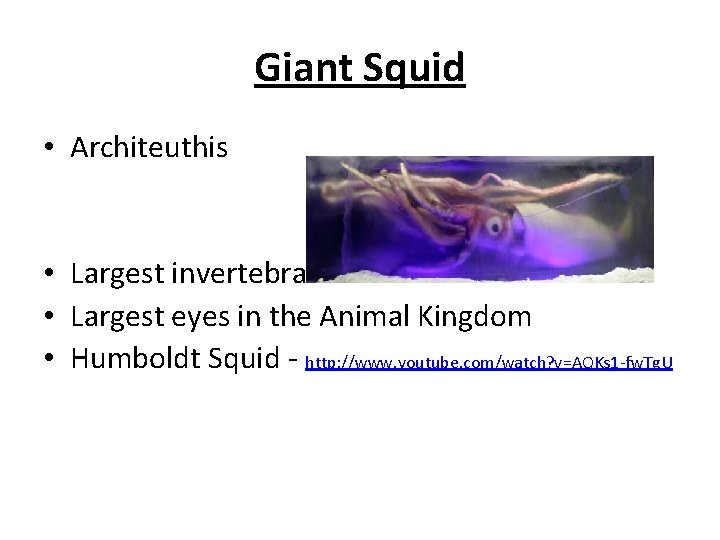
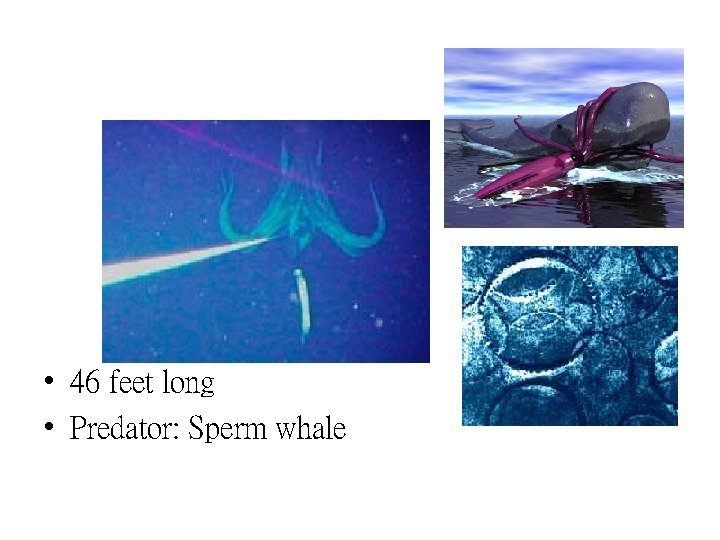
Giant Squid • Architeuthis • Largest invertebrates • Largest eyes in the Animal Kingdom • Humboldt Squid - http: //www. youtube. com/watch? v=AQKs 1 -fw. Tg. U
• 46 feet long • Predator: Sperm whale
Leech • http: //www. pbs. org/wnet/nature/bloodysuc kers/media_players_brown/leech_lo. html