
CH 27 28 Empire and Progressivism 1890 1914
- Slides: 58
CH 27, 28 Empire and Progressivism: 1890 -1914
Imperialism/ Progressivism Imperialism: a policy of extending a country's power and influence through diplomacy or military force. Progressivism: favoring or advocating progress, change, improvement, or reform, as opposed to wishing to maintain things as they are, especially in political matters
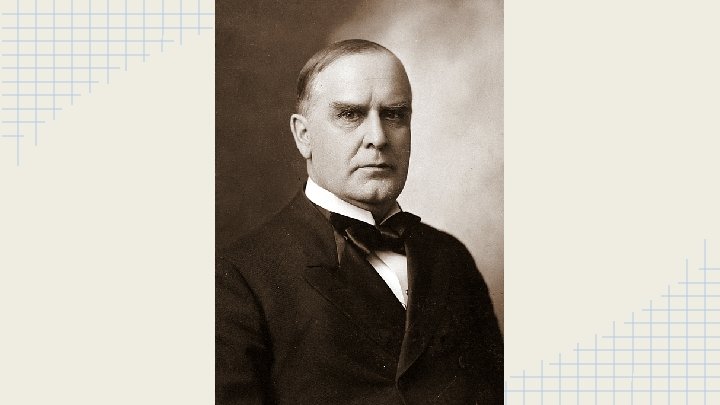
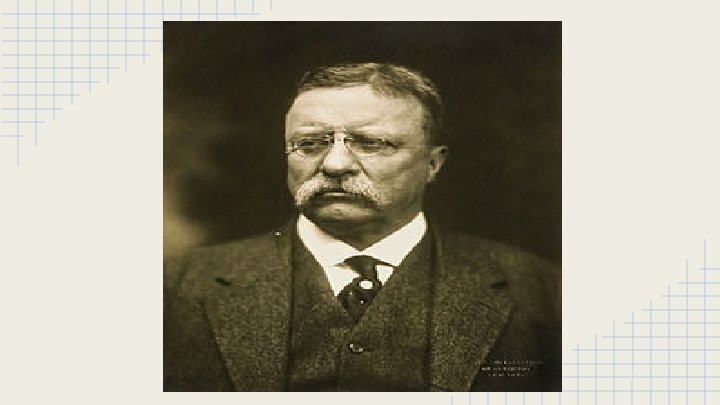
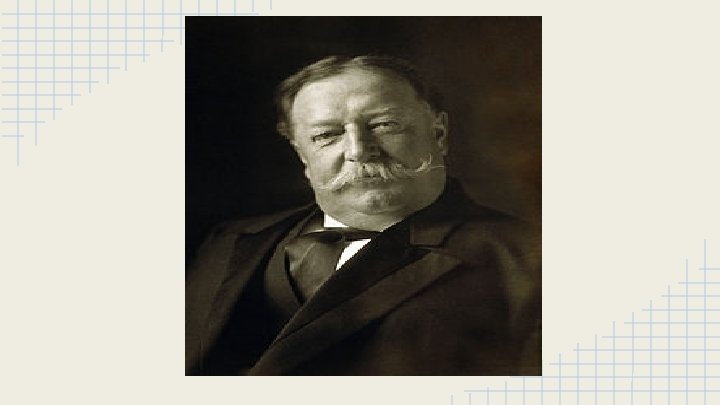
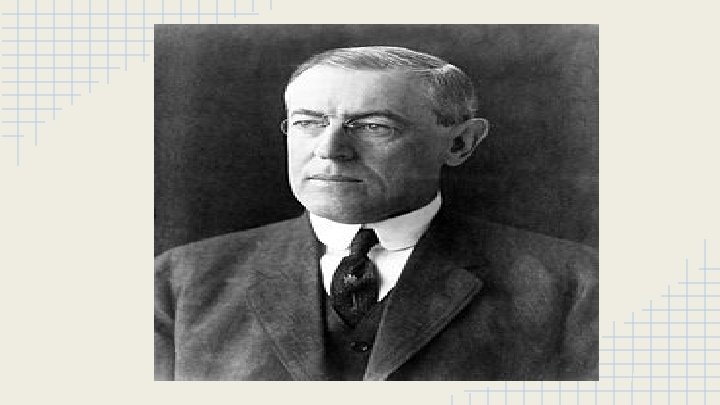
The Presidents of this Era William Mc. Kinley- Rep, 1897 -1901, assassinated 6 months into 2 nd term. Theodore Roosevelt- Rep, 1901 - 1909 William Taft- Rep, 1909 -1913 Woodrow Wilson- Dem, 1913 - 1921
Creating an Empire US wants to expand to find new markets for our new industrial nation. Also, We have the need for raw materials for these factories. The Influence of Sea Power Upon History- Alfred Thayer Mahan. Influences Congress to fund modern steel navy and acquire islands like Samoa. By 1900, We have third largest navy in the world.
Pan- America 1889 - James D. Blaine organized a meeting of all the countries of the Americas. Sought to reduce tariff rates across both continents. Brings more cooperation across the hemisphere. 1895 -96: Venezuela and the UK colony Guiana were in a border dispute. USA threatens military force if UK won’t arbitrate the dispute in court. Helps create a strong friendship between USA and UK
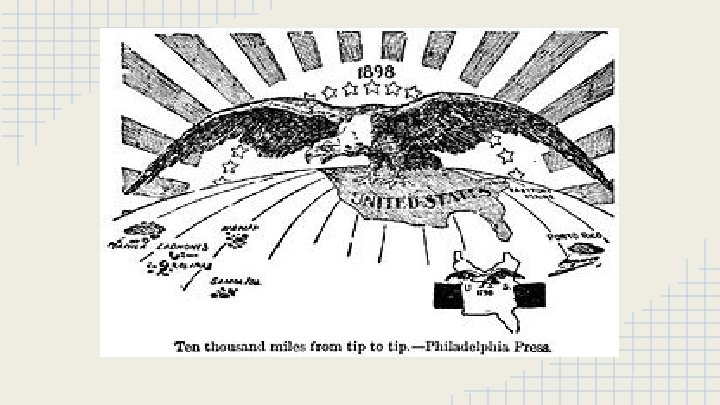
Caribbean Expansion America had an interest in Cuba since the 1850’s. Especially in the South. By 1890’s, Cuba had large American investments and the Spanish have misruled the island. Jingoism- extreme patriotism, especially in the form of aggressive or warlike foreign policy. People want to see the US as a world power.
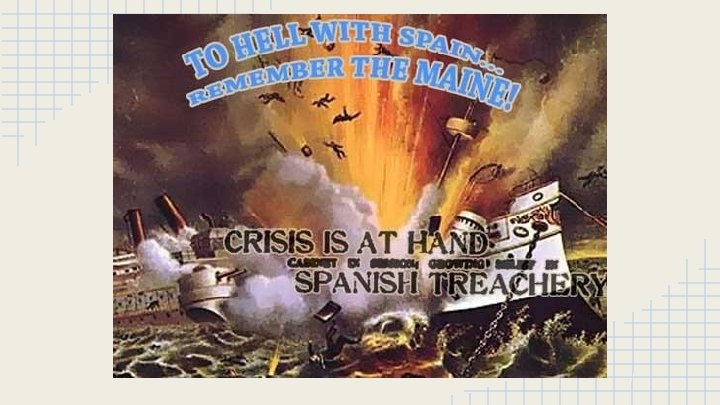
The Spanish- American War Causes of the War: The Monroe Doctrine (removing Spain from the hemisphere during a Cuban revolution) Yellow Journalism: Pulitzer and William Randolph Hearst publishing stories about Spain’s cruel treatment of Cuba. Sinking of the Maine: 1898, US ship blows up in Havana, 260 killed, US Newspapers blame Spain.
Mc. Kinley’s Message 4 reasons given by Mc. Kinley for war. 1. 2. 3. 4. End suffering of the Cubans by the Spanish Protect lives and property of US citizens in Cuba End the negative effect on US trade in Cuba End a threat to US Peace
Teller Amendment April 20, 1898: Congress passed joint-resolution for war. This included the Teller Amendment: US had no intention of taking political control of Cuba and once peace is restored to the island, Cubans would control their own Government.
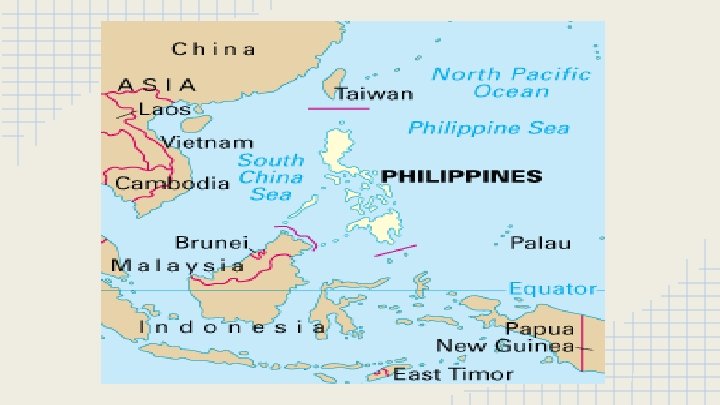
The Philippines Under control of Spain since 1500’s. US fleet is stationed in The Philippines. Commodore Dewey’s fleet attacks the Spanish Navy on May 1 Captured Manila on August 13
Invading Cuba The US lands an ill-trained force in Cuba at the end of June 1898. 5, 000 die of disease, 500 die in battle. Two most important battles of the war: San Juan Hill and Santiago Bay. The war is finished by August with the Spanish asking for peace
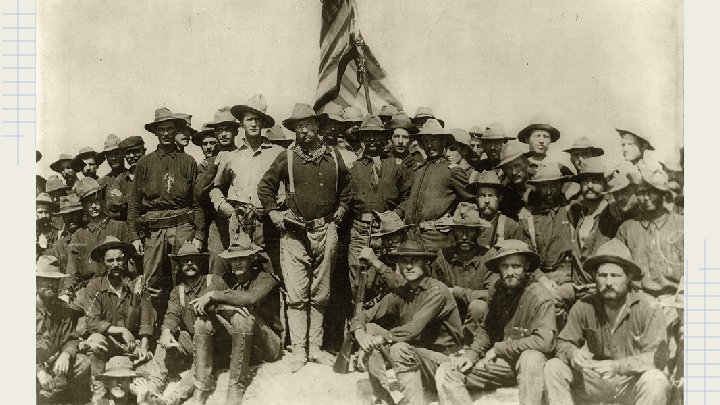
The Rough Riders Volunteer cavalry regiment led by Theodore Roosevelt. Called the Rough Riders because of their toughness. Led a charge up San Juan Hill to secure victory for the US Army.
After the War Spain gives up the islands of Puerto Rico and Guam and recognizes Cuban Independence. US pays $20 million dollars for the Philippines The population of the Philippines was not happy with being acquired by the US. Philippines were not recognized independent by US until 1946
The Platt Amendment US troops remained in Cuba from 1898 until 1901. Cuba had to agree: 1. never sign a treaty with a foreign power that impaired its independence. 2. never build up an excessive public debt. 3. allow the US to maintain order in Cuba. 4. allow the US to maintain navy bases.
International Respect The biggest effect of the Spanish- American War is that people in Europe and the US recognize how important the US is, on the international level.
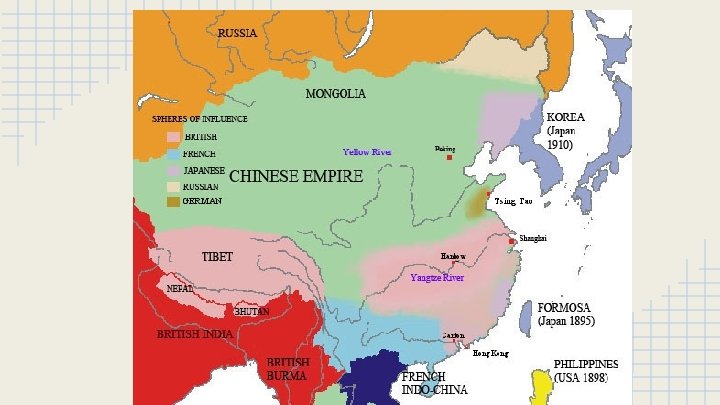
Open Door Policy China was under the economic spheres of influence by European nations. US negotiated the concept of the Open Door Policy. No restrictions on economics in China.
Boxer Rebellion- 1900 Chinese nationalism and xenophobia( hatred of foreigners) The Society of the Harmonious Fists( Boxers), a Chinese nationalist secret society, starts killing Christian Missionaries and foreign settlements US sends troops to stop the rebellion
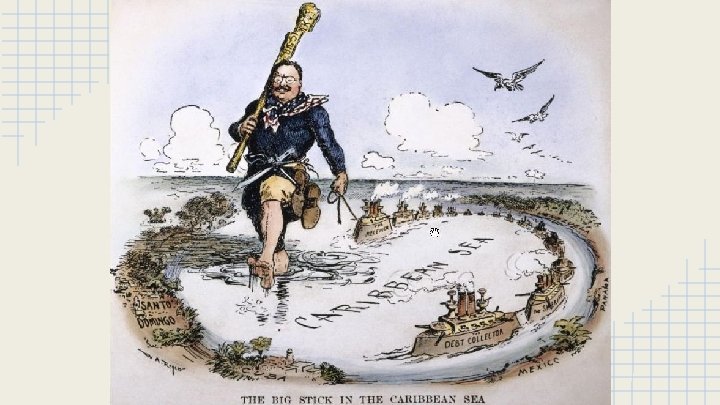
Roosevelt’s Foreign Policy 1901 - Roosevelt takes over after Mc. Kinley’s killed. Roosevelt’s motto for acting “ Speak softly and carry a big stick” Biggest foreign accomplishment: Panama Canal
Panama’s Revolution Colombia controlled the area of Panama in 1903 The US supported a revolution in Panama to help negotiate the rights to build a canal in Panama becomes a separate nation in 1903
Panama Canal Hay-Pauncefote Treaty: Signed between US and Britain. Repealed previous agreement to not build a canal in Panama. 1901 Hay- Buena Villa Treaty: grants the US access to the Panama Canal for the long term. 1903
Roosevelt Corollary If Europe had any claims or issues within Latin America, the US would intervene on their behalf.
Russo- Japanese War- conflict between Japan and Russia The Great White Fleet- Roosevelt’s demonstration of naval improvements. Root-Takahira Agreement- Open Door Policy, Japanese annexation of Korea.
Taft’s Diplomacy Taft’s approach to diplomacy was more based on economics rather than battleships. Dollar Diplomacy- US foreign interests follow the investments of businesses. Promotes investments in Chinese railroads. Marines sent to Nicaragua to stop a Civil War- 1912
Lodge Corollary Japanese investors wanted to purchase a large portion of land in Mexico. Henry Lodge, a senator, had a resolution passed that non. European nations couldn’t own land in the Western Hemisphere.
Wilson’s Diplomacy Woodrow Wilson takes over in 1913 Moral Diplomacy- Wanting to correct past wrongs made by previous administrations Areas Wilson focused: The Philippines, Puerto Rico, Panama Canal
Military Intervention Wilson sent troops to maintain order throughout Latin America. Haiti- (1915) Dominican Republic- (1916)
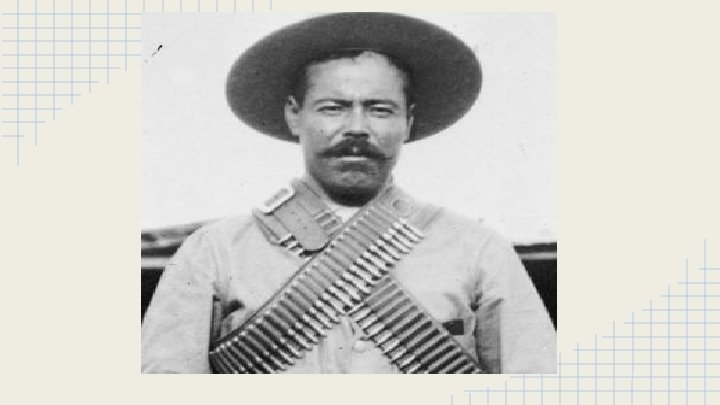
Mexico 1913 - Mexico is in the middle of a revolution 1914 - Pancho Villa, revolutionary that led a band of followers on raids in Mexico and SW United States. Wilson sent troops to stop the raids.
Who are the Progressives? These are the middle-class city dwellers (doctors, bank managers, office workers) that are looking to improve their situation. Lasted from 1890 -1910 Philosophy: Practical motives to reform society.
Muckraking: Journalists that would “rake up the muck” in society. They were responsible for helping the Progressive movements. Ida Tarbell(The History of Standard Oil Company), Lincoln Steffens(Tweed Days in St. Louis), Upton Sinclair ( The Jungle) Muckraking declines due to pressure from corporations
Progressive Voting 1888 - Massachusetts adopting the system of printing ballots by the state and having people vote in private. By 1910, all states had adopted this method for voting.
Direct Voting Primaries: By 1915, all states use a direct primary vote to determine a party nomination. Direct Election of Senators: 17 th amendment is passed in 1913. This requires the direct election of senators. States nominated Senators before.
State Reforms Legislative Reform: Amendments to State Constitutions 1. Initiative : proposed changes by the people 2. referendum: people voting to directly approve laws 3. recall: remove politicians from office before term ends with a majority vote.
18 th Amendment Temperance Movement attracted more supporters in the early 1900’s. By 1915, most states banned the sale of alcohol. Passed the 18 th amendment in 1919.
Square Deal Roosevelt is a Progressive. Wants to give the worker a “Square Deal” The first example of progressive reform: Coal Miner Strike of 1902. T. R. solves the strike with using the Army. Miners received 9 - hour workday and a wage increase.
Trust-Busting T. R. believed that Trusts were good or bad. First president to use the Sherman Antitrust Act with effectiveness The first Trust attacked by T. R. was Northern Securities, a railroad company. Attacked over 40 trusts during his presidency.
Railroad Regulation Elkins Act- Stopped Railroads from granting rebates to favored customers. 1903 Hepburn Act- Commission could fix “just and reasonable” rates for railroads. Both acts help strengthen the Interstate Commerce Commission
Consumer Protection Pure Food and Drug Act- Forbade the manufacture, sale, and transportation of adulterated or mislabeled foods and drugs Meat Inspection Act- Federal Inspectors visit meatpacking plants to ensure that standards are met.
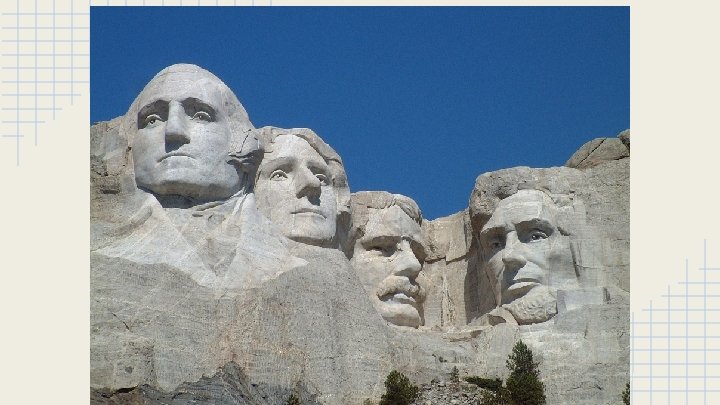
Conservation Conserve/Preserve= limit use versus maintain with no use Forest Reserve Act - Set aside 150 million acres of federal land that cannot be sold to private interest. National Conservation Commission and created US Forest Service
Trust-Busting/Conservation Taft went after twice as many trusts as Roosevelt. The biggest company attacked by Taft: U. S. Steel Bureau of Mines and large parts to the National Parks System of the Appalachian Mountains.
16 th Amendment Passed 16 th amendment to the constitution in 1913 The amendment creates an Income Tax. Progressives love that the amendment passed.
Payne-Aldrich Tariff During the 1908 campaign, Taft promises to lower the tariff on imports. 1909 - approves the tariff increase the Progressives will no longer support Taft’s presidency.
Pinchot- Ballinger Contro. Gifford Pinchot was a progressive and the chief of the Forest Service. Pinchot criticized Secretary of the Interior, Richard Ballinger Taft fires Pinchot. This alienates the Progressive section of the Republican Party.
1910 Midterm Elections The progressive movement is at its’ apex Taft decided to support the more conservative faction of the Republican party This support causes a split of the Republican Party
The Socialist Party Socialism- social ownership of the means of production and co-operative management of the economy 1901 - The Socialist Party of America The Socialists called for more radical changes: Public ownership of the railroads, utilities, minimum wage, eighthour workday
Eugene Debs First gains fame from the Pullman Car Strike. Adopted Socialism while in jail for the Pullman Strike Ran for President 5 times between 1900 -1920 Highest number of votes: 913, 693 (1920) while in Jail