
Ch 24 origin of species microevolution Change in
- Slides: 57
Ch 24 origin of species
microevolution – Change in gene frequency from generation to generation – below the species level • Macroevolution – Broad pattern of evolution over time – Change above the species level
Evolutionary theory must explain MACROEVOLUTION • • • Origin of new taxonomic groups New species New genera New families New kingdoms • Speciation is key process
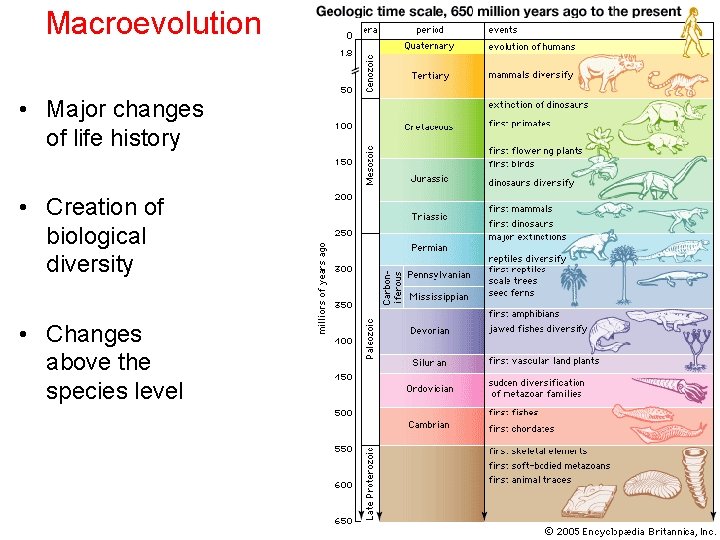
Macroevolution • Major changes of life history • Creation of biological diversity • Changes above the species level
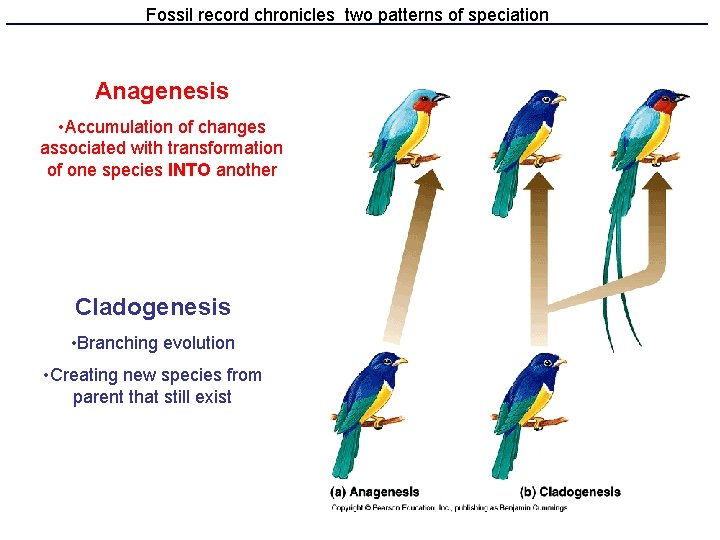
Fossil record chronicles two patterns of speciation Anagenesis • Accumulation of changes associated with transformation of one species INTO another Cladogenesis • Branching evolution • Creating new species from parent that still exist
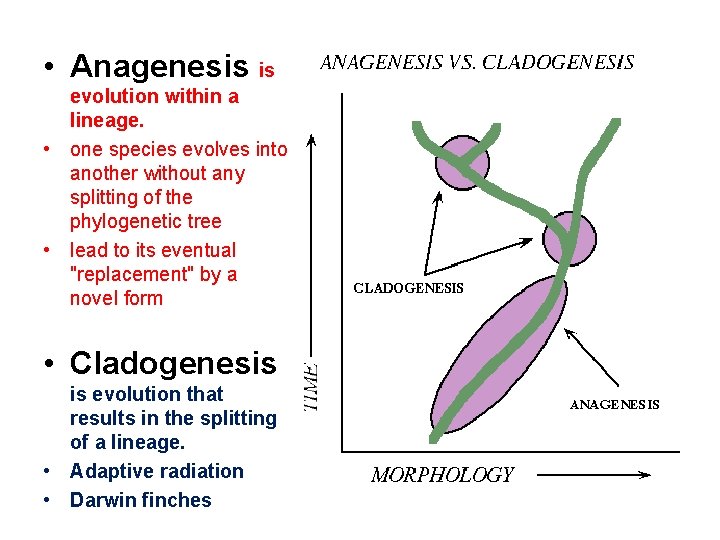
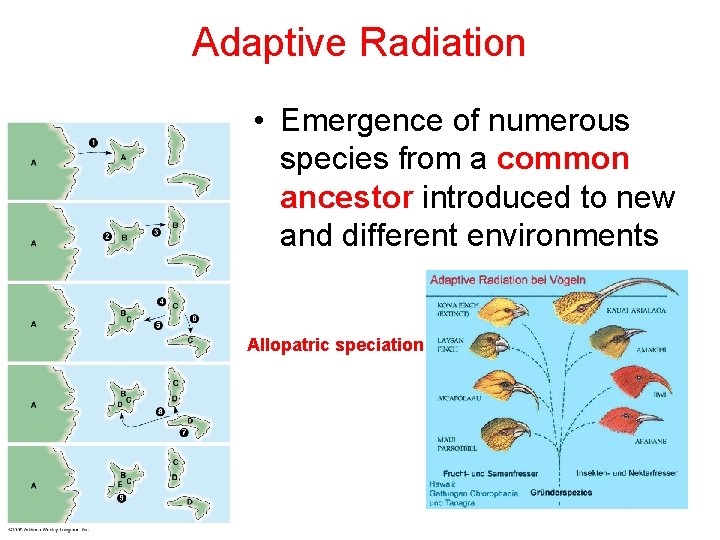
• Anagenesis is evolution within a lineage. • one species evolves into another without any splitting of the phylogenetic tree • lead to its eventual "replacement" by a novel form • Cladogenesis is evolution that results in the splitting of a lineage. • Adaptive radiation • Darwin finches
What is a species and what are mechanisms of speciation? We will compare: • Morphology • Body functions • Biochemistry • Behavior • Genetic makeup
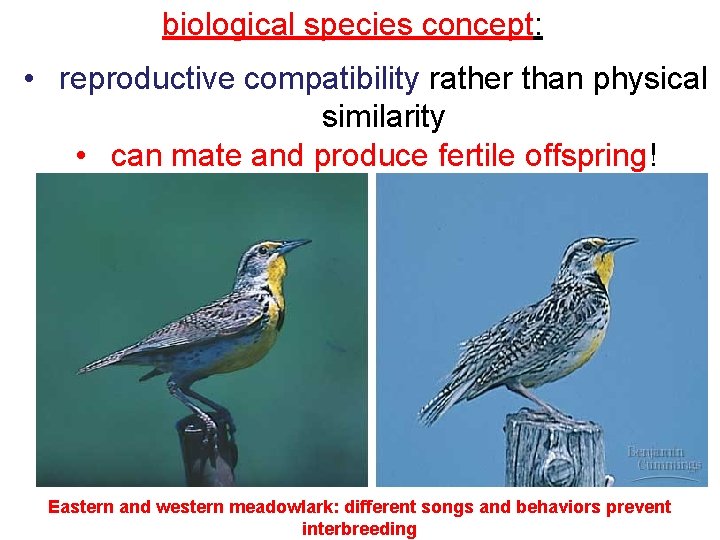
biological species concept: • reproductive compatibility rather than physical similarity • can mate and produce fertile offspring! Eastern and western meadowlark: different songs and behaviors prevent interbreeding
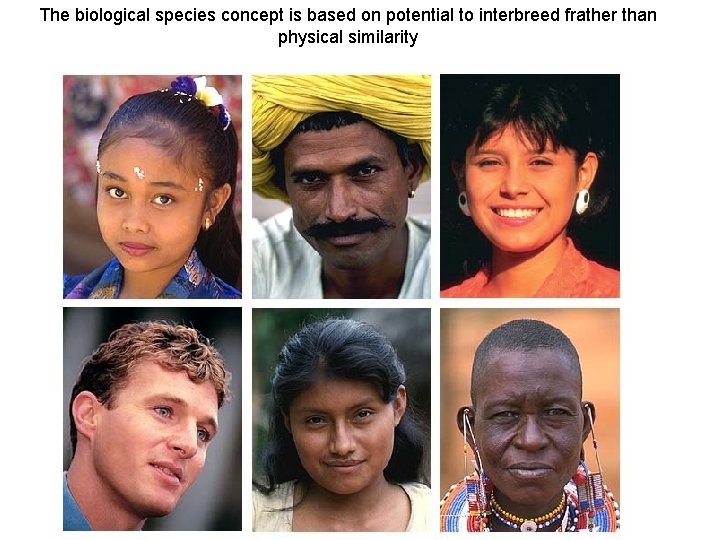
The biological species concept is based on potential to interbreed frather than physical similarity
Biological species • A population or group of populations • members can interbreed and produce fertile offspring • There is GENE FLOW • If you share the same territory and can not interbreed and can not produce fertile offspring= NOT same species
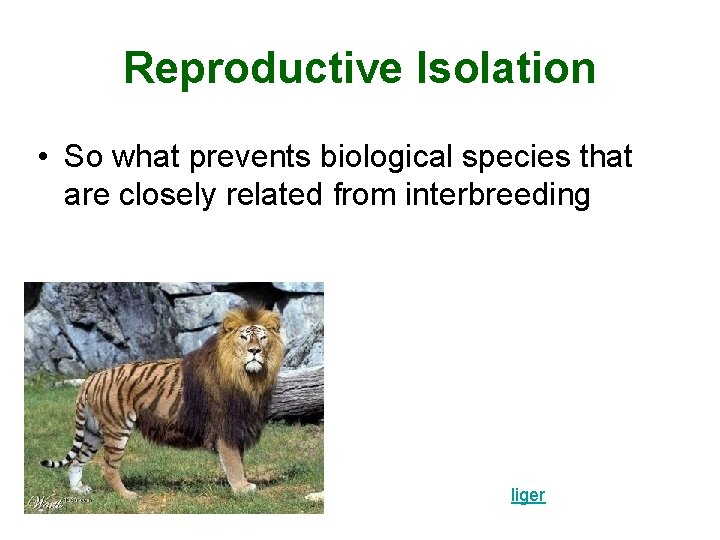
Reproductive Isolation • So what prevents biological species that are closely related from interbreeding liger
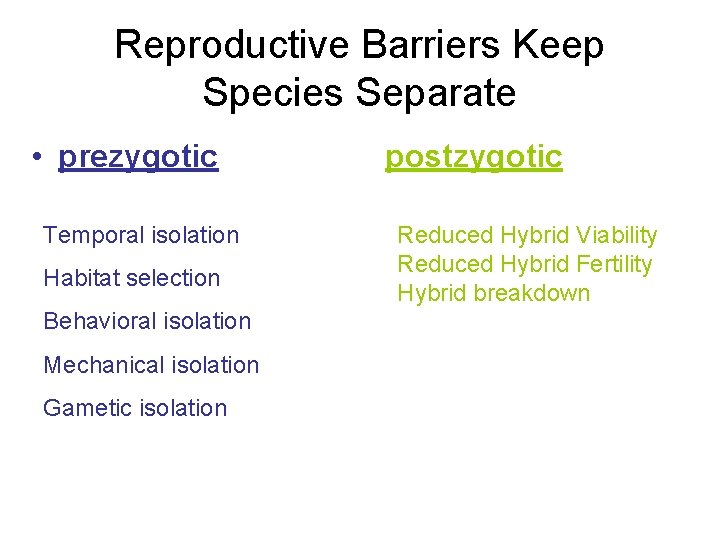
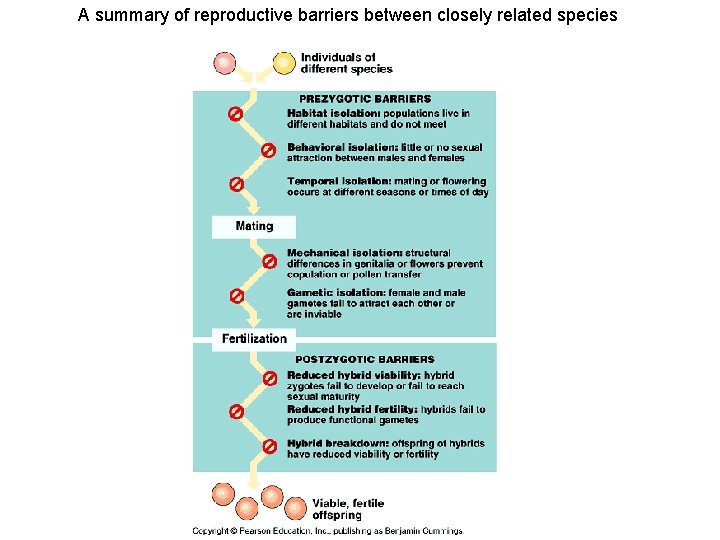
Reproductive Barriers Keep Species Separate • prezygotic Temporal isolation Habitat selection Behavioral isolation Mechanical isolation Gametic isolation postzygotic Reduced Hybrid Viability Reduced Hybrid Fertility Hybrid breakdown
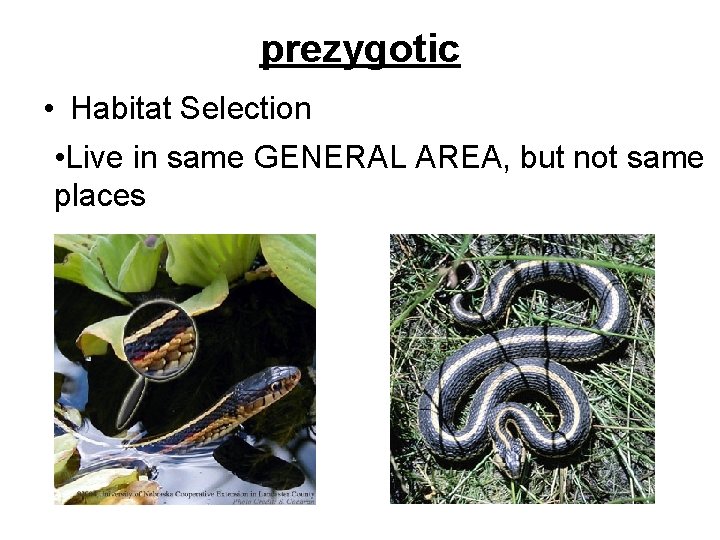
prezygotic • Habitat Selection • Live in same GENERAL AREA, but not same places
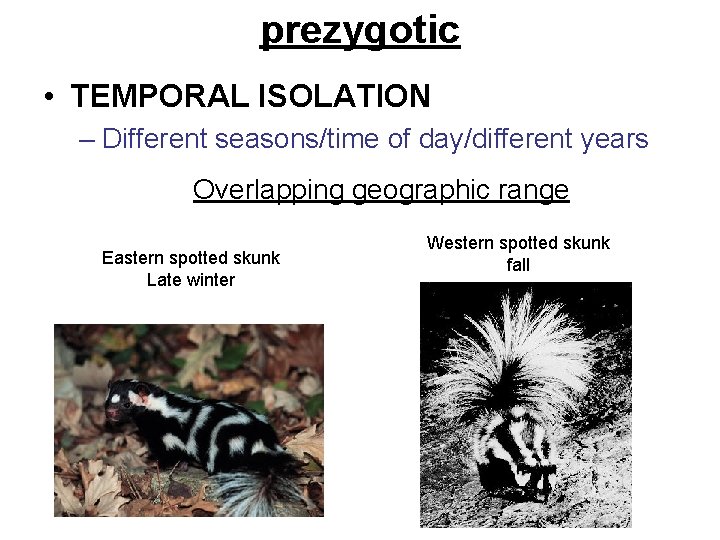
prezygotic • TEMPORAL ISOLATION – Different seasons/time of day/different years Overlapping geographic range Eastern spotted skunk Late winter Western spotted skunk fall
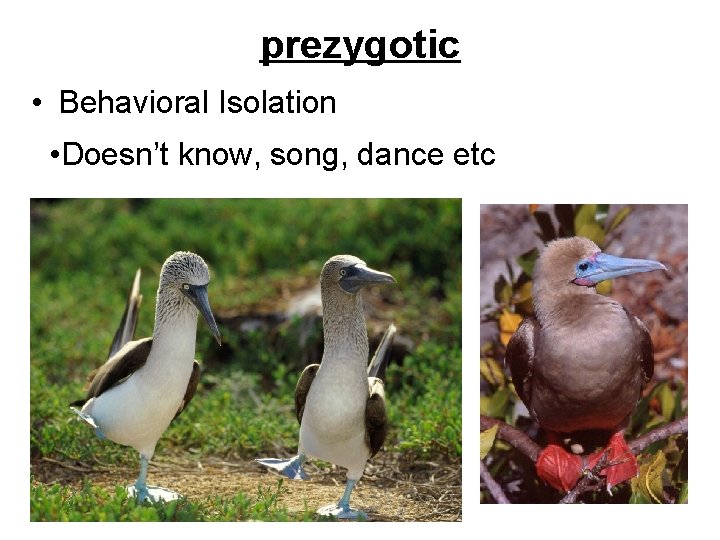
prezygotic • Behavioral Isolation • Doesn’t know, song, dance etc
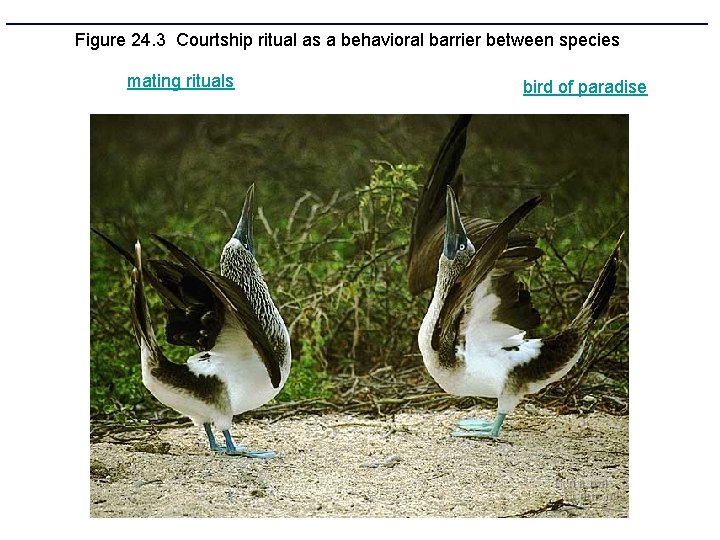
Figure 24. 3 Courtship ritual as a behavioral barrier between species mating rituals bird of paradise
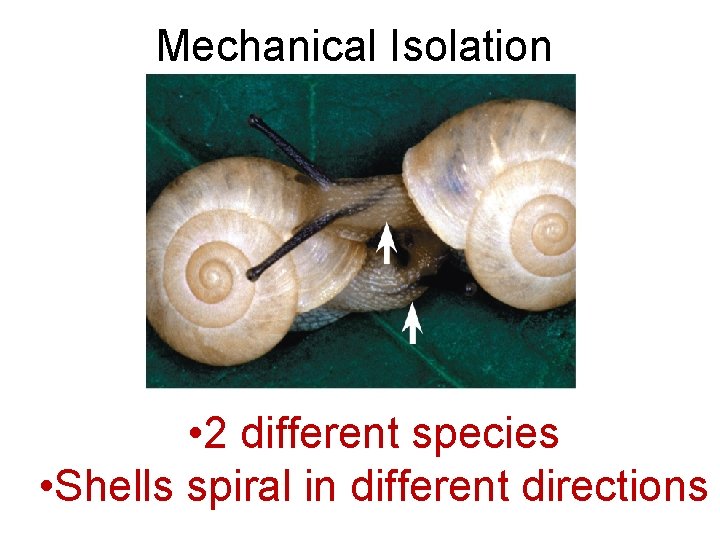
Mechanical Isolation • 2 different species • Shells spiral in different directions
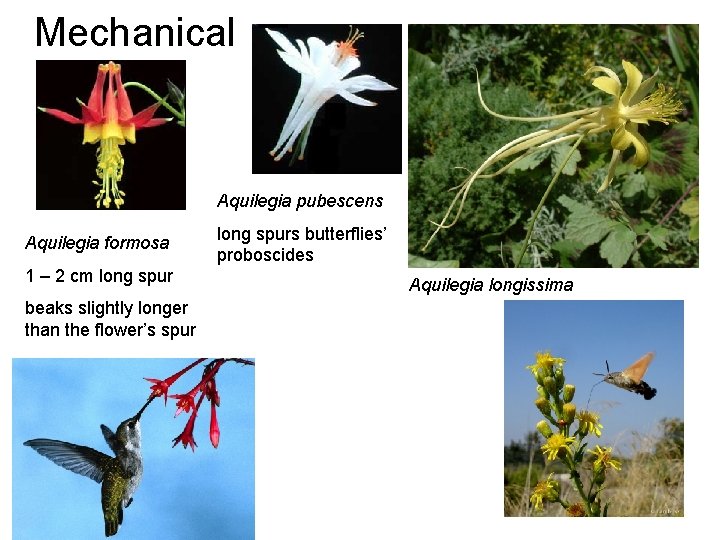
Mechanical Aquilegia pubescens Aquilegia formosa 1 – 2 cm long spur beaks slightly longer than the flower’s spur long spurs butterflies’ proboscides Aquilegia longissima
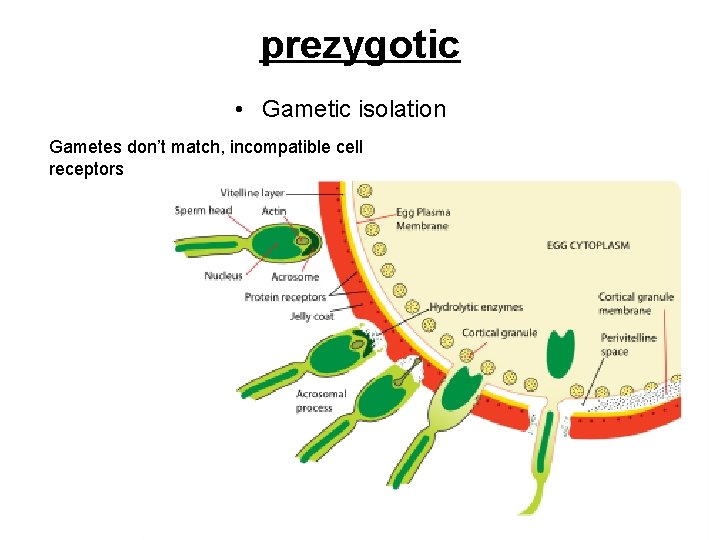
prezygotic • Gametic isolation Gametes don’t match, incompatible cell receptors
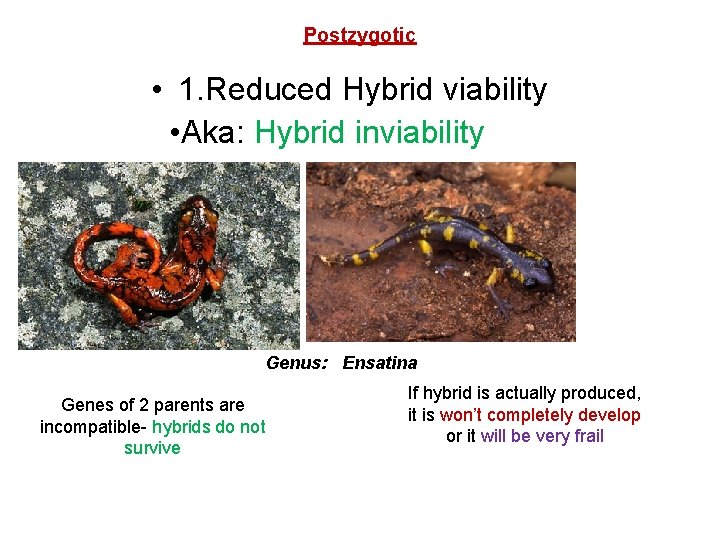
Postzygotic • 1. Reduced Hybrid viability • Aka: Hybrid inviability Genus: Ensatina Genes of 2 parents are incompatible- hybrids do not survive If hybrid is actually produced, it is won’t completely develop or it will be very frail
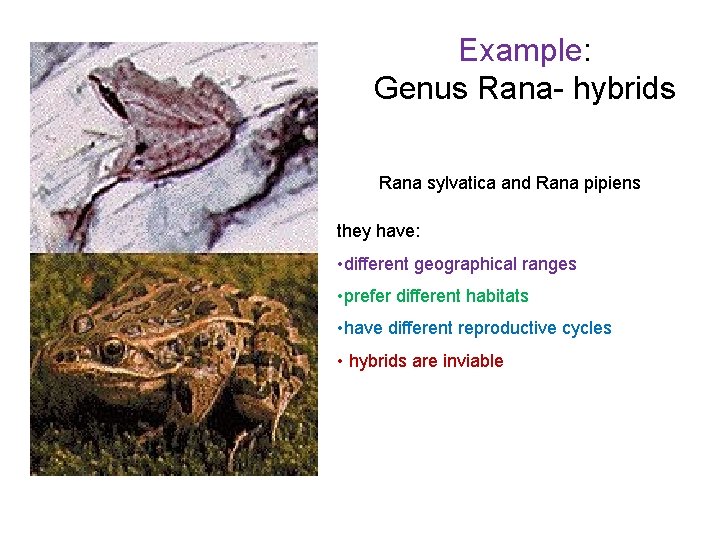
Example: Genus Rana- hybrids Rana sylvatica and Rana pipiens they have: • different geographical ranges • prefer different habitats • have different reproductive cycles • hybrids are inviable
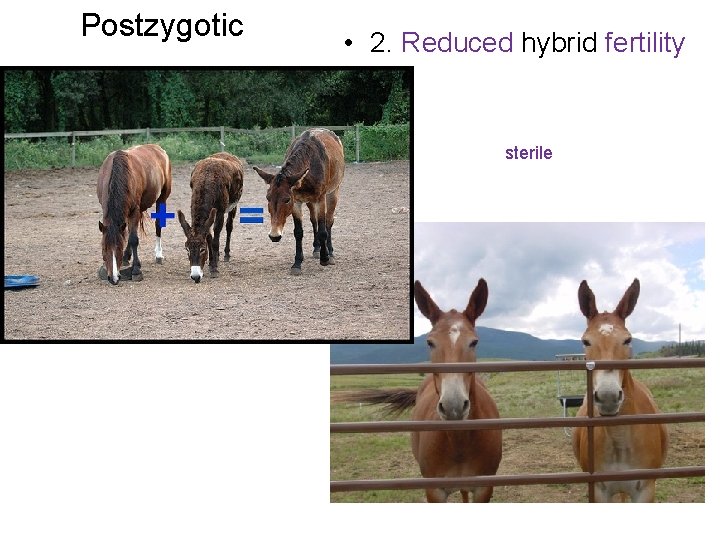
Postzygotic • 2. Reduced hybrid fertility sterile
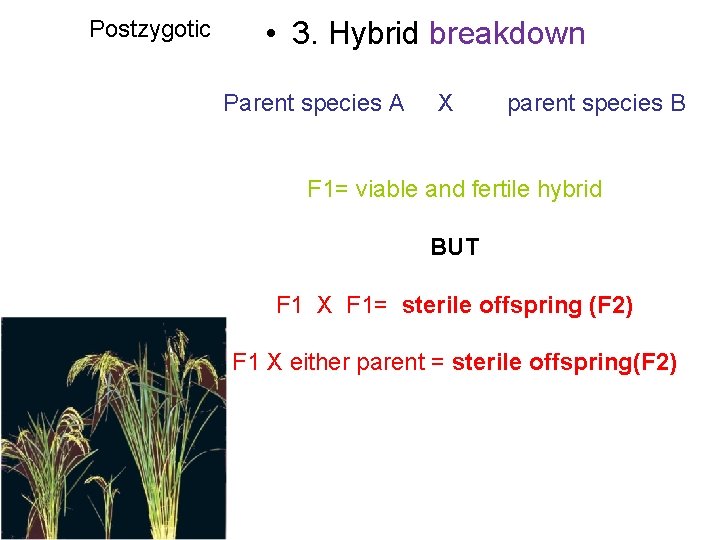
Postzygotic • 3. Hybrid breakdown Parent species A X parent species B F 1= viable and fertile hybrid BUT F 1 X F 1= sterile offspring (F 2) F 1 X either parent = sterile offspring(F 2)
A summary of reproductive barriers between closely related species
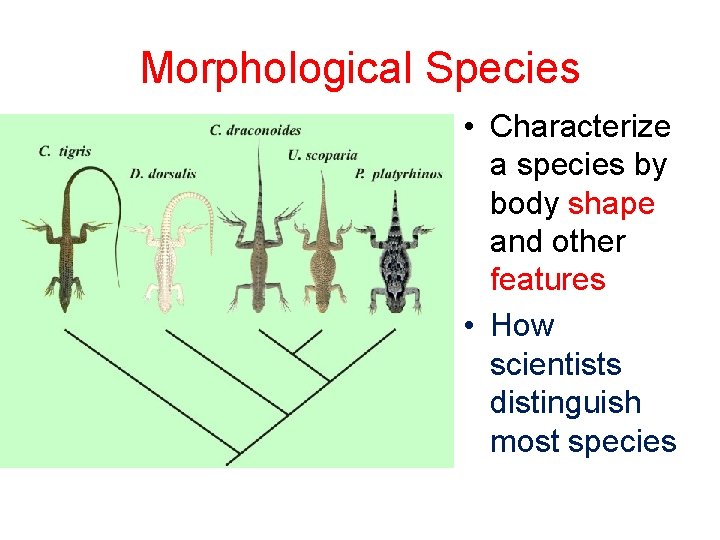
Morphological Species • Characterize a species by body shape and other features • How scientists distinguish most species
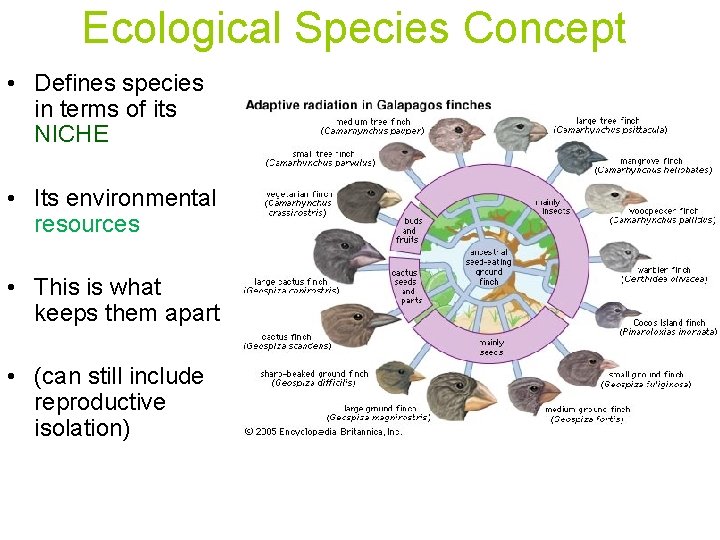
Ecological Species Concept • Defines species in terms of its NICHE • Its environmental resources • This is what keeps them apart • (can still include reproductive isolation)
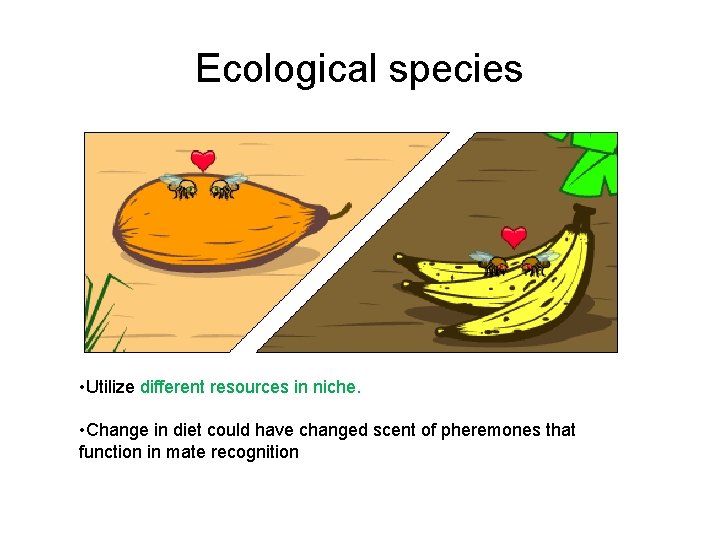
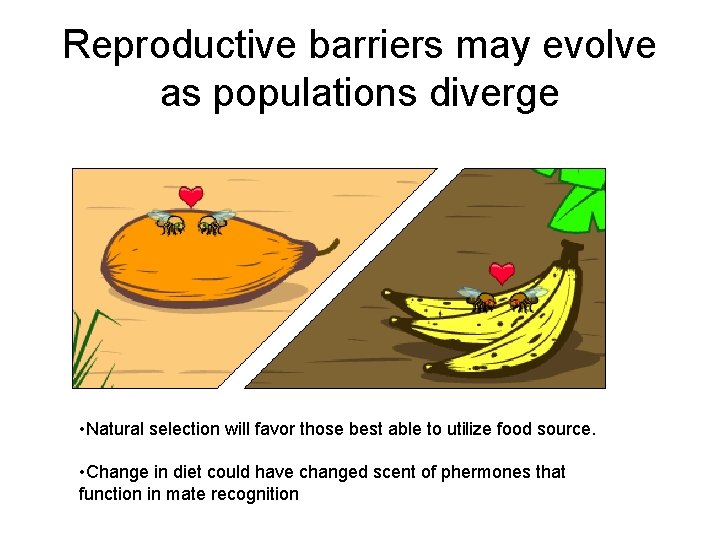
Ecological species • Utilize different resources in niche. • Change in diet could have changed scent of pheremones that function in mate recognition
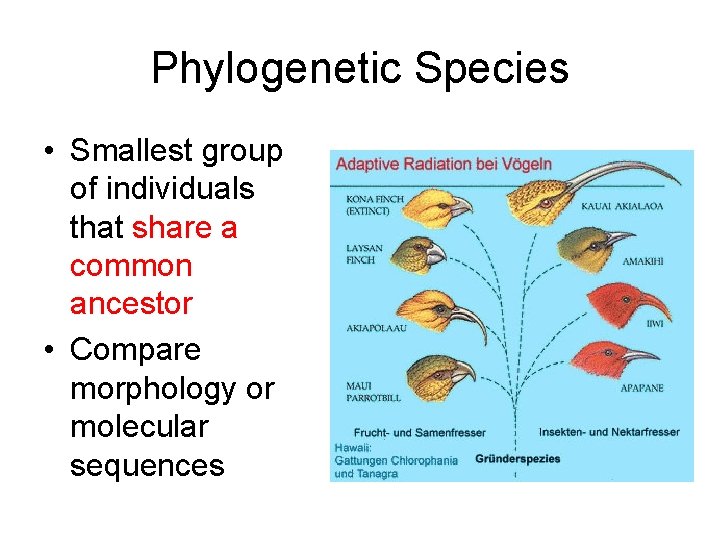
Phylogenetic Species • Smallest group of individuals that share a common ancestor • Compare morphology or molecular sequences
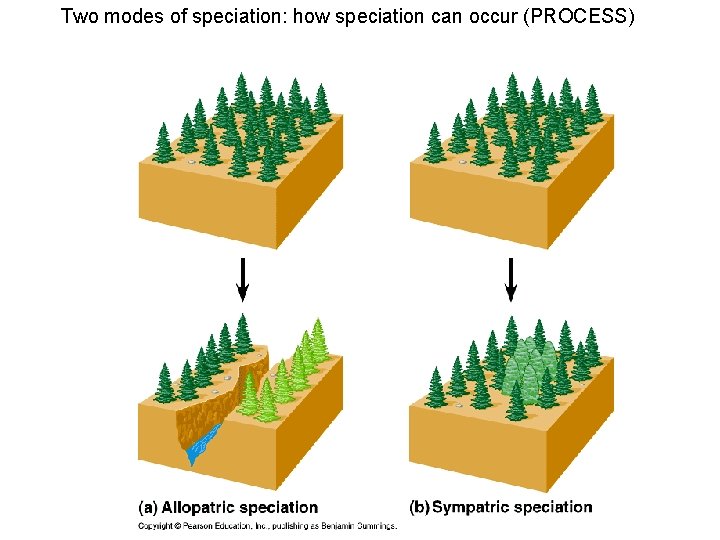
Two modes of speciation: how speciation can occur (PROCESS)
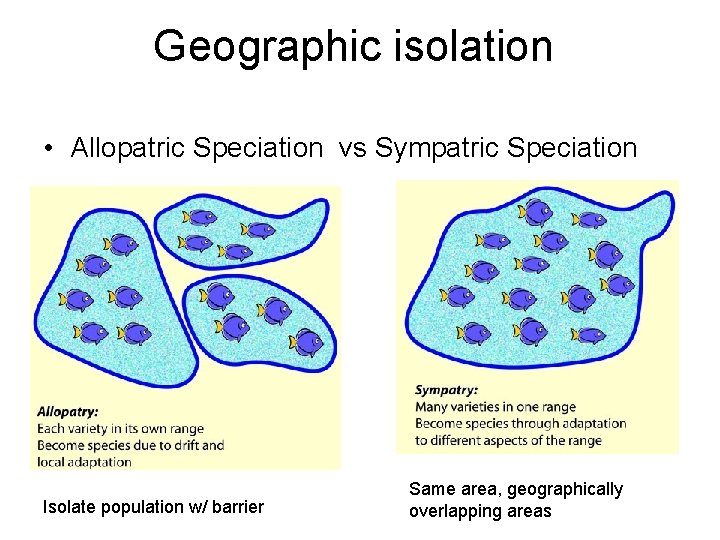
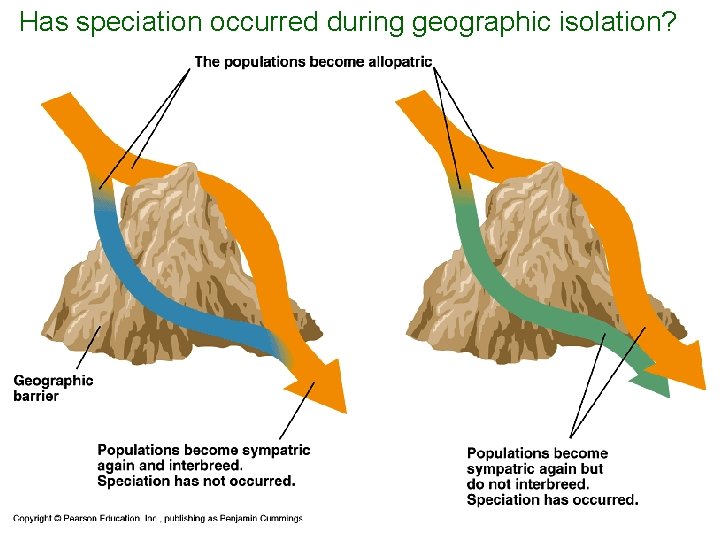
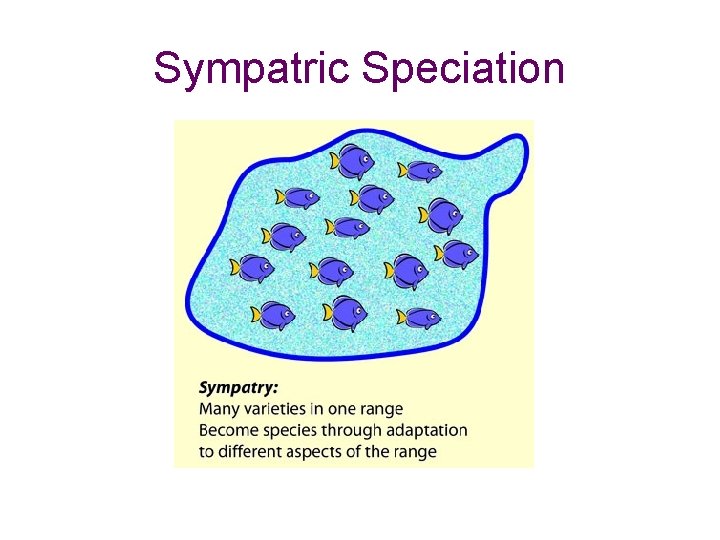
Geographic isolation • Allopatric Speciation vs Sympatric Speciation Isolate population w/ barrier Same area, geographically overlapping areas
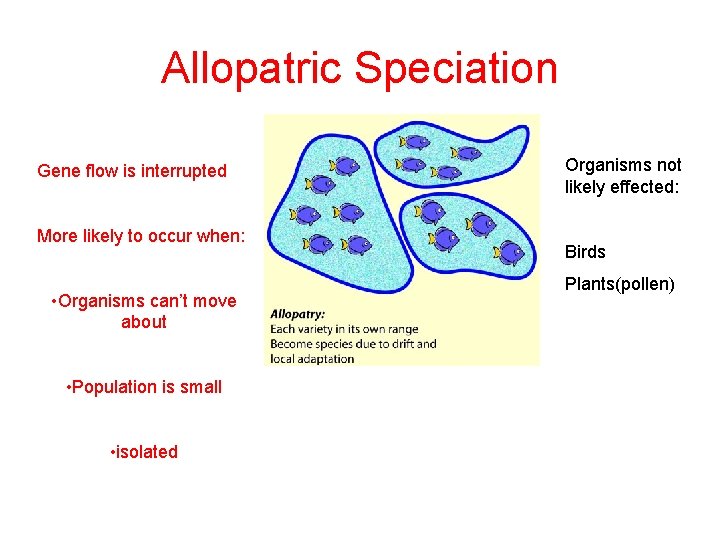
Allopatric Speciation Gene flow is interrupted More likely to occur when: • Organisms can’t move about • Population is small • isolated Organisms not likely effected: Birds Plants(pollen)
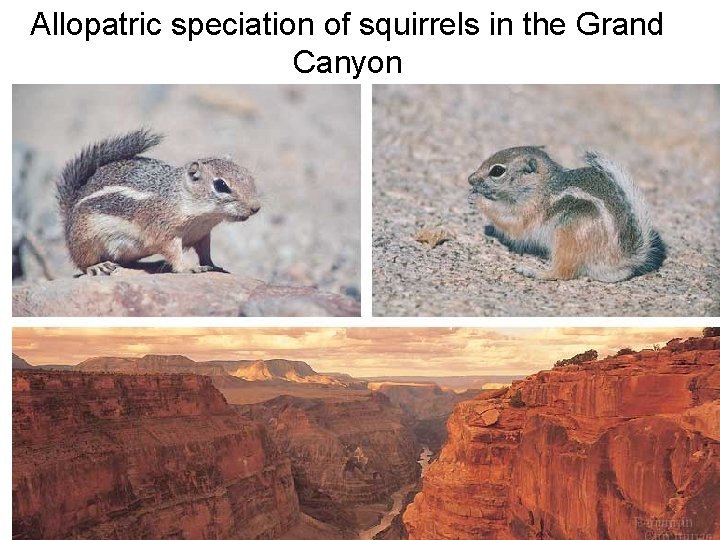
Allopatric speciation of squirrels in the Grand Canyon
Has speciation occurred during geographic isolation?
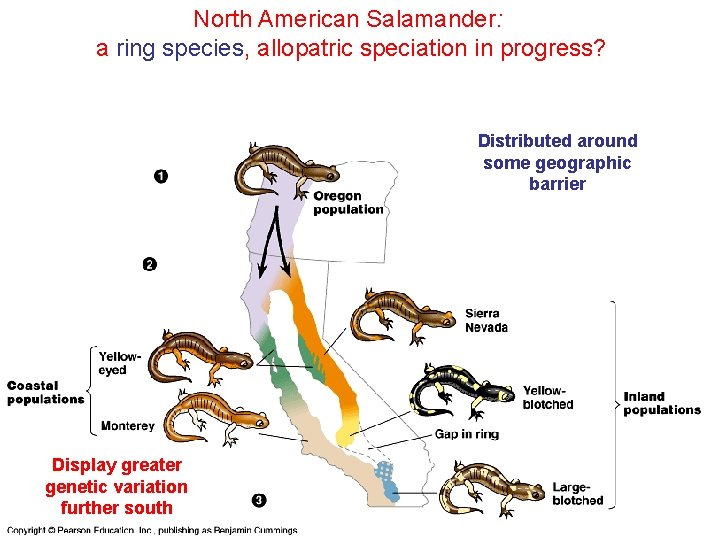
North American Salamander: a ring species, allopatric speciation in progress? Distributed around some geographic barrier Display greater genetic variation further south
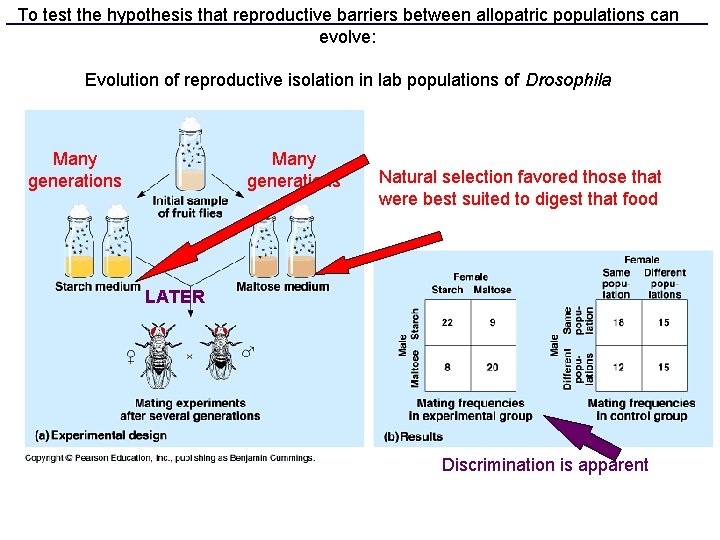
To test the hypothesis that reproductive barriers between allopatric populations can evolve: Evolution of reproductive isolation in lab populations of Drosophila Many generations Natural selection favored those that were best suited to digest that food LATER Discrimination is apparent
Reproductive barriers may evolve as populations diverge • Natural selection will favor those best able to utilize food source. • Change in diet could have changed scent of phermones that function in mate recognition
Sympatric Speciation
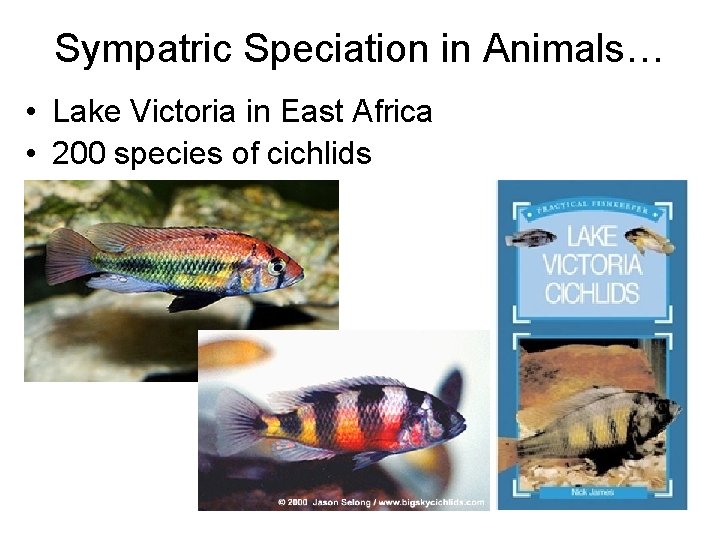
Sympatric Speciation in Animals… • Lake Victoria in East Africa • 200 species of cichlids
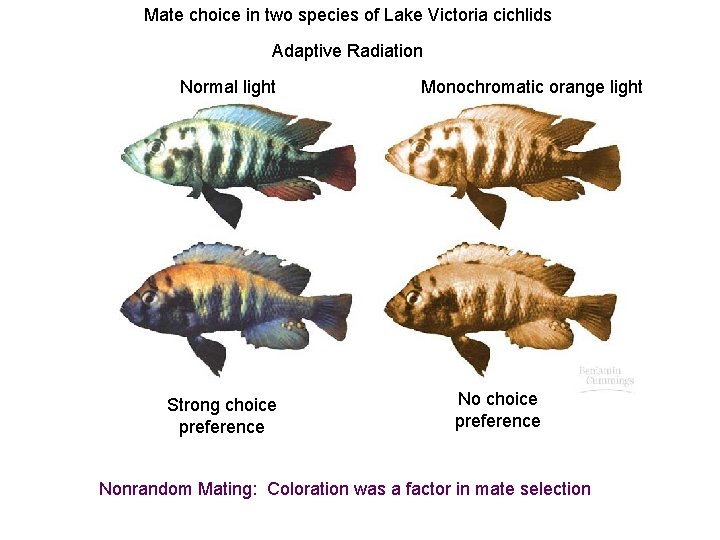
Mate choice in two species of Lake Victoria cichlids Adaptive Radiation Normal light Strong choice preference Monochromatic orange light No choice preference Nonrandom Mating: Coloration was a factor in mate selection
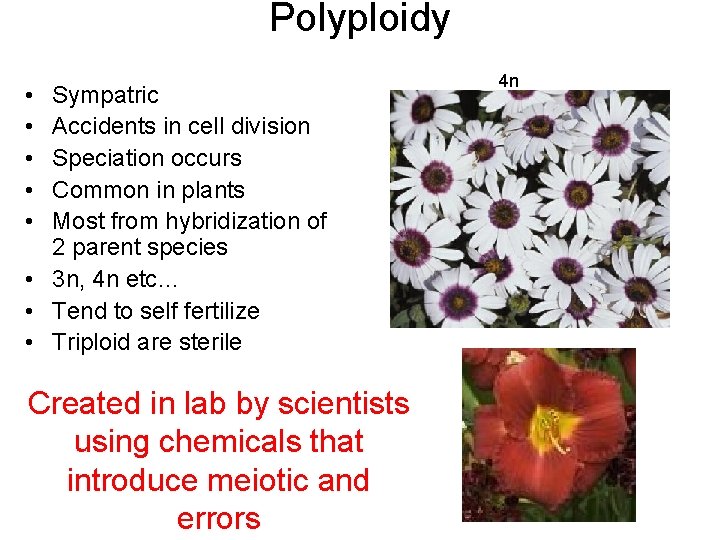
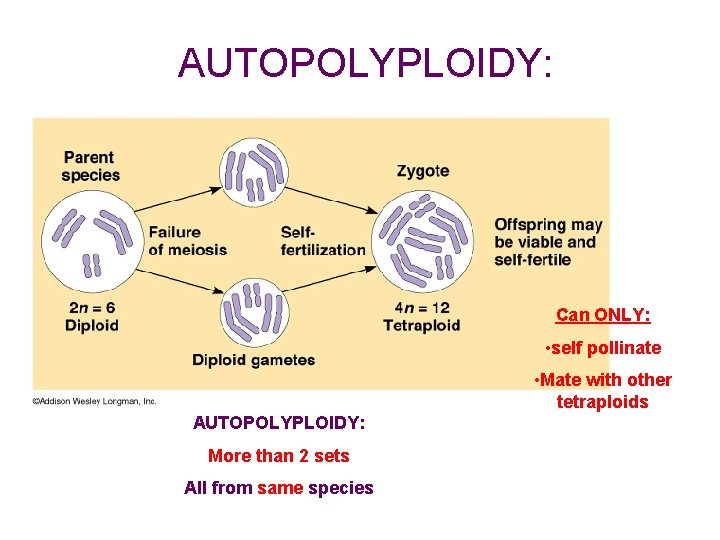
Polyploidy • • • Sympatric Accidents in cell division Speciation occurs Common in plants Most from hybridization of 2 parent species • 3 n, 4 n etc… • Tend to self fertilize • Triploid are sterile Created in lab by scientists using chemicals that introduce meiotic and errors 4 n
AUTOPOLYPLOIDY: Can ONLY: • self pollinate • Mate with other tetraploids AUTOPOLYPLOIDY: More than 2 sets All from same species
Autoployploid • Individual that has more than 2 sets of chromosomes • Come from a SINGLE species • Failure to divide • 4 n • Can produce sterile 3 n
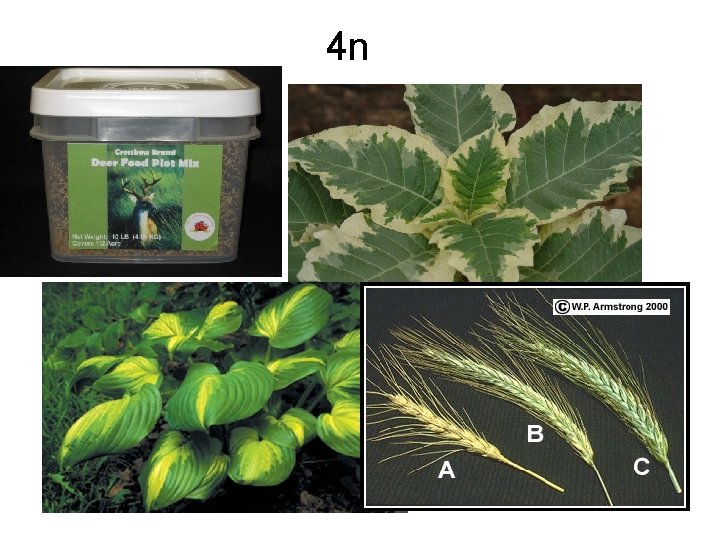
4 n
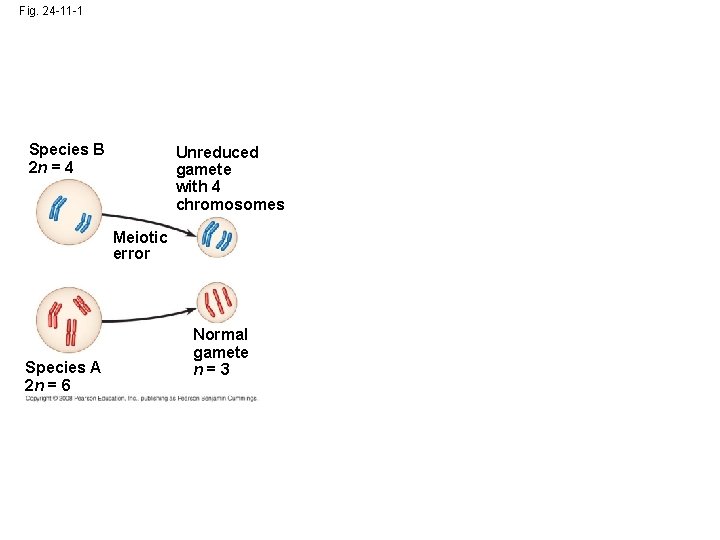
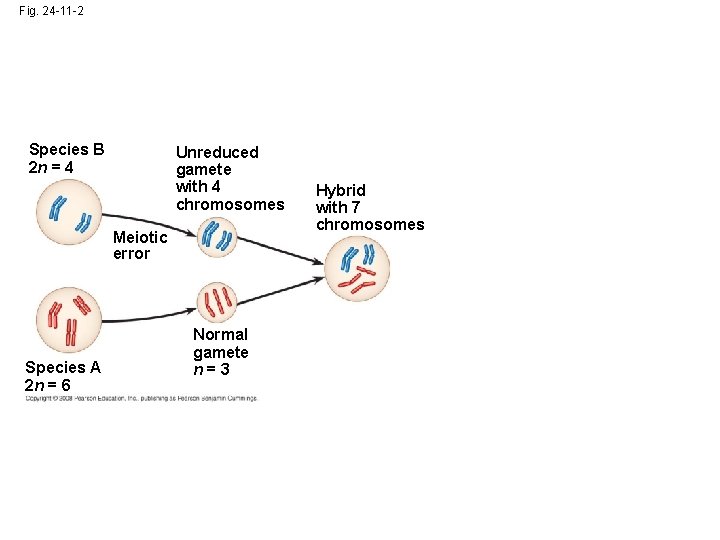
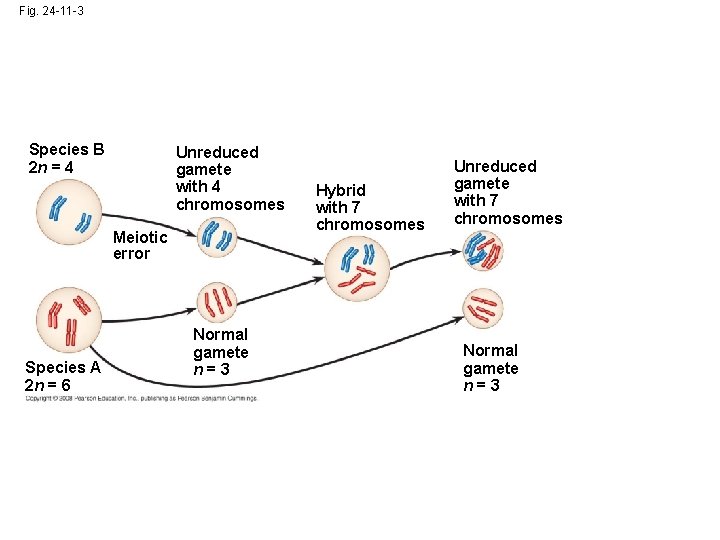
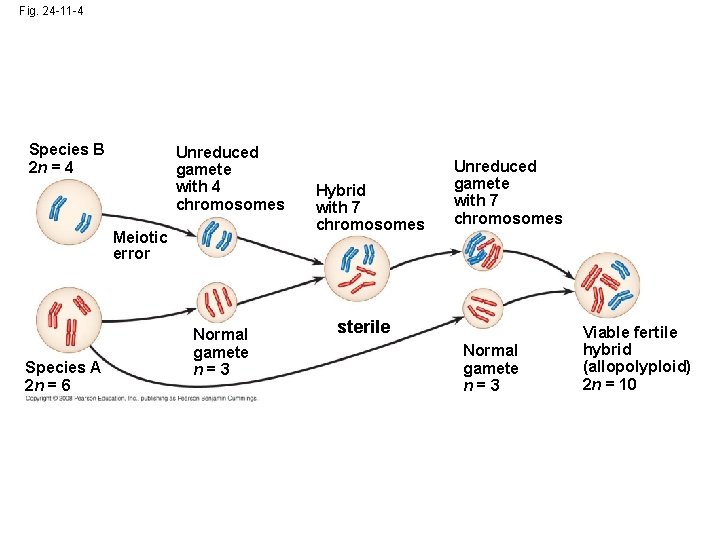
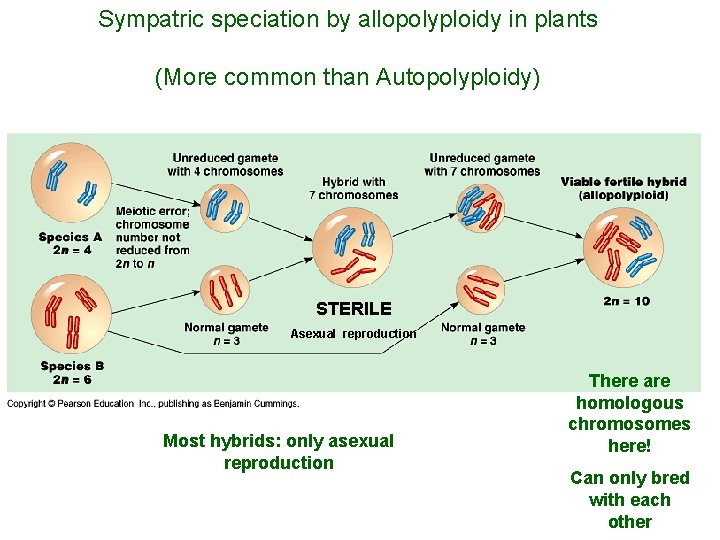
allopolyploidy • An allopolyploid is a species with multiple sets of chromosomes derived from 2 different species that interbreed
Fig. 24 -11 -1 Species B 2 n = 4 Unreduced gamete with 4 chromosomes Meiotic error Species A 2 n = 6 Normal gamete n=3
Fig. 24 -11 -2 Species B 2 n = 4 Unreduced gamete with 4 chromosomes Meiotic error Species A 2 n = 6 Normal gamete n=3 Hybrid with 7 chromosomes
Fig. 24 -11 -3 Species B 2 n = 4 Unreduced gamete with 4 chromosomes Meiotic error Species A 2 n = 6 Normal gamete n=3 Hybrid with 7 chromosomes Unreduced gamete with 7 chromosomes Normal gamete n=3
Fig. 24 -11 -4 Species B 2 n = 4 Unreduced gamete with 4 chromosomes Meiotic error Species A 2 n = 6 Normal gamete n=3 Hybrid with 7 chromosomes Unreduced gamete with 7 chromosomes sterile Normal gamete n=3 Viable fertile hybrid (allopolyploid) 2 n = 10
Sympatric speciation by allopolyploidy in plants (More common than Autopolyploidy) STERILE Asexual reproduction Most hybrids: only asexual reproduction There are homologous chromosomes here! Can only bred with each other
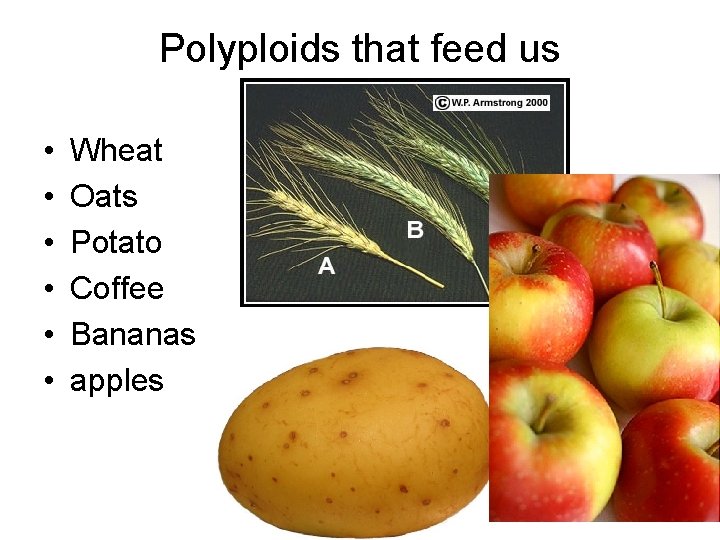
Polyploids that feed us • • • Wheat Oats Potato Coffee Bananas apples
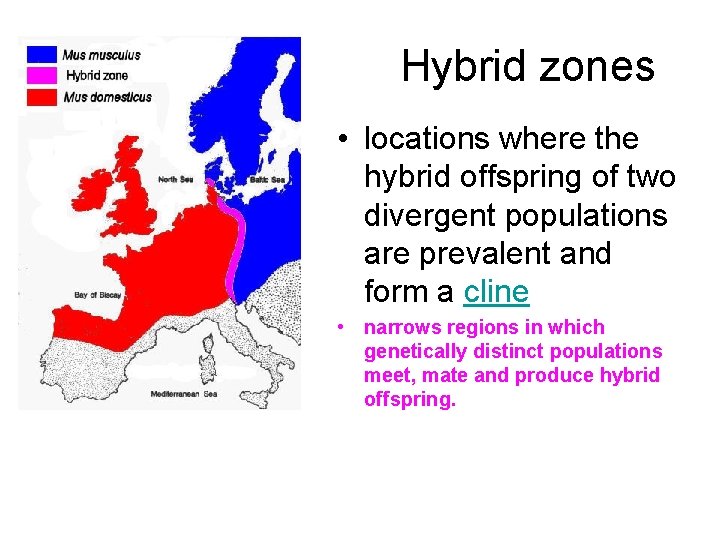
Hybrid zones • locations where the hybrid offspring of two divergent populations are prevalent and form a cline • narrows regions in which genetically distinct populations meet, mate and produce hybrid offspring.
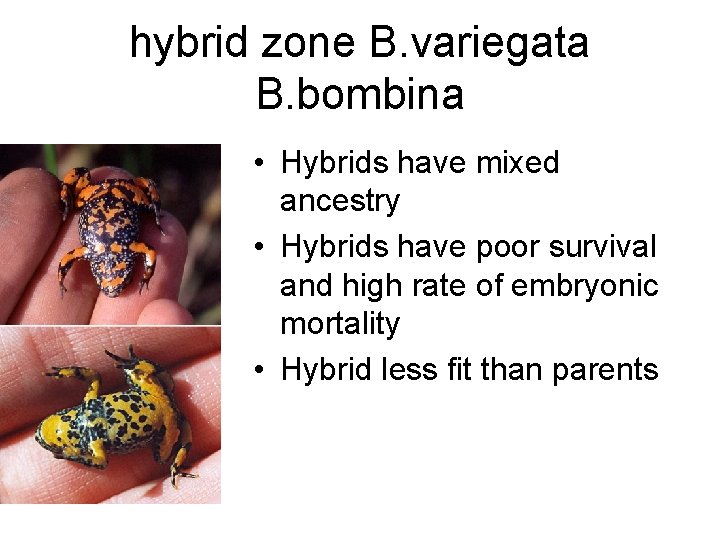
hybrid zone B. variegata B. bombina • Hybrids have mixed ancestry • Hybrids have poor survival and high rate of embryonic mortality • Hybrid less fit than parents
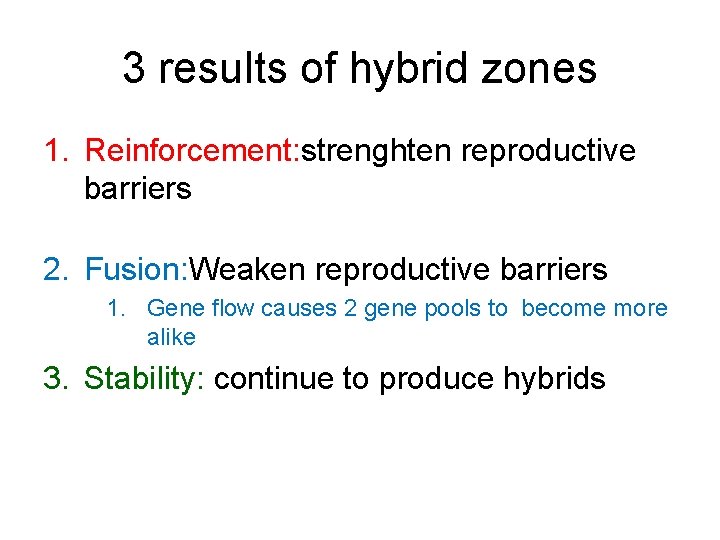
3 results of hybrid zones 1. Reinforcement: strenghten reproductive barriers 2. Fusion: Weaken reproductive barriers 1. Gene flow causes 2 gene pools to become more alike 3. Stability: continue to produce hybrids
How long does it take to form a new species?
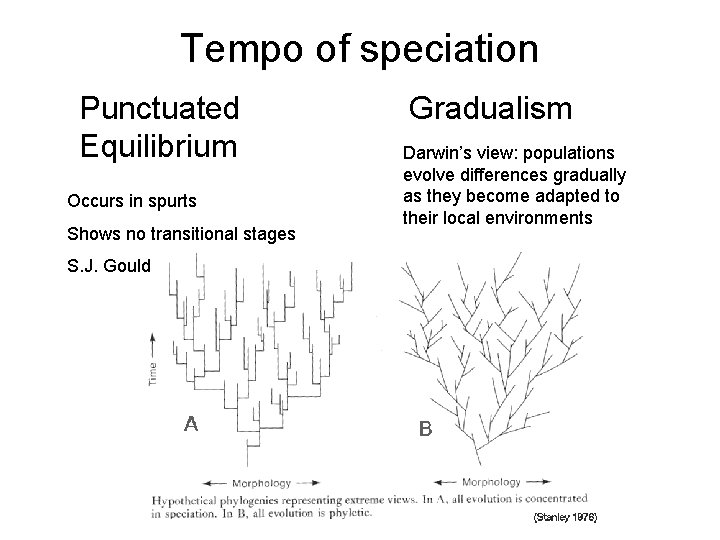
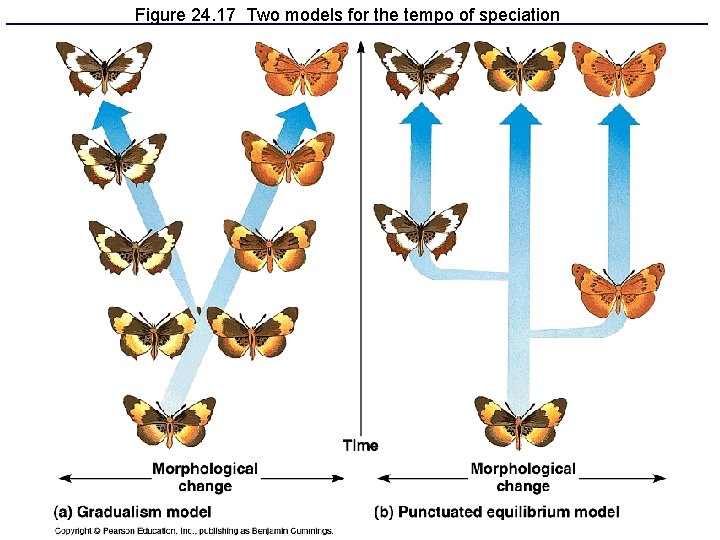
Tempo of speciation Punctuated Equilibrium Occurs in spurts Shows no transitional stages S. J. Gould Gradualism Darwin’s view: populations evolve differences gradually as they become adapted to their local environments
Figure 24. 17 Two models for the tempo of speciation
Adaptive Radiation • Emergence of numerous species from a common ancestor introduced to new and different environments Allopatric speciation