
Ch 2 Classifying Living Things Why Classify Classification

- Slides: 19
Ch. 2: Classifying Living Things
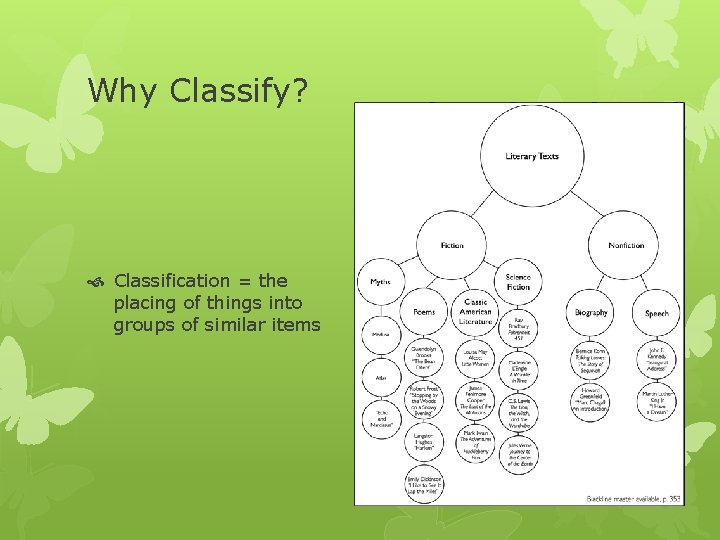
Why Classify? Classification = the placing of things into groups of similar items
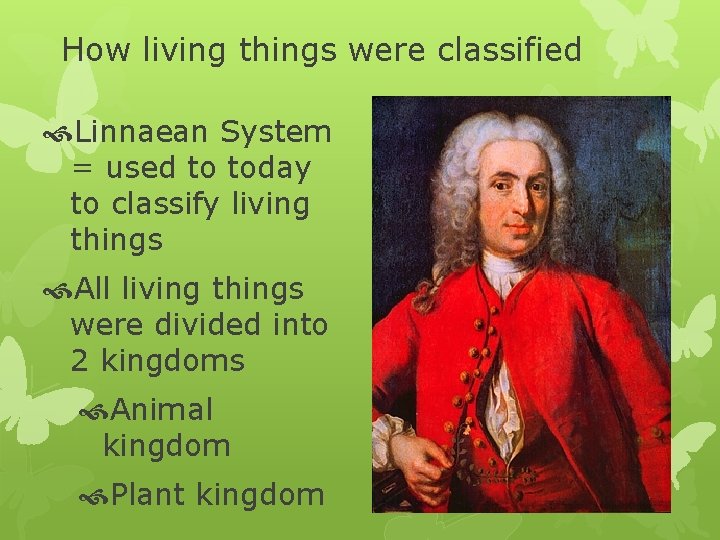
How living things were classified Linnaean System = used to today to classify living things All living things were divided into 2 kingdoms Animal kingdom Plant kingdom
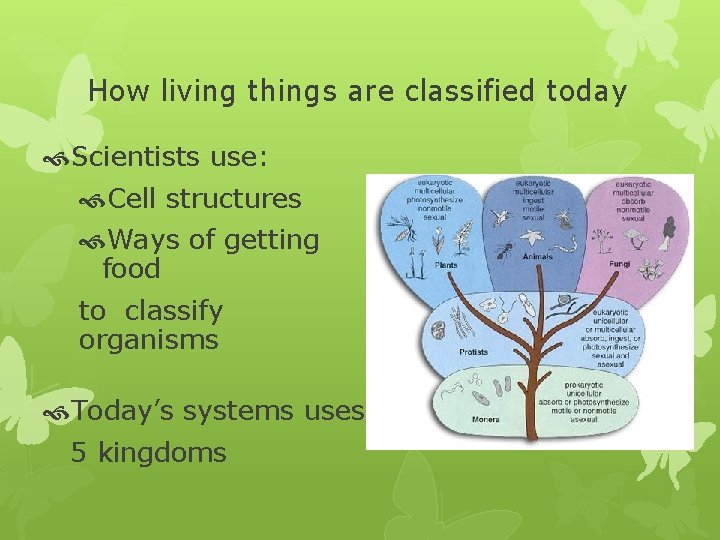
How living things are classified today Scientists use: Cell structures Ways of getting food to classify organisms Today’s systems uses 5 kingdoms
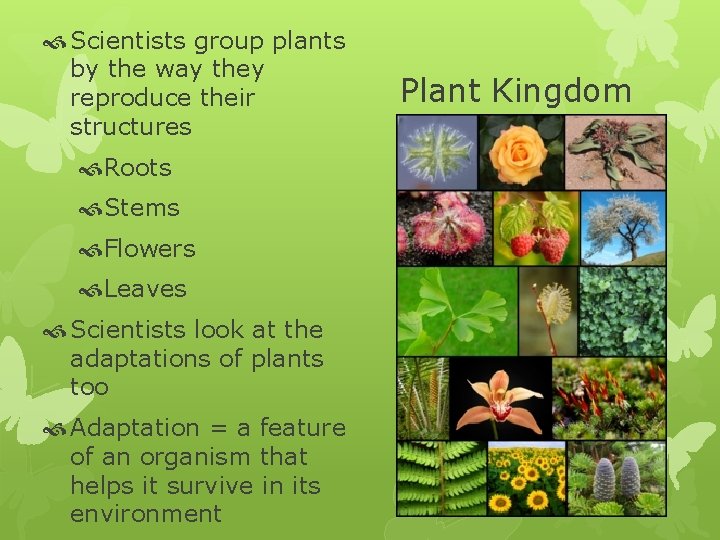
Scientists group plants by the way they reproduce their structures Roots Stems Flowers Leaves Scientists look at the adaptations of plants too Adaptation = a feature of an organism that helps it survive in its environment Plant Kingdom
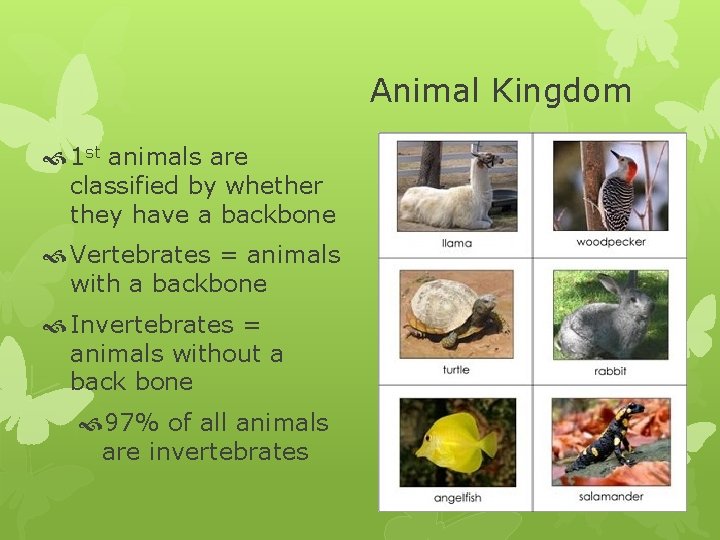
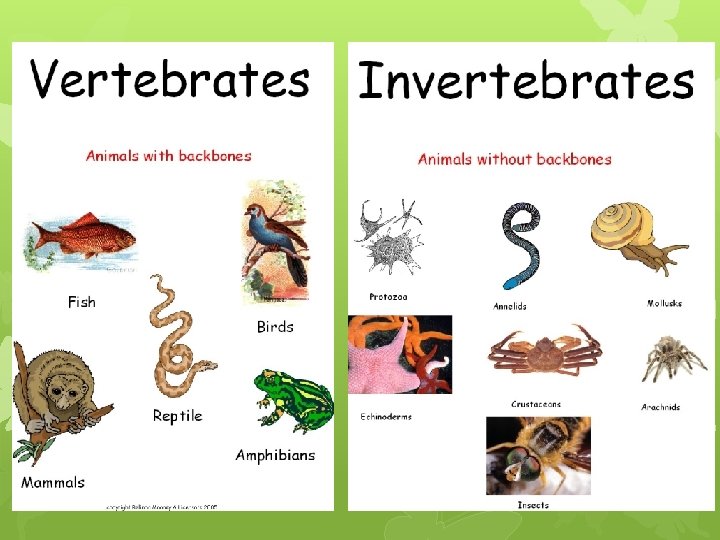
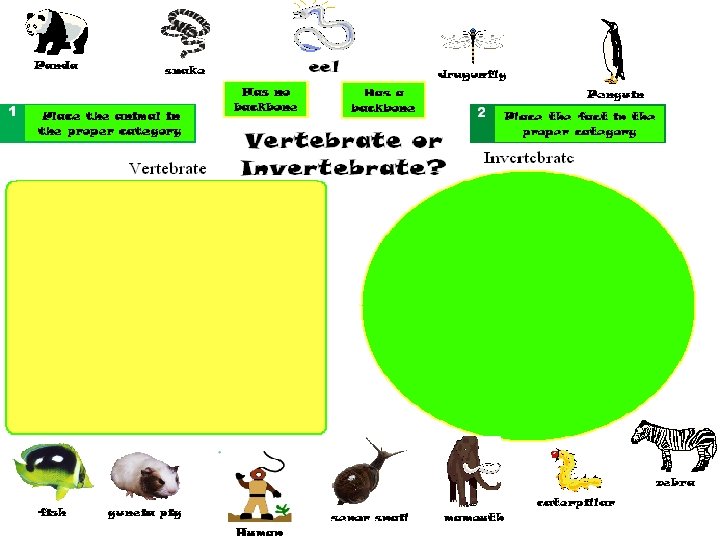
Animal Kingdom 1 st animals are classified by whether they have a backbone Vertebrates = animals with a backbone Invertebrates = animals without a back bone 97% of all animals are invertebrates
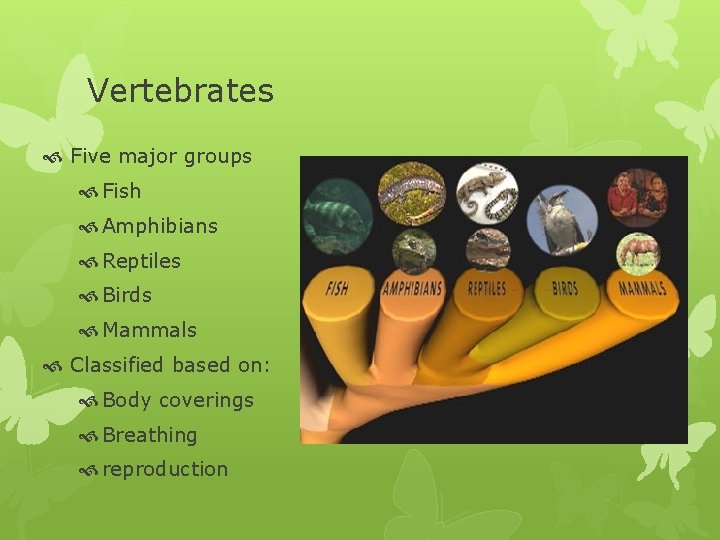
Vertebrates Five major groups Fish Amphibians Reptiles Birds Mammals Classified based on: Body coverings Breathing reproduction
Fungus Kingdom Fungus = an organism whose cells have walls but no chloroplasts Feed on decaying tissue of other organisms Classified by: Shape Size Way of reproducing
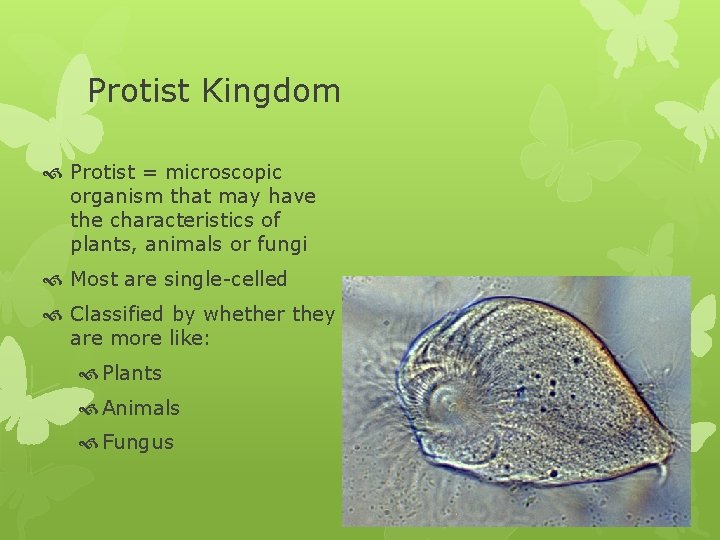
Protist Kingdom Protist = microscopic organism that may have the characteristics of plants, animals or fungi Most are single-celled Classified by whether they are more like: Plants Animals Fungus
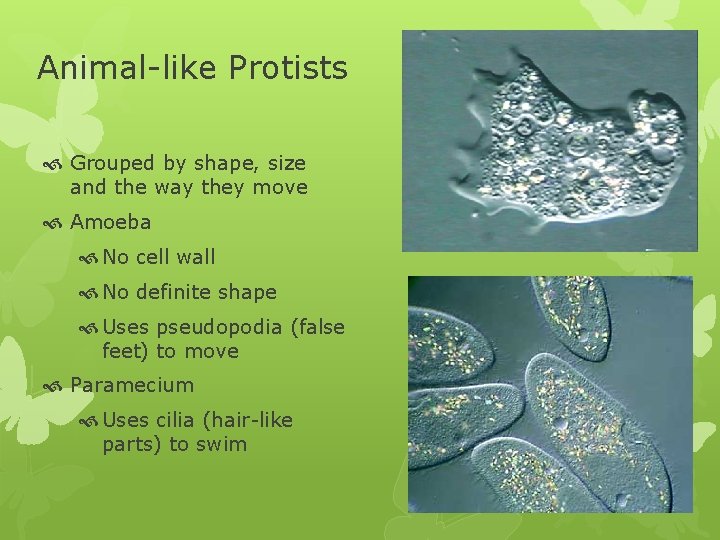
Animal-like Protists Grouped by shape, size and the way they move Amoeba No cell wall No definite shape Uses pseudopodia (false feet) to move Paramecium Uses cilia (hair-like parts) to swim
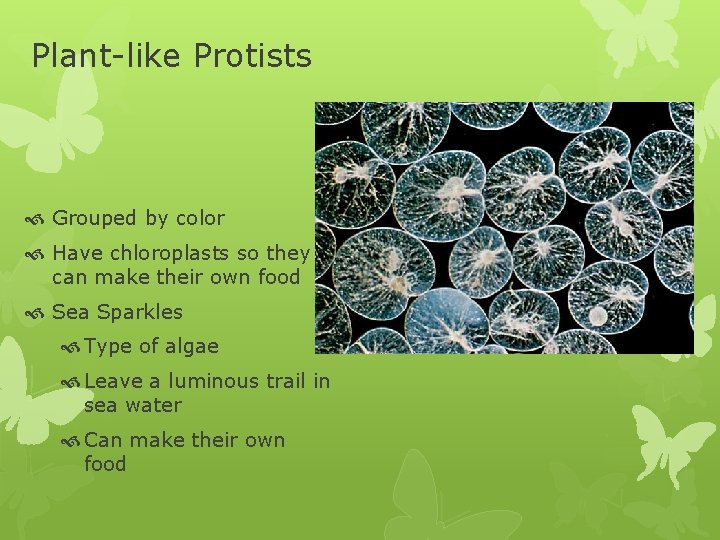
Plant-like Protists Grouped by color Have chloroplasts so they can make their own food Sea Sparkles Type of algae Leave a luminous trail in sea water Can make their own food
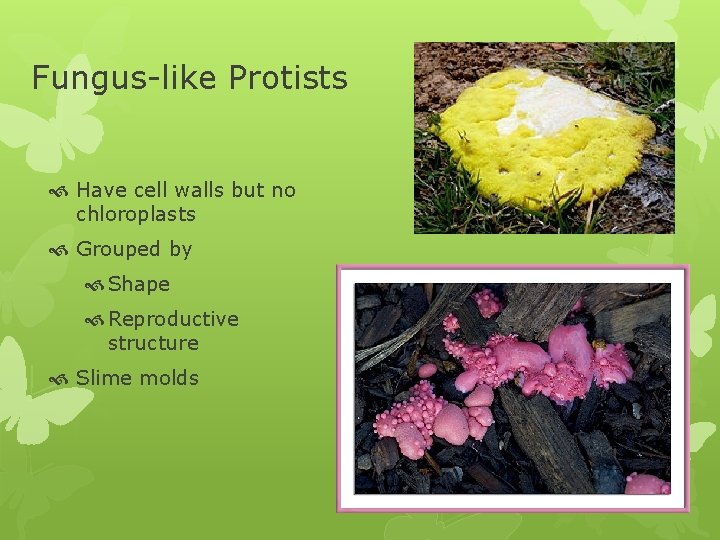
Fungus-like Protists Have cell walls but no chloroplasts Grouped by Shape Reproductive structure Slime molds
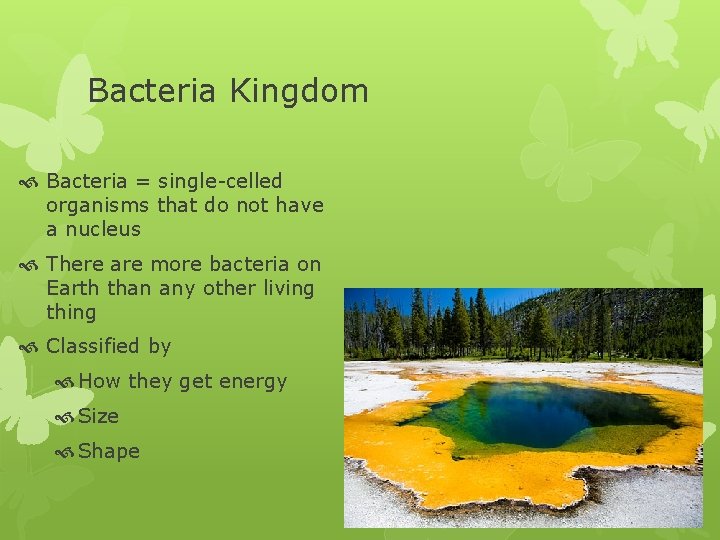
Bacteria Kingdom Bacteria = single-celled organisms that do not have a nucleus There are more bacteria on Earth than any other living thing Classified by How they get energy Size Shape
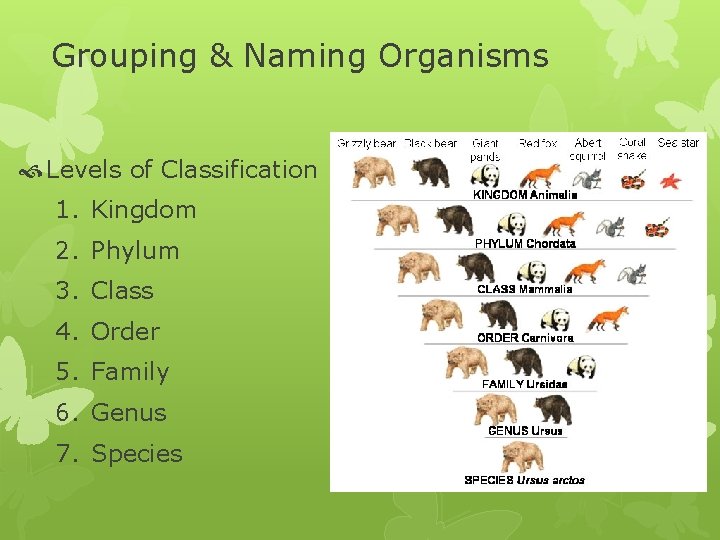
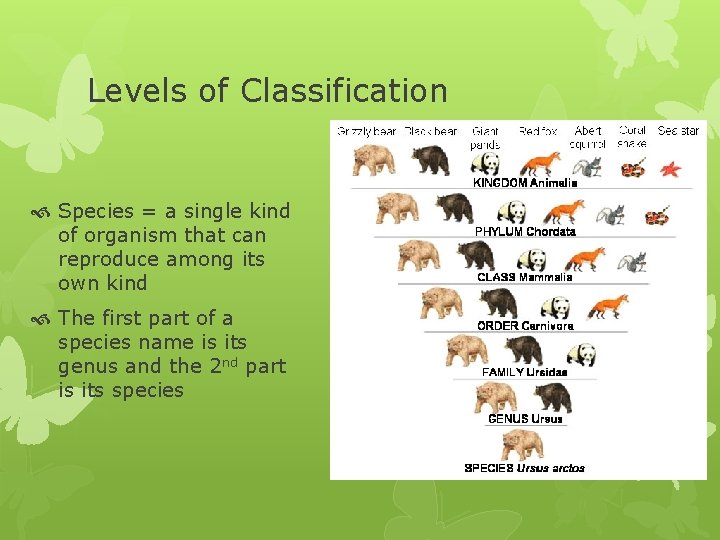
Grouping & Naming Organisms Levels of Classification 1. Kingdom 2. Phylum 3. Class 4. Order 5. Family 6. Genus 7. Species
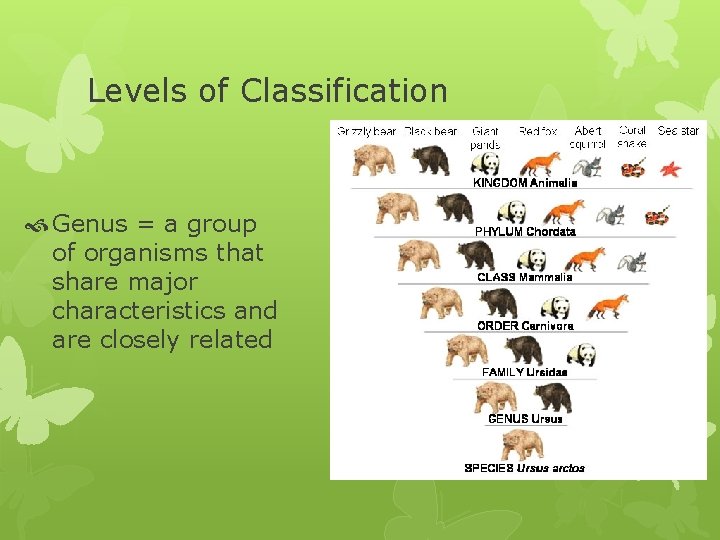
Levels of Classification Genus = a group of organisms that share major characteristics and are closely related
Levels of Classification Species = a single kind of organism that can reproduce among its own kind The first part of a species name is its genus and the 2 nd part is its species
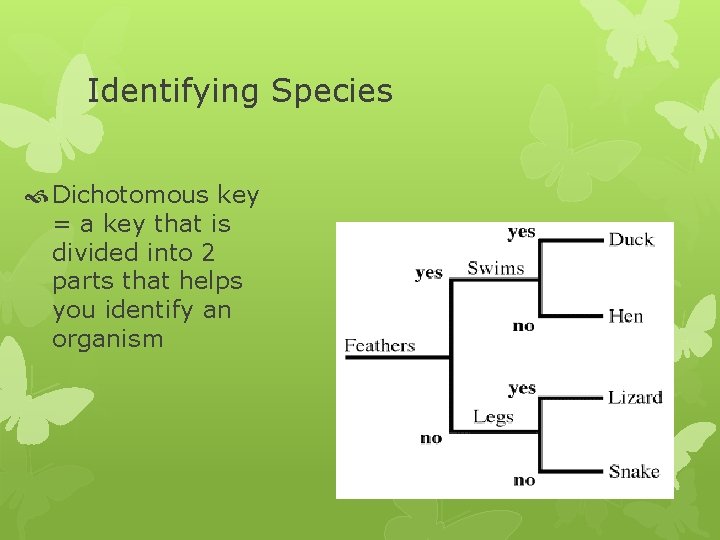
Identifying Species Dichotomous key = a key that is divided into 2 parts that helps you identify an organism