
CH 17 Taxonomy and Classification 18 Bacteria and
CH 17 Taxonomy and Classification & 18 Bacteria and Viruses
Essential Questions 17 -1 • Using binomial nomenclature, how are scientific names written? • What are the categories used in biological classification? The History of Classification
Vocabulary Review • morphology New • • • classification taxonomy binomial nomenclature taxon genus family order class phylum division kingdom domain The History of Classification
Early Systems of Classification • Classification is the grouping of objects or organisms based on a set of criteria. • Biologists use a system of classification to organize information about the diversity of living things. The History of Classification
Early Systems of Classification Linnaeus’s system • Linnaeus’s system of classification was based on observations of morphology and habitat. • The Linnaean system was the first formal system of taxonomy – the discipline of identifying, naming, and classifying organisms. The History of Classification
Early Systems of Classification Binomial nomenclature • Linnaeus’s method of naming organisms, called binomial nomenclature, gives each species a scientific name with two parts. • The first part is the genus name, and the second part is the specific epithet, or specific name, that identifies the species. • Biologists use scientific names for species because common names vary in their use. The History of Classification
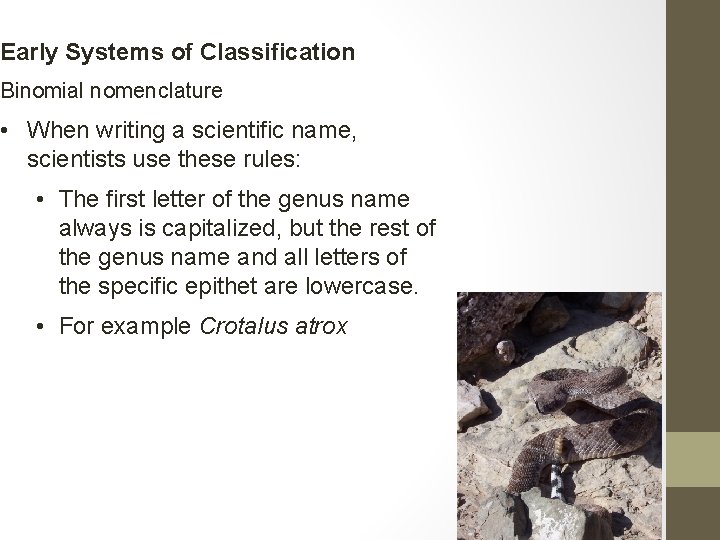
Early Systems of Classification Binomial nomenclature • When writing a scientific name, scientists use these rules: • The first letter of the genus name always is capitalized, but the rest of the genus name and all letters of the specific epithet are lowercase. • For example Crotalus atrox
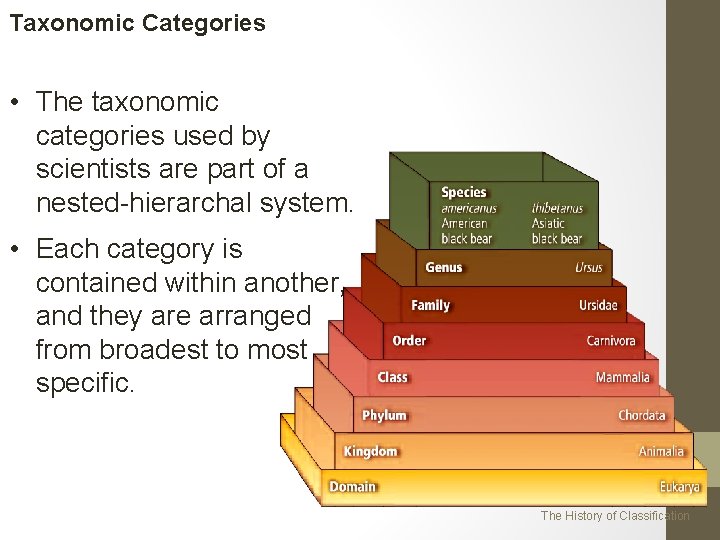
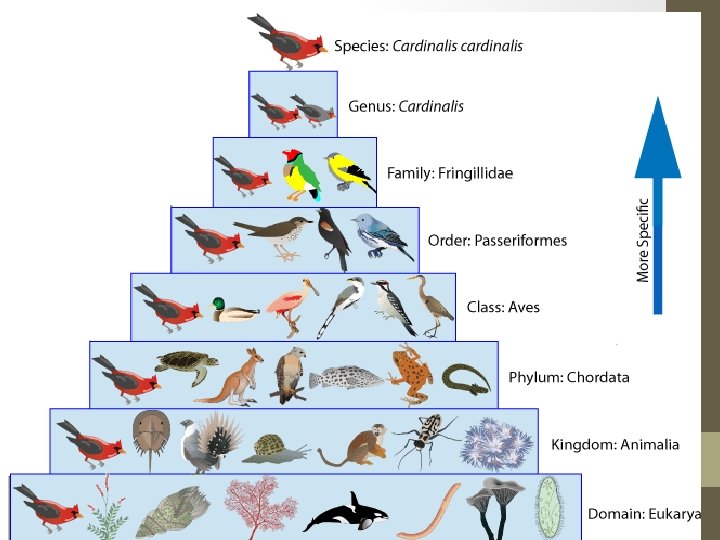
Taxonomic Categories • The taxonomic categories used by scientists are part of a nested-hierarchal system. • Each category is contained within another, and they are arranged from broadest to most specific. The History of Classification
Taxonomic Categories Higher taxa • An order contains related families. • A class contains related orders. • A phylum or division contains related classes. • A kingdom contains related phyla. • The domain is the broadest of all the taxa and contains one or more kingdoms. The History of Classification
Taxonomic Categories Species and genus • A named group of organisms is called a taxon. • A genus is a group of species that are closely related and share a common ancestor. Family • A family is the next higher taxon, consisting of similar, related genera The History of Classification
Systematics applications • Taxonomy is part of a larger branch of biology called systematics. • Systematics is the study of biological diversity with an emphasis on evolutionary history. • Taxonomists can produce detailed guides to identify different organisms. • Through the use of dichotomous keys, which provide a series of choices between alternate characteristics, users can identify organisms they encounter. The History of Classification
Essential Questions 17 -2 • What are the similarities and differences between species concepts? • What are the methods used to reveal phylogeny? • How is a cladogram constructed? Modern Classification
Vocabulary Review • evolution New • • • phylogeny character molecular clock cladistics cladogram Modern Classification
Determining Species Typological species concept • The concept of what determines a species has changed through time. • Aristotle and Linnaeus used the typological species concept – each species a distinctly different group of organisms based on physical similarities. • Based on the idea that species are unchanging, distinct, and natural types. Modern Classification
Determining Species Biological species concept • The biological species concept defines a species as a group of organisms that is able to interbreed and produce fertile offspring in a natural setting. • Does not account for extinct species or species that reproduce asexually. Modern Classification
Determining Species **Phylogenic species concept** • Phylogeny is the evolutionary history of a species. • The phylogenic species concept defines a species as a cluster of organisms that is distinct from other clusters and shows evidence of a pattern of ancestry and descent. Characters • To classify a species, scientists construct patterns of descent by using characters – inherited features that vary among species. • Characters can be morphological or biochemical. Modern Classification
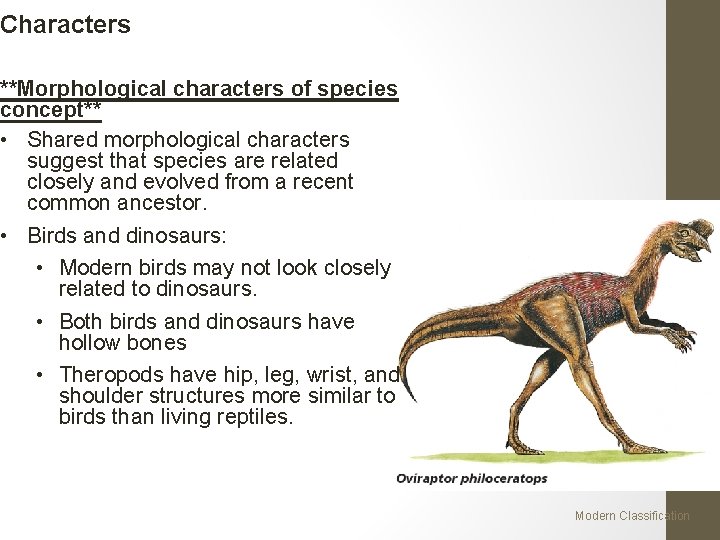
Characters **Morphological characters of species concept** • Shared morphological characters suggest that species are related closely and evolved from a recent common ancestor. • Birds and dinosaurs: • Modern birds may not look closely related to dinosaurs. • Both birds and dinosaurs have hollow bones • Theropods have hip, leg, wrist, and shoulder structures more similar to birds than living reptiles. Modern Classification
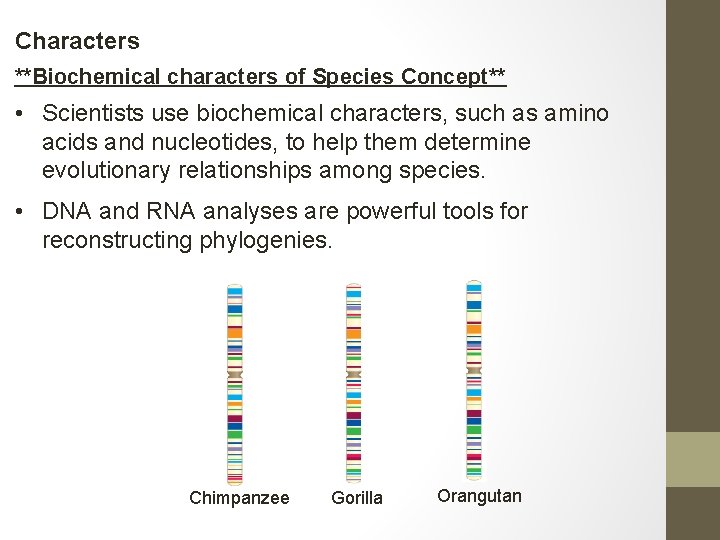
Characters **Biochemical characters of Species Concept** • Scientists use biochemical characters, such as amino acids and nucleotides, to help them determine evolutionary relationships among species. • DNA and RNA analyses are powerful tools for reconstructing phylogenies. Chimpanzee Gorilla Orangutan
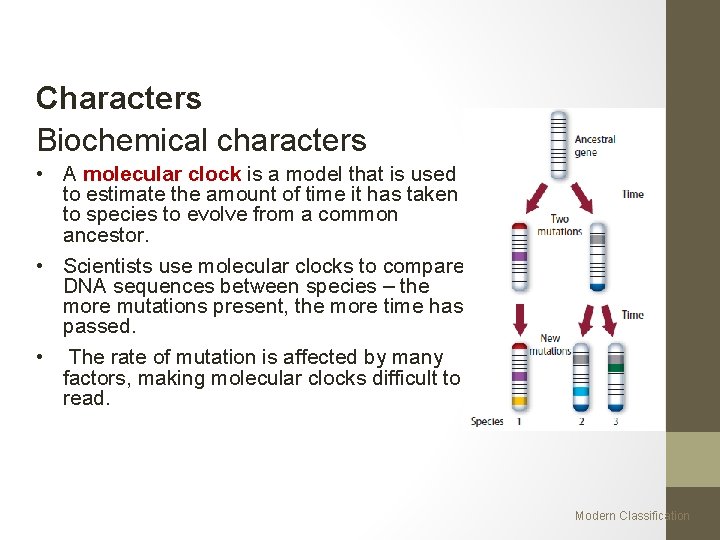
Characters Biochemical characters • A molecular clock is a model that is used to estimate the amount of time it has taken to species to evolve from a common ancestor. • Scientists use molecular clocks to compare DNA sequences between species – the more mutations present, the more time has passed. • The rate of mutation is affected by many factors, making molecular clocks difficult to read. Modern Classification
Phylogenetic Reconstruction Character types • Cladistics classifies organisms based on the order that they diverged from a common ancestor. • Scientists consider two main types of characters when doing cladistic analyses: • Ancestral characters are found within the entire line of descent of a group of organisms. • Derived characters are only found after a split from the descendent line. Modern Classification
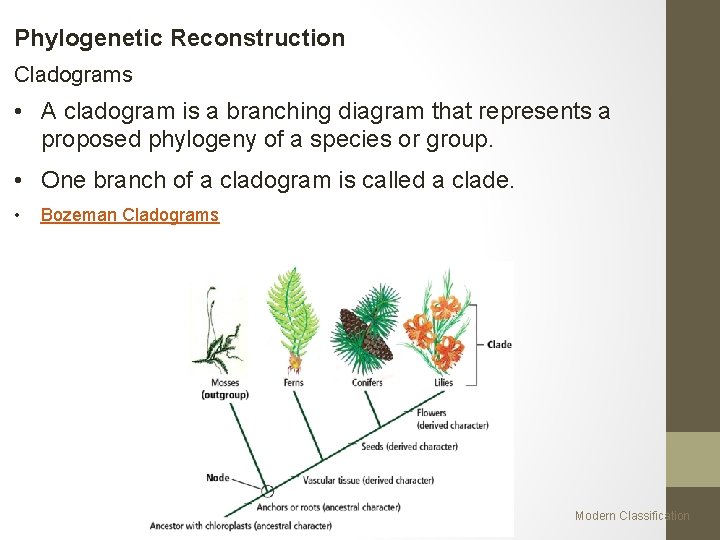
Phylogenetic Reconstruction Cladograms • A cladogram is a branching diagram that represents a proposed phylogeny of a species or group. • One branch of a cladogram is called a clade. • Bozeman Cladograms Modern Classification
Essential Questions 17 -3 • What are the major characteristics of the three domains? • What are the differences among the six kingdoms? • How are organisms classified at the kingdom level? Domains and Kingdoms
Vocabulary Review • eukaryote New • • • archaea protist fungus Domains and Kingdoms
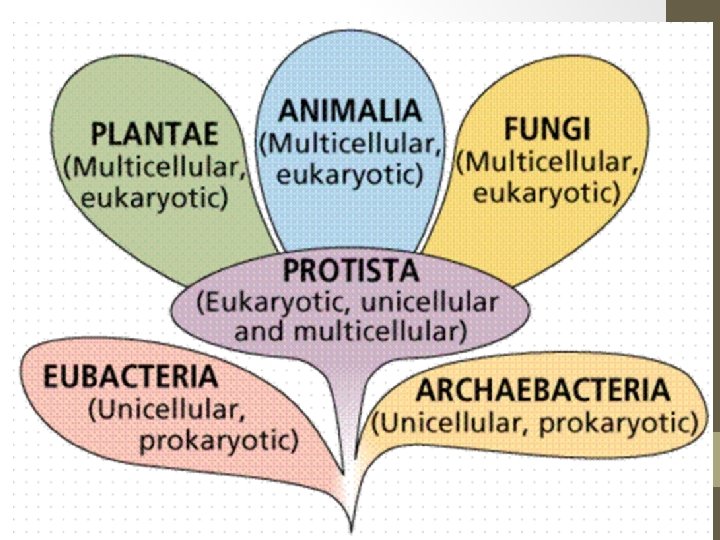
Grouping Species • The broadest category in the classification used by most biologists is the domain. • Three domains: Bacteria, Archaea, Eukarya • Six kingdoms: Bacteria, Archaea, Protists, Fungi, Plantae, and Animalia • Organisms are classified into domains based on cell type and structure • Organisms are classified into kingdoms based on cell type, structure, and nutrition Domains and Kingdoms
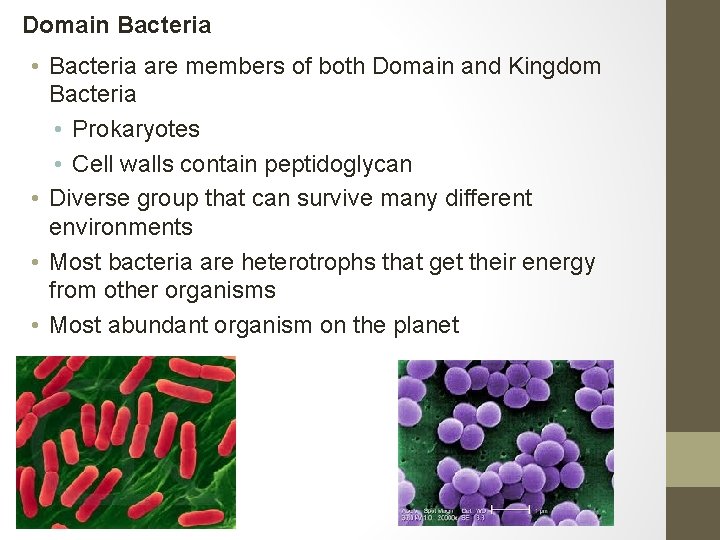
Domain Bacteria • Bacteria are members of both Domain and Kingdom Bacteria • Prokaryotes • Cell walls contain peptidoglycan • Diverse group that can survive many different environments • Most bacteria are heterotrophs that get their energy from other organisms • Most abundant organism on the planet Copyright © Mc. Graw-Hill Education
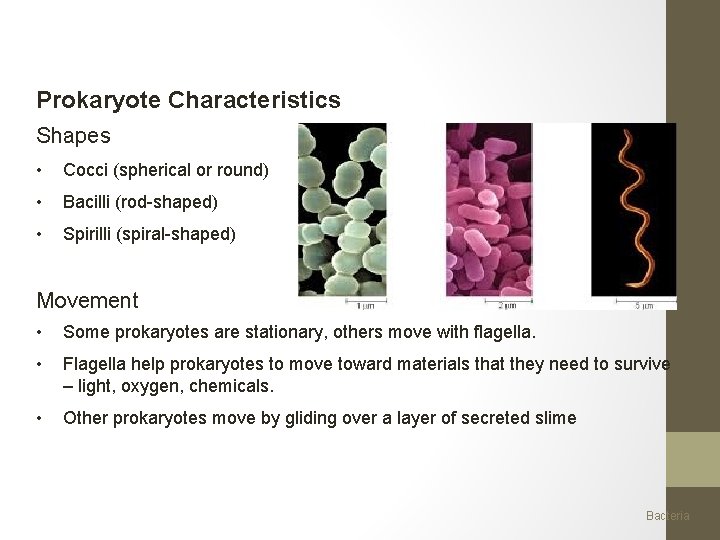
Prokaryote Characteristics Shapes • Cocci (spherical or round) • Bacilli (rod-shaped) • Spirilli (spiral-shaped) Movement • Some prokaryotes are stationary, others move with flagella. • Flagella help prokaryotes to move toward materials that they need to survive – light, oxygen, chemicals. • Other prokaryotes move by gliding over a layer of secreted slime Bacteria
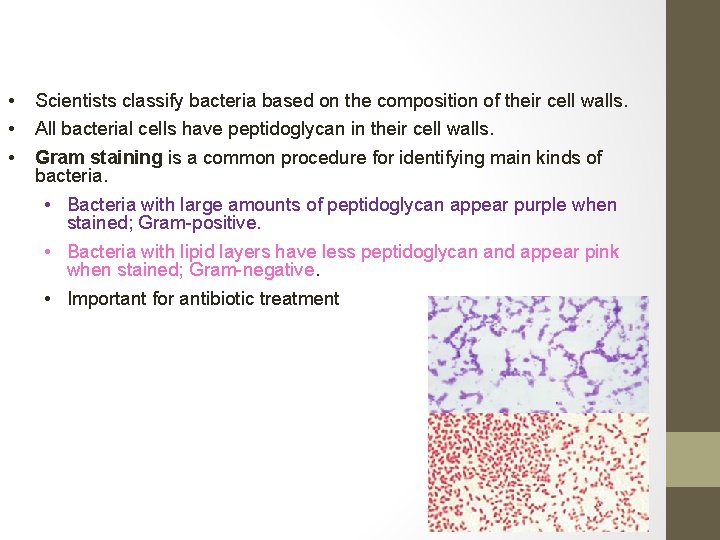
• • • Scientists classify bacteria based on the composition of their cell walls. All bacterial cells have peptidoglycan in their cell walls. Gram staining is a common procedure for identifying main kinds of bacteria. • Bacteria with large amounts of peptidoglycan appear purple when stained; Gram-positive. • Bacteria with lipid layers have less peptidoglycan and appear pink when stained; Gram-negative. • Important for antibiotic treatment
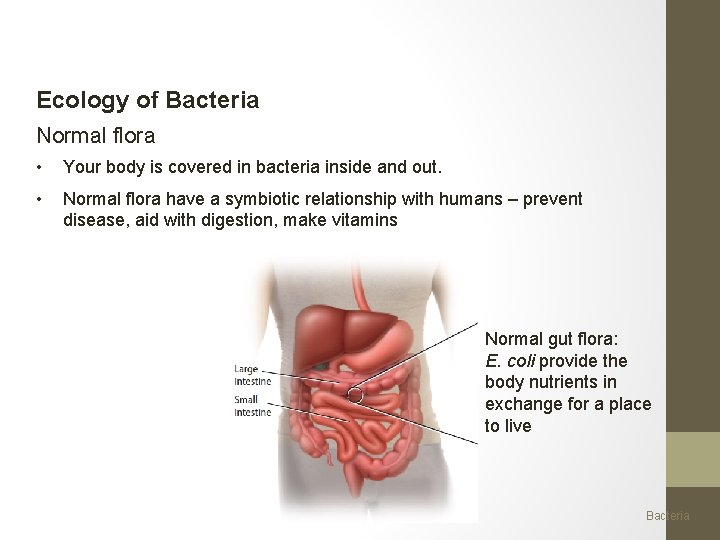
Ecology of Bacteria Normal flora • Your body is covered in bacteria inside and out. • Normal flora have a symbiotic relationship with humans – prevent disease, aid with digestion, make vitamins Normal gut flora: E. coli provide the body nutrients in exchange for a place to live Bacteria
Ecology of Bacteria Disease-causing bacteria • A small percentage of bacteria cause disease. • Cause disease in two ways: • Multiply quickly at site of infection before immune system responds • Secrete a toxin or harmful substance Bacteria
• Bacteria and Replication
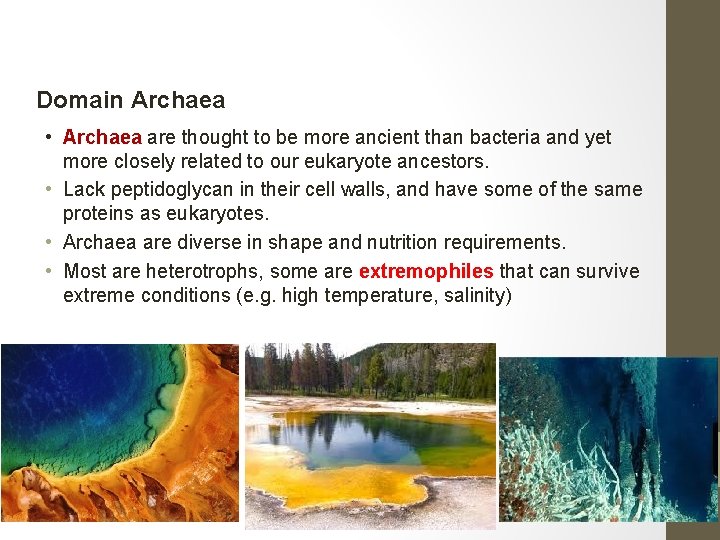
Domain Archaea • Archaea are thought to be more ancient than bacteria and yet more closely related to our eukaryote ancestors. • Lack peptidoglycan in their cell walls, and have some of the same proteins as eukaryotes. • Archaea are diverse in shape and nutrition requirements. • Most are heterotrophs, some are extremophiles that can survive extreme conditions (e. g. high temperature, salinity) Copyright © Mc. Graw-Hill Education Domains and Kingdoms
Domain Eukarya • All eukaryotes have a membrane-bound nucleus and other membrane-bound organelles. • Domain Eukarya contains Kingdoms Protista, Fungi, Plantae, and Animalia. Domains and Kingdoms
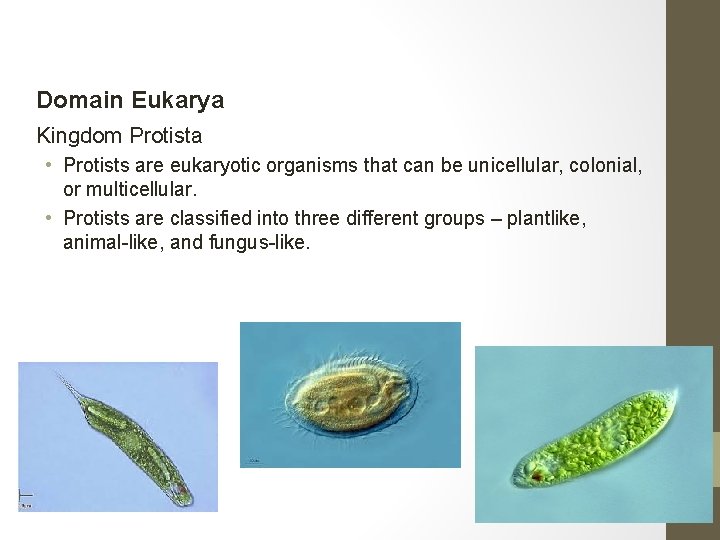
Domain Eukarya Kingdom Protista • Protists are eukaryotic organisms that can be unicellular, colonial, or multicellular. • Protists are classified into three different groups – plantlike, animal-like, and fungus-like. Domains and Kingdoms
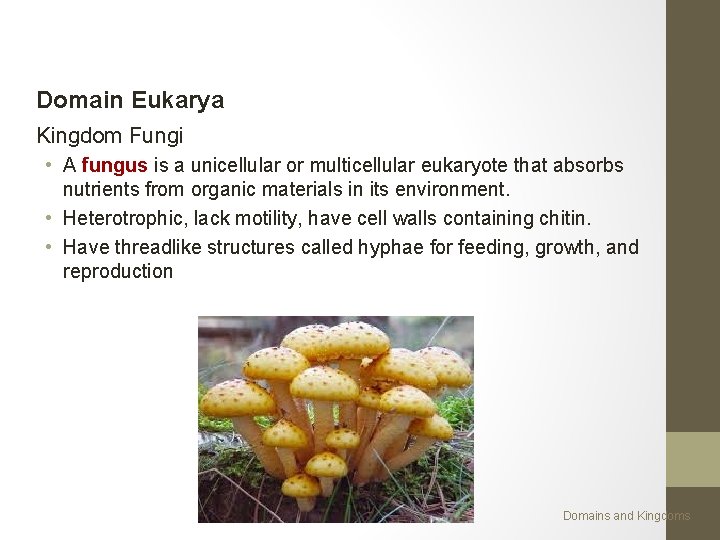
Domain Eukarya Kingdom Fungi • A fungus is a unicellular or multicellular eukaryote that absorbs nutrients from organic materials in its environment. • Heterotrophic, lack motility, have cell walls containing chitin. • Have threadlike structures called hyphae for feeding, growth, and reproduction Domains and Kingdoms
Domain Eukarya Kingdom Animalia • All animals are heterotrophic, multicellular eukaryotes. • Have cells organized into tissues and organs as well as complex organ systems. • Most animals are motile for at least a portion of their life cycle. Domains and Kingdoms
Domain Eukarya Kingdom Plantae • Mostly multicellular, have cell walls composed of cellulose. • Most contain chloroplasts for photosynthesis, but a few plants are heterotrophs • Many plants possess organs such as roots, stems, and leaves. Domains and Kingdoms
Viruses – an exception • A virus is a nucleic acid surrounded by a protein coat. • Viruses do not possess cells, nor are they cells, and are not considered to be living. • Because they are nonliving, they usually are not placed in the biological classification system. • Viruses • Viral Replication Domains and Kingdoms
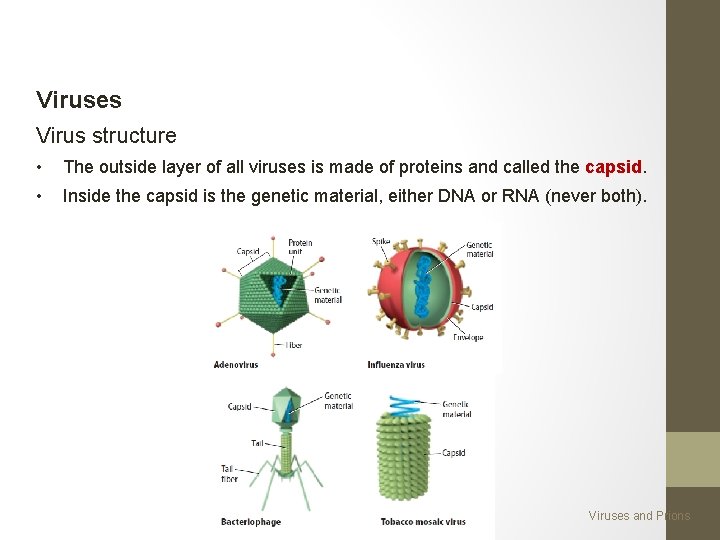
Viruses Virus structure • The outside layer of all viruses is made of proteins and called the capsid. • Inside the capsid is the genetic material, either DNA or RNA (never both). Viruses and Prions
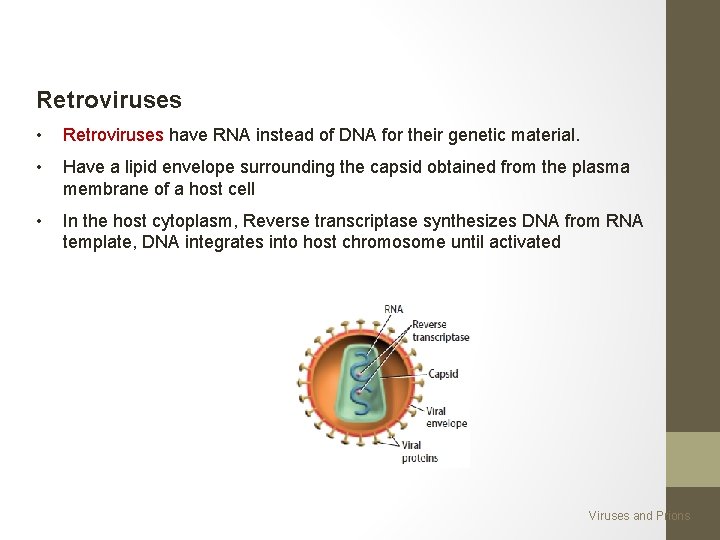
Retroviruses • Retroviruses have RNA instead of DNA for their genetic material. • Have a lipid envelope surrounding the capsid obtained from the plasma membrane of a host cell • In the host cytoplasm, Reverse transcriptase synthesizes DNA from RNA template, DNA integrates into host chromosome until activated Viruses and Prions
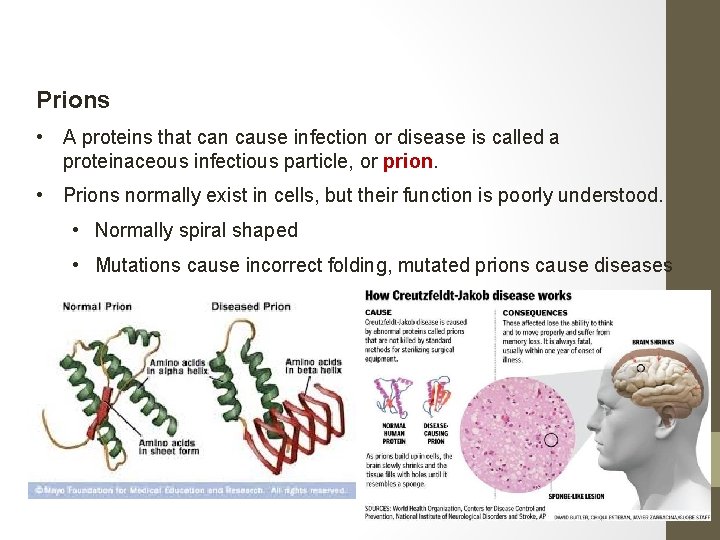
Prions • A proteins that can cause infection or disease is called a proteinaceous infectious particle, or prion. • Prions normally exist in cells, but their function is poorly understood. • Normally spiral shaped • Mutations cause incorrect folding, mutated prions cause diseases Viruses and Prions
Prions Prion infection • Prions can cause normal proteins to mutate. • Cause nerve cells to burst, creating space in the brain • Prions may be communicated between species, but scientists are not unified on this thought. Viruses and Prions
- Slides: 43