
Ch 17 Lesson 1 The Industrial Revolution EQ

- Slides: 29
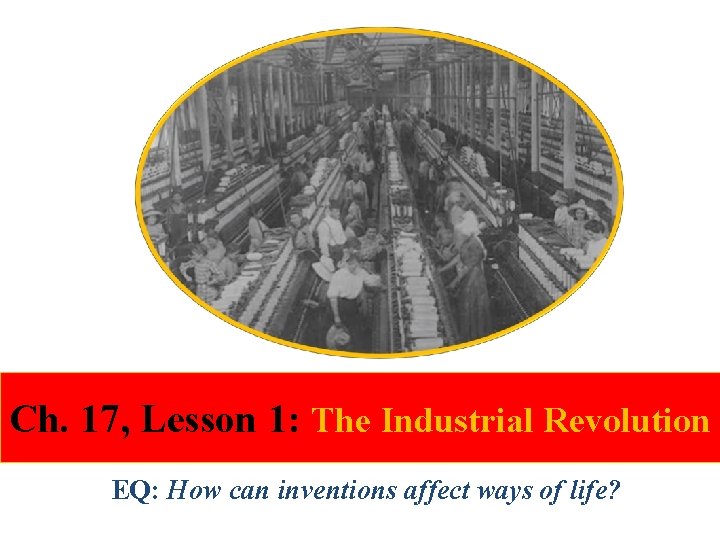
Ch. 17, Lesson 1: The Industrial Revolution EQ: How can inventions affect ways of life?
Ch. 17, Lesson 1: Vocabulary (pg. 316) • • • Capital Entrepreneur Cottage industry Industrial capitalism Socialism
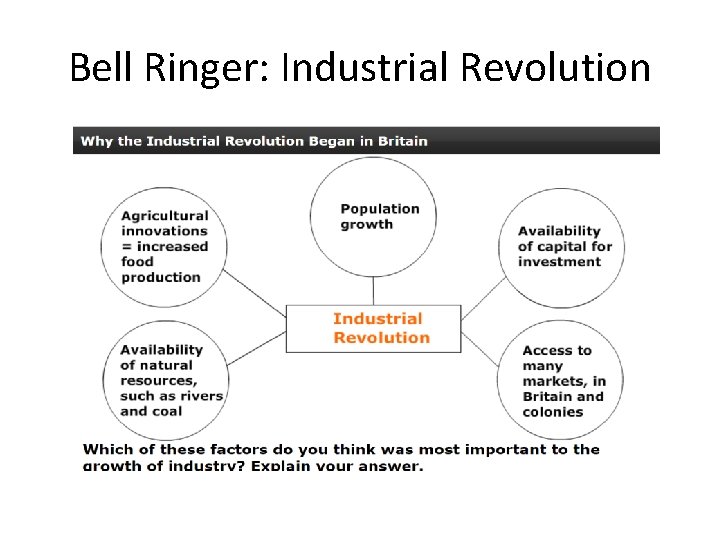
Bell Ringer: Industrial Revolution
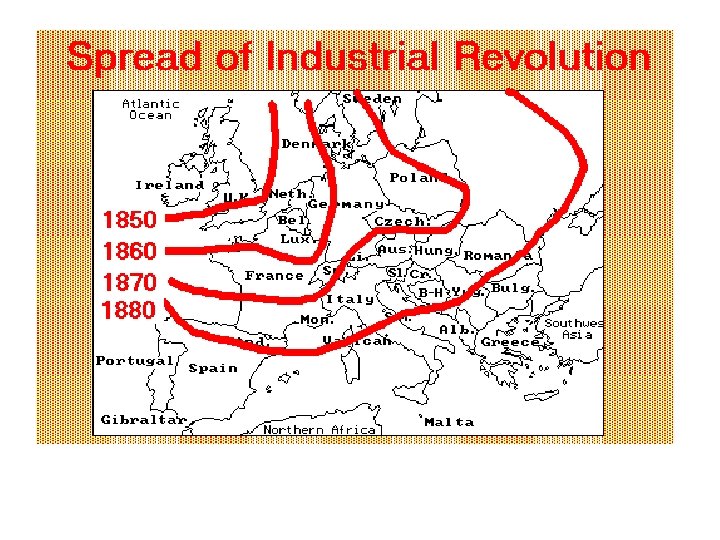
The Industrial Revolution • Change from an economy based on farming and handcrafts, to an economy based on manufacturing using machines. • Began in Great Britain in 1780 s, then spread throughout European and northern USA.
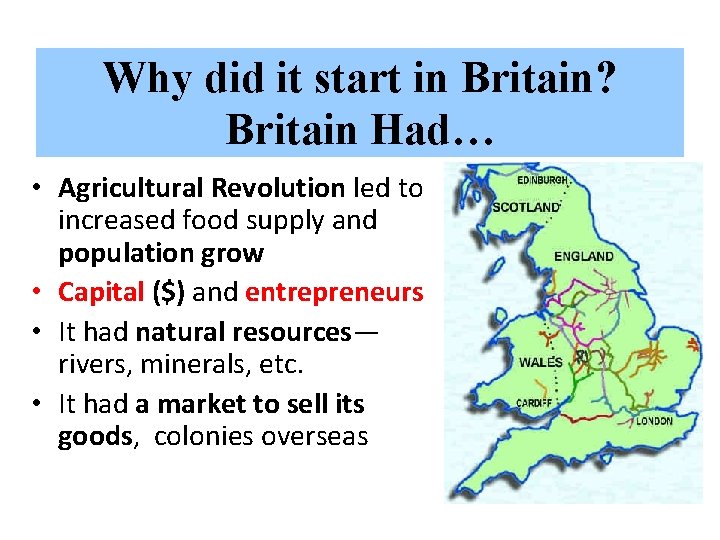
Why did it start in Britain? Britain Had… • Agricultural Revolution led to increased food supply and population grow • Capital ($) and entrepreneurs • It had natural resources— rivers, minerals, etc. • It had a market to sell its goods, colonies overseas
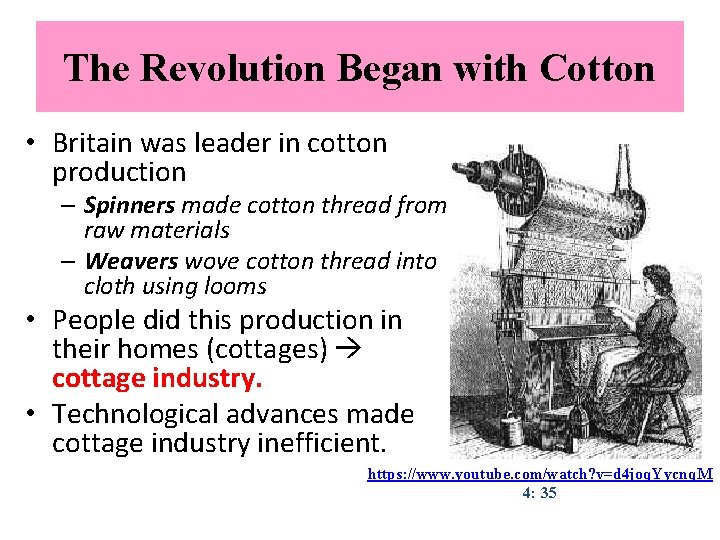
The Revolution Began with Cotton • Britain was leader in cotton production – Spinners made cotton thread from raw materials – Weavers wove cotton thread into cloth using looms • People did this production in their homes (cottages) cottage industry. • Technological advances made cottage industry inefficient. https: //www. youtube. com/watch? v=d 4 joq. Yycnq. M 4: 35
Activity #1: • As you read Cotton Production and New Factories (pg. 317) —identify the three inventions and inventors that changed the cotton production industry in England. • Then, explain how their invention changed the cotton production industry in England.
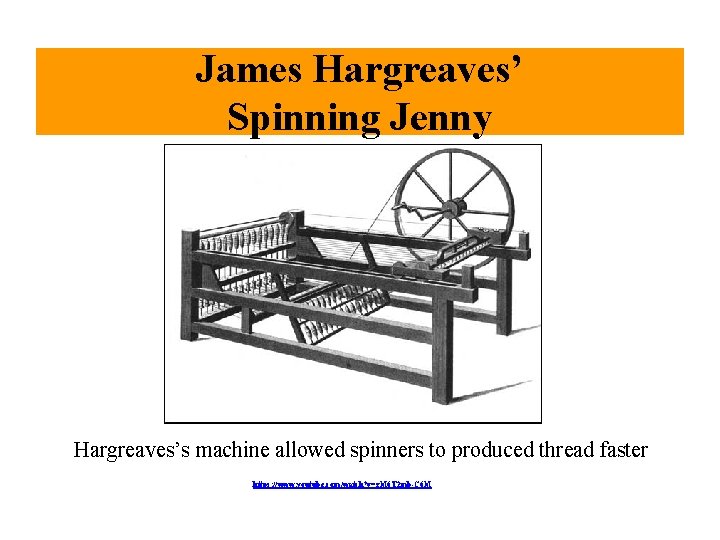
James Hargreaves’ Spinning Jenny Hargreaves’s machine allowed spinners to produced thread faster https: //www. youtube. com/watch? v=g. M 6 T 2 mb-C 6 M
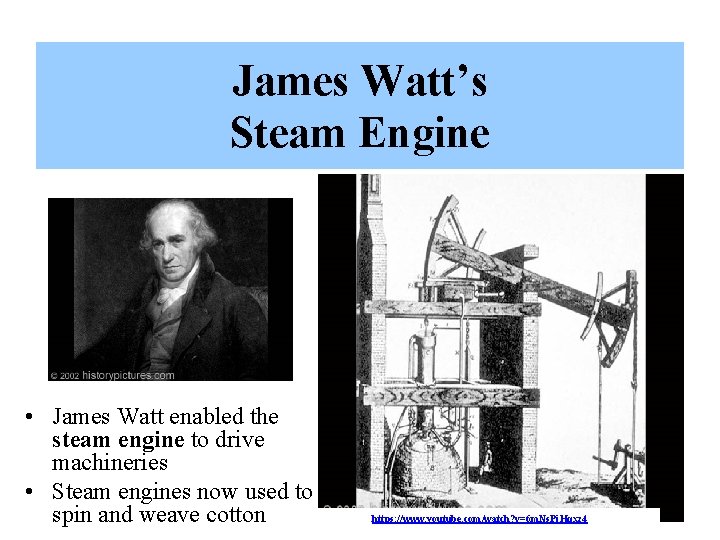
James Watt’s Steam Engine • James Watt enabled the steam engine to drive machineries • Steam engines now used to spin and weave cotton https: //www. youtube. com/watch? v=6 m. Ns. Pj. Hqxz 4
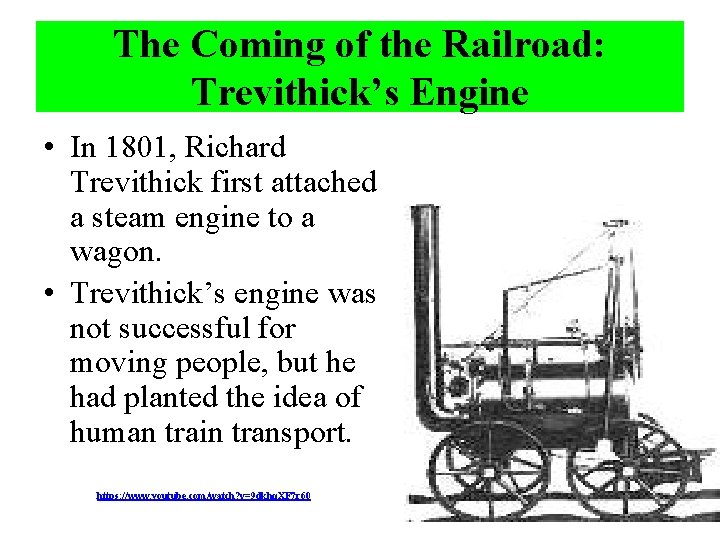
The Coming of the Railroad: Trevithick’s Engine • In 1801, Richard Trevithick first attached a steam engine to a wagon. • Trevithick’s engine was not successful for moving people, but he had planted the idea of human train transport. https: //www. youtube. com/watch? v=9 dkhq. XF 7 r 60
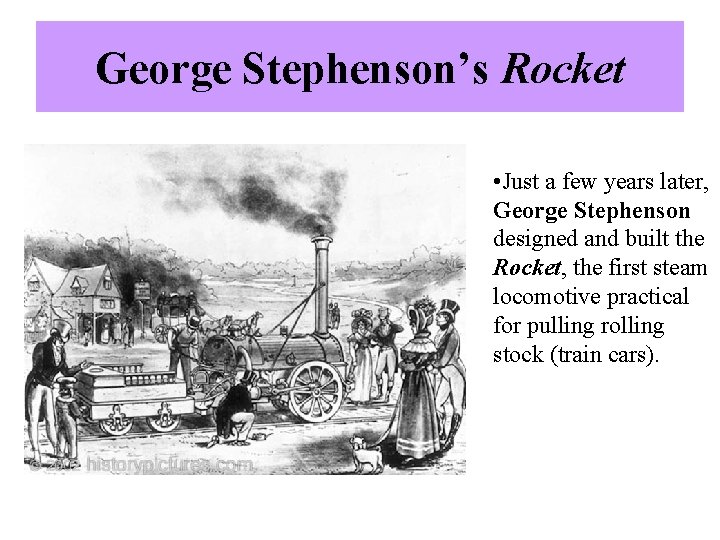
George Stephenson’s Rocket • Just a few years later, George Stephenson designed and built the Rocket, the first steam locomotive practical for pulling rolling stock (train cars).
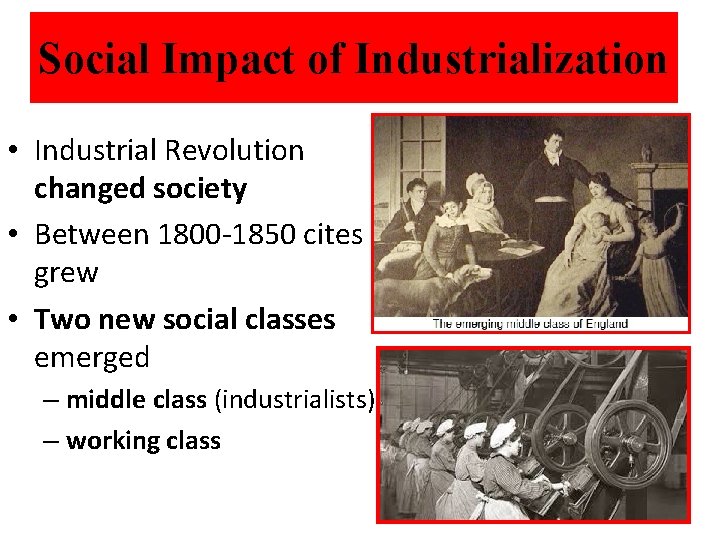
Social Impact of Industrialization • Industrial Revolution changed society • Between 1800 -1850 cites grew • Two new social classes emerged – middle class (industrialists) – working class
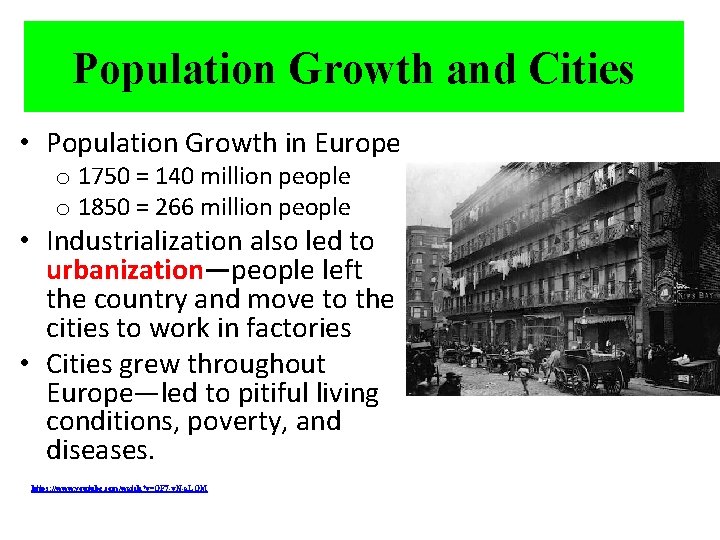
Population Growth and Cities • Population Growth in Europe o 1750 = 140 million people o 1850 = 266 million people • Industrialization also led to urbanization—people left the country and move to the cities to work in factories • Cities grew throughout Europe—led to pitiful living conditions, poverty, and diseases. https: //www. youtube. com/watch? v=OF 7 -v. N-a. LOM
Activity #2: New Social Classes • Read New Social Classes pg. 320 (ch. 17. 1) • Contrast the Two Social Classes that emerged during the Industrial Revolution. • Activity directions: 1. Graphic Organizer Industrial Middle Class Industrial Working Class Define: Detail #1 Detail #2 2. Write a paragraph contrasting the two classes.
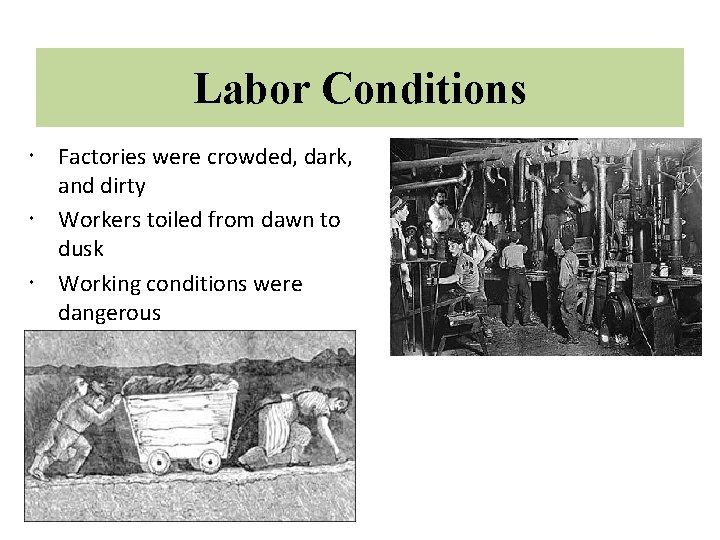
Labor Conditions Factories were crowded, dark, and dirty Workers toiled from dawn to dusk Working conditions were dangerous
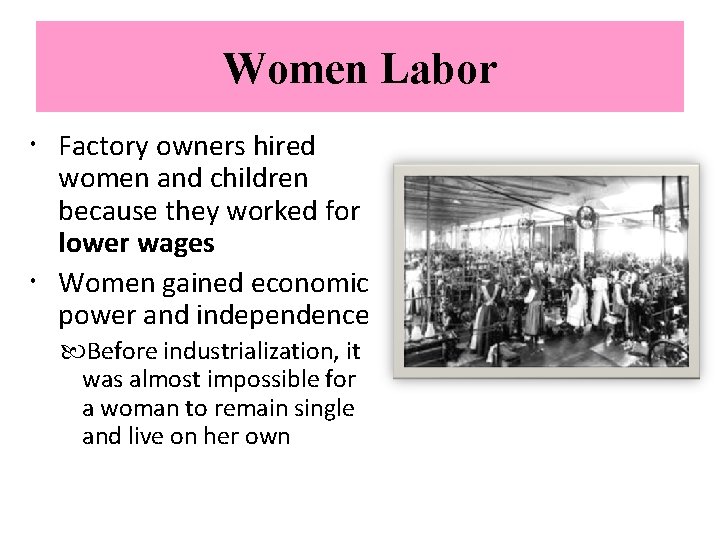
Women Labor Factory owners hired women and children because they worked for lower wages Women gained economic power and independence Before industrialization, it was almost impossible for a woman to remain single and live on her own
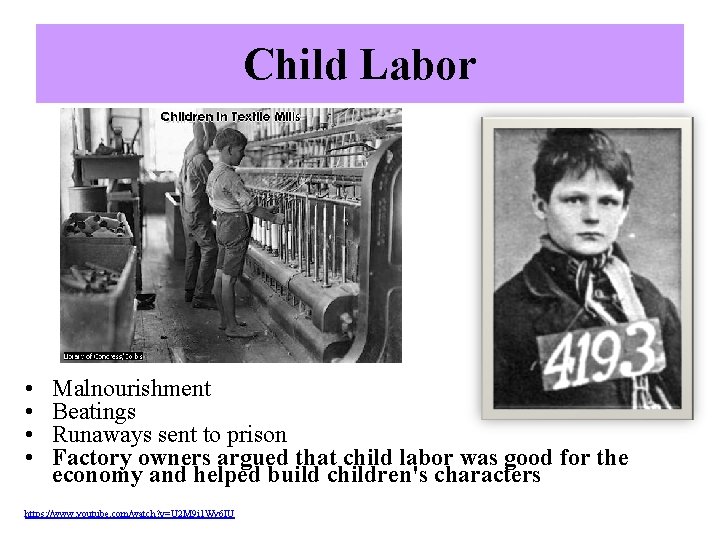
Child Labor • • Malnourishment Beatings Runaways sent to prison Factory owners argued that child labor was good for the economy and helped build children's characters https: //www. youtube. com/watch? v=U 2 M 9 i 1 Wy 6 IU
Activity #3: Analyzing Primary Sources • Read Analyzing Primary Sources (Pg. 320) • Document: The British Parliament Report on the Condition of Child Labor • Date Written: 1857 • After you finish reading it: – Answer the DBQ question: Why might the British Parliament have examined the conditions of child factory workers? Explain in a paragraph, providing at least 2 statements of support.
Bell Ringer: Defining Socialism • Watch CNN student news, pay close attention to the report on Venezuela. • Based on the video, what do you think socialism is?
Activity #4: Effect of Industrialization: Socialism • Read Social Impacts of Industrialization (pg. 320 -21) Ch. 17, Lesson 1: 1. What was the social impact of industrialization in Europe? 2. Why do you think the working conditions during the Industrial Revolution led some to argue for socialism?
Activity #5: Labor Unions and Socialism • Read Rise of Labor Unions (pg. 24) 1. Answer questions #1 -6
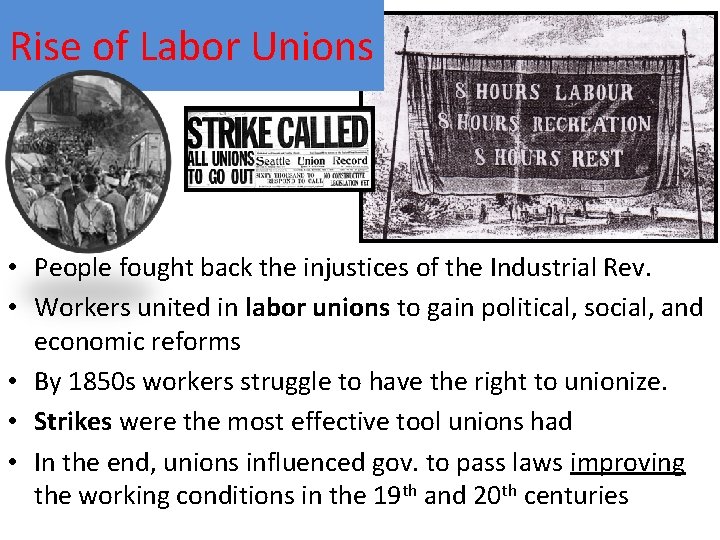
Rise of Labor Unions • People fought back the injustices of the Industrial Rev. • Workers united in labor unions to gain political, social, and economic reforms • By 1850 s workers struggle to have the right to unionize. • Strikes were the most effective tool unions had • In the end, unions influenced gov. to pass laws improving the working conditions in the 19 th and 20 th centuries
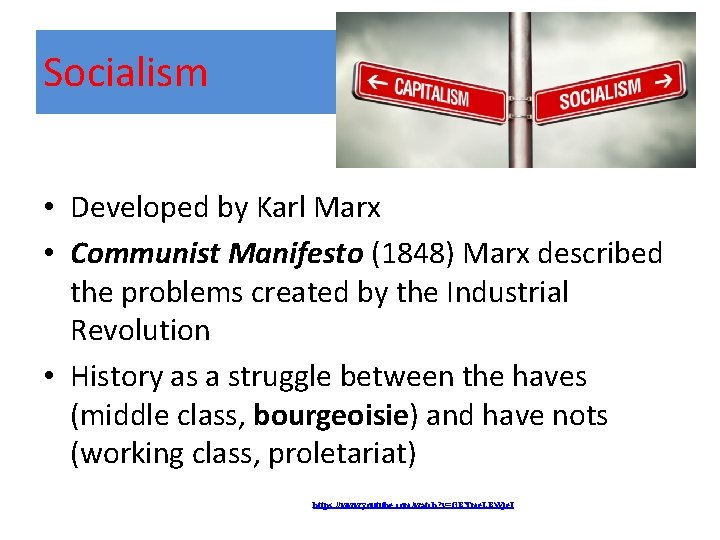
Socialism • Developed by Karl Marx • Communist Manifesto (1848) Marx described the problems created by the Industrial Revolution • History as a struggle between the haves (middle class, bourgeoisie) and have nots (working class, proletariat) https: //www. youtube. com/watch? v=OBYme. LBWje. I
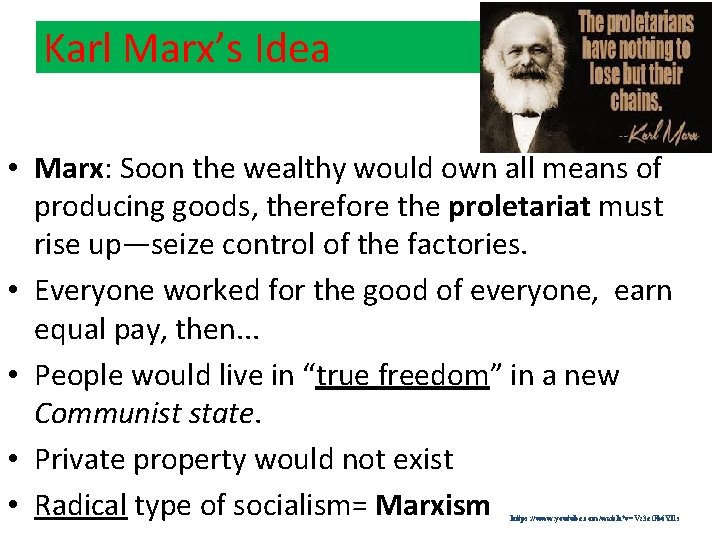
Karl Marx’s Idea • Marx: Soon the wealthy would own all means of producing goods, therefore the proletariat must rise up—seize control of the factories. • Everyone worked for the good of everyone, earn equal pay, then. . . • People would live in “true freedom” in a new Communist state. • Private property would not exist • Radical type of socialism= Marxism https: //www. youtube. com/watch? v=Vz 3 e. Ob 6 Yl 1 s
Activity #5: Labor Unions and Socialism, Socialism and Politics • Read Rise of Labor Unions, Socialism and Politics -Answer all questions in the packet
Chapter 17. 1: Lesson Review 1. DBQ: British Parliament Bill -pg. 340, questions 12 and 13. 2. Drawing Conclusions: How might the working conditions in mines and mills have led to the new industrial working class to support socialism?
Assessment Activity due May 4. • Pretend that you are one of the following people working in a factory during the Industrial Revolution: – 12 -year old boy/girl – Woman – Male • Research the living conditions and working conditions that you faced during the Industrial Revolution • Write a 1 -page journal entry depicting your struggles, fears, frustrations, and hopes for the future
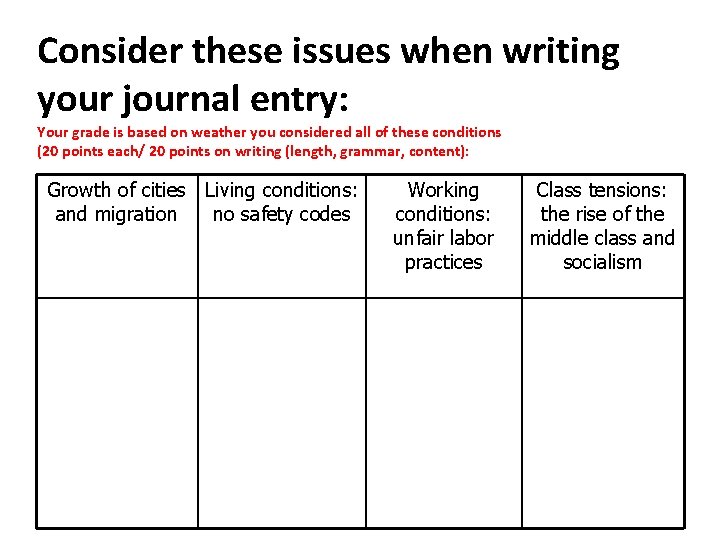
Consider these issues when writing your journal entry: Your grade is based on weather you considered all of these conditions (20 points each/ 20 points on writing (length, grammar, content): Growth of cities Living conditions: and migration no safety codes Working conditions: unfair labor practices Class tensions: the rise of the middle class and socialism