
Ch 17 Complexation reactions and titrations A The




- Slides: 37
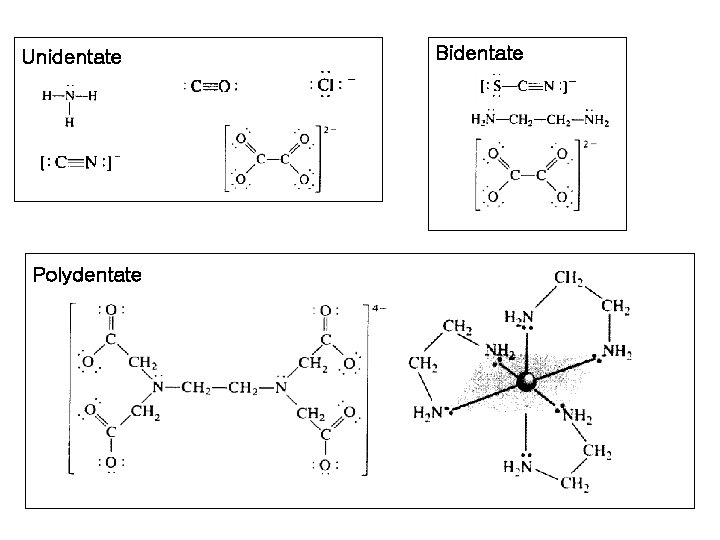
Ch. 17 Complexation reactions and titrations A. The formation of complexes Most metal ion : react with electron-donor species to form coordination compounds or complexes. * Electron-donor : Ligand(water, ammonia, halide ions) Co-ordinate group : Ligand 중 donor 원자를 갖는 基 * Complexometric methods : Titrimetric methods based on complex formation * Coordination number : 2, 4, 6 Single donor group : unidentate Poly donor group : bidentate, tridentate, tetradentate, pentadentate, hexadentate * Chelate ring : 여러자리 배위자에 의한 배위화합물은 중심 금속 이온에 의하여 환을 이루게 되는 이를 chelate ring이라 한다. chelate ring 형성반응 : chelation
Unidentate Polydentate Bidentate
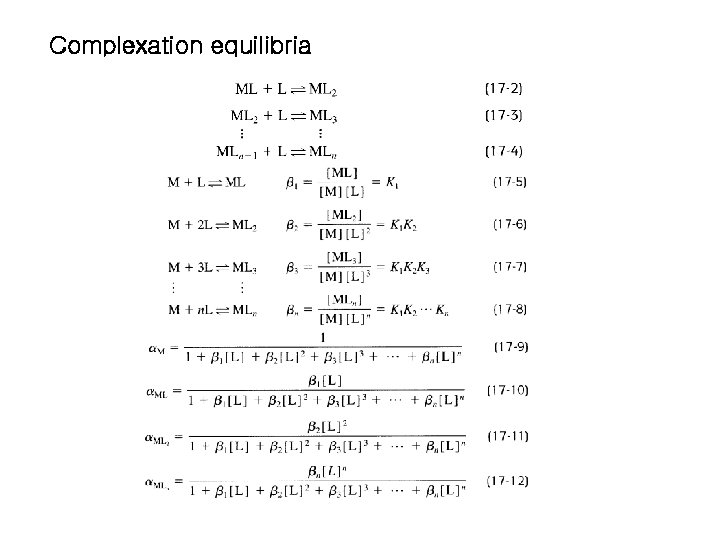
Complexation equilibria
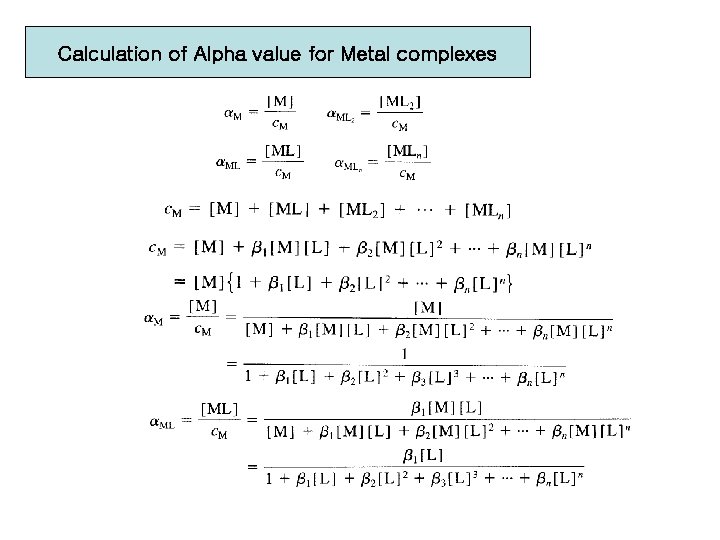
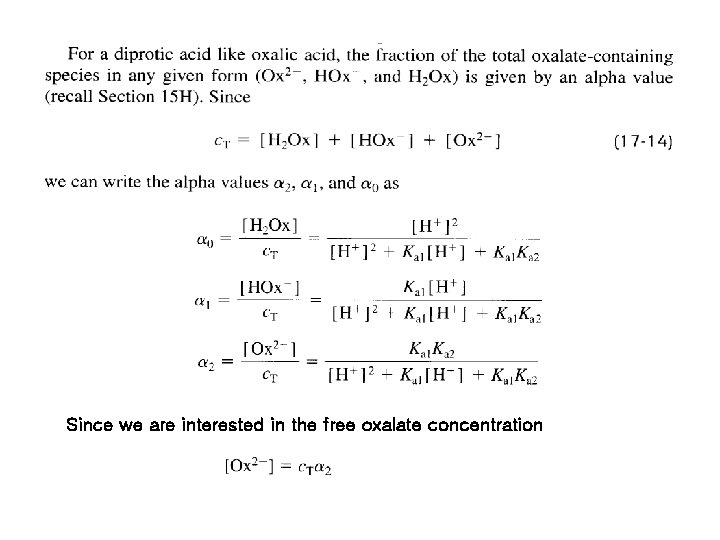
Calculation of Alpha value for Metal complexes
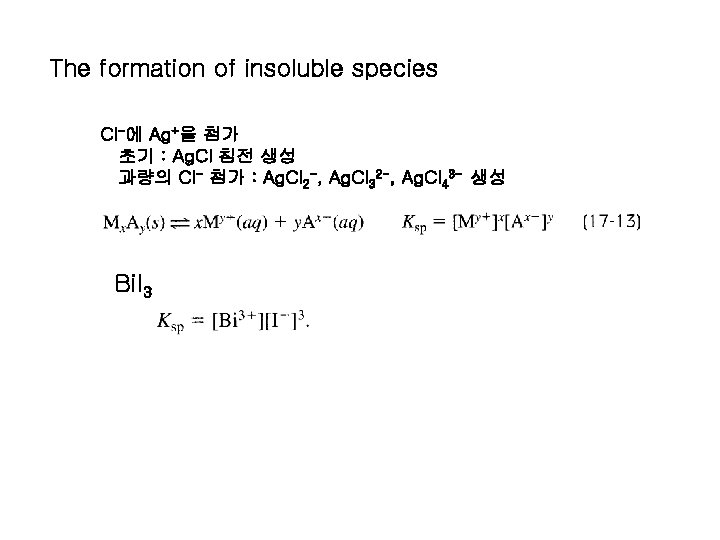
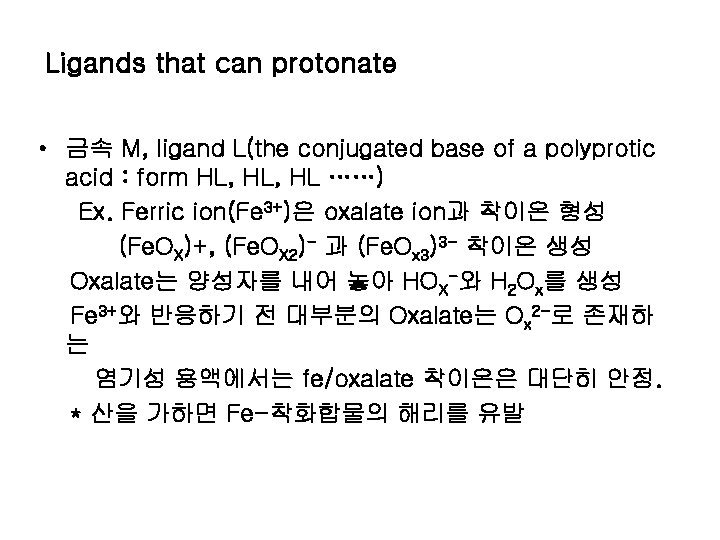
The formation of insoluble species Cl-에 Ag+을 첨가 초기 : Ag. Cl 침전 생성 과량의 Cl- 첨가 : Ag. Cl 2 -, Ag. Cl 32 -, Ag. Cl 43 - 생성 Bi. I 3
Since we are interested in the free oxalate concentration
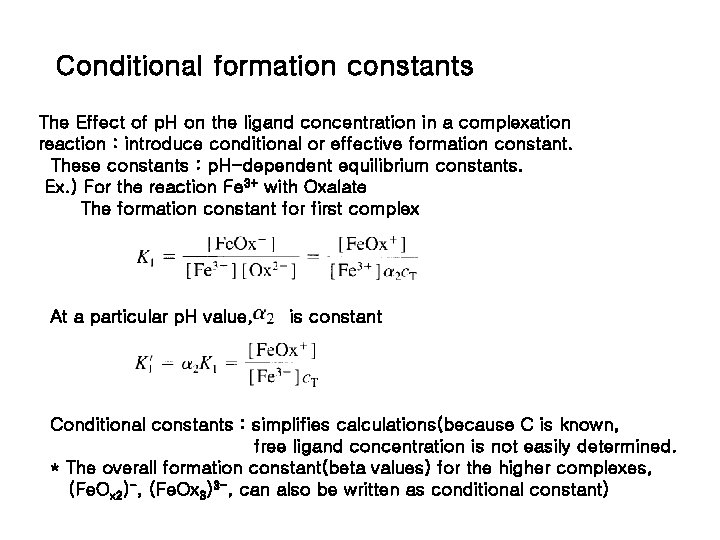
Conditional formation constants The Effect of p. H on the ligand concentration in a complexation reaction : introduce conditional or effective formation constant. These constants : p. H-dependent equilibrium constants. Ex. ) For the reaction Fe 3+ with Oxalate The formation constant for first complex At a particular p. H value, is constant Conditional constants : simplifies calculations(because C is known, free ligand concentration is not easily determined. * The overall formation constant(beta values) for the higher complexes, (Fe. Ox 2)-, (Fe. Ox 3)3 -, can also be written as conditional constant)
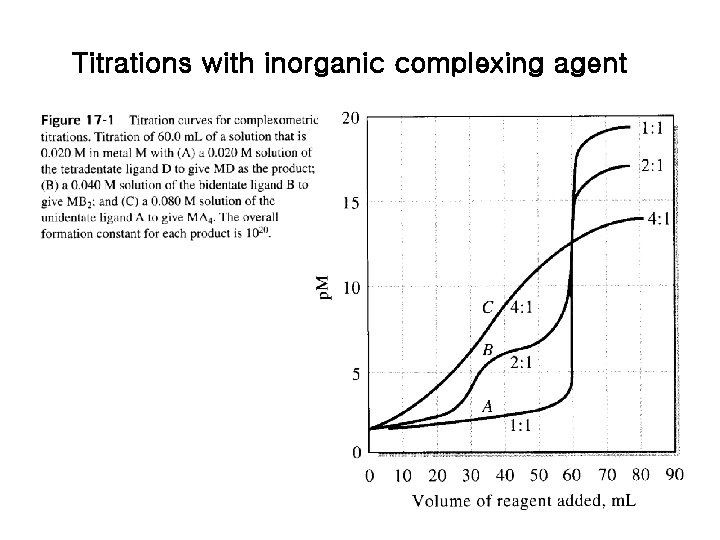
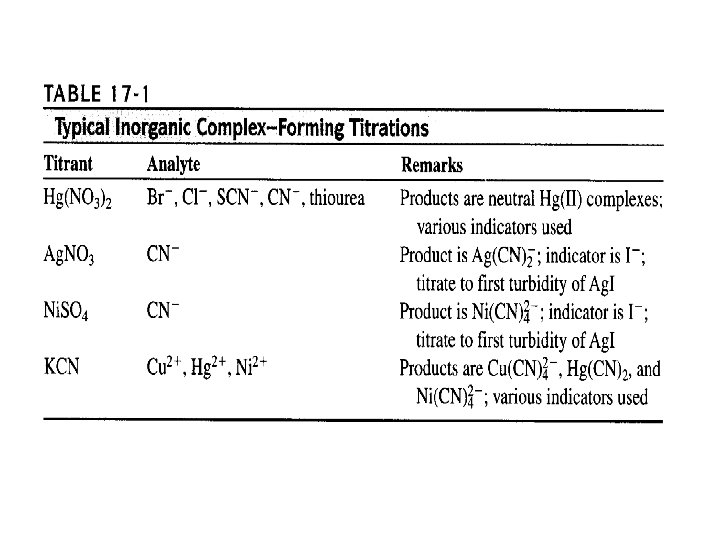
Titrations with inorganic complexing agent
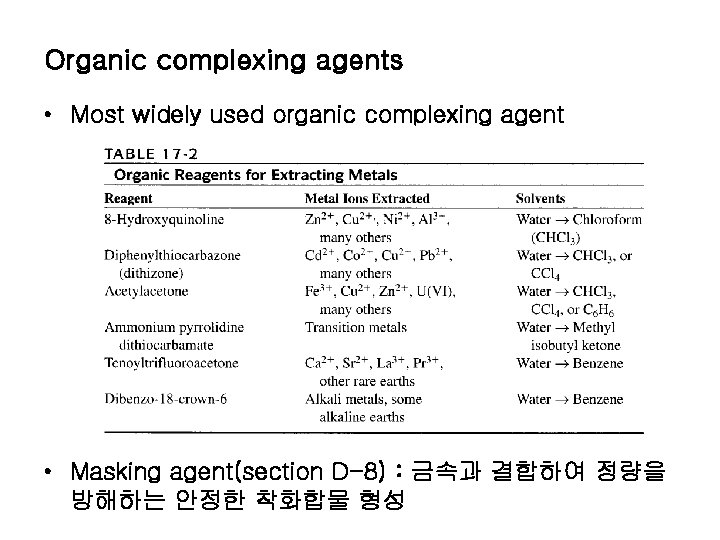
Organic complexing agents • Most widely used organic complexing agent • Masking agent(section D-8) : 금속과 결합하여 정량을 방해하는 안정한 착화합물 형성
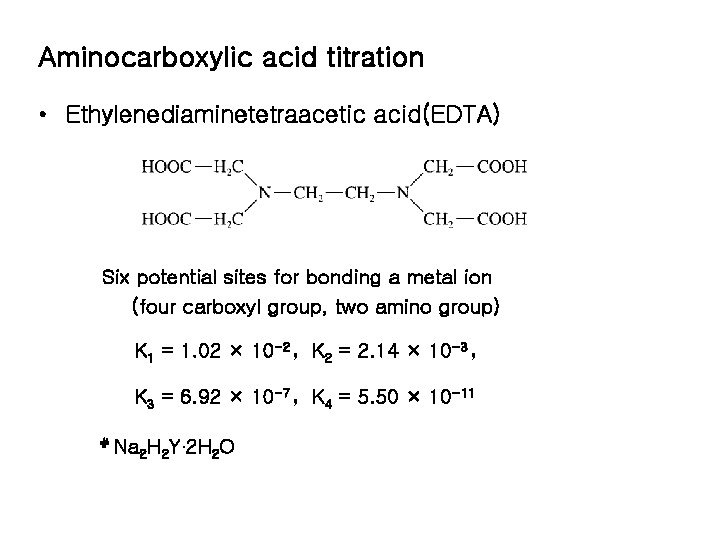
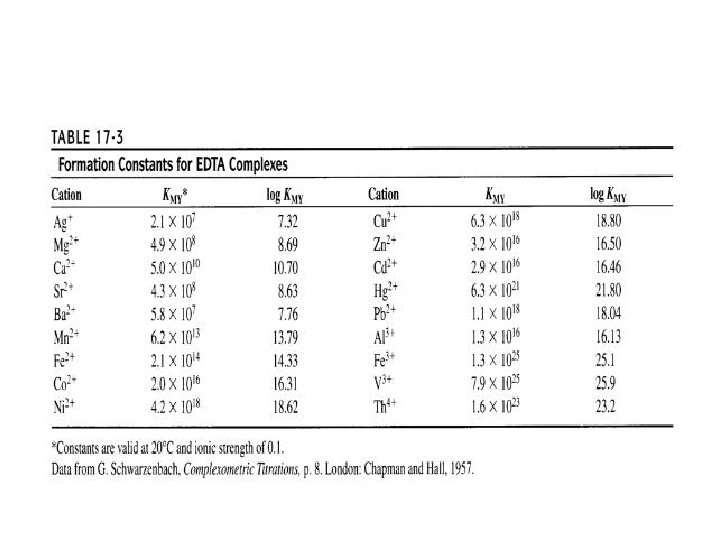
Aminocarboxylic acid titration • Ethylenediaminetetraacetic acid(EDTA) Six potential sites for bonding a metal ion (four carboxyl group, two amino group) , K 3 = 6. 92 × 10 -7, K 1 = 1. 02 × 10 -2 # Na 2 H 2 Y. 2 H 2 O K 2 = 2. 14 × 10 -3 , K 4 = 5. 50 × 10 -11
Composition of EDTA solutions as a function of p. H.
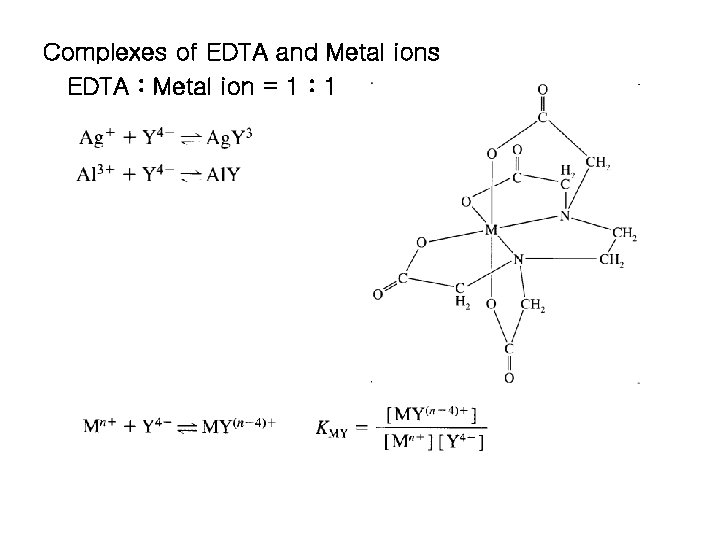
Complexes of EDTA and Metal ions EDTA : Metal ion = 1 : 1
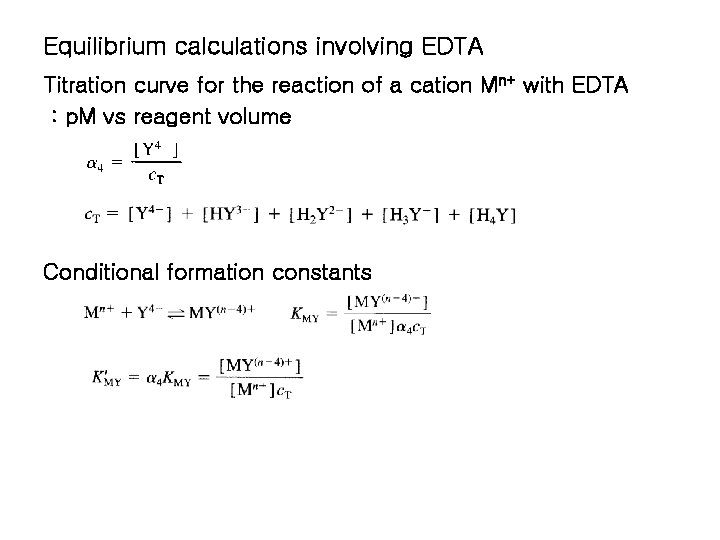
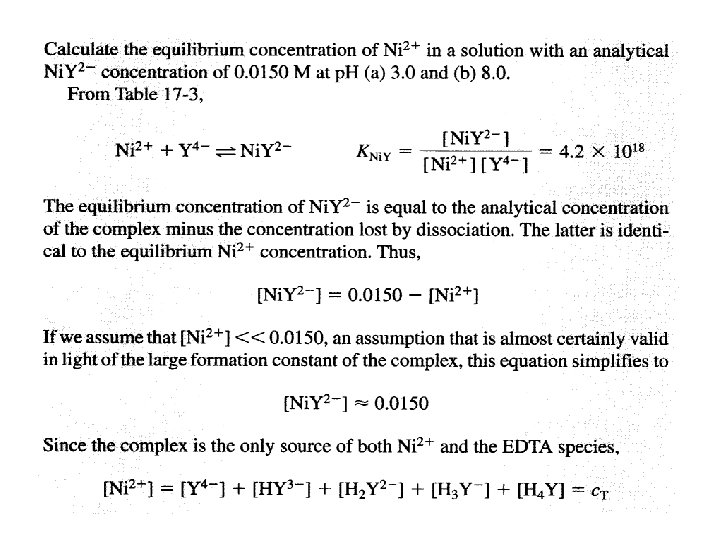
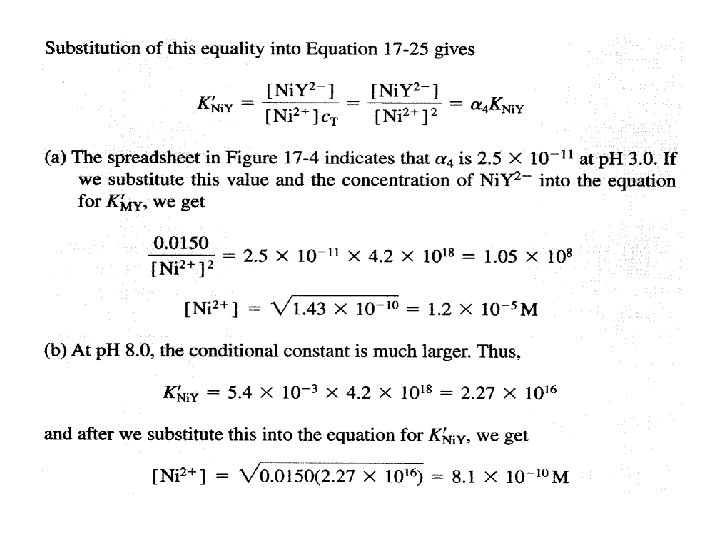
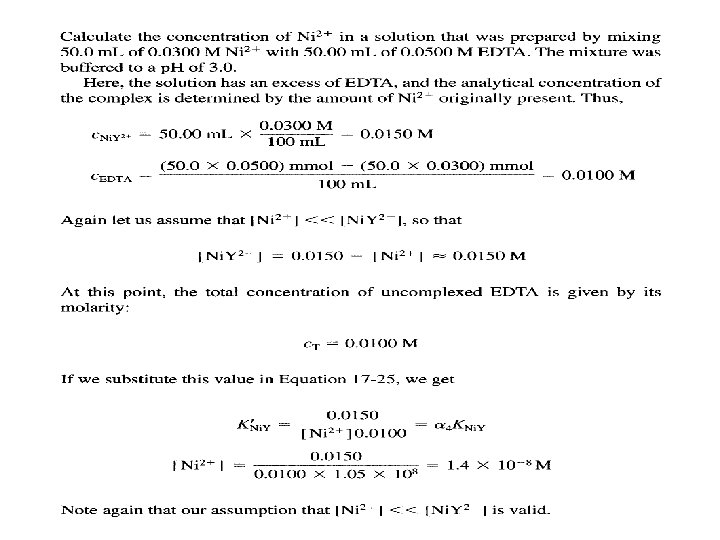
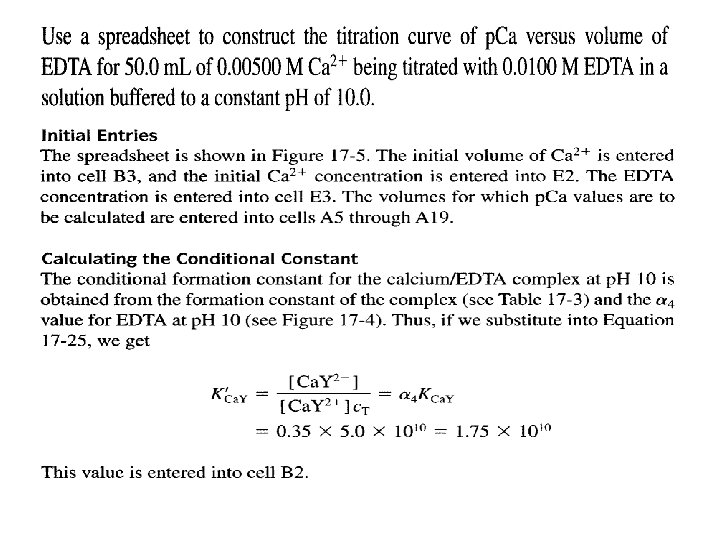
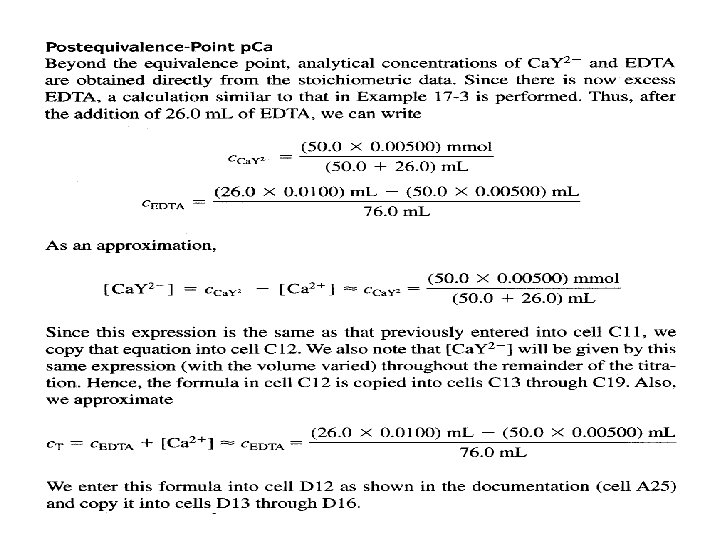
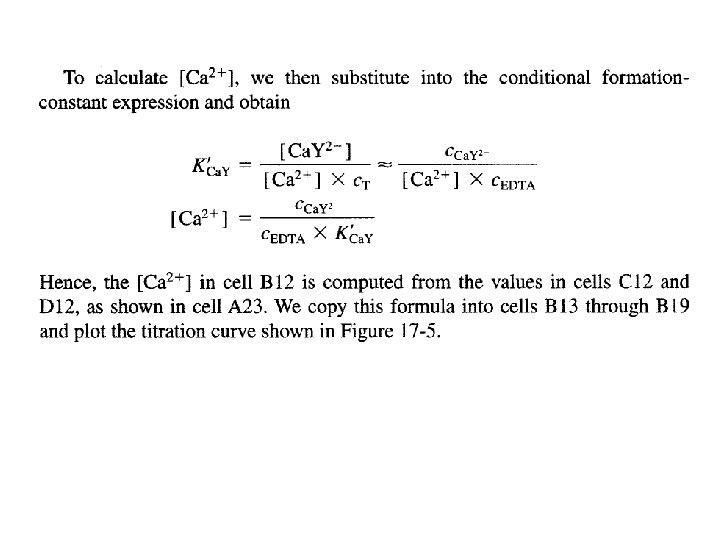
Equilibrium calculations involving EDTA Titration curve for the reaction of a cation Mn+ with EDTA : p. M vs reagent volume Conditional formation constants
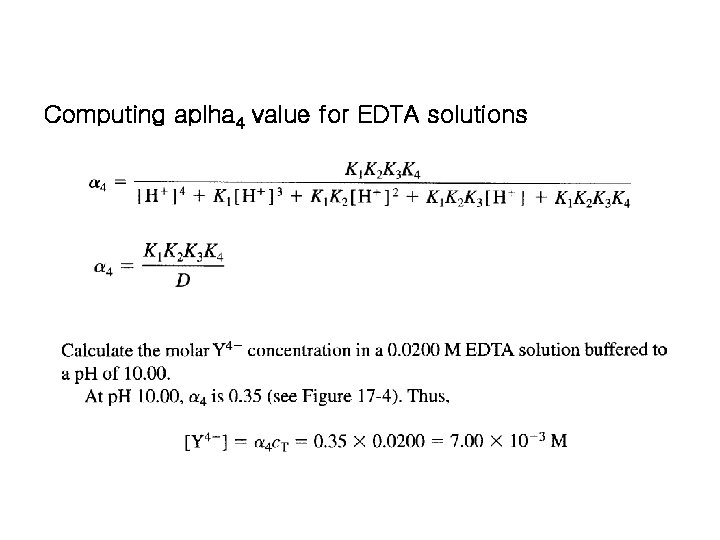
Computing aplha 4 value for EDTA solutions
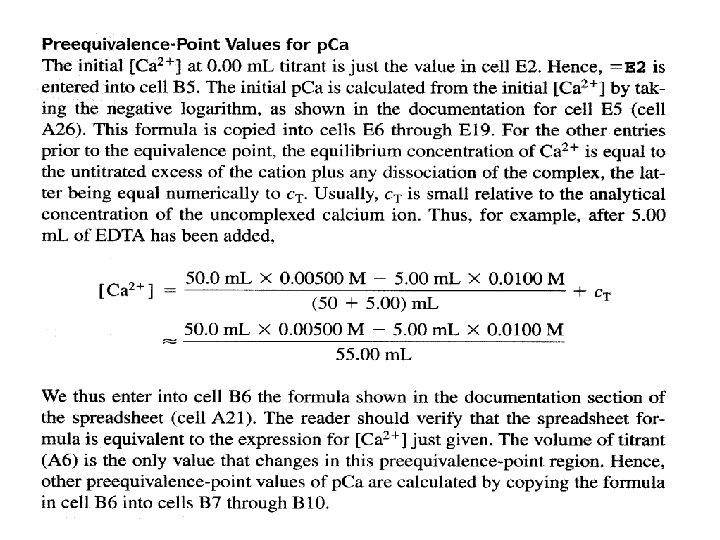
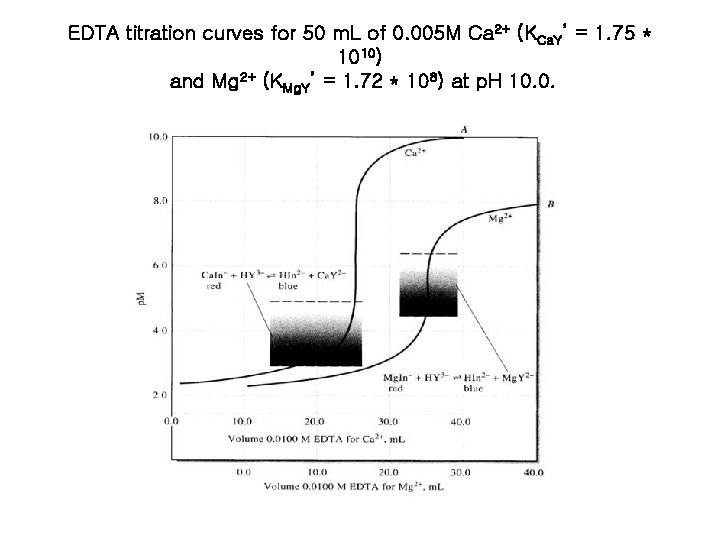
EDTA titration curves for 50 m. L of 0. 005 M Ca 2+ (KCa. Y’ = 1. 75 * 1010) and Mg 2+ (KMg. Y’ = 1. 72 * 108) at p. H 10. 0.
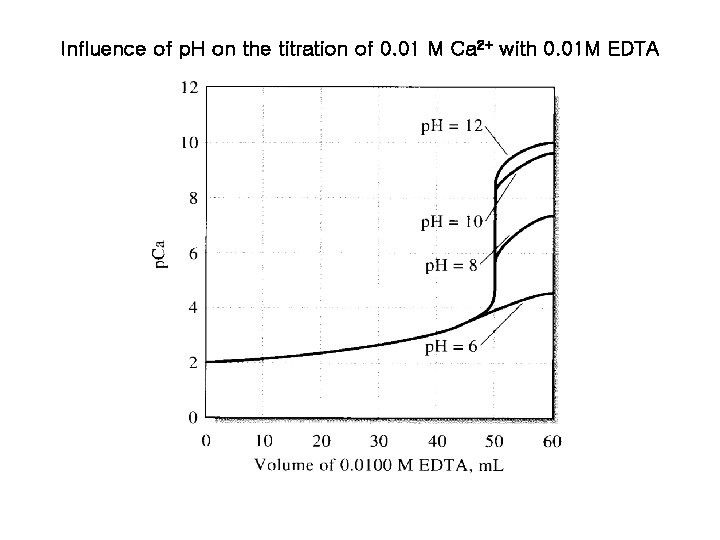
Influence of p. H on the titration of 0. 01 M Ca 2+ with 0. 01 M EDTA
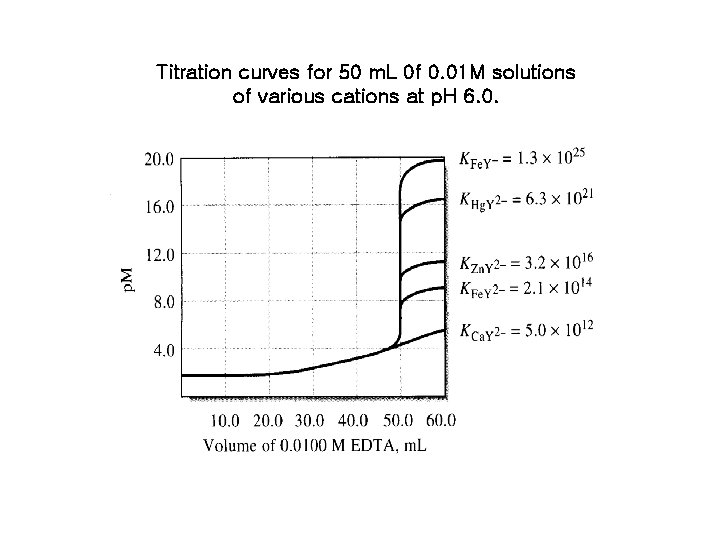
Titration curves for 50 m. L 0 f 0. 01 M solutions of various cations at p. H 6. 0.
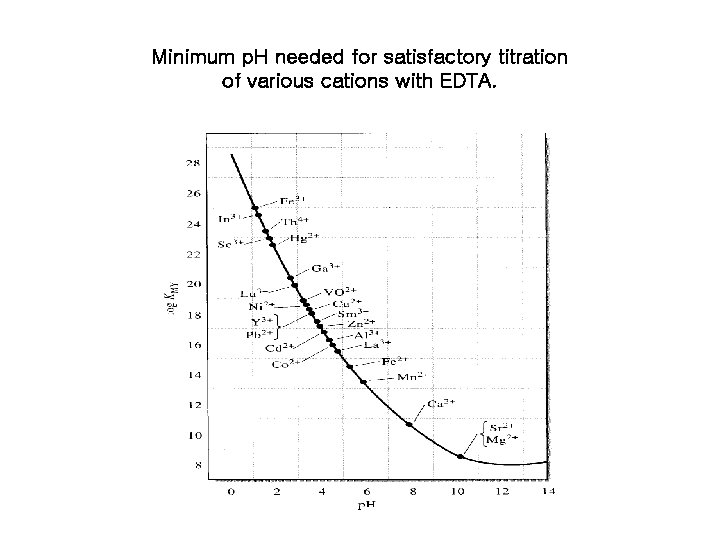
Minimum p. H needed for satisfactory titration of various cations with EDTA.
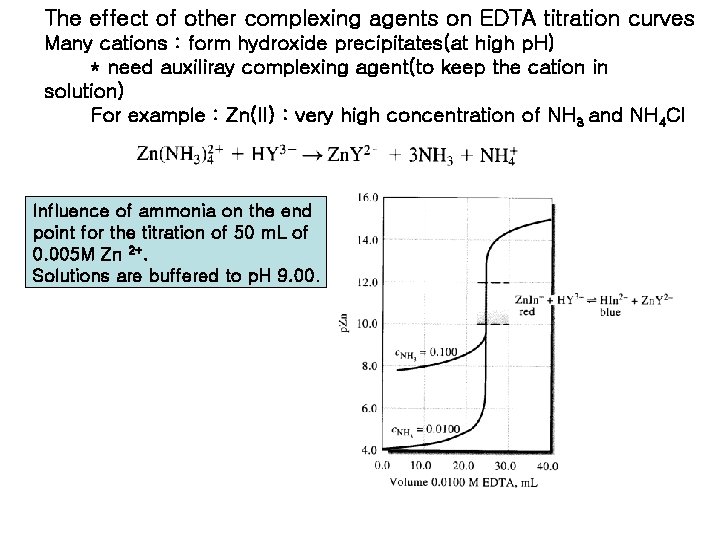
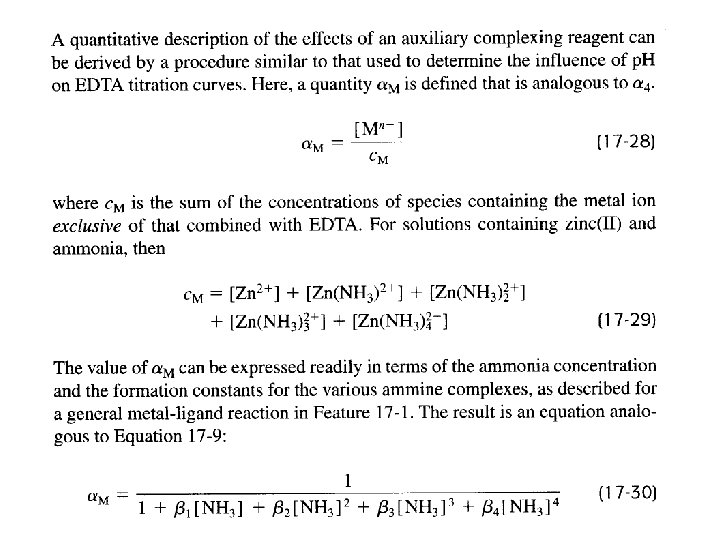
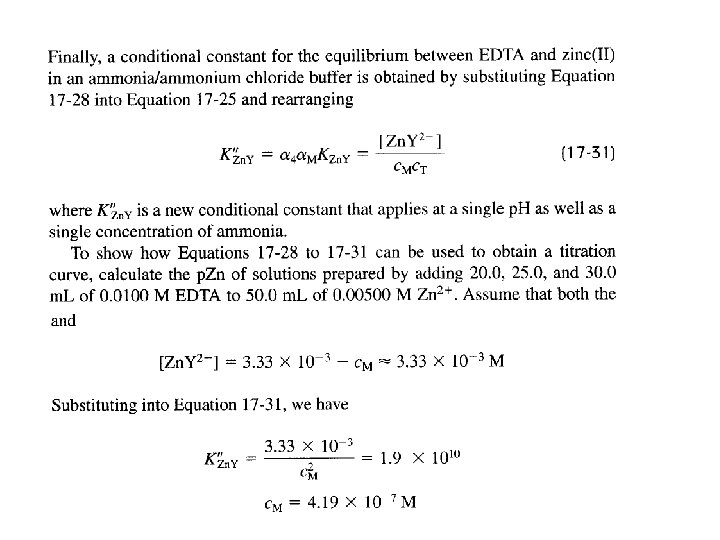
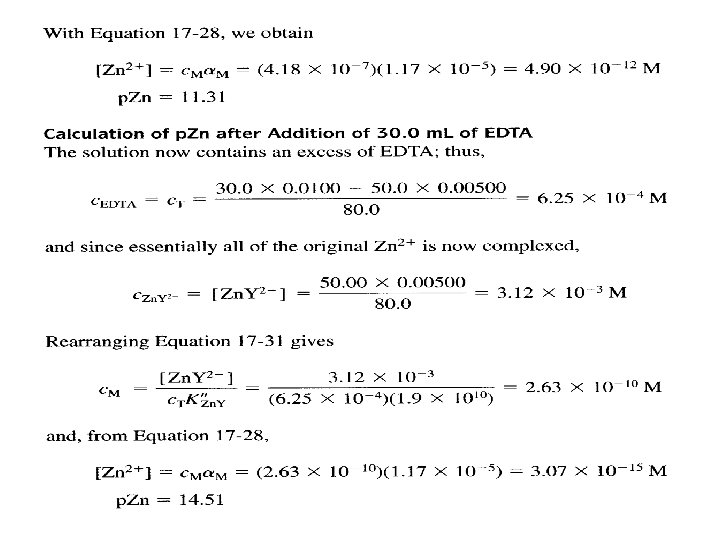
The effect of other complexing agents on EDTA titration curves Many cations : form hydroxide precipitates(at high p. H) * need auxiliray complexing agent(to keep the cation in solution) For example : Zn(II) : very high concentration of NH 3 and NH 4 Cl Influence of ammonia on the end point for the titration of 50 m. L of 0. 005 M Zn 2+. Solutions are buffered to p. H 9. 00.
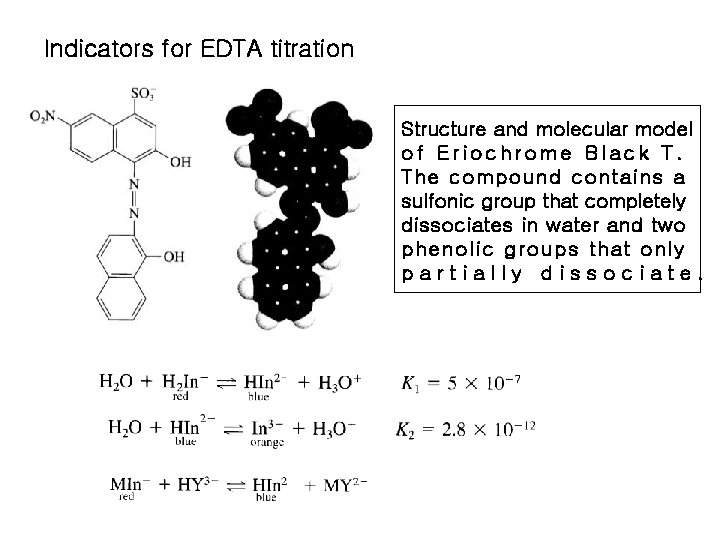
Indicators for EDTA titration Structure and molecular model of Eriochrome Black T. The compound contains a sulfonic group that completely dissociates in water and two phenolic groups that only partially dissociate.
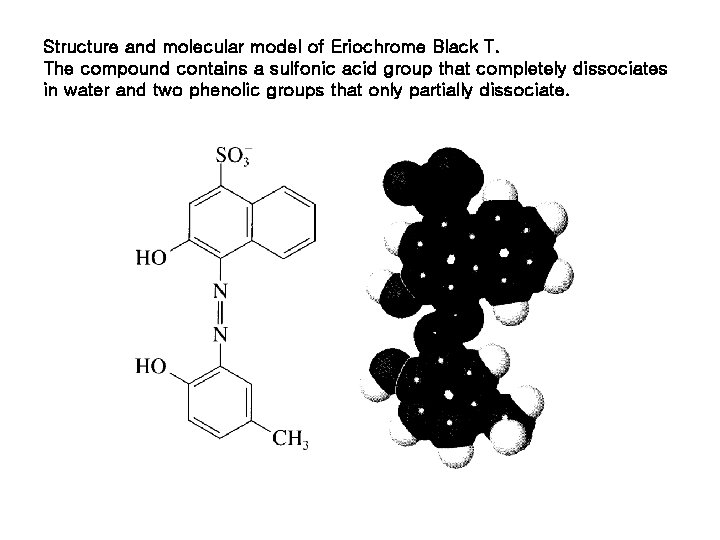
Structure and molecular model of Eriochrome Black T. The compound contains a sulfonic acid group that completely dissociates in water and two phenolic groups that only partially dissociate.
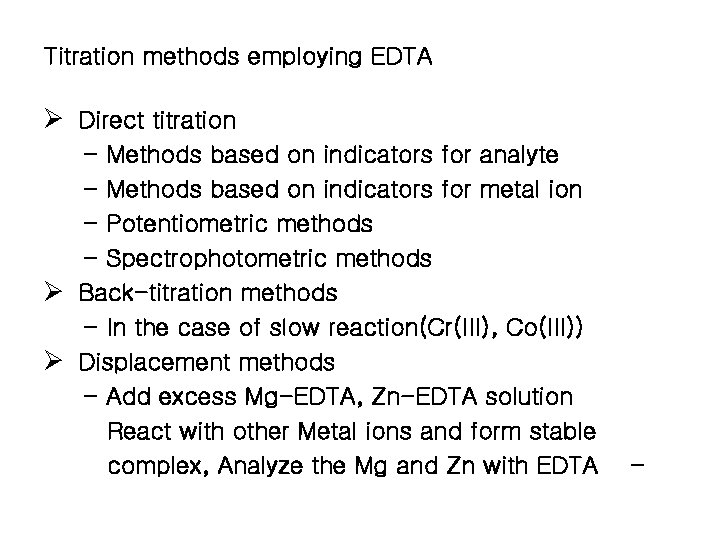
Titration methods employing EDTA Ø Direct titration - Methods based on indicators for analyte - Methods based on indicators for metal ion - Potentiometric methods - Spectrophotometric methods Ø Back-titration methods - In the case of slow reaction(Cr(III), Co(III)) Ø Displacement methods - Add excess Mg-EDTA, Zn-EDTA solution React with other Metal ions and form stable complex, Analyze the Mg and Zn with EDTA -