
Ch 16 Treatment of Psychological Disorders PRESENTED BY
Ch. 16 Treatment of Psychological Disorders PRESENTED BY MERCEDES PRATT
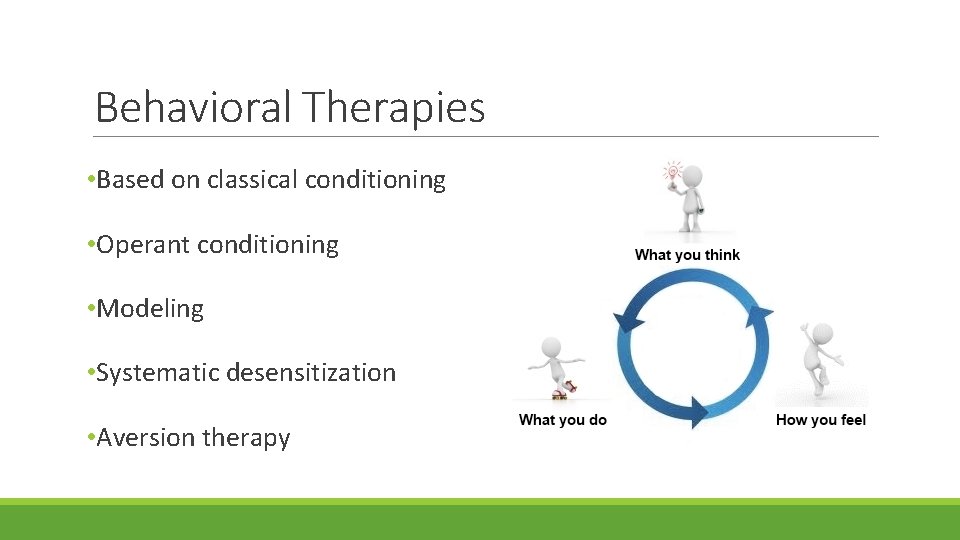
Behavioral Therapies • Based on classical conditioning • Operant conditioning • Modeling • Systematic desensitization • Aversion therapy
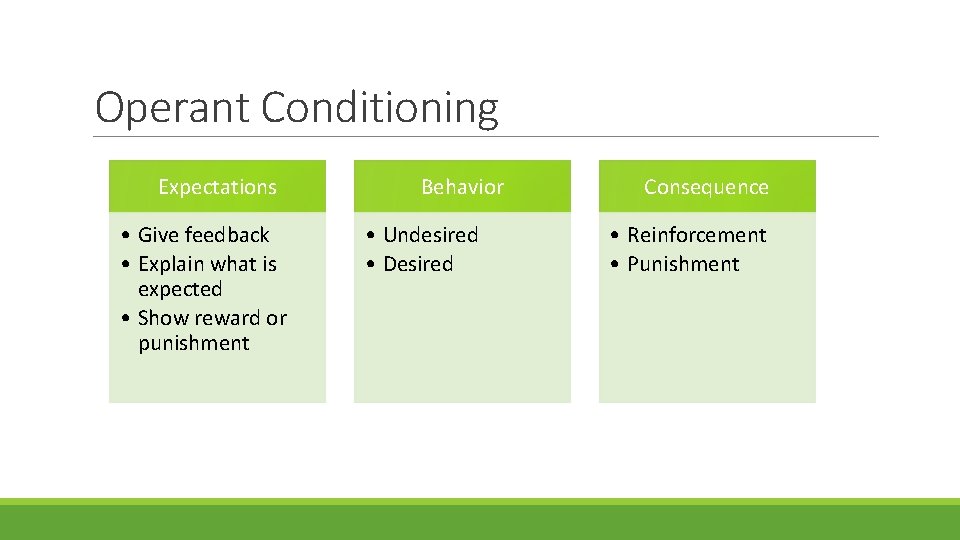
Operant Conditioning Expectations • Give feedback • Explain what is expected • Show reward or punishment Behavior • Undesired • Desired Consequence • Reinforcement • Punishment
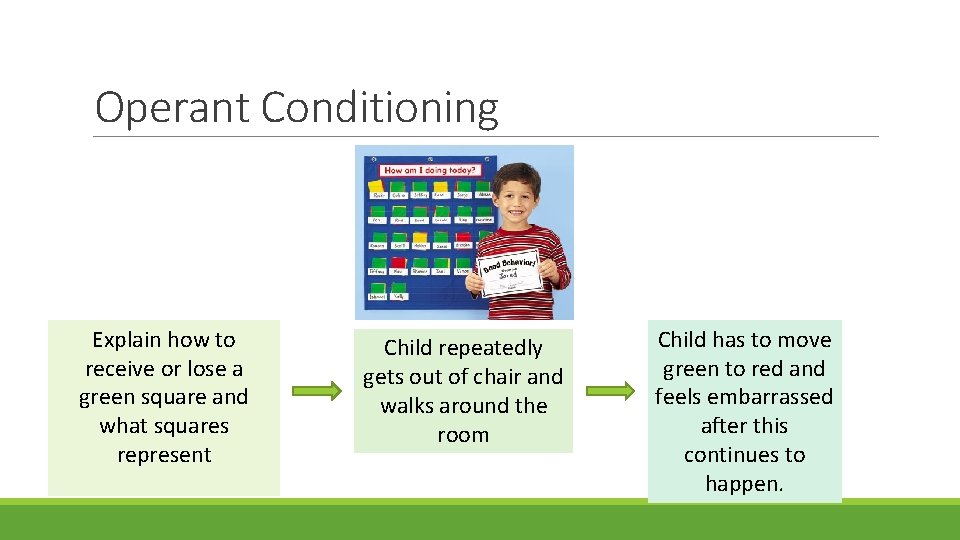
Operant Conditioning Explain how to receive or lose a green square and what squares represent Child repeatedly gets out of chair and walks around the room Child has to move green to red and feels embarrassed after this continues to happen.
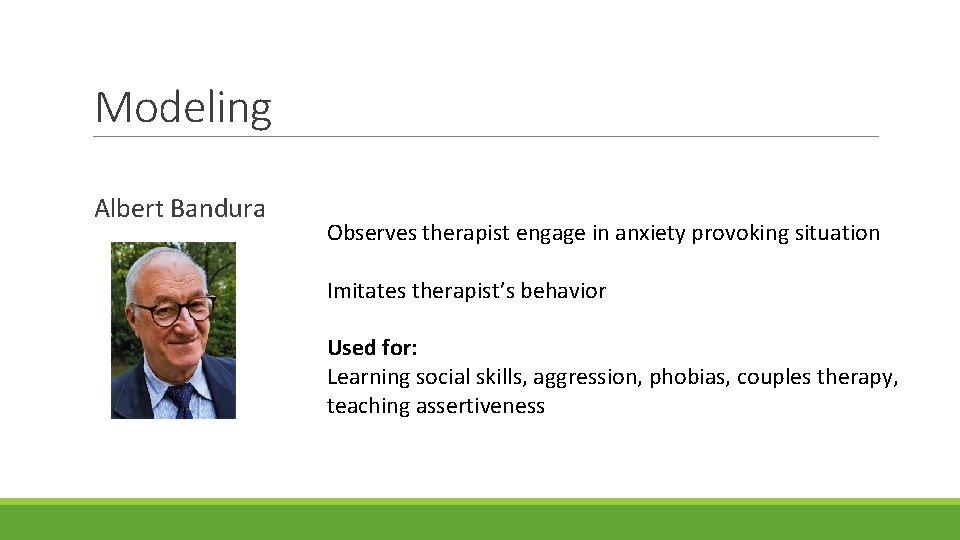
Modeling Albert Bandura Observes therapist engage in anxiety provoking situation Imitates therapist’s behavior Used for: Learning social skills, aggression, phobias, couples therapy, teaching assertiveness
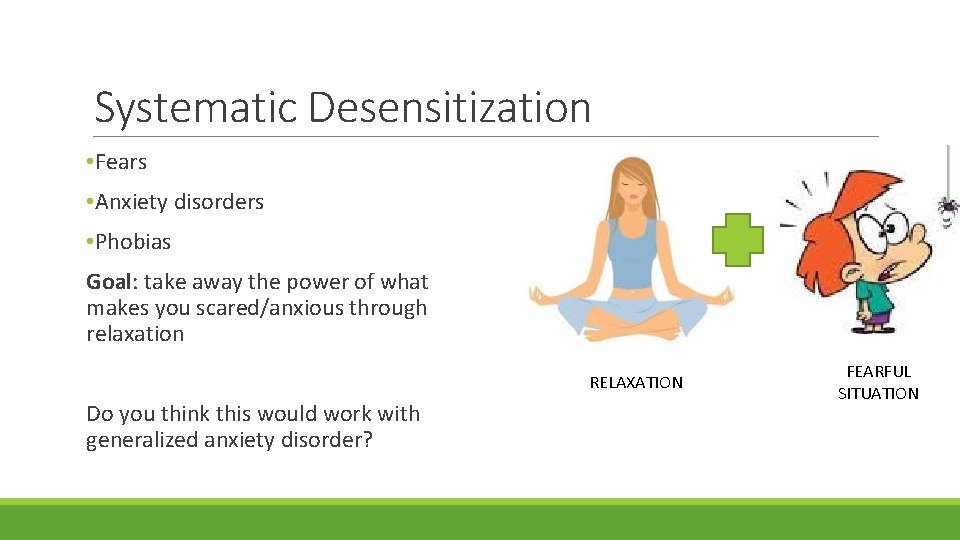
Systematic Desensitization • Fears • Anxiety disorders • Phobias Goal: take away the power of what makes you scared/anxious through relaxation RELAXATION Do you think this would work with generalized anxiety disorder? FEARFUL SITUATION
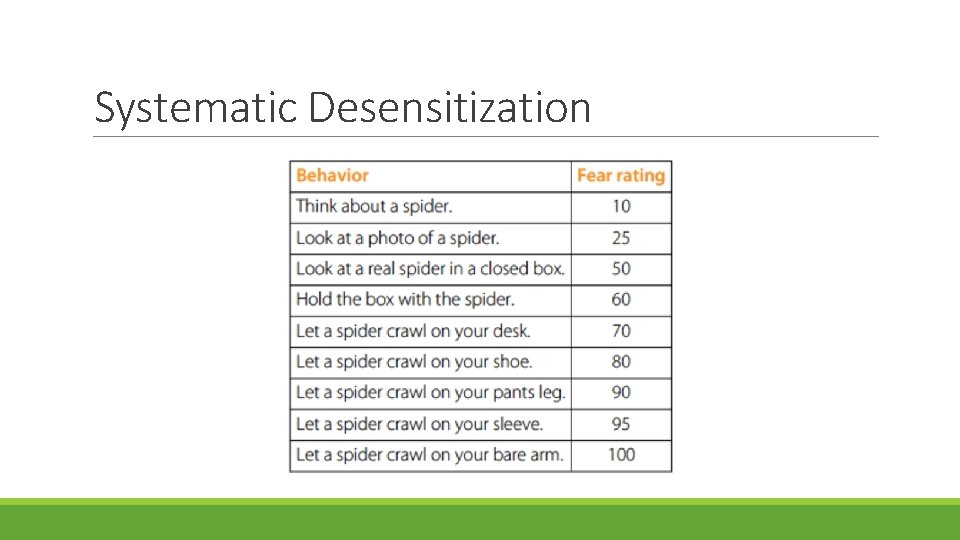
Systematic Desensitization
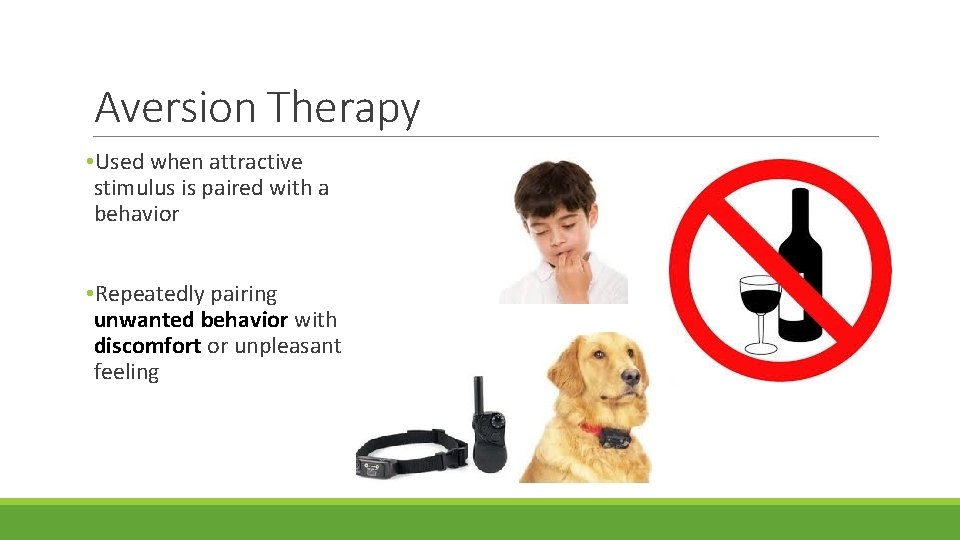
Aversion Therapy • Used when attractive stimulus is paired with a behavior • Repeatedly pairing unwanted behavior with discomfort or unpleasant feeling
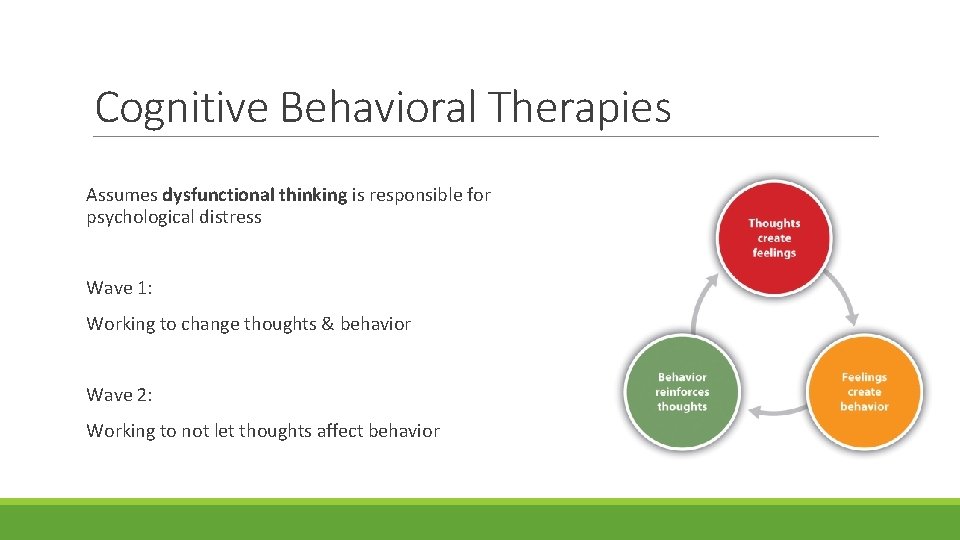
Cognitive Behavioral Therapies Assumes dysfunctional thinking is responsible for psychological distress Wave 1: Working to change thoughts & behavior Wave 2: Working to not let thoughts affect behavior
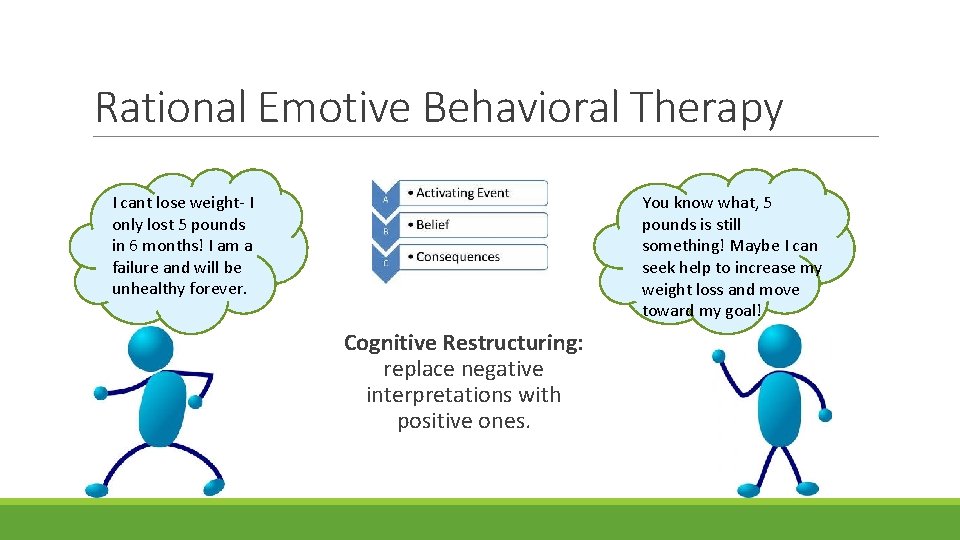
Rational Emotive Behavioral Therapy I cant lose weight- I only lost 5 pounds in 6 months! I am a failure and will be unhealthy forever. You know what, 5 pounds is still something! Maybe I can seek help to increase my weight loss and move toward my goal! Cognitive Restructuring: replace negative interpretations with positive ones.
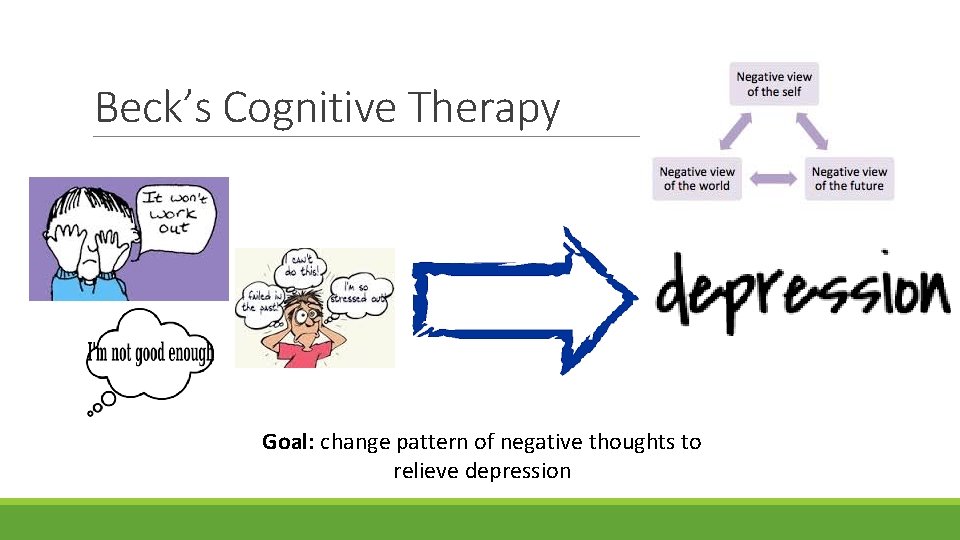
Beck’s Cognitive Therapy Goal: change pattern of negative thoughts to relieve depression
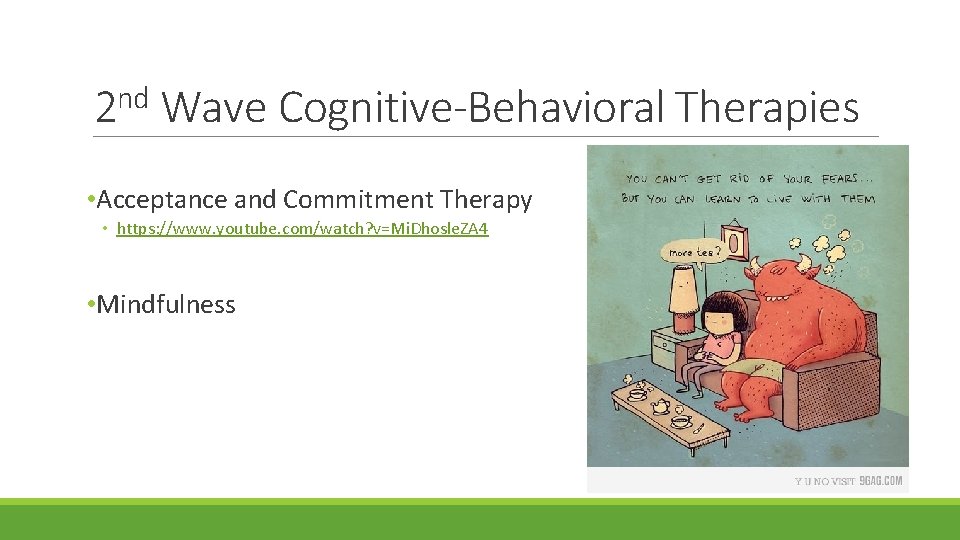
2 nd Wave Cognitive-Behavioral Therapies • Acceptance and Commitment Therapy • https: //www. youtube. com/watch? v=Mi. Dhosle. ZA 4 • Mindfulness
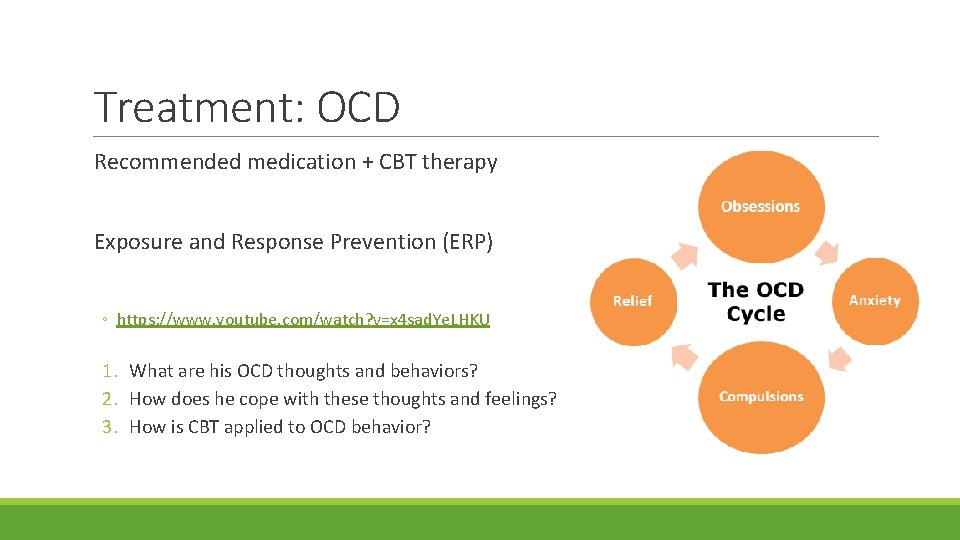
Treatment: OCD Recommended medication + CBT therapy Exposure and Response Prevention (ERP) ◦ https: //www. youtube. com/watch? v=x 4 sad. Ye. LHKU 1. What are his OCD thoughts and behaviors? 2. How does he cope with these thoughts and feelings? 3. How is CBT applied to OCD behavior?
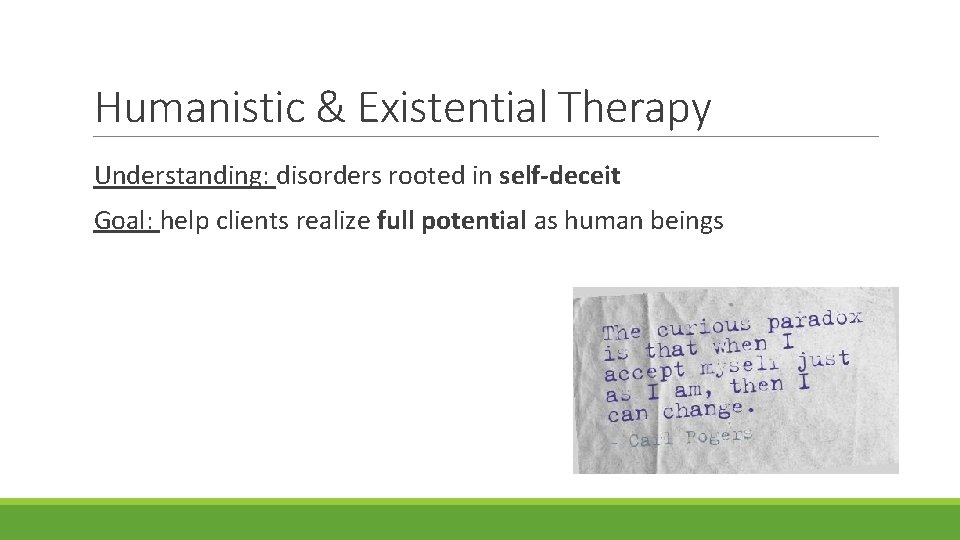
Humanistic & Existential Therapy Understanding: disorders rooted in self-deceit Goal: help clients realize full potential as human beings
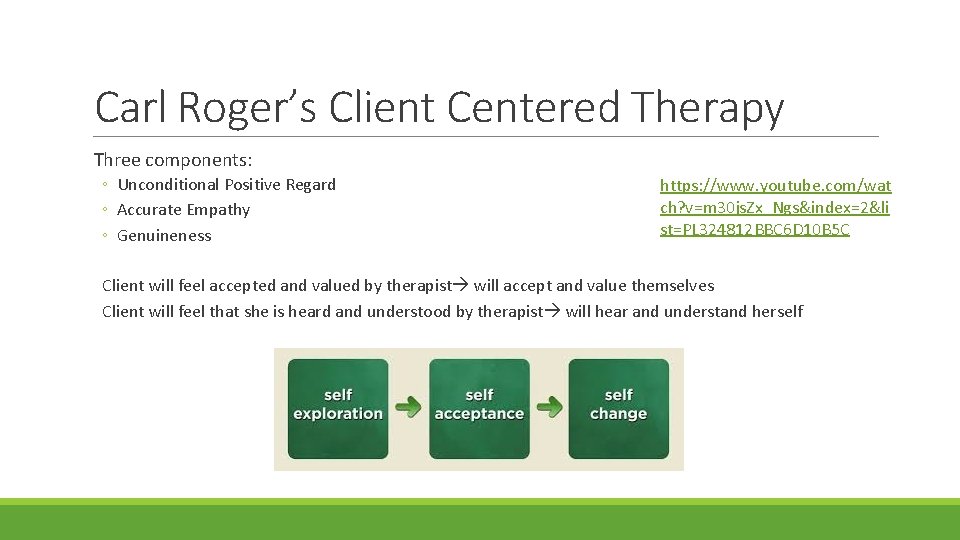
Carl Roger’s Client Centered Therapy Three components: ◦ Unconditional Positive Regard ◦ Accurate Empathy ◦ Genuineness https: //www. youtube. com/wat ch? v=m 30 js. Zx_Ngs&index=2&li st=PL 324812 BBC 6 D 10 B 5 C Client will feel accepted and valued by therapist will accept and value themselves Client will feel that she is heard and understood by therapist will hear and understand herself
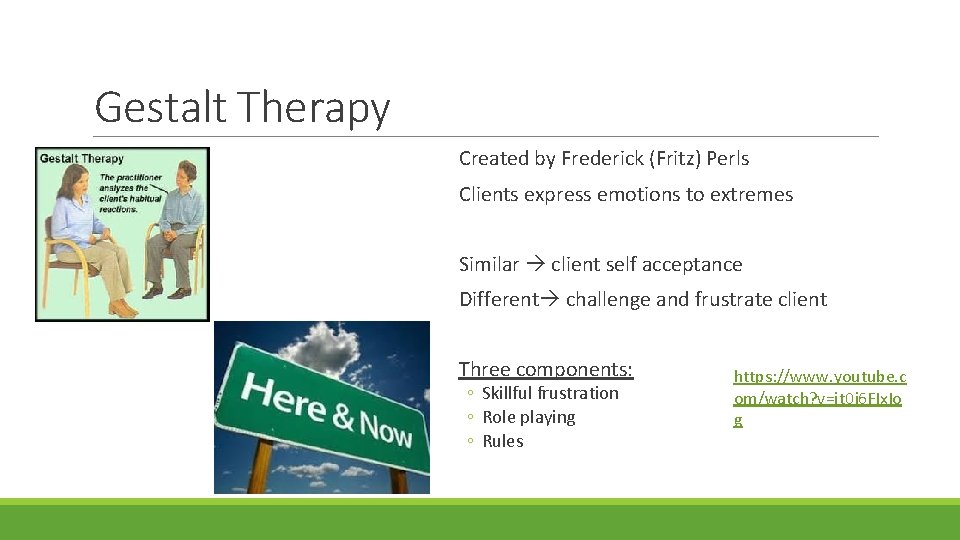
Gestalt Therapy Created by Frederick (Fritz) Perls Clients express emotions to extremes Similar client self acceptance Different challenge and frustrate client Three components: ◦ Skillful frustration ◦ Role playing ◦ Rules https: //www. youtube. c om/watch? v=it 0 j 6 FIx. Io g

Therapy Formats o. Individual Therapy o. Group Therapy o. Family Therapy o. Community Treatment
Question #1 Sally tells her therapist that she has been suffering from depression. She is currently failing a class and if she doesn't get on the honor roll, she will never get into a good college and will consider herself a failure. Her therapist enables Sally to see that she has set the rule of what makes her a failure. What is this situation an example of? A. Acceptance and Commitment Therapy B. Beck’s Cognitive Therapy C. Mindfulness D. Modeling
Question #2 Which therapy technique encourages clients to express their feelings to an extreme by often challenging and frustrating the client? A. Client Centered Therapy B. Gestalt Therapy C. Aversion Therapy D. Modeling
Question #3 Jenna cannot stop smoking even though she has tried many times to quit. She is aware of the negative effect on her health and seeks the help of a therapist to discuss her addiction. What therapy would likely benefit her? A. Systematic desensitization B. Family therapy C. Aversion therapy D. Gestalt therapy
Question #4 Which therapy type focused on unconditional positive regard for the client? A. Client Centered Therapy B. Group Therapy C. Exposure and Response Prevention D. Individual Therapy
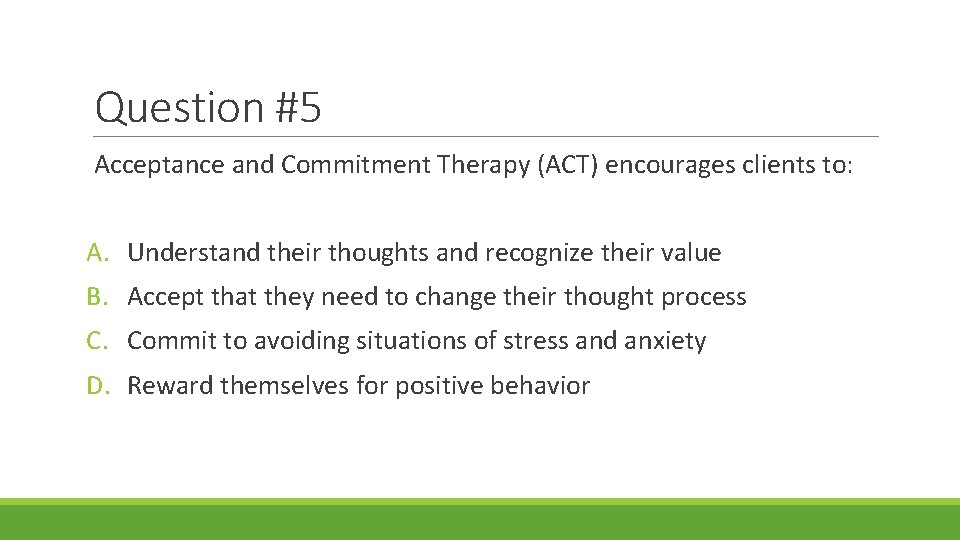
Question #5 Acceptance and Commitment Therapy (ACT) encourages clients to: A. Understand their thoughts and recognize their value B. Accept that they need to change their thought process C. Commit to avoiding situations of stress and anxiety D. Reward themselves for positive behavior
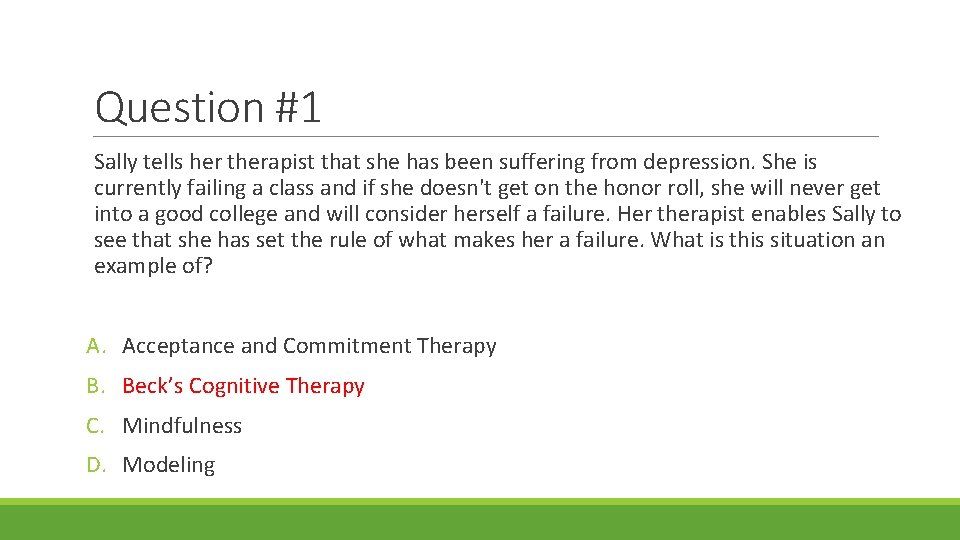
Question #1 Sally tells her therapist that she has been suffering from depression. She is currently failing a class and if she doesn't get on the honor roll, she will never get into a good college and will consider herself a failure. Her therapist enables Sally to see that she has set the rule of what makes her a failure. What is this situation an example of? A. Acceptance and Commitment Therapy B. Beck’s Cognitive Therapy C. Mindfulness D. Modeling
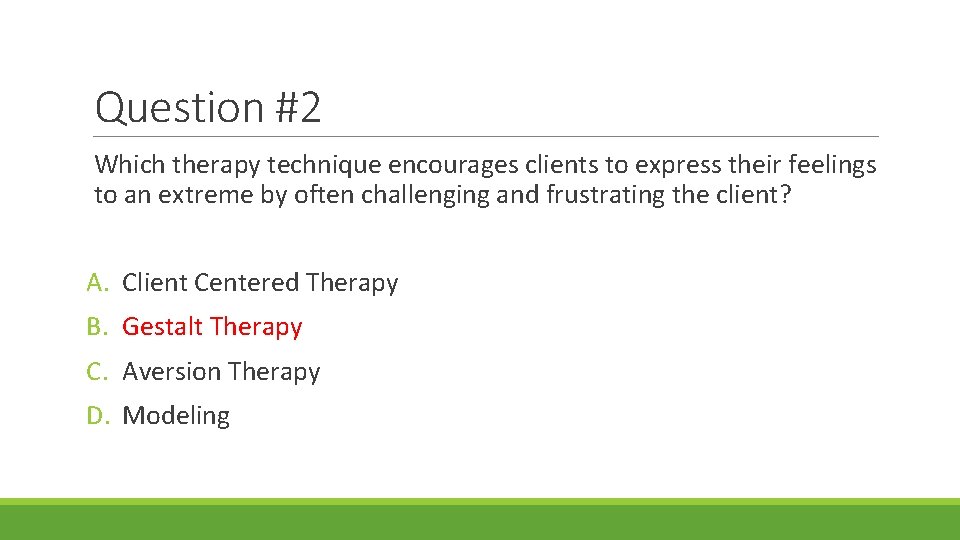
Question #2 Which therapy technique encourages clients to express their feelings to an extreme by often challenging and frustrating the client? A. Client Centered Therapy B. Gestalt Therapy C. Aversion Therapy D. Modeling
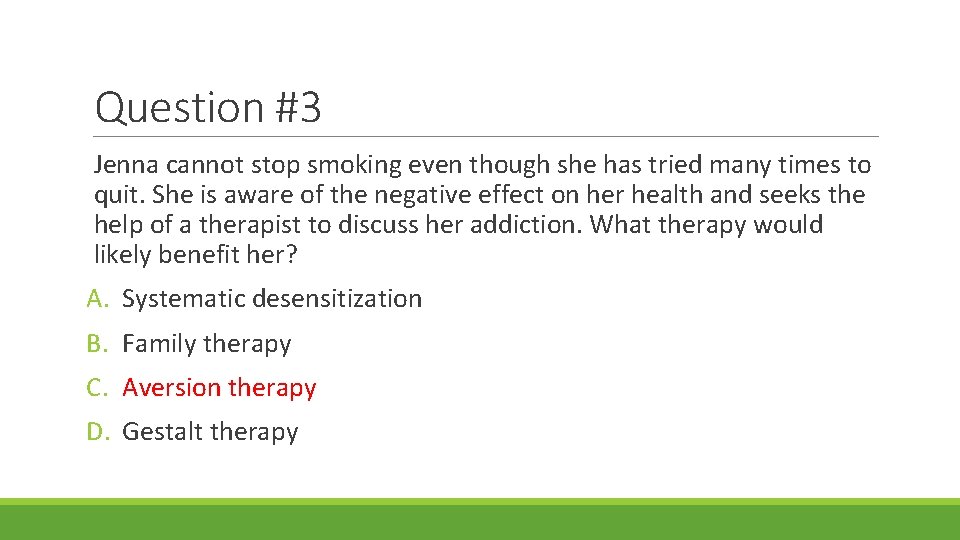
Question #3 Jenna cannot stop smoking even though she has tried many times to quit. She is aware of the negative effect on her health and seeks the help of a therapist to discuss her addiction. What therapy would likely benefit her? A. Systematic desensitization B. Family therapy C. Aversion therapy D. Gestalt therapy
Question #4 Which therapy type focused on unconditional positive regard for the client? A. Client Centered Therapy B. Group Therapy C. Exposure and Response Prevention D. Individual Therapy
Question #5 Acceptance and Commitment Therapy (ACT) encourages clients to: A. Understand their thoughts and recognize their value B. Accept that they need to change their thought process C. Commit to avoiding situations of stress and anxiety D. Reward themselves for positive behavior
- Slides: 27