
Ch 16 Reconstruction and the New South 16
- Slides: 20
Ch: 16 Reconstruction and the New South
16: 3 The End of Reconstruction
Standards: • 8. 87 Explain the movement of both white and black Northern entrepreneurs (carpetbaggers) from the North to the South. • 8. 88 Explain the controversy of the 1876 presidential election and the subsequent removal of federal troops from the South.
Objectives: • Explain why support for Reconstruction declined. • Describe how African Americans in the South lost many newly gained rights. • Describe the sharecropping system and how it trapped many in a cycle of poverty. • Identify the signs that the South began to develop a strong economy by the 1880 s.
Terms and People • poll tax – a personal tax to be paid before voting • literacy test – a test to see if a person can read and write • grandfather clause – a provision that allowed a voter to avoid a literacy test if his father or grandfather had been eligible to vote on January 1, 1867
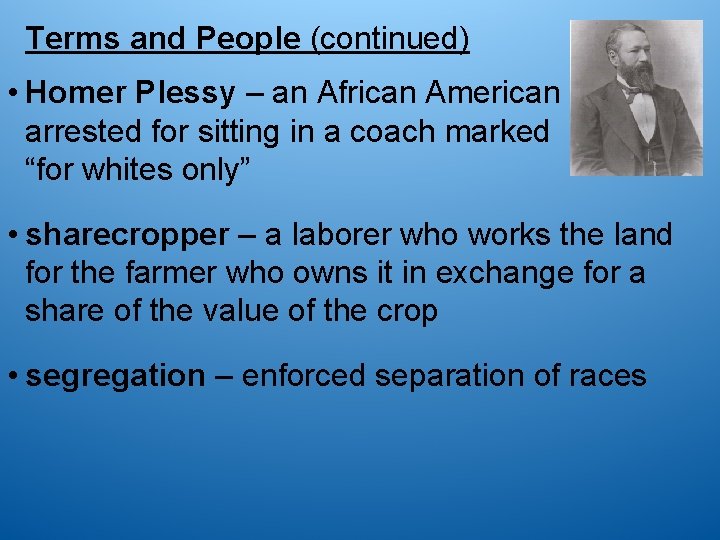
Terms and People (continued) • Homer Plessy – an African American man arrested for sitting in a coach marked “for whites only” • sharecropper – a laborer who works the land for the farmer who owns it in exchange for a share of the value of the crop • segregation – enforced separation of races
What were the effects of Reconstruction? The reforms of the Reconstruction era did not last. By the end of the era, African Americans were subjected to new hardships and injustices.
After the Civil War, many northerners lost faith in the Republicans for these reasons: President Grant’s administration included corrupt, poorly chosen individuals. Americans began to forget the war and focused on bettering their own lives.
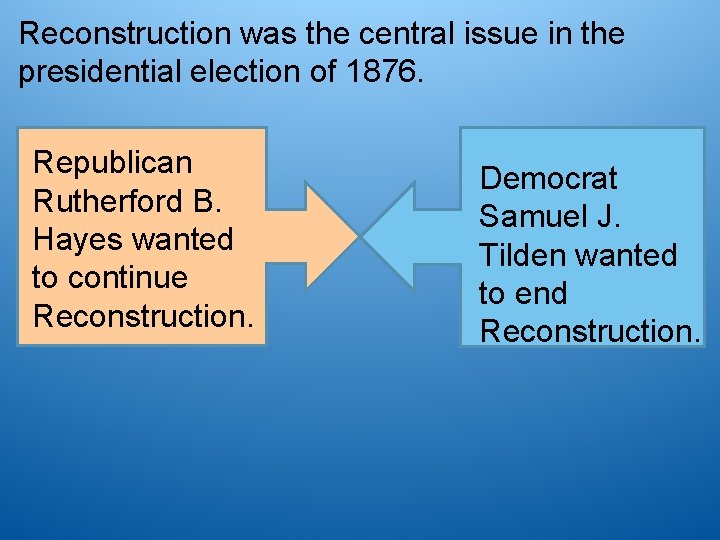
Reconstruction was the central issue in the presidential election of 1876. Republican Rutherford B. Hayes wanted to continue Reconstruction. Democrat Samuel J. Tilden wanted to end Reconstruction.
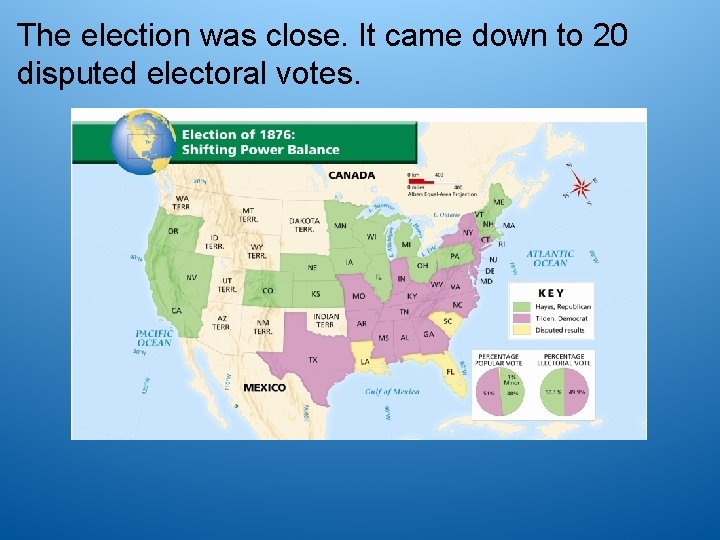
The election was close. It came down to 20 disputed electoral votes.
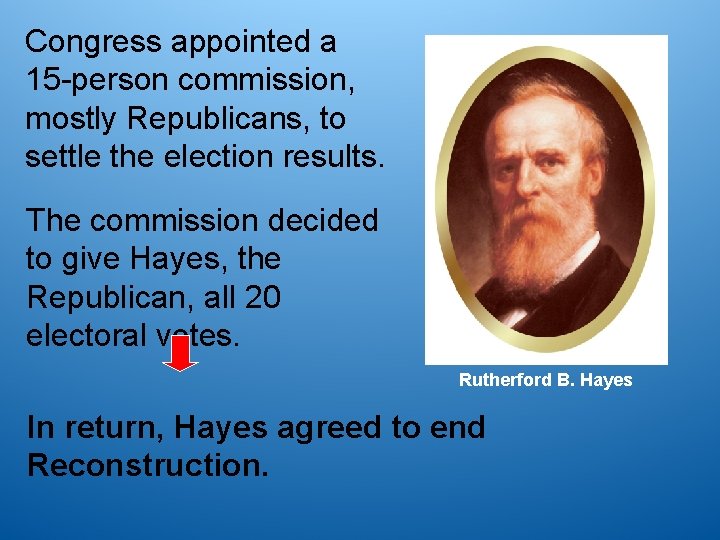
Congress appointed a 15 -person commission, mostly Republicans, to settle the election results. The commission decided to give Hayes, the Republican, all 20 electoral votes. Rutherford B. Hayes In return, Hayes agreed to end Reconstruction.
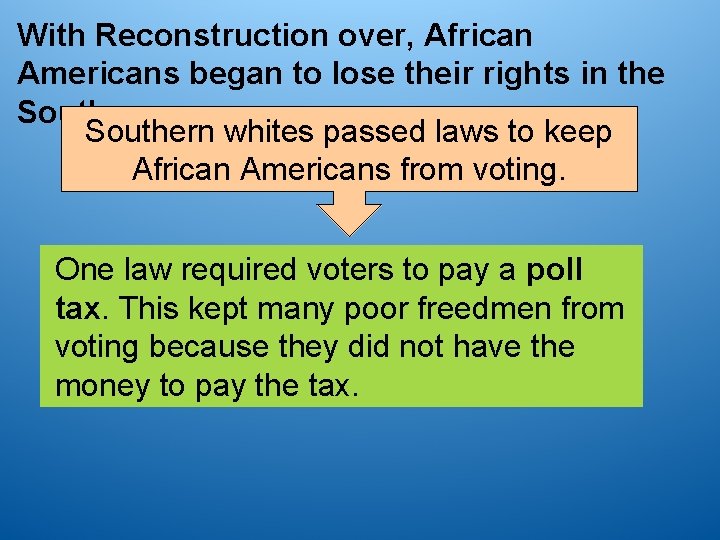
With Reconstruction over, African Americans began to lose their rights in the Southern whites passed laws to keep African Americans from voting. One law required voters to pay a poll tax. This kept many poor freedmen from voting because they did not have the money to pay the tax.
With Reconstruction over, African Americans began to lose their rights in the Southern whites passed laws to keep African Americans from voting. Another law required voters to pass a literacy test. Voters had to read a section of the Constitution and explain it before being allowed to vote It included a grandfather clause that allowed illiterate whites to vote. You would be eligible to vote if your grandfather was allowed to vote
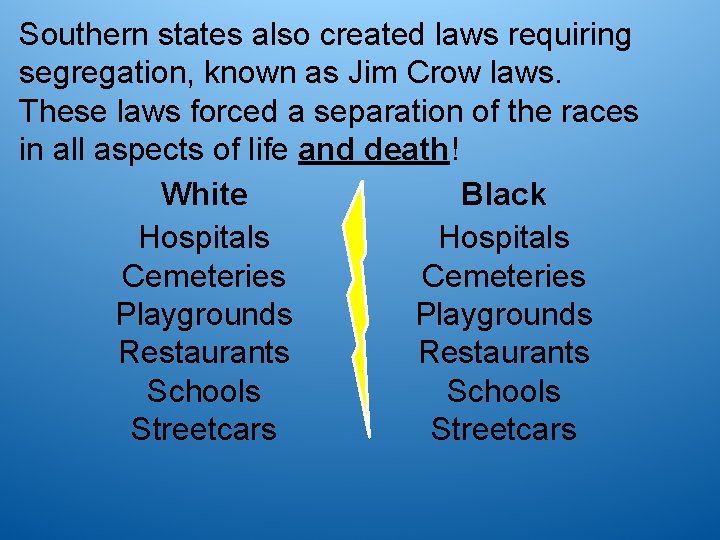
Southern states also created laws requiring segregation, known as Jim Crow laws. These laws forced a separation of the races in all aspects of life and death! White Black Hospitals Cemeteries Playgrounds Restaurants Schools Streetcars
In 1896, the Supreme Court upheld segregation laws. Homer Plessy was arrested for sitting in a coach marked “for whites only. ” The court ruled that a law could require “separate but equal” facilities for blacks and whites. This rule remained in effect until the 1950 s. https: //www. youtube. com/watch? v=u. Gvk. OBxp 0 VY
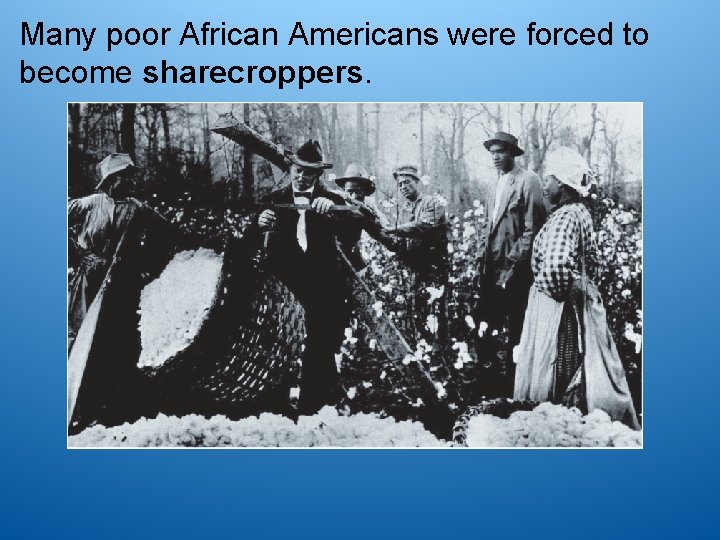
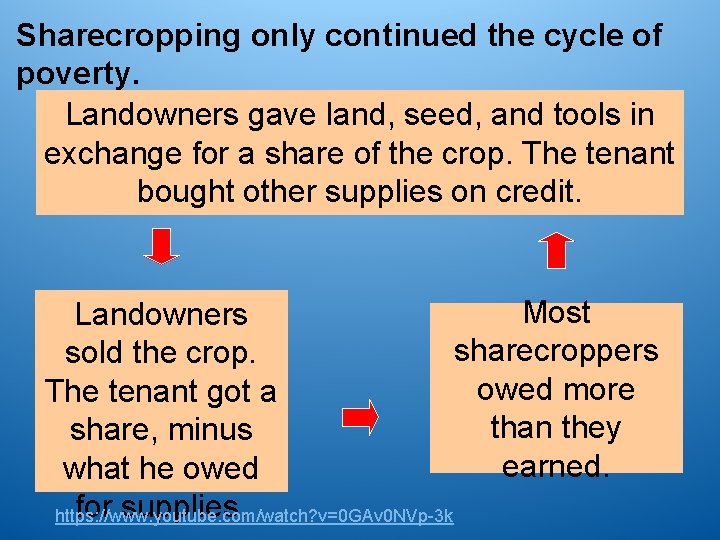
Many poor African Americans were forced to become sharecroppers.
Sharecropping only continued the cycle of poverty. Landowners gave land, seed, and tools in exchange for a share of the crop. The tenant bought other supplies on credit. Most Landowners sharecroppers sold the crop. owed more The tenant got a than they share, minus earned. what he owed for supplies. https: //www. youtube. com/watch? v=0 GAv 0 NVp-3 k
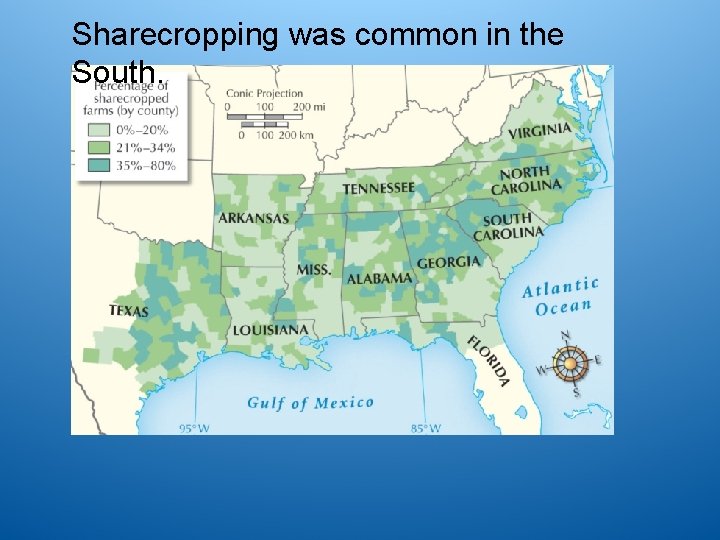
Sharecropping was common in the South.
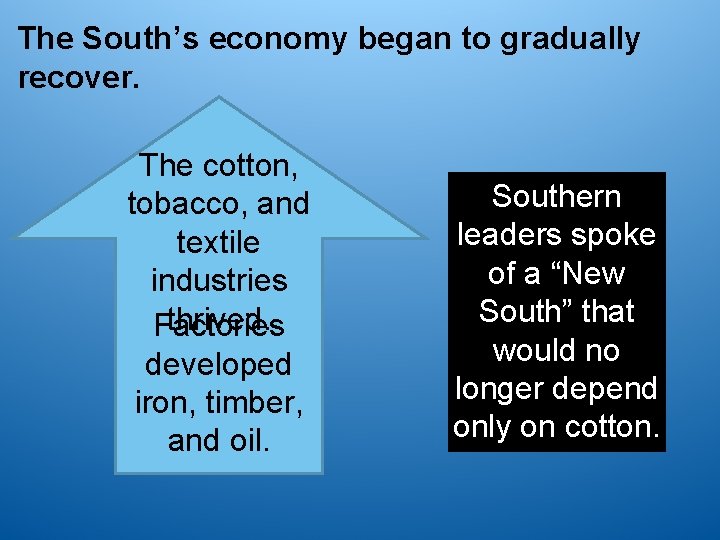
The South’s economy began to gradually recover. The cotton, tobacco, and textile industries thrived. Factories developed iron, timber, and oil. Southern leaders spoke of a “New South” that would no longer depend only on cotton.
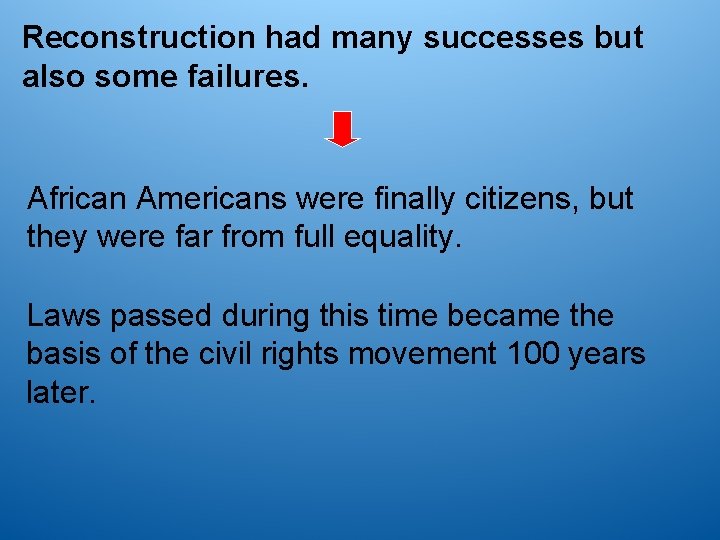
Reconstruction had many successes but also some failures. African Americans were finally citizens, but they were far from full equality. Laws passed during this time became the basis of the civil rights movement 100 years later.