
Ch 16 Civil and Criminal Law Erin Brokovitch
Ch. 16 – Civil and Criminal Law Erin Brokovitch
Ch. 16, Sec. 1 – Civil Cases • Obj: Identify the various types of civil law and the steps in civil lawsuits
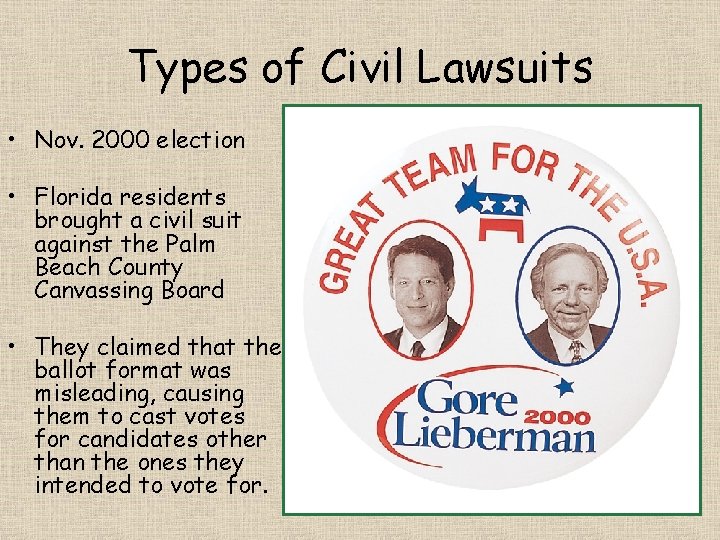
Types of Civil Lawsuits • Nov. 2000 election • Florida residents brought a civil suit against the Palm Beach County Canvassing Board • They claimed that the ballot format was misleading, causing them to cast votes for candidates other than the ones they intended to vote for.
Types of Civil Lawsuits, Cont’d. • Plaintiff – Person bringing the lawsuit – Claims to have suffered a loss, and seeks monetary award from the defendant • Defendant – Person being sued – Argues either that the loss did not occur or that he/she is not responsible for the defendant’s loss

Job of the Civil Court • Resolve civil disputes – Disagreements over noncriminal matters • Lawsuits involving more than a few thousand dollars usually involve a trial with a jury • Small Claims Court – Cases involving a few thousand dollars or less – Plaintiff and defendant usually act as their own attorneys – Judge decides who wins

Examples of Typical Lawsuits • Property disputes • Breach of contract • Family matters, like divorce • Negligence – when a person has died or property has been destroyed because someone was careless
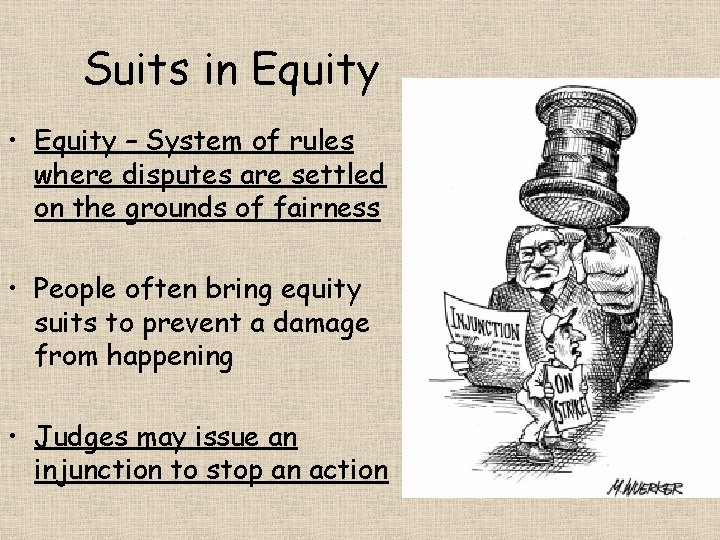
Suits in Equity • Equity – System of rules where disputes are settled on the grounds of fairness • People often bring equity suits to prevent a damage from happening • Judges may issue an injunction to stop an action
Steps in Bringing a Lawsuit • 1. Plaintiff hires a lawyer • 2. Lawyer files a “complaint” with the court Names the plaintiff and defendant, and nature of the lawsuit • 3. Court sends a “summons” to the defendant – Summons: notifies the defendant of the suit and orders him to appear in court on a certain date
Steps in Bringing a Lawsuit, Cont’d. • 4. Defendant Responds – Can hire an attorney and file an “answer” to the complaint – Either admit to the charges or offer reasons why the defendant is not responsible for the damages the plaintiff is claiming – Complaint and Answer are called “pleadings”
Steps in Bringing a Lawsuit, Cont’d. • 5. “Discovery” process – Attorneys for both sides: • Checks facts • Gather evidence by questioning the other party and any witnesses – Purpose of Discovery: Avoid any surprises at the trial
Steps in Bringing a Lawsuit, Cont’d. • 6. Pretrial Discussions with the judge, plaintiff, and defendant • Cases are often settled at this point, before ever going to trial – The plaintiff may decide to drop the suit, or the defendant may decide that he’s likely to lose the case and offer the plaintiff a settlement
Alternatives to Lawsuits • Mediation – Each side explains its side of the dispute and must listen to the other side – A professional mediator helps the two parties compromise and come to agreement on the issue – Arbitrators are sometimes used if both parties agree to it • Arbitrator acts as a judge, decides the issue, and both parties are bound by the arbitrator’s decision
Outcomes of Most Lawsuits • Most are settled out of court for several reasons – High cost of attorney and court fees – Trial outcomes are uncertain, so most people prefer a negotiated outcome – It can take years for a trial to happen due to the backlog of court cases
When Lawsuits go to Trial • Usually only a judge hears the case, but in cases involving large amounts of money, a jury of 6 to 12 people may decide the case • Plaintiff has to present a “preponderance of evidence” – enough to convince the judge (or jury) that the defendant was responsible for the action • If the defendant wins the case, the plaintiff gets nothing and pays court costs
Appeals • If the losing side believes the judge made errors during the trial or that some other type of injustice took place, it may appeal the verdict to a higher court • In cases involving large amounts of money, the defendant usually appeals to have the award amount reduced • Result: Winning plaintiff may have to wait years to collect the money awarded and may even end up with nothing
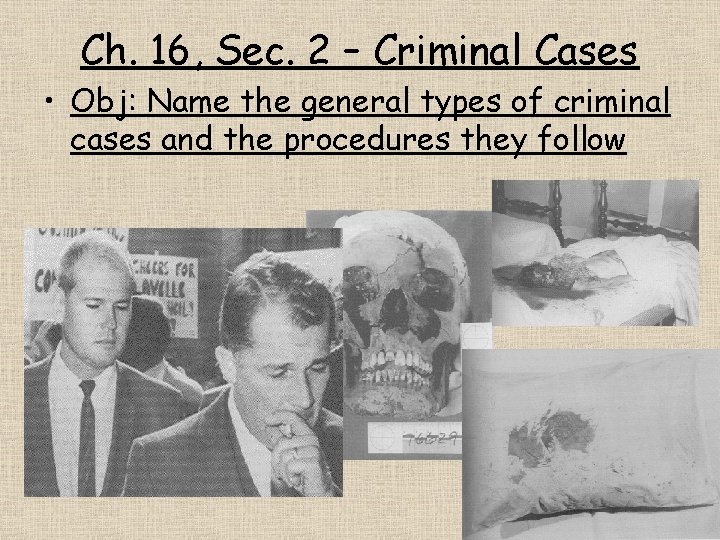
Ch. 16, Sec. 2 – Criminal Cases • Obj: Name the general types of criminal cases and the procedures they follow
Types of Criminal Cases • Plaintiff – always the govt. • Defendant – person accused of committing a crime • Crime – an act that violates a state or federal law and causes harm to a person or to society in general
Penal Code • A state’s written laws – lists crimes and their penalties • They establish categories of crimes – Depends on degree of seriousness of the crime – Punishments are designed to fit the crime
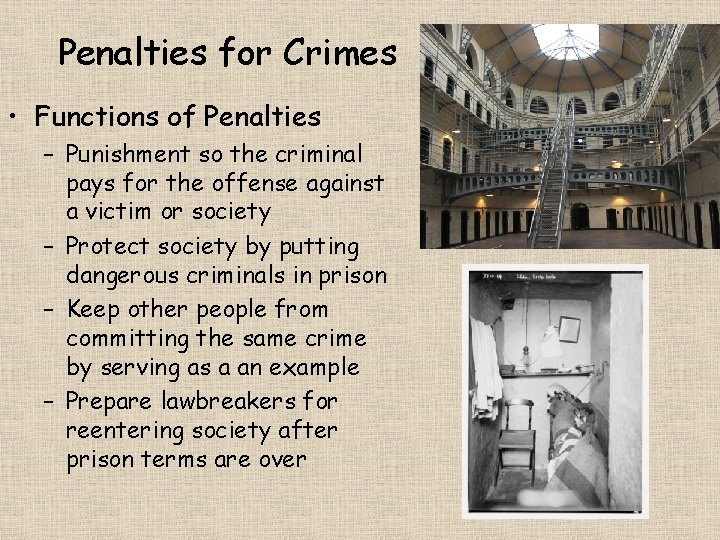
Penalties for Crimes • Functions of Penalties – Punishment so the criminal pays for the offense against a victim or society – Protect society by putting dangerous criminals in prison – Keep other people from committing the same crime by serving as a an example – Prepare lawbreakers for reentering society after prison terms are over
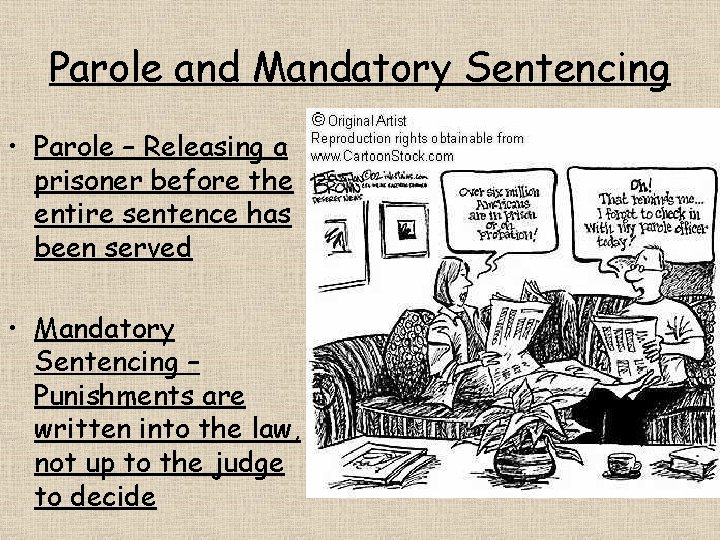
Parole and Mandatory Sentencing • Parole – Releasing a prisoner before the entire sentence has been served • Mandatory Sentencing – Punishments are written into the law, not up to the judge to decide
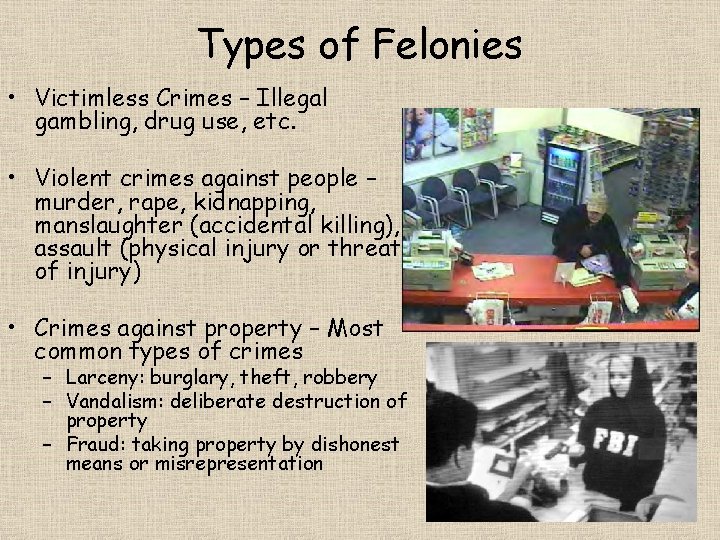
Types of Felonies • Victimless Crimes – Illegal gambling, drug use, etc. • Violent crimes against people – murder, rape, kidnapping, manslaughter (accidental killing), assault (physical injury or threat of injury) • Crimes against property – Most common types of crimes – Larceny: burglary, theft, robbery – Vandalism: deliberate destruction of property – Fraud: taking property by dishonest means or misrepresentation
Steps in a Criminal Case • Search Warrant – Granted if police have “probable cause” • 1. Arrest – Police must inform the person of their rights • 2. Hearing – Suspect appears before a judge – Bail is set • 3. Indictment – Grand jury or judge hears evidence and formally charges the suspect with a crime
Steps in a Criminal Case, Cont’d. • 4. Arraignment – Defendant pleads guilty and accepts a plea bargain – No contest – Defendant does not admit guilt, but will not fight the prosecution’s case – OR, defendant pleads not guilty – Trial date is se
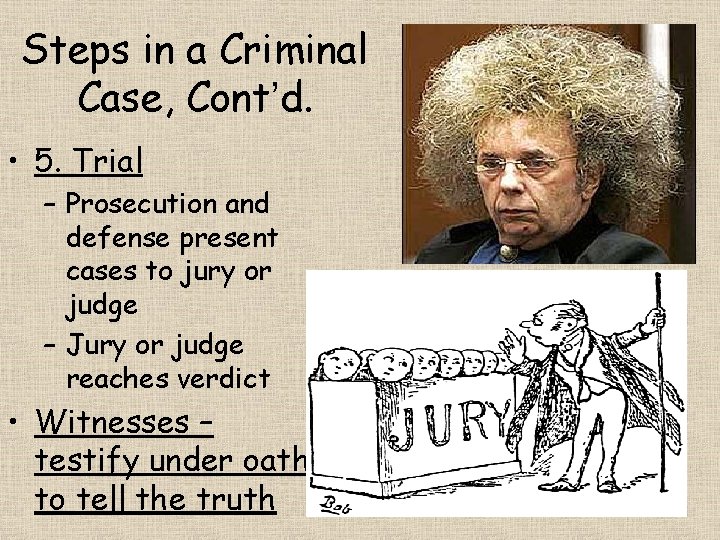
Steps in a Criminal Case, Cont’d. • 5. Trial – Prosecution and defense present cases to jury or judge – Jury or judge reaches verdict • Witnesses – testify under oath to tell the truth
Steps in a Criminal Case, Cont’d. • 6. a. Sentencing – Defendant is found guilty – Judge sentences the defendant • OR • 6. b. Acquittal – Defendant is found not guilty and goes free
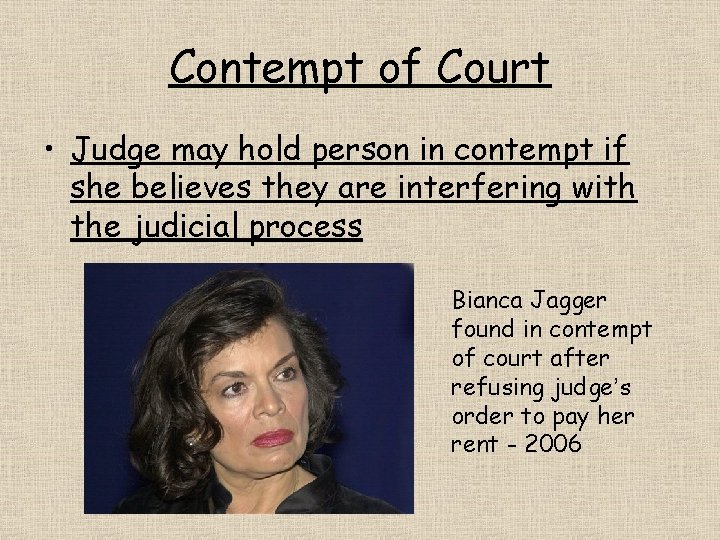
Contempt of Court • Judge may hold person in contempt if she believes they are interfering with the judicial process Bianca Jagger found in contempt of court after refusing judge’s order to pay her rent - 2006
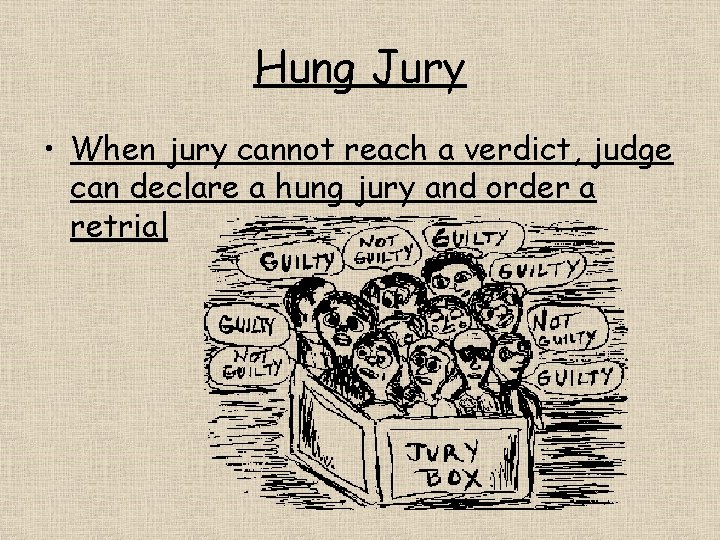
Hung Jury • When jury cannot reach a verdict, judge can declare a hung jury and order a retrial
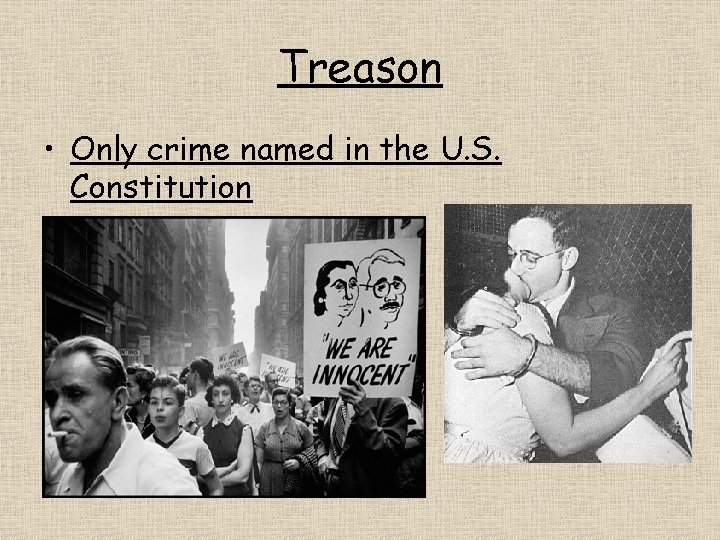
Treason • Only crime named in the U. S. Constitution

Begin Notes Mon. , Nov. 8 • 2 nd Block
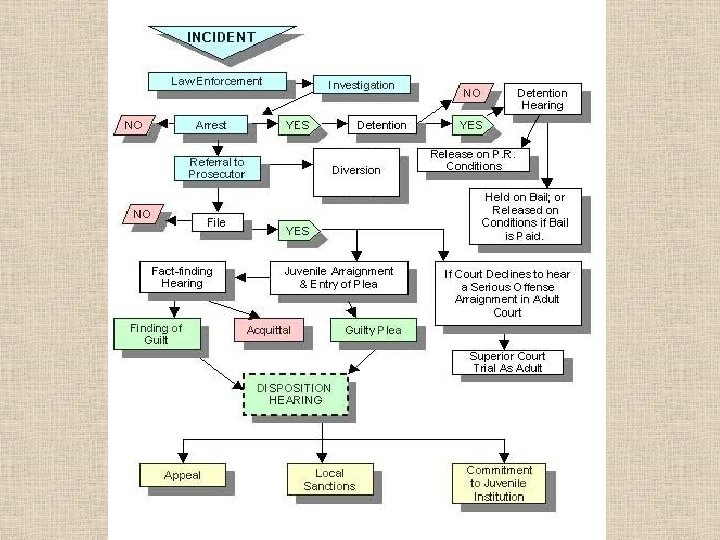
Stages in the Juvenile Justice System • Cases are handled in juvenile courts • Primary goal of juvenile courts – rehabilitation – Correct a person’s behavior rather than punish the person
Juvenile Delinquent • Person under age 18 who commits a crime • Types of Cases handled by juvenile courts: – Neglect: Can place the child in foster care – Delinquency: Can include running away from home, skipping school, violating curfew laws
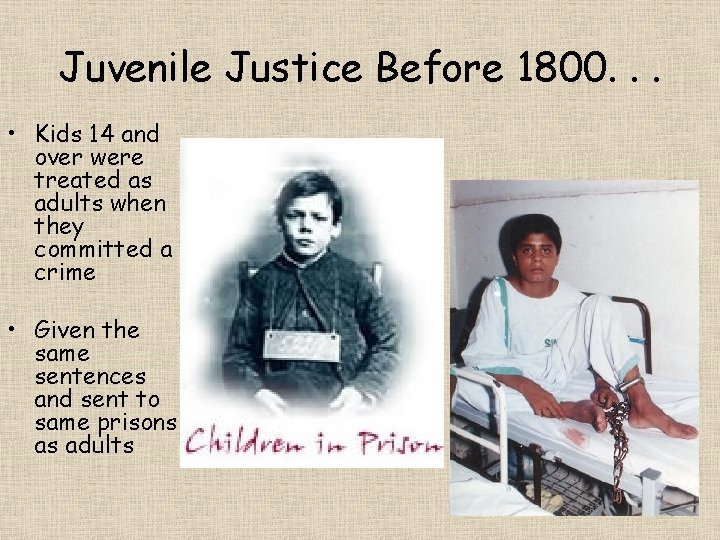
Juvenile Justice Before 1800. . . • Kids 14 and over were treated as adults when they committed a crime • Given the same sentences and sent to same prisons as adults
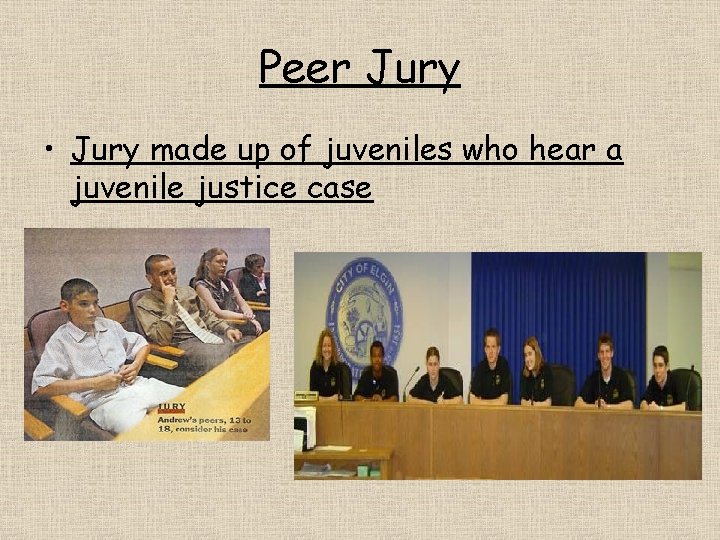
Peer Jury • Jury made up of juveniles who hear a juvenile justice case
In re Gault • Supreme Court case in 1967 • A judge in Arizona sentenced a 15 -year-old to six years in juvenile detention for making indecent phone calls to a neighbor • His parents were notified of his arrest, he had no attorney, and the neighbor was not questioned • S. C. said juveniles have rights too, when it comes to arrests and trials
- Slides: 35