
Ch 15 1 Refraction Definition Refraction Change in
- Slides: 28
Ch 15. 1 - Refraction
Definition: Refraction Change in speed of light as it moves from one medium to another. Can cause bending of the light at the interface between media.
Index of Refraction • The ratio of the speed of light in a vacuum to its speed in a given transparent medium
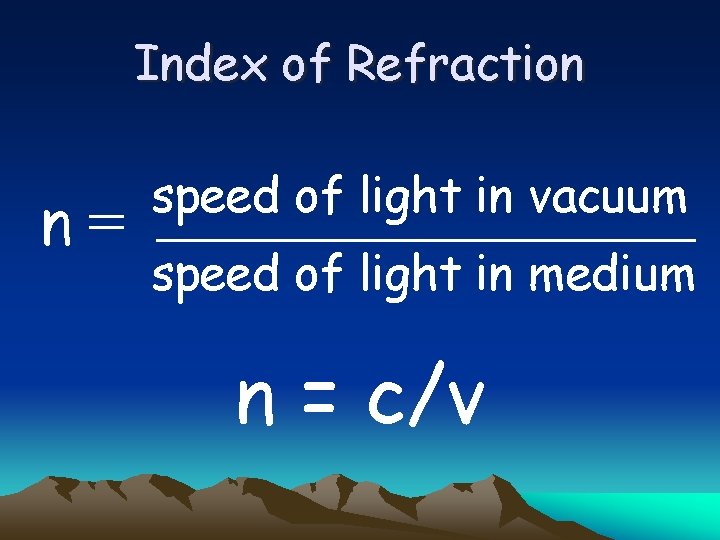
Index of Refraction n= speed of light in vacuum speed of light in medium n = c/v
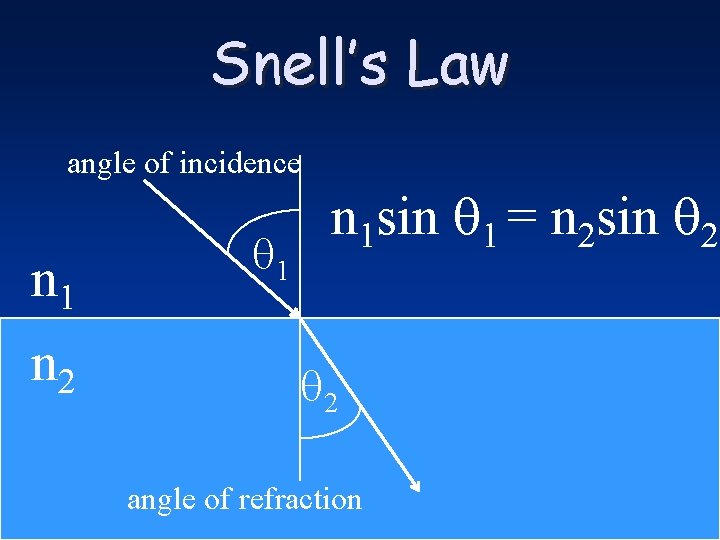
Snell’s Law angle of incidence n 1 n 2 1 n 1 sin 1 = n 2 sin 2 2 angle of refraction
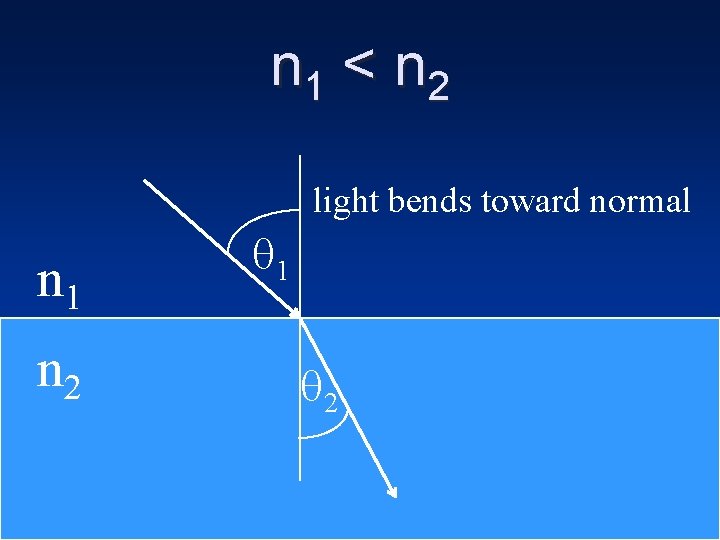
n 1 < n 2 light bends toward normal n 1 n 2 1 2
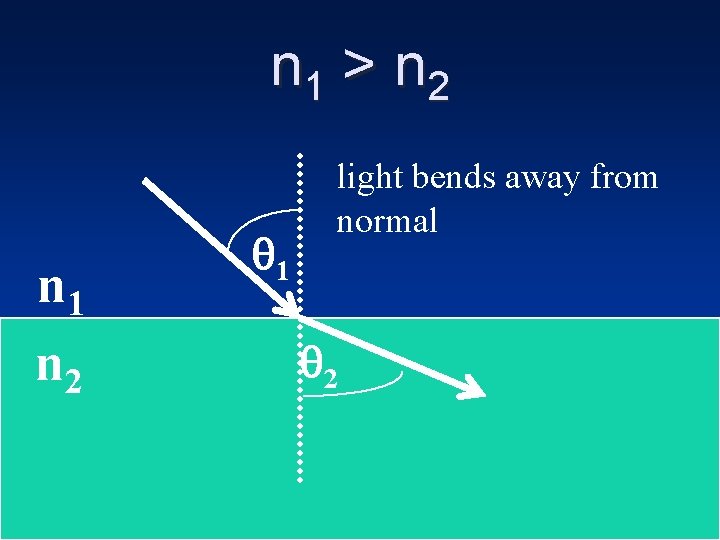
n 1 > n 2 n 1 n 2 1 light bends away from normal 2
Homework • P 567 #1 -3 (Snell’s Law) • P 567 #1 -3 (Section Review)
15. 3 – Optical Phenomena
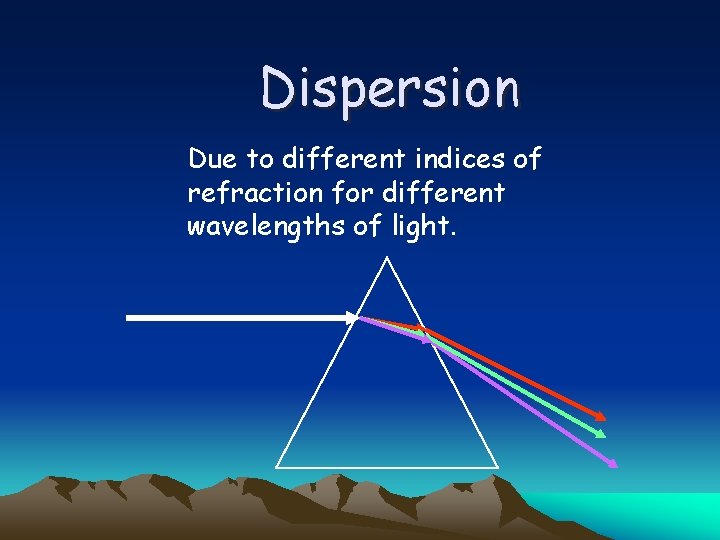
Dispersion The separation of white light into colors due to different refractive indices for different wavelengths.
Dispersion Due to different indices of refraction for different wavelengths of light.
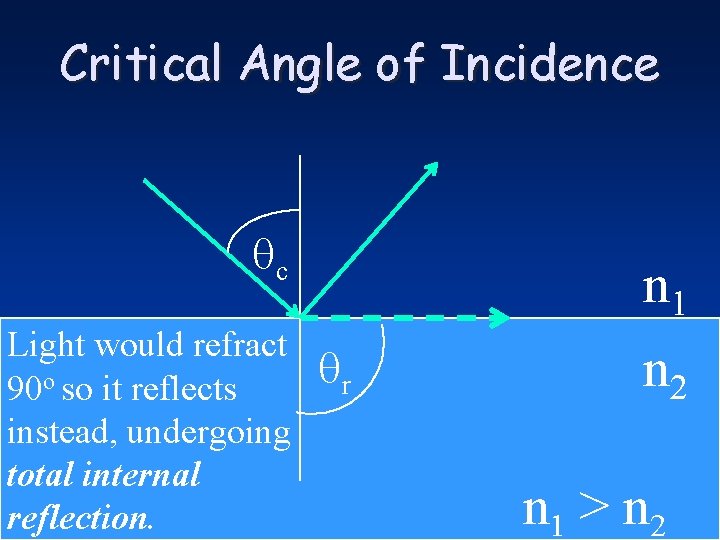
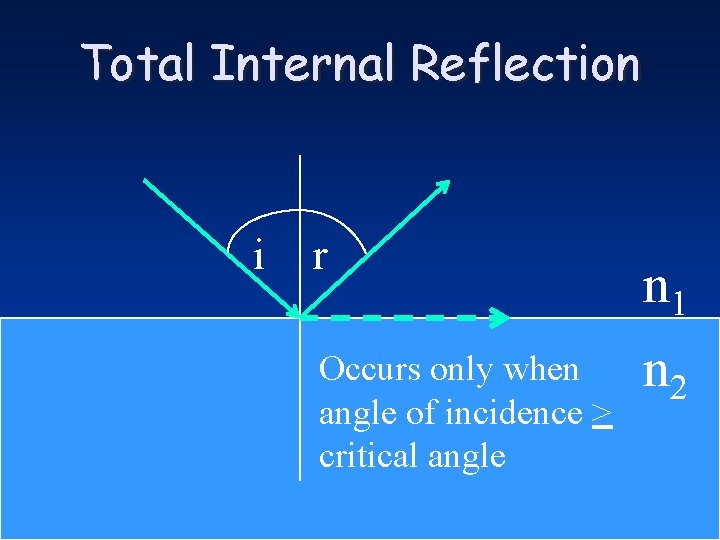
Useful Definitions • Total Internal Reflection – the complete reflection of light at the boundary of two transparent media • Critical Angle – the minimum angle of incidence for which total internal reflection occurs
Critical Angle of Incidence c Light would refract 90 o so it reflects instead, undergoing total internal reflection. n 1 r n 2 n 1 > n 2
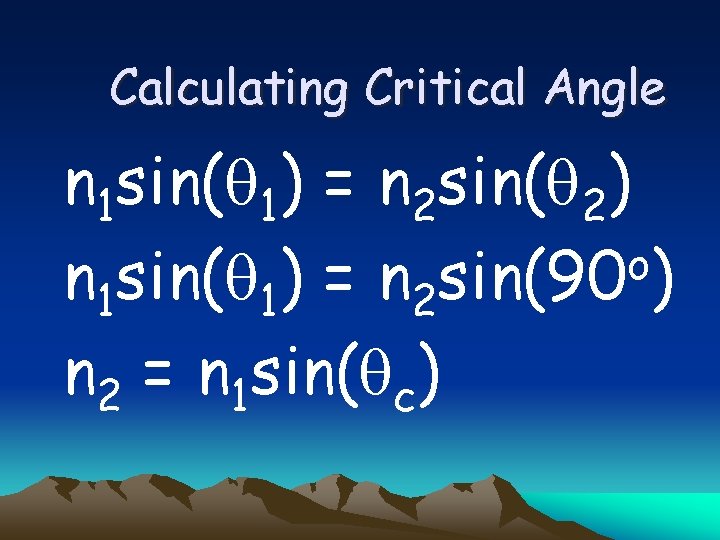
Calculating Critical Angle n 1 sin( 1) = n 2 sin( 2) o n 1 sin( 1) = n 2 sin(90 ) n 2 = n 1 sin( c)
Total Internal Reflection i r Occurs only when angle of incidence > critical angle n 1 n 2
Homework • P 582 #1 -4, p 585 #1 -3
15. 2 – Thin lenses
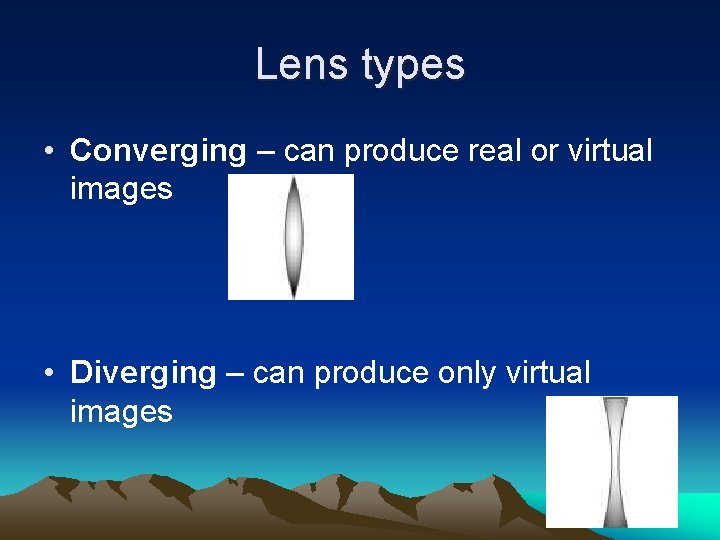
Lens types • Converging – can produce real or virtual images • Diverging – can produce only virtual images
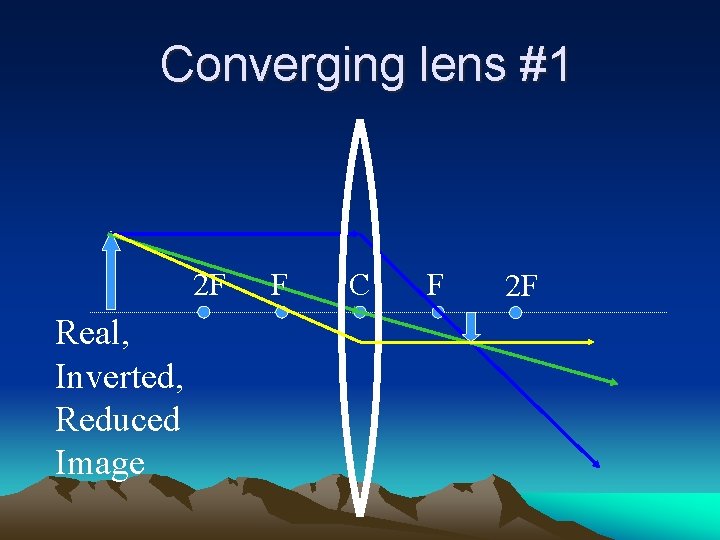
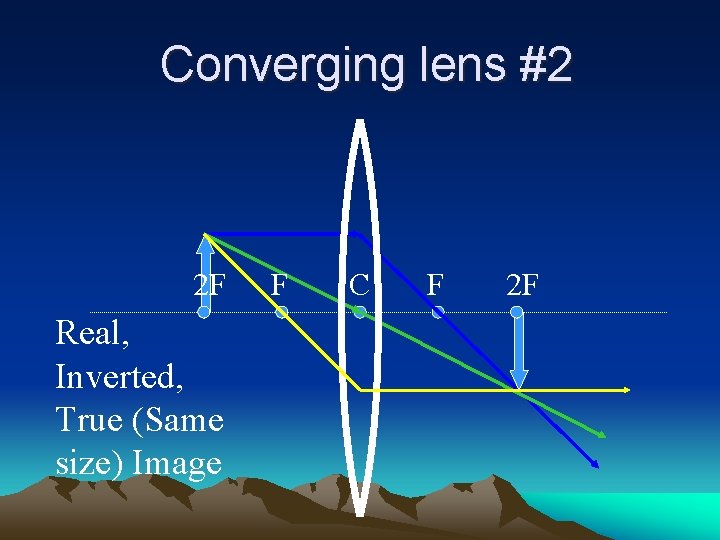
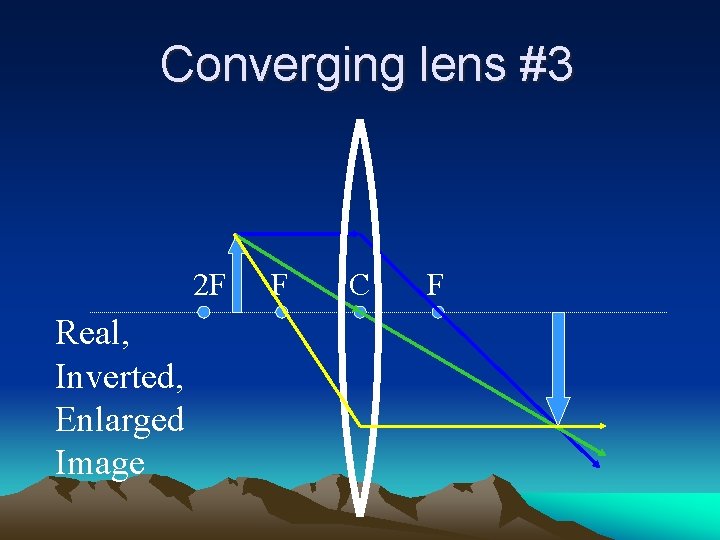
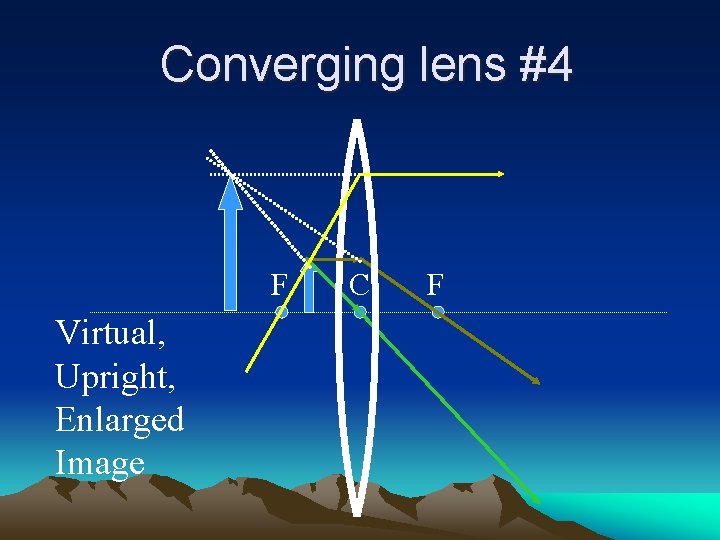
Ray diagrams • Same rays as we drew for mirrors • Rays will always go through the mirror (not reflected) but will be somehow bent (refracted)
Useful Definitions • Lens – a transparent object that refracts light rays, causing them to converge or diverge to create an image. • **Big difference with mirrors** – Real is on the right side of the lens. Why? • + side of mirror is ride side • - side of mirror is left side
Converging lens #1 2 F Real, Inverted, Reduced Image F C F 2 F
Converging lens #2 2 F Real, Inverted, True (Same size) Image F C F 2 F
Converging lens #3 2 F Real, Inverted, Enlarged Image F C F
Converging lens #4 F Virtual, Upright, Enlarged Image C F
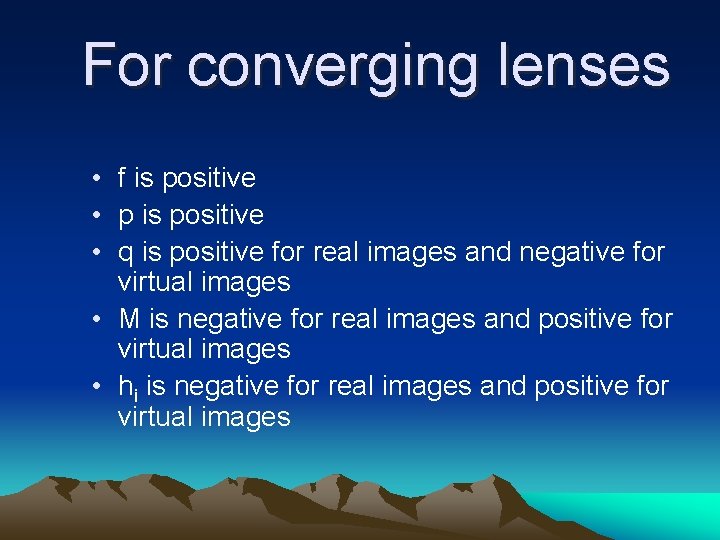
For converging lenses • f is positive • p is positive • q is positive for real images and negative for virtual images • M is negative for real images and positive for virtual images • hi is negative for real images and positive for virtual images
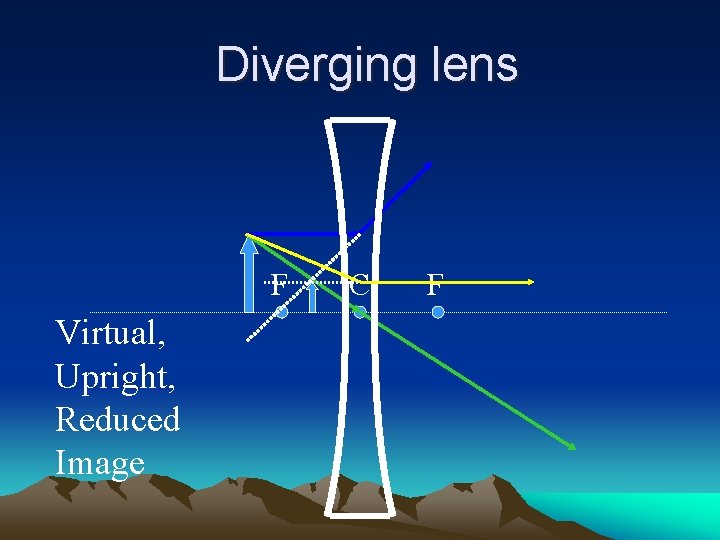
Diverging lens F Virtual, Upright, Reduced Image C F
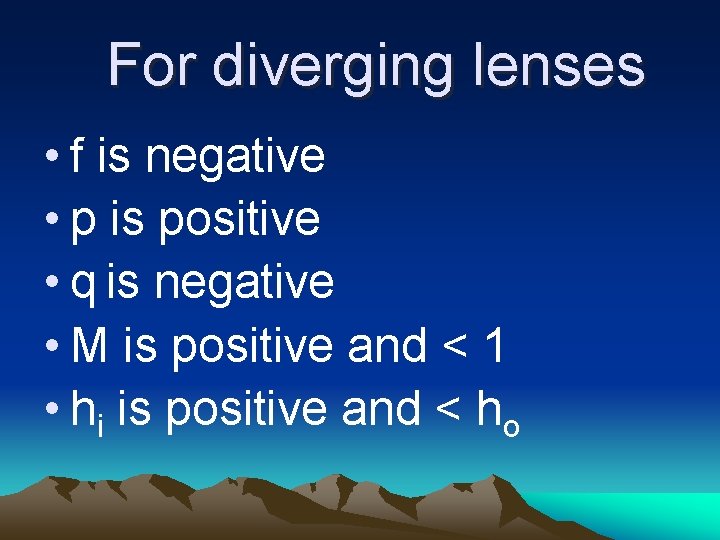
For diverging lenses • f is negative • p is positive • q is negative • M is positive and < 1 • hi is positive and < ho
Homework • P 576 #1 -4