
Ch 14 Interactions in Ecosystems 14 1 Habitat
Ch 14 Interactions in Ecosystems 14. 1 Habitat and Niche • Habitat – Abiotic + biotic factors • Ecological niche – Phys, chem, bio factors species needs to survive/reproduce – Niche includes: food, all abiotic factors, and behaviors of species – Ex. Bee vs butterfly
• Competitive Exclusion – If 2 species are competing for same niche then 1 that is better suited gets it (other move/dies) – Niche partitioning- use different parts – Evolutionary response- divergent evolution to use different resource • Ecological Equivalents – In different geological region/habitats species inhabit similar niches
14. 2 Community Interactions • Competition – Interspecific: 2 different species compete same resources – Intraspecific: 2 of same species compete • Predation – Hunting/ killing prey – Natural selection of both predator (how well obtain food) and prey (can they avoid being eaten)
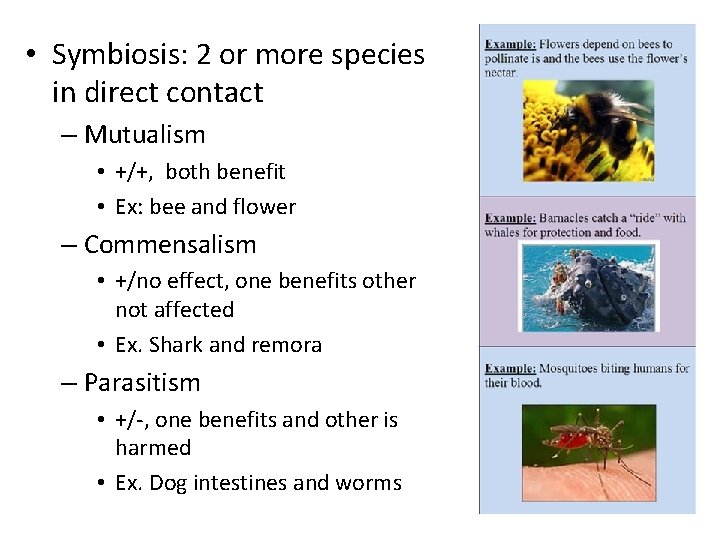
• Symbiosis: 2 or more species in direct contact – Mutualism • +/+, both benefit • Ex: bee and flower – Commensalism • +/no effect, one benefits other not affected • Ex. Shark and remora – Parasitism • +/-, one benefits and other is harmed • Ex. Dog intestines and worms
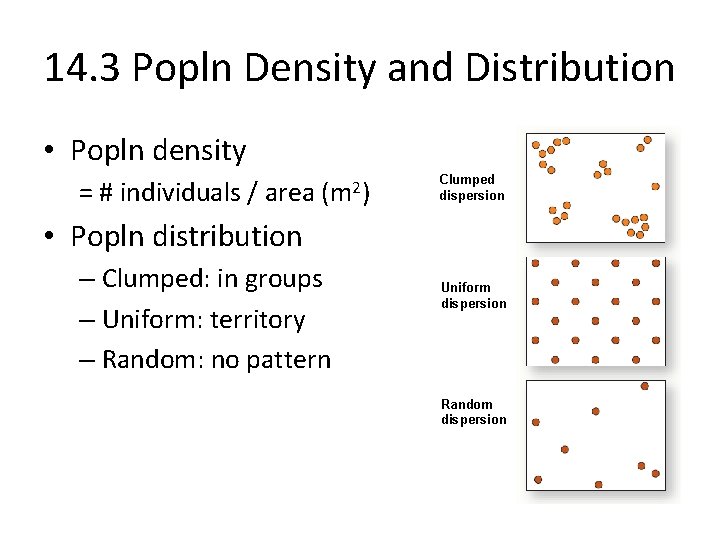
14. 3 Popln Density and Distribution • Popln density = # individuals / area (m 2) Clumped dispersion • Popln distribution – Clumped: in groups – Uniform: territory – Random: no pattern Uniform dispersion Random dispersion
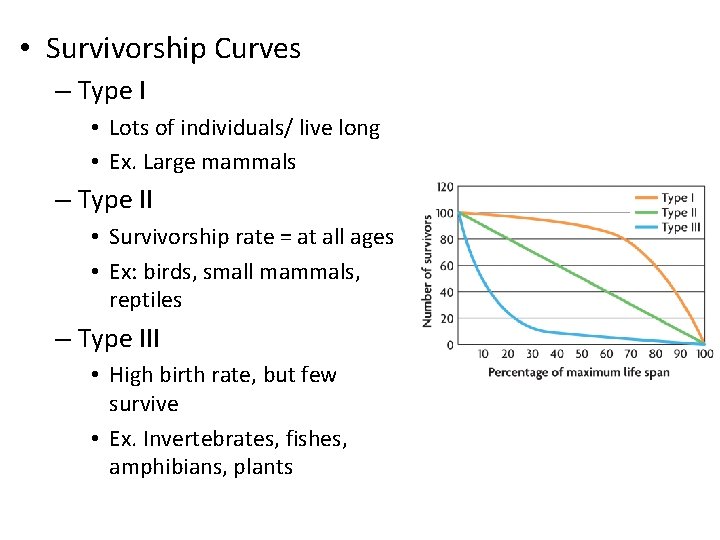
• Survivorship Curves – Type I • Lots of individuals/ live long • Ex. Large mammals – Type II • Survivorship rate = at all ages • Ex: birds, small mammals, reptiles – Type III • High birth rate, but few survive • Ex. Invertebrates, fishes, amphibians, plants
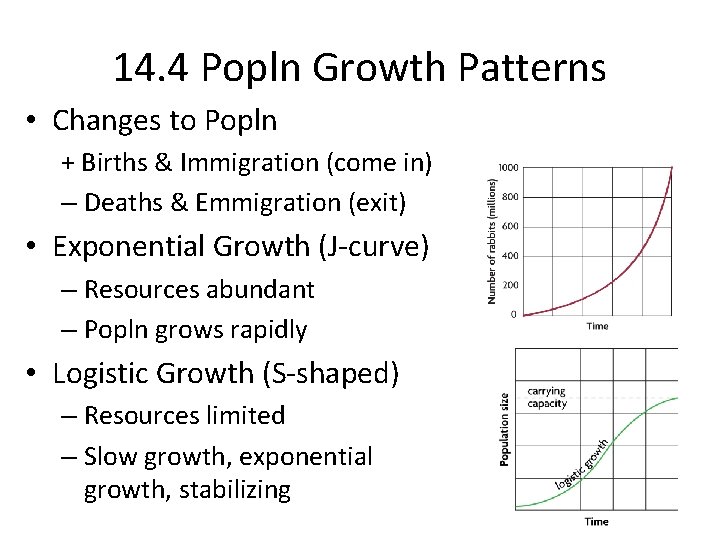
14. 4 Popln Growth Patterns • Changes to Popln + Births & Immigration (come in) – Deaths & Emmigration (exit) • Exponential Growth (J-curve) – Resources abundant – Popln grows rapidly • Logistic Growth (S-shaped) – Resources limited – Slow growth, exponential growth, stabilizing
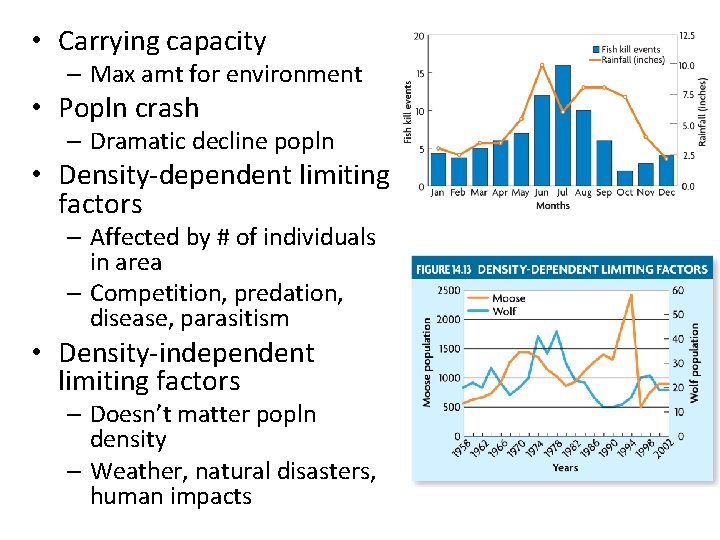
• Carrying capacity – Max amt for environment • Popln crash – Dramatic decline popln • Density-dependent limiting factors – Affected by # of individuals in area – Competition, predation, disease, parasitism • Density-independent limiting factors – Doesn’t matter popln density – Weather, natural disasters, human impacts

14. 5 Ecological Succession • Succession: biological changes/ sequences to regenerate 1 2 or reestablish damaged community 3 4 – Primary Succession: uninhabited ecosystem – 1: 0 -15 yrs, bare rocks covered moss and lichen – 2: 15 -80 yrs, shrubs begin to grow – 3: 80 -115 yrs, soil thickens to allow tree growth – 4: 115 -200 yrs, diff tree species in direct sunlight
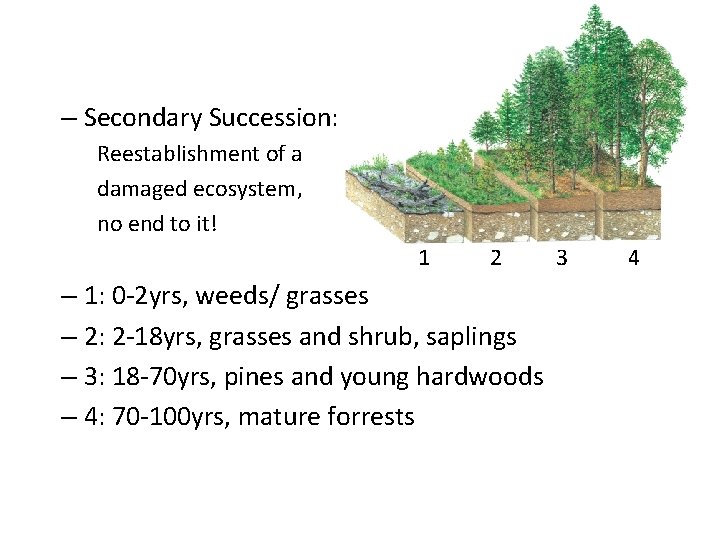
– Secondary Succession: Reestablishment of a damaged ecosystem, no end to it! 1 2 – 1: 0 -2 yrs, weeds/ grasses – 2: 2 -18 yrs, grasses and shrub, saplings – 3: 18 -70 yrs, pines and young hardwoods – 4: 70 -100 yrs, mature forrests 3 4
- Slides: 10