
Ch 14 Gases I Physical Properties A Kinetic
- Slides: 11
Ch. 14 - Gases I. Physical Properties
A. Kinetic Molecular Theory b Particles in an ideal gas… • have no volume. • have elastic collisions. • are in constant, random, straightline motion. • don’t attract or repel each other. • have an avg. KE directly related to Kelvin temperature.
B. Real Gases b Particles in a REAL gas… • have their own volume • attract each other b Gas behavior is most ideal… • at low pressures • at high temperatures • in nonpolar atoms/molecules
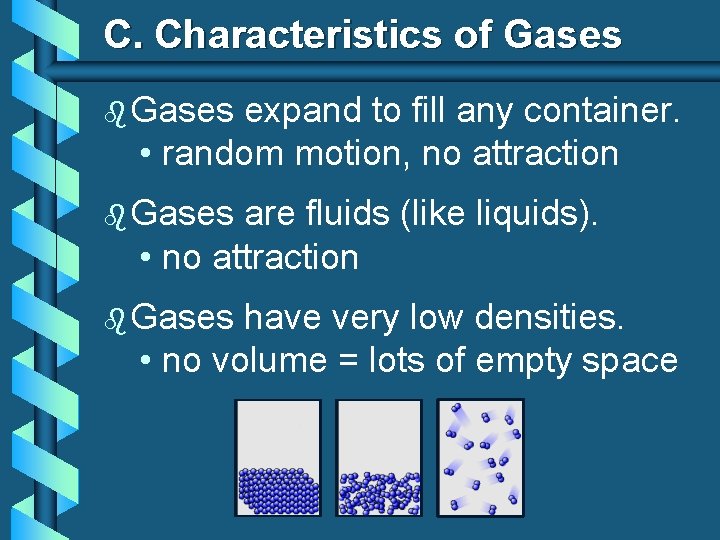
C. Characteristics of Gases b Gases expand to fill any container. • random motion, no attraction b Gases are fluids (like liquids). • no attraction b Gases have very low densities. • no volume = lots of empty space
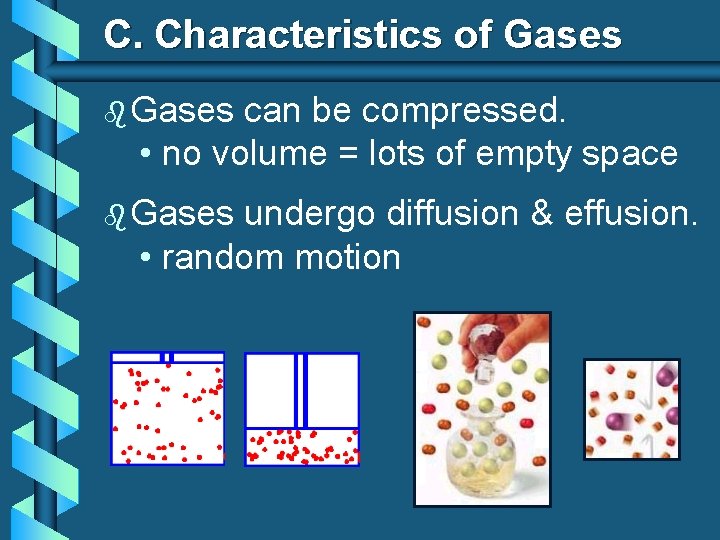
C. Characteristics of Gases b Gases can be compressed. • no volume = lots of empty space b Gases undergo diffusion & effusion. • random motion
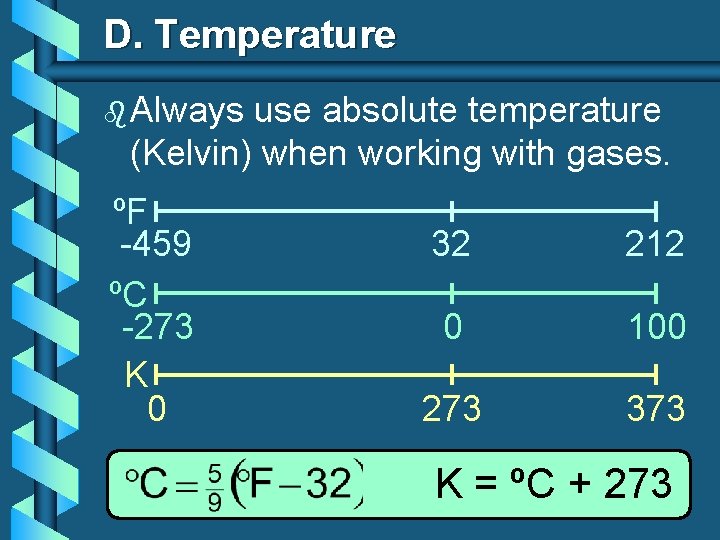
D. Temperature b Always use absolute temperature (Kelvin) when working with gases. ºF -459 ºC -273 K 0 32 212 0 100 273 373 K = ºC + 273
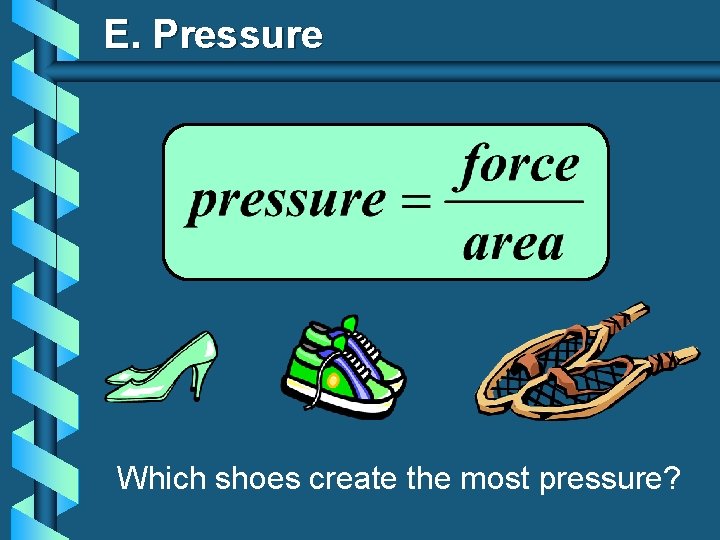
E. Pressure Which shoes create the most pressure?
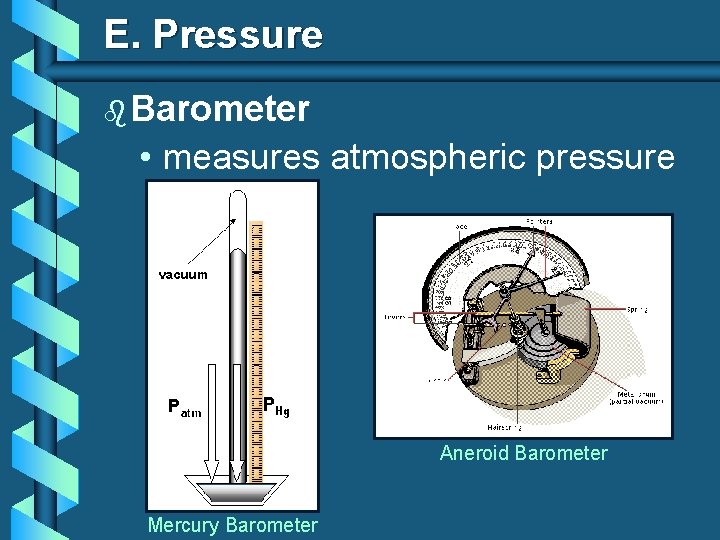
E. Pressure b Barometer • measures atmospheric pressure Aneroid Barometer Mercury Barometer
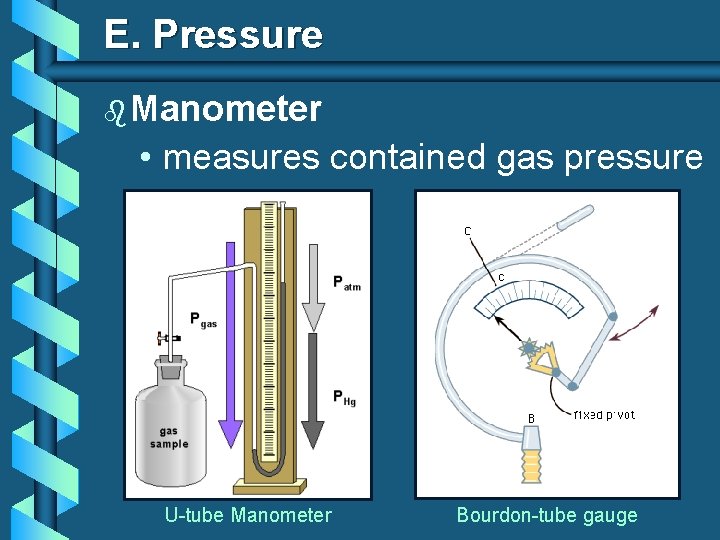
E. Pressure b Manometer • measures contained gas pressure U-tube Manometer Bourdon-tube gauge
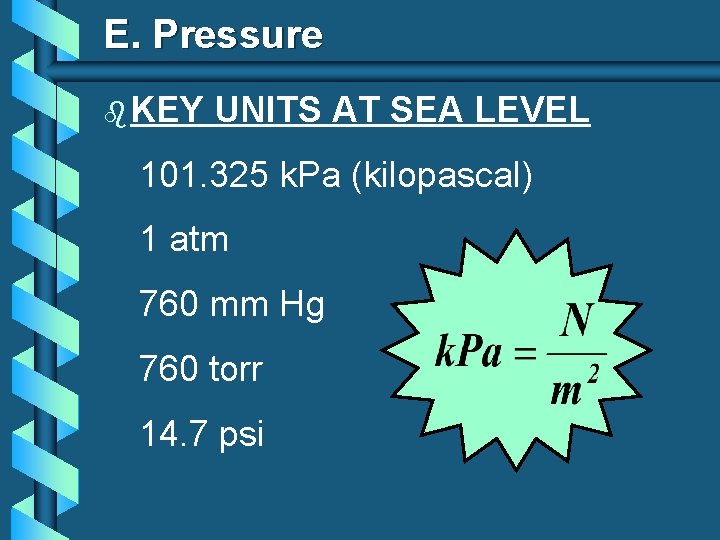
E. Pressure b KEY UNITS AT SEA LEVEL 101. 325 k. Pa (kilopascal) 1 atm 760 mm Hg 760 torr 14. 7 psi
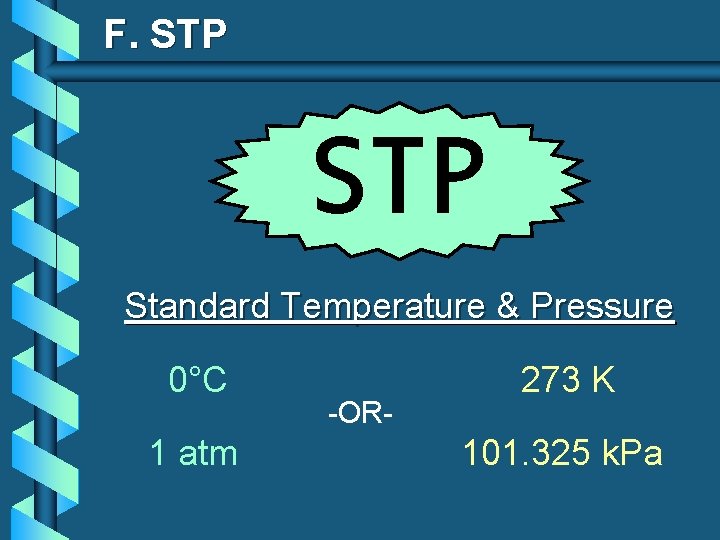
F. STP Standard Temperature & Pressure 0°C 1 atm -OR- 273 K 101. 325 k. Pa