
CH 13 VIRUSES Stephanie Lanoue Learning Objectives 1
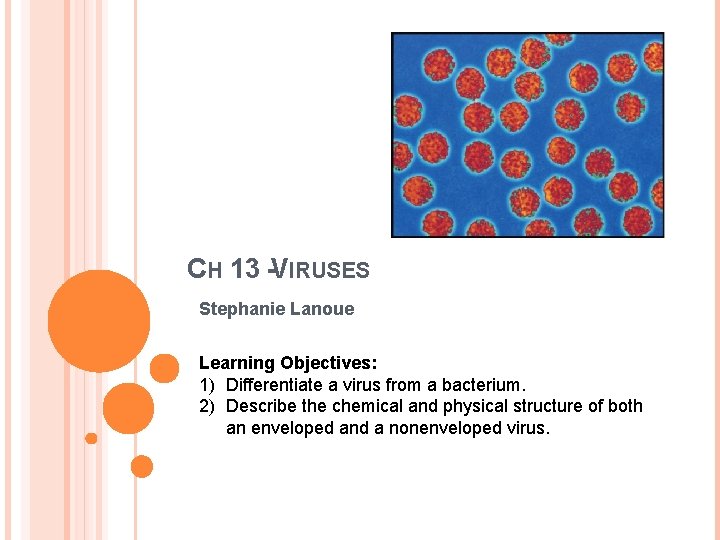
CH 13 -VIRUSES Stephanie Lanoue Learning Objectives: 1) Differentiate a virus from a bacterium. 2) Describe the chemical and physical structure of both an enveloped and a nonenveloped virus.
BRAINSTORMING (3 -5 MINUTE ACTIVITY) Team up with someone near you. Have a piece of paper handy. How many diseases can you think of that are specifically caused by a virus? List them now. Be prepared to share. NOTE: You may use google quickly to double-check your ideas
VIRUSES AND HUMAN HEALTH Worldwide � Colds � Hepatitis � Chickenpox � Influenza � Herpes � Warts � Ebola � Flu (of different varieties) Regional � Yellow fever AIDS*****
WHAT IS A VIRUS EXACTLY? A virus is a small _____ agent that replicates only inside the living cells of other organisms Obligatory intracellular parasites � Require _____ host cells to multiply Contain _____ or RNA Contain a protein coat No ribosomes No ATP-generating mechanism
CLASS DISCUSSION QUESTION THINK-PAIR-SHARE (TEAM UP) How is a virus different from a bacteria? Use your google technology now to look it up! Try to formulate the answer in your own words.
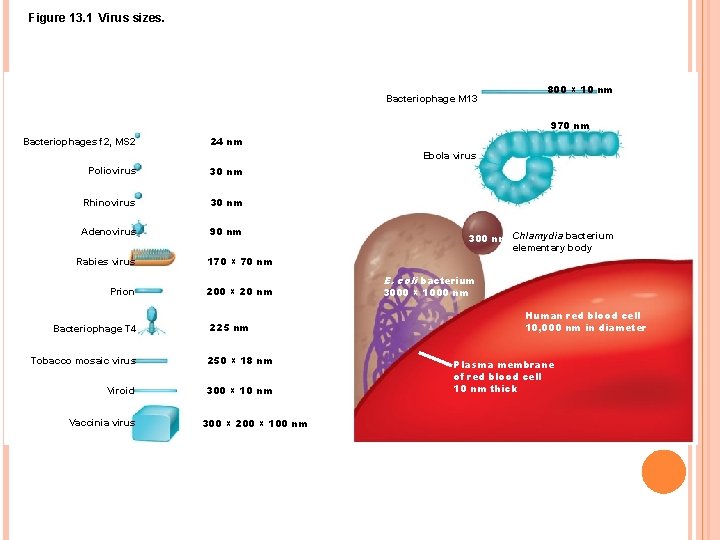
Figure 13. 1 Virus sizes. Bacteriophage M 13 800 × 10 nm 970 nm Bacteriophages f 2, MS 2 24 nm Ebola virus Poliovirus 30 nm Rhinovirus 30 nm Adenovirus 90 nm Rabies virus 170 × 70 nm Prion 200 × 20 nm Bacteriophage T 4 225 nm Tobacco mosaic virus 250 × 18 nm Viroid 300 × 10 nm Vaccinia virus 300 × 200 × 100 nm 300 nm Chlamydia bacterium elementary body E. coli bacterium 3000 × 1000 nm Human red blood cell 10, 000 nm in diameter Plasma membrane of red blood cell 10 nm thick
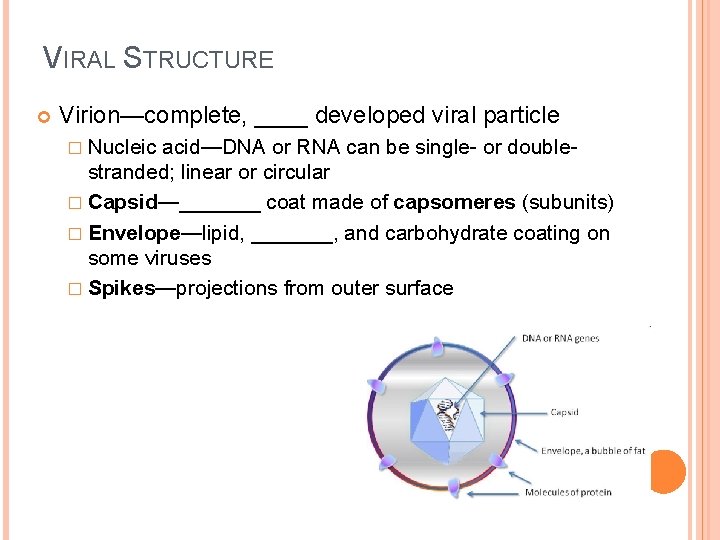
VIRAL STRUCTURE Virion—complete, ____ developed viral particle � Nucleic acid—DNA or RNA can be single- or doublestranded; linear or circular � Capsid—_______ coat made of capsomeres (subunits) � Envelope—lipid, _______, and carbohydrate coating on some viruses � Spikes—projections from outer surface
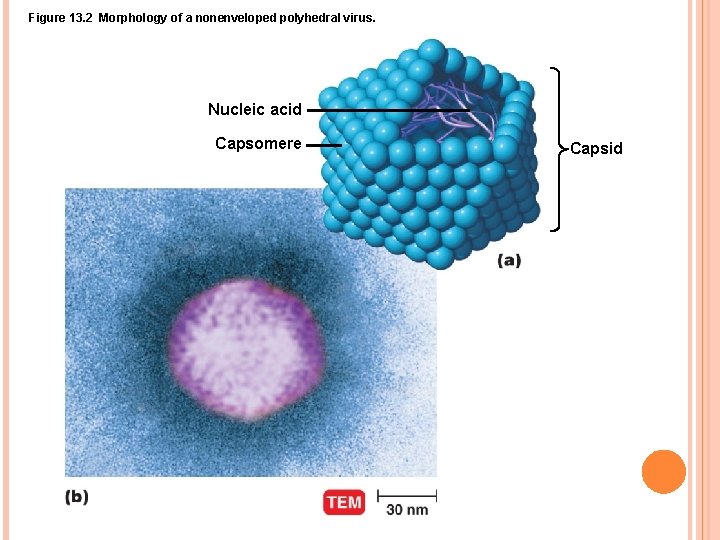
Figure 13. 2 Morphology of a nonenveloped polyhedral virus. Nucleic acid Capsomere Capsid
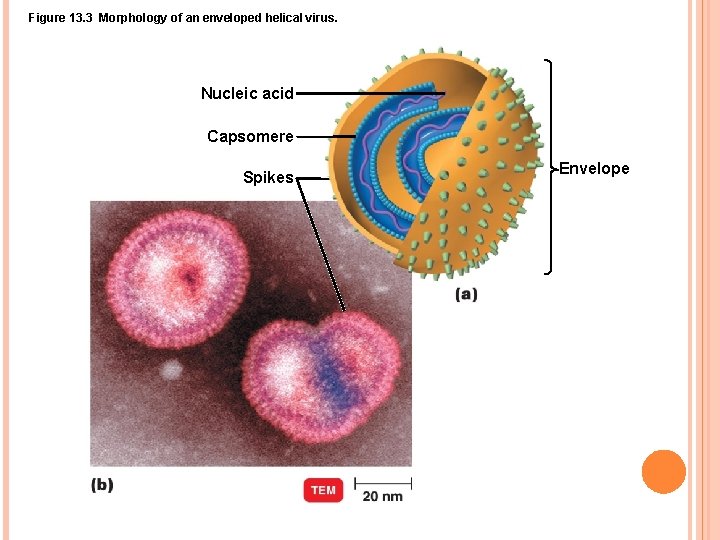
Figure 13. 3 Morphology of an enveloped helical virus. Nucleic acid Capsomere Spikes Envelope
Quick Review Question – can you answer this? What is a capsid? And can you answer this? What is an envelope?
HOW DO WE CLASSIFY VIRUSES? 1. Capsid structure and shape 2. Type of genetic material 3. 4. 5. Animal Plant Target cell 7. ______ Size of the capsid Presence or ____ of an envelope Type of host it infects 6. Helical viruses—hollow, cylindrical capsid Polyhedral viruses—many-sided Enveloped viruses Complex viruses—complicated structures Immune cell (HIV) Endothelial cells in blood vessels (Ebola) Type of disease it produces
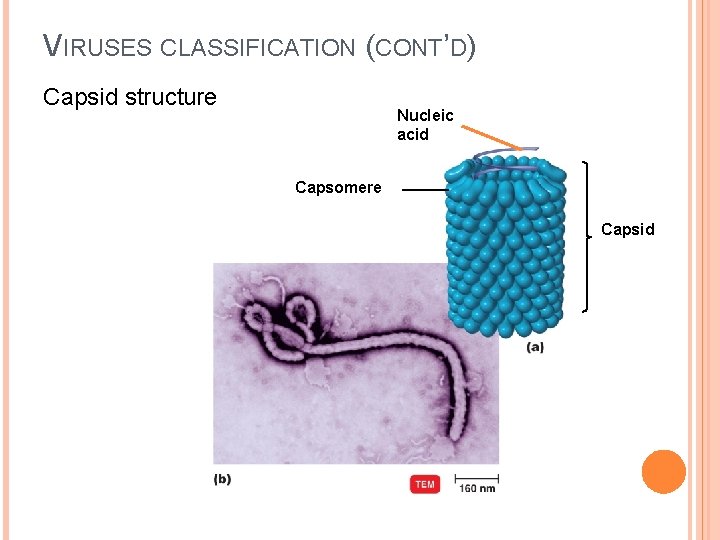
VIRUSES CLASSIFICATION (CONT’D) Capsid structure Nucleic acid Capsomere Capsid
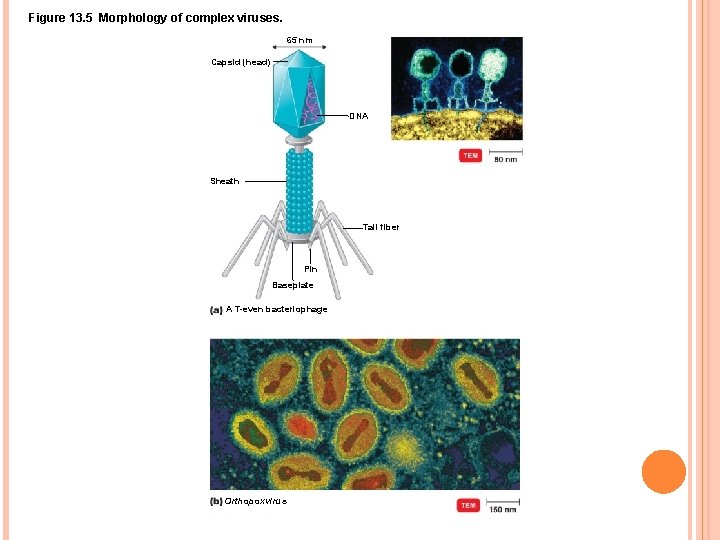
Figure 13. 5 Morphology of complex viruses. 65 nm Capsid (head) DNA Sheath Tail fiber Pin Baseplate A T-even bacteriophage Orthopoxvirus
VIRAL MULTIPLICATION Learning Objectives 3) Describe the lytic cycle of T-even bacteriophages. 4) Describe the lysogenic cycle of bacteriophage lambda.
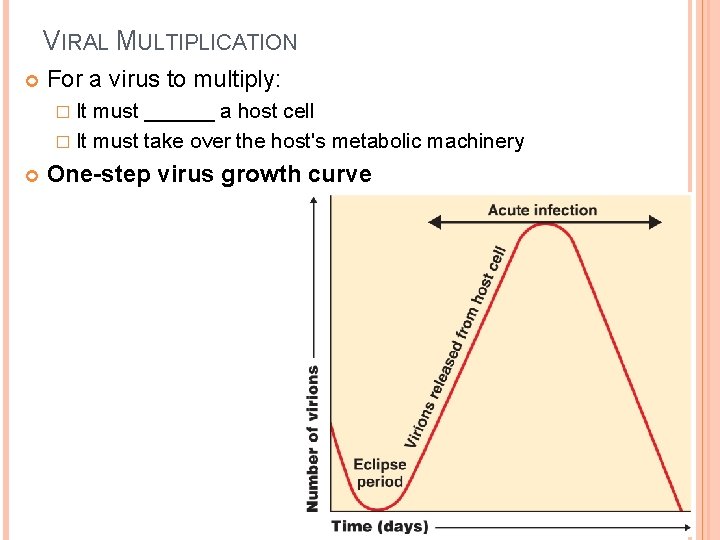
VIRAL MULTIPLICATION For a virus to multiply: � It must ______ a host cell � It must take over the host's metabolic machinery One-step virus growth curve
MULTIPLICATION OF BACTERIOPHAGES Look up on google: What is a phage? Lytic cycle � Phage causes lysis and _______ of the host cell Lysogenic cycle � Phage DNA is incorporated in the host DNA � Phage conversion
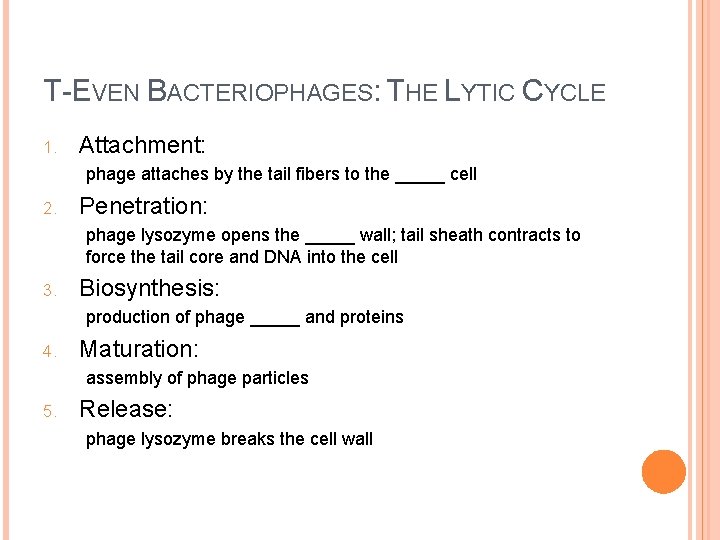
T-EVEN BACTERIOPHAGES: THE LYTIC CYCLE 1. Attachment: phage attaches by the tail fibers to the _____ cell 2. Penetration: phage lysozyme opens the _____ wall; tail sheath contracts to force the tail core and DNA into the cell 3. Biosynthesis: production of phage _____ and proteins 4. Maturation: assembly of phage particles 5. Release: phage lysozyme breaks the cell wall
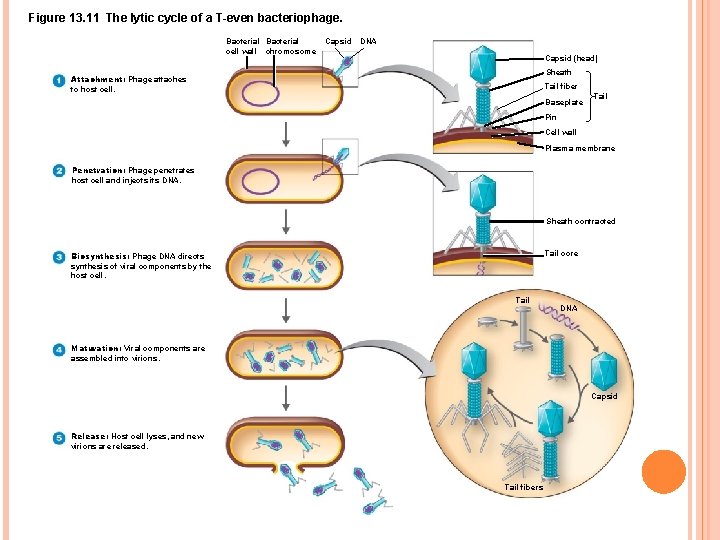
Figure 13. 11 The lytic cycle of a T-even bacteriophage. Bacterial cell wall chromosome Capsid DNA Capsid (head) Sheath Attachment: Phage attaches to host cell. Tail fiber Baseplate Tail Pin Cell wall Plasma membrane Penetration: Phage penetrates host cell and injects its DNA. Sheath contracted Tail core Biosynthesis: Phage DNA directs synthesis of viral components by the host cell. Tail DNA Maturation: Viral components are assembled into virions. Capsid Release: Host cell lyses, and new virions are released. Tail fibers
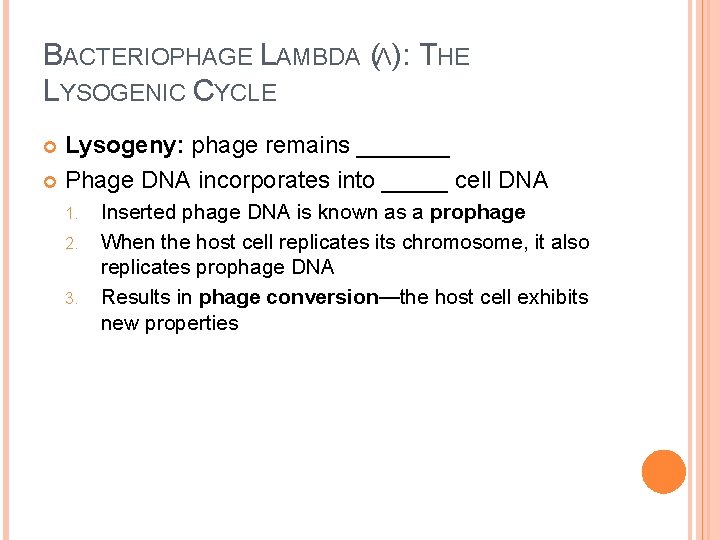
BACTERIOPHAGE LAMBDA (Λ): THE LYSOGENIC CYCLE Lysogeny: phage remains _______ Phage DNA incorporates into _____ cell DNA 1. 2. 3. Inserted phage DNA is known as a prophage When the host cell replicates its chromosome, it also replicates prophage DNA Results in phage conversion—the host cell exhibits new properties
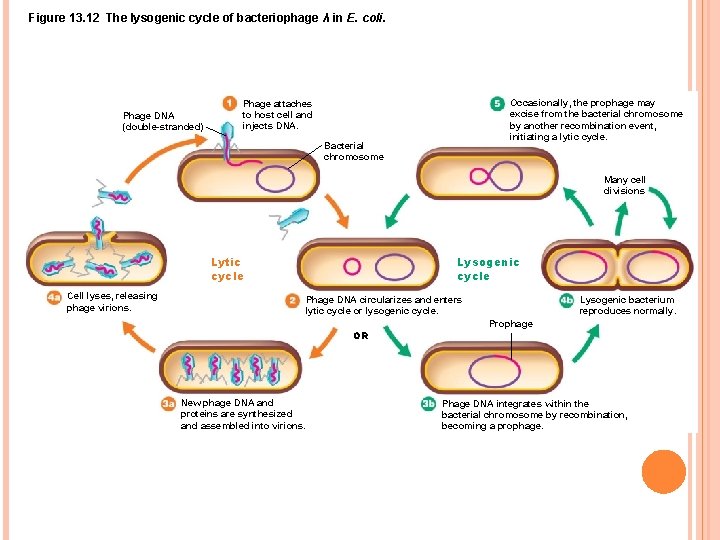
Figure 13. 12 The lysogenic cycle of bacteriophage λ in E. coli. Phage DNA (double-stranded) Occasionally, the prophage may excise from the bacterial chromosome by another recombination event, initiating a lytic cycle. Phage attaches to host cell and injects DNA. Bacterial chromosome Many cell divisions Lytic cycle Cell lyses, releasing phage virions. Lysogenic cycle Lysogenic bacterium reproduces normally. Phage DNA circularizes and enters lytic cycle or lysogenic cycle. OR New phage DNA and proteins are synthesized and assembled into virions. Prophage Phage DNA integrates within the bacterial chromosome by recombination, becoming a prophage.
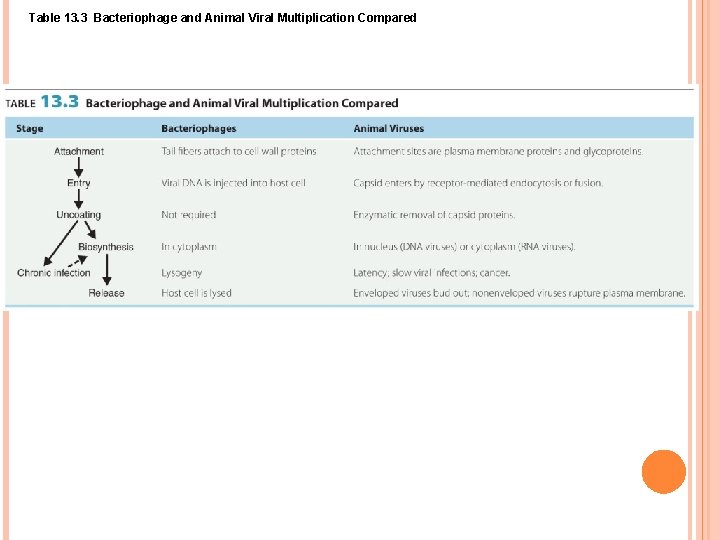
Table 13. 3 Bacteriophage and Animal Viral Multiplication Compared
Reflection – can you answer this? How does the Lytic cycle differ from the Lysogenic cycle? Instructions: Take 3 -4 minutes to review the previous 6 slides covering this topic. Take a moment to craft an answer. Write your response now.
VIRUSES AND CANCER Learning Objectives 5) Define oncogene cell and give an example.
VIRUSES AND CANCER Oncogenic viruses become integrated into the ______ cell's DNA and _______ tumors Mechanism is similar to lysogeny in bacteria Ex. Human papillomaviruses (HPV –wart viruses) cause different types of cancers. � Cervical �A cancer, anal cancer vaccine against HPV for 11 to 12 years girls and boys is recommended
PLANT VIRUSES, VIROIDS, AND PRIONS Learning Objectives 6) Discuss how a protein can be infectious. 7) Differentiate virus, viroid, and perion. 8) Describe plant virus.
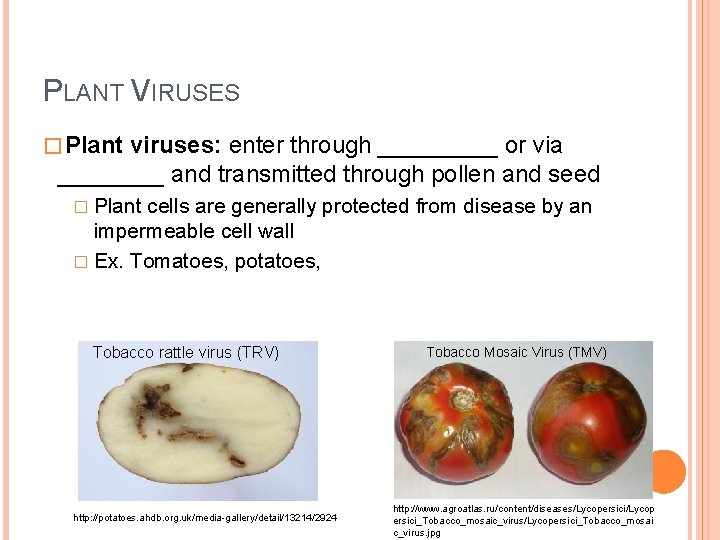
PLANT VIRUSES � Plant viruses: enter through _____ or via ____ and transmitted through pollen and seed � Plant cells are generally protected from disease by an impermeable cell wall � Ex. Tomatoes, potatoes, Tobacco rattle virus (TRV) http: //potatoes. ahdb. org. uk/media-gallery/detail/13214/2924 Tobacco Mosaic Virus (TMV) http: //www. agroatlas. ru/content/diseases/Lycopersici/Lycop ersici_Tobacco_mosaic_virus/Lycopersici_Tobacco_mosai c_virus. jpg
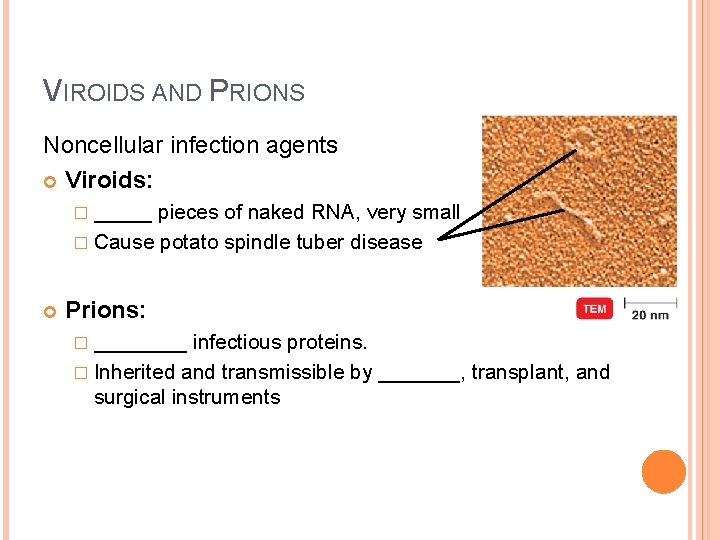
VIROIDS AND PRIONS Noncellular infection agents Viroids: � _____ pieces of naked RNA, very small � Cause potato spindle tuber disease Prions: � ____ infectious proteins. � Inherited and transmissible by _______, transplant, and surgical instruments
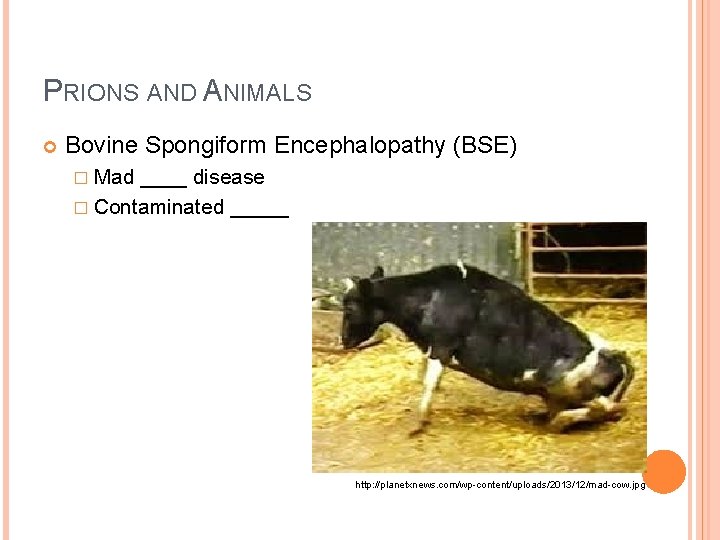
PRIONS AND ANIMALS Bovine Spongiform Encephalopathy (BSE) � Mad ____ disease � Contaminated _____ http: //planetxnews. com/wp-content/uploads/2013/12/mad-cow. jpg
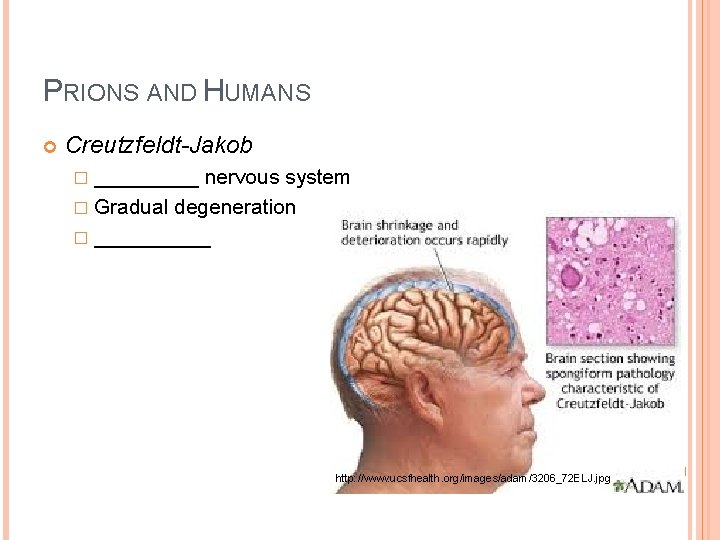
PRIONS AND HUMANS Creutzfeldt-Jakob � _____ nervous system � Gradual degeneration � _____ http: //www. ucsfhealth. org/images/adam/3206_72 ELJ. jpg
ANTIVIRAL AGENTS Difficult to find effective ______ Because of their _____ � Antibiotics don’t affect of viruses (why? ) � Antiviral drugs _____ viruses replication by targeting the function of host cells � Ex. HAV drug, interrupts HIV genetic information incorporate into host cell DNA � � Double-stranded RNA activated caspase oligomer (DRACO) � Viruses destroy themselves Vaccine Stimulate immunity Limited
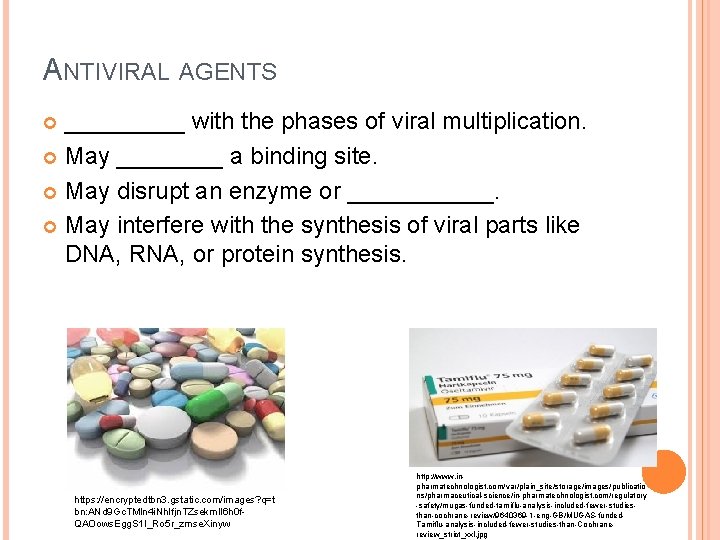
ANTIVIRAL AGENTS _____ with the phases of viral multiplication. May ____ a binding site. May disrupt an enzyme or ______. May interfere with the synthesis of viral parts like DNA, RNA, or protein synthesis. https: //encryptedtbn 3. gstatic. com/images? q=t bn: ANd 9 Gc. TMln 4 i. Nh. Ifjn. TZsekml. I 6 h 0 f. QAOows. Egg. S 1 I_Ro 5 r_zmse. Xinyw http: //www. inpharmatechnologist. com/var/plain_site/storage/images/publicatio ns/pharmaceutical-science/in-pharmatechnologist. com/regulatory -safety/mugas-funded-tamiflu-analysis-included-fewer-studiesthan-cochrane-review/9640369 -1 -eng-GB/MUGAS-funded. Tamiflu-analysis-included-fewer-studies-than-Cochranereview_strict_xxl. jpg
- Slides: 31