
Ch 13 Blood What does blood do Transport
Ch 13: Blood What does blood do? Transport: Regulation: Protection:
SLOs Describe the composition of plasma and list the major functions of plasma proteins. Map hematopoiesis, starting from a pluripotent hematopoietic stem cell. Distinguishing characteristics of each type of leukocyte. Define hematocrit, describe how a person’s hematocrit is determined, and identify the clinical relevance of this value. Describe the molecular structure of hemoglobin and explain its function. Distinguish between the different types of anemias. Diagram the key steps of hemostasis, the coagulation cascade, and fibrinolysis.
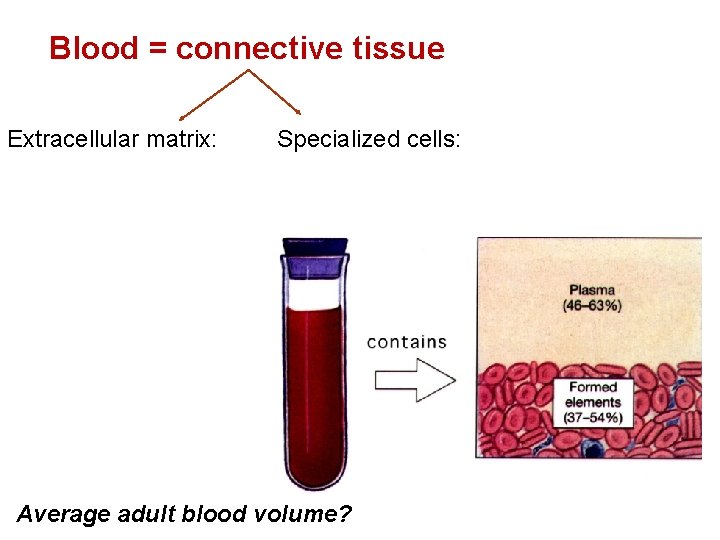
Blood = connective tissue Extracellular matrix: Specialized cells: Average adult blood volume?
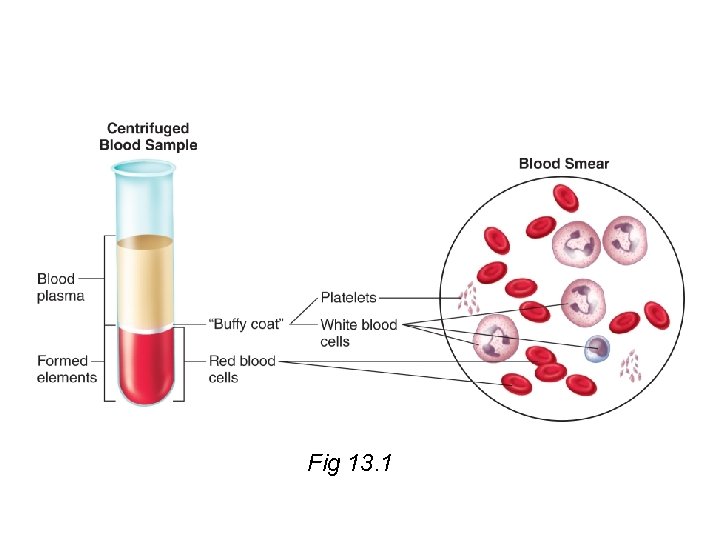
Fig 13. 1
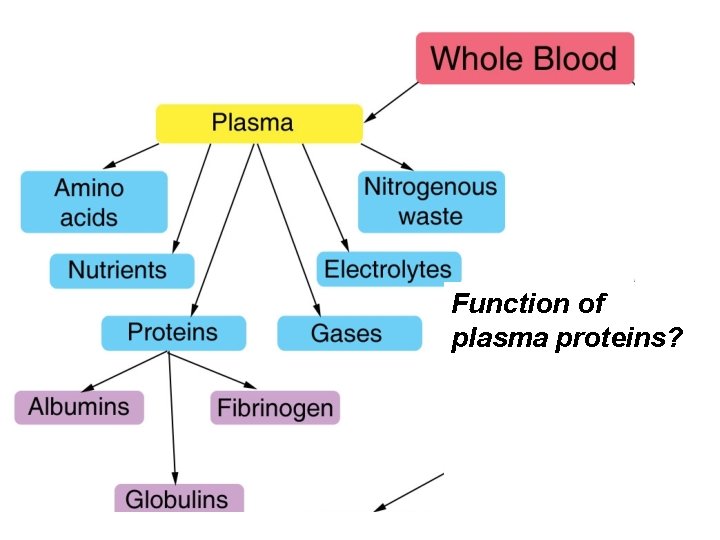
Function of plasma proteins?
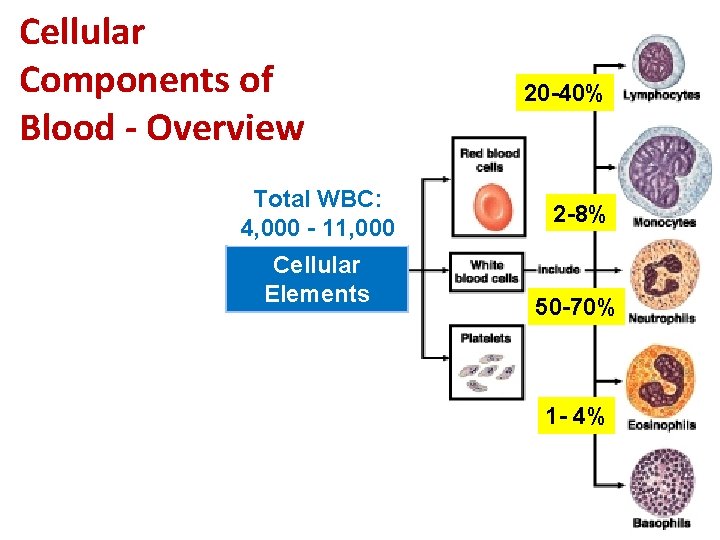
Cellular Components of Blood - Overview Total WBC: 4, 000 - 11, 000 Cellular Elements 20 -40% 2 -8% 50 -70% 1 - 4%
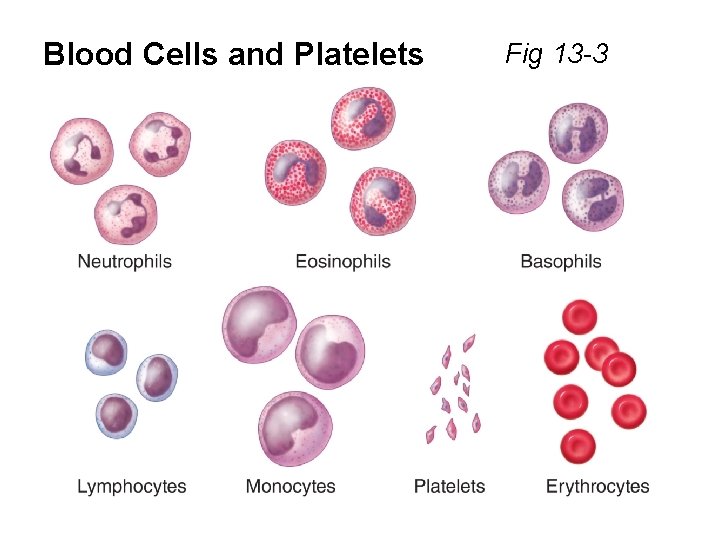
Blood Cells and Platelets Fig 13 -3
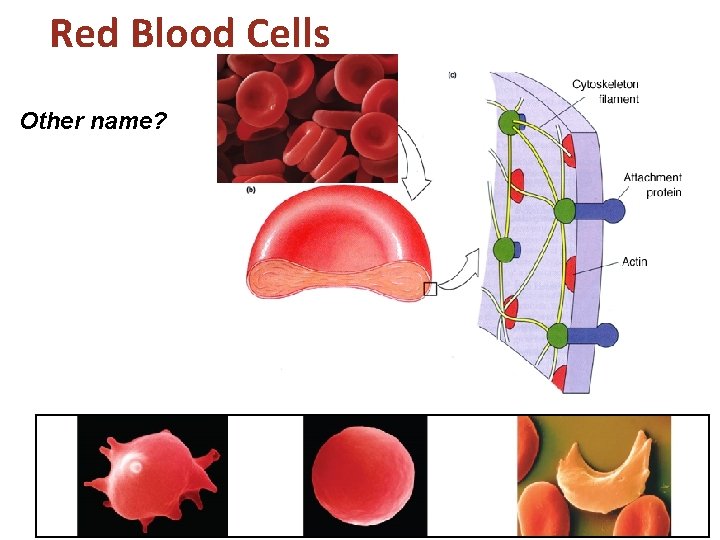
Red Blood Cells Other name?
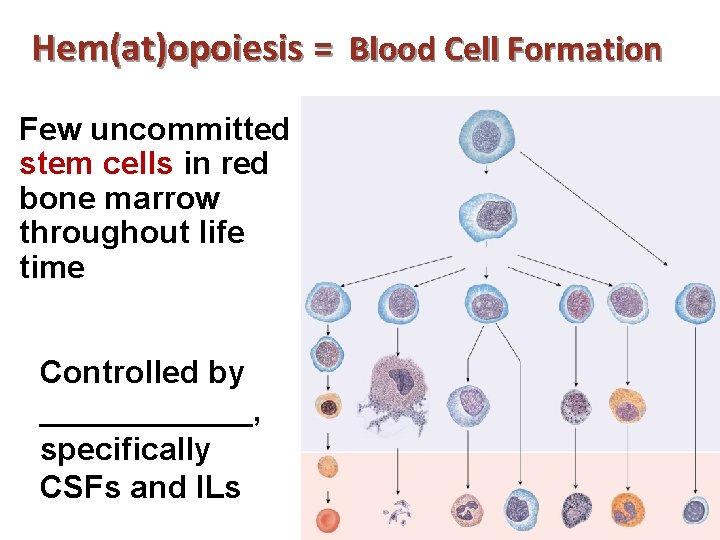
Hem(at)opoiesis = Blood Cell Formation Few uncommitted stem cells in red bone marrow throughout life time Controlled by ______, specifically CSFs and ILs
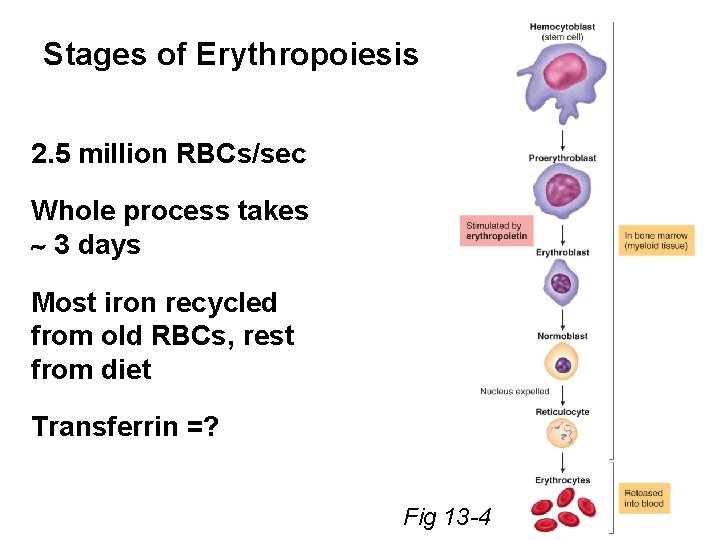
Stages of Erythropoiesis 2. 5 million RBCs/sec Whole process takes 3 days Most iron recycled from old RBCs, rest from diet Transferrin =? Fig 13 -4
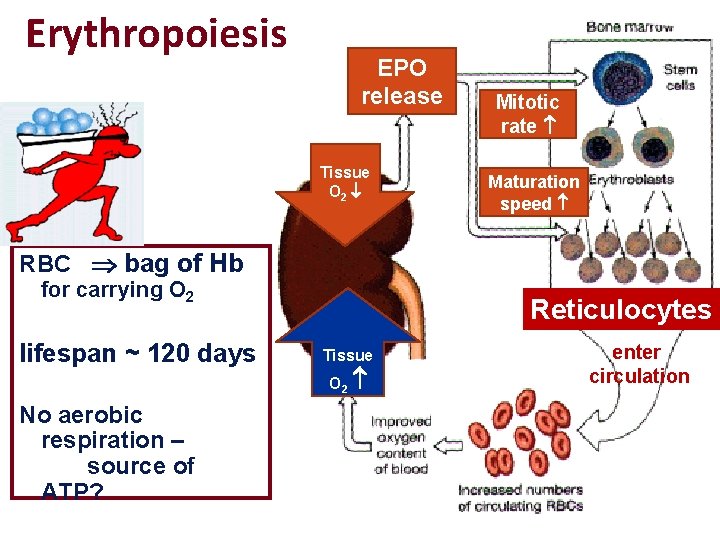
Erythropoiesis EPO release Tissue O 2 Mitotic rate Maturation speed RBC bag of Hb for carrying O 2 lifespan ~ 120 days No aerobic respiration – source of ATP? Tissue O 2 Reticulocytes enter circulation
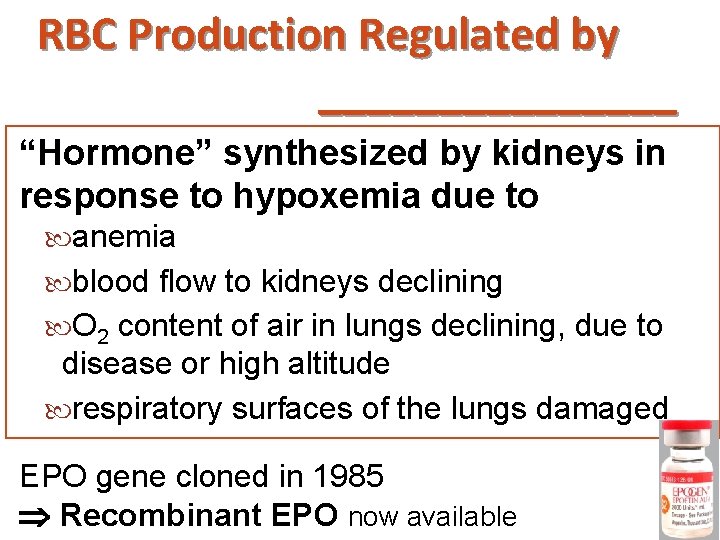
RBC Production Regulated by ________ “Hormone” synthesized by kidneys in response to hypoxemia due to anemia blood flow to kidneys declining O 2 content of air in lungs declining, due to disease or high altitude respiratory surfaces of the lungs damaged EPO gene cloned in 1985 Recombinant EPO now available
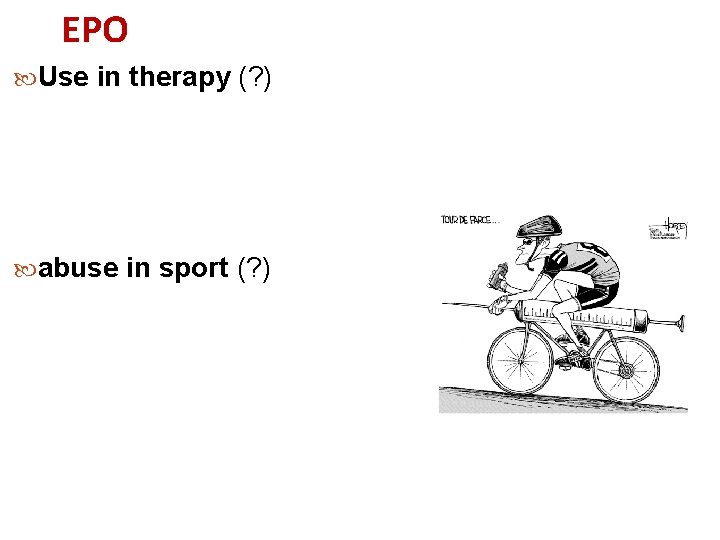
EPO Use in therapy (? ) abuse in sport (? )
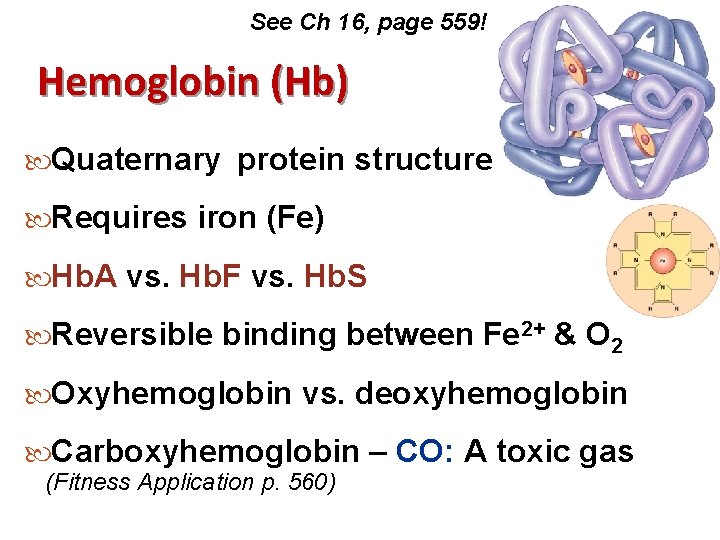
See Ch 16, page 559! Hemoglobin (Hb) Quaternary protein structure ? Requires iron (Fe) Hb. A vs. Hb. F vs. Hb. S Reversible binding between Fe 2+ & O 2 Oxyhemoglobin vs. deoxyhemoglobin Carboxyhemoglobin – CO: A toxic gas (Fitness Application p. 560)
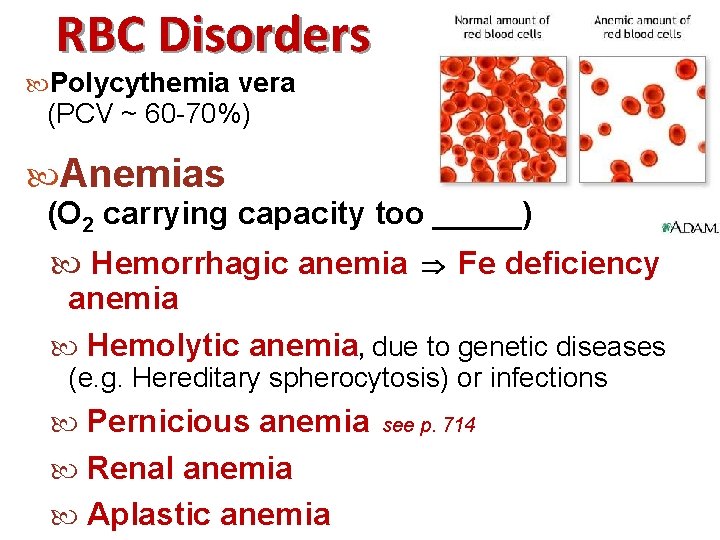
RBC Disorders Polycythemia vera (PCV ~ 60 -70%) Anemias (O 2 carrying capacity too _____) Hemorrhagic anemia Fe deficiency anemia Hemolytic anemia, due to genetic diseases (e. g. Hereditary spherocytosis) or infections Pernicious anemia Renal anemia Aplastic anemia see p. 714
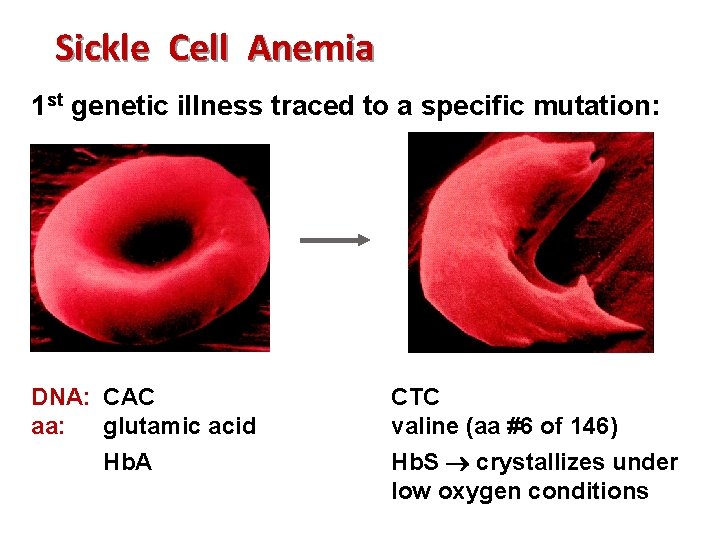
Sickle Cell Anemia 1 st genetic illness traced to a specific mutation: DNA: CAC aa: glutamic acid Hb. A CTC valine (aa #6 of 146) Hb. S crystallizes under low oxygen conditions
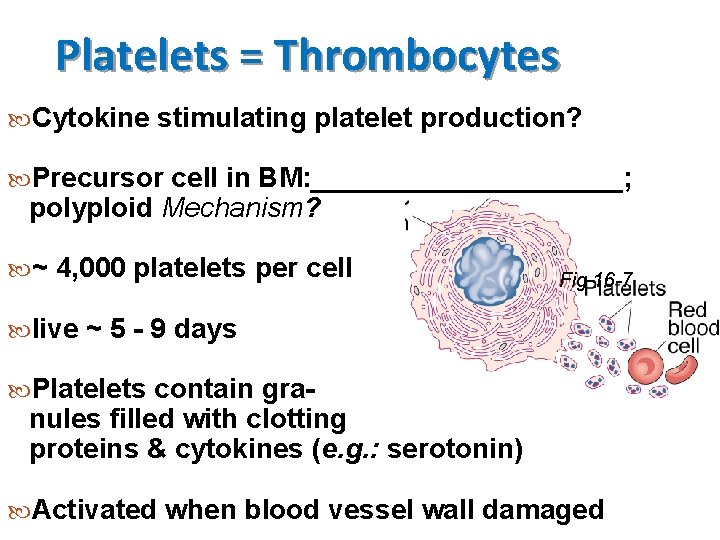
Platelets = Thrombocytes Cytokine stimulating platelet production? Precursor cell in BM: __________; polyploid Mechanism? ~ 4, 000 platelets per cell Fig 16 -7 live ~ 5 - 9 days Platelets contain gra- nules filled with clotting proteins & cytokines (e. g. : serotonin) Activated when blood vessel wall damaged
Hemostasis = stops bleeding. Opposite of hemorrhage. Too much hemostasis Too little hemostasis Three major steps of hemostasis: 1. Vasoconstriction 2. Platelet plug (temporary blockage of hole) 3. Coagulation (clot formation seals hole until tissues repaired)
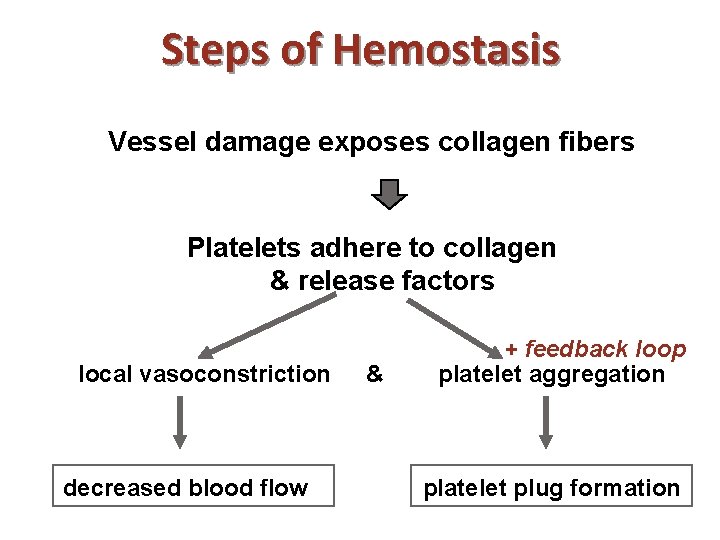
Steps of Hemostasis Vessel damage exposes collagen fibers Platelets adhere to collagen & release factors local vasoconstriction decreased blood flow & + feedback loop platelet aggregation platelet plug formation
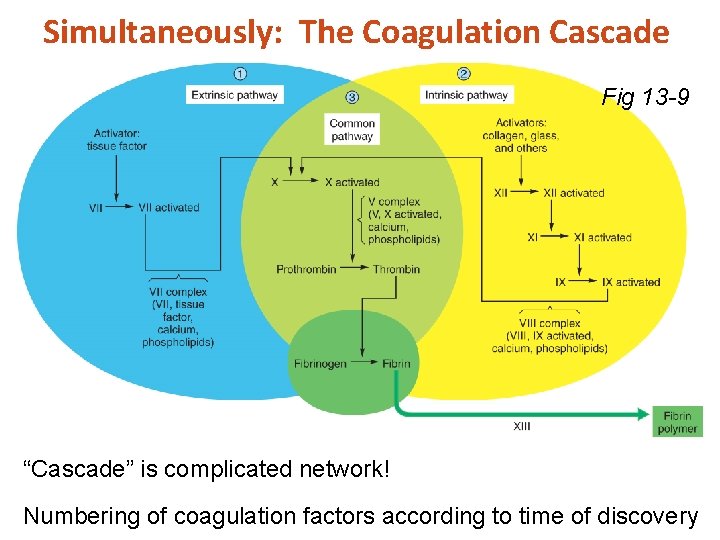
Simultaneously: The Coagulation Cascade Fig 13 -9 “Cascade” is complicated network! Numbering of coagulation factors according to time of discovery
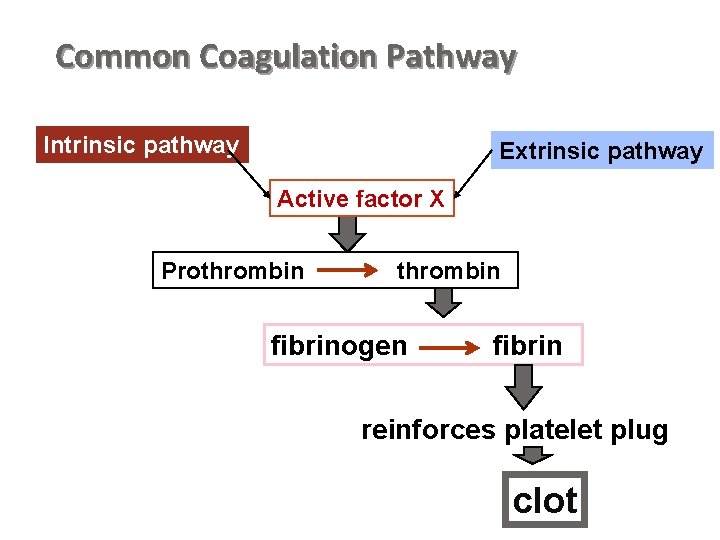
Common Coagulation Pathway Intrinsic pathway Extrinsic pathway Active factor X Prothrombin fibrinogen fibrin reinforces platelet plug clot
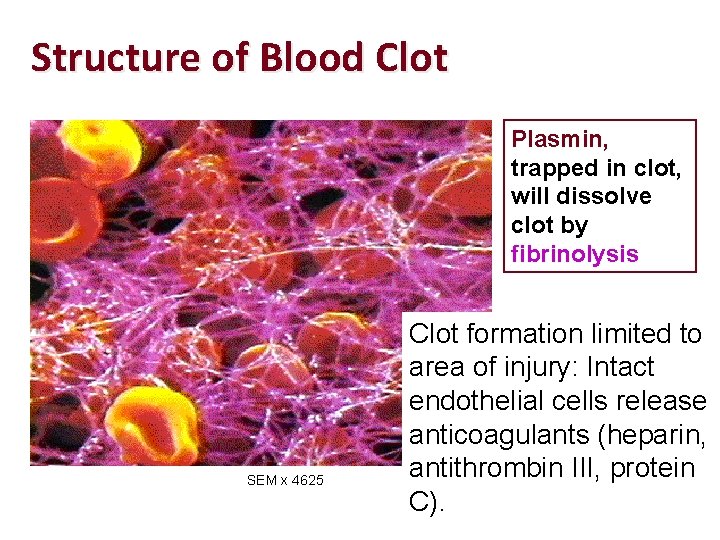
Structure of Blood Clot Plasmin, trapped in clot, will dissolve clot by fibrinolysis SEM x 4625 Clot formation limited to area of injury: Intact endothelial cells release anticoagulants (heparin, antithrombin III, protein C).
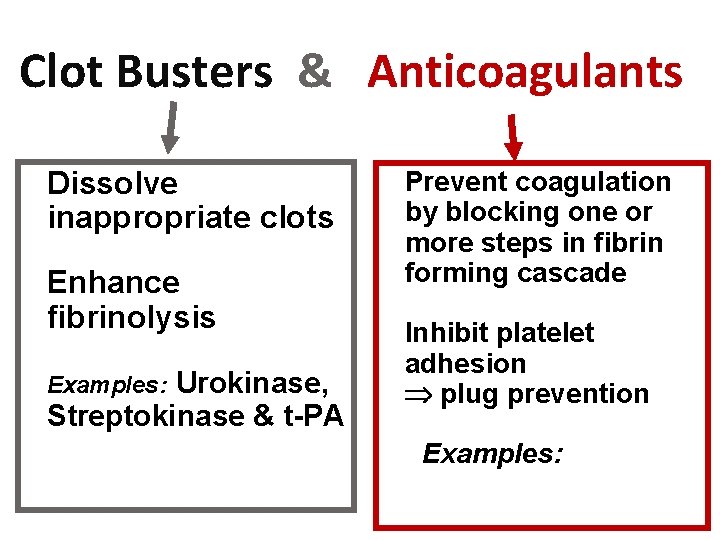
Clot Busters & Anticoagulants Dissolve inappropriate clots Enhance fibrinolysis Urokinase, Streptokinase & t-PA Examples: Prevent coagulation by blocking one or more steps in fibrin forming cascade Inhibit platelet adhesion plug prevention Examples:
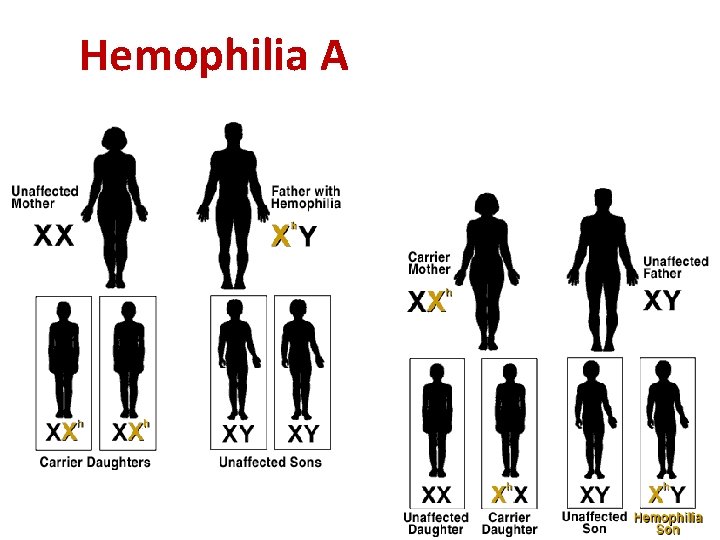
Hemophilia A
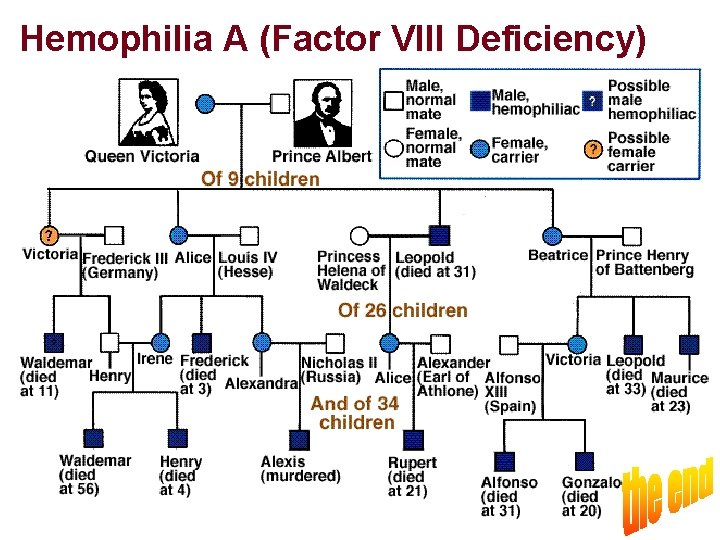
Hemophilia A (Factor VIII Deficiency)
- Slides: 25