
Ch 12 Volcanos Igneous Processes Extrusive Igneous Formations



- Slides: 20
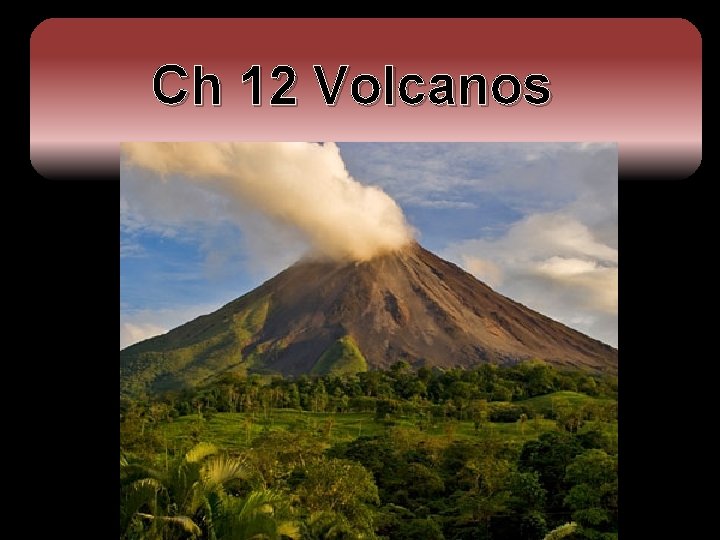
Ch 12 Volcanos
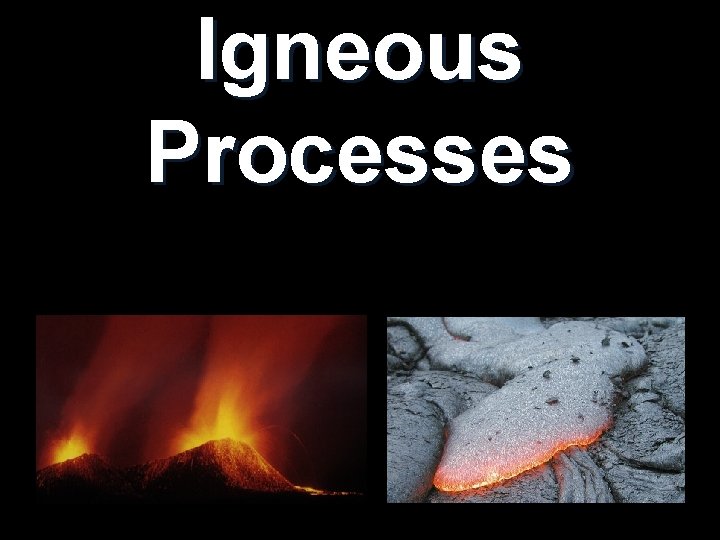
Igneous Processes
Extrusive Igneous Formations Volcanoes • Openings in the Earth that erupt gases, ash, & lava. • Lava flows destroy everything in their path. • Pyroclastic flows (ash & debris) rush down the sides of the volcano. • Acid rain is produced when sulfurous gases mix with water vapor in the atmosphere.
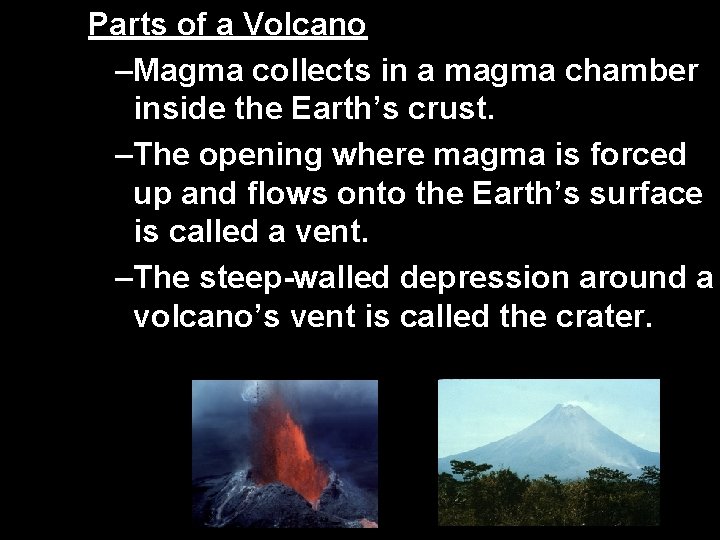
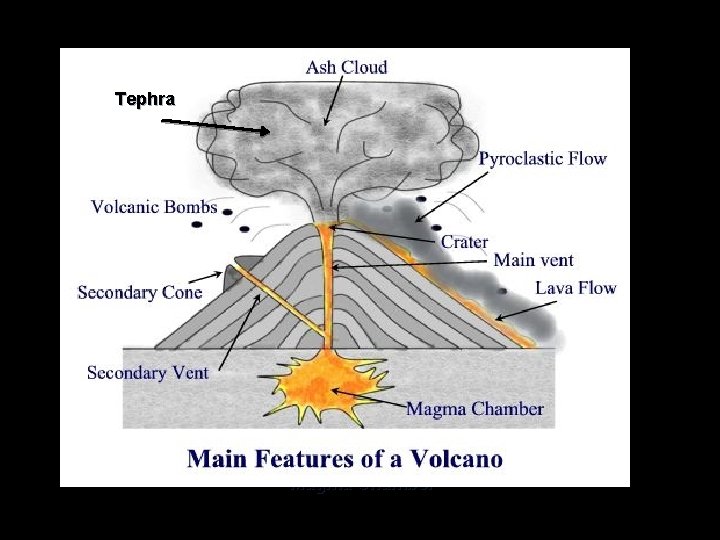
Parts of a Volcano –Magma collects in a magma chamber inside the Earth’s crust. –The opening where magma is forced up and flows onto the Earth’s surface is called a vent. –The steep-walled depression around a volcano’s vent is called the crater.
Tephra Vent Magma Chamber
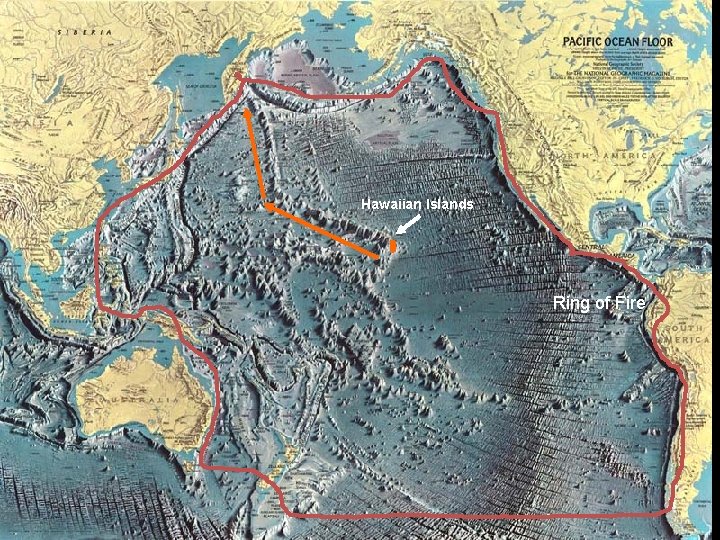
Formation of Volcanoes –Form at Divergent & Convergent plate boundaries. –Hot Spots : » An unusually hot area between the mantle & core that forces melted rock upward to form volcanoes in the middle of tectonic plates. » Plate moves as the hot spot is stationary.
Hawaiian Islands Ring of Fire
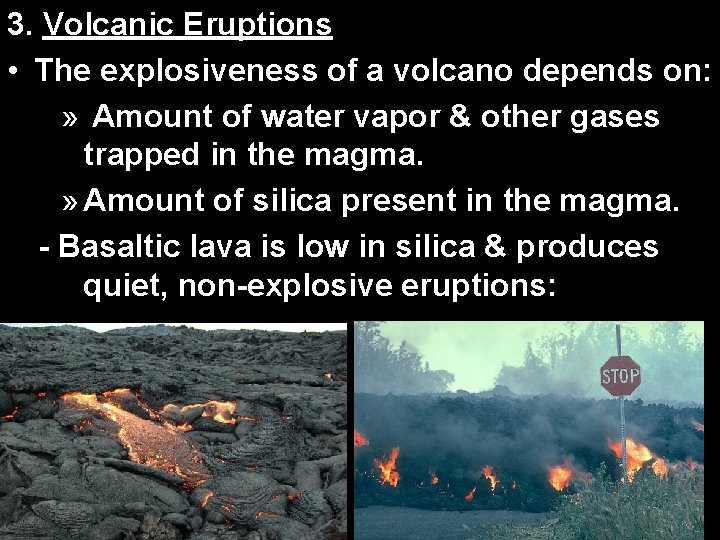
3. Volcanic Eruptions • The explosiveness of a volcano depends on: » Amount of water vapor & other gases trapped in the magma. » Amount of silica present in the magma. - Basaltic lava is low in silica & produces quiet, non-explosive eruptions:
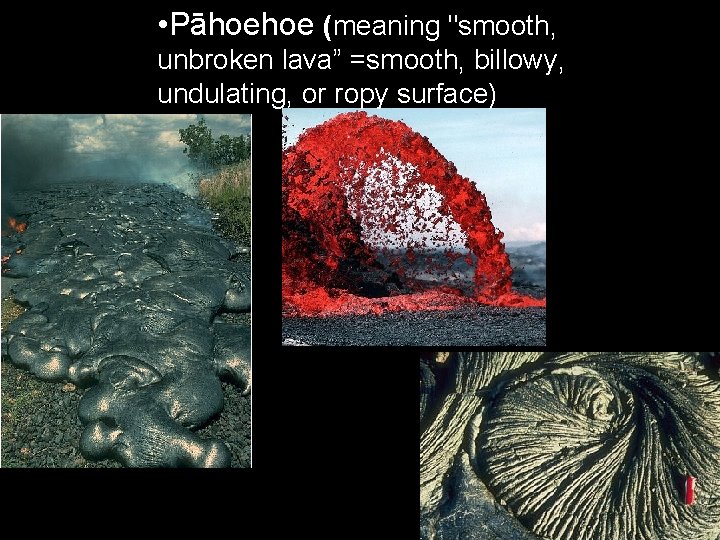
• Pāhoehoe (meaning "smooth, unbroken lava” =smooth, billowy, undulating, or ropy surface)
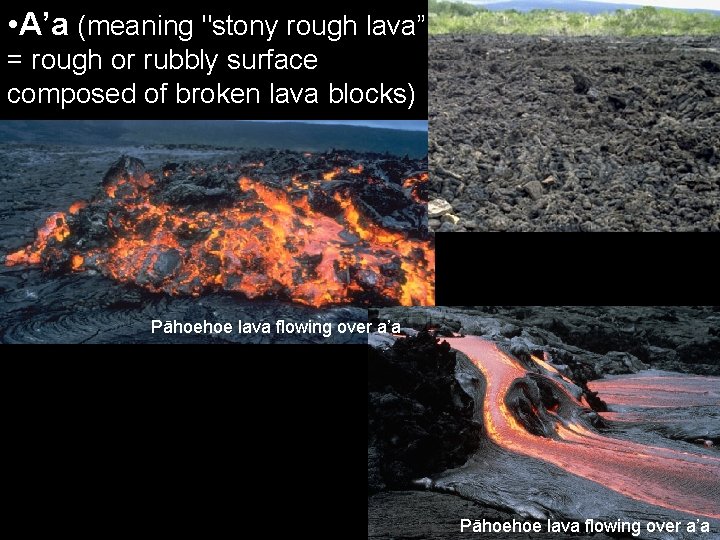
• A’a (meaning "stony rough lava” = rough or rubbly surface composed of broken lava blocks) Pāhoehoe lava flowing over a’a
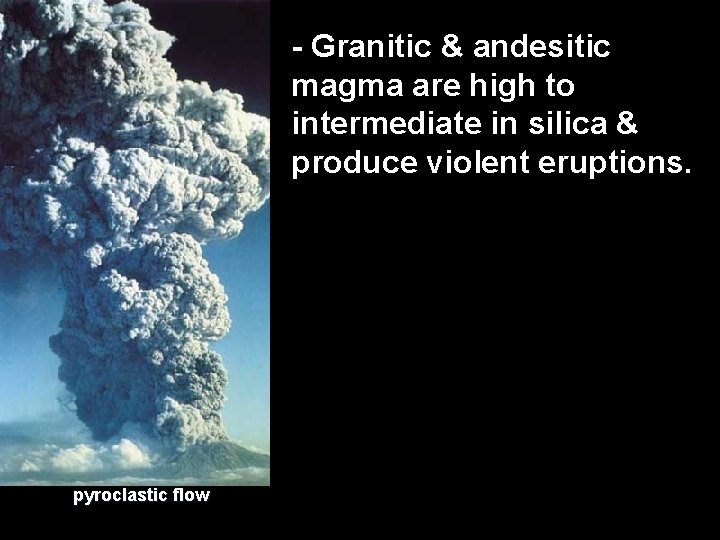
- Granitic & andesitic magma are high to intermediate in silica & produce violent eruptions. pyroclastic flow
Types of Volcanoes Shield » Broad volcanoes with gently sloping sides. » Quiet eruptions of basaltic lava forming flat layers.
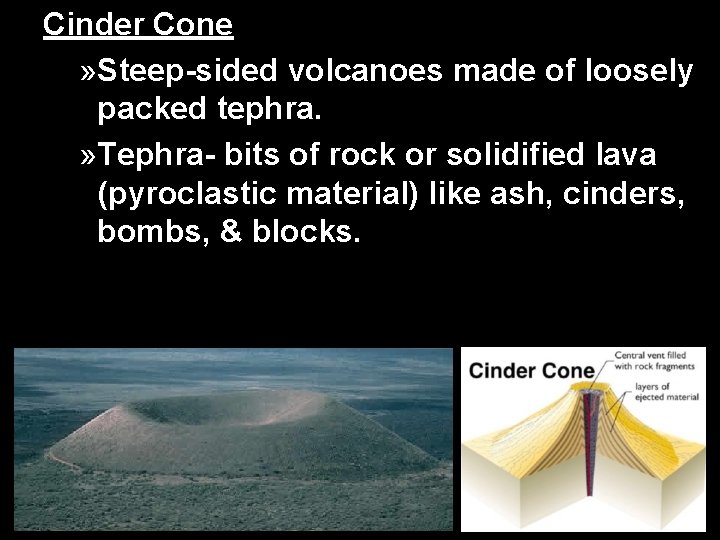
Cinder Cone » Steep-sided volcanoes made of loosely packed tephra. » Tephra- bits of rock or solidified lava (pyroclastic material) like ash, cinders, bombs, & blocks.
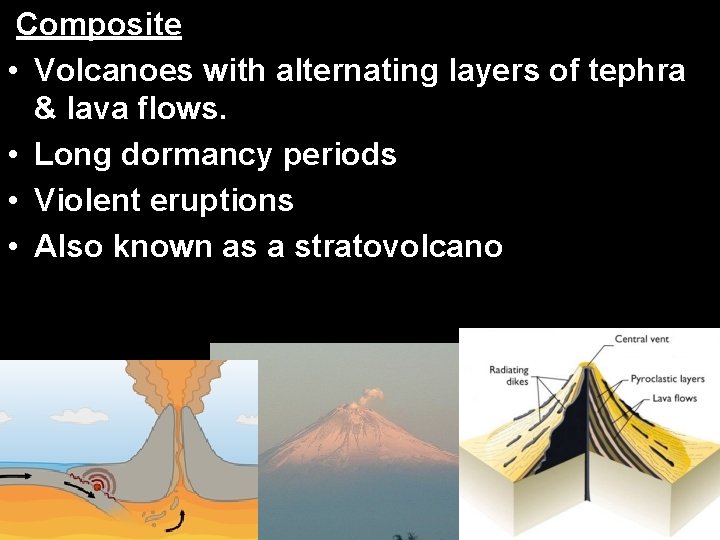
Composite • Volcanoes with alternating layers of tephra & lava flows. • Long dormancy periods • Violent eruptions • Also known as a stratovolcano
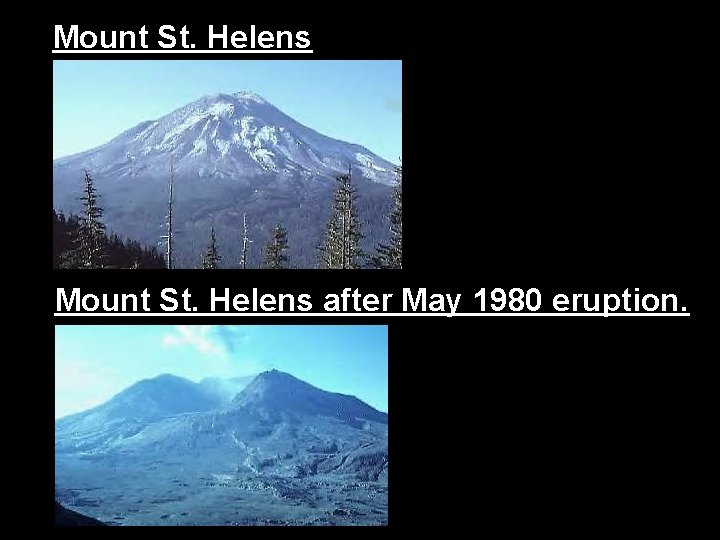
Mount St. Helens after May 1980 eruption.
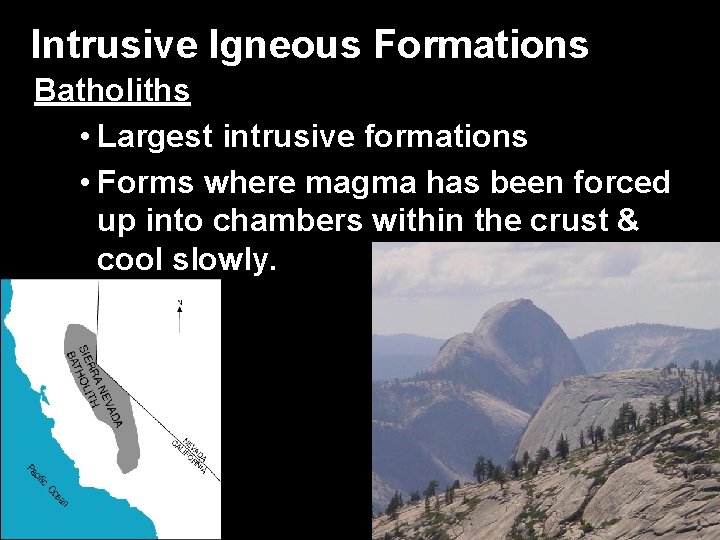
Intrusive Igneous Formations Batholiths • Largest intrusive formations • Forms where magma has been forced up into chambers within the crust & cool slowly.
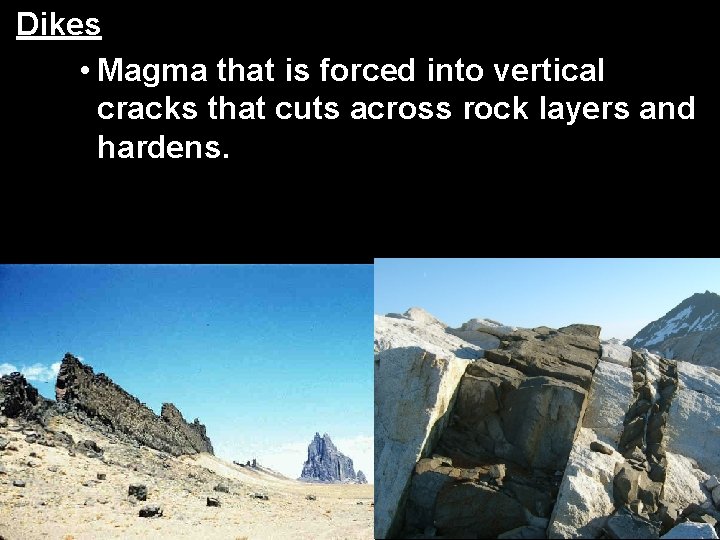
Dikes • Magma that is forced into vertical cracks that cuts across rock layers and hardens.
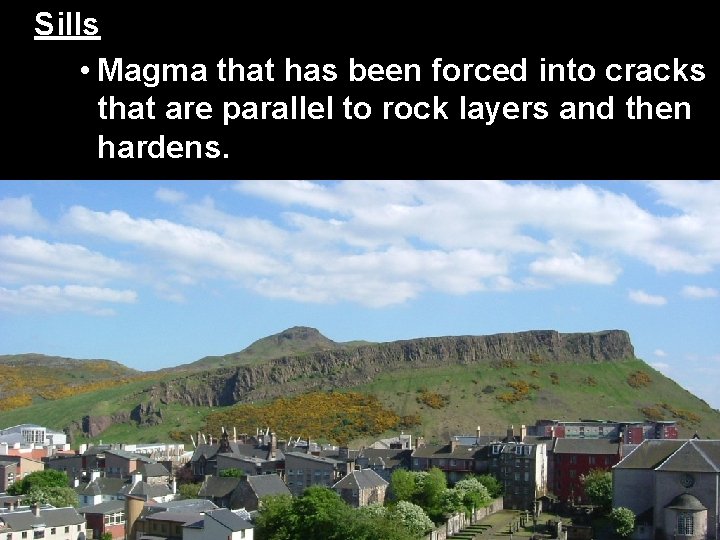
Sills • Magma that has been forced into cracks that are parallel to rock layers and then hardens.
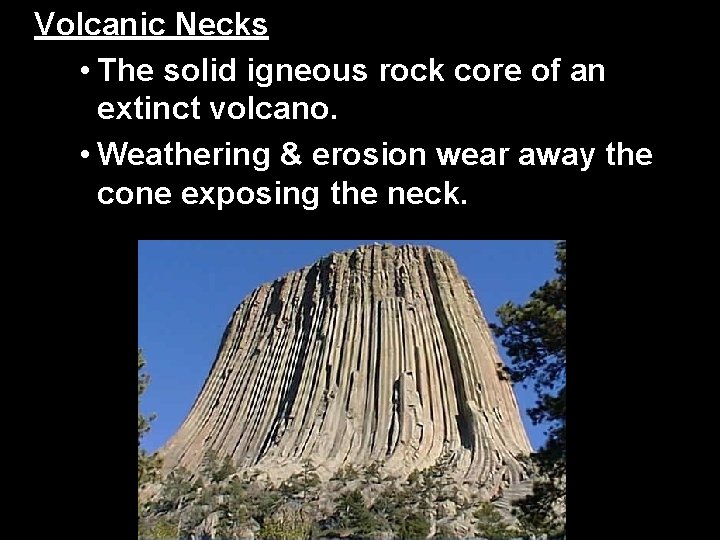
Volcanic Necks • The solid igneous rock core of an extinct volcano. • Weathering & erosion wear away the cone exposing the neck.
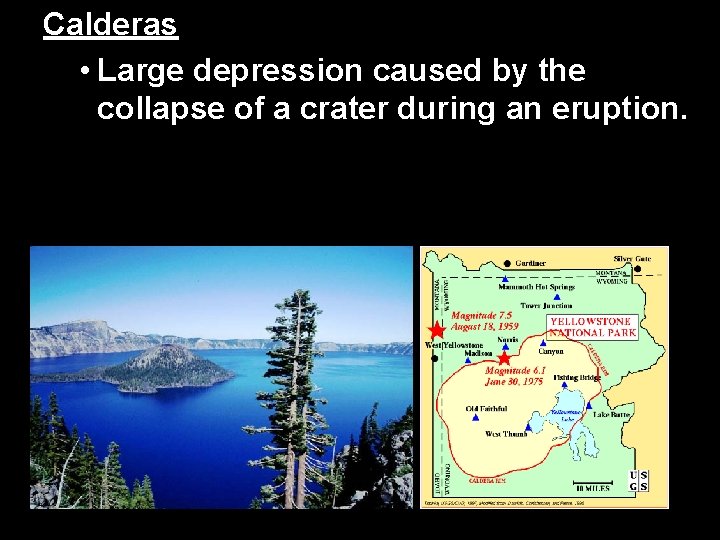
Calderas • Large depression caused by the collapse of a crater during an eruption.