
Ch 12 The South Section 2 Southern Society
- Slides: 17
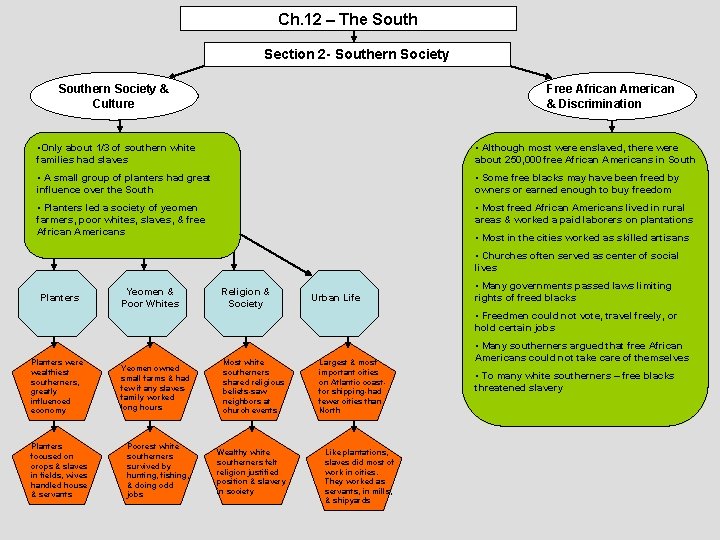
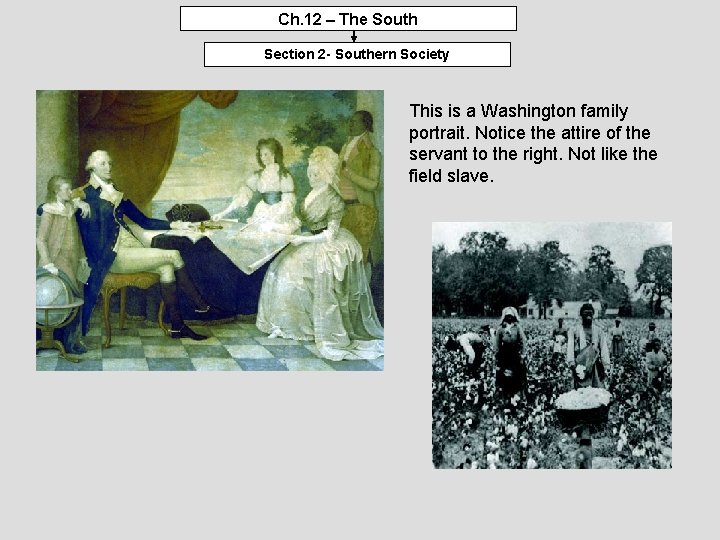
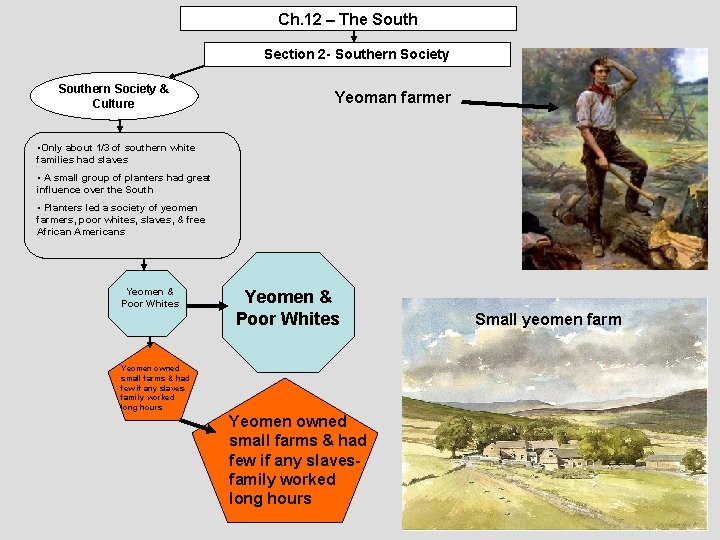
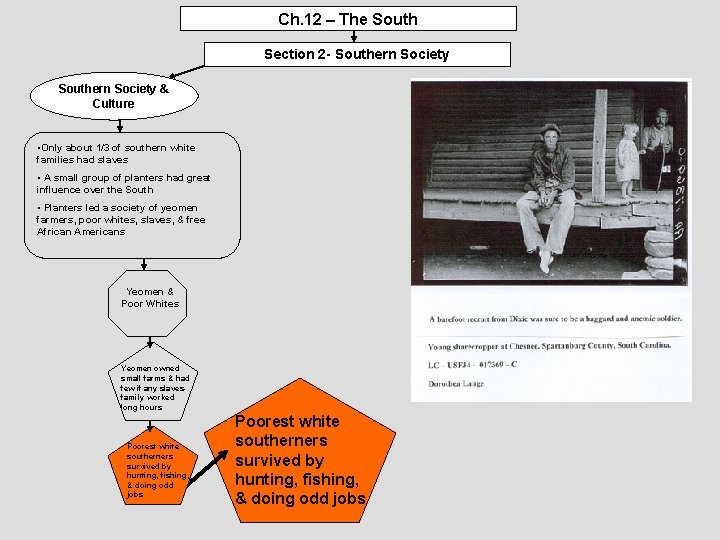
Ch. 12 – The South Section 2 - Southern Society & Culture Free African American & Discrimination • Only about 1/3 of southern white families had slaves • Although most were enslaved, there were about 250, 000 free African Americans in South • A small group of planters had great influence over the South • Some free blacks may have been freed by owners or earned enough to buy freedom • Planters led a society of yeomen farmers, poor whites, slaves, & free African Americans • Most freed African Americans lived in rural areas & worked a paid laborers on plantations • Most in the cities worked as skilled artisans • Churches often served as center of social lives Planters Yeomen & Poor Whites Religion & Society Urban Life • Many governments passed laws limiting rights of freed blacks • Freedmen could not vote, travel freely, or hold certain jobs Planters were wealthiest southerners, greatly influenced economy Planters focused on crops & slaves in fields, wives handled house & servants Yeomen owned small farms & had few if any slavesfamily worked long hours Most white southerners shared religious beliefs-saw neighbors at church events Poorest white southerners survived by hunting, fishing, & doing odd jobs Wealthy white southerners felt religion justified position & slavery in society Largest & most important cities on Atlantic coastfor shipping-had fewer cities than North Like plantations, slaves did most of work in cities. They worked as servants, in mills, & shipyards • Many southerners argued that free African Americans could not take care of themselves • To many white southerners – free blacks threatened slavery
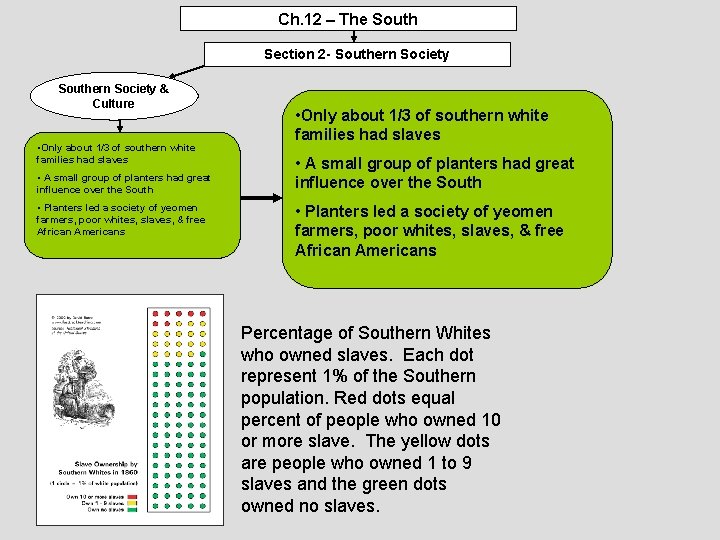
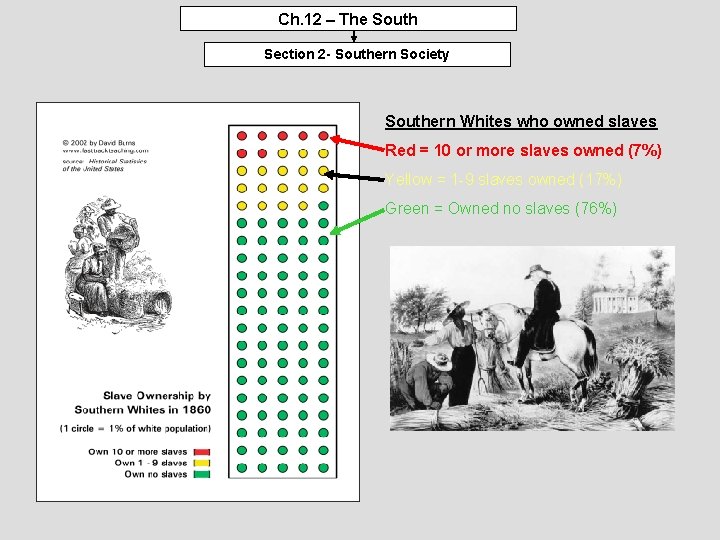
Ch. 12 – The South Section 2 - Southern Society & Culture • Only about 1/3 of southern white families had slaves • A small group of planters had great influence over the South • Planters led a society of yeomen farmers, poor whites, slaves, & free African Americans Percentage of Southern Whites who owned slaves. Each dot represent 1% of the Southern population. Red dots equal percent of people who owned 10 or more slave. The yellow dots are people who owned 1 to 9 slaves and the green dots owned no slaves.
Ch. 12 – The South Section 2 - Southern Society Southern Whites who owned slaves Red = 10 or more slaves owned (7%) Yellow = 1 -9 slaves owned (17%) Green = Owned no slaves (76%)
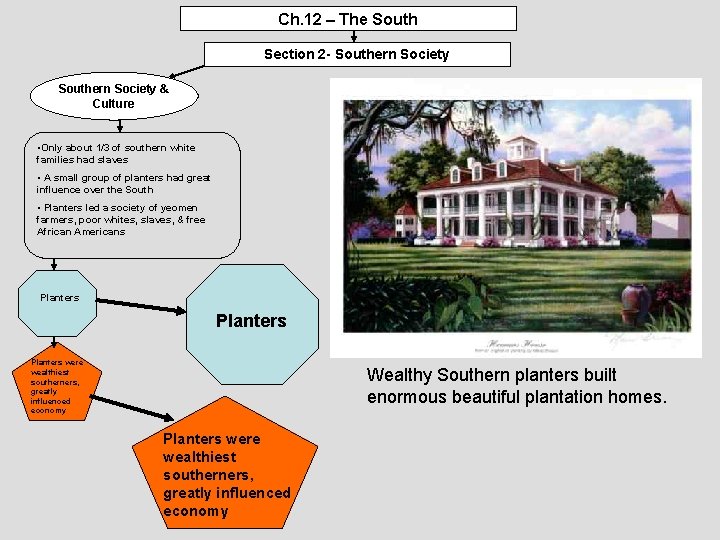
Ch. 12 – The South Section 2 - Southern Society & Culture • Only about 1/3 of southern white families had slaves • A small group of planters had great influence over the South • Planters led a society of yeomen farmers, poor whites, slaves, & free African Americans Planters were wealthiest southerners, greatly influenced economy Wealthy Southern planters built enormous beautiful plantation homes. Planters were wealthiest southerners, greatly influenced economy
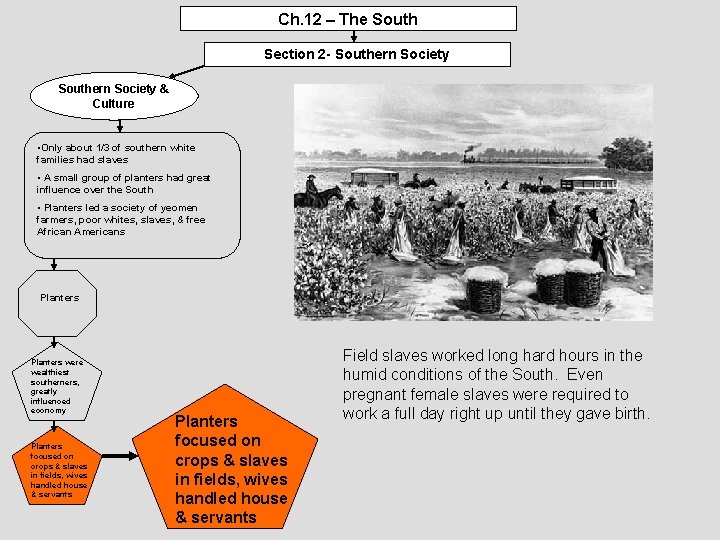
Ch. 12 – The South Section 2 - Southern Society & Culture • Only about 1/3 of southern white families had slaves • A small group of planters had great influence over the South • Planters led a society of yeomen farmers, poor whites, slaves, & free African Americans Planters were wealthiest southerners, greatly influenced economy Planters focused on crops & slaves in fields, wives handled house & servants Field slaves worked long hard hours in the humid conditions of the South. Even pregnant female slaves were required to work a full day right up until they gave birth.
Ch. 12 – The South Section 2 - Southern Society This is a Washington family portrait. Notice the attire of the servant to the right. Not like the field slave.
Ch. 12 – The South Section 2 - Southern Society & Culture Yeoman farmer • Only about 1/3 of southern white families had slaves • A small group of planters had great influence over the South • Planters led a society of yeomen farmers, poor whites, slaves, & free African Americans Yeomen & Poor Whites Yeomen owned small farms & had few if any slavesfamily worked long hours Small yeomen farm
Ch. 12 – The South Section 2 - Southern Society & Culture • Only about 1/3 of southern white families had slaves • A small group of planters had great influence over the South • Planters led a society of yeomen farmers, poor whites, slaves, & free African Americans Yeomen & Poor Whites Yeomen owned small farms & had few if any slavesfamily worked long hours Poorest white southerners survived by hunting, fishing, & doing odd jobs
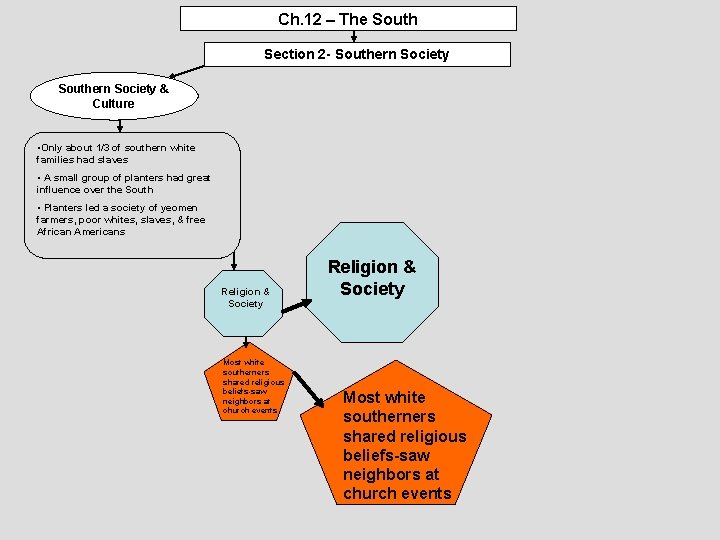
Ch. 12 – The South Section 2 - Southern Society & Culture • Only about 1/3 of southern white families had slaves • A small group of planters had great influence over the South • Planters led a society of yeomen farmers, poor whites, slaves, & free African Americans Religion & Society Most white southerners shared religious beliefs-saw neighbors at church events
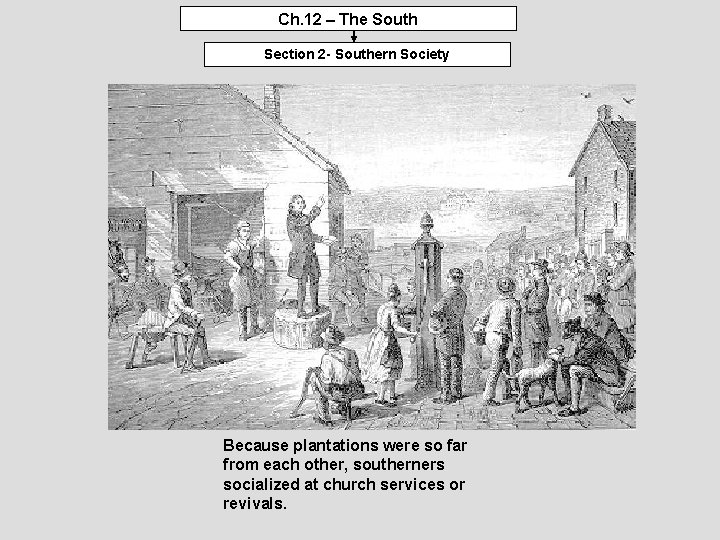
Ch. 12 – The South Section 2 - Southern Society Because plantations were so far from each other, southerners socialized at church services or revivals.
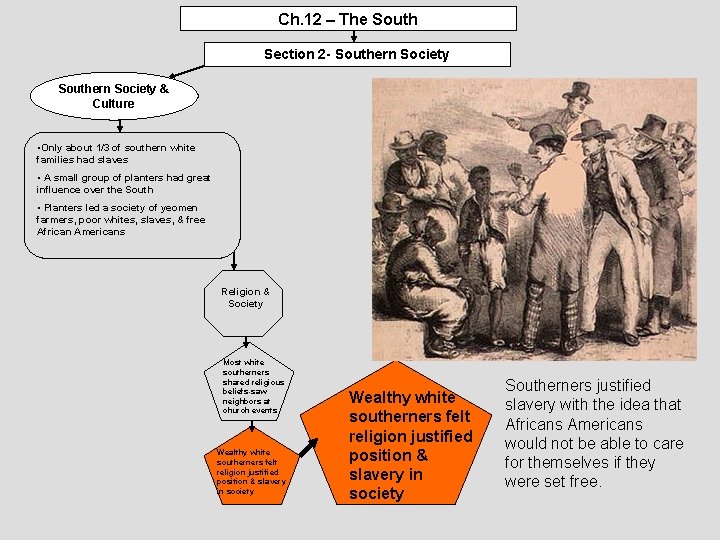
Ch. 12 – The South Section 2 - Southern Society & Culture • Only about 1/3 of southern white families had slaves • A small group of planters had great influence over the South • Planters led a society of yeomen farmers, poor whites, slaves, & free African Americans Religion & Society Most white southerners shared religious beliefs-saw neighbors at church events Wealthy white southerners felt religion justified position & slavery in society Southerners justified slavery with the idea that Africans Americans would not be able to care for themselves if they were set free.
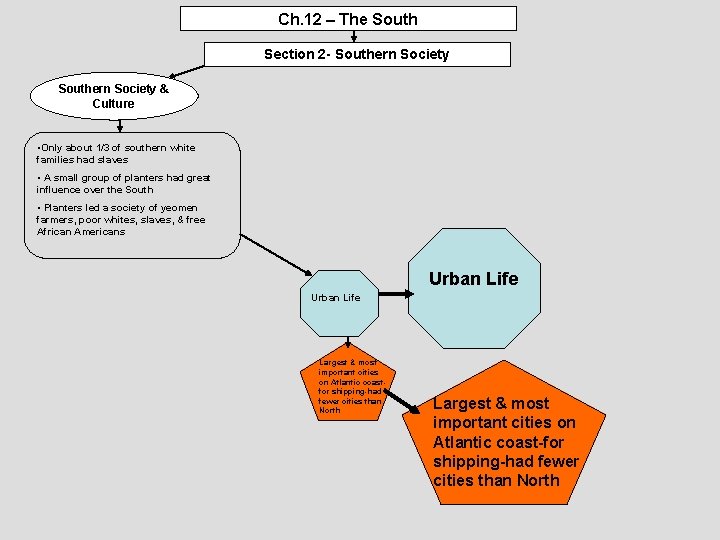
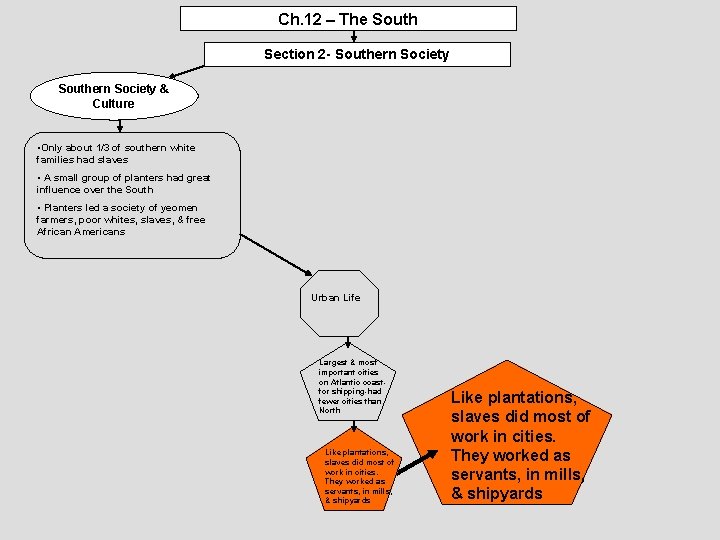
Ch. 12 – The South Section 2 - Southern Society & Culture • Only about 1/3 of southern white families had slaves • A small group of planters had great influence over the South • Planters led a society of yeomen farmers, poor whites, slaves, & free African Americans Urban Life Largest & most important cities on Atlantic coastfor shipping-had fewer cities than North Largest & most important cities on Atlantic coast-for shipping-had fewer cities than North
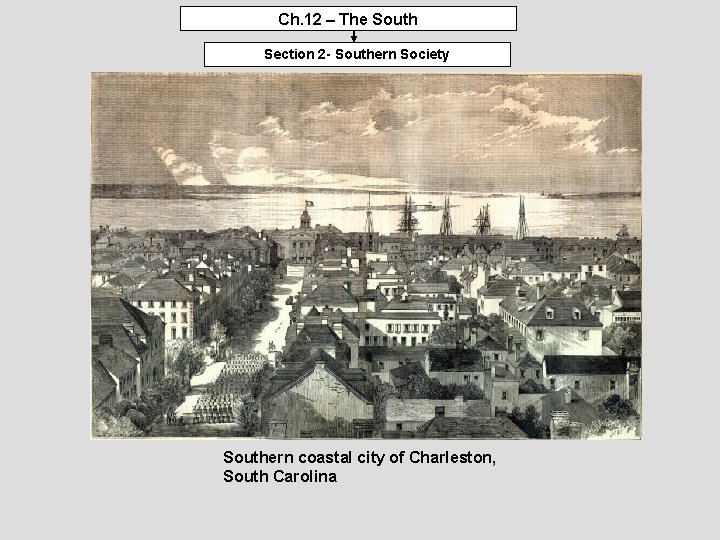
Ch. 12 – The South Section 2 - Southern Society Southern coastal city of Charleston, South Carolina
Ch. 12 – The South Section 2 - Southern Society & Culture • Only about 1/3 of southern white families had slaves • A small group of planters had great influence over the South • Planters led a society of yeomen farmers, poor whites, slaves, & free African Americans Urban Life Largest & most important cities on Atlantic coastfor shipping-had fewer cities than North Like plantations, slaves did most of work in cities. They worked as servants, in mills, & shipyards
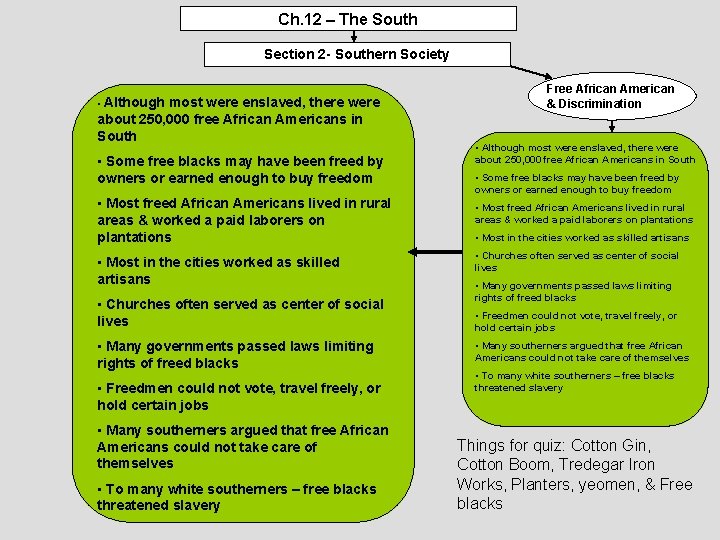
Ch. 12 – The South Section 2 - Southern Society • Although most were enslaved, there were about 250, 000 free African Americans in South • Some free blacks may have been freed by owners or earned enough to buy freedom • Most freed African Americans lived in rural areas & worked a paid laborers on plantations • Most in the cities worked as skilled artisans • Churches often served as center of social lives • Many governments passed laws limiting rights of freed blacks • Freedmen could not vote, travel freely, or hold certain jobs • Many southerners argued that free African Americans could not take care of themselves • To many white southerners – free blacks threatened slavery Free African American & Discrimination • Although most were enslaved, there were about 250, 000 free African Americans in South • Some free blacks may have been freed by owners or earned enough to buy freedom • Most freed African Americans lived in rural areas & worked a paid laborers on plantations • Most in the cities worked as skilled artisans • Churches often served as center of social lives • Many governments passed laws limiting rights of freed blacks • Freedmen could not vote, travel freely, or hold certain jobs • Many southerners argued that free African Americans could not take care of themselves • To many white southerners – free blacks threatened slavery Things for quiz: Cotton Gin, Cotton Boom, Tredegar Iron Works, Planters, yeomen, & Free blacks
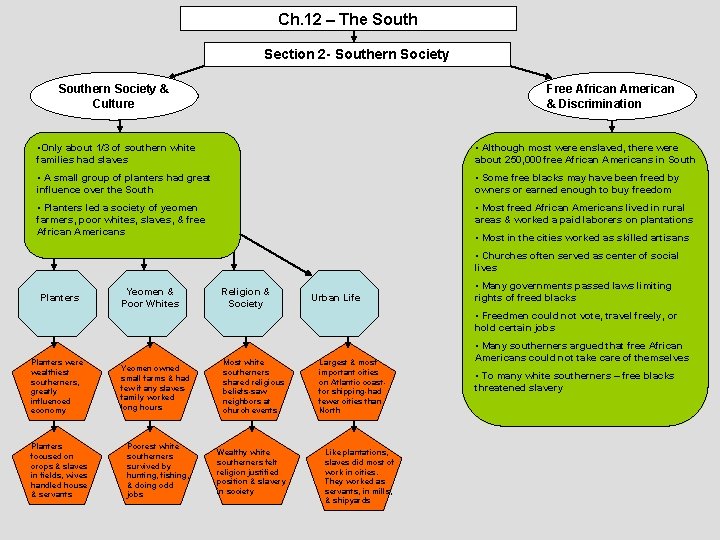
Ch. 12 – The South Section 2 - Southern Society & Culture Free African American & Discrimination • Only about 1/3 of southern white families had slaves • Although most were enslaved, there were about 250, 000 free African Americans in South • A small group of planters had great influence over the South • Some free blacks may have been freed by owners or earned enough to buy freedom • Planters led a society of yeomen farmers, poor whites, slaves, & free African Americans • Most freed African Americans lived in rural areas & worked a paid laborers on plantations • Most in the cities worked as skilled artisans • Churches often served as center of social lives Planters Yeomen & Poor Whites Religion & Society Urban Life • Many governments passed laws limiting rights of freed blacks • Freedmen could not vote, travel freely, or hold certain jobs Planters were wealthiest southerners, greatly influenced economy Planters focused on crops & slaves in fields, wives handled house & servants Yeomen owned small farms & had few if any slavesfamily worked long hours Most white southerners shared religious beliefs-saw neighbors at church events Poorest white southerners survived by hunting, fishing, & doing odd jobs Wealthy white southerners felt religion justified position & slavery in society Largest & most important cities on Atlantic coastfor shipping-had fewer cities than North Like plantations, slaves did most of work in cities. They worked as servants, in mills, & shipyards • Many southerners argued that free African Americans could not take care of themselves • To many white southerners – free blacks threatened slavery
Ch. 12 – The South Section 2 - Southern Society & Culture Free African American & Discrimination