
Ch 12 The Eukaryotes Fungi Algae Protozoa and
- Slides: 27
Ch 12 The Eukaryotes: Fungi, Algae, Protozoa, and Helminths Copyright © 2010 Pearson Education, Inc.
§ § § Student Learning Outcomes List the defining characteristics of fungi. Identify two beneficial and two harmful effects of fungi. List the defining characteristics of protozoa. Differentiate an intermediate host from a definitive host. List the distinguishing characteristics of the two classes of parasitic helminths, and give an example of each. § Provide a rationale for the elaborate life cycles of parasitic worms. § Define arthropod vector. § Differentiate between a tick and a mosquito, and name a disease transmitted by each. Copyright © 2010 Pearson Education, Inc.
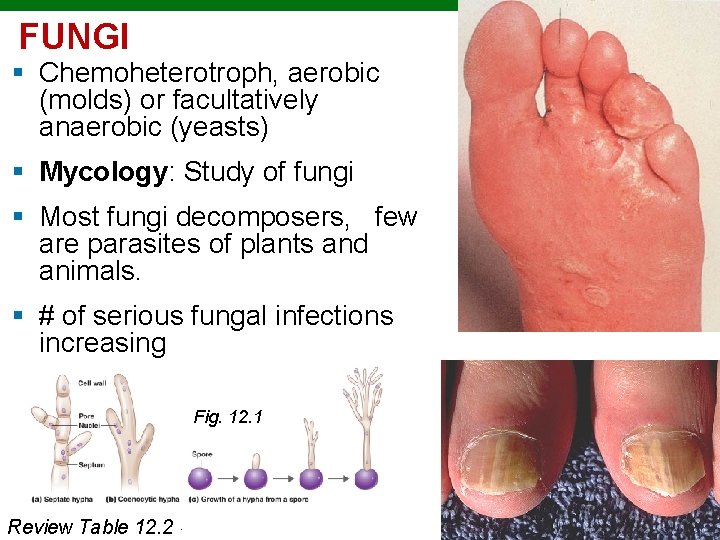
FUNGI § Chemoheterotroph, aerobic (molds) or facultatively anaerobic (yeasts) § Mycology: Study of fungi § Most fungi decomposers, few are parasites of plants and animals. § # of serious fungal infections increasing Fig. 12. 1 Copyright © 2010 Pearson Education, Review Table 12. 2 Inc.
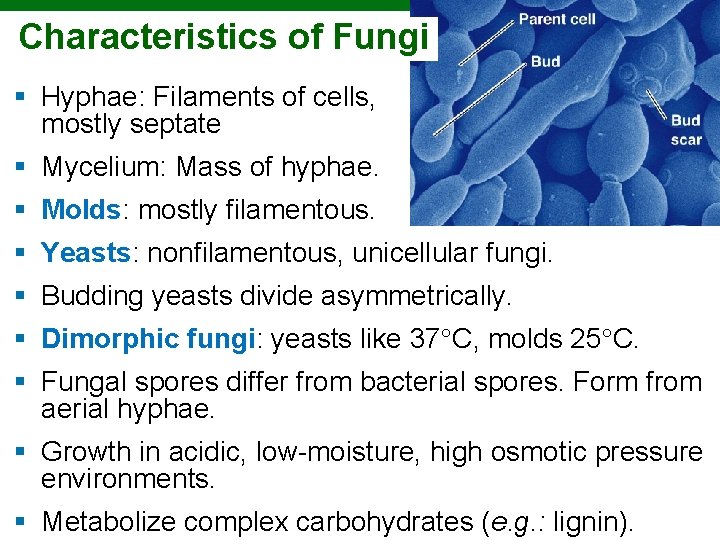
Characteristics of Fungi § Hyphae: Filaments of cells, mostly septate § Mycelium: Mass of hyphae. § Molds: mostly filamentous. § Yeasts: nonfilamentous, unicellular fungi. § Budding yeasts divide asymmetrically. § Dimorphic fungi: yeasts like 37 C, molds 25 C. § Fungal spores differ from bacterial spores. Form from aerial hyphae. § Growth in acidic, low-moisture, high osmotic pressure environments. § Metabolize complex carbohydrates (e. g. : lignin). Copyright © 2010 Pearson Education, Inc.
Economic Effects of Fungi § Saccharomyces cerevisiae: Bread, wine, HBV vaccine § Trichoderma: Cellulase § Taxomyces: Taxol § Entomophaga: Biocontrol § Paecilomyces: Kills termites § Mold spoilage Copyright © 2010 Pearson Education, Inc.
Fungal Diseases – Mycoses 1. Systemic mycosis: infection deep within body, affects many tissues and organs. Histoplasmosis and coccidiomycosis. 2. Subcutaneous mycosis: Saprophytic fungi, e. g. : Sporotrichosis. 3. Cutaneous mycosis = Dermatomycosis: affects keratin-containing tissues (hair, nails, skin). 4. Superficial mycosis: localized on hair shafts and superficial skin cells. Opportunistic mycoses: § caused by normal microbiota or fungi that are not usually pathogenic (E. g. : Candidiasis and Pneumocystis pneumonia) § usually systemic. Copyright © 2010 Pearson Education, Inc.
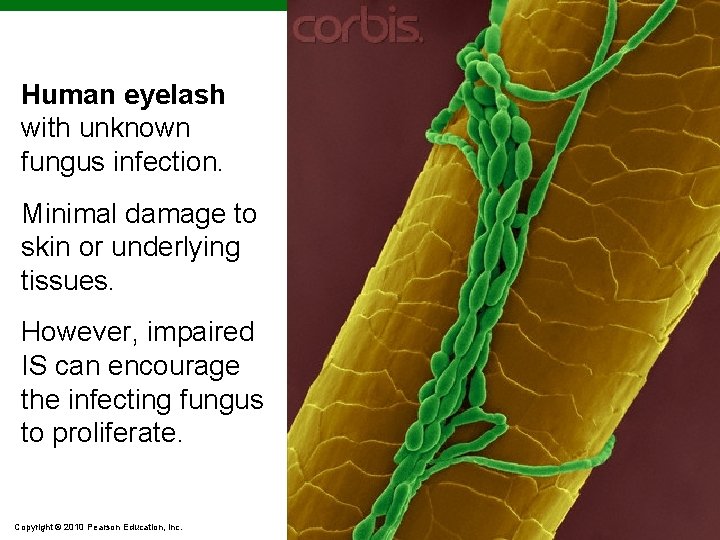
Human eyelash with unknown fungus infection. Minimal damage to skin or underlying tissues. However, impaired IS can encourage the infecting fungus to proliferate. Copyright © 2010 Pearson Education, Inc.
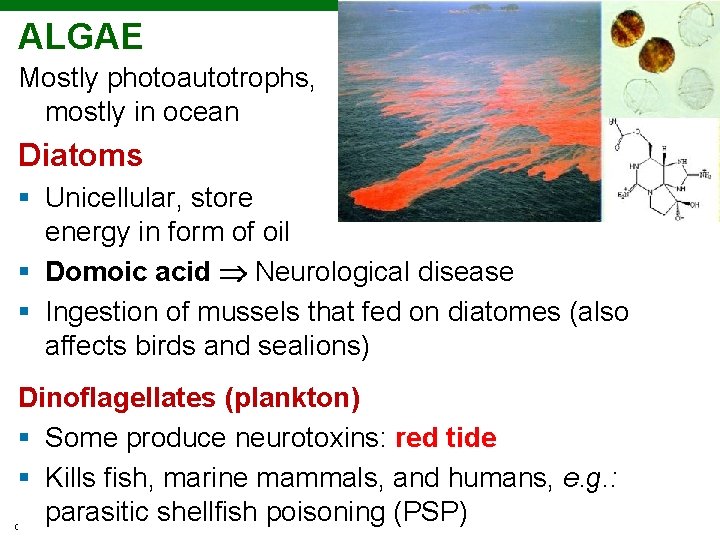
ALGAE Mostly photoautotrophs, mostly in ocean Diatoms § Unicellular, store energy in form of oil § Domoic acid Neurological disease § Ingestion of mussels that fed on diatomes (also affects birds and sealions) Dinoflagellates (plankton) § Some produce neurotoxins: red tide § Kills fish, marine mammals, and humans, e. g. : parasitic shellfish poisoning (PSP) Copyright © 2010 Pearson Education, Inc.
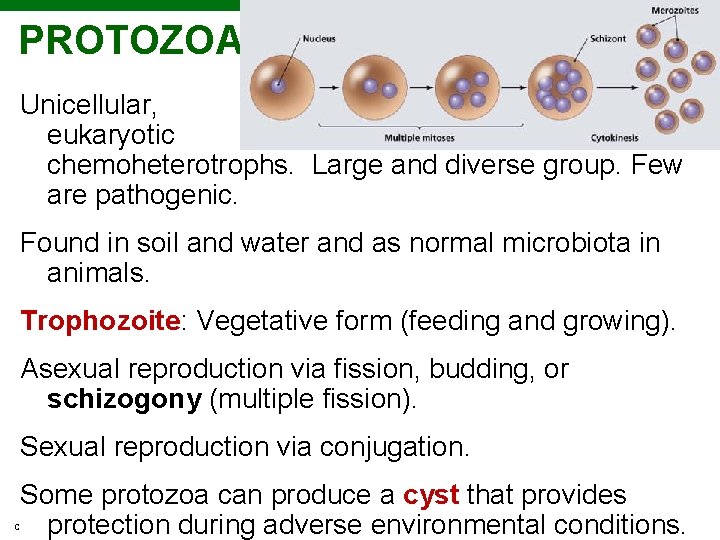
PROTOZOA Unicellular, eukaryotic chemoheterotrophs. Large and diverse group. Few are pathogenic. Found in soil and water and as normal microbiota in animals. Trophozoite: Vegetative form (feeding and growing). Asexual reproduction via fission, budding, or schizogony (multiple fission). Sexual reproduction via conjugation. Some protozoa can produce a cyst that provides protection during adverse environmental conditions. Copyright © 2010 Pearson Education, Inc.
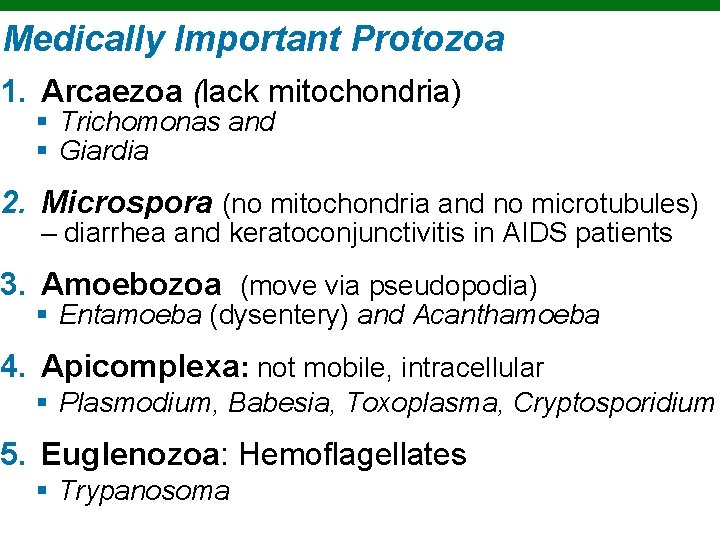
Medically Important Protozoa 1. Arcaezoa (lack mitochondria) § Trichomonas and § Giardia 2. Microspora (no mitochondria and no microtubules) – diarrhea and keratoconjunctivitis in AIDS patients 3. Amoebozoa (move via pseudopodia) § Entamoeba (dysentery) and Acanthamoeba 4. Apicomplexa: not mobile, intracellular § Plasmodium, Babesia, Toxoplasma, Cryptosporidium 5. Euglenozoa: Hemoflagellates § Trypanosoma Copyright © 2010 Pearson Education, Inc.
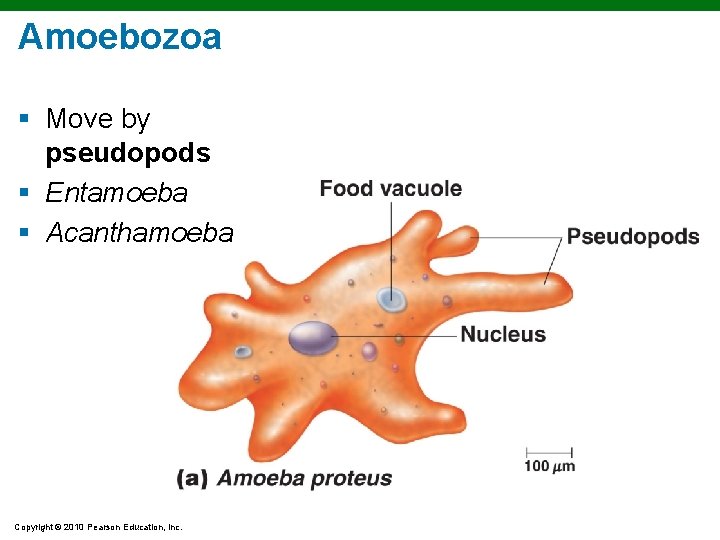
Amoebozoa § Move by pseudopods § Entamoeba § Acanthamoeba Copyright © 2010 Pearson Education, Inc.
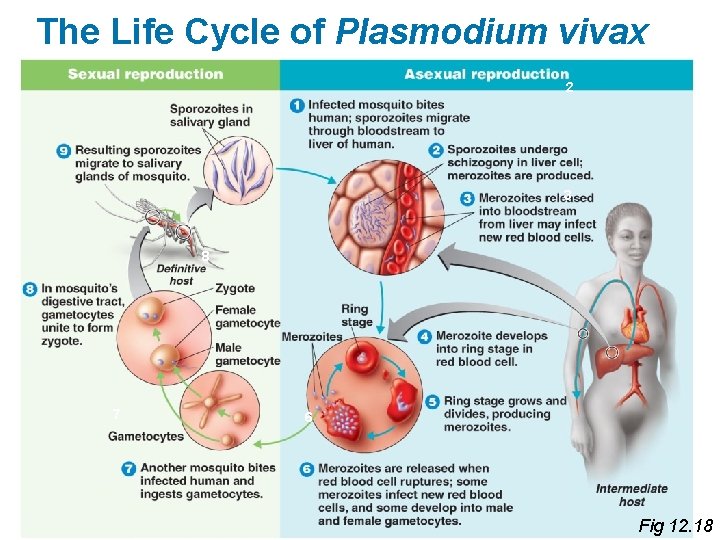
The Life Cycle of Plasmodium vivax 2 3 8 7 6 Fig 12. 18
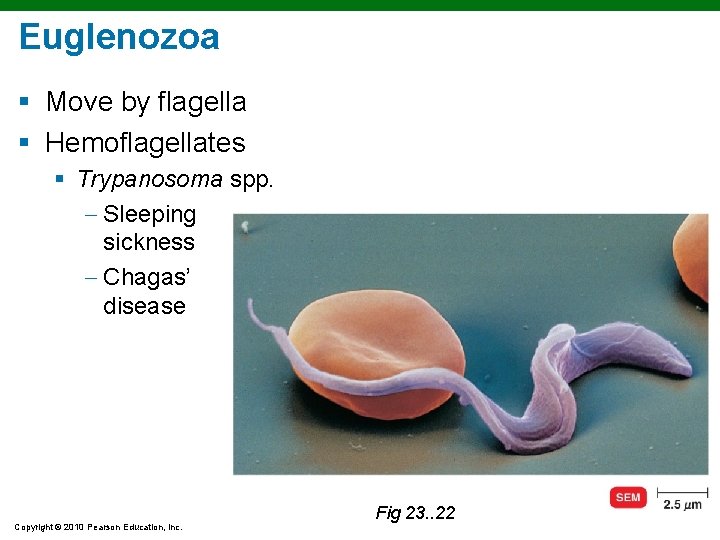
Euglenozoa § Move by flagella § Hemoflagellates § Trypanosoma spp. Sleeping sickness Chagas’ disease Copyright © 2010 Pearson Education, Inc. Fig 23. . 22
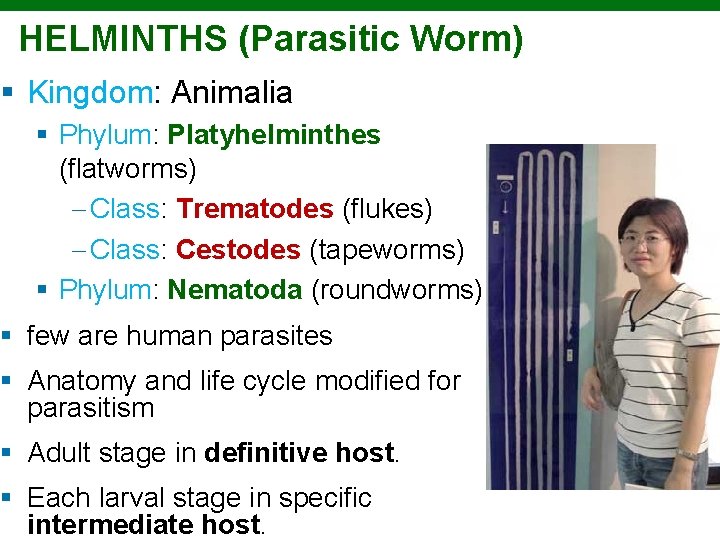
HELMINTHS (Parasitic Worm) § Kingdom: Animalia § Phylum: Platyhelminthes (flatworms) Class: Trematodes (flukes) Class: Cestodes (tapeworms) § Phylum: Nematoda (roundworms) § few are human parasites § Anatomy and life cycle modified for parasitism § Adult stage in definitive host. § Each larval stage in specific intermediate host. Copyright © 2010 Pearson Education, Inc.
Life Cycle of Helminths § Monoecious (hermaphroditic) § Male and female reproductive systems in one animal § Dioecious § Separate male and female § Egg larva(e) adult Copyright © 2010 Pearson Education, Inc.
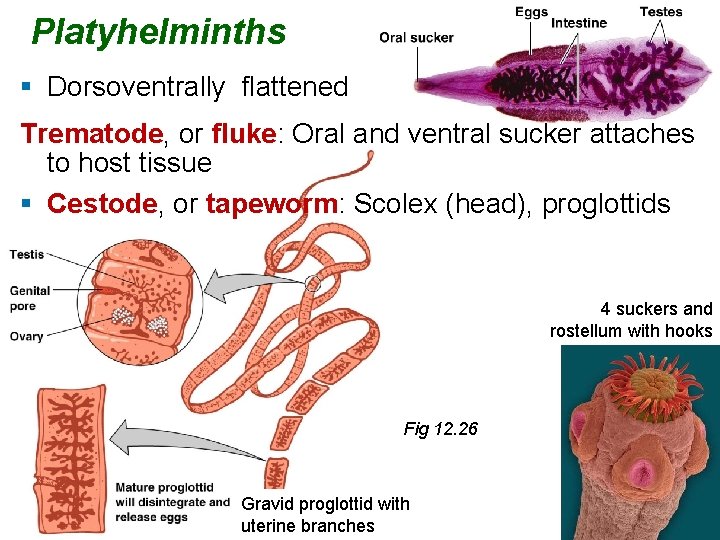
Platyhelminths § Dorsoventrally flattened Trematode, or fluke: Oral and ventral sucker attaches to host tissue § Cestode, or tapeworm: Scolex (head), proglottids 4 suckers and rostellum with hooks Fig 12. 26 Gravid proglottid with uterine branches
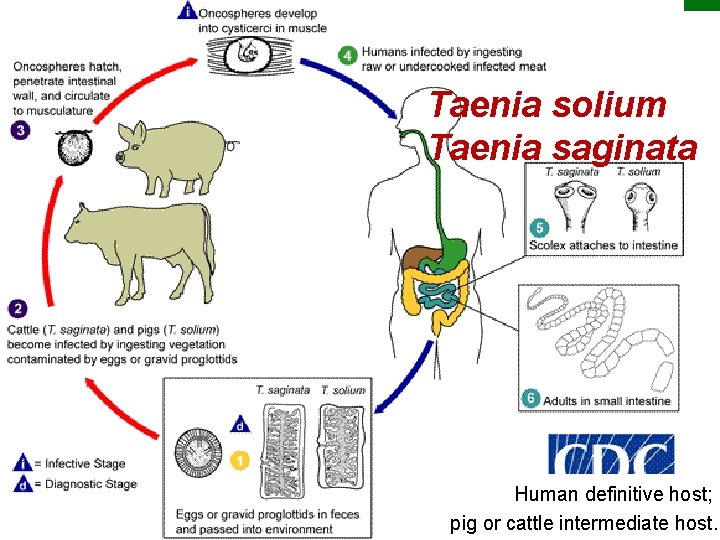
Taenia solium Taenia saginata Copyright © 2010 Pearson Education, Inc. Human definitive host; pig or cattle intermediate host.
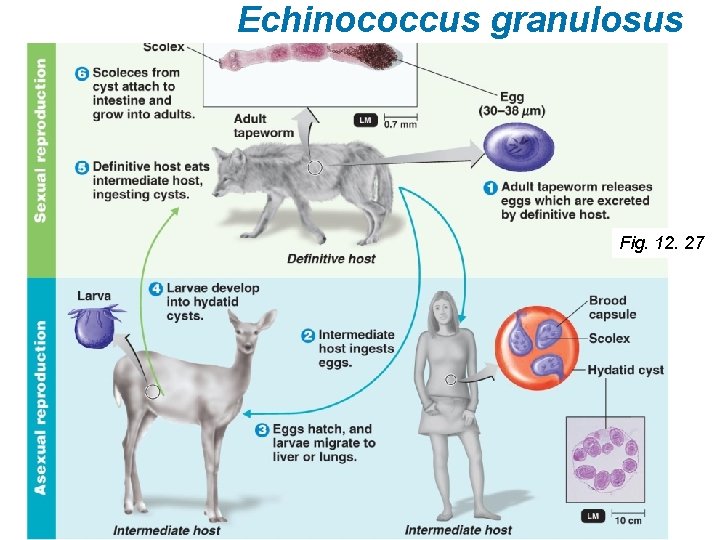
Echinococcus granulosus Fig. 12. 27
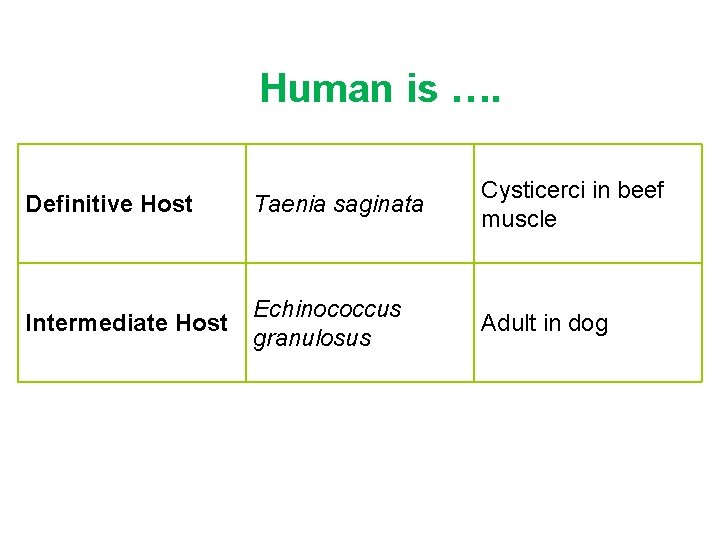
Human as Human is …. Definitive Host Taenia saginata Cysticerci in beef muscle Intermediate Host Echinococcus granulosus Adult in dog
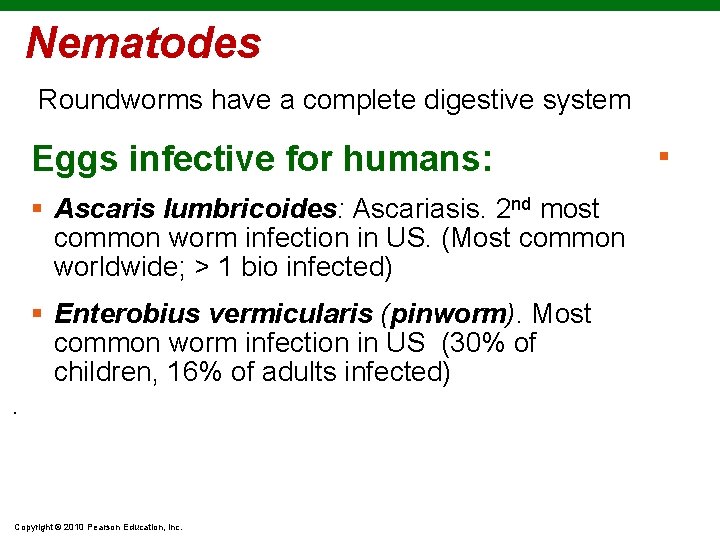
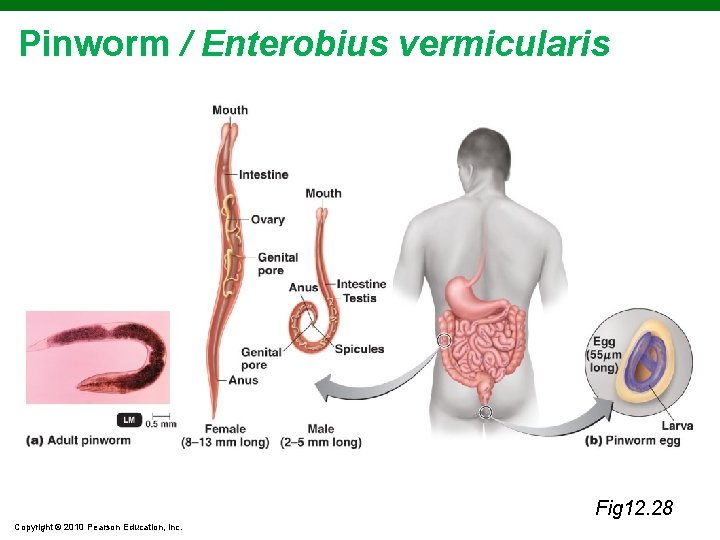
Nematodes Roundworms have a complete digestive system Eggs infective for humans: § Ascaris lumbricoides: Ascariasis. 2 nd most common worm infection in US. (Most common worldwide; > 1 bio infected) § Enterobius vermicularis (pinworm). Most common worm infection in US (30% of children, 16% of adults infected). Copyright © 2010 Pearson Education, Inc. §
Pinworm / Enterobius vermicularis Fig 12. 28 Copyright © 2010 Pearson Education, Inc.
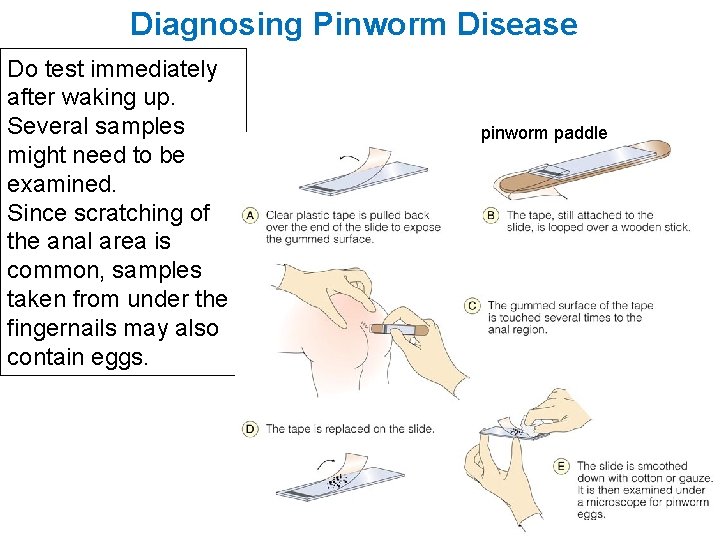
Diagnosing Pinworm Disease Do test immediately after waking up. Several samples might need to be examined. Since scratching of the anal area is common, samples taken from under the fingernails may also contain eggs. pinworm paddle
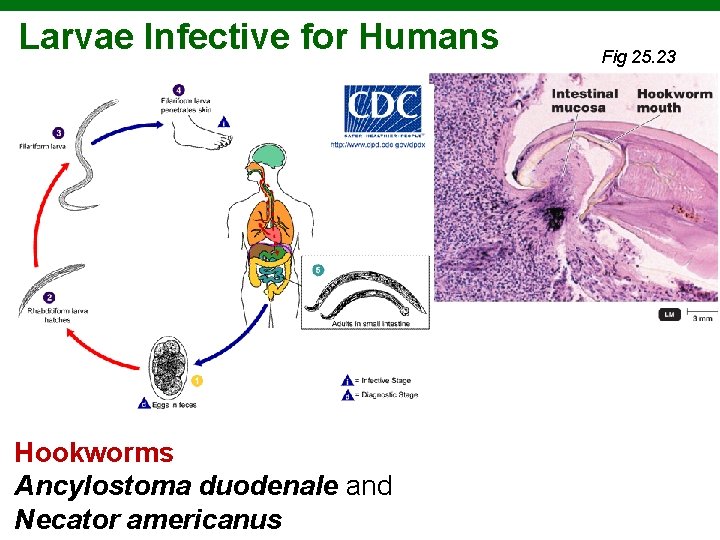
Larvae Infective for Humans Hookworms Ancylostoma duodenale and Necator americanus Copyright © 2010 Pearson Education, Inc. Fig 25. 23
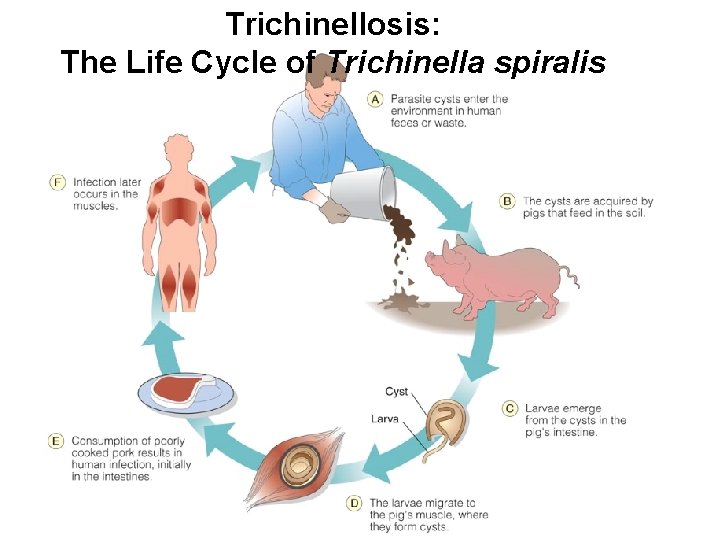
Trichinellosis: The Life Cycle of Trichinella spiralis
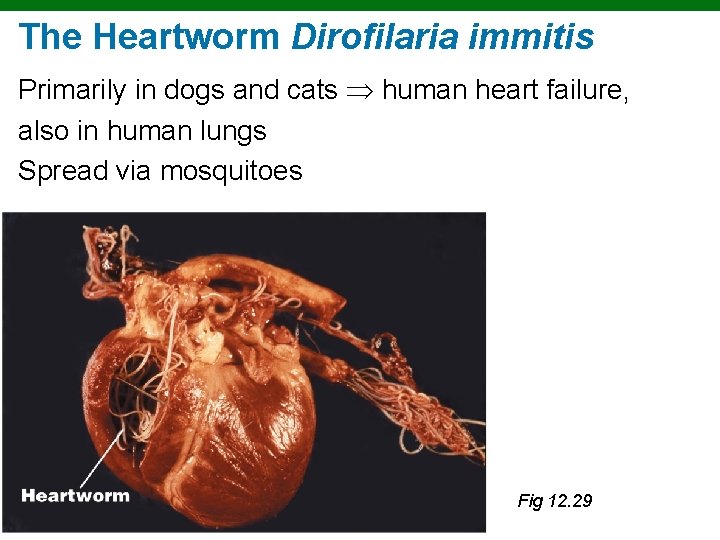
The Heartworm Dirofilaria immitis Primarily in dogs and cats human heart failure, also in human lungs Spread via mosquitoes Fig 12. 29 Copyright © 2010 Pearson Education, Inc.
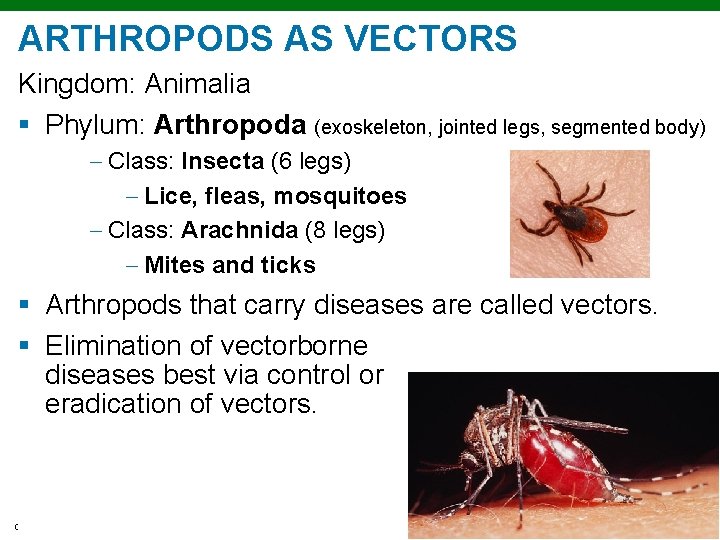
ARTHROPODS AS VECTORS Kingdom: Animalia § Phylum: Arthropoda (exoskeleton, jointed legs, segmented body) Class: Insecta (6 legs) Lice, fleas, mosquitoes Class: Arachnida (8 legs) Mites and ticks § Arthropods that carry diseases are called vectors. § Elimination of vectorborne diseases best via control or eradication of vectors. Copyright © 2010 Pearson Education, Inc.
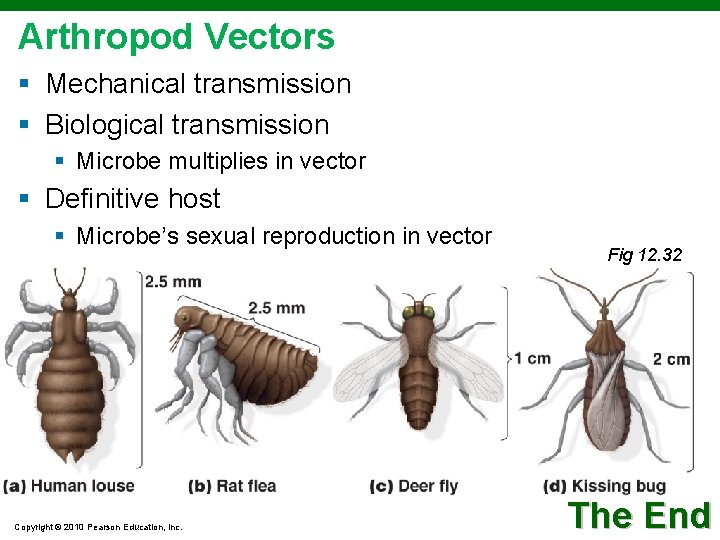
Arthropod Vectors § Mechanical transmission § Biological transmission § Microbe multiplies in vector § Definitive host § Microbe’s sexual reproduction in vector Copyright © 2010 Pearson Education, Inc. Fig 12. 32 The End