
Ch 12 Psychological Disorders What is Psychological Disorder
![Multiaxial Classification Axis II Is a Clinical Syndrome (cognitive, anxiety, mood disorders [16 syndromes])](https://slidetodoc.com/presentation_image_h/20e219c861d816efad4f3a7715c62238/image-8.jpg "Multiaxial Classification Axis II Is a Clinical Syndrome (cognitive, anxiety, mood disorders [16 syndromes])")


- Slides: 62
Ch. 12 Psychological Disorders
What is Psychological Disorder? medical model “disease” psychology psychological disorder Ø interaction…biological cognitive social behavioral factors
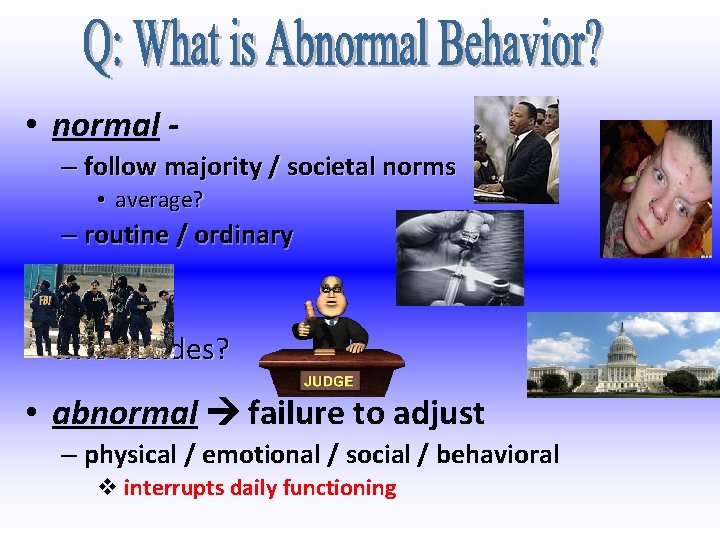
• normal – follow majority / societal norms • average? – routine / ordinary • who decides? • abnormal failure to adjust – physical / emotional / social / behavioral v interrupts daily functioning
Severe “Classic” Symptoms • hallucinations • delusions • affect
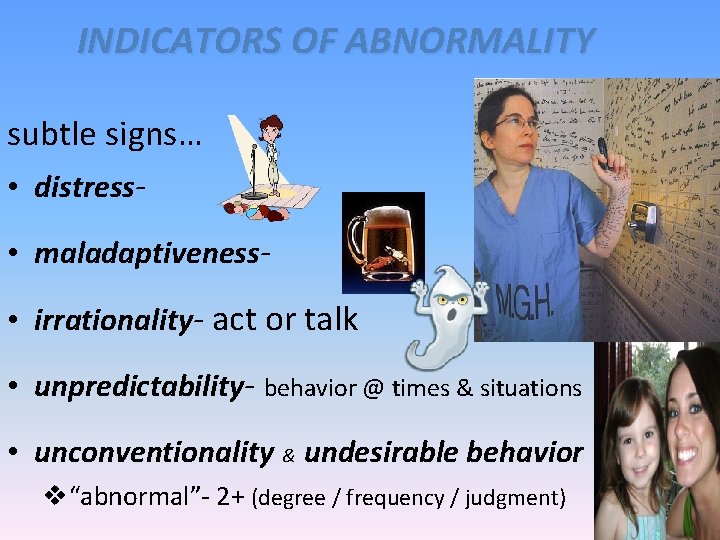
INDICATORS OF ABNORMALITY subtle signs… • distress • maladaptiveness • irrationality- act or talk • unpredictability- behavior @ times & situations • unconventionality & undesirable behavior v“abnormal”- 2+ (degree / frequency / judgment)
How are Psychological Disorders Classified? most widely used systemØDSM-IV: classifies disorders ümental & behavioral symptoms
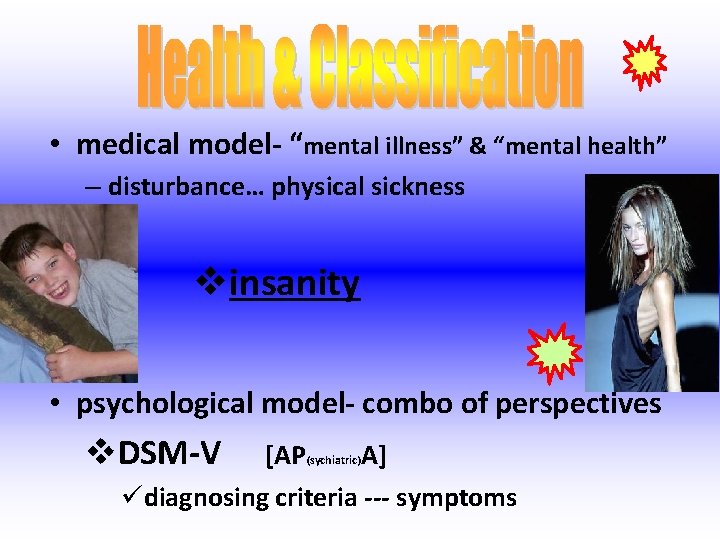
• medical model- “mental illness” & “mental health” – disturbance… physical sickness vinsanity • psychological model- combo of perspectives v. DSM-V [AP(sychiatric)A] üdiagnosing criteria --- symptoms
Multiaxial Classification Axis II Is a Clinical Syndrome (cognitive, anxiety, mood disorders [16 syndromes]) present? Is a Personality Disorder or Mental Retardation present? Is a General Medical Condition (diabetes, Axis III hypertension or arthritis etc) also present? Are Psychosocial or Environmental Problems Axis IV (school or housing issues) also present? What is the Global Assessment of the person’s Axis V functioning? 8
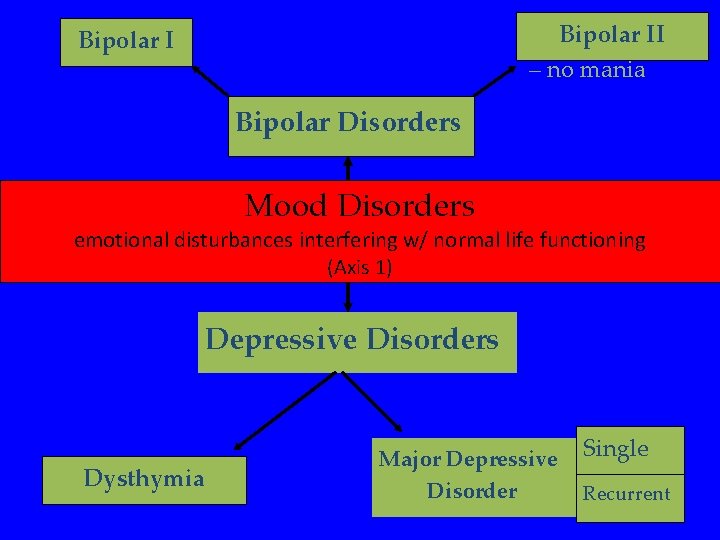
Bipolar II – no mania Bipolar I Bipolar Disorders Mood Disorders emotional disturbances interfering w/ normal life functioning (Axis 1) Depressive Disorders Dysthymia Major Depressive Disorder Single Recurrent
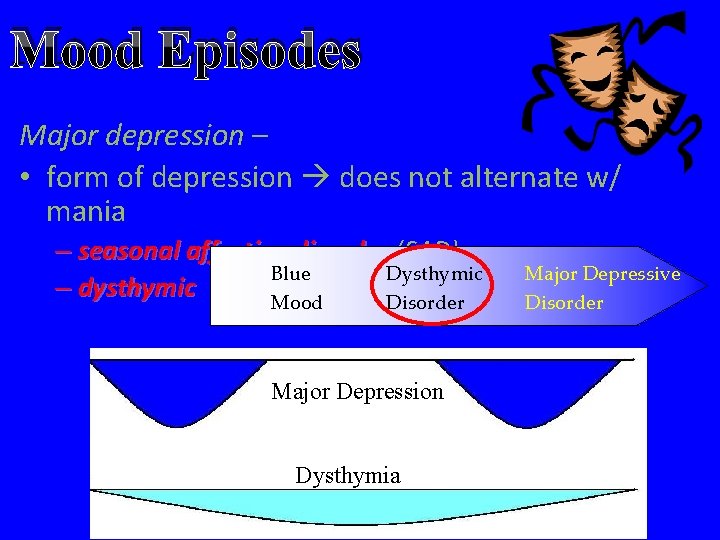
Mood Episodes Major depression – • form of depression does not alternate w/ mania – seasonal affective disorder (SAD) Blue Dysthymic – dysthymic Mood Disorder Major Depression Dysthymia Major Depressive Disorder
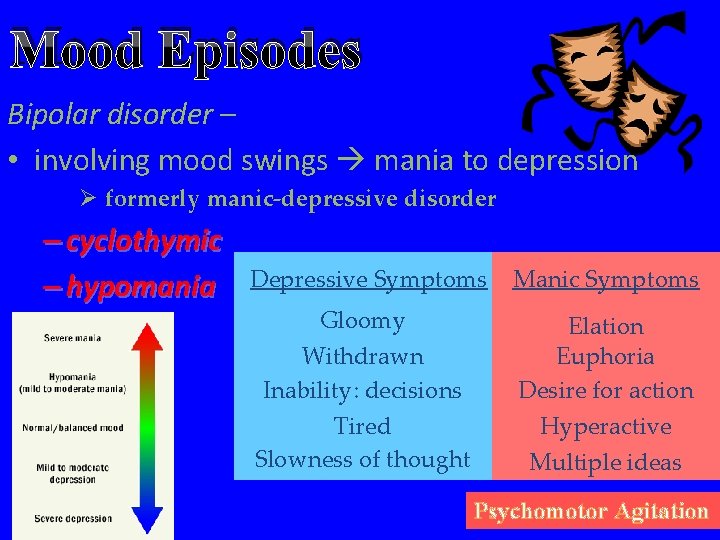
Mood Episodes Bipolar disorder – • involving mood swings mania to depression Ø formerly manic-depressive disorder – cyclothymic – hypomania Depressive Symptoms Manic Symptoms Gloomy Elation Euphoria Desire for action Hyperactive Multiple ideas Withdrawn Inability: decisions Tired Slowness of thought Psychomotor Agitation
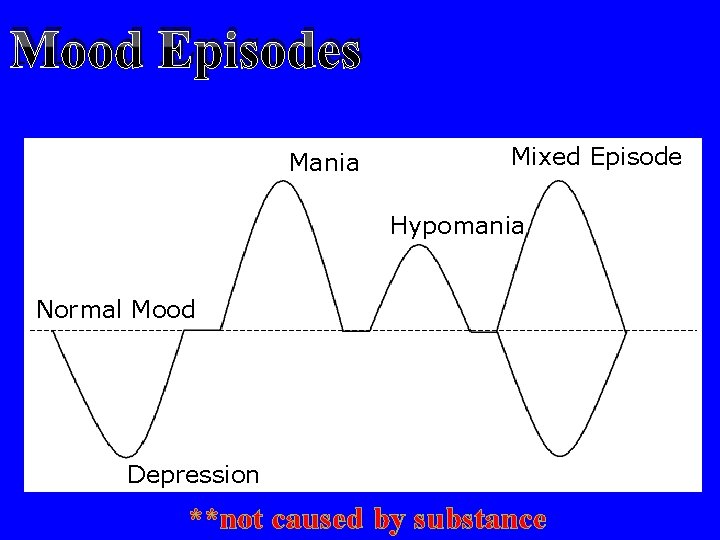
Mood Episodes Mania Mixed Episode Hypomania Normal Mood Depression **not caused by substance
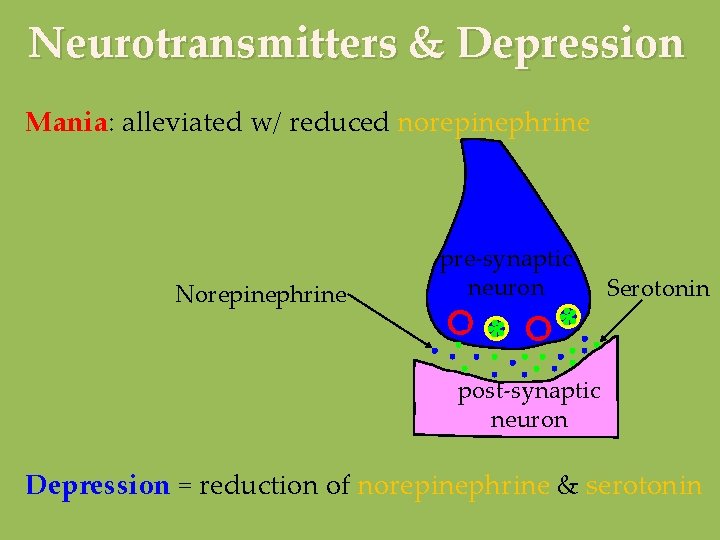
Neurotransmitters & Depression Mania: alleviated w/ reduced norepinephrine Norepinephrine pre-synaptic neuron Serotonin post-synaptic neuron Depression = reduction of norepinephrine & serotonin
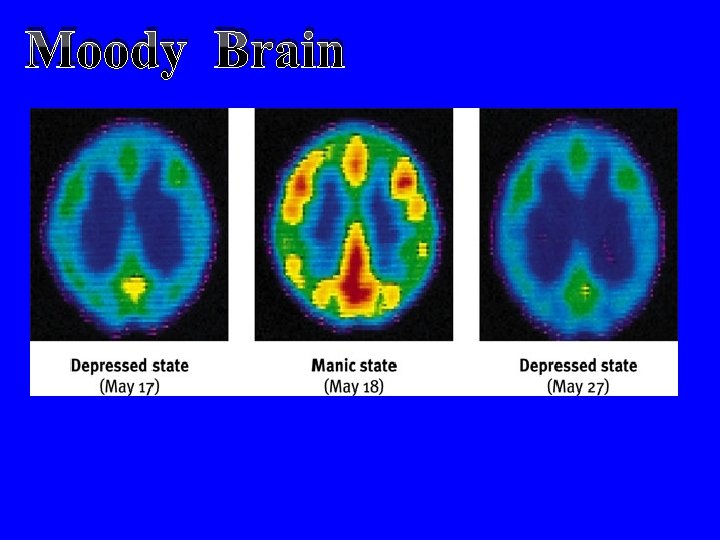
Moody Brain
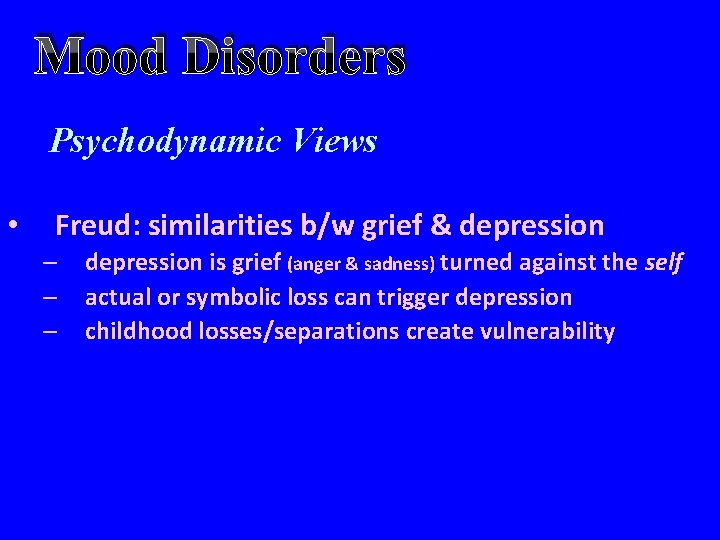
Mood Disorders Psychodynamic Views • Freud: similarities b/w grief & depression – – – depression is grief (anger & sadness) turned against the self actual or symbolic loss can trigger depression childhood losses/separations create vulnerability
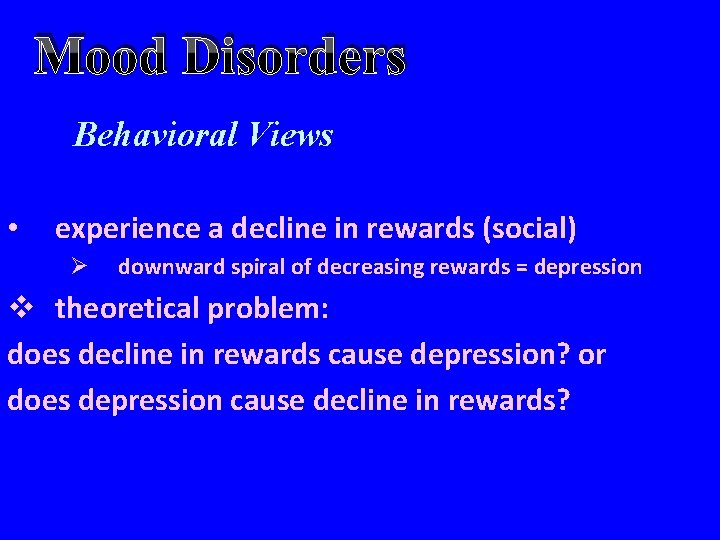
Mood Disorders Behavioral Views • experience a decline in rewards (social) Ø downward spiral of decreasing rewards = depression v theoretical problem: does decline in rewards cause depression? or does depression cause decline in rewards?
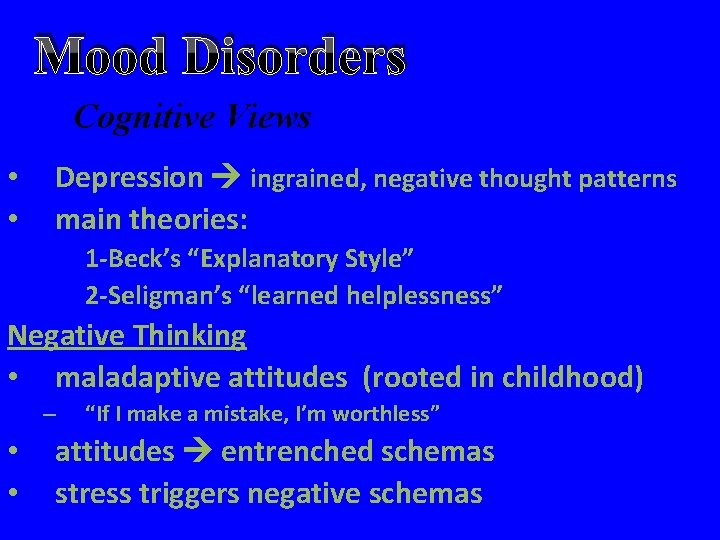
Mood Disorders Cognitive Views • • Depression ingrained, negative thought patterns main theories: 1 -Beck’s “Explanatory Style” 2 -Seligman’s “learned helplessness” Negative Thinking • maladaptive attitudes (rooted in childhood) – • • “If I make a mistake, I’m worthless” attitudes entrenched schemas stress triggers negative schemas
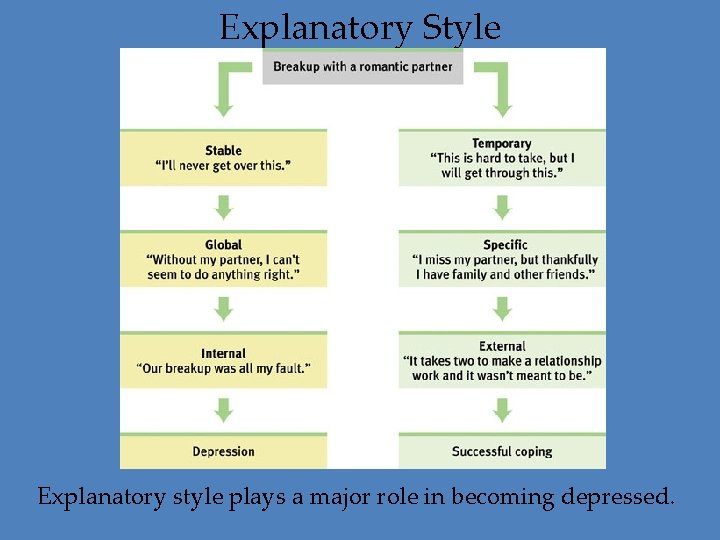
Explanatory Style Explanatory style plays a major role in becoming depressed.
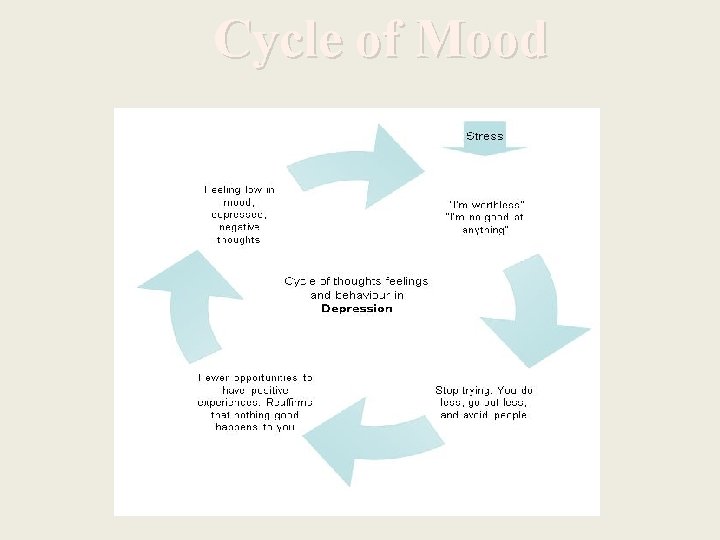
Cycle of Mood
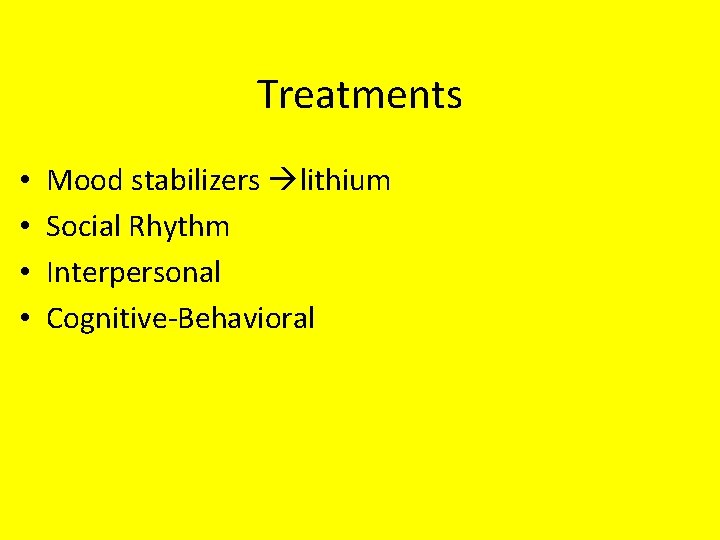
Treatments • • Mood stabilizers lithium Social Rhythm Interpersonal Cognitive-Behavioral
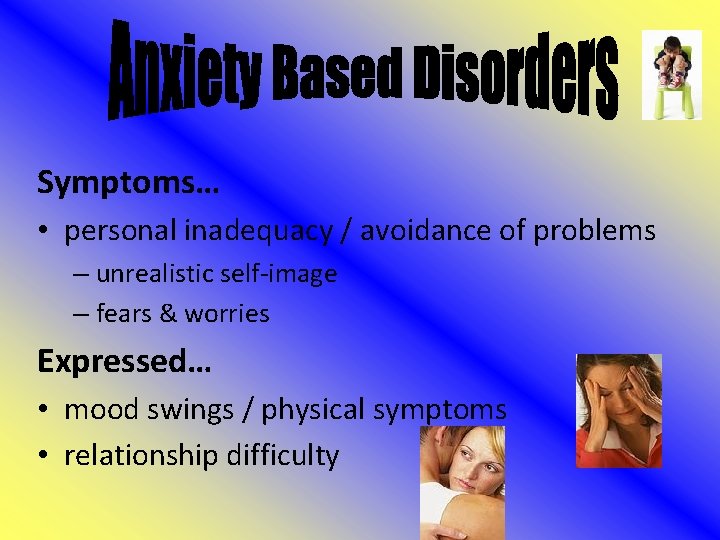
Symptoms… • personal inadequacy / avoidance of problems – unrealistic self-image – fears & worries Expressed… • mood swings / physical symptoms • relationship difficulty
Generalized anxiety disorder – • persistent & pervasive feelings of anxiety, w/o any external cause Panic disorder – • panic attacks: no connection to events in present experience Agoraphobia – • fear of public places/open spaces
Phobias– • (grp) pathological fear of specific object / situation – social – specific: subtypes * situational * natural environment • develops… vpreparedness hypothesis – * injury or blood * animals / insects innate tendency (natural selection)- respond quickly & automatically to stimuli posing a survival threat
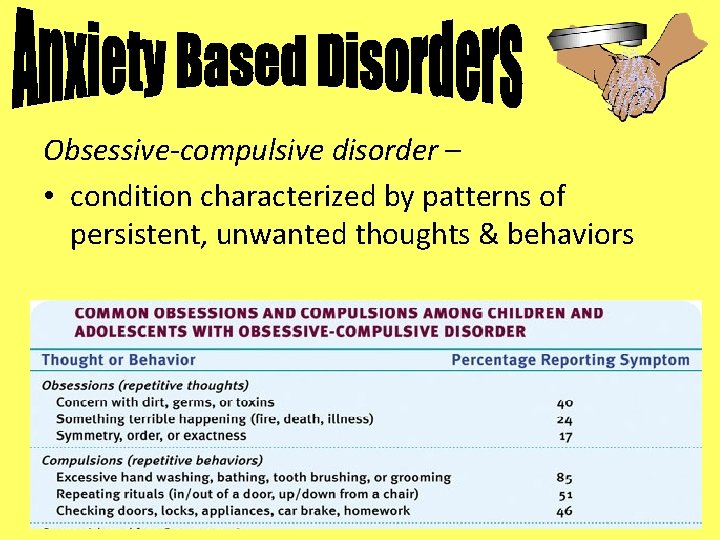
Obsessive-compulsive disorder – • condition characterized by patterns of persistent, unwanted thoughts & behaviors
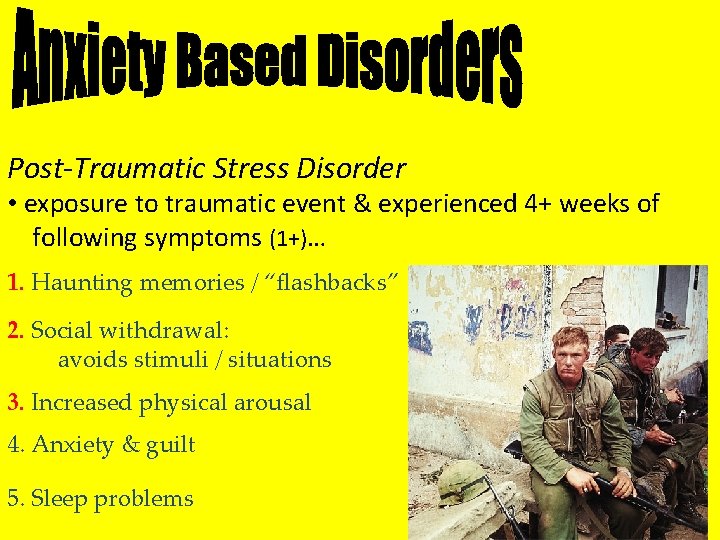
Post-Traumatic Stress Disorder • exposure to traumatic event & experienced 4+ weeks of following symptoms (1+)… 1. Haunting memories / “flashbacks” 2. Social withdrawal: avoids stimuli / situations 3. Increased physical arousal 4. Anxiety & guilt 5. Sleep problems
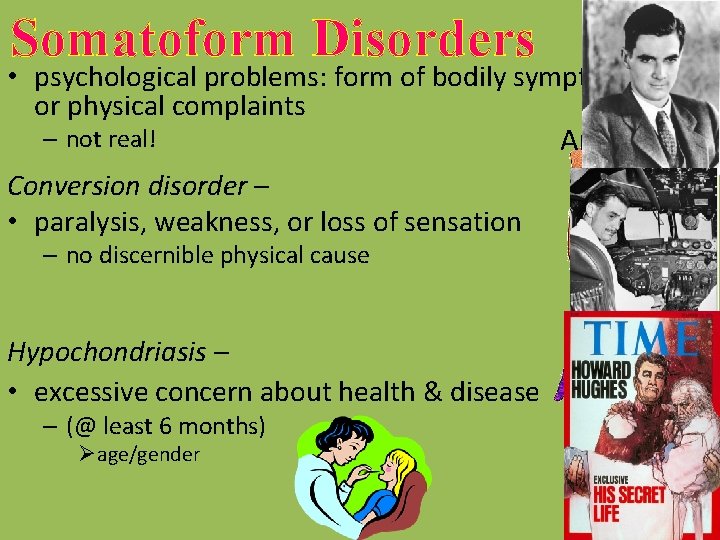
Somatoform Disorders • psychological problems: form of bodily symptoms Glove or physical complaints – not real! Anesthesia Conversion disorder – • paralysis, weakness, or loss of sensation – no discernible physical cause Hypochondriasis – • excessive concern about health & disease – (@ least 6 months) Øage/gender
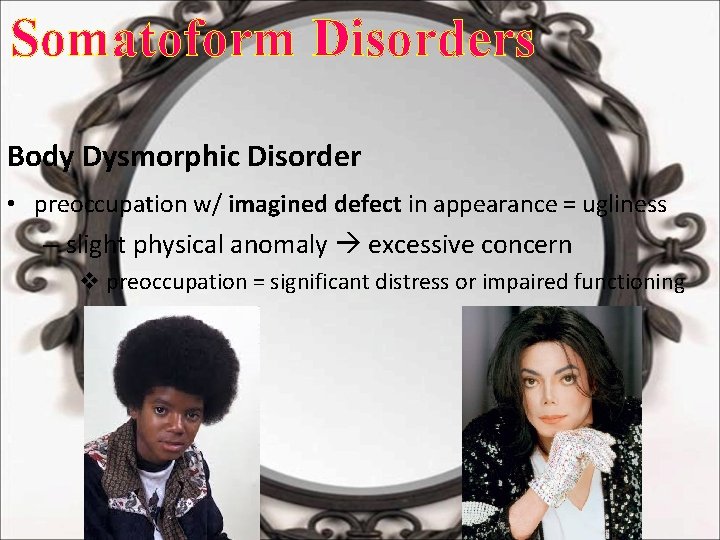
Somatoform Disorders Body Dysmorphic Disorder • preoccupation w/ imagined defect in appearance = ugliness – slight physical anomaly excessive concern v preoccupation = significant distress or impaired functioning
Dissociative Disorders Dissociative disorders – • “fragmentation” of personality Dissociative amnesia • psychologically induced loss of memory – personal info – traumatic or stressful nature – extensive NOT ordinary forgetfulness Dissociative fugue • amnesia + “flight” – home / family / job new ID
Dissociative Disorders Depersonalization disorder • sensation of mind & body having separated – experience: near-death OR trauma Dissociative identity disorder • individual displays multiple identities – memory disruptions – 2+ distinct “alters” control behavior Ø develop? emerge? Ø aware of “others” --- name/ history v. NOT integrated --- embody aspects of primary
Hollywood
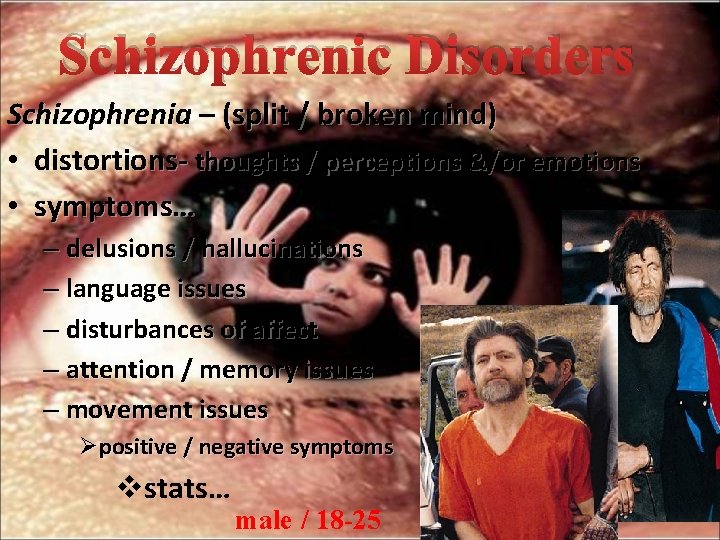
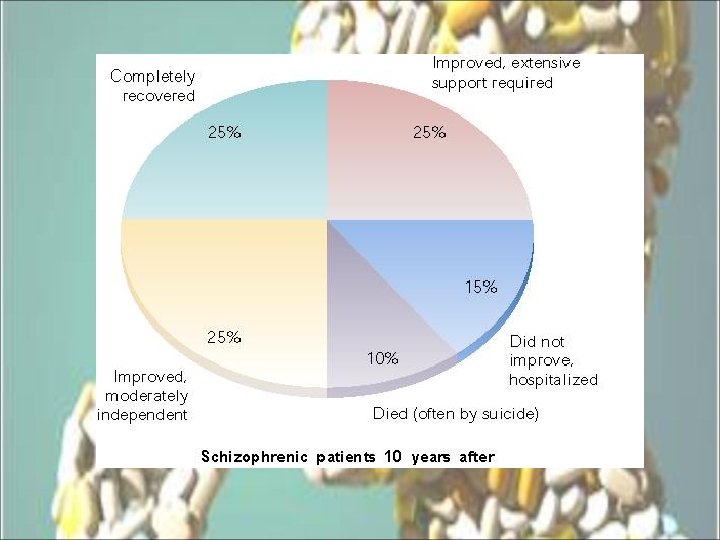
Schizophrenic Disorders Schizophrenia – (split / broken mind) • distortions- thoughts / perceptions &/or emotions • symptoms… – delusions / hallucinations – language issues – disturbances of affect – attention / memory issues – movement issues Øpositive / negative symptoms vstats… male / 18 -25
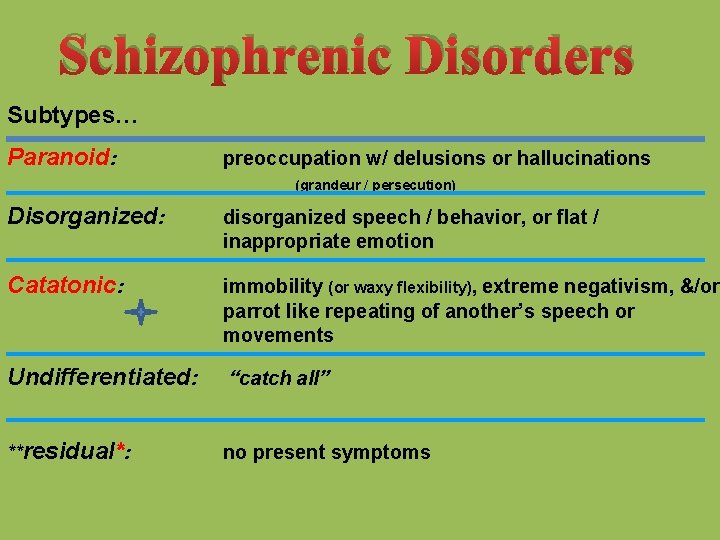
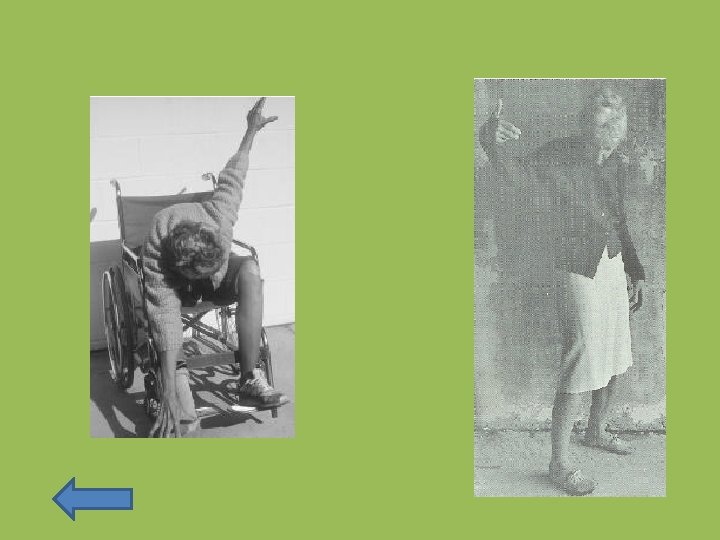
Schizophrenic Disorders Subtypes… Paranoid: preoccupation w/ delusions or hallucinations (grandeur / persecution) Disorganized: disorganized speech / behavior, or flat / inappropriate emotion Catatonic: immobility (or waxy flexibility), extreme negativism, &/or parrot like repeating of another’s speech or movements Undifferentiated: “catch all” **residual*: no present symptoms
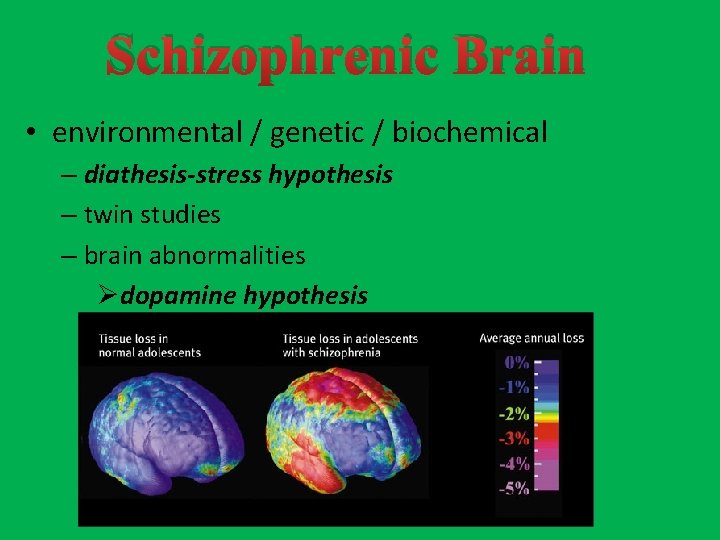
Schizophrenic Brain • environmental / genetic / biochemical – diathesis-stress hypothesis – twin studies – brain abnormalities Ødopamine hypothesis
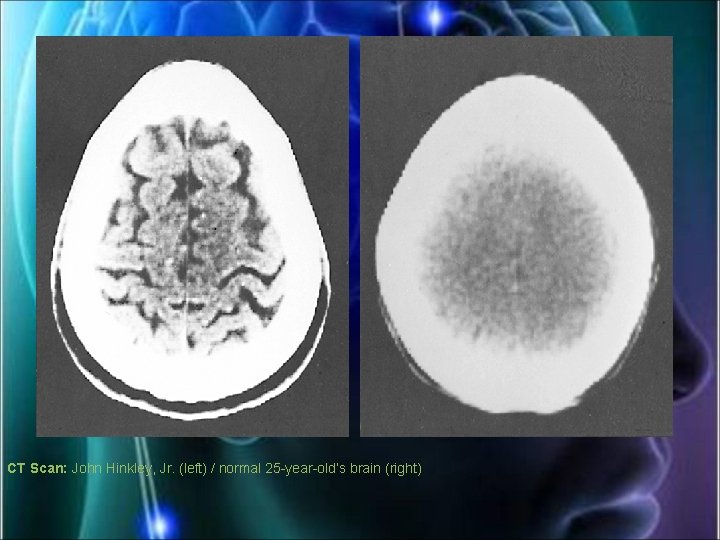
CT Scan: John Hinkley, Jr. (left) / normal 25 -year-old’s brain (right)
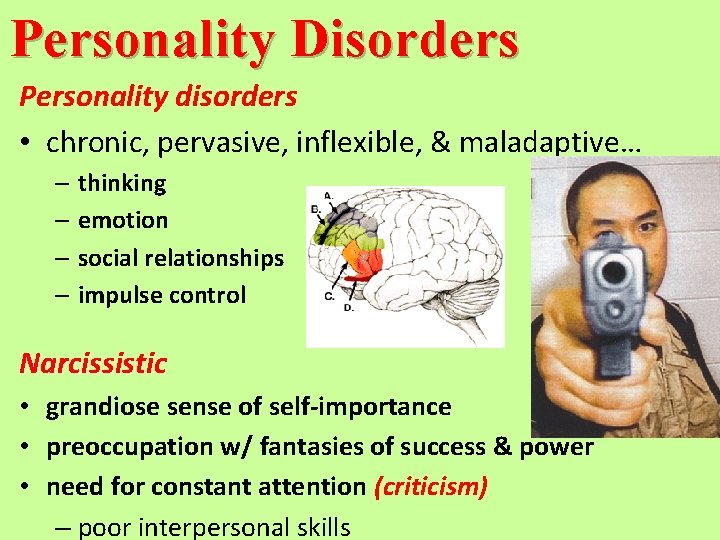
Personality Disorders Personality disorders • chronic, pervasive, inflexible, & maladaptive… – thinking – emotion – social relationships – impulse control Narcissistic • grandiose sense of self-importance • preoccupation w/ fantasies of success & power • need for constant attention (criticism) – poor interpersonal skills
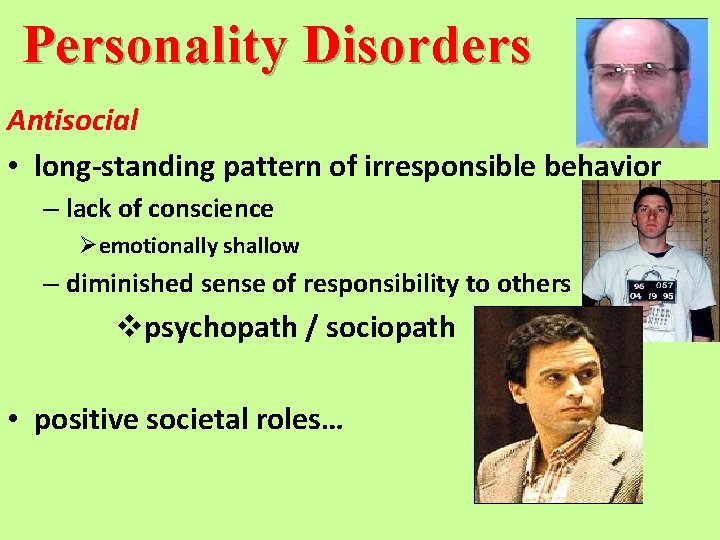
Personality Disorders Antisocial • long-standing pattern of irresponsible behavior – lack of conscience Øemotionally shallow – diminished sense of responsibility to others vpsychopath / sociopath • positive societal roles…
Personality Disorders Borderline • unstable personality given to impulsive behavior – unpredictable moods – confrontational relationships – unstable self image vabsolutes!! Causes: attachment / abuse
What are the Consequences of Labeling People? Ideally: accurate diagnoses = proper treatments Ødiagnoses may labels üdepersonalize individuals üignore social & cultural contexts
Plea of Insanity – • legal term: person unable to conform behavior to law – mental disorder or defect
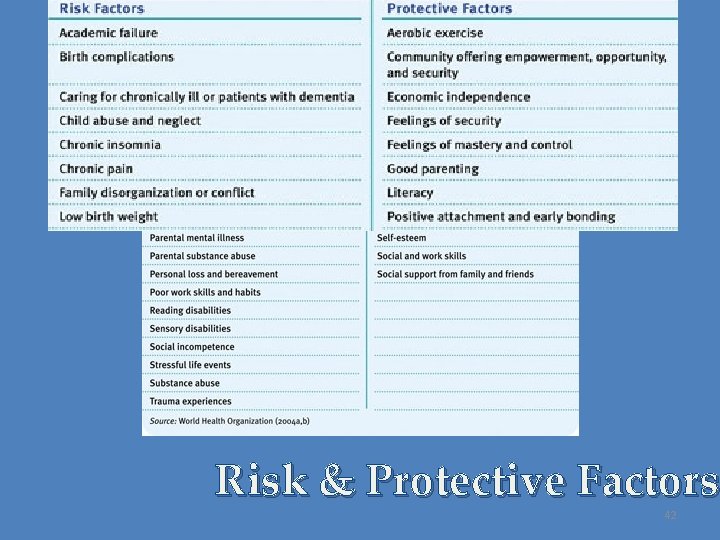
Risk & Protective Factors 42
Abnormal Behavior
• “abnormal”… – meaningful relationships – social responsibilities – social environment üno acute anxiety ünormal behavior • self-defeating personality patterns
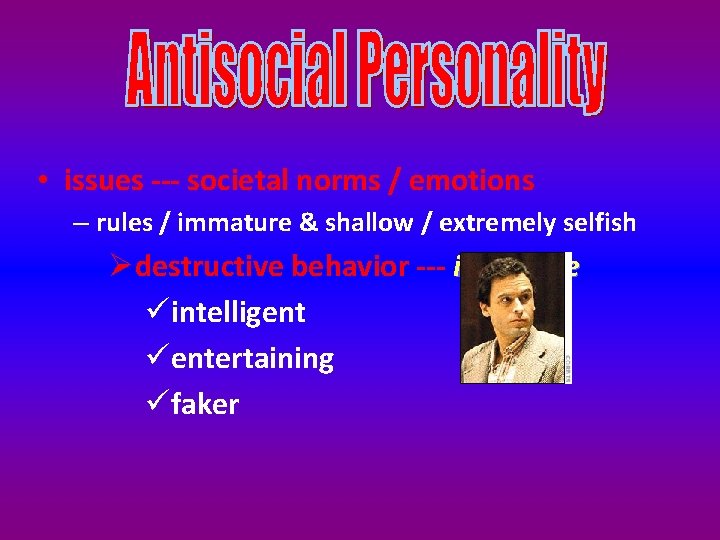
• issues --- societal norms / emotions – rules / immature & shallow / extremely selfish Ødestructive behavior --- impulsive üintelligent üentertaining üfaker
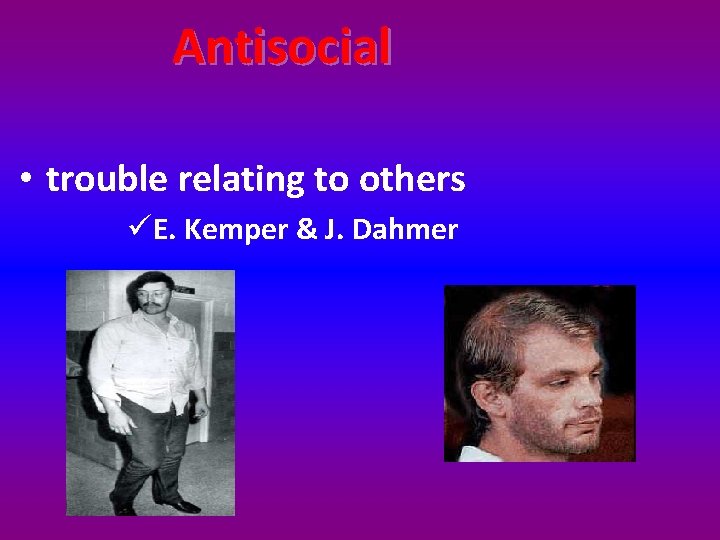
Antisocial • trouble relating to others üE. Kemper & J. Dahmer
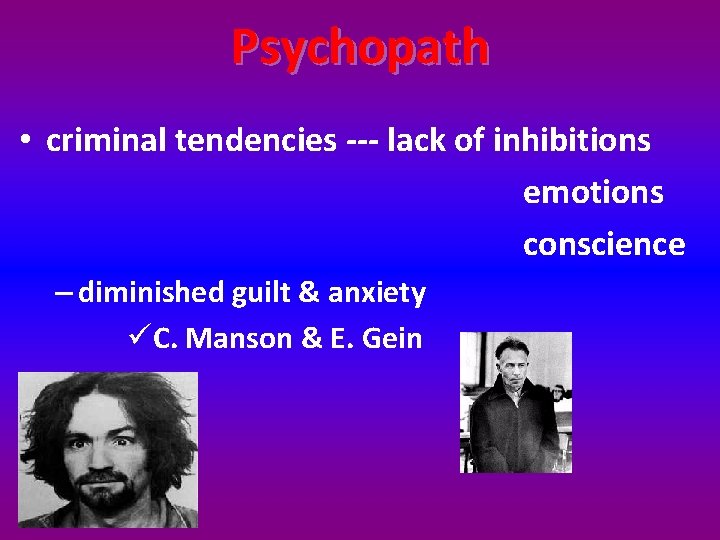
Psychopath • criminal tendencies --- lack of inhibitions emotions conscience – diminished guilt & anxiety üC. Manson & E. Gein
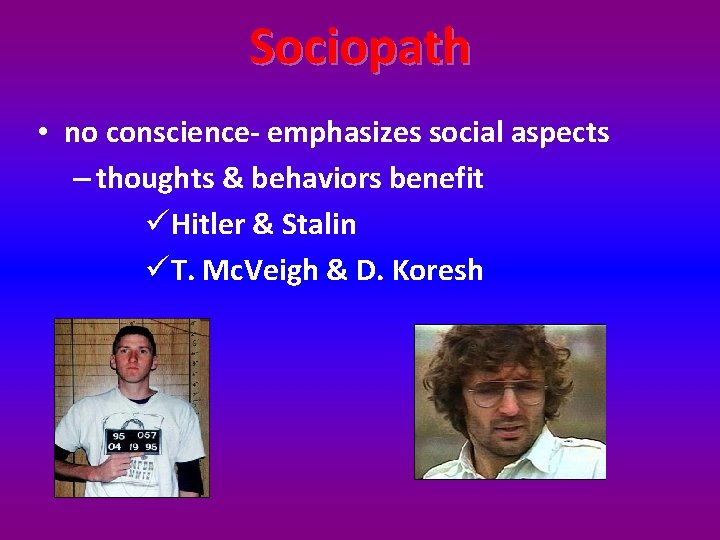
Sociopath • no conscience- emphasizes social aspects – thoughts & behaviors benefit üHitler & Stalin üT. Mc. Veigh & D. Koresh
• • Superficial charm Self-worth Stimulation desired Pathological lying Manipulative Lack remorse or guilt Lack empathy Parasitic lifestyle • • Poor behavioral control Promiscuous sex Lack long-term plans Impulsivity Responsibility issues Juvenile delinquency Criminal versatility Desire authority / power
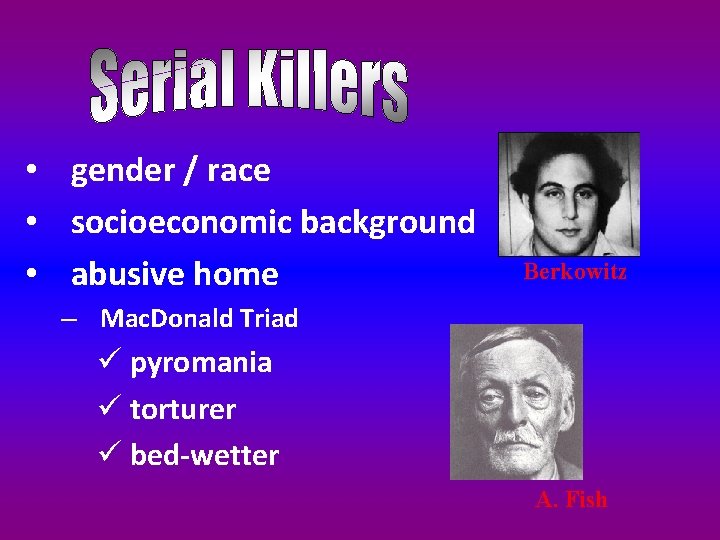
• gender / race • socioeconomic background • abusive home Berkowitz – Mac. Donald Triad ü pyromania ü torturer ü bed-wetter A. Fish
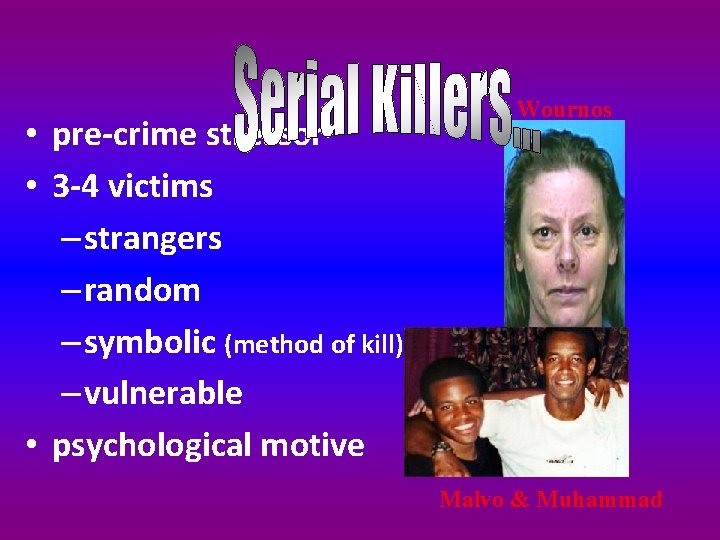
• pre-crime stressor • 3 -4 victims – strangers – random – symbolic (method of kill) – vulnerable • psychological motive Wournos Malvo & Muhammad
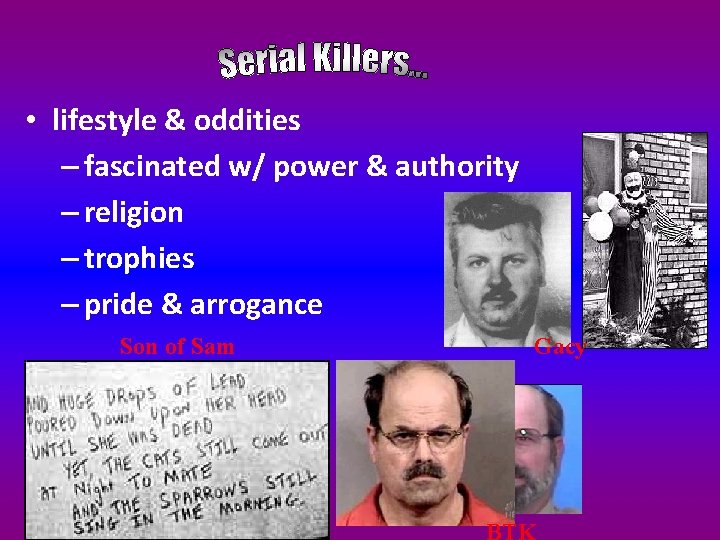
• lifestyle & oddities – fascinated w/ power & authority – religion – trophies – pride & arrogance Son of Sam Gacy
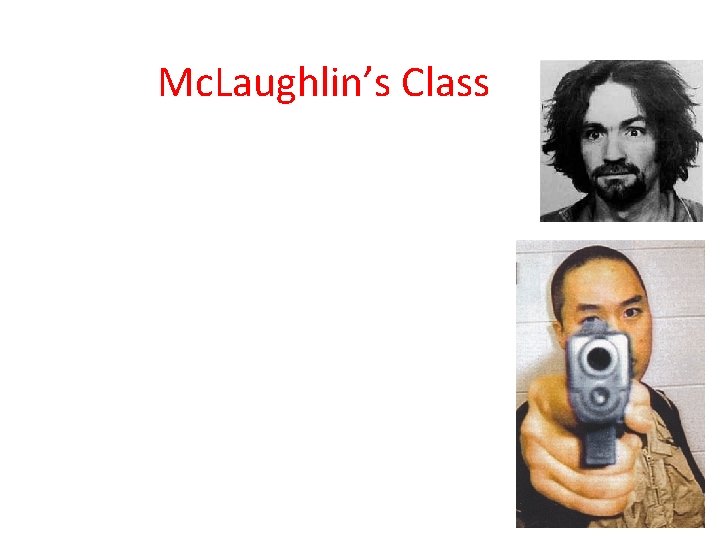
Mc. Laughlin’s Class • • • Deviation from statistical Deviation from social norms Maladaptiveness of behavior Personal distress Psychological health Legal definition
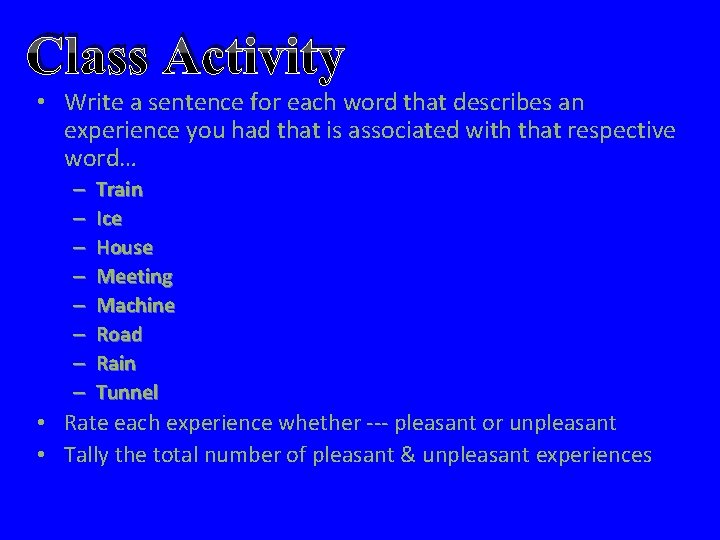
Class Activity • Write a sentence for each word that describes an experience you had that is associated with that respective word… – – – – Train Ice House Meeting Machine Road Rain Tunnel • Rate each experience whether --- pleasant or unpleasant • Tally the total number of pleasant & unpleasant experiences
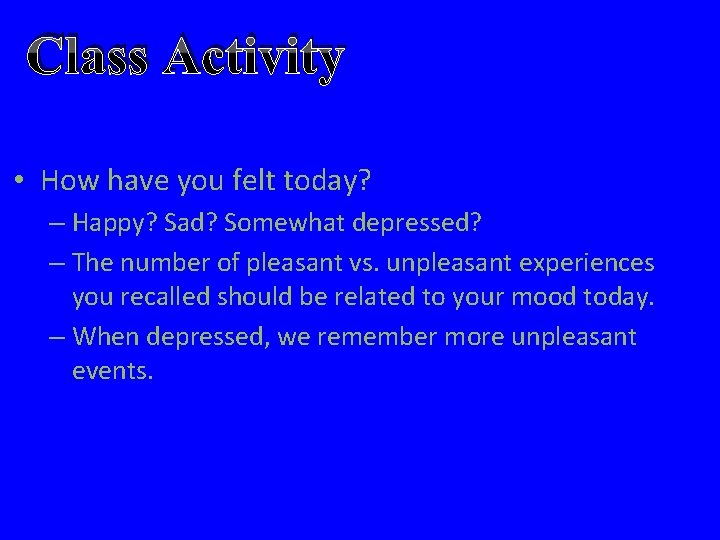
Class Activity • How have you felt today? – Happy? Sad? Somewhat depressed? – The number of pleasant vs. unpleasant experiences you recalled should be related to your mood today. – When depressed, we remember more unpleasant events.
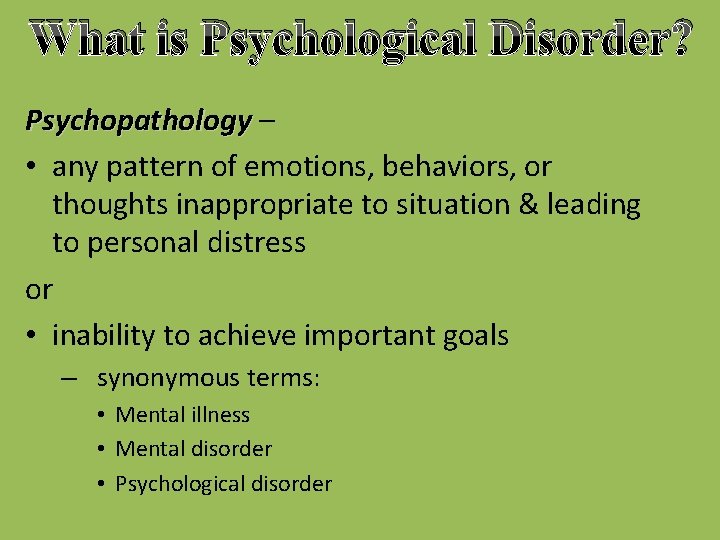
What is Psychological Disorder? Psychopathology – • any pattern of emotions, behaviors, or thoughts inappropriate to situation & leading to personal distress or • inability to achieve important goals – synonymous terms: • Mental illness • Mental disorder • Psychological disorder