
Ch 12 Host Defenses I Nonspecific Defenses SLOs
- Slides: 32
Ch 12 Host Defenses I: Nonspecific Defenses
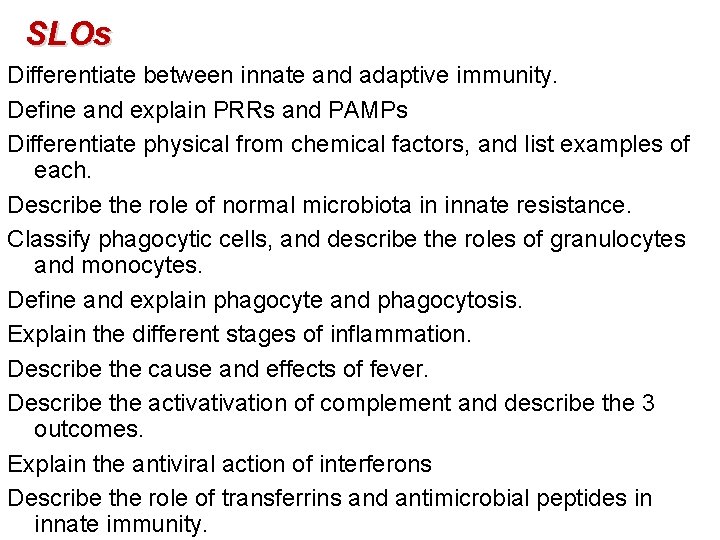
SLOs Differentiate between innate and adaptive immunity. Define and explain PRRs and PAMPs Differentiate physical from chemical factors, and list examples of each. Describe the role of normal microbiota in innate resistance. Classify phagocytic cells, and describe the roles of granulocytes and monocytes. Define and explain phagocyte and phagocytosis. Explain the different stages of inflammation. Describe the cause and effects of fever. Describe the activation of complement and describe the 3 outcomes. Explain the antiviral action of interferons Describe the role of transferrins and antimicrobial peptides in innate immunity.
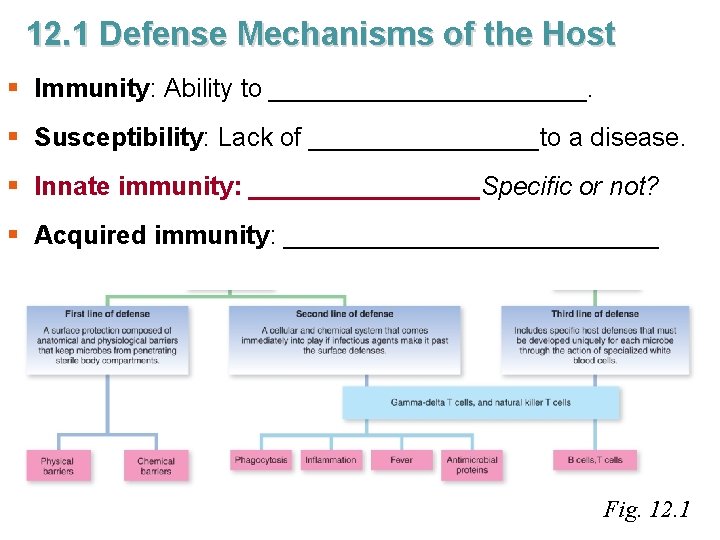
12. 1 Defense Mechanisms of the Host § Immunity: Ability to ___________. § Susceptibility: Lack of ________to a disease. § Innate immunity: ________Specific or not? § Acquired immunity: _____________ Fig. 12. 1
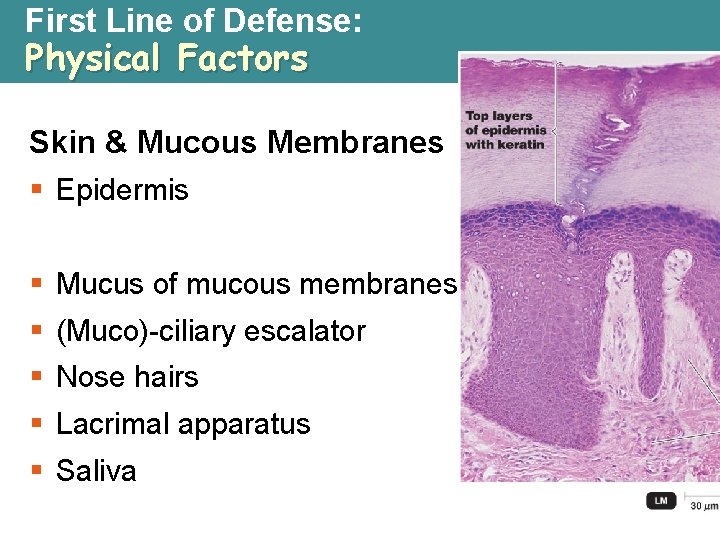
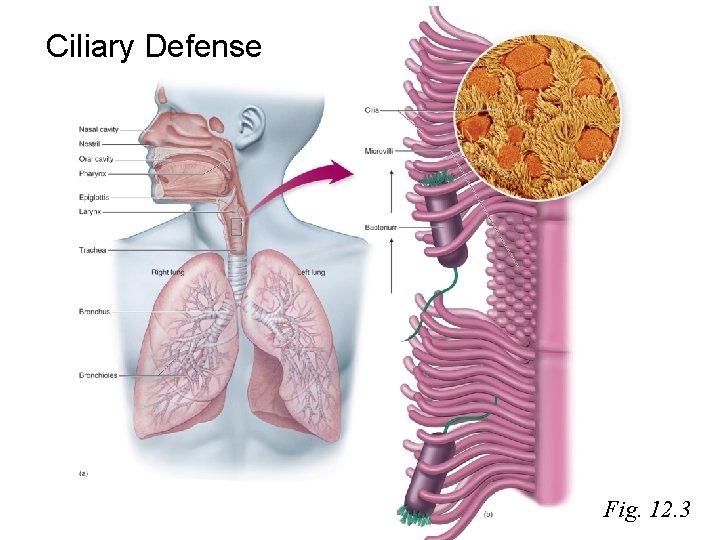
First Line of Defense: Physical Factors Skin & Mucous Membranes § Epidermis § Mucus of mucous membranes § (Muco)-ciliary escalator § Nose hairs § Lacrimal apparatus § Saliva Fig 16. 3
Ciliary Defense Fig. 12. 3
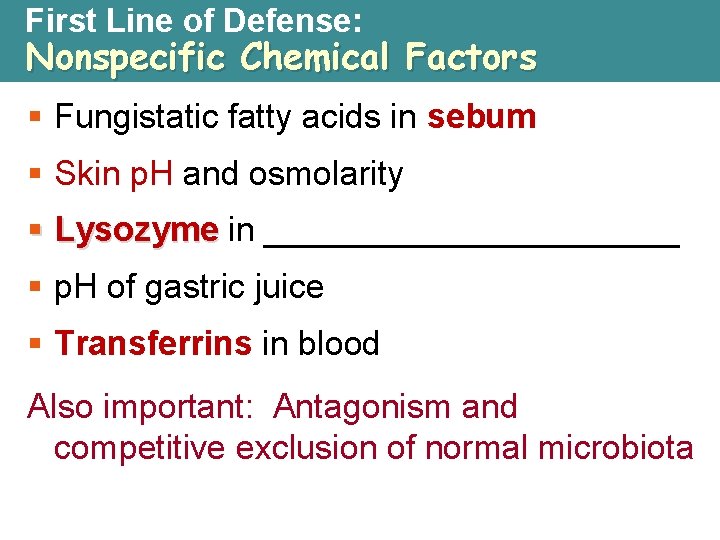
First Line of Defense: Nonspecific Chemical Factors § Fungistatic fatty acids in sebum § Skin p. H and osmolarity § Lysozyme in ___________ § p. H of gastric juice § Transferrins in blood Also important: Antagonism and competitive exclusion of normal microbiota
Concept Check For each of the barriers below, state whether it is a physical, chemical, or genetic barrier. A. Hydrochloric acid of the stomach B. Sloughing of skin C. Lysozyme in saliva and tears D. Mutation in the gene for complement proteins E. Ciliary escalator
12. 2 SECOND AND THIRD LINES OF DEFENSE: AN OVERVIEW Kick in if 1 st level of defense breached System of protective cells and fluids Includes inflammation and phagocytosis Rapid action at local and systemic levels Immune system responsible for: • Body surveillance • Recognition of foreign and abnormal material • Destruction of these entities
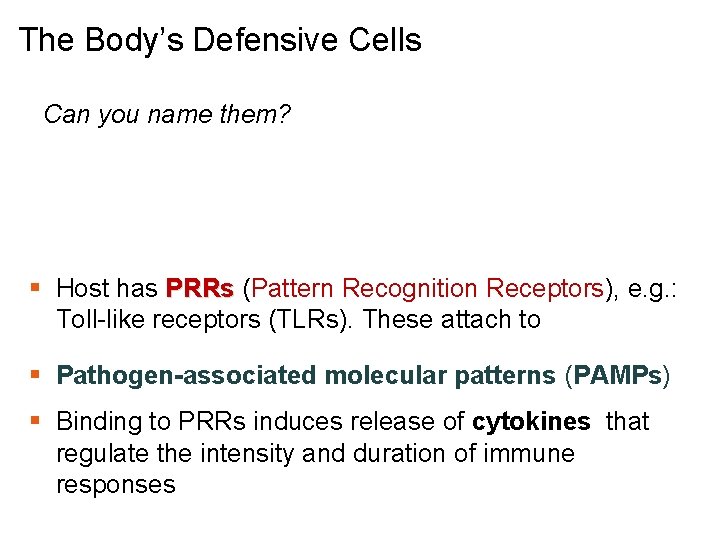
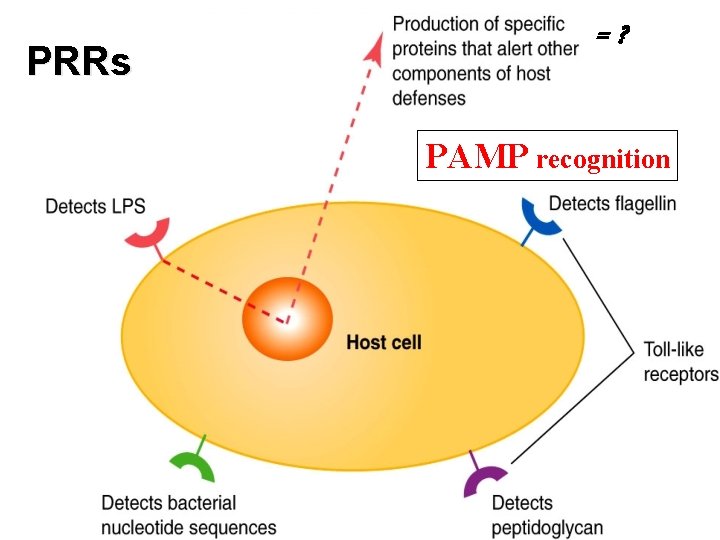
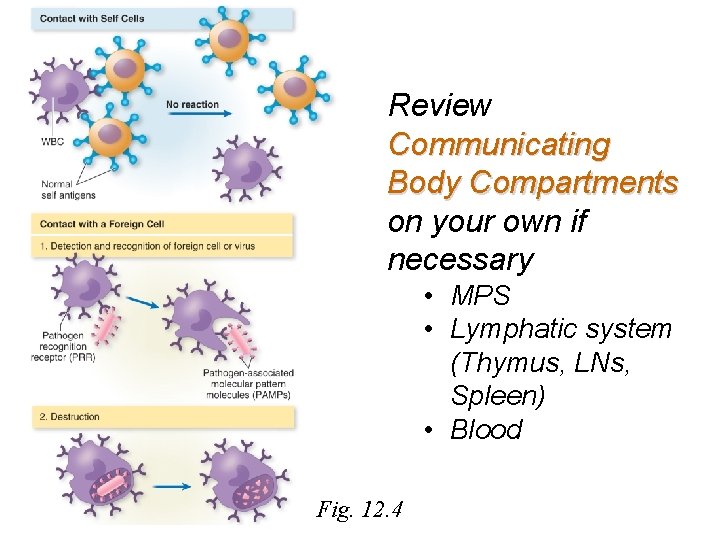
The Body’s Defensive Cells Can you name them? § Host has PRRs (Pattern Recognition Receptors), e. g. : Toll-like receptors (TLRs). These attach to § Pathogen-associated molecular patterns (PAMPs) § Binding to PRRs induces release of cytokines that regulate the intensity and duration of immune responses
PRRs =? PAMP recognition
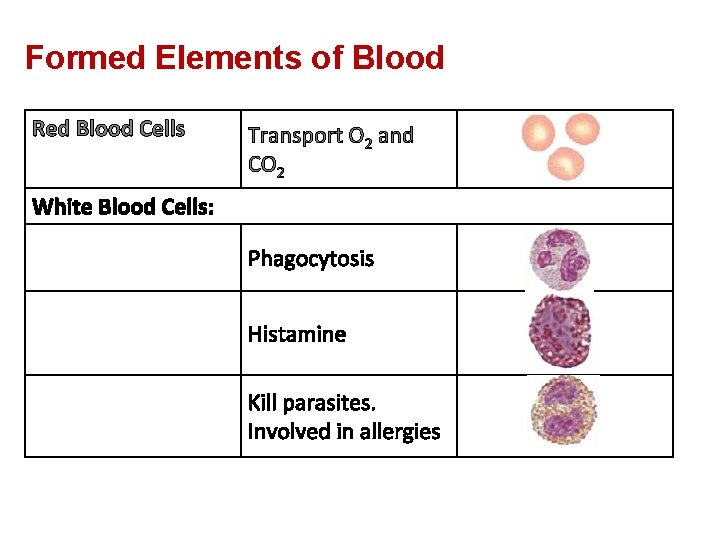
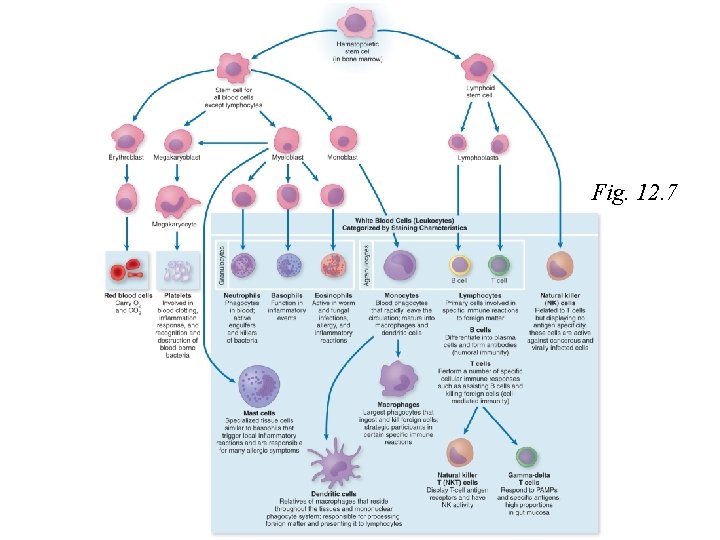
Formed Elements of Blood Red Blood Cells Transport O 2 and CO 2 White Blood Cells: Phagocytosis Histamine Kill parasites. Involved in allergies
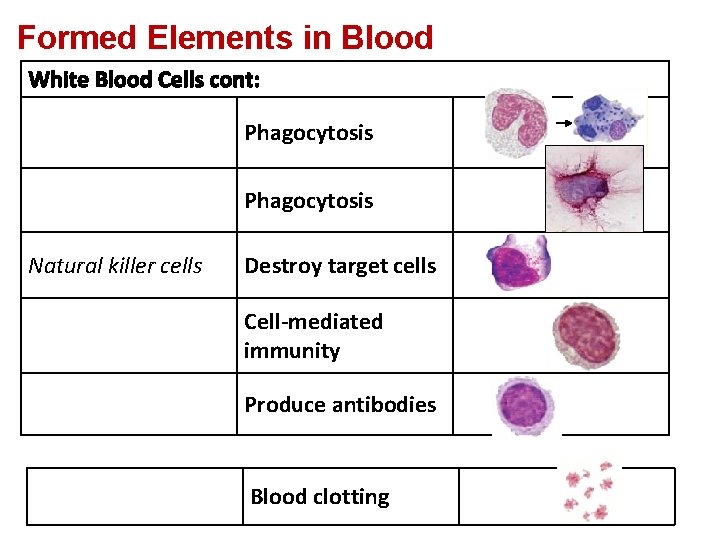
Formed Elements in Blood White Blood Cells cont: Phagocytosis Natural killer cells Destroy target cells Cell-mediated immunity Produce antibodies Blood clotting
Fig. 12. 7
Review Communicating Body Compartments on your own if necessary • MPS • Lymphatic system (Thymus, LNs, Spleen) • Blood Fig. 12. 4
12. 3 The Second Line of Defense Generalized and nonspecific defenses that support and interact with specific immune responses: - Phagocytosis - Inflammation - Fever - Antimicrobial proteins
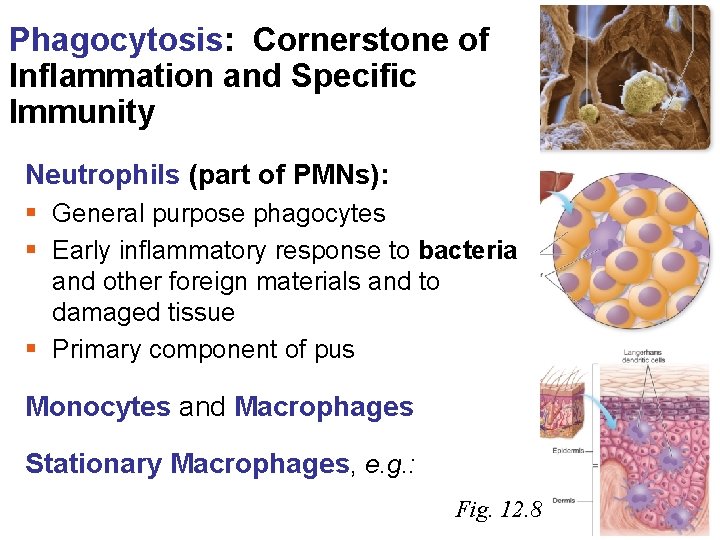
Phagocytosis: Cornerstone of Inflammation and Specific Immunity Neutrophils (part of PMNs): § General purpose phagocytes § Early inflammatory response to bacteria and other foreign materials and to damaged tissue § Primary component of pus Monocytes and Macrophages Stationary Macrophages, e. g. : Fig. 12. 8
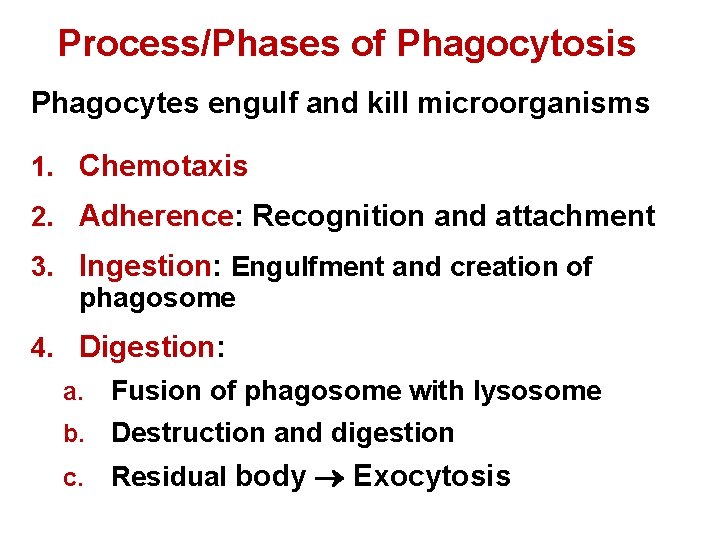
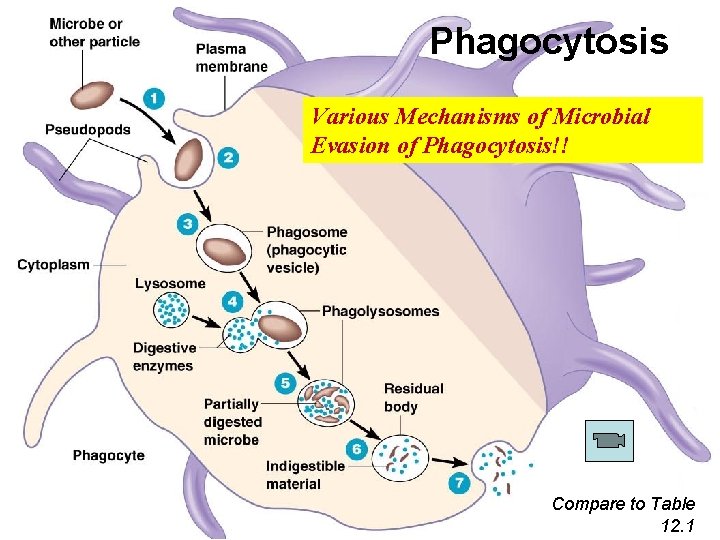
Process/Phases of Phagocytosis Phagocytes engulf and kill microorganisms 1. Chemotaxis 2. Adherence: Recognition and attachment 3. Ingestion: Engulfment and creation of phagosome 4. Digestion: a. Fusion of phagosome with lysosome b. Destruction and digestion c. Residual body Exocytosis
Phagocytosis Various Mechanisms of Microbial Evasion of Phagocytosis!! Compare to Table 12. 1
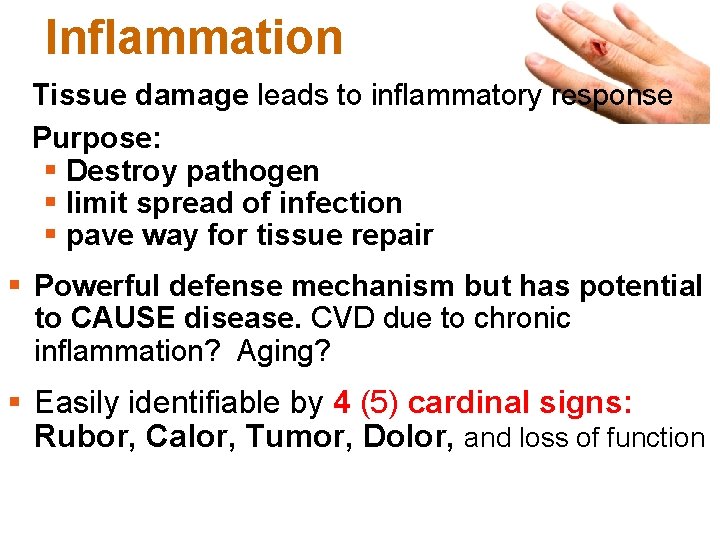
Inflammation Tissue damage leads to inflammatory response Purpose: § Destroy pathogen § limit spread of infection § pave way for tissue repair § Powerful defense mechanism but has potential to CAUSE disease. CVD due to chronic inflammation? Aging? § Easily identifiable by 4 (5) cardinal signs: Rubor, Calor, Tumor, Dolor, and loss of function
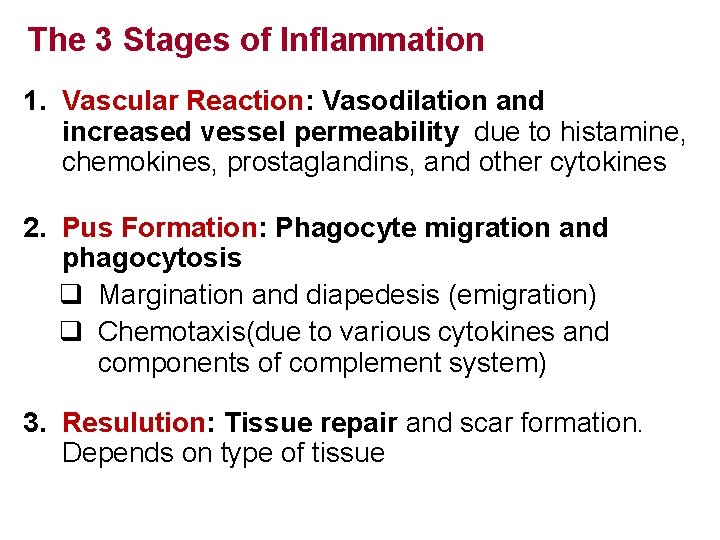
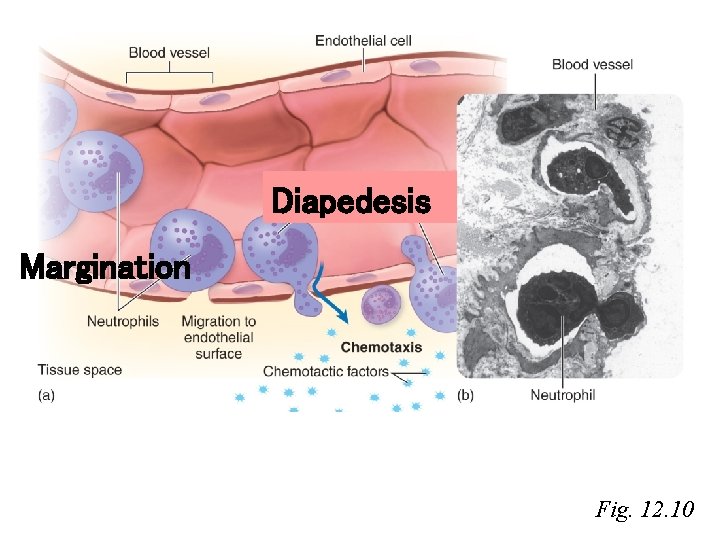
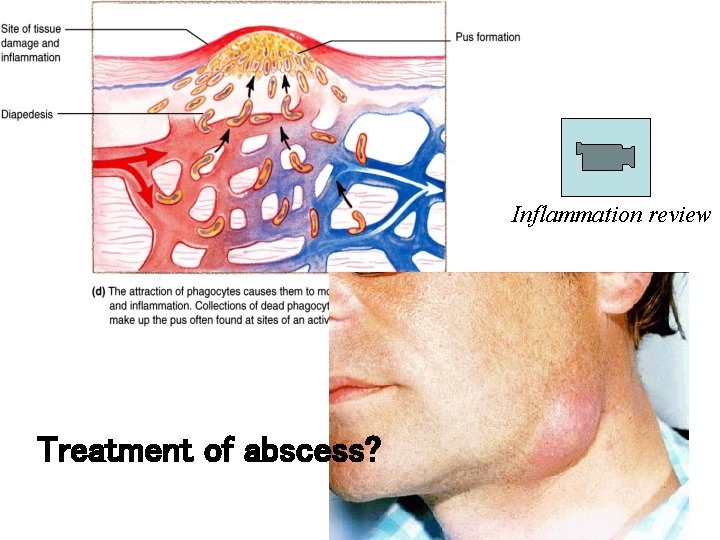
The 3 Stages of Inflammation 1. Vascular Reaction: Vasodilation and increased vessel permeability due to histamine, chemokines, prostaglandins, and other cytokines 2. Pus Formation: Phagocyte migration and phagocytosis q Margination and diapedesis (emigration) q Chemotaxis(due to various cytokines and components of complement system) 3. Resulution: Tissue repair and scar formation. Depends on type of tissue
Diapedesis Margination Fig. 12. 10
Inflammation review Treatment of abscess?
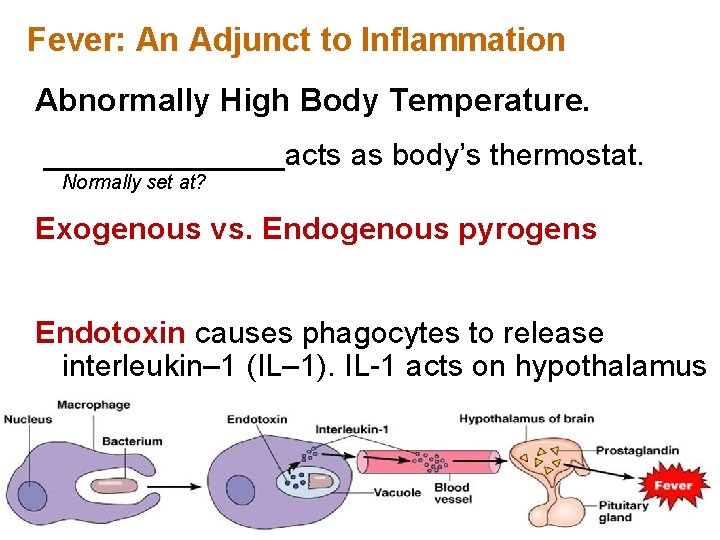
Fever: An Adjunct to Inflammation Abnormally High Body Temperature. _______acts as body’s thermostat. Normally set at? Exogenous vs. Endogenous pyrogens Endotoxin causes phagocytes to release interleukin– 1 (IL– 1). IL-1 acts on hypothalamus
Fever cont. Thermostat set to higher temp. Body reacts how? What happens when no more IL– 1?
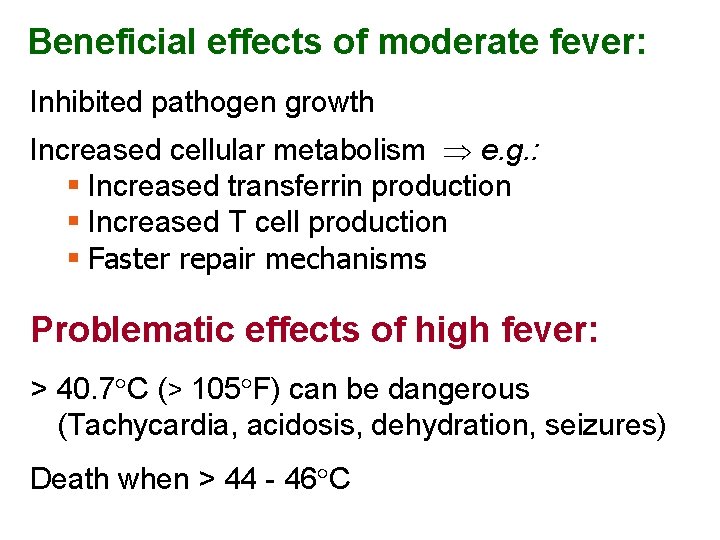
Beneficial effects of moderate fever: Inhibited pathogen growth Increased cellular metabolism e. g. : § Increased transferrin production § Increased T cell production § Faster repair mechanisms Problematic effects of high fever: > 40. 7 C (> 105 F) can be dangerous (Tachycardia, acidosis, dehydration, seizures) Death when > 44 - 46 C
Antimicrobial Proteins 1. Interferons 2. Complement system 3. Antimicrobial peptides 4. Iron-binding proteins: _______
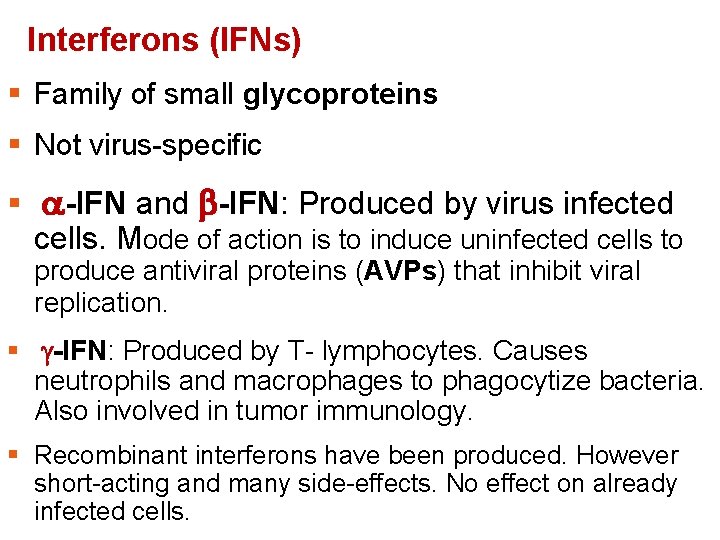
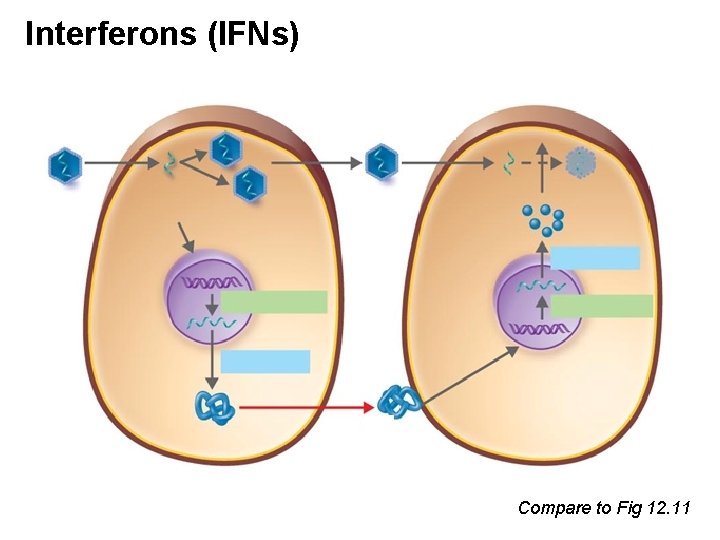
Interferons (IFNs) § Family of small glycoproteins § Not virus-specific § -IFN and -IFN: Produced by virus infected cells. Mode of action is to induce uninfected cells to produce antiviral proteins (AVPs) that inhibit viral replication. § -IFN: Produced by T- lymphocytes. Causes neutrophils and macrophages to phagocytize bacteria. Also involved in tumor immunology. § Recombinant interferons have been produced. However short-acting and many side-effects. No effect on already infected cells.
Interferons (IFNs) Compare to Fig 12. 11
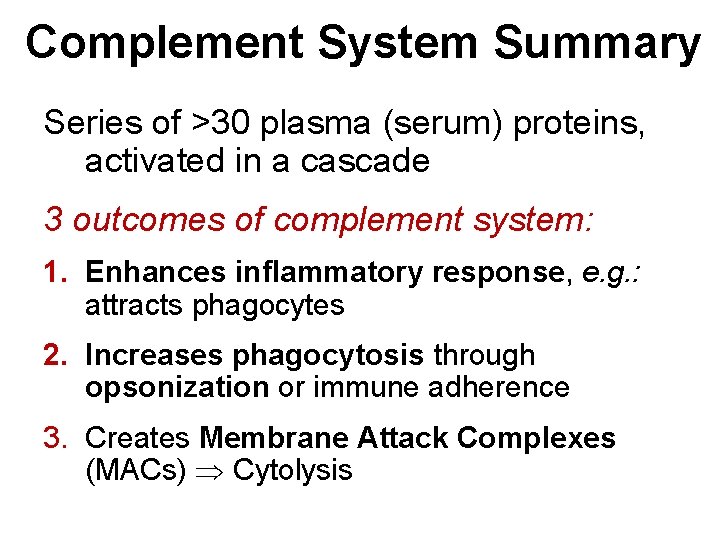
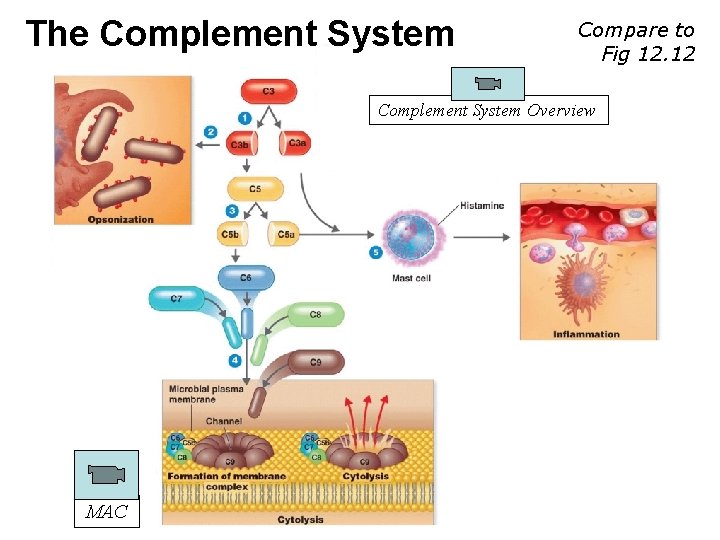
Complement System Summary Series of >30 plasma (serum) proteins, activated in a cascade 3 outcomes of complement system: 1. Enhances inflammatory response, e. g. : attracts phagocytes 2. Increases phagocytosis through opsonization or immune adherence 3. Creates Membrane Attack Complexes (MACs) Cytolysis
The Complement System Compare to Fig 12. 12 Complement System Overview MAC
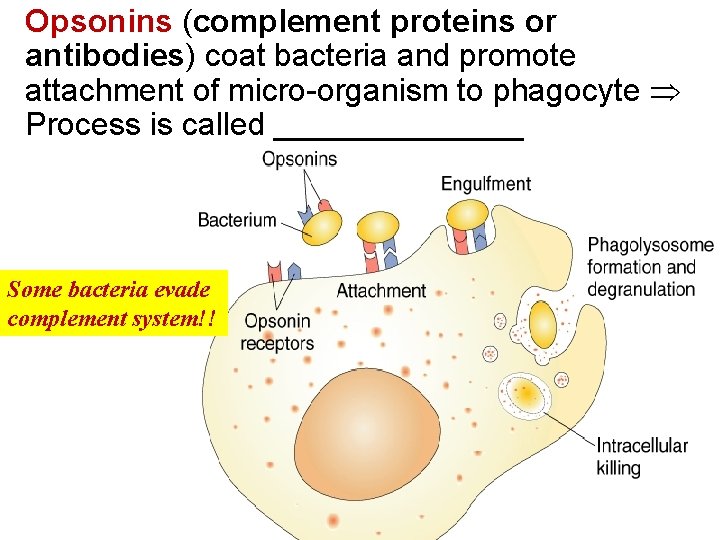
Opsonins (complement proteins or antibodies) coat bacteria and promote attachment of micro-organism to phagocyte Process is called _______ Some bacteria evade complement system!!
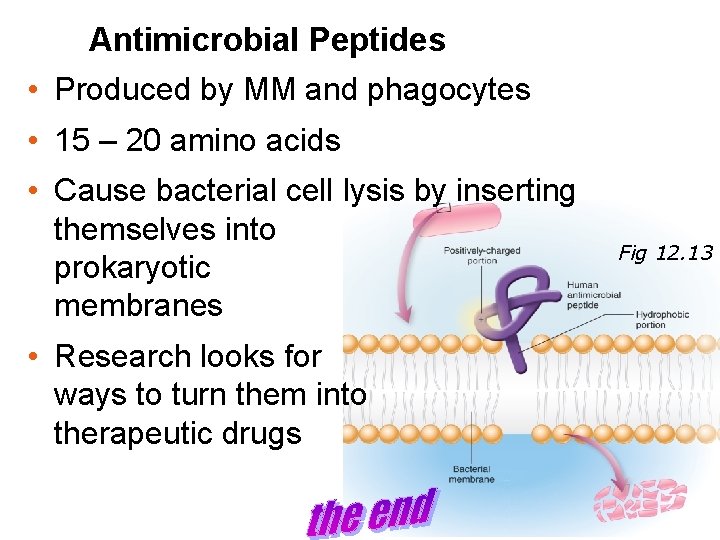
Antimicrobial Peptides • Produced by MM and phagocytes • 15 – 20 amino acids • Cause bacterial cell lysis by inserting themselves into prokaryotic membranes • Research looks for ways to turn them into therapeutic drugs Fig 12. 13