
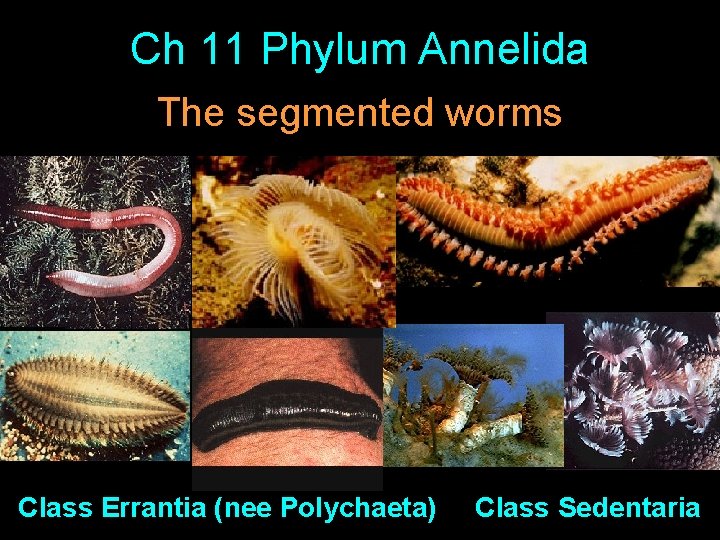
Ch 11 Phylum Annelida The segmented worms Class


- Slides: 40
Ch 11 Phylum Annelida The segmented worms Class Errantia (nee Polychaeta) Class Sedentaria
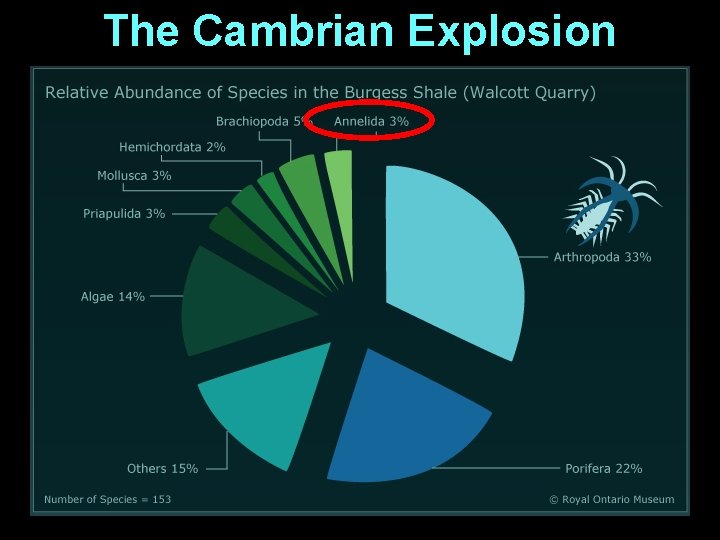
The Cambrian Explosion
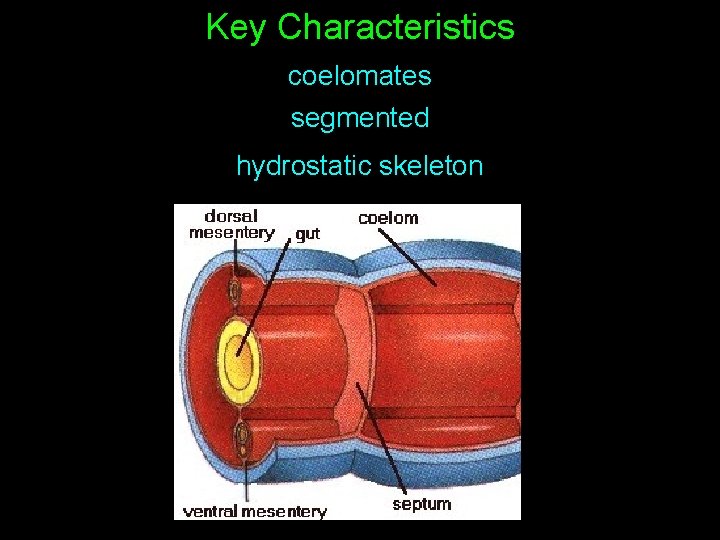
Key Characteristics coelomates segmented hydrostatic skeleton
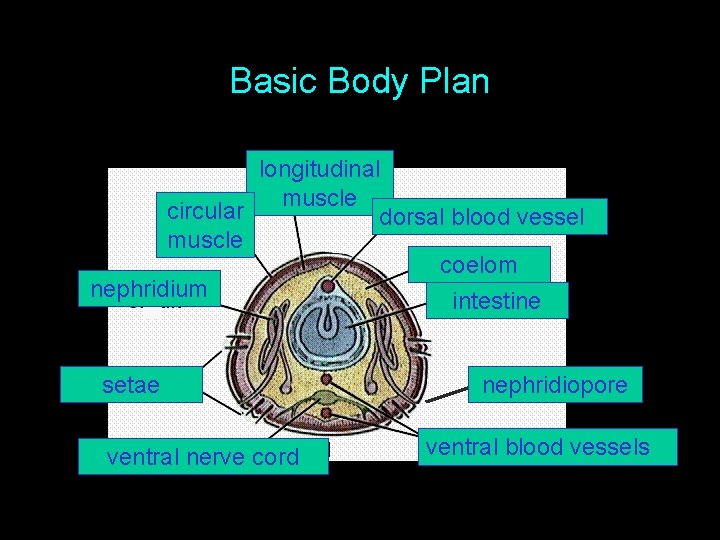
Basic Body Plan longitudinal muscle circular dorsal blood vessel muscle coelom nephridium intestine setae ventral nerve cord nephridiopore ventral blood vessels
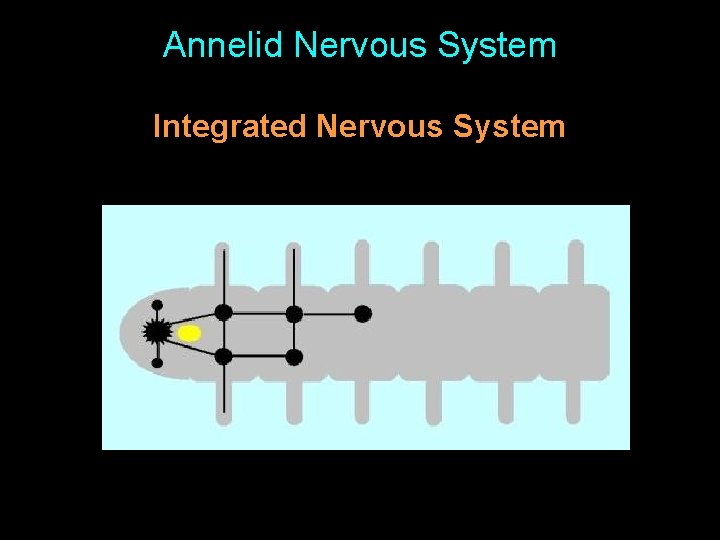
Annelid Nervous System Integrated Nervous System
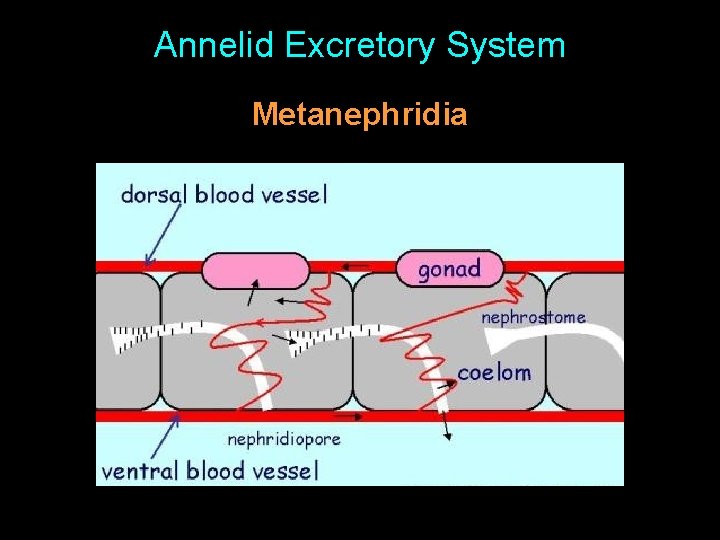
Annelid Excretory System Metanephridia
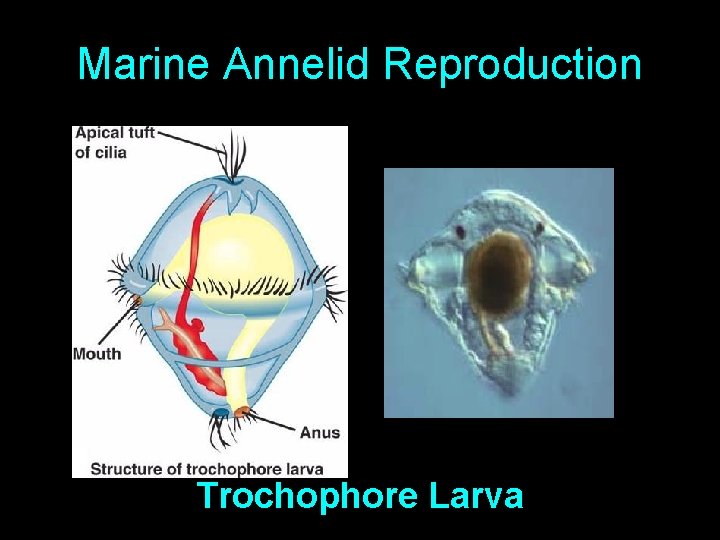
Marine Annelid Reproduction Trochophore Larva
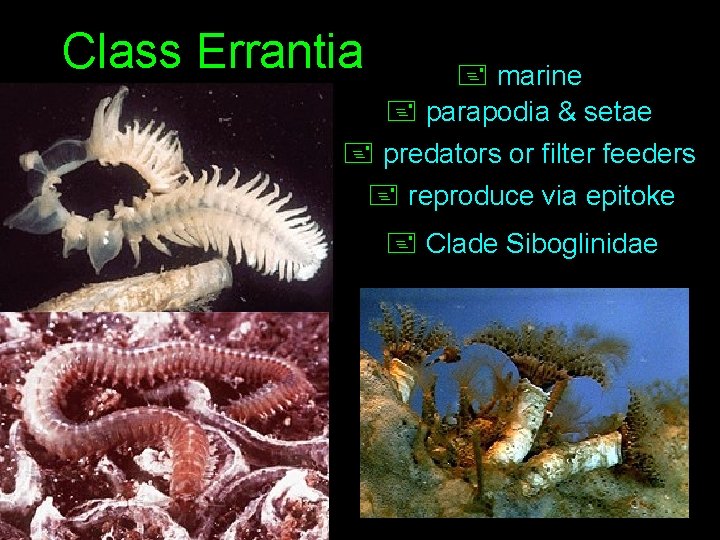
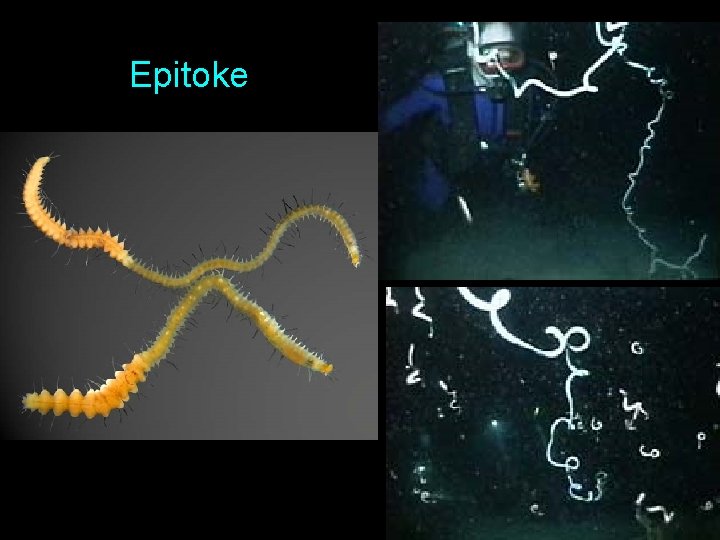
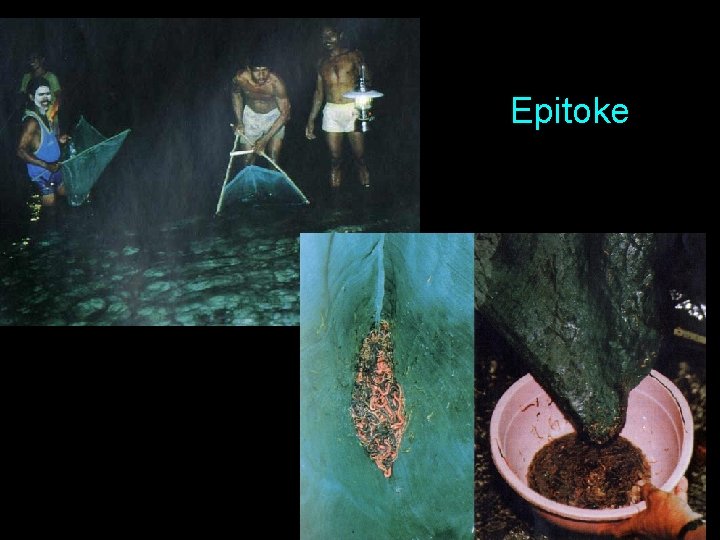
Class Errantia + marine + parapodia & setae + predators or filter feeders + reproduce via epitoke + Clade Siboglinidae
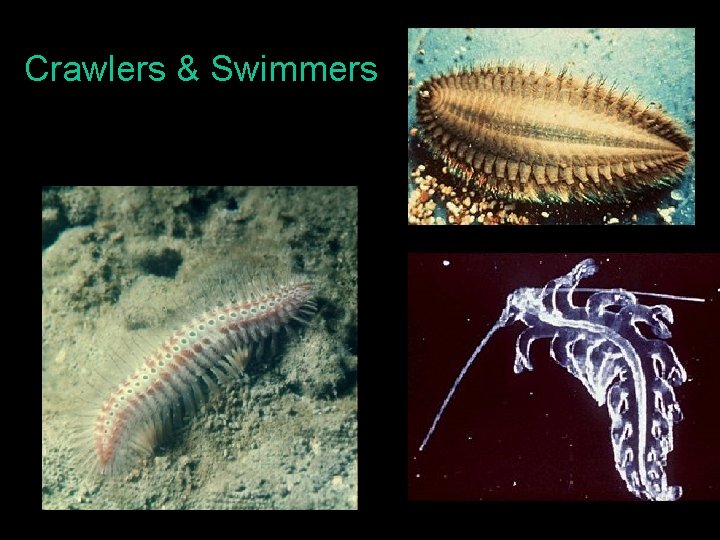
Crawlers & Swimmers
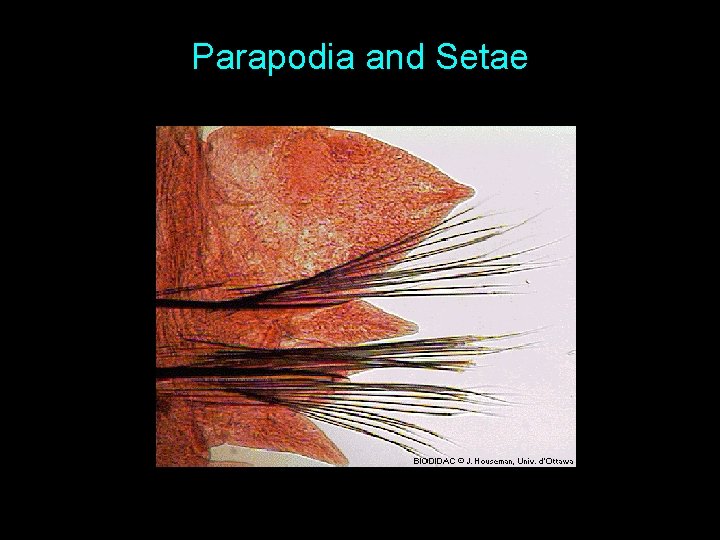
Parapodia and Setae
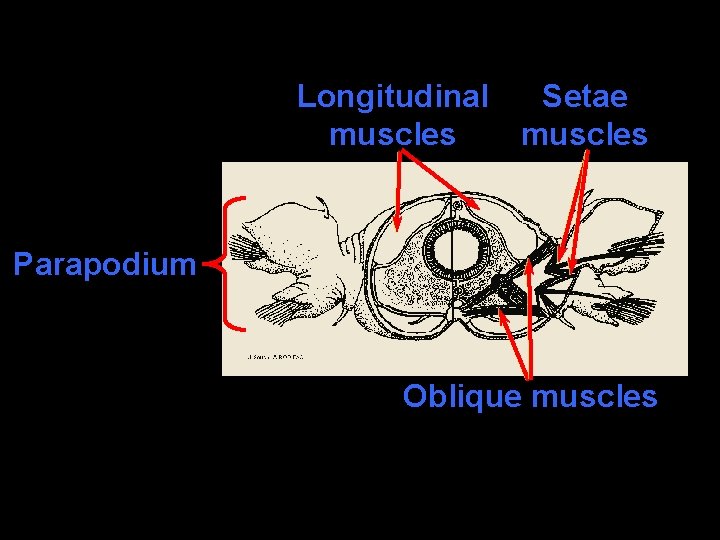
Longitudinal muscles Setae muscles Parapodium Oblique muscles
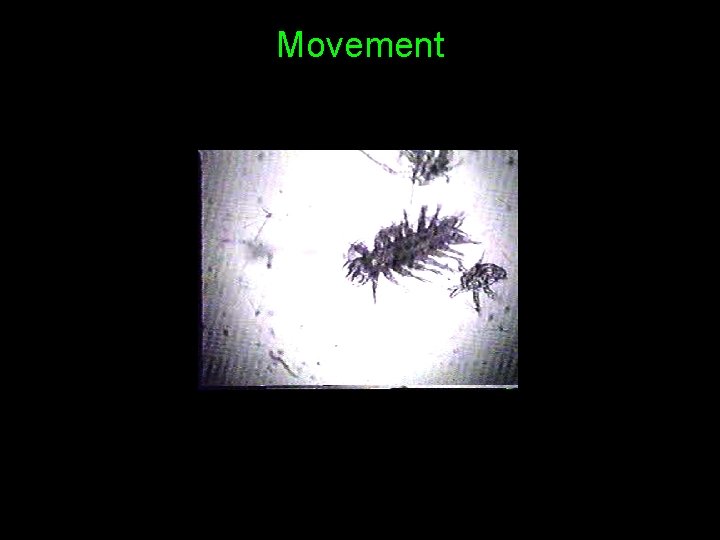
Movement
Epitoke
Epitoke
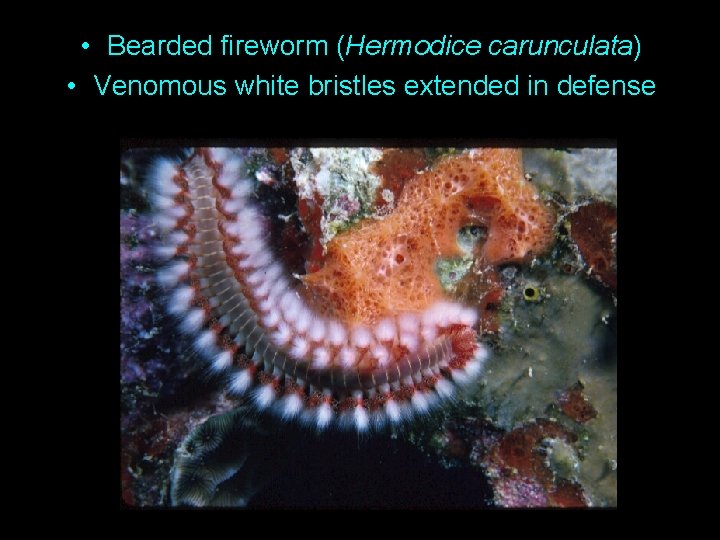
• Bearded fireworm (Hermodice carunculata) • Venomous white bristles extended in defense
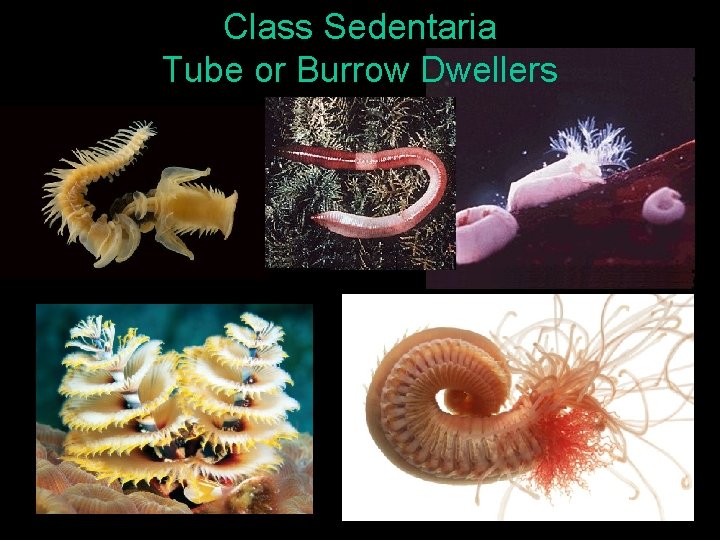
Class Sedentaria Tube or Burrow Dwellers
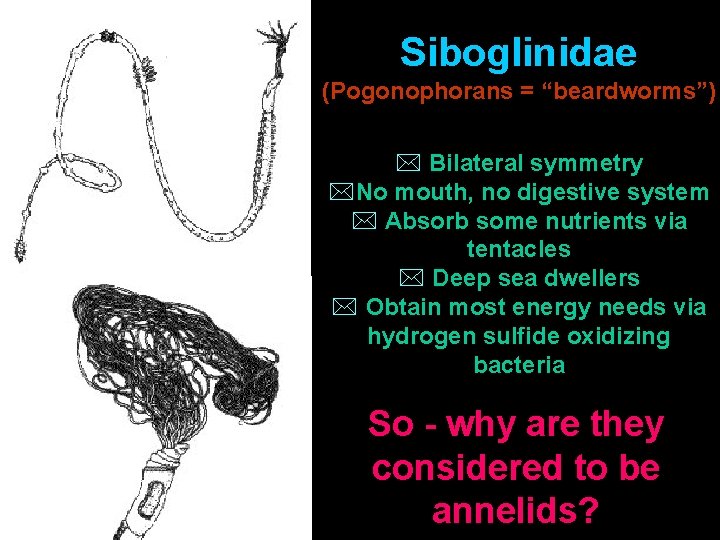
Siboglinidae (Pogonophorans = “beardworms”) * Bilateral symmetry *No mouth, no digestive system * Absorb some nutrients via tentacles * Deep sea dwellers * Obtain most energy needs via hydrogen sulfide oxidizing bacteria So - why are they considered to be annelids?
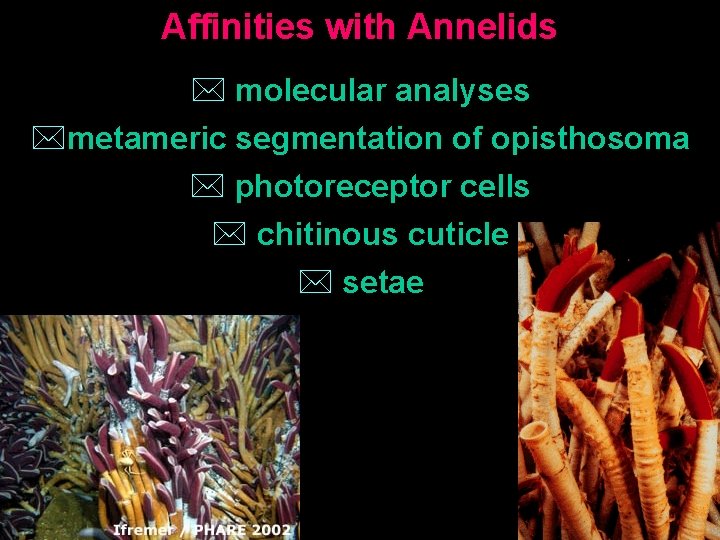
Affinities with Annelids * molecular analyses *metameric segmentation of opisthosoma * photoreceptor cells * chitinous cuticle * setae
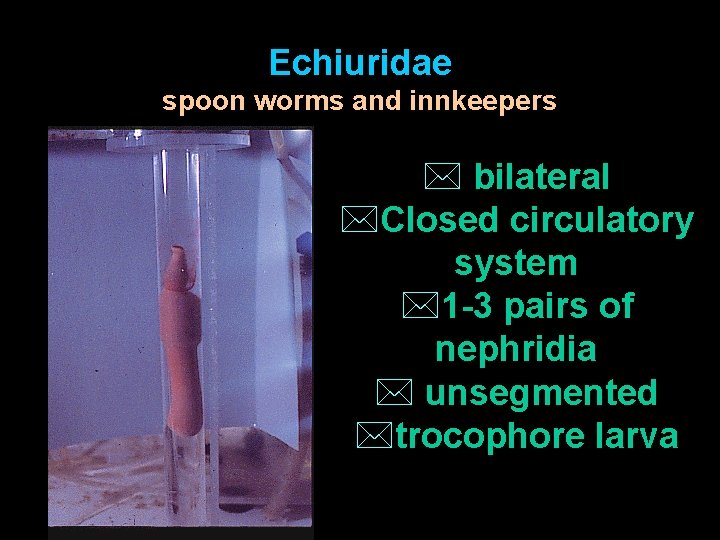
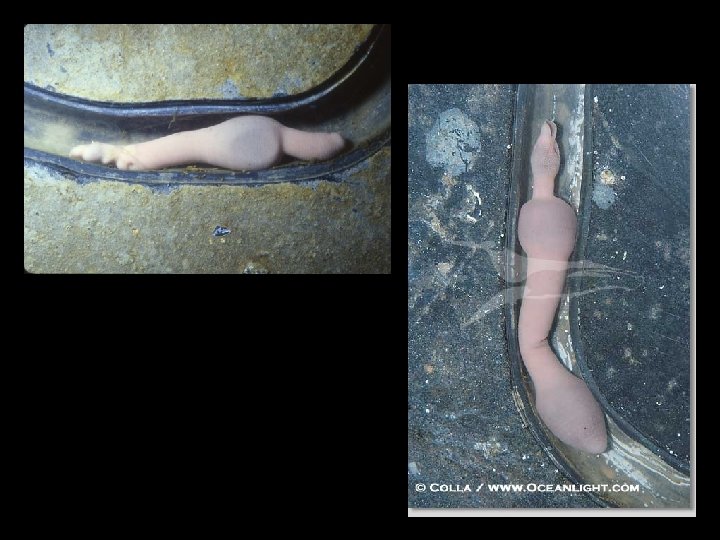
Echiuridae spoon worms and innkeepers * bilateral *Closed circulatory system *1 -3 pairs of nephridia * unsegmented *trocophore larva
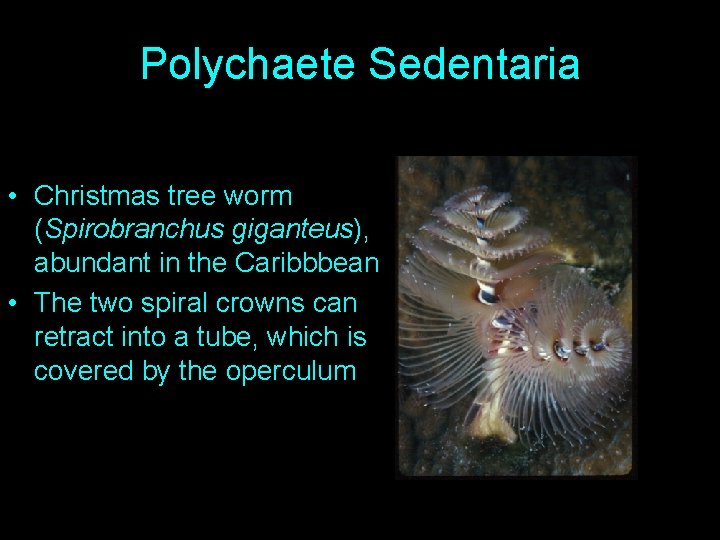
Polychaete Sedentaria • Christmas tree worm (Spirobranchus giganteus), abundant in the Caribbbean • The two spiral crowns can retract into a tube, which is covered by the operculum
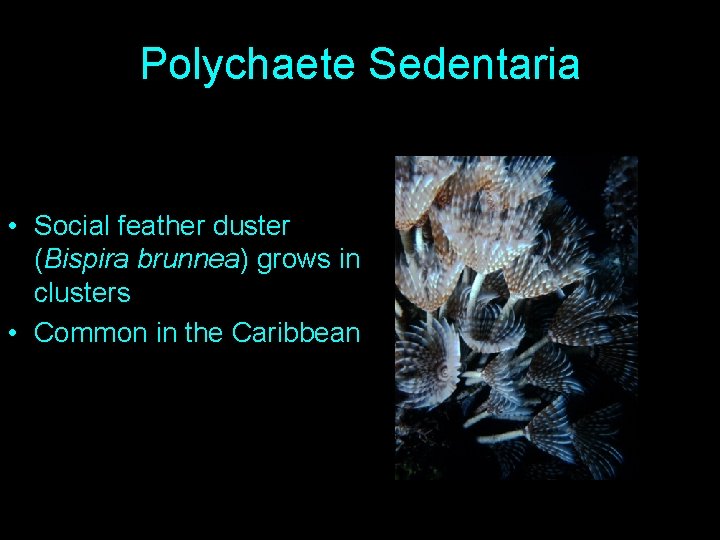
Polychaete Sedentaria • Social feather duster (Bispira brunnea) grows in clusters • Common in the Caribbean
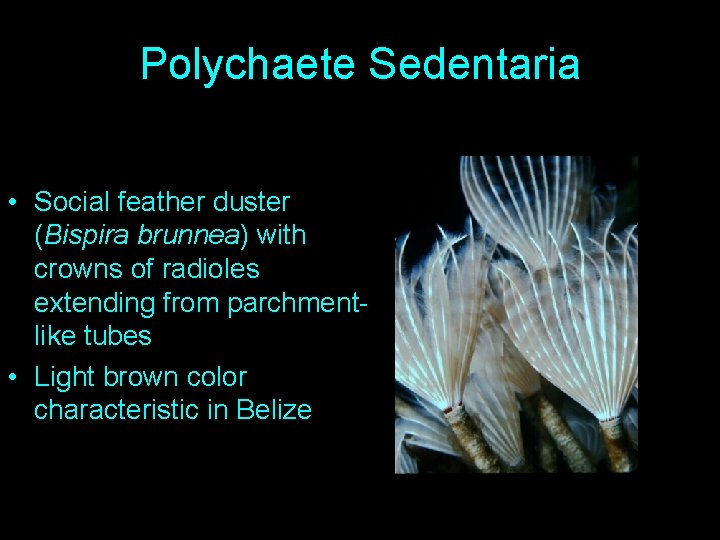
Polychaete Sedentaria • Social feather duster (Bispira brunnea) with crowns of radioles extending from parchmentlike tubes • Light brown color characteristic in Belize
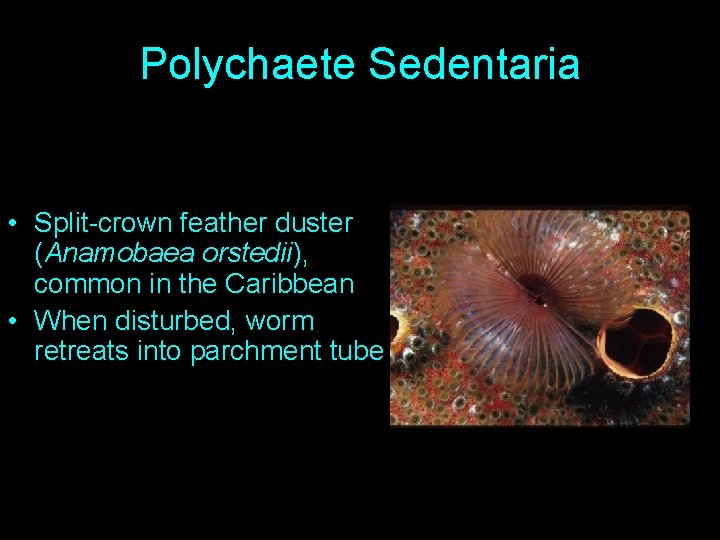
Polychaete Sedentaria • Split-crown feather duster (Anamobaea orstedii), common in the Caribbean • When disturbed, worm retreats into parchment tube
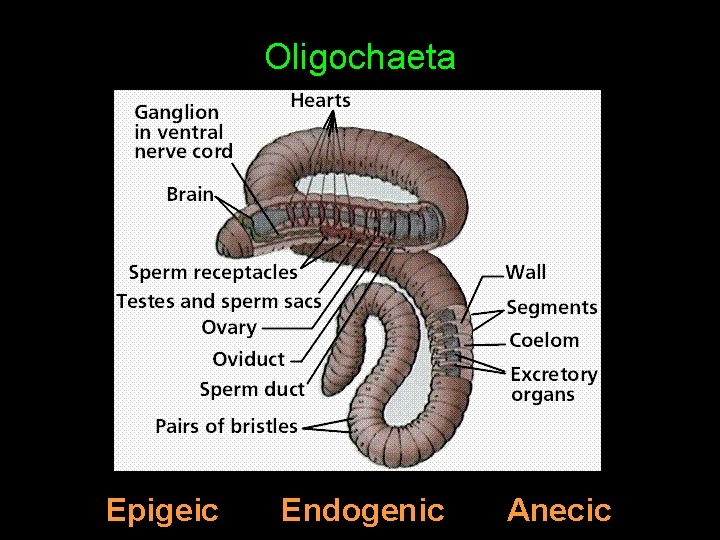
Oligochaeta Epigeic Endogenic Anecic
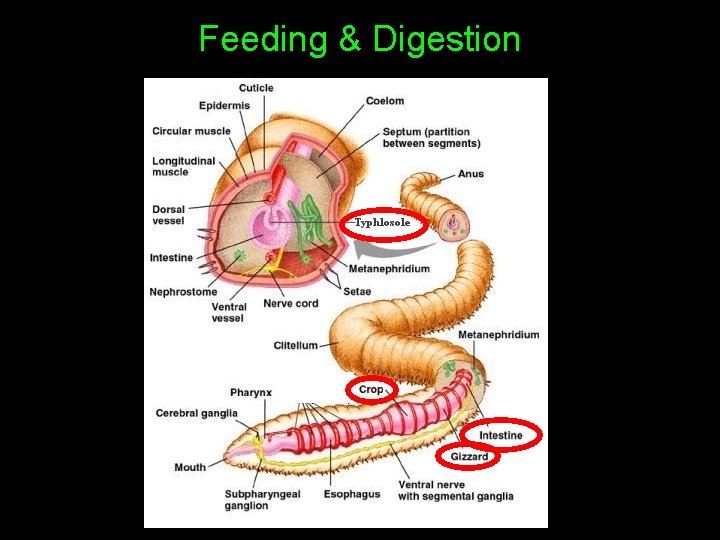
Feeding & Digestion
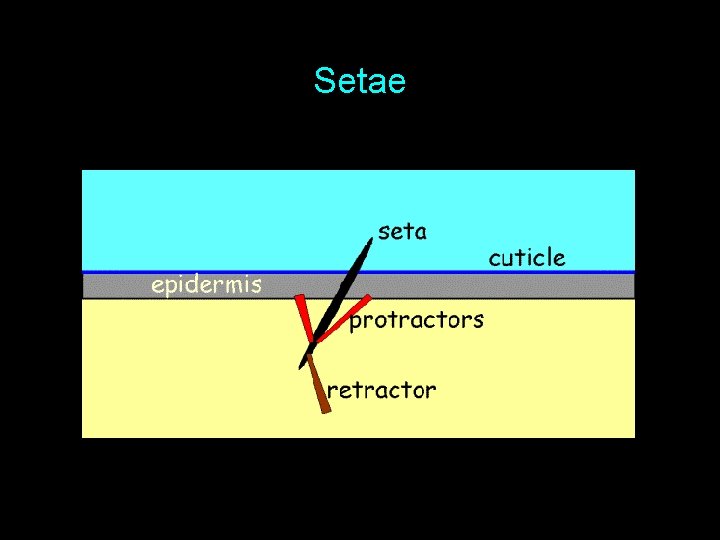
Setae
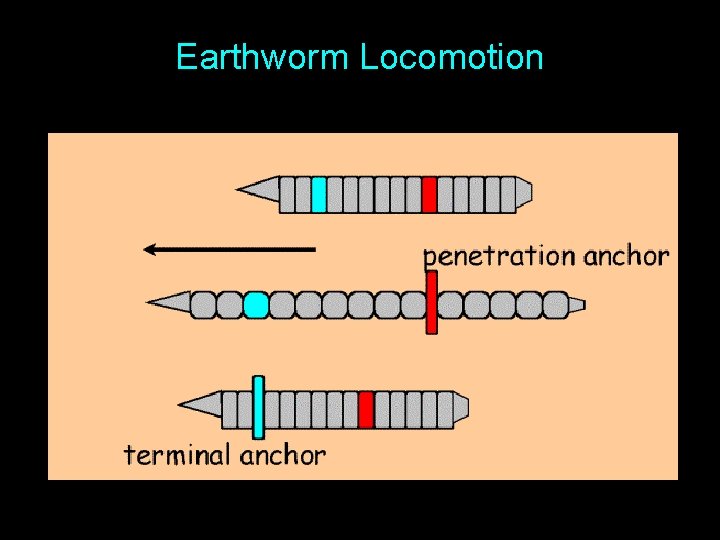
Earthworm Locomotion
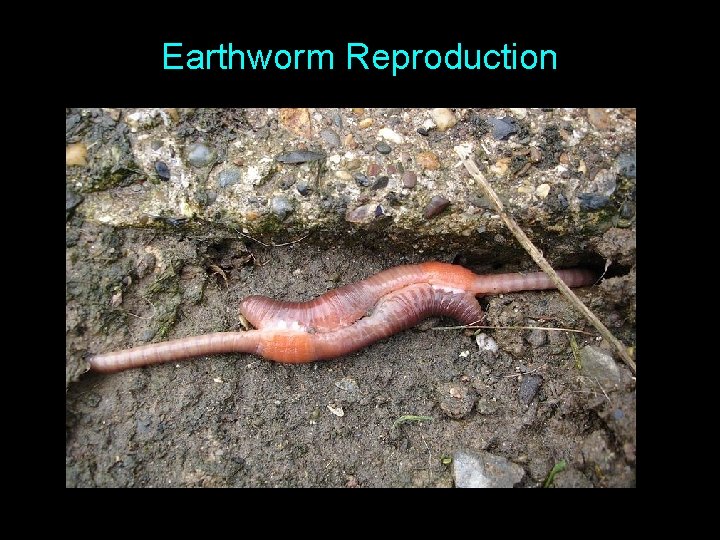
Earthworm Reproduction
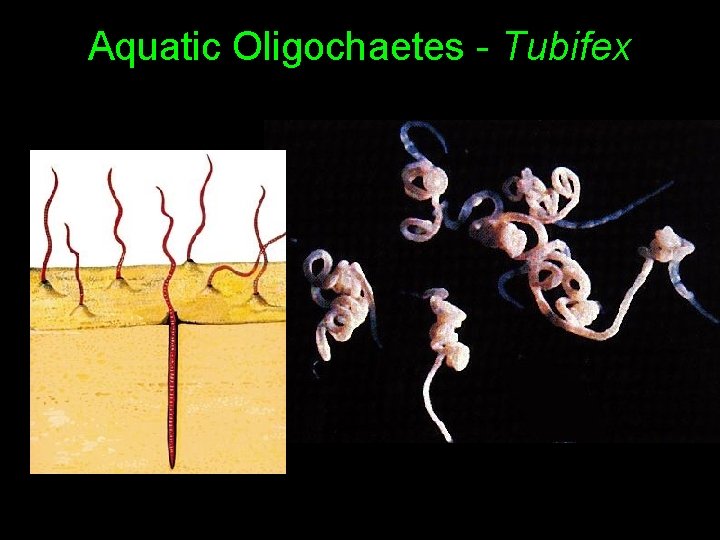
Aquatic Oligochaetes - Tubifex
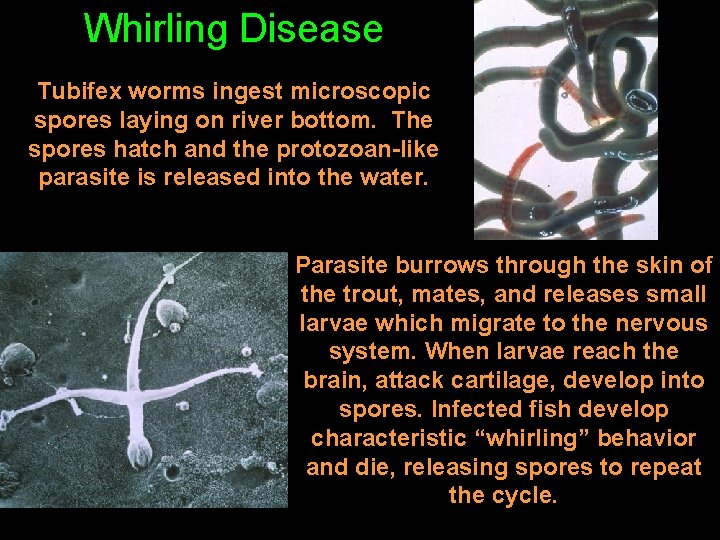
Whirling Disease Tubifex worms ingest microscopic spores laying on river bottom. The spores hatch and the protozoan-like parasite is released into the water. Parasite burrows through the skin of the trout, mates, and releases small larvae which migrate to the nervous system. When larvae reach the brain, attack cartilage, develop into spores. Infected fish develop characteristic “whirling” behavior and die, releasing spores to repeat the cycle.
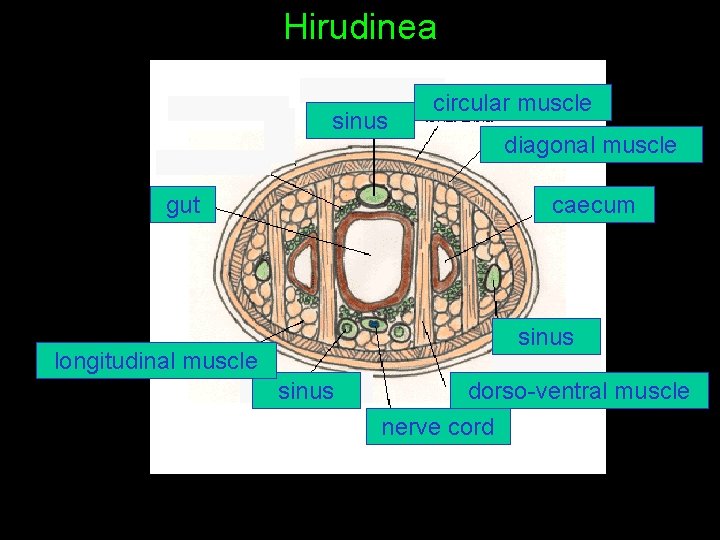
Hirudinea sinus gut circular muscle diagonal muscle caecum sinus longitudinal muscle sinus dorso-ventral muscle nerve cord
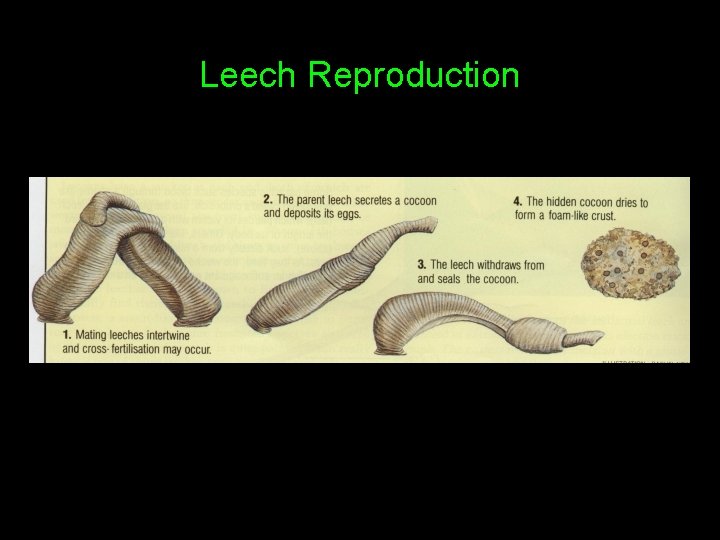
Leech Reproduction
Movement
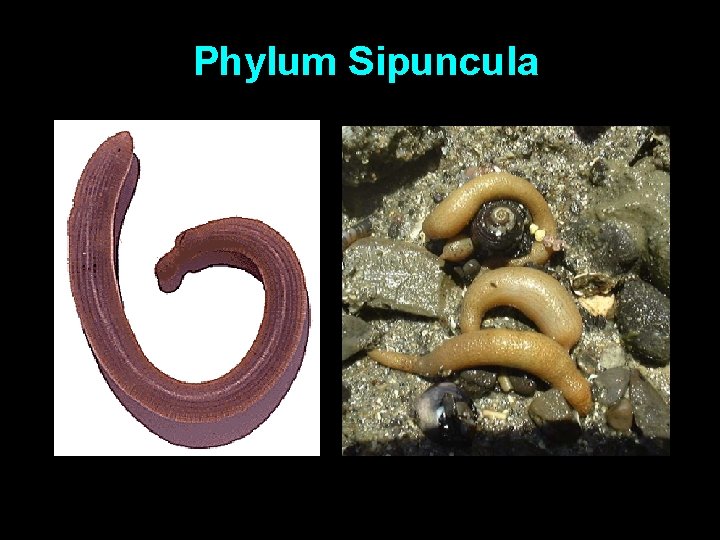
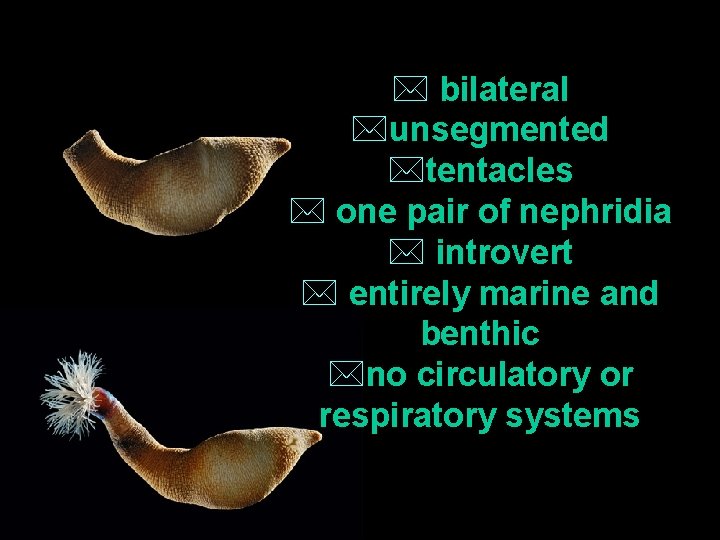
Phylum Sipuncula
* bilateral *unsegmented *tentacles * one pair of nephridia * introvert * entirely marine and benthic *no circulatory or respiratory systems