
Ch 11 Introduction to Genetics A Brief History
Ch. 11 Introduction to Genetics
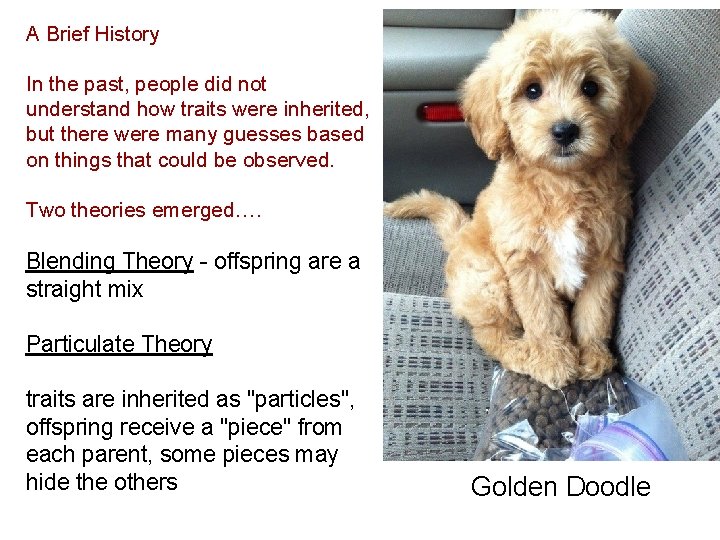
A Brief History In the past, people did not understand how traits were inherited, but there were many guesses based on things that could be observed. Two theories emerged…. Blending Theory - offspring are a straight mix Particulate Theory traits are inherited as "particles", offspring receive a "piece" from each parent, some pieces may hide the others Golden Doodle

What is genetics? The study of heredity (how traits are passed from one generation to the next)
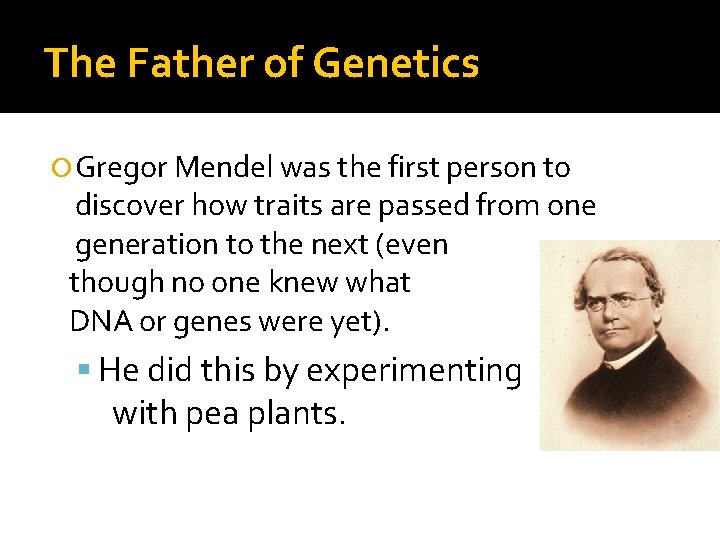
The Father of Genetics Gregor Mendel was the first person to discover how traits are passed from one generation to the next (even though no one knew what DNA or genes were yet). He did this by experimenting with pea plants.
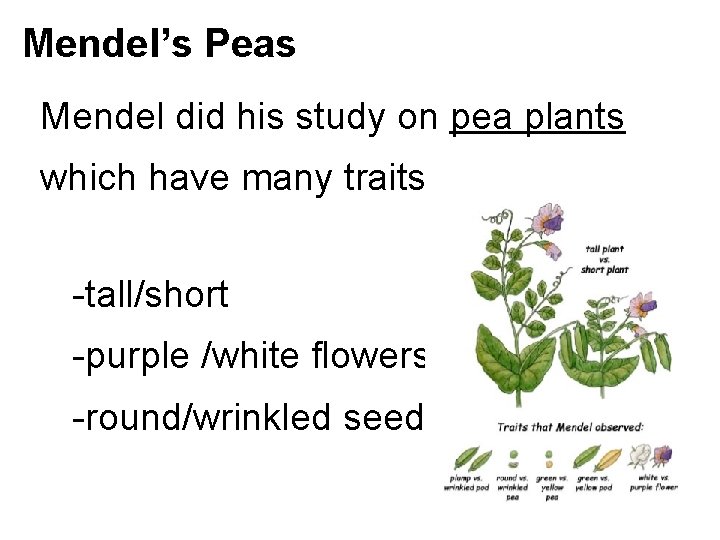
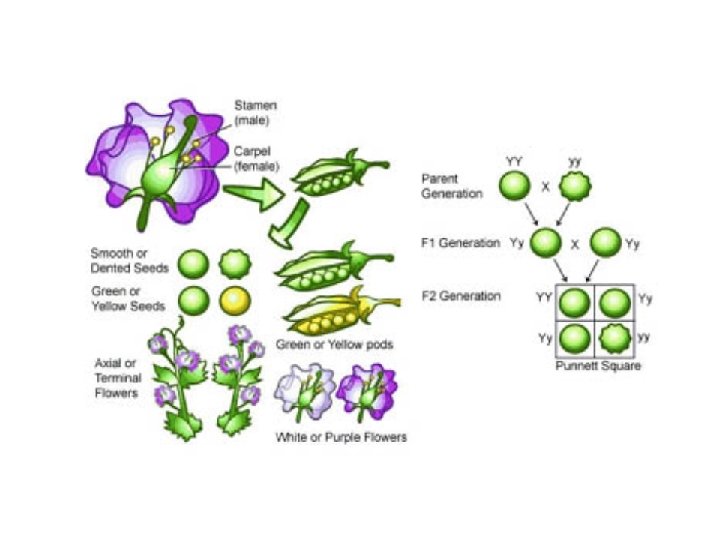
Mendel’s Peas Mendel did his study on pea plants which have many traits -tall/short -purple /white flowers -round/wrinkled seed

• True-Breeding Plants -always create plants that look like themselves • Hybrids – offspring of truebreeding plants Tall x Short = Hybrid
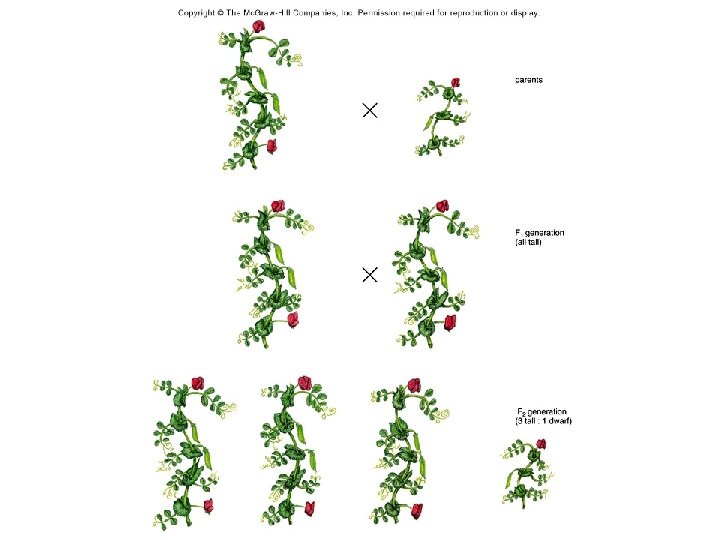
• Some traits are dominant over others. • Tall x Short = all tall offspring (hybrids) *Tall is the dominant trait * Short is recessive
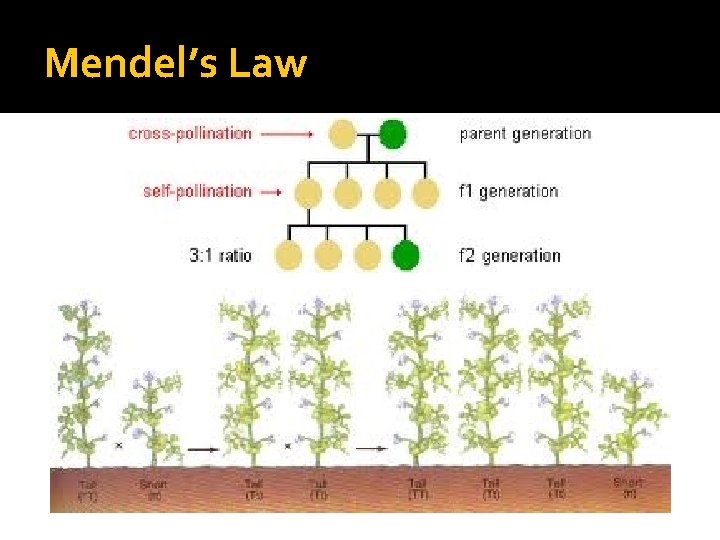
Mendel’s Law
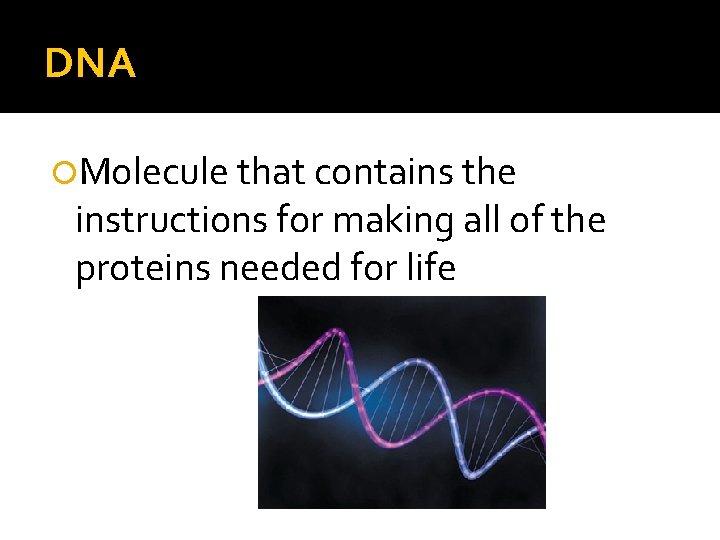
DNA Molecule that contains the instructions for making all of the proteins needed for life
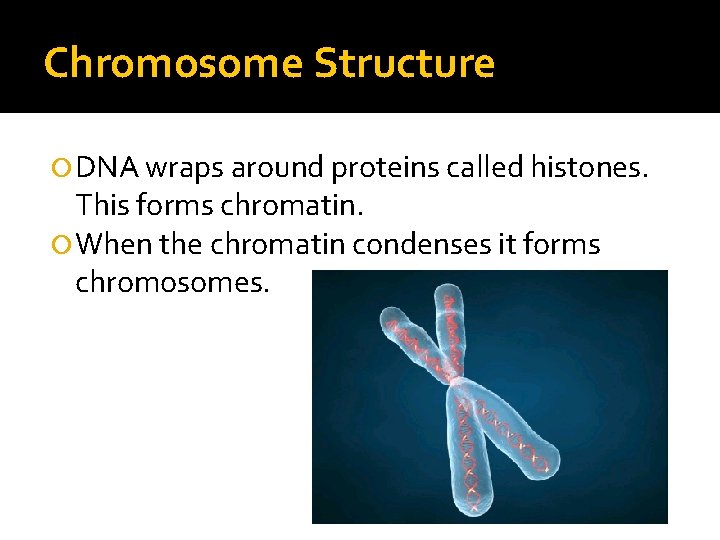
Chromosome Structure DNA wraps around proteins called histones. This forms chromatin. When the chromatin condenses it forms chromosomes.
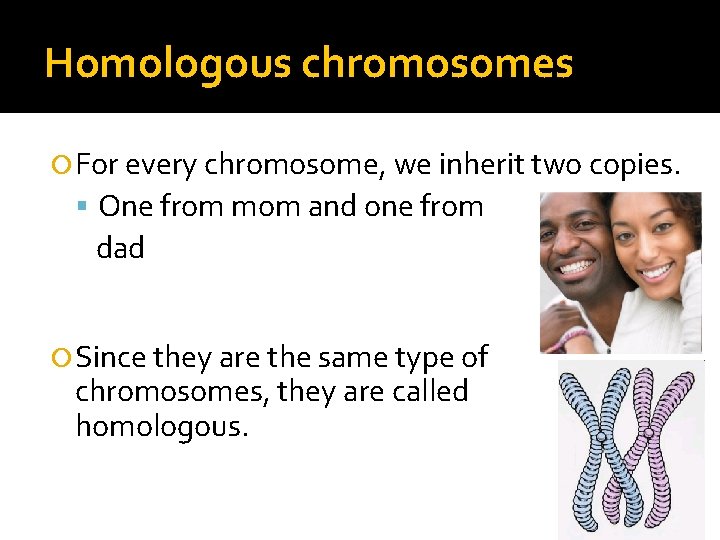
Homologous chromosomes For every chromosome, we inherit two copies. One from mom and one from dad Since they are the same type of chromosomes, they are called homologous.
Mendel’s Principles Genes are passed from parents to their offspring The adult has two copies of each gene -one from each parent. These genes segregated from each other when gametes are formed -The alleles for different genes usually segregate independently of one another.
Principle of Dominance (Discovered by Mendel) Forms of a gene may be dominant while others are recessive
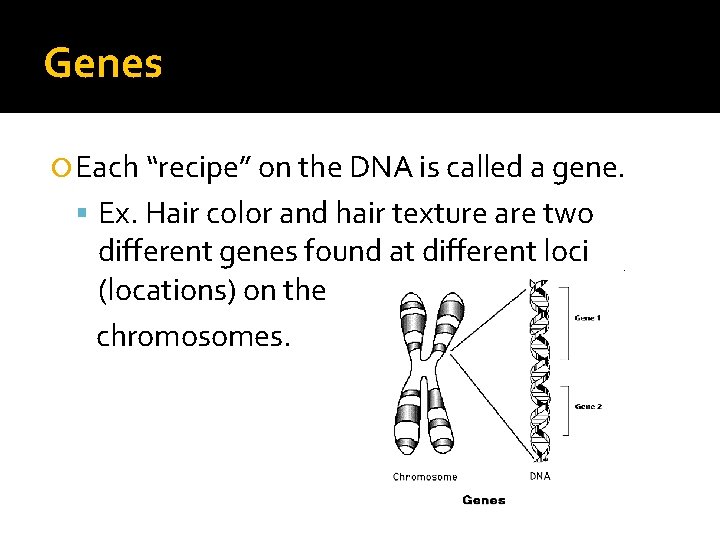
Genes Each “recipe” on the DNA is called a gene. Ex. Hair color and hair texture are two different genes found at different loci (locations) on the chromosomes.
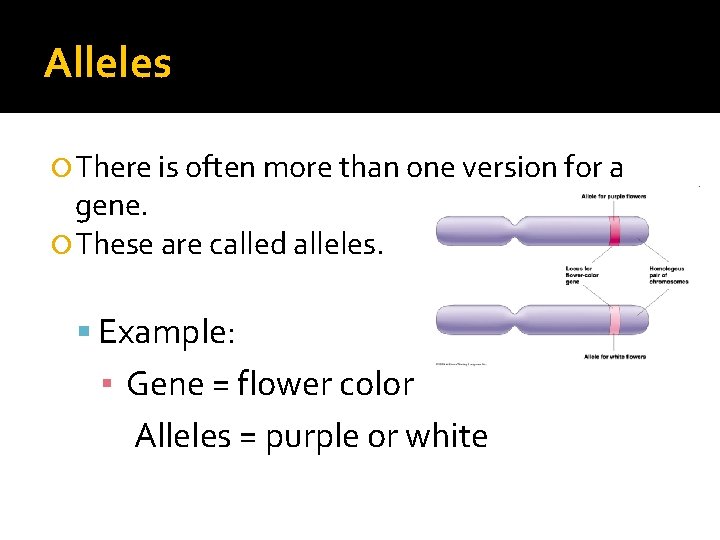
Alleles There is often more than one version for a gene. These are called alleles. Example: ▪ Gene = flower color Alleles = purple or white
What does it mean to be dominant? A dominant allele will ALWAYS be expressed if it is present in the DNA.

What does it mean to be recessive? A recessive allele will be hidden or “masked” if a dominant allele is present. The only way an individual can express a recessive trait is by inheriting two recessive alleles.
Genotypes The genotype tells you which alleles an individual has inherited. Capital letters are used for dominant traits. Lowercase letters are used for recessive traits.
Which letter should you choose? The rule is to choose the first letter of the dominant trait. Example: Brown eyes are dominant over green eyes, so you would use “B” for brown eyes and “b” for green eyes.
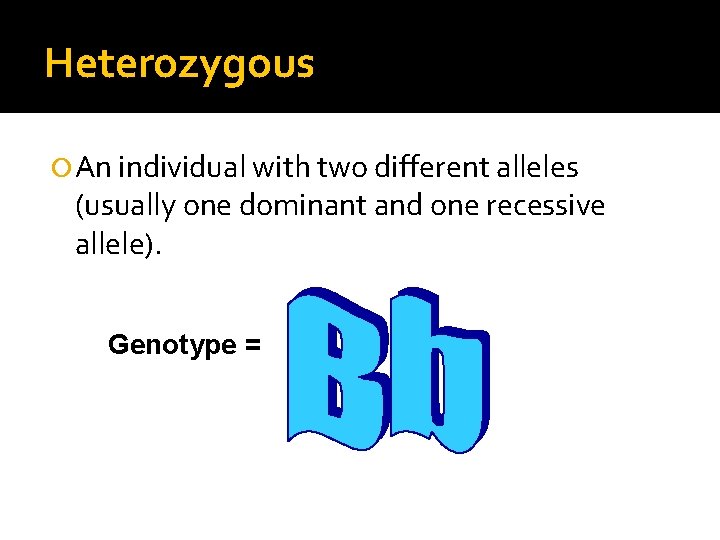
Heterozygous An individual with two different alleles (usually one dominant and one recessive allele). Genotype =
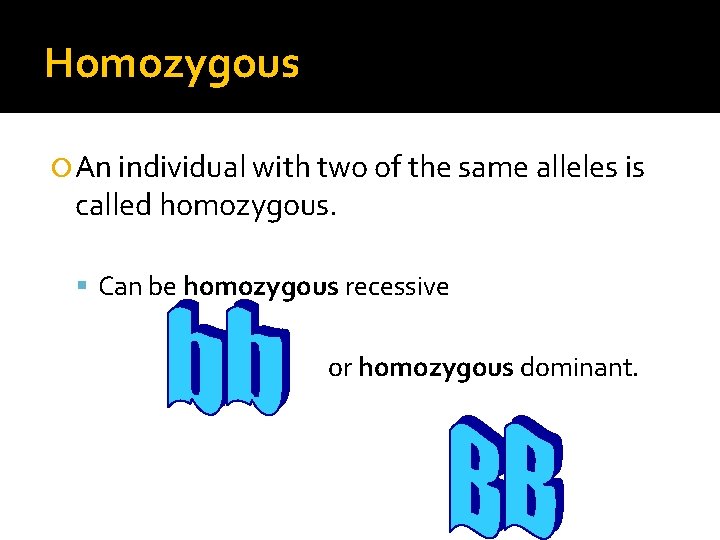
Homozygous An individual with two of the same alleles is called homozygous. Can be homozygous recessive or homozygous dominant.
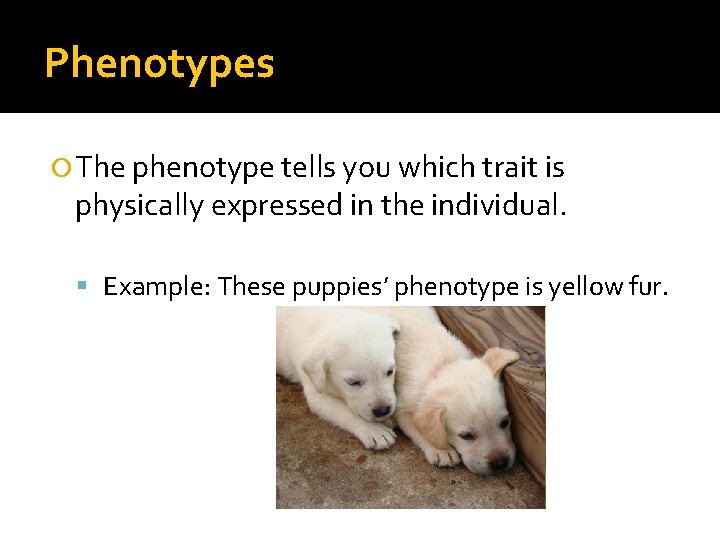
Phenotypes The phenotype tells you which trait is physically expressed in the individual. Example: These puppies’ phenotype is yellow fur.

Eye Color
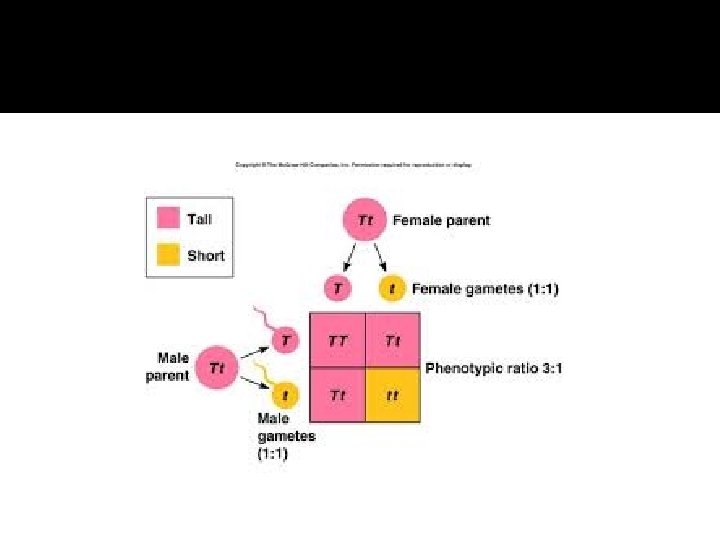

Punnett Square
Explaining the Cross When a parent makes sperm or eggs, their genes separate (PRINCIPLE OF SEGREGATION) The GAMETES (egg or sperm) contain either a T allele (tall) or a t allele (short)
- Slides: 28