
Ch 11 Enlightenment Ideas and Reforms Two Views

- Slides: 21
Ch 11 Enlightenment Ideas and Reforms
Two Views on Government 1) Hobbes- Conflict is a part of human nature • War of everyone v. everyone without government • Life would be “nasty, brutish and short”
Two Views on Government 2) Locke – Human nature is shaped by experiences. • Humans learn from their experiences.
Thomas Hobbes • The book Leviathan • Must give individual rights up to a strong ruler • SOCIAL CONTRACT • Ruler needs total power, citizens bound to obey
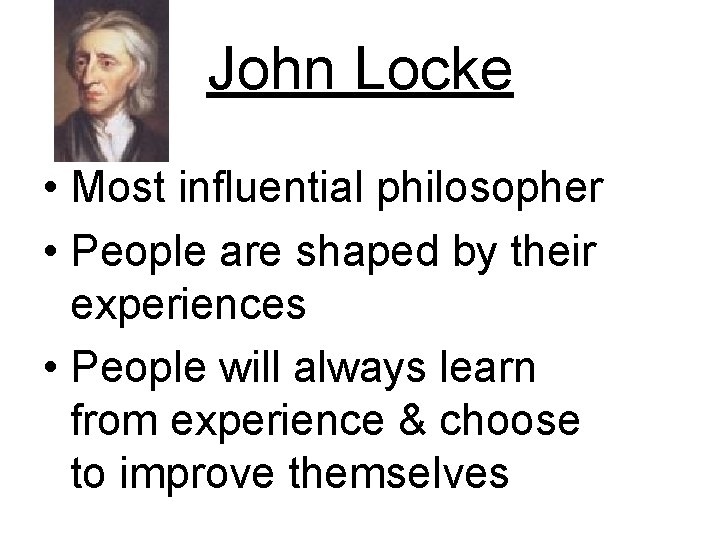
John Locke • Most influential philosopher • People are shaped by their experiences • People will always learn from experience & choose to improve themselves
John Locke • All people born free & equal, with 3 natural rights • LIFE, LIBERTY, and PROPERTY • Purpose of govt. – to protect natural rights • People can choose to overthrow a govt. that fails to do this
John Locke • Father of modern political thinking • Govt. power comes from the consent (OK) of the people and so does the right to rebel
“During the time men live without a common power to keep them all in awe, they are in that condition called war. . . as if of every man against every man. . The notions of right and wrong, justice and injustice have there no place. . No arts; no letters; no society; and which is worst of all, continual fear, and danger of violent death: and the life of man, solitary, poor, nasty, brutish, and short. ” - Thomas Hobbes
Part 2
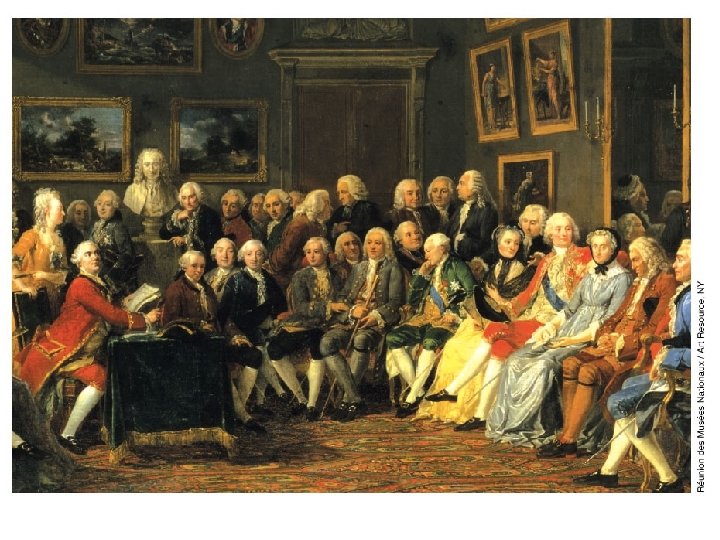
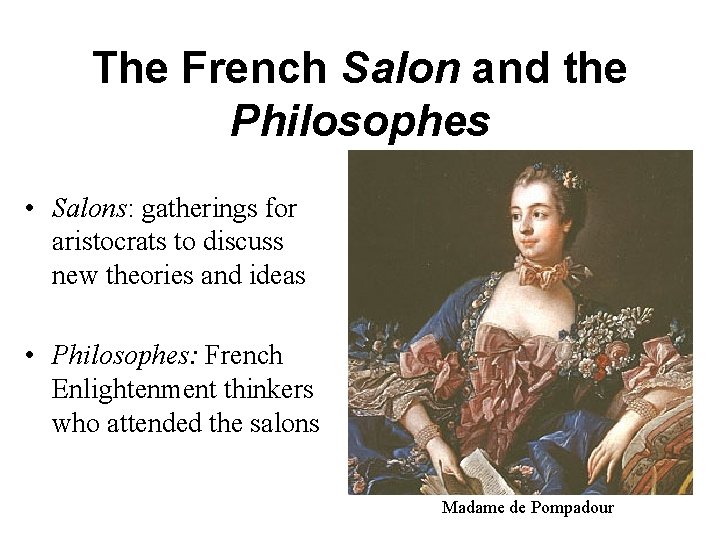
The French Salon and the Philosophes • Salons: gatherings for aristocrats to discuss new theories and ideas • Philosophes: French Enlightenment thinkers who attended the salons Madame de Pompadour
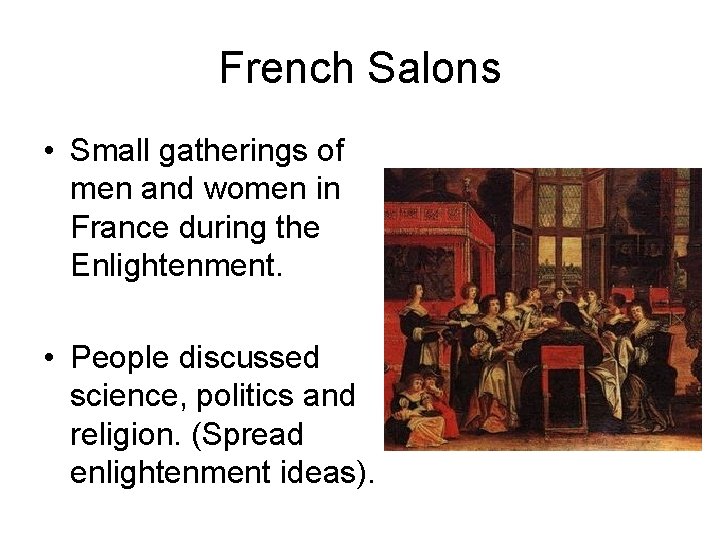
French Salons • Small gatherings of men and women in France during the Enlightenment. • People discussed science, politics and religion. (Spread enlightenment ideas).
Philosophes • Greatest thinkers of their day • Social critics of the period in France • Apply reason to all aspects of life
Philosophes • Opposed traditions of absolute monarchy and divine right • Objected to special privileges of nobility and clergy
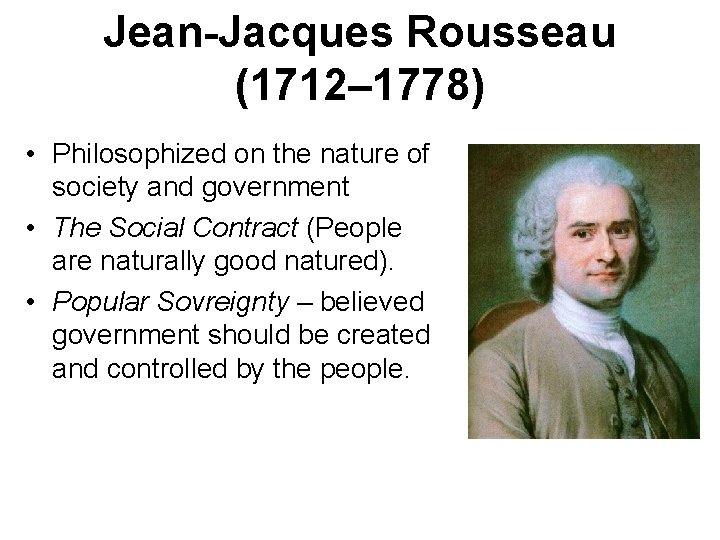
Jean-Jacques Rousseau (1712– 1778) • Philosophized on the nature of society and government • The Social Contract (People are naturally good natured). • Popular Sovreignty – believed government should be created and controlled by the people.
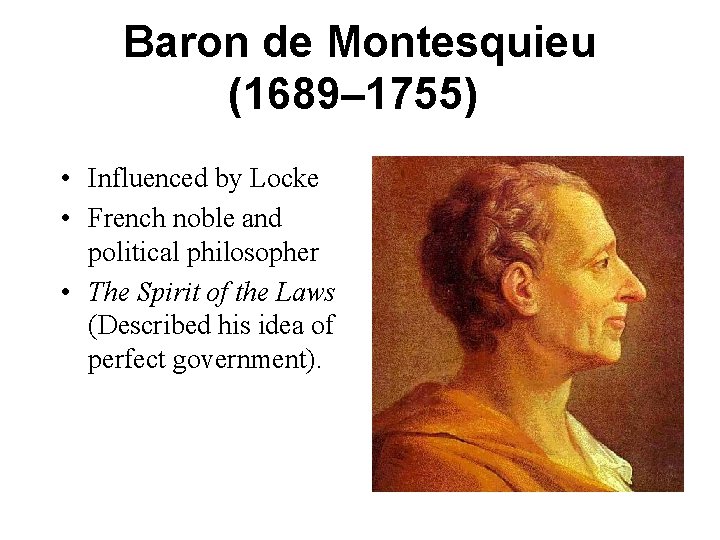
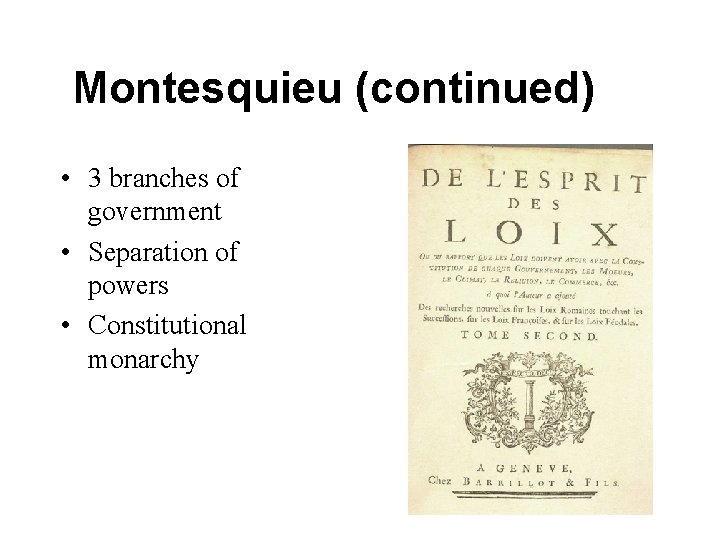
Baron de Montesquieu (1689– 1755) • Influenced by Locke • French noble and political philosopher • The Spirit of the Laws (Described his idea of perfect government).
Montesquieu (continued) • 3 branches of government • Separation of powers • Constitutional monarchy
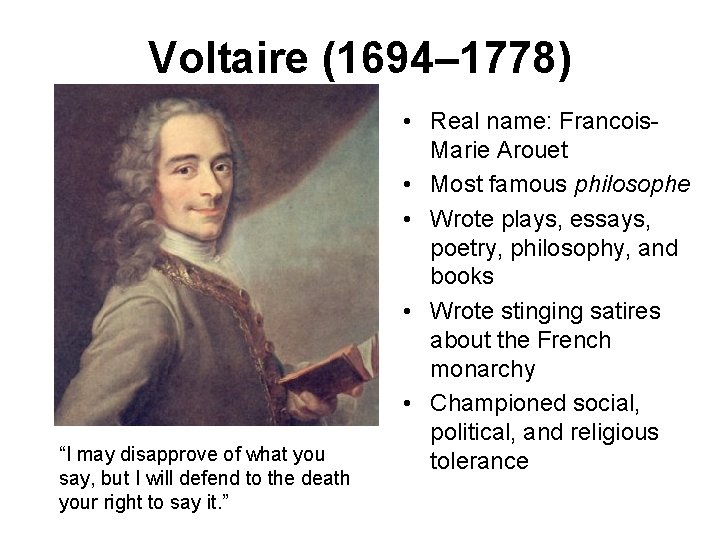
Voltaire (1694– 1778) “I may disapprove of what you say, but I will defend to the death your right to say it. ” • Real name: Francois. Marie Arouet • Most famous philosophe • Wrote plays, essays, poetry, philosophy, and books • Wrote stinging satires about the French monarchy • Championed social, political, and religious tolerance
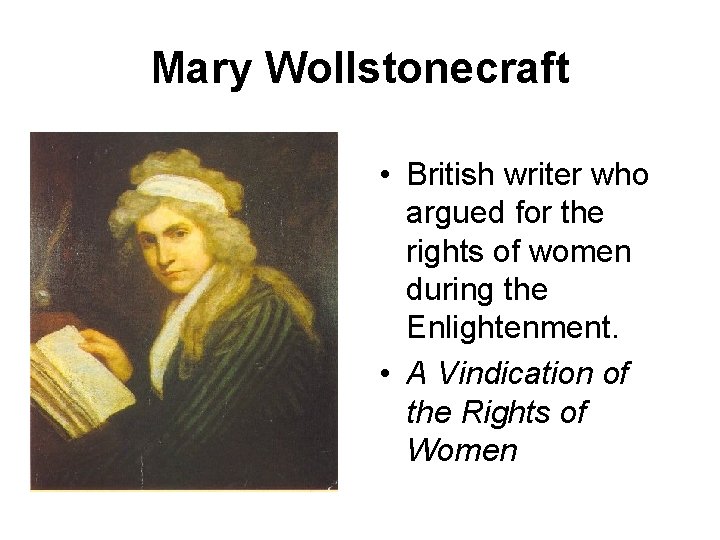
Mary Wollstonecraft • British writer who argued for the rights of women during the Enlightenment. • A Vindication of the Rights of Women
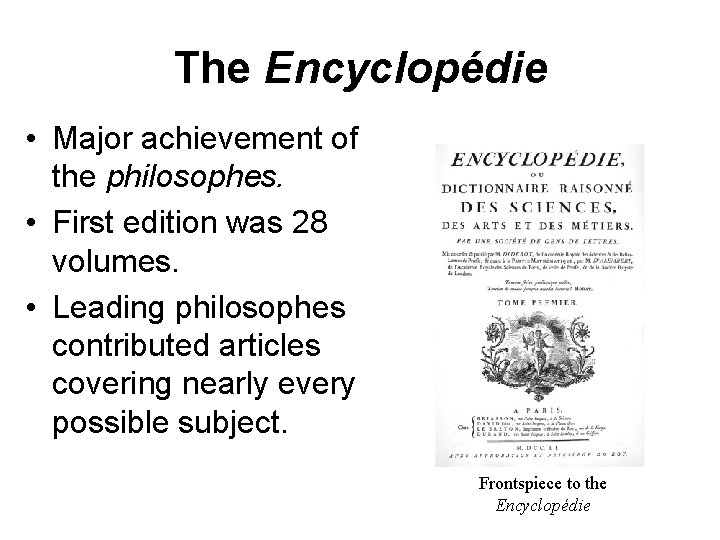
The Encyclopédie • Major achievement of the philosophes. • First edition was 28 volumes. • Leading philosophes contributed articles covering nearly every possible subject. Frontspiece to the Encyclopédie
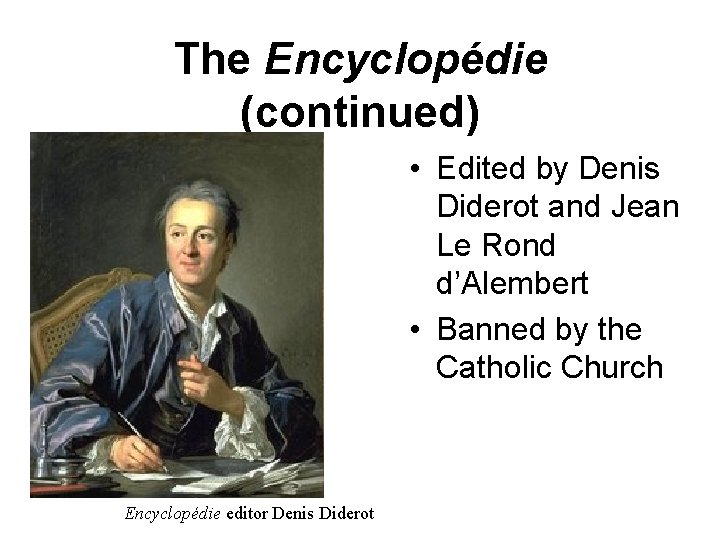
The Encyclopédie (continued) • Edited by Denis Diderot and Jean Le Rond d’Alembert • Banned by the Catholic Church Encyclopédie editor Denis Diderot