
Ch 11 Chapter 8 1 Balancing Equations and
Ch 11
Chapter 8 1) Balancing Equations and Law of 2) 3) 4) 5) 6) Conservation of mass What kind of reaction is it? Will SR or DR occur? Given eqn. as a sentence, write formula (visa versa) Predict Products of all 5 reaction types (given type of reaction) State s, l, g, or aq in a reaction equation
8. 1 Chemical Equations Chemical equations represent, with symbols and formulas, the reactants and products in a chemical reaction. n Common Terms to Know: n Reacts with: And: Yield : Produces: n n n
Reminder n 7 Diatomics?
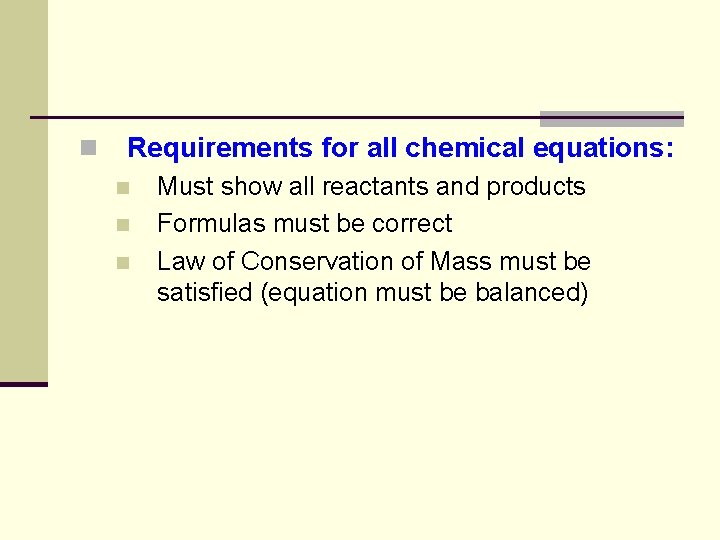
n Requirements for all chemical equations: n n n Must show all reactants and products Formulas must be correct Law of Conservation of Mass must be satisfied (equation must be balanced)
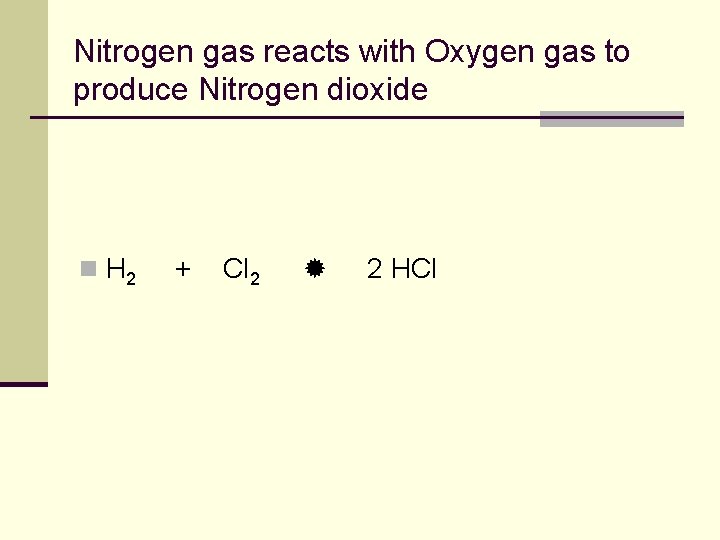
Nitrogen gas reacts with Oxygen gas to produce Nitrogen dioxide n H 2 + Cl 2 2 HCl
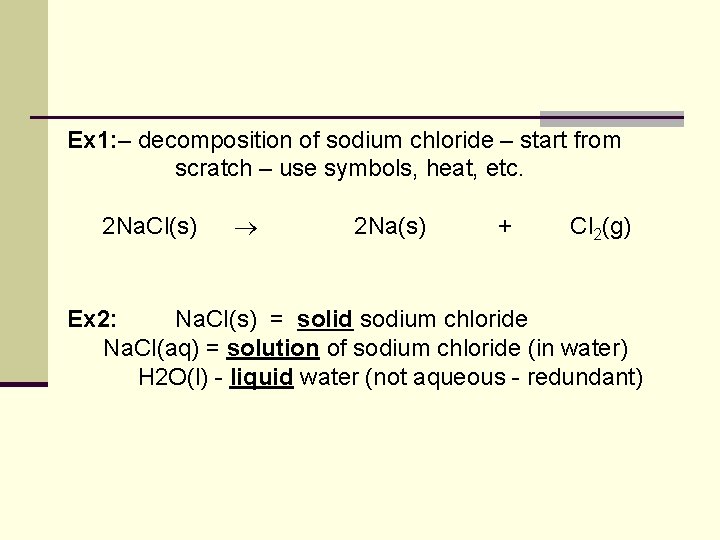
Ex 1: – decomposition of sodium chloride – start from scratch – use symbols, heat, etc. 2 Na. Cl(s) 2 Na(s) + Cl 2(g) Ex 2: Na. Cl(s) = solid sodium chloride Na. Cl(aq) = solution of sodium chloride (in water) H 2 O(l) - liquid water (not aqueous - redundant)
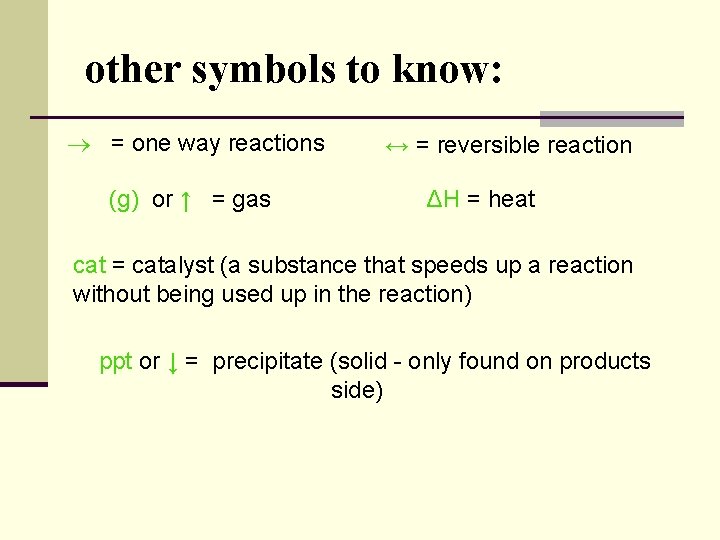
other symbols to know: = one way reactions (g) or ↑ = gas ↔ = reversible reaction ΔH = heat cat = catalyst (a substance that speeds up a reaction without being used up in the reaction) ppt or ↓ = precipitate (solid - only found on products side)
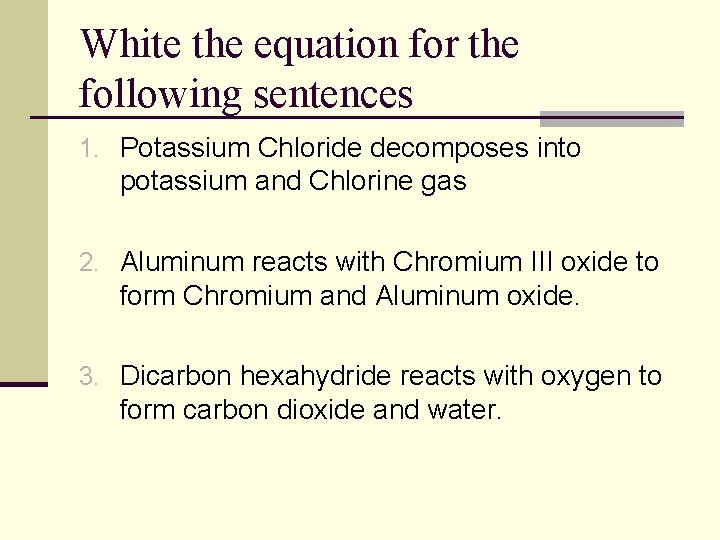
White the equation for the following sentences 1. Potassium Chloride decomposes into potassium and Chlorine gas 2. Aluminum reacts with Chromium III oxide to form Chromium and Aluminum oxide. 3. Dicarbon hexahydride reacts with oxygen to form carbon dioxide and water.
More practice if necessary n Wks pkt 27 -31
Wks pkt n Write the sentence for the following formulas n 1 n 2 n 4 n 7
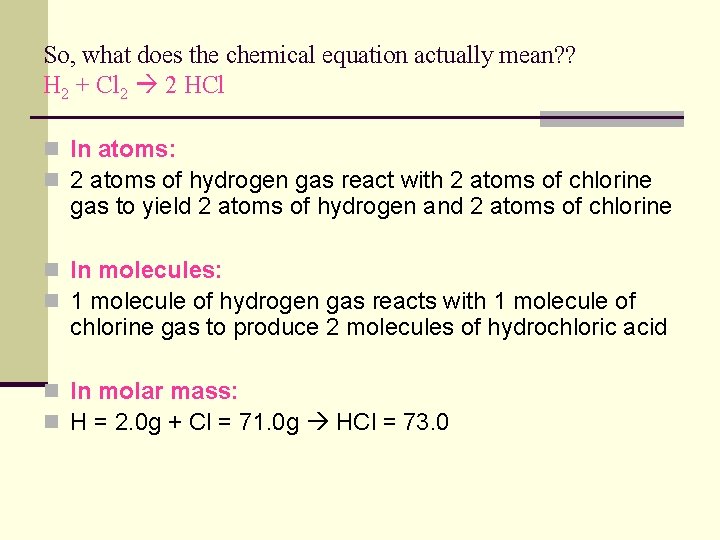
So, what does the chemical equation actually mean? ? H 2 + Cl 2 2 HCl n In atoms: n 2 atoms of hydrogen gas react with 2 atoms of chlorine gas to yield 2 atoms of hydrogen and 2 atoms of chlorine n In molecules: n 1 molecule of hydrogen gas reacts with 1 molecule of chlorine gas to produce 2 molecules of hydrochloric acid n In molar mass: n H = 2. 0 g + Cl = 71. 0 g HCl = 73. 0
Why do chemical equations need to be balanced?
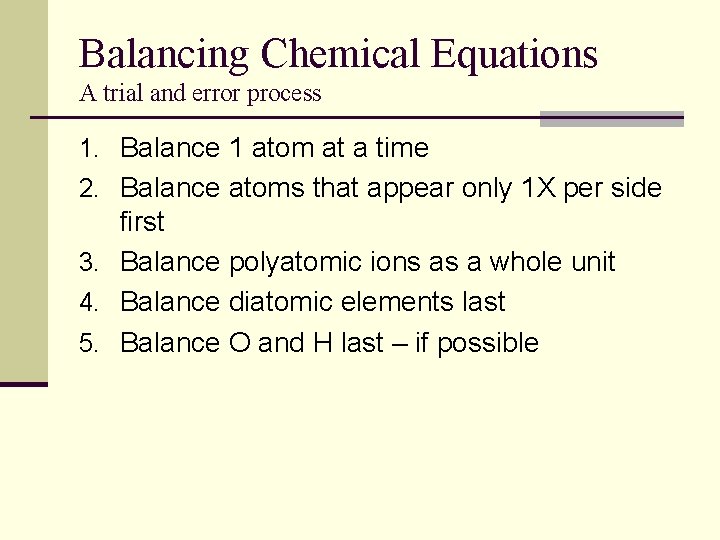
Balancing Chemical Equations A trial and error process 1. Balance 1 atom at a time 2. Balance atoms that appear only 1 X per side first 3. Balance polyatomic ions as a whole unit 4. Balance diatomic elements last 5. Balance O and H last – if possible
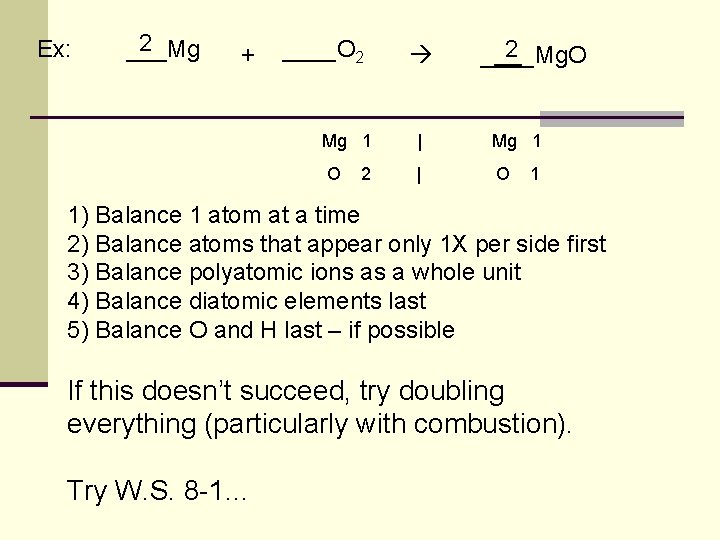
Ex: 2 ___Mg + ____O 2 2 ____Mg. O Mg 1 | Mg 1 O | O 2 1 1) Balance 1 atom at a time 2) Balance atoms that appear only 1 X per side first 3) Balance polyatomic ions as a whole unit 4) Balance diatomic elements last 5) Balance O and H last – if possible If this doesn’t succeed, try doubling everything (particularly with combustion). Try W. S. 8 -1…
Exit Ticket
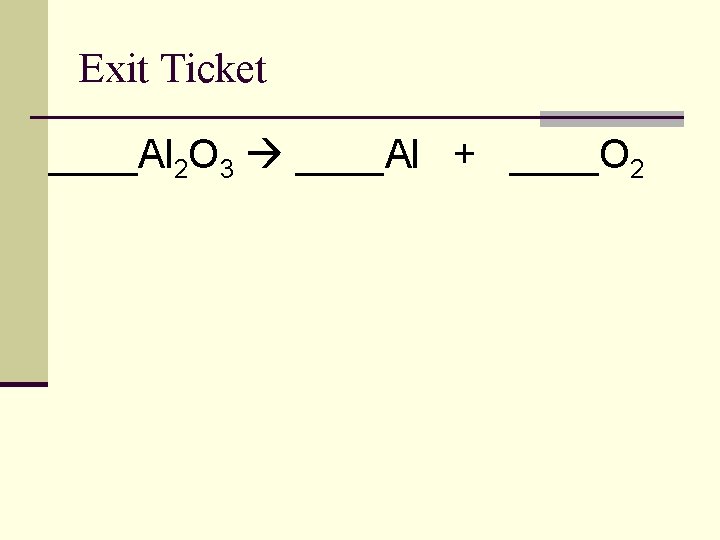
Exit Ticket ____Al 2 O 3 ____Al + ____O 2
Warm Up 1) Show Mr. Roberts your homework 2) Put 2 answers from the HW on the board
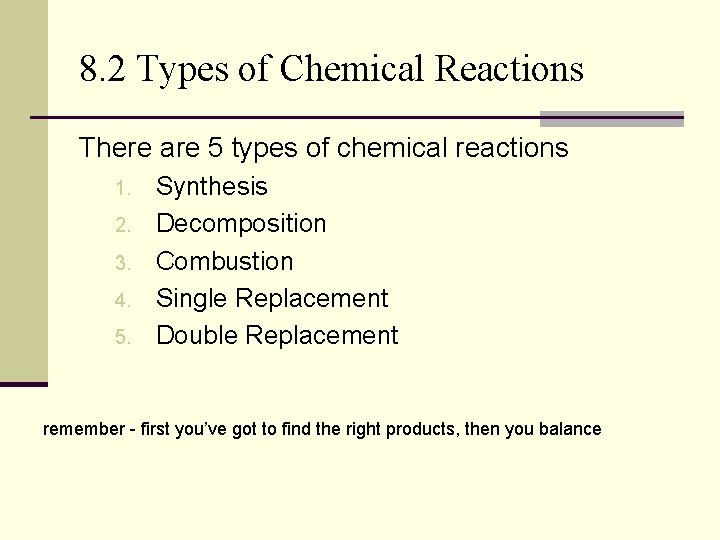
8. 2 Types of Chemical Reactions There are 5 types of chemical reactions 1. 2. 3. 4. 5. Synthesis Decomposition Combustion Single Replacement Double Replacement remember - first you’ve got to find the right products, then you balance
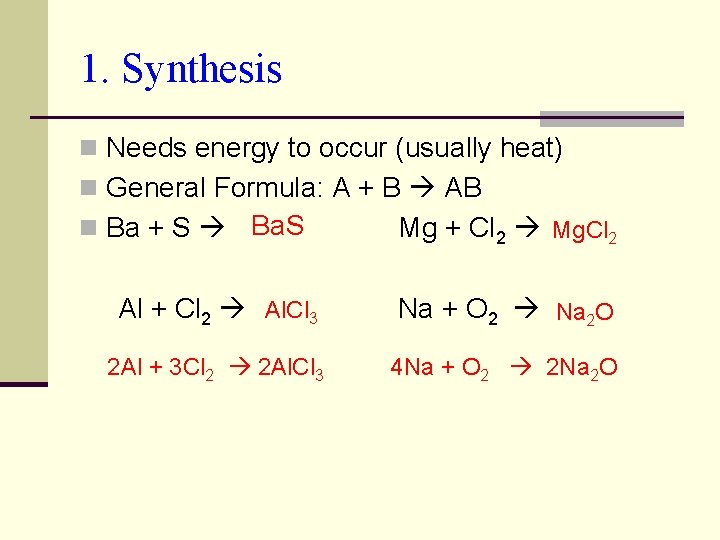
1. Synthesis n Needs energy to occur (usually heat) n General Formula: A + B AB n Ba + S Ba. S Mg + Cl 2 Mg. Cl 2 Al + Cl 2 Al. Cl 3 Na + O 2 Na 2 O 2 Al + 3 Cl 2 2 Al. Cl 3 4 Na + O 2 2 Na 2 O
1) Go over CH 7 Test and recollect 2) Go over wks 3 synthesis
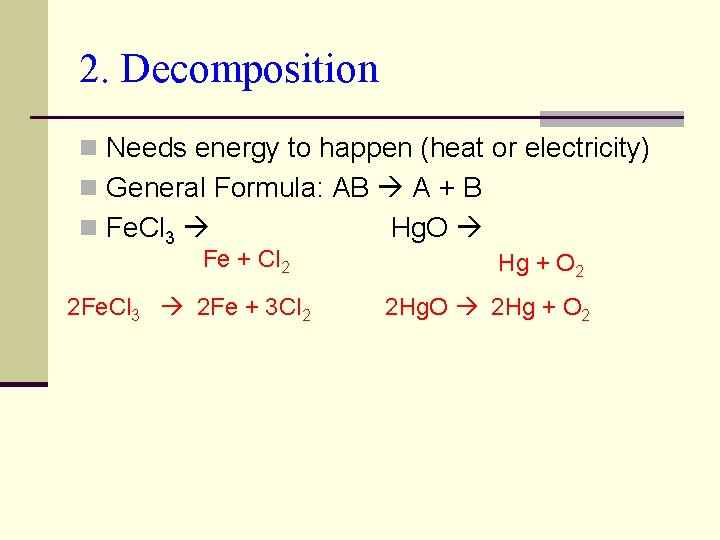
2. Decomposition n Needs energy to happen (heat or electricity) n General Formula: AB A + B n Fe. Cl 3 Fe + Cl 2 2 Fe. Cl 3 2 Fe + 3 Cl 2 Hg. O Hg + O 2 2 Hg. O 2 Hg + O 2
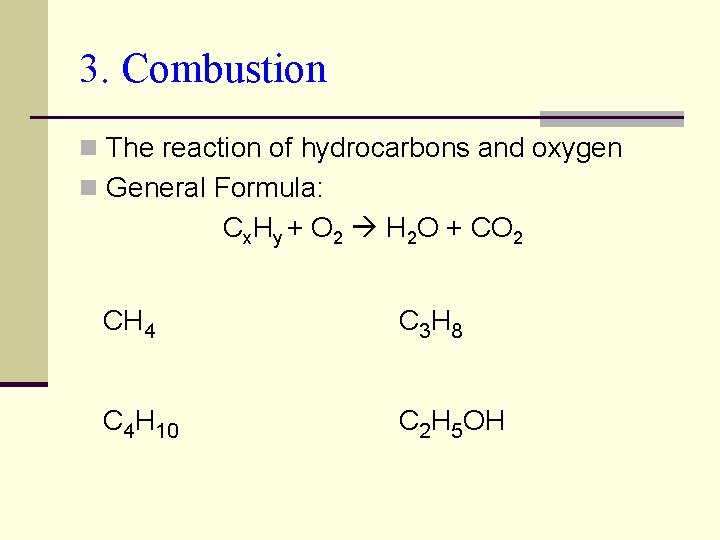
3. Combustion n The reaction of hydrocarbons and oxygen n General Formula: Cx. Hy + O 2 H 2 O + CO 2 CH 4 C 3 H 8 C 4 H 10 C 2 H 5 OH
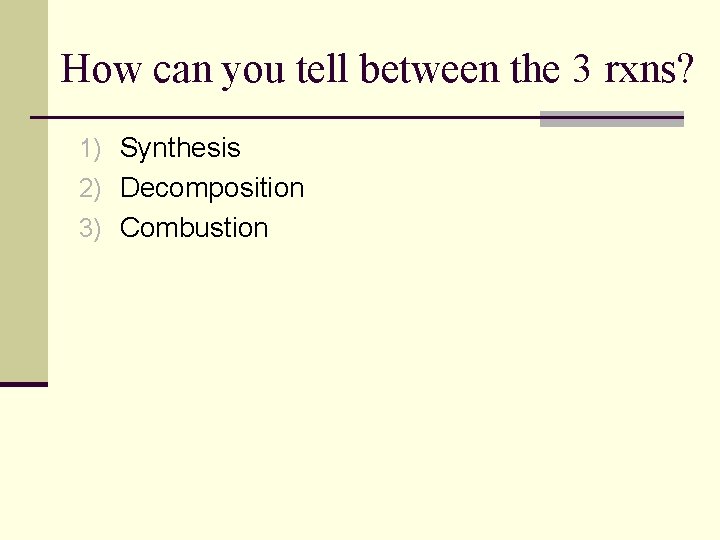
How can you tell between the 3 rxns? 1) Synthesis 2) Decomposition 3) Combustion
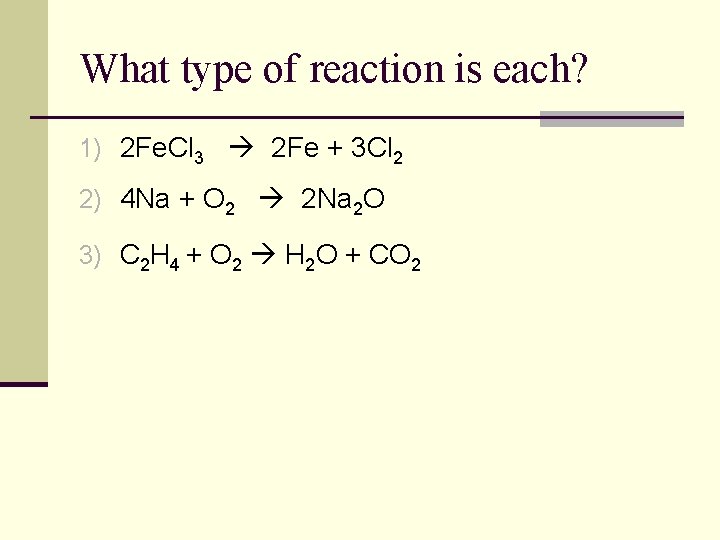
What type of reaction is each? 1) 2 Fe. Cl 3 2 Fe + 3 Cl 2 2) 4 Na + O 2 2 Na 2 O 3) C 2 H 4 + O 2 H 2 O + CO 2
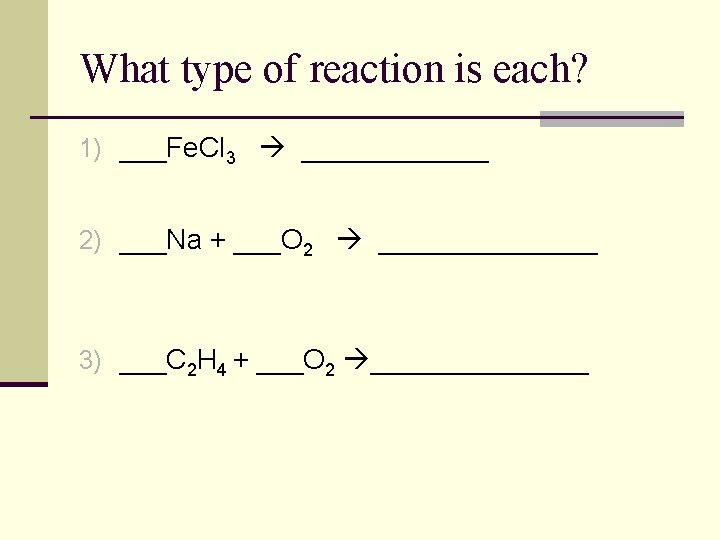
What type of reaction is each? 1) ___Fe. Cl 3 ______ 2) ___Na + ___O 2 _______ 3) ___C 2 H 4 + ___O 2 _______
n Worksheet 1 and 2 Label S, D or C n Worksheet 3 Decomposition n Worksheet 6 (1 -10)
Act it out n Single Replacement (prom and +/-) n Double Replacement
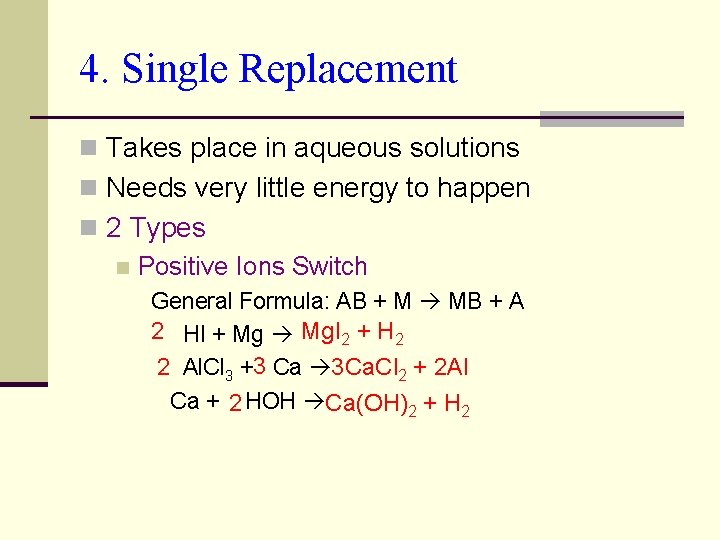
4. Single Replacement n Takes place in aqueous solutions n Needs very little energy to happen n 2 Types n Positive Ions Switch General Formula: AB + M MB + A 2 HI + Mg Mg. I 2 + H 2 2 Al. Cl 3 +3 Ca 3 Ca. Cl 2 + 2 Al Ca + 2 HOH Ca(OH)2 + H 2
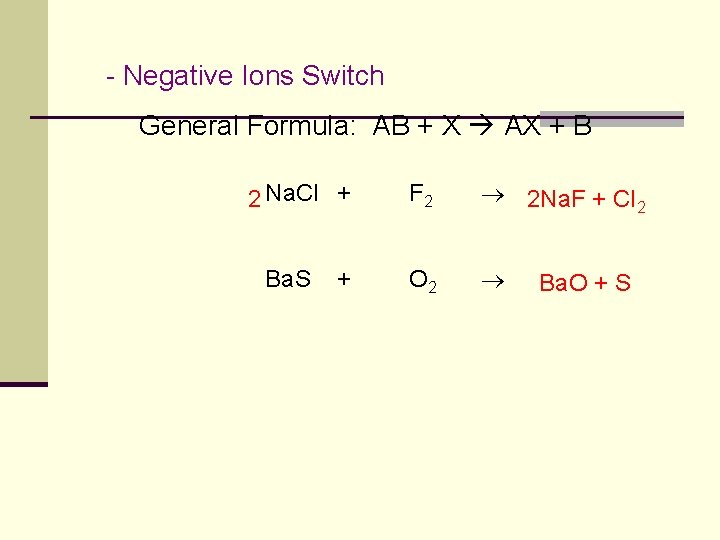
- Negative Ions Switch General Formula: AB + X AX + B 2 Na. Cl + Ba. S + F 2 2 Na. F + Cl 2 O 2 Ba. O + S
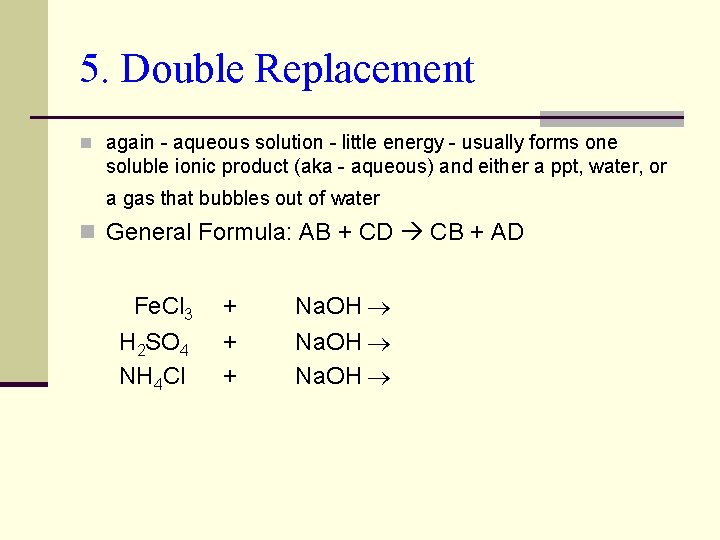
5. Double Replacement n again - aqueous solution - little energy - usually forms one soluble ionic product (aka - aqueous) and either a ppt, water, or a gas that bubbles out of water n General Formula: AB + CD CB + AD Fe. Cl 3 H 2 SO 4 NH 4 Cl + + + Na. OH
How can you tell them apart? 1) Single replacement 2) Double replacement
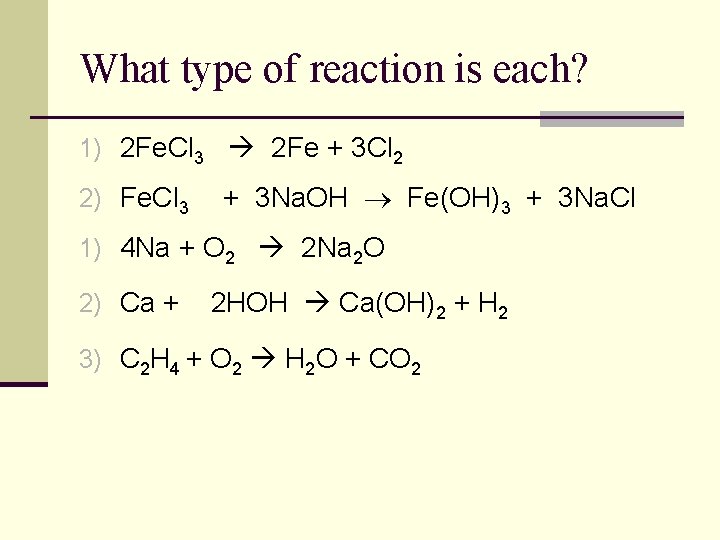
What type of reaction is each? 1) 2 Fe. Cl 3 2 Fe + 3 Cl 2 2) Fe. Cl 3 + 3 Na. OH Fe(OH)3 + 3 Na. Cl 1) 4 Na + O 2 2 Na 2 O 2) Ca + 2 HOH Ca(OH)2 + H 2 3) C 2 H 4 + O 2 H 2 O + CO 2
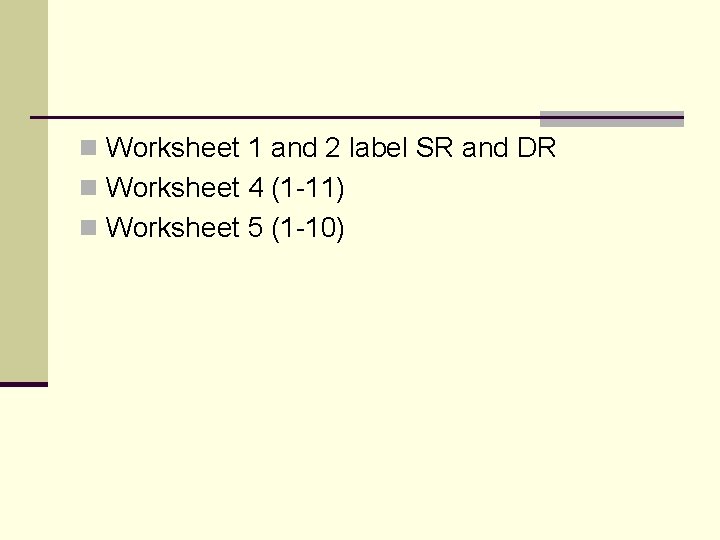
n Worksheet 1 and 2 label SR and DR n Worksheet 4 (1 -11) n Worksheet 5 (1 -10)
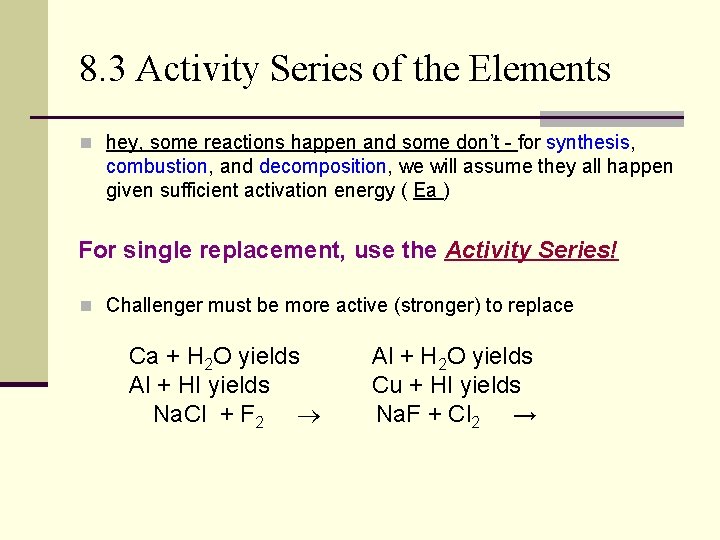
8. 3 Activity Series of the Elements n hey, some reactions happen and some don’t - for synthesis, combustion, and decomposition, we will assume they all happen given sufficient activation energy ( Ea ) For single replacement, use the Activity Series! n Challenger must be more active (stronger) to replace Ca + H 2 O yields Al + HI yields Na. Cl + F 2 Al + H 2 O yields Cu + HI yields Na. F + Cl 2 →
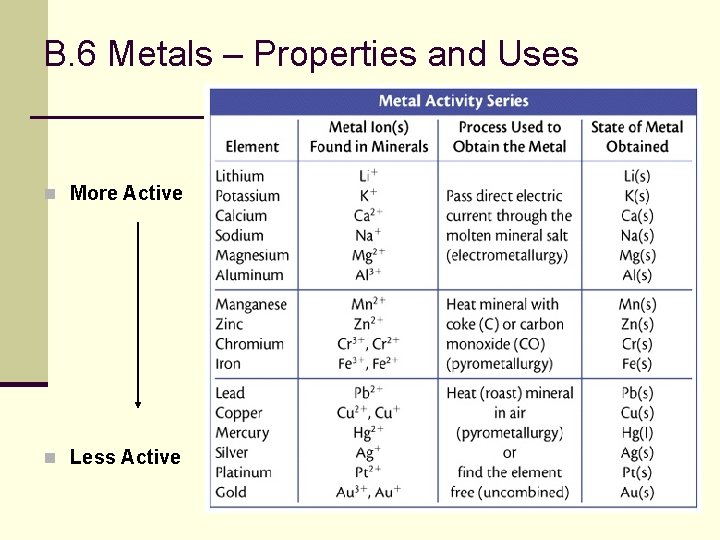
B. 6 Metals – Properties and Uses n More Active n Less Active
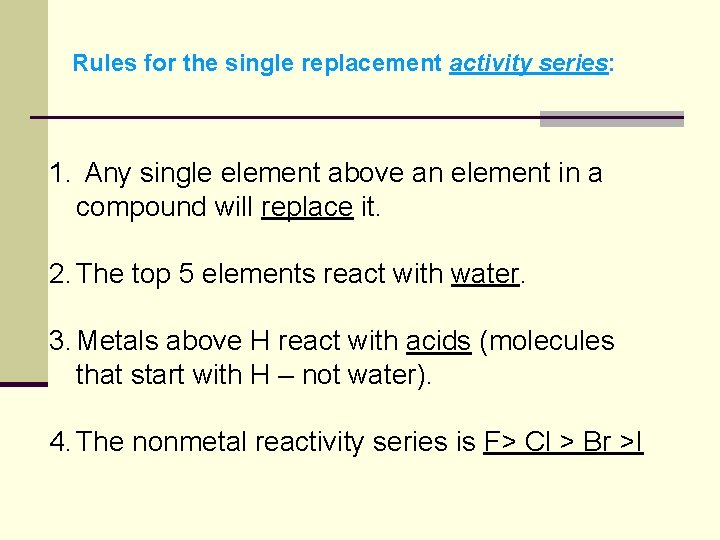
Rules for the single replacement activity series: 1. Any single element above an element in a compound will replace it. 2. The top 5 elements react with water. 3. Metals above H react with acids (molecules that start with H – not water). 4. The nonmetal reactivity series is F> Cl > Br >I
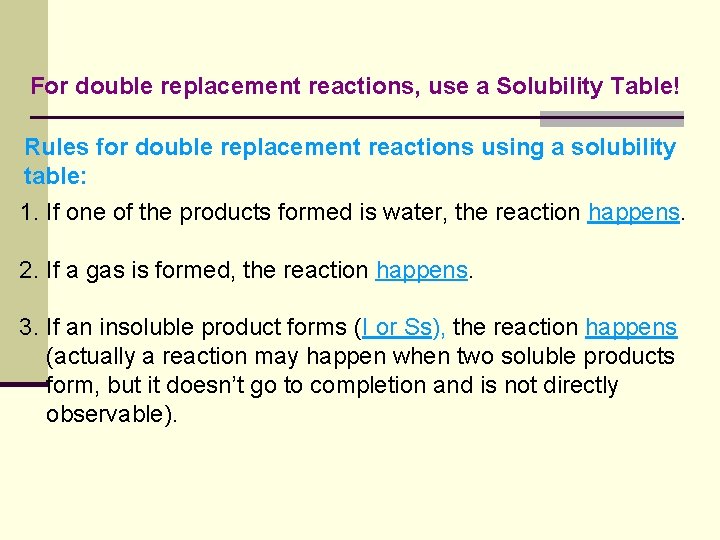
For double replacement reactions, use a Solubility Table! Rules for double replacement reactions using a solubility table: 1. If one of the products formed is water, the reaction happens. 2. If a gas is formed, the reaction happens. 3. If an insoluble product forms (I or Ss), the reaction happens (actually a reaction may happen when two soluble products form, but it doesn’t go to completion and is not directly observable).
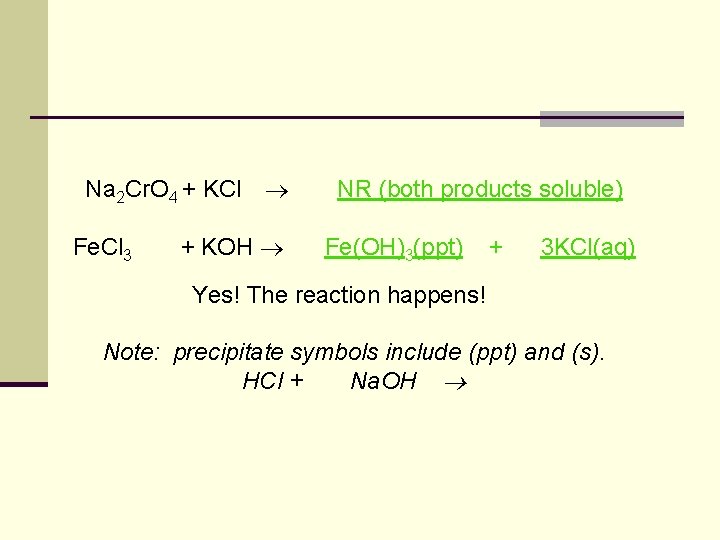
Na 2 Cr. O 4 + KCl Fe. Cl 3 + KOH NR (both products soluble) Fe(OH)3(ppt) + 3 KCl(aq) Yes! The reaction happens! Note: precipitate symbols include (ppt) and (s). HCl + Na. OH
n Complete wks 4 and 5
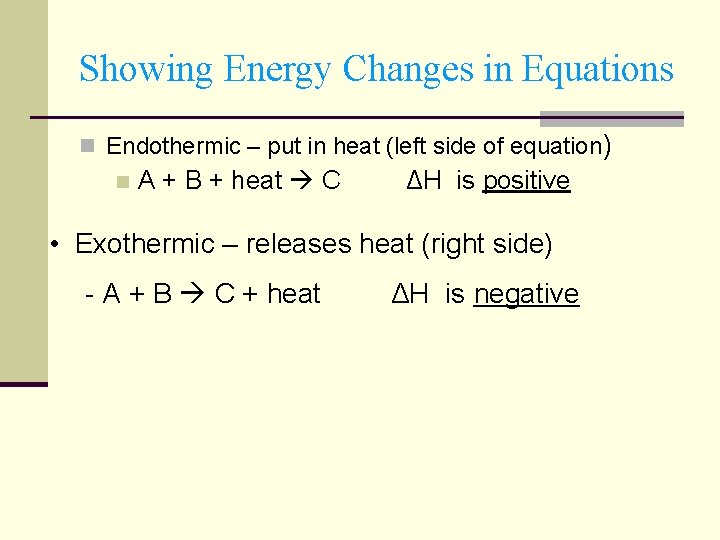
Showing Energy Changes in Equations n Endothermic – put in heat (left side of equation) n A + B + heat C ΔH is positive • Exothermic – releases heat (right side) - A + B C + heat ΔH is negative
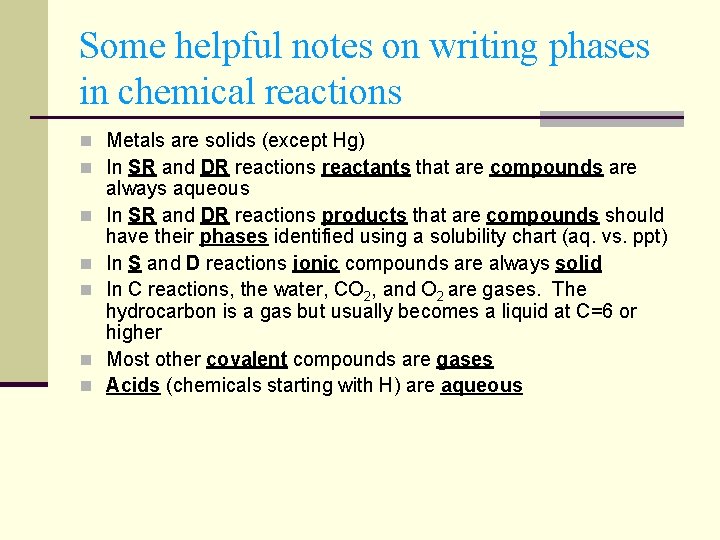
Some helpful notes on writing phases in chemical reactions n Metals are solids (except Hg) n In SR and DR reactions reactants that are compounds are n n n always aqueous In SR and DR reactions products that are compounds should have their phases identified using a solubility chart (aq. vs. ppt) In S and D reactions ionic compounds are always solid In C reactions, the water, CO 2, and O 2 are gases. The hydrocarbon is a gas but usually becomes a liquid at C=6 or higher Most other covalent compounds are gases Acids (chemicals starting with H) are aqueous
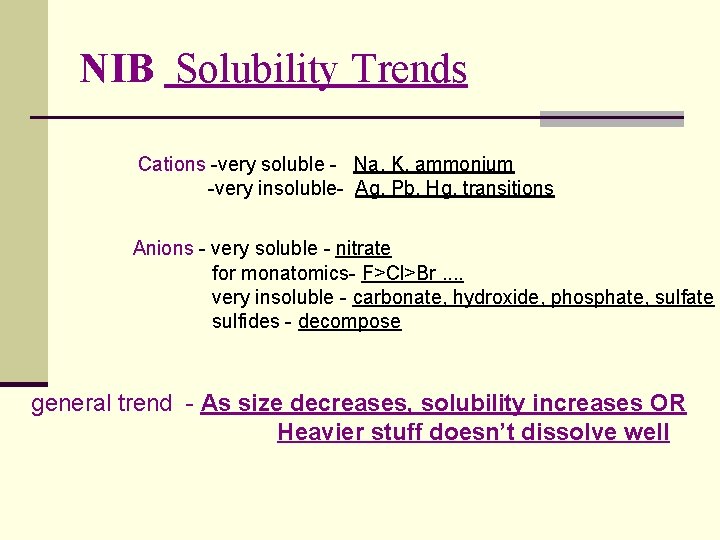
NIB Solubility Trends Cations -very soluble - Na, K, ammonium -very insoluble- Ag, Pb, Hg, transitions Anions - very soluble - nitrate for monatomics- F>Cl>Br. . very insoluble - carbonate, hydroxide, phosphate, sulfate sulfides - decompose general trend - As size decreases, solubility increases OR Heavier stuff doesn’t dissolve well
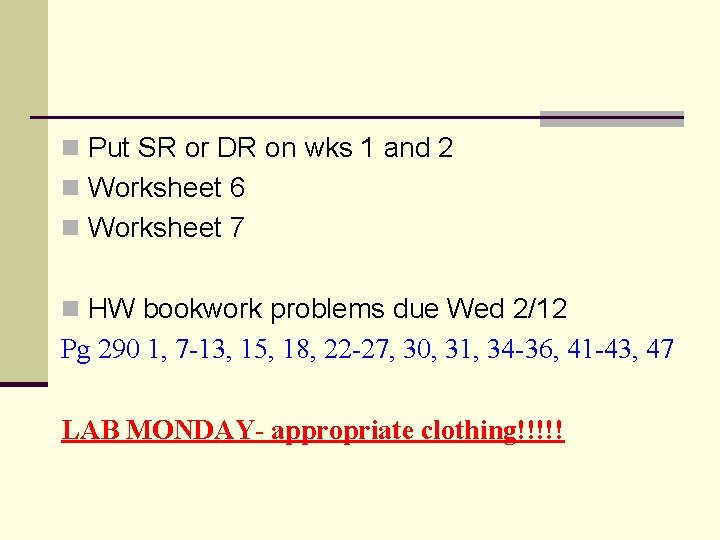
n Put SR or DR on wks 1 and 2 n Worksheet 6 n Worksheet 7 n HW bookwork problems due Wed 2/12 Pg 290 1, 7 -13, 15, 18, 22 -27, 30, 31, 34 -36, 41 -43, 47 LAB MONDAY- appropriate clothing!!!!!
- Slides: 44