
Ch 11 Cell Communication AP Biology Communication Methods
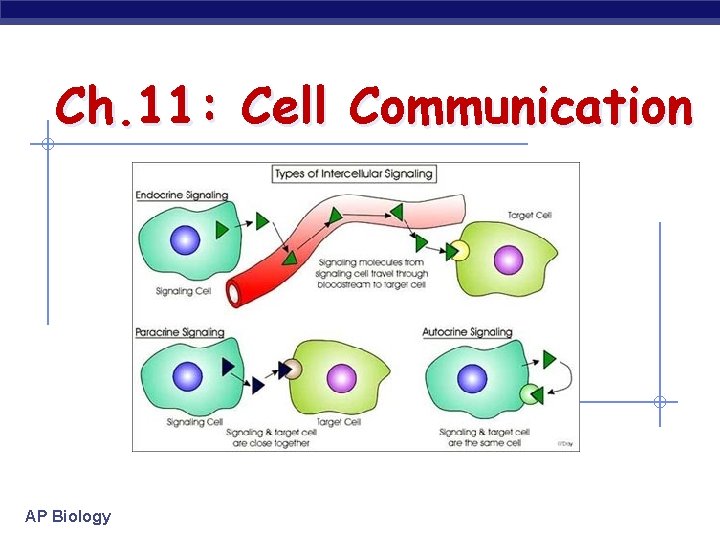
Ch. 11: Cell Communication AP Biology
Communication Methods § Cell-to-cell contact § Local signaling § Long distance signaling AP Biology
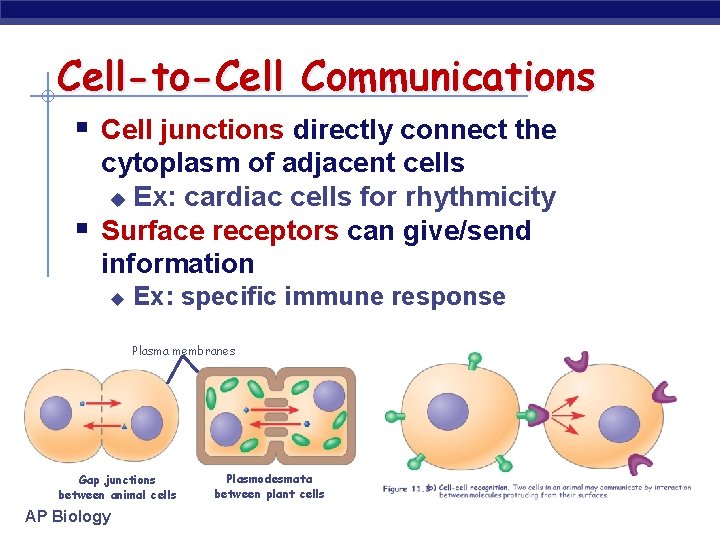
Cell-to-Cell Communications § Cell junctions directly connect the § cytoplasm of adjacent cells u Ex: cardiac cells for rhythmicity Surface receptors can give/send information u Ex: specific immune response Plasma membranes Gap junctions between animal cells AP Biology Plasmodesmata between plant cells
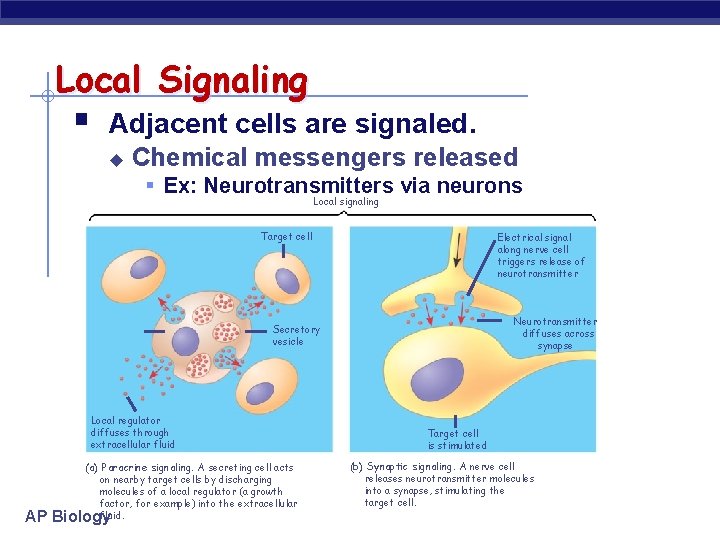
Local Signaling § Adjacent cells are signaled. u Chemical messengers released § Ex: Neurotransmitters via neurons Local signaling Target cell Electrical signal along nerve cell triggers release of neurotransmitter Neurotransmitter diffuses across synapse Secretory vesicle Local regulator diffuses through extracellular fluid (a) Paracrine signaling. A secreting cell acts on nearby target cells by discharging molecules of a local regulator (a growth factor, for example) into the extracellular fluid. AP Biology Target cell is stimulated (b) Synaptic signaling. A nerve cell releases neurotransmitter molecules into a synapse, stimulating the target cell.
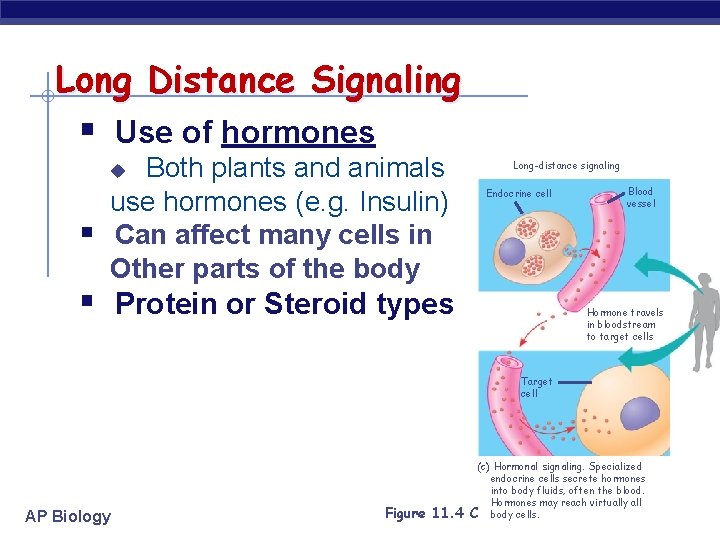
Long Distance Signaling § Use of hormones Both plants and animals use hormones (e. g. Insulin) Can affect many cells in Other parts of the body u § Long-distance signaling Endocrine cell § Protein or Steroid types Blood vessel Hormone travels in bloodstream to target cells Target cell AP Biology Figure 11. 4 (c) Hormonal signaling. Specialized endocrine cells secrete hormones into body fluids, often the blood. Hormones may reach virtually all C body cells.
How Do Cells Communicate? § Signal Transduction Pathways § Convert signals on a cell’s surface into cellular responses § Are similar in microbes and mammals, suggesting an early origin AP Biology
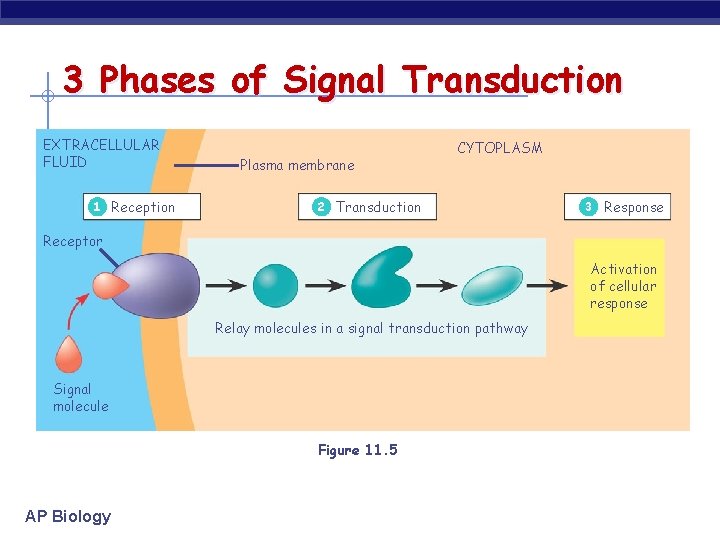
3 Phases of Signal Transduction EXTRACELLULAR FLUID 1 Reception Plasma membrane CYTOPLASM 2 Transduction 3 Response Receptor Activation of cellular response Relay molecules in a signal transduction pathway Signal molecule Figure 11. 5 AP Biology
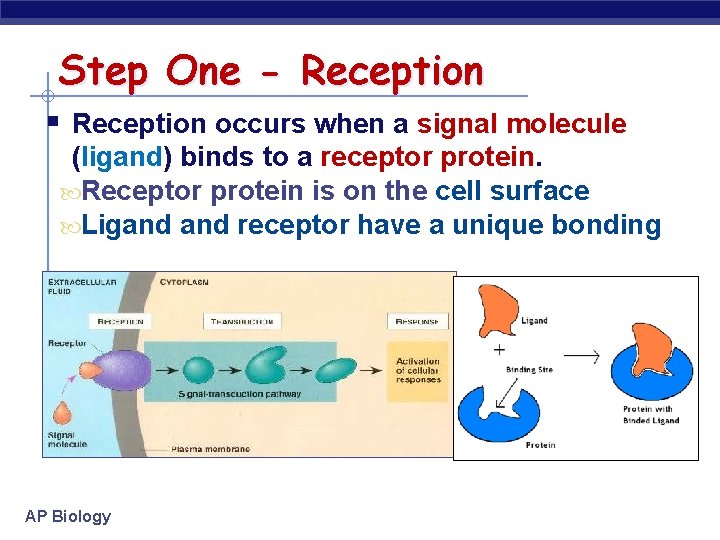
Step One - Reception § Reception occurs when a signal molecule (ligand) binds to a receptor protein. Receptor protein is on the cell surface Ligand receptor have a unique bonding AP Biology
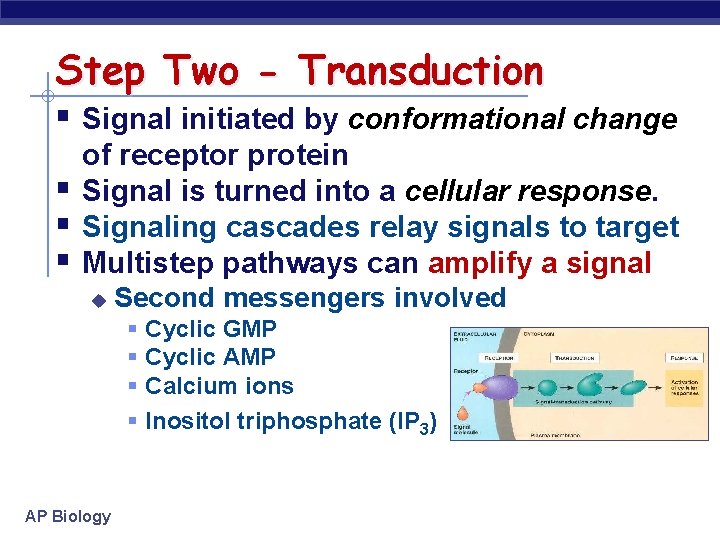
Step Two - Transduction § Signal initiated by conformational change § § § of receptor protein Signal is turned into a cellular response. Signaling cascades relay signals to target Multistep pathways can amplify a signal u Second messengers involved § § AP Biology Cyclic GMP Cyclic AMP Calcium ions Inositol triphosphate (IP 3)
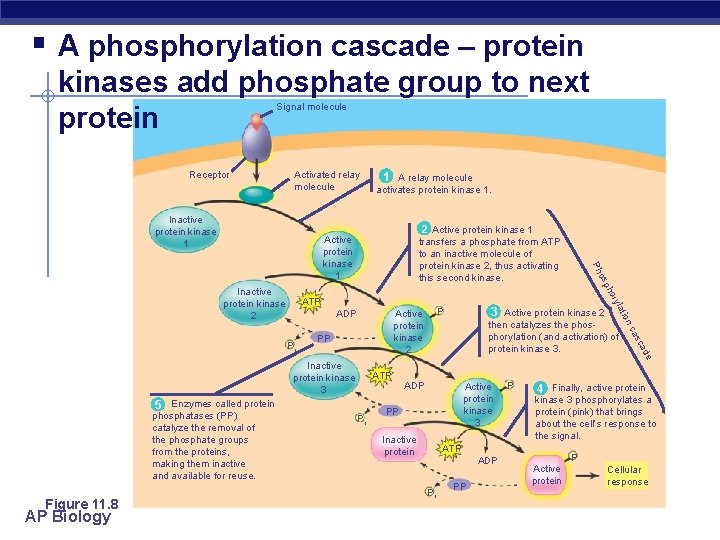
§ A phosphorylation cascade – protein kinases add phosphate group to next protein Signal molecule Receptor Activated relay molecule Inactive protein kinase 1 ory ph Active protein kinase 3 PP Inactive protein P Finally, active protein 4 kinase 3 phosphorylates a protein (pink) that brings about the cell’s response to the signal. ATP ADP P i PP de Figure 11. 8 Pi ADP a sc Enzymes called protein 5 phosphatases (PP) catalyze the removal of the phosphate groups from the proteins, making them inactive and available for reuse. ATP ca Inactive protein kinase 3 on PP Active protein kinase 2 3 then catalyzes the phosphorylation (and activation) of protein kinase 3. P Active protein kinase 2 ADP i lat ATP Pi os Ph Active protein kinase 1 2 transfers a phosphate from ATP to an inactive molecule of protein kinase 2, thus activating this second kinase. Active protein kinase 1 Inactive protein kinase 2 AP Biology 1 A relay molecule activates protein kinase 1. P Active protein Cellular response
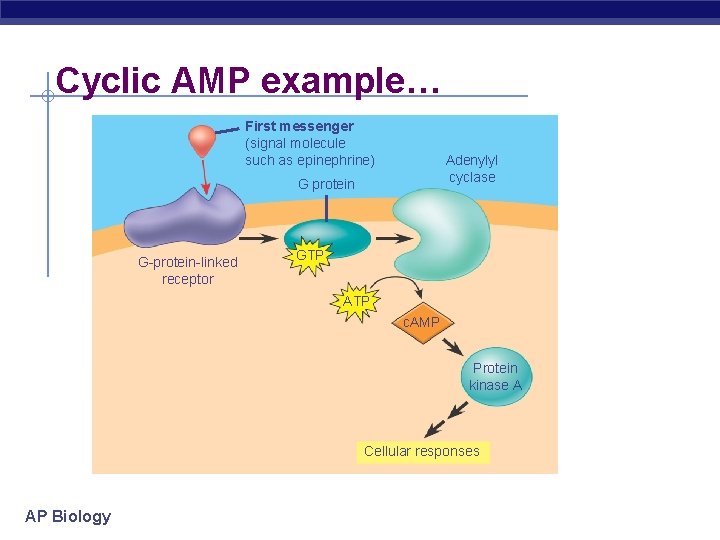
Cyclic AMP example… First messenger (signal molecule such as epinephrine) Adenylyl cyclase G protein G-protein-linked receptor GTP ATP c. AMP Protein kinase A Cellular responses AP Biology
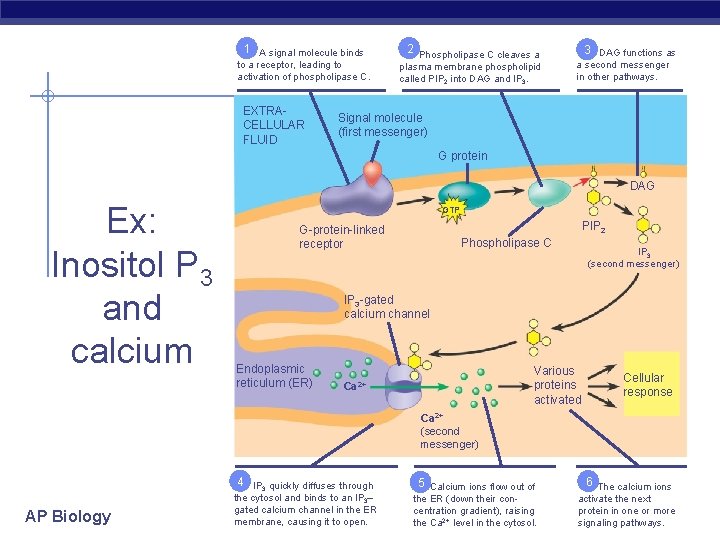
1 A signal molecule binds to a receptor, leading to activation of phospholipase C. EXTRACELLULAR FLUID 2 Phospholipase C cleaves a plasma membrane phospholipid called PIP 2 into DAG and IP 3. 3 DAG functions as a second messenger in other pathways. Signal molecule (first messenger) G protein DAG Ex: Inositol P 3 and calcium GTP PIP 2 G-protein-linked receptor Phospholipase C IP 3 (second messenger) IP 3 -gated calcium channel Endoplasmic reticulum (ER) Various proteins activated Ca 2+ Cellular response Ca 2+ (second messenger) AP Biology 4 IP 3 quickly diffuses through the cytosol and binds to an IP 3– gated calcium channel in the ER membrane, causing it to open. 5 Calcium ions flow out of the ER (down their concentration gradient), raising the Ca 2+ level in the cytosol. 6 The calcium ions activate the next protein in one or more signaling pathways.
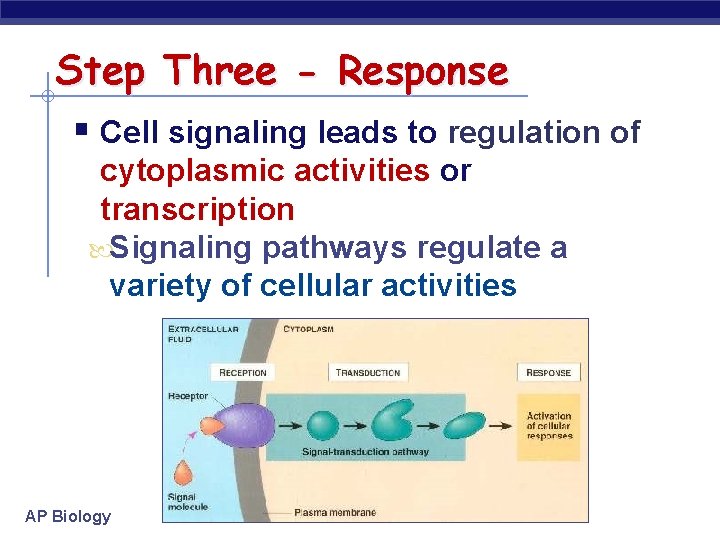
Step Three - Response § Cell signaling leads to regulation of cytoplasmic activities or transcription Signaling pathways regulate a variety of cellular activities AP Biology
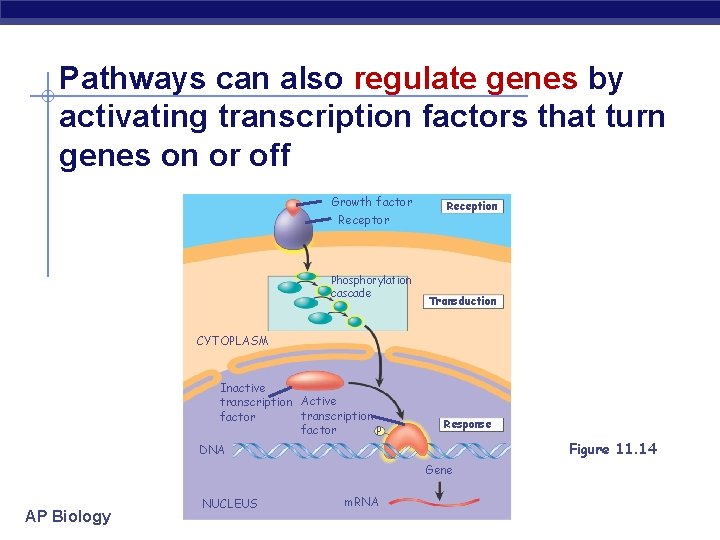
Pathways can also regulate genes by activating transcription factors that turn genes on or off Growth factor Receptor Phosphorylation cascade Reception Transduction CYTOPLASM Inactive transcription Active transcription factor P Response Figure 11. 14 DNA Gene AP Biology NUCLEUS m. RNA
Types of Receptors § There are three main types of plasma membrane receptors: u G-protein-linked u Tyrosine kinases u Ion channel AP Biology
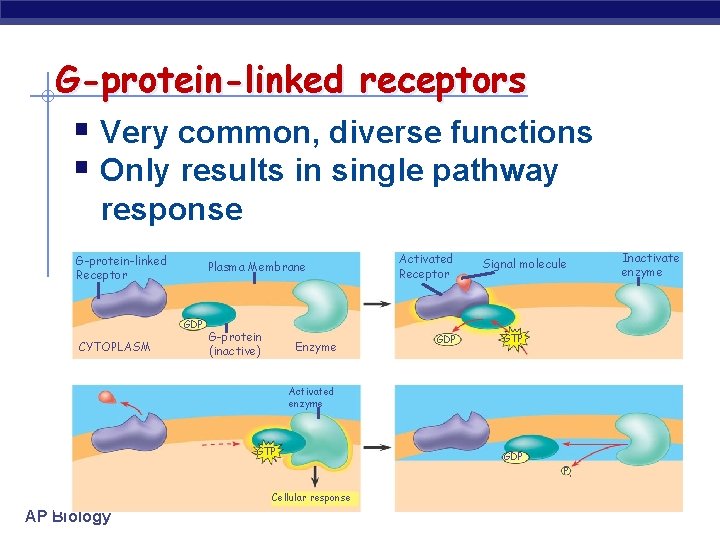
G-protein-linked receptors § Very common, diverse functions § Only results in single pathway response G-protein-linked Receptor Plasma Membrane GDP CYTOPLASM G-protein (inactive) Enzyme Activated Receptor GDP Signal molecule GTP Activated enzyme GTP GDP Pi Cellular response AP Biology Inactivate enzyme
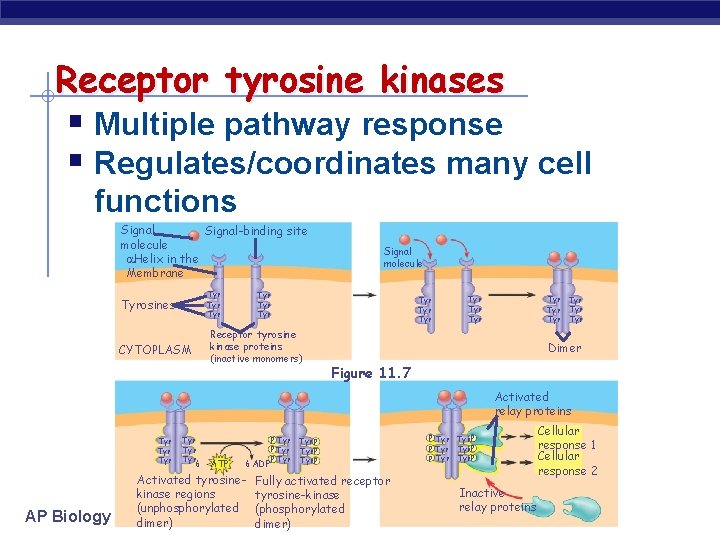
Receptor tyrosine kinases § Multiple pathway response § Regulates/coordinates many cell functions Signal-binding site molecule Helix in the Membrane Tyr Tyrosines Tyr Tyr Tyr Receptor tyrosine kinase proteins (inactive monomers) CYTOPLASM Signal molecule Tyr Tyr Tyr Dimer Figure 11. 7 Activated relay proteins Tyr Tyr AP Biology Tyr Tyr 6 ATP P Tyr 6 ADP Activated tyrosinekinase regions (unphosphorylated dimer) Tyr P Tyr. P Fully activated receptor tyrosine-kinase (phosphorylated dimer) P Tyr Tyr P P Tyr P Inactive relay proteins Cellular response 1 Cellular response 2
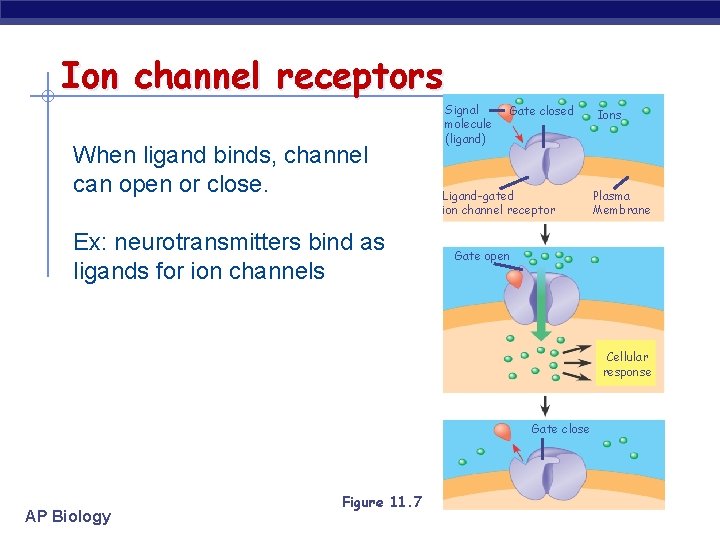
Ion channel receptors When ligand binds, channel can open or close. Ex: neurotransmitters bind as ligands for ion channels Signal molecule (ligand) Gate closed Ligand-gated ion channel receptor Ions Plasma Membrane Gate open Cellular response Gate close AP Biology Figure 11. 7
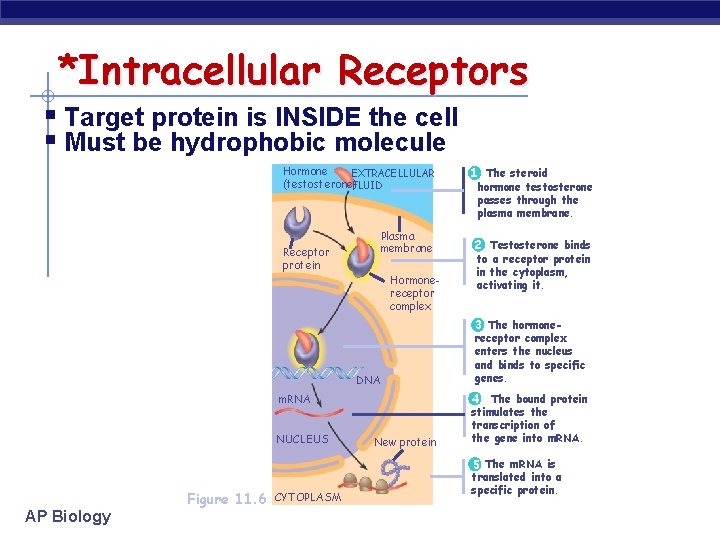
*Intracellular Receptors § Target protein is INSIDE the cell § Must be hydrophobic molecule Hormone EXTRACELLULAR (testosterone) FLUID Receptor protein Plasma membrane Hormonereceptor complex 1 The steroid hormone testosterone passes through the plasma membrane. 2 Testosterone binds to a receptor protein in the cytoplasm, activating it. 3 The hormone- DNA 4 m. RNA NUCLEUS AP Biology Figure 11. 6 CYTOPLASM receptor complex enters the nucleus and binds to specific genes. New protein The bound protein stimulates the transcription of the gene into m. RNA. 5 The m. RNA is translated into a specific protein.
Evolutionary Significance § Unicellular and multicellular cell § § communication have similarities Yeast cells signal for sexual reproduction through signal transduction process. Bacteria secrete molecules to sense density of own population. u Quorum Sensing § Many bacteria functioning in low numbers is ineffective (survival purpose) AP Biology
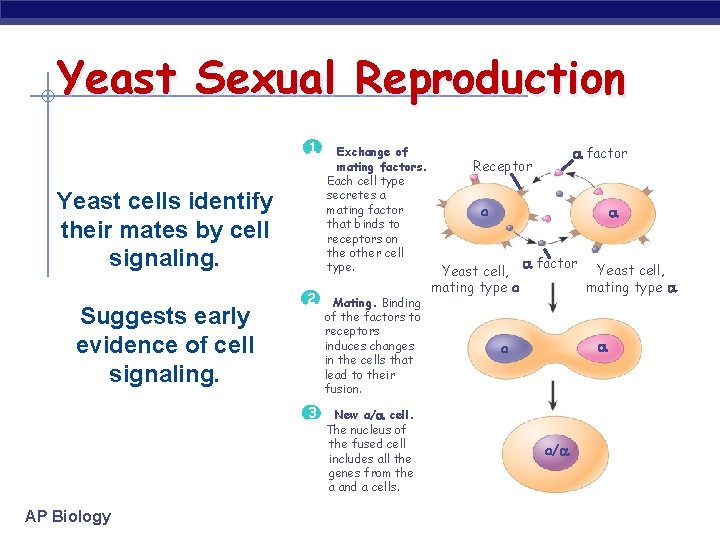
Yeast Sexual Reproduction 1 Yeast cells identify their mates by cell signaling. Suggests early evidence of cell signaling. 2 Mating. Binding of the factors to receptors induces changes in the cells that lead to their fusion. 3 AP Biology Exchange of mating factors. Each cell type secretes a mating factor that binds to receptors on the other cell type. New a/ cell. The nucleus of the fused cell includes all the genes from the a and a cells. factor Receptor a Yeast cell, mating type a factor a Yeast cell, mating type a/
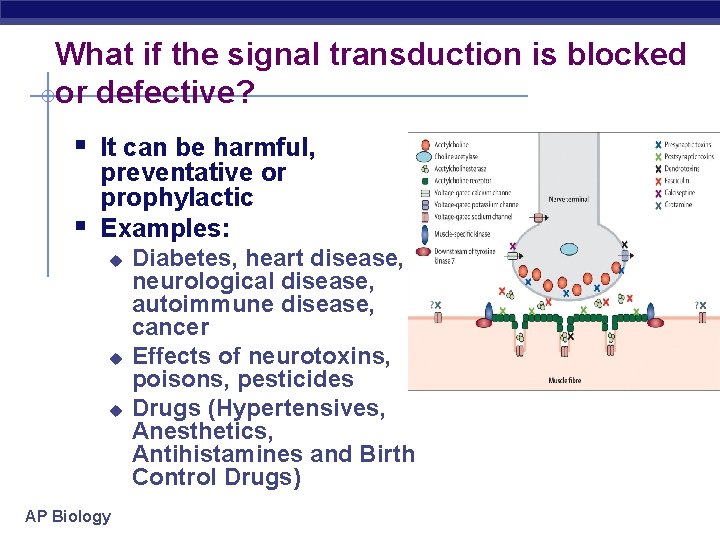
What if the signal transduction is blocked or defective? § It can be harmful, § preventative or prophylactic Examples: u u u AP Biology Diabetes, heart disease, neurological disease, autoimmune disease, cancer Effects of neurotoxins, poisons, pesticides Drugs (Hypertensives, Anesthetics, Antihistamines and Birth Control Drugs)
- Slides: 22