
Ch 11 Atmosphere Lesson 1 Atmospheric Basics Think
Ch 11 Atmosphere
Lesson 1 Atmospheric Basics
Think About It… Why would it be a bad thing if the atmosphere was mostly oxygen?
Focus Question… What is the composition and structure of the atmosphere?
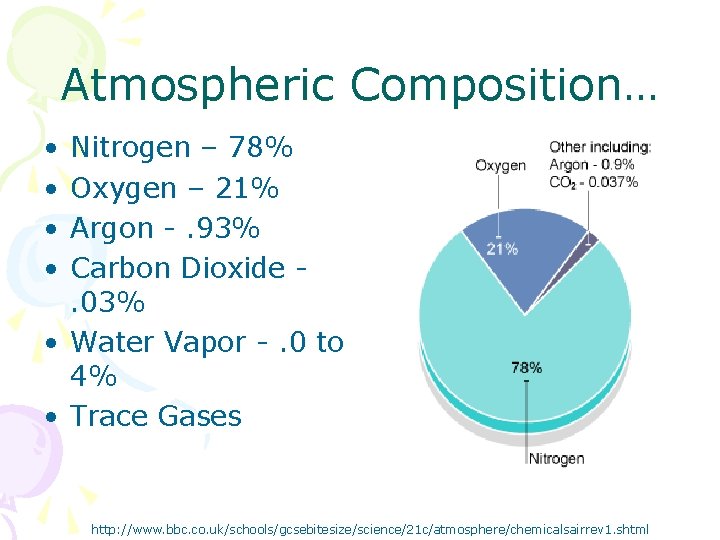
Atmospheric Composition… • • Nitrogen – 78% Oxygen – 21% Argon -. 93% Carbon Dioxide. 03% • Water Vapor -. 0 to 4% • Trace Gases http: //www. bbc. co. uk/schools/gcsebitesize/science/21 c/atmosphere/chemicalsairrev 1. shtml
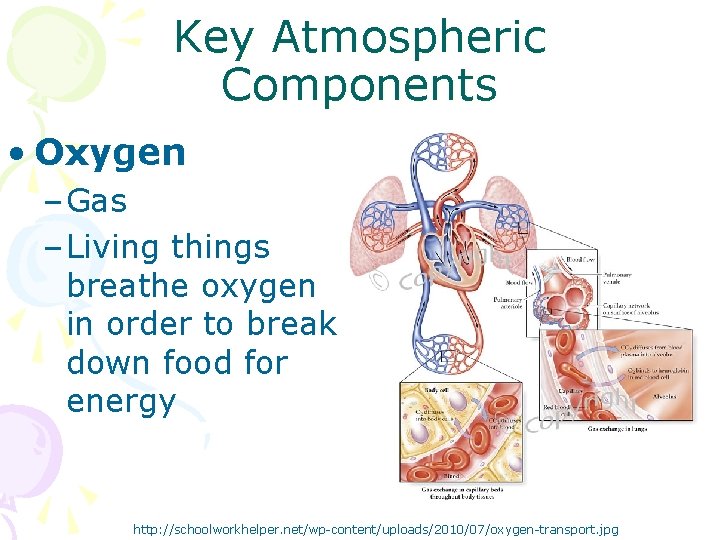
Key Atmospheric Components • Oxygen – Gas – Living things breathe oxygen in order to break down food for energy http: //schoolworkhelper. net/wp-content/uploads/2010/07/oxygen-transport. jpg
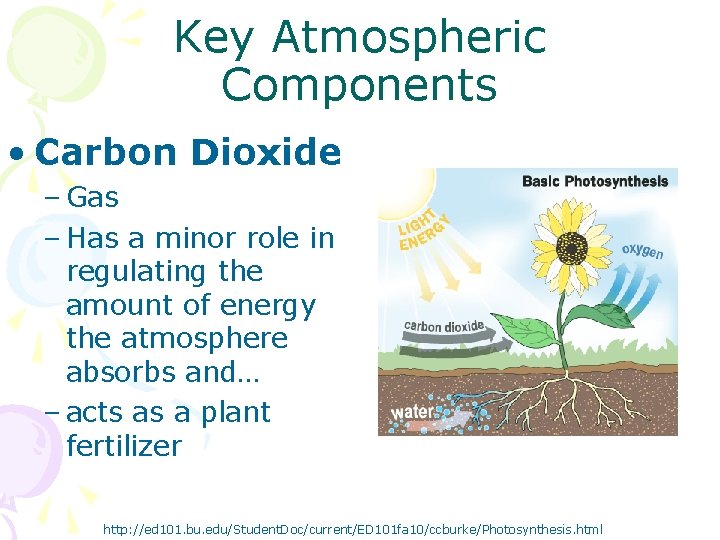
Key Atmospheric Components • Carbon Dioxide – Gas – Has a minor role in regulating the amount of energy the atmosphere absorbs and… – acts as a plant fertilizer http: //ed 101. bu. edu/Student. Doc/current/ED 101 fa 10/ccburke/Photosynthesis. html
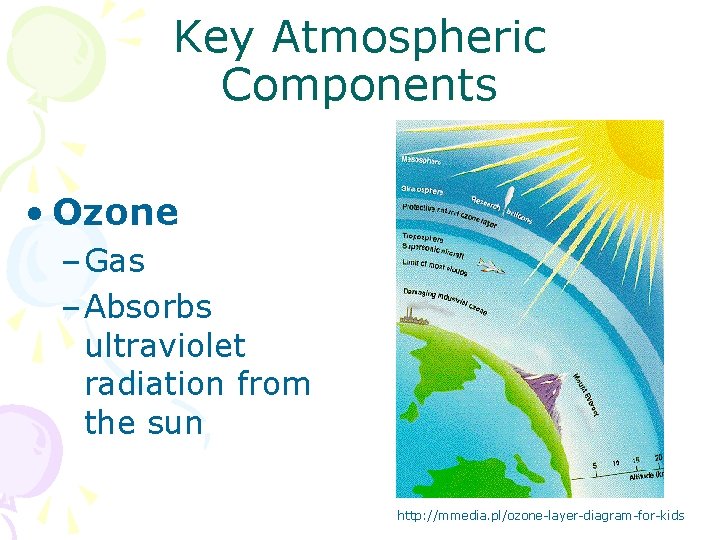
Key Atmospheric Components • Ozone – Gas – Absorbs ultraviolet radiation from the sun http: //mmedia. pl/ozone-layer-diagram-for-kids
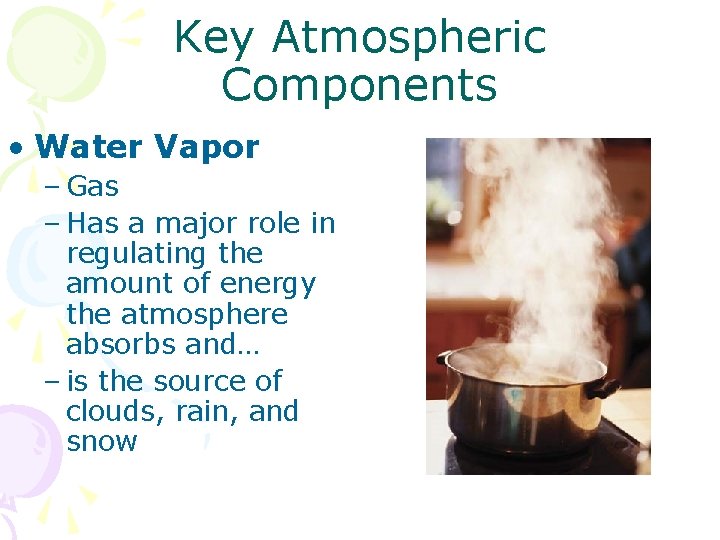
Key Atmospheric Components • Water Vapor – Gas – Has a major role in regulating the amount of energy the atmosphere absorbs and… – is the source of clouds, rain, and snow
Key Atmospheric Components • Water – Liquid – The source of rain Singing in the Rain! http: //mypeartreehouse. blogspot. com/
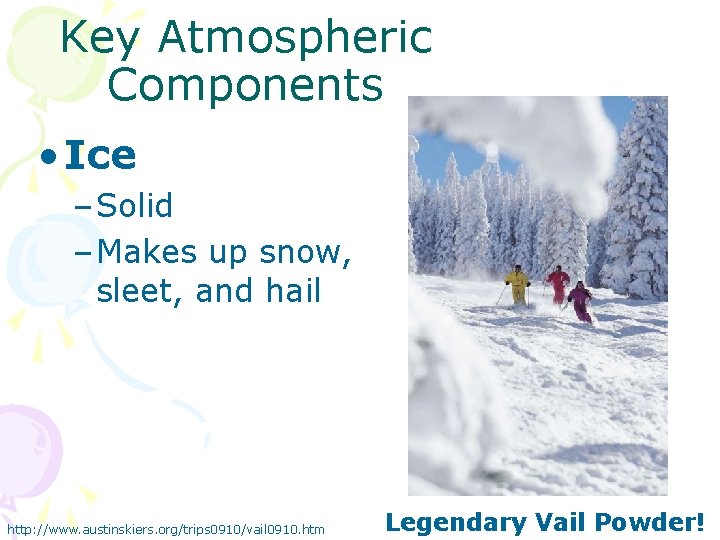
Key Atmospheric Components • Ice – Solid – Makes up snow, sleet, and hail http: //www. austinskiers. org/trips 0910/vail 0910. htm Legendary Vail Powder!
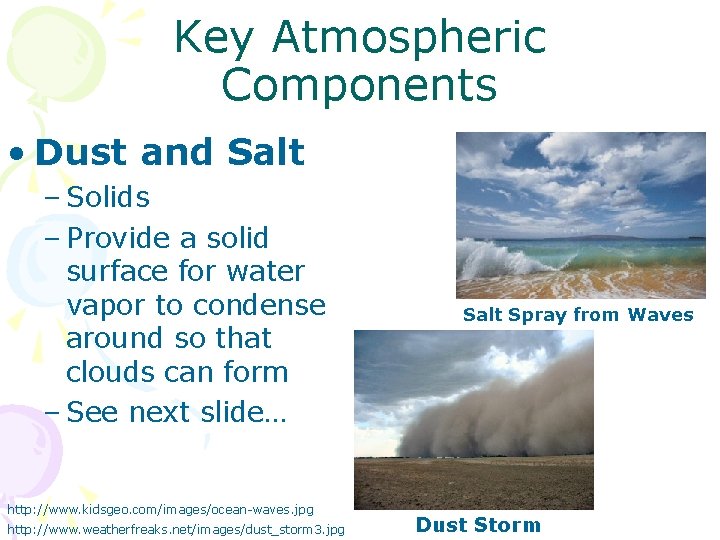
Key Atmospheric Components • Dust and Salt – Solids – Provide a solid surface for water vapor to condense around so that clouds can form – See next slide… http: //www. kidsgeo. com/images/ocean-waves. jpg http: //www. weatherfreaks. net/images/dust_storm 3. jpg Salt Spray from Waves Dust Storm
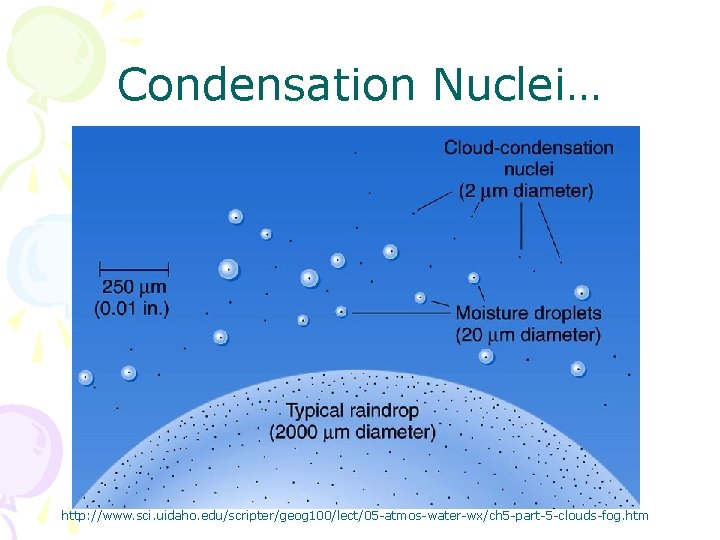
Condensation Nuclei… http: //www. sci. uidaho. edu/scripter/geog 100/lect/05 -atmos-water-wx/ch 5 -part-5 -clouds-fog. htm
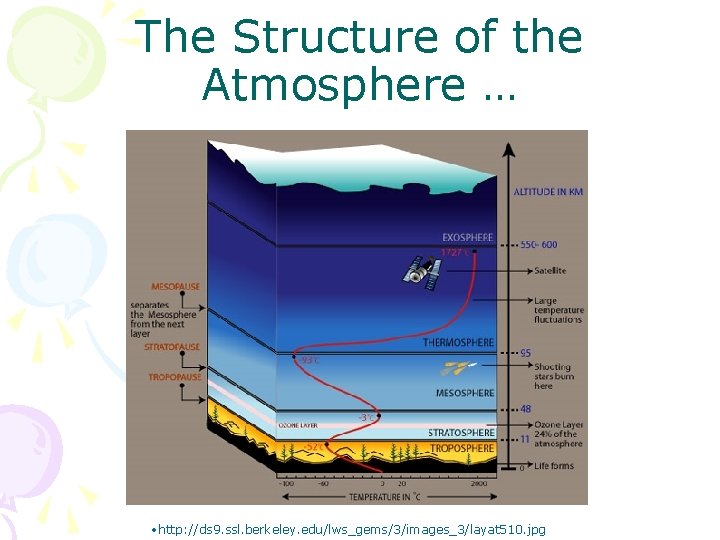
The Structure of the Atmosphere … • http: //ds 9. ssl. berkeley. edu/lws_gems/3/images_3/layat 510. jpg
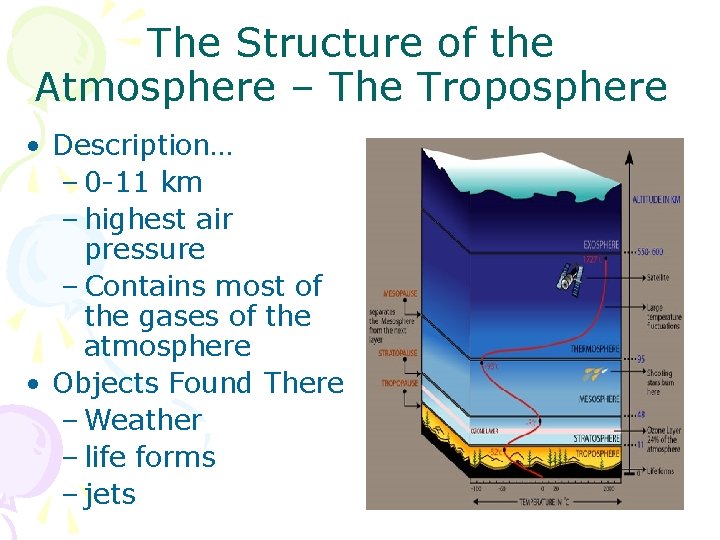
The Structure of the Atmosphere – The Troposphere • Description… – 0 -11 km – highest air pressure – Contains most of the gases of the atmosphere • Objects Found There – Weather – life forms – jets
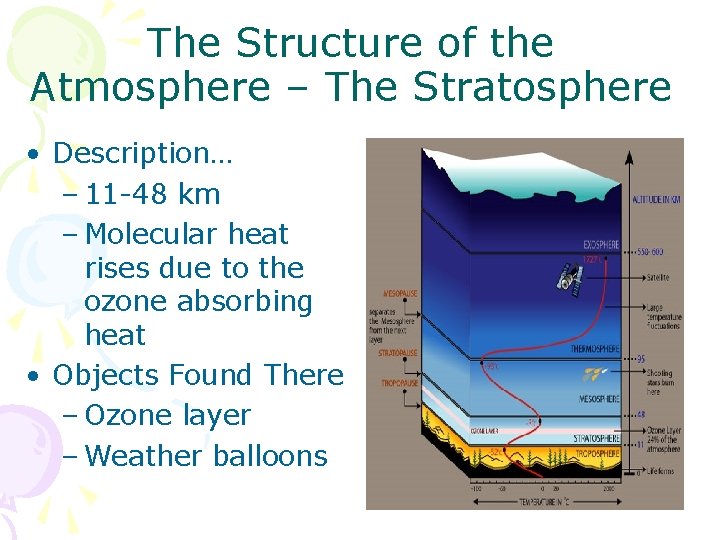
The Structure of the Atmosphere – The Stratosphere • Description… – 11 -48 km – Molecular heat rises due to the ozone absorbing heat • Objects Found There – Ozone layer – Weather balloons
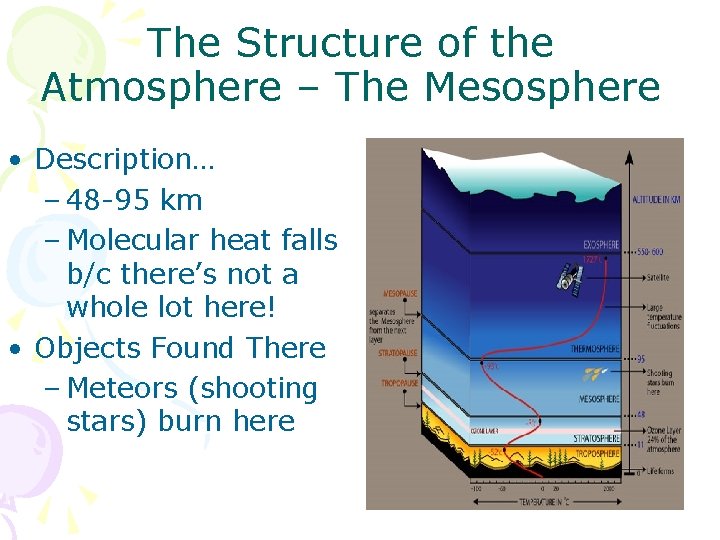
The Structure of the Atmosphere – The Mesosphere • Description… – 48 -95 km – Molecular heat falls b/c there’s not a whole lot here! • Objects Found There – Meteors (shooting stars) burn here
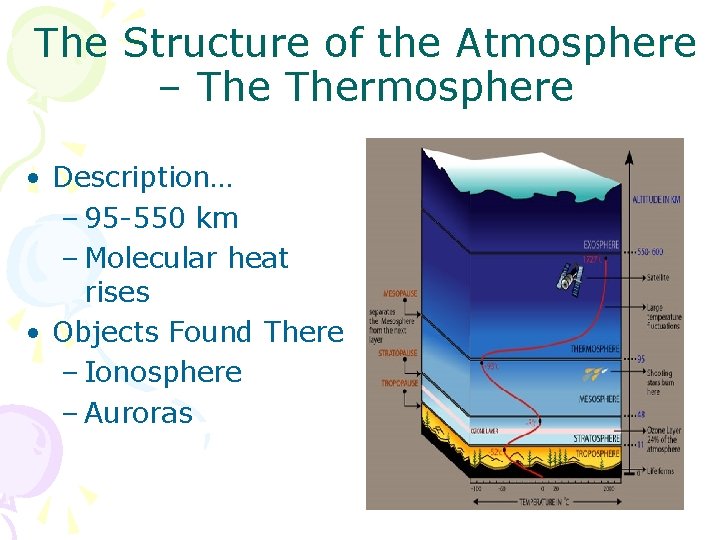
The Structure of the Atmosphere – Thermosphere • Description… – 95 -550 km – Molecular heat rises • Objects Found There – Ionosphere – Auroras
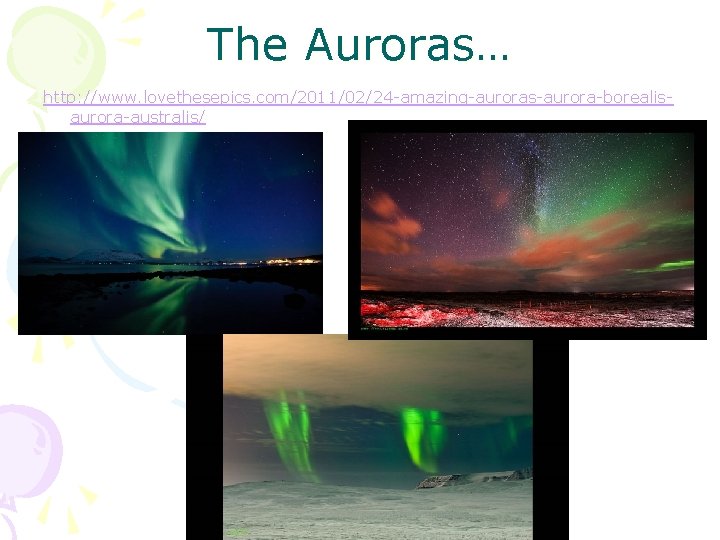
The Auroras… http: //www. lovethesepics. com/2011/02/24 -amazing-auroras-aurora-borealisaurora-australis/
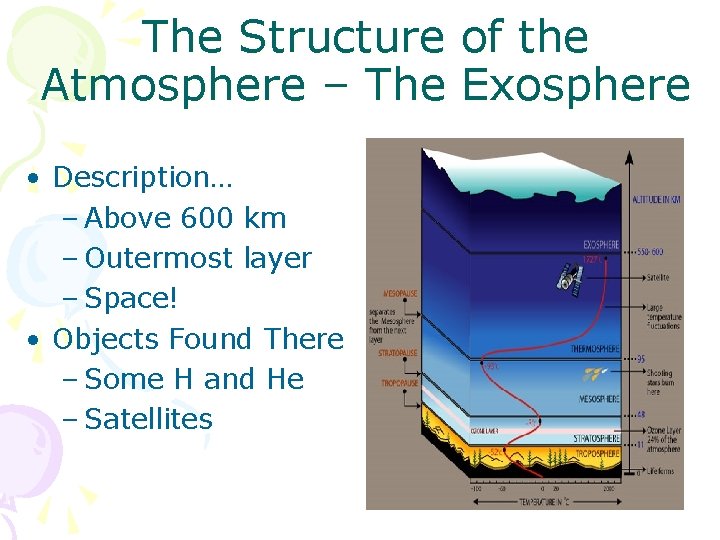
The Structure of the Atmosphere – The Exosphere • Description… – Above 600 km – Outermost layer – Space! • Objects Found There – Some H and He – Satellites
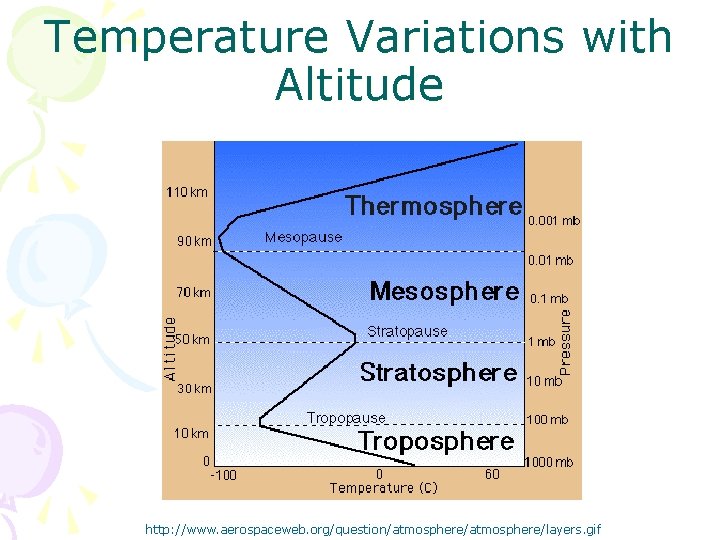
Temperature Variations with Altitude http: //www. aerospaceweb. org/question/atmosphere/layers. gif
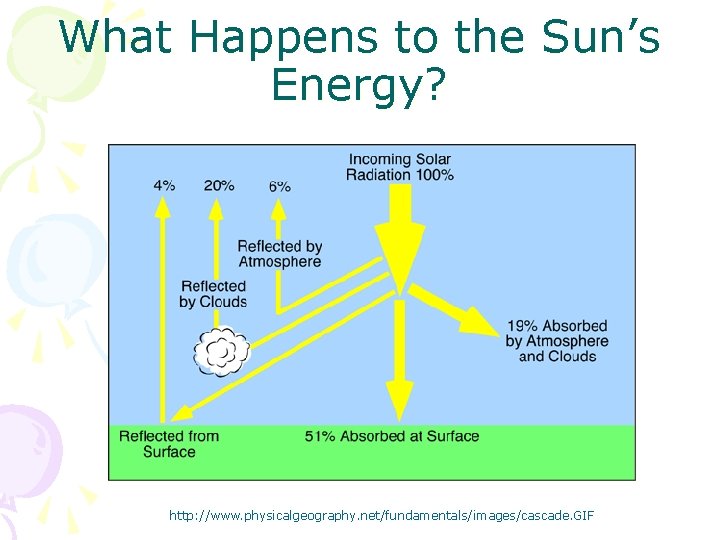
What Happens to the Sun’s Energy? http: //www. physicalgeography. net/fundamentals/images/cascade. GIF
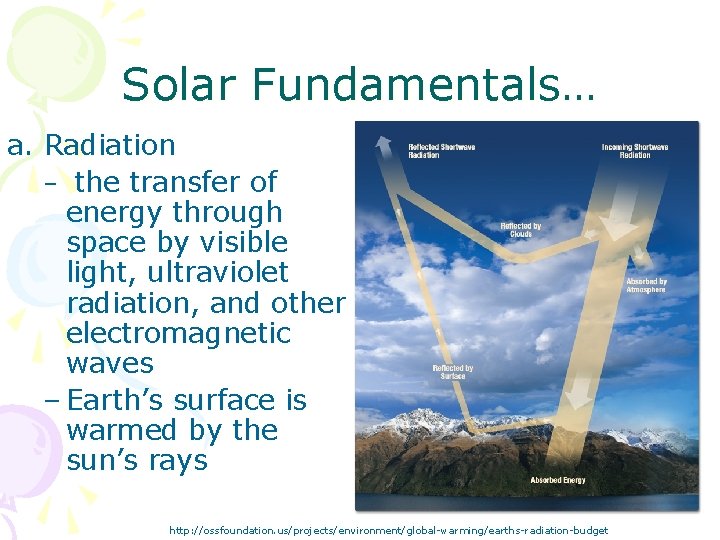
Solar Fundamentals… a. Radiation – the transfer of energy through space by visible light, ultraviolet radiation, and other electromagnetic waves – Earth’s surface is warmed by the sun’s rays http: //ossfoundation. us/projects/environment/global-warming/earths-radiation-budget
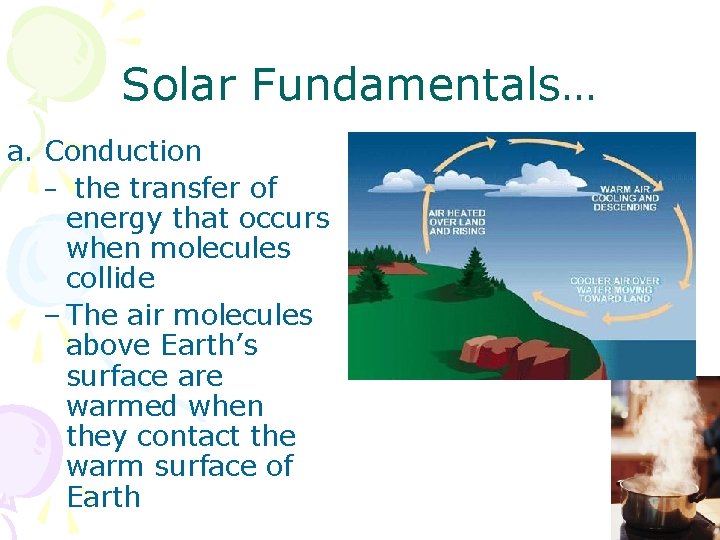
Solar Fundamentals… a. Conduction – the transfer of energy that occurs when molecules collide – The air molecules above Earth’s surface are warmed when they contact the warm surface of Earth
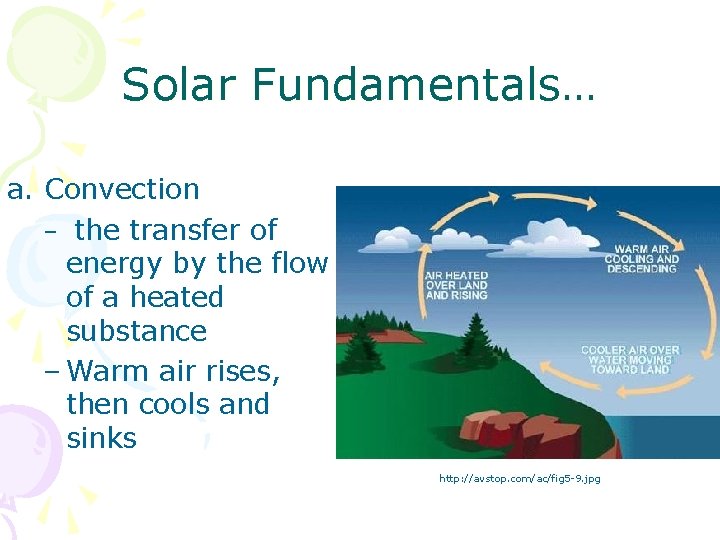
Solar Fundamentals… a. Convection – the transfer of energy by the flow of a heated substance – Warm air rises, then cools and sinks http: //avstop. com/ac/fig 5 -9. jpg
The Transfer of Heat in the Atmosphere… Copy the diagram your teacher draws on the board!
Lesson 2 The State of the Atmosphere
Think About It… What makes a hot air balloon float?
Focus Question… What are the physical properties of the atmosphere that create weather?
Temperature of the Atmosphere… a. What is temperature? a. The measurement of how rapidly or slowly molecules move around b. What is heat? b. The transfer of energy that occurs because of a difference in temperature between substances Heat fuels atmospheric processes!
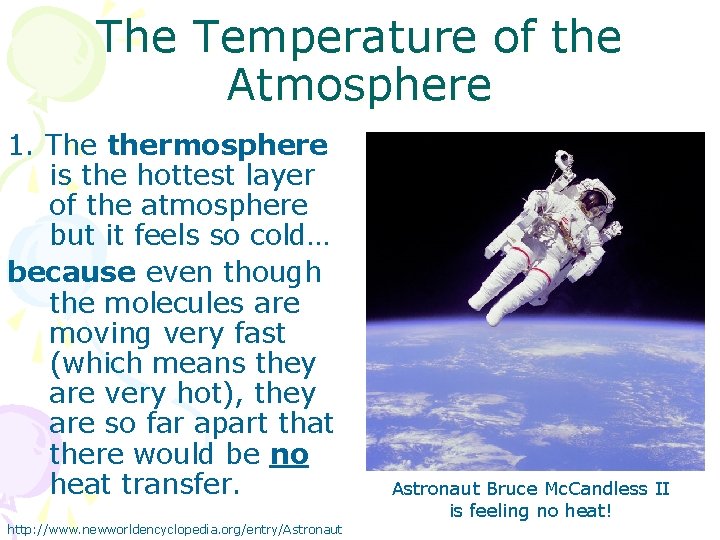
The Temperature of the Atmosphere 1. The thermosphere is the hottest layer of the atmosphere but it feels so cold… because even though the molecules are moving very fast (which means they are very hot), they are so far apart that there would be no heat transfer. http: //www. newworldencyclopedia. org/entry/Astronaut Bruce Mc. Candless II is feeling no heat!
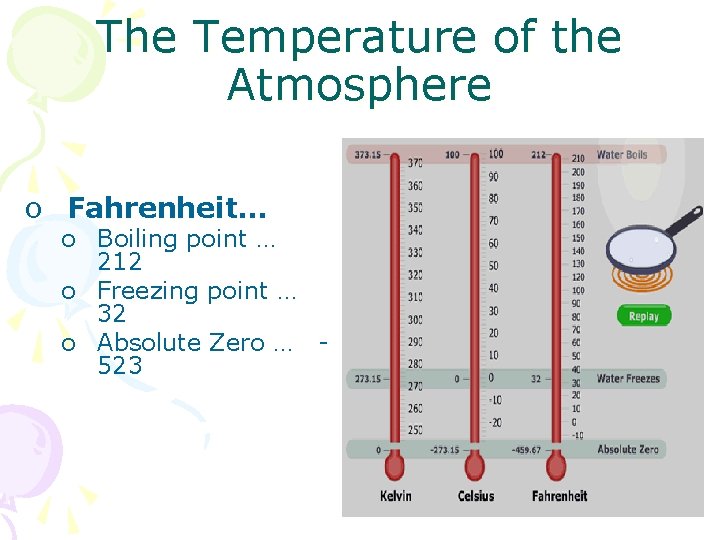
The Temperature of the Atmosphere o Fahrenheit… o Boiling point … 212 o Freezing point … 32 o Absolute Zero … 523
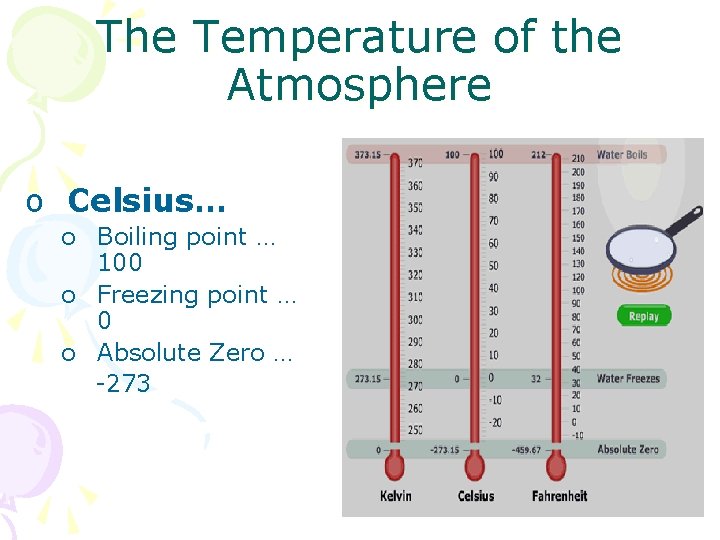
The Temperature of the Atmosphere o Celsius… o Boiling point … 100 o Freezing point … 0 o Absolute Zero … -273
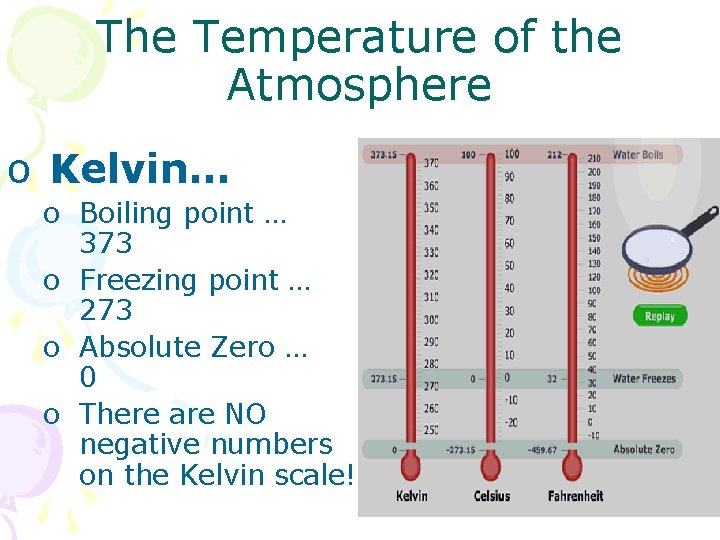
The Temperature of the Atmosphere o Kelvin… o Boiling point … 373 o Freezing point … 273 o Absolute Zero … 0 o There are NO negative numbers on the Kelvin scale!
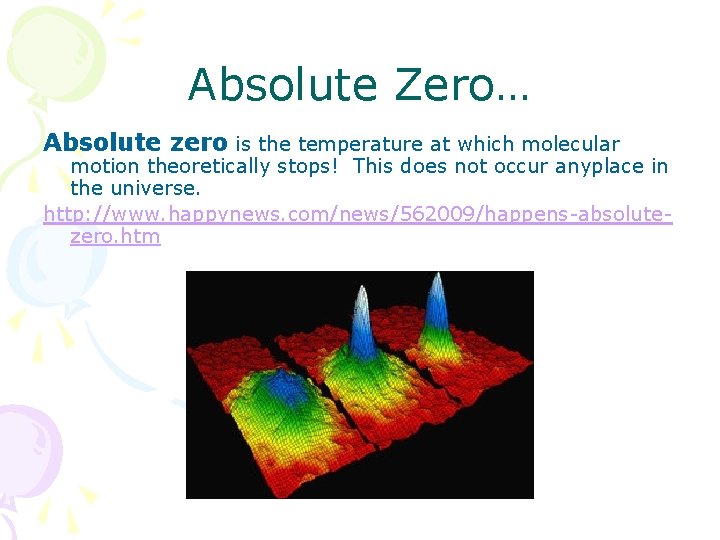
Absolute Zero… Absolute zero is the temperature at which molecular motion theoretically stops! This does not occur anyplace in the universe. http: //www. happynews. com/news/562009/happens-absolutezero. htm
The Temperature of the Atmosphere 3 a. Dew Point is the temperature to which air must be cooled at constant pressure to reach saturation. o That is when dew is formed! o The higher the dew point, more humid and uncomfortable the air. o See next slide…
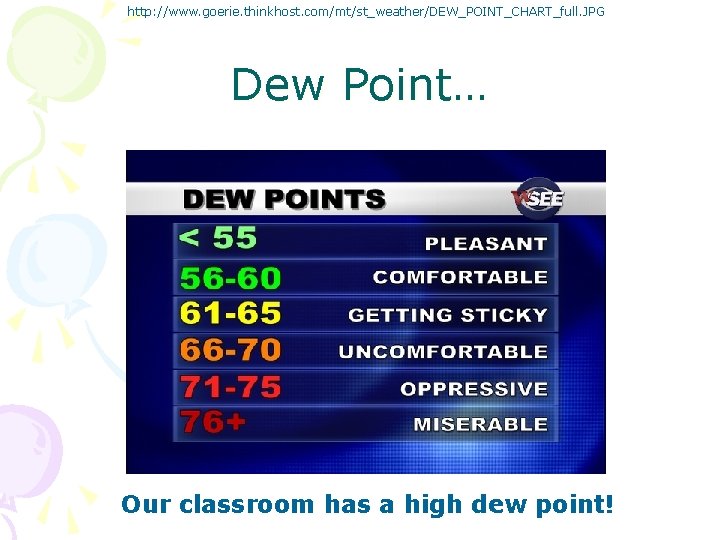
http: //www. goerie. thinkhost. com/mt/st_weather/DEW_POINT_CHART_full. JPG Dew Point… Our classroom has a high dew point!
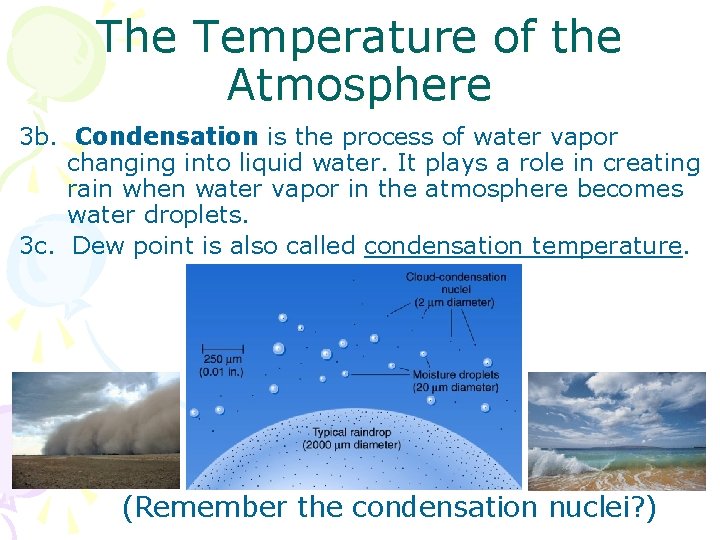
The Temperature of the Atmosphere 3 b. Condensation is the process of water vapor changing into liquid water. It plays a role in creating rain when water vapor in the atmosphere becomes water droplets. 3 c. Dew point is also called condensation temperature. (Remember the condensation nuclei? )
Vertical Temperature Changes a. Altitude is height above ground or sea level. b. Why is the temperature of the lower atmosphere cooler at higher elevations and altitudes? b. Because it is farther away from the source of heat – Earth’s surface c. Individual air masses moving upward through the atmosphere will cool about 10 degrees C/1000 m.
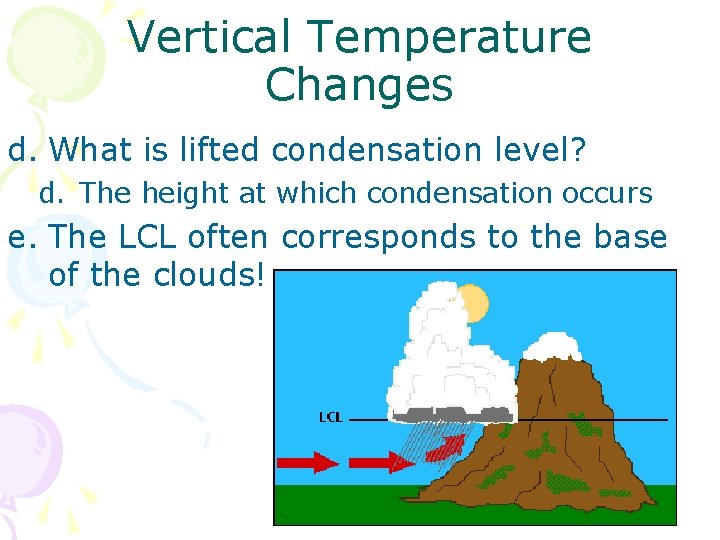
Vertical Temperature Changes d. What is lifted condensation level? d. The height at which condensation occurs e. The LCL often corresponds to the base of the clouds!
Air Pressure and Density… 1. Density is mass per volume. 2. As altitude increases (moving up through Earth’s atmosphere), the density of the air. . . … decreases 3. Air pressure is… … the force exerted by the molecules of the atmosphere as they are pulled toward Earth’s center. 4. As altitude increases… … air pressure decreases
Air Pressure and Density… 5. Air at the bottom of the atmosphere (the troposphere #6) has higher density and pressure because. . . … of the greater mass of the atmosphere above you! … Gravity is the force pulling all air molecules in the atmosphere toward Earth. … This is similar to being at the bottom of the ocean with tons of water above you! … We are accustomed to the high air pressure so it doesn’t squash us.
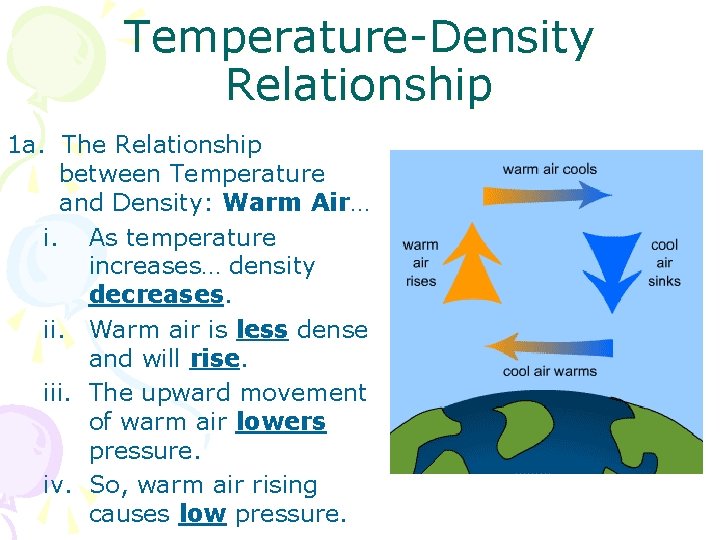
Temperature-Density Relationship 1 a. The Relationship between Temperature and Density: Warm Air… i. As temperature increases… density decreases. ii. Warm air is less dense and will rise. iii. The upward movement of warm air lowers pressure. iv. So, warm air rising causes low pressure.
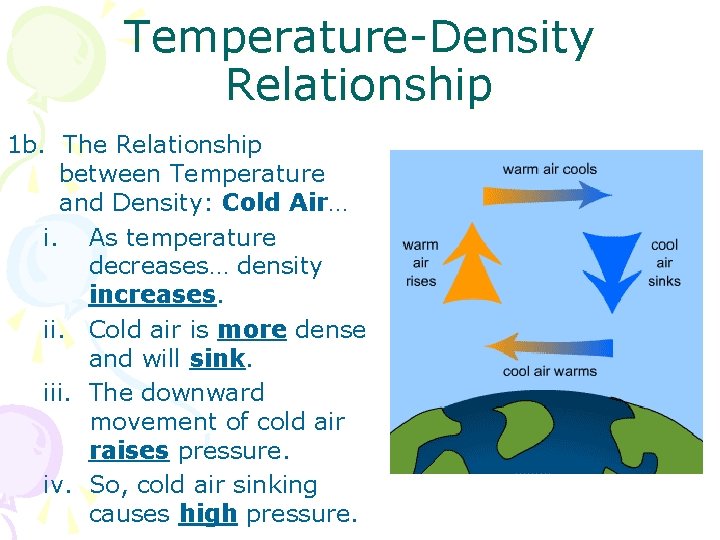
Temperature-Density Relationship 1 b. The Relationship between Temperature and Density: Cold Air… i. As temperature decreases… density increases. ii. Cold air is more dense and will sink. iii. The downward movement of cold air raises pressure. iv. So, cold air sinking causes high pressure.
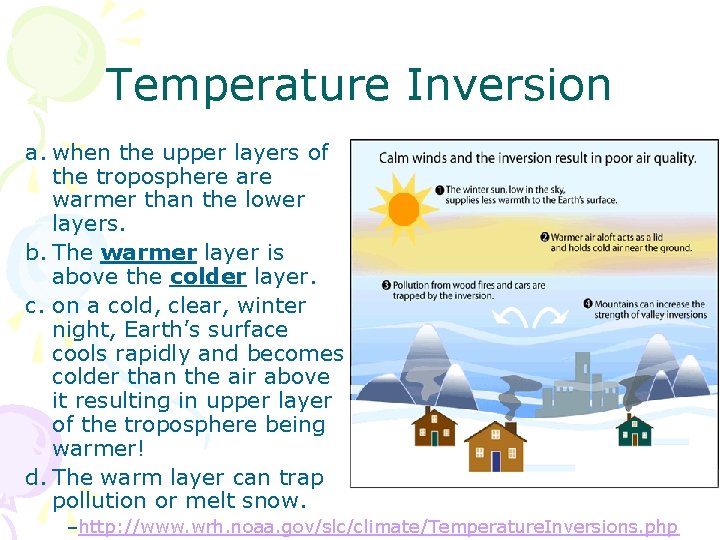
Temperature Inversion a. when the upper layers of the troposphere are warmer than the lower layers. b. The warmer layer is above the colder layer. c. on a cold, clear, winter night, Earth’s surface cools rapidly and becomes colder than the air above it resulting in upper layer of the troposphere being warmer! d. The warm layer can trap pollution or melt snow. –http: //www. wrh. noaa. gov/slc/climate/Temperature. Inversions. php
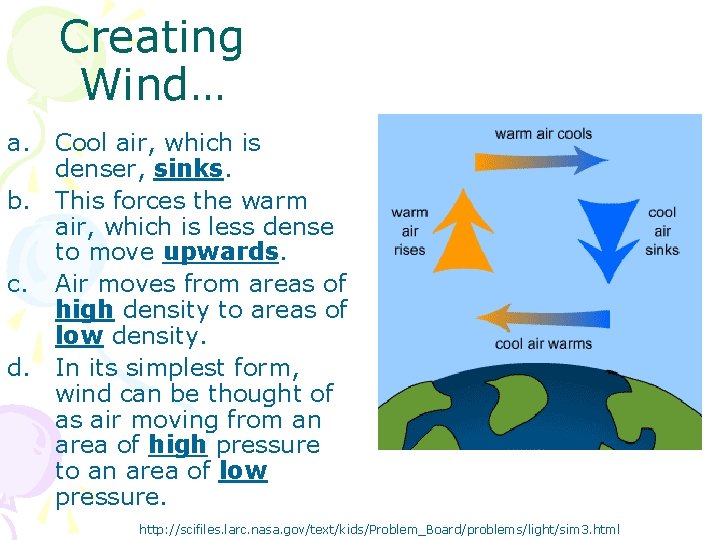
Creating Wind… a. Cool air, which is denser, sinks. b. This forces the warm air, which is less dense to move upwards. c. Air moves from areas of high density to areas of low density. d. In its simplest form, wind can be thought of as air moving from an area of high pressure to an area of low pressure. http: //scifiles. larc. nasa. gov/text/kids/Problem_Board/problems/light/sim 3. html
Humidity Changes with Temperature… 1. What is humidity? o The amount of water air can hold at a given temperature. This is a constant! 2. What is relative humidity? o The amount of water the air is actually holding compared to how much it can hold
Humidity Changes with Temperature… 3. How much water vapor can a m 3 of air hold at 25 degrees C? o 24 grams 4. How much water vapor can a m 3 of air hold at 15 degrees C? o 13 grams 5. Why does the air hold more water at 25 degrees than it does at 15 degrees C? o Warm air can hold more water than cold air because it is less dense. 6. How much water (per m 3) would the air hold in a room at 25 degrees C if the relative humidity was 50%? o 12 grams
Lesson 3 Moisture in the Atmosphere
Think About It… Can you forecast the weather by looking at clouds?
Focus Question… How are clouds formed and what does each type indicate about the weather?
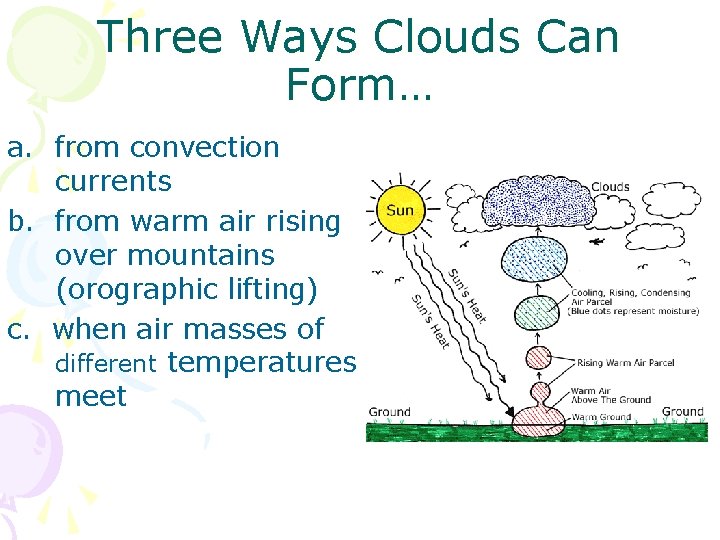
Three Ways Clouds Can Form… a. from convection currents b. from warm air rising over mountains (orographic lifting) c. when air masses of different temperatures meet
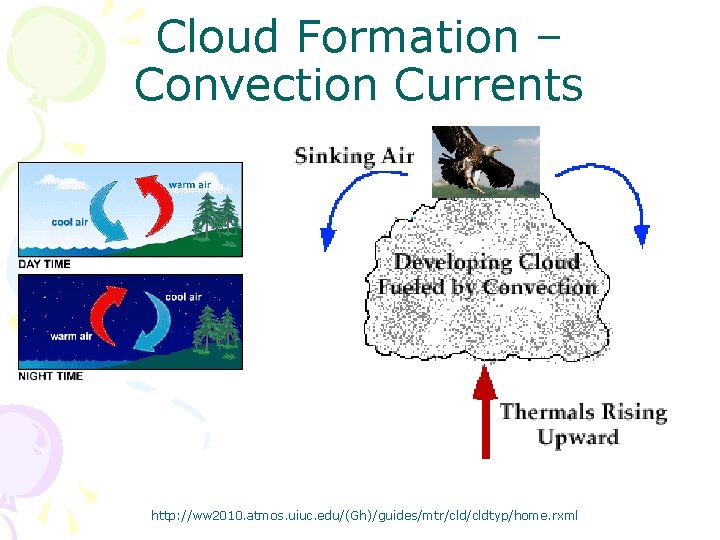
Cloud Formation – Convection Currents http: //ww 2010. atmos. uiuc. edu/(Gh)/guides/mtr/cldtyp/home. rxml
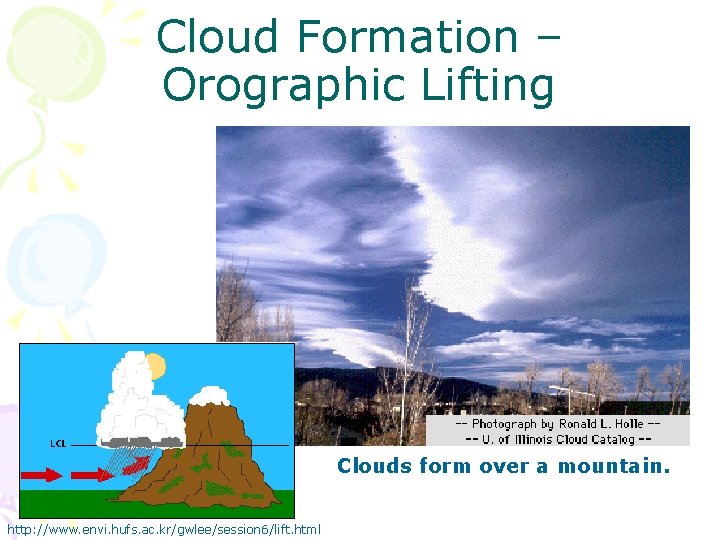
Cloud Formation – Orographic Lifting Clouds form over a mountain. http: //www. envi. hufs. ac. kr/gwlee/session 6/lift. html
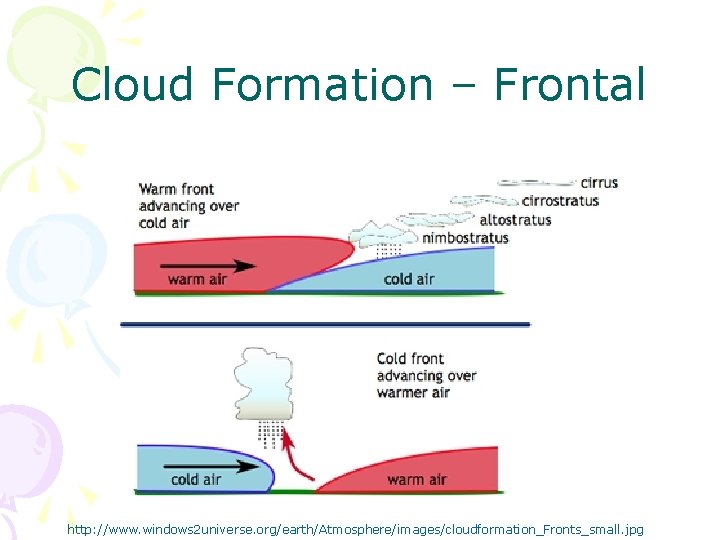
Cloud Formation – Frontal http: //www. windows 2 universe. org/earth/Atmosphere/images/cloudformation_Fronts_small. jpg
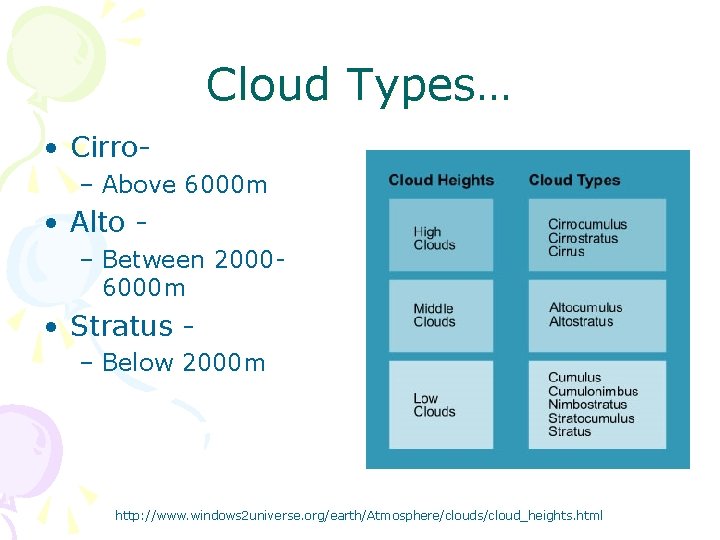
Cloud Types… • Cirro– Above 6000 m • Alto – Between 20006000 m • Stratus – Below 2000 m http: //www. windows 2 universe. org/earth/Atmosphere/clouds/cloud_heights. html
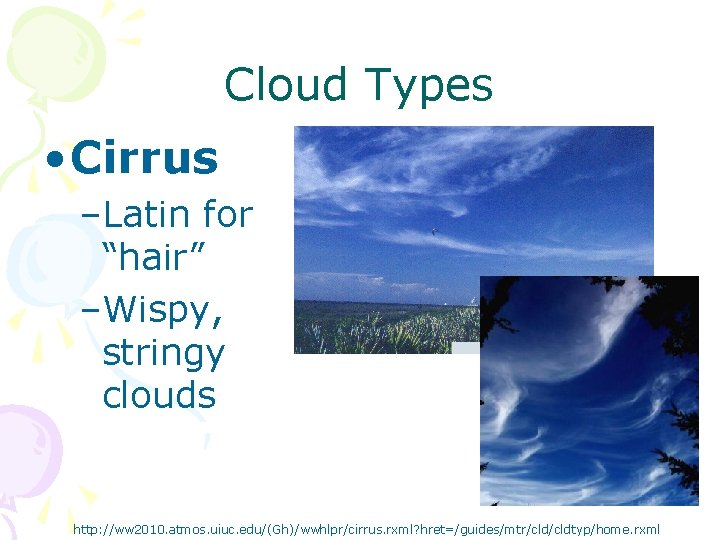
Cloud Types • Cirrus –Latin for “hair” –Wispy, stringy clouds http: //ww 2010. atmos. uiuc. edu/(Gh)/wwhlpr/cirrus. rxml? hret=/guides/mtr/cldtyp/home. rxml
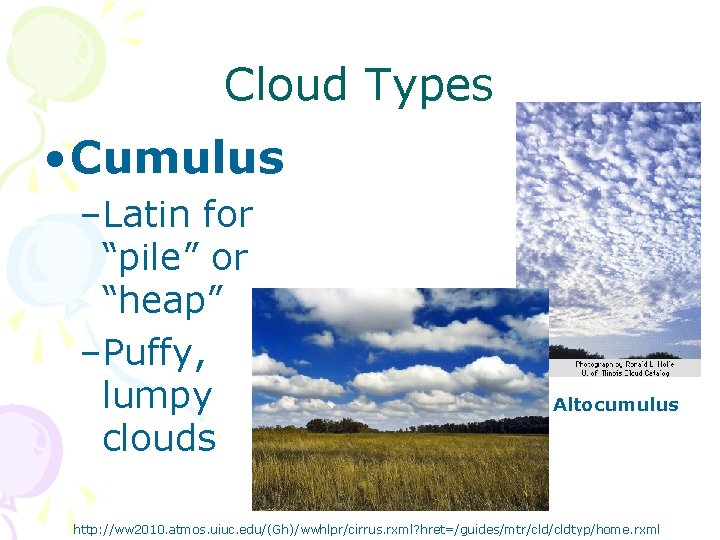
Cloud Types • Cumulus –Latin for “pile” or “heap” –Puffy, lumpy clouds Altocumulus http: //ww 2010. atmos. uiuc. edu/(Gh)/wwhlpr/cirrus. rxml? hret=/guides/mtr/cldtyp/home. rxml
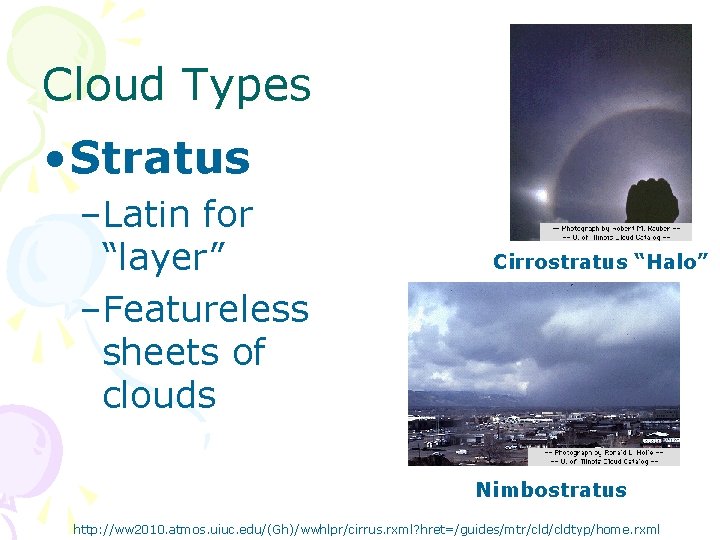
Cloud Types • Stratus –Latin for “layer” –Featureless sheets of clouds Cirrostratus “Halo” Nimbostratus http: //ww 2010. atmos. uiuc. edu/(Gh)/wwhlpr/cirrus. rxml? hret=/guides/mtr/cldtyp/home. rxml
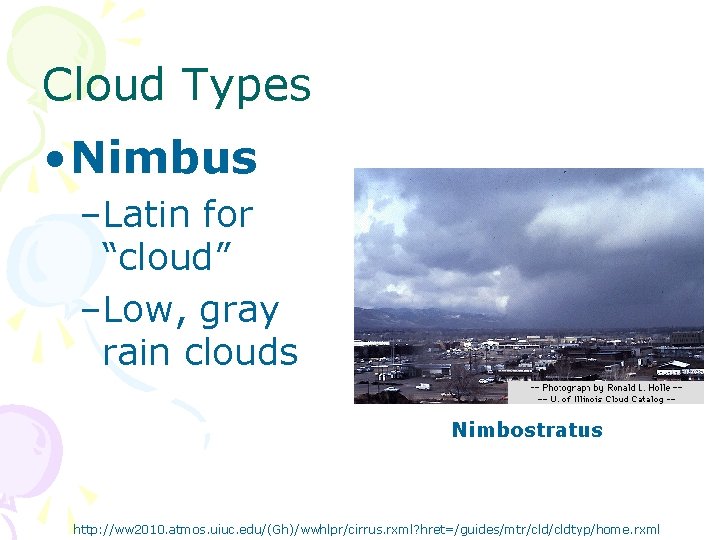
Cloud Types • Nimbus –Latin for “cloud” –Low, gray rain clouds Nimbostratus http: //ww 2010. atmos. uiuc. edu/(Gh)/wwhlpr/cirrus. rxml? hret=/guides/mtr/cldtyp/home. rxml
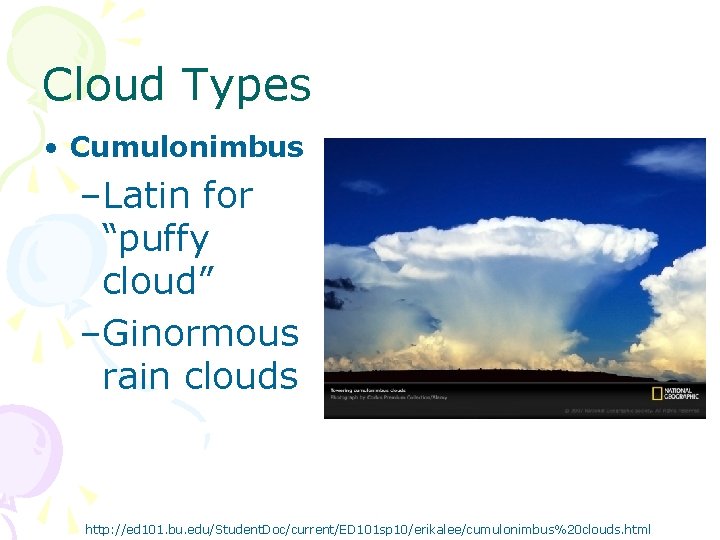
Cloud Types • Cumulonimbus –Latin for “puffy cloud” –Ginormous rain clouds http: //ed 101. bu. edu/Student. Doc/current/ED 101 sp 10/erikalee/cumulonimbus%20 clouds. html
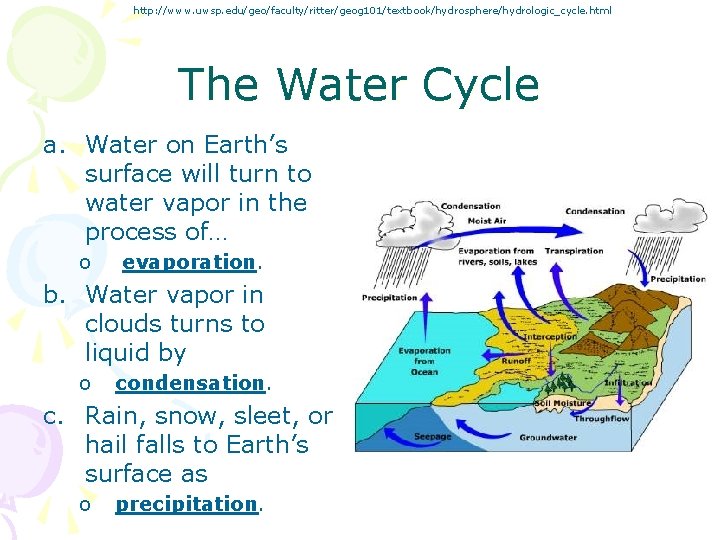
http: //www. uwsp. edu/geo/faculty/ritter/geog 101/textbook/hydrosphere/hydrologic_cycle. html The Water Cycle a. Water on Earth’s surface will turn to water vapor in the process of… o evaporation. b. Water vapor in clouds turns to liquid by o condensation. c. Rain, snow, sleet, or hail falls to Earth’s surface as o precipitation.
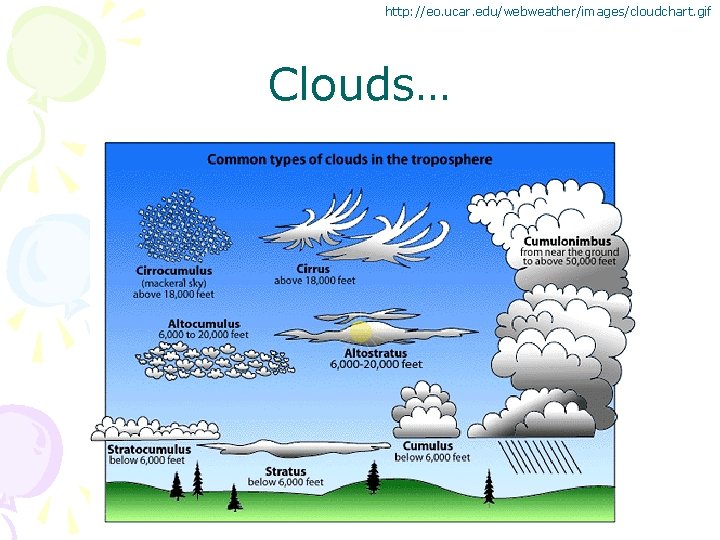
http: //eo. ucar. edu/webweather/images/cloudchart. gif Clouds…
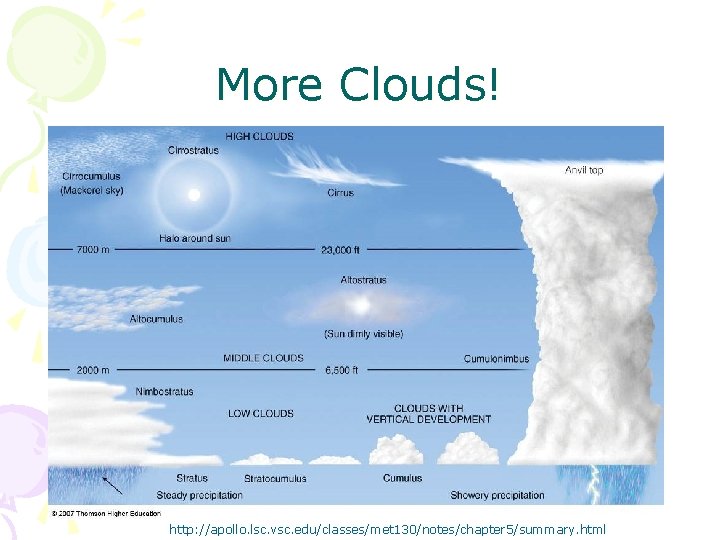
More Clouds! http: //apollo. lsc. vsc. edu/classes/met 130/notes/chapter 5/summary. html
Lesson 3 Cloud Model… • • • p. 288 Create 10 clouds. Get a piece of blue paper. Title it “Clouds” and write your name(s) on the bottom left. Draw the ground. Mark the altitude on left side. Draw a sun. Glue the clouds on and label them. Draw rain drops under nimbus clouds.
- Slides: 65