
Ch 10 Sensory Physiology Types of sensory information
- Slides: 15
Ch. 10: Sensory Physiology • • • Types of sensory information Receptive field Threshold Receptor potential Labeled line coding Location of stimulus Lateral inhibition Intensity and duration of stimulus Tonic and phasic receptors
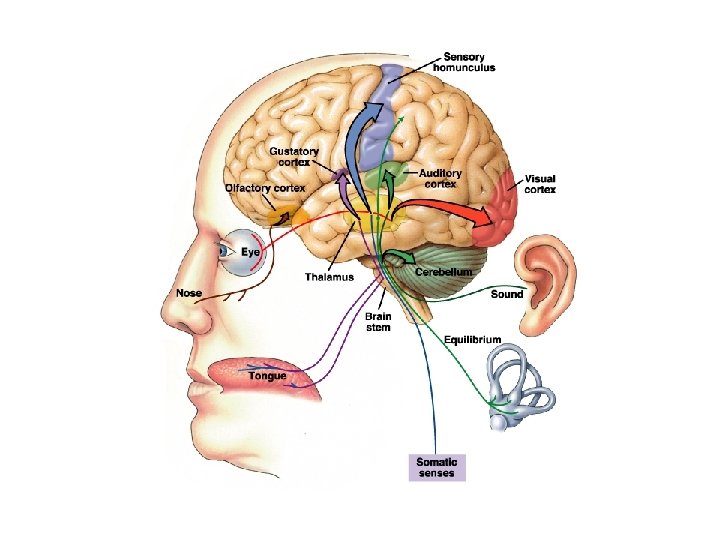
Types of conscious stimuli • Special senses: vision, hearing, taste, smell, equilibrium • Somatic senses: touch-pressure, temperature, pain, proprioception (make us aware of body position)
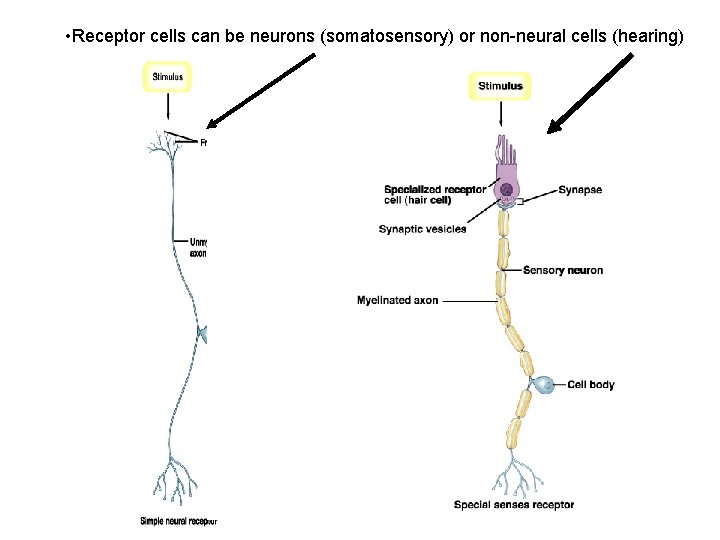
Receptor cells • Sensory systems contain receptor cells that respond to stimuli • The receptor cells transduce stimulation to a cellular response • Receptor cells can be neurons (somatosensory) or non-neural cells (hearing)
• Receptor cells can be neurons (somatosensory) or non-neural cells (hearing)
Sensory pathways carry information to the CNS. • Relays: primary sensory neurons secondary neurons tertiary neurons
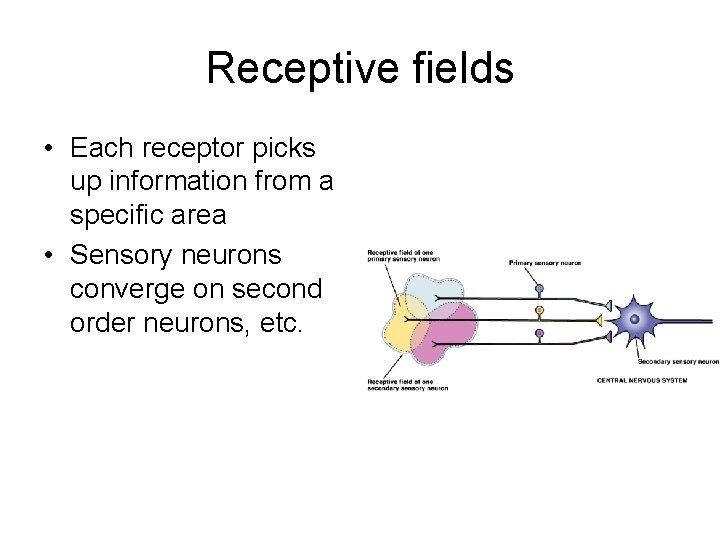
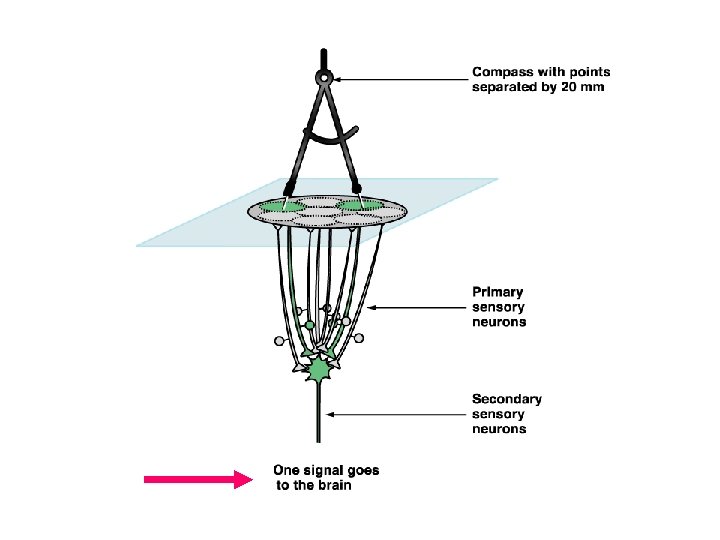
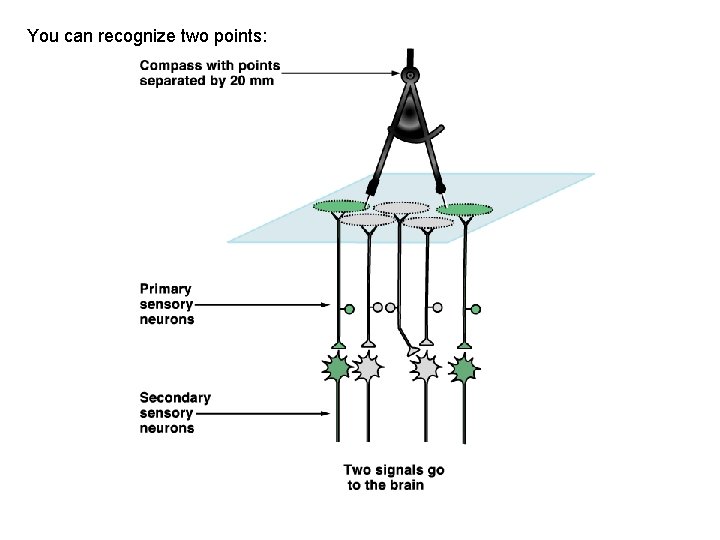
Receptive fields • Each receptor picks up information from a specific area • Sensory neurons converge on second order neurons, etc.
You can recognize two points:
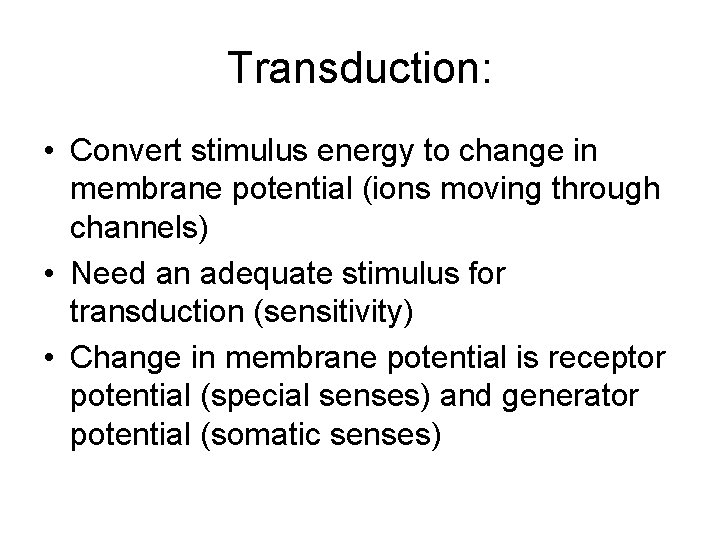
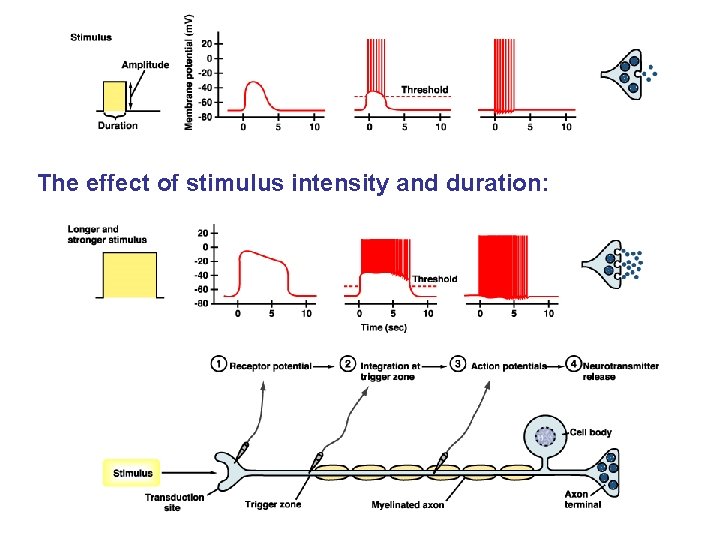
Transduction: • Convert stimulus energy to change in membrane potential (ions moving through channels) • Need an adequate stimulus for transduction (sensitivity) • Change in membrane potential is receptor potential (special senses) and generator potential (somatic senses)
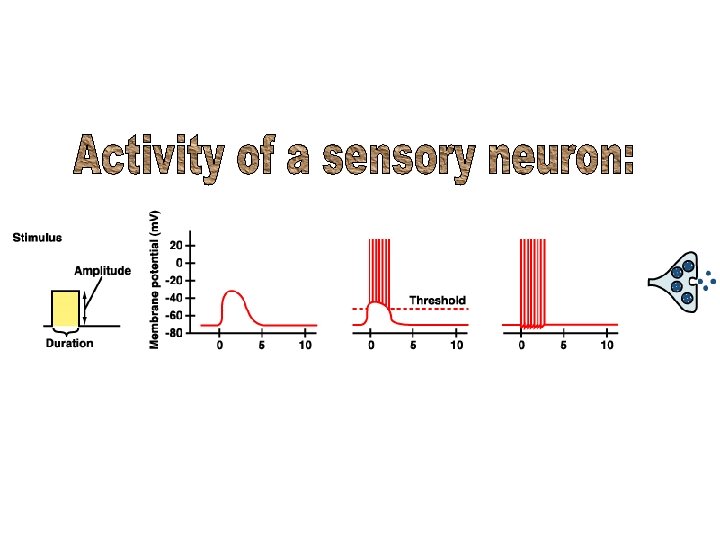
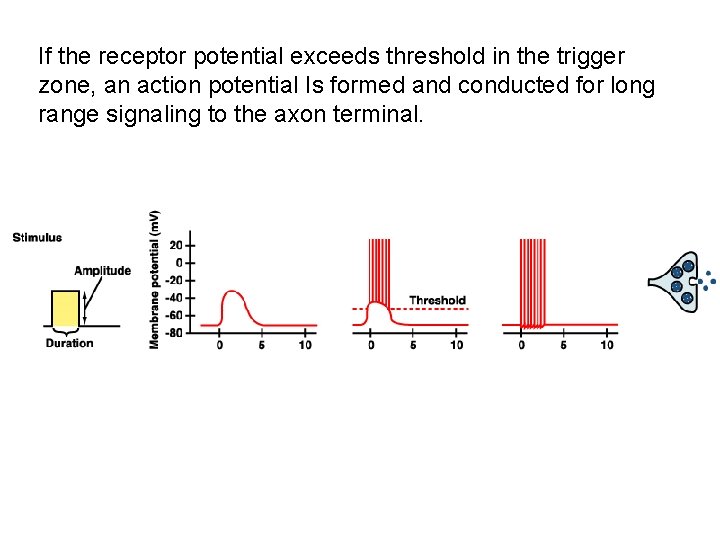
If the receptor potential exceeds threshold in the trigger zone, an action potential Is formed and conducted for long range signaling to the axon terminal.
The effect of stimulus intensity and duration:
Labeled line coding • When a sensory neuron is activated, signals follow a specific pathway and elicit a specific sensation
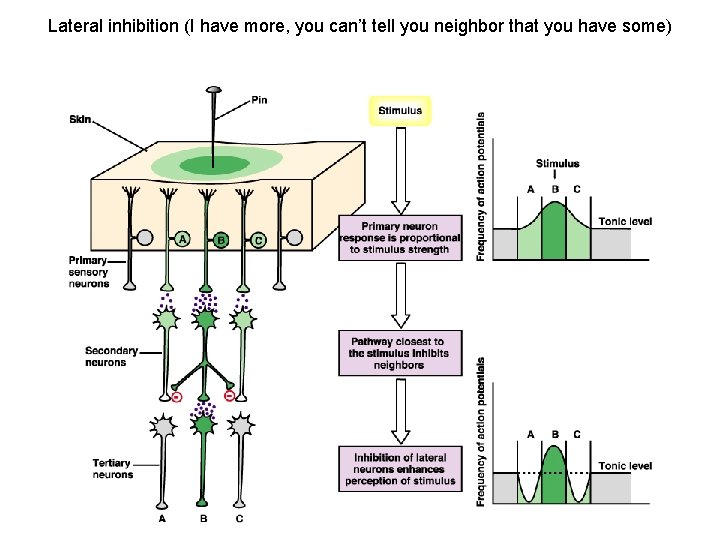
Lateral inhibition (I have more, you can’t tell you neighbor that you have some)