
Ch 10 Classification of Microorganisms Student Learning Outcomes
- Slides: 23
Ch 10 Classification of Microorganisms
Student Learning Outcomes Define taxonomy, taxon, and phylogeny. List the characteristics of the Bacteria, Archaea, and Eukarya domains. Differentiate among eukaryotic, prokaryotic, and viral species. Explain the scientific naming Differentiate between culture, clone, and strain. Compare and contrast classification and identification. Explain the purpose of Bergey’s Manual. Describe how staining and biochemical tests are used to identify bacteria. Explain how serological tests and phage typing can be used to identify an unknown bacterium. Describe how a newly discovered microbe can be classified by ribotyping, DNA fingerprinting, and PCR. Describe how microorganisms can be identified by nucleic acid hybridization, DNA chips, and FISH. Explain and apply a dichotomous key Copyright © 2006 Pearson Education, Inc. , publishing as Benjamin Cummings
Taxonomy and Phylogeny Taxonmoy: Science of classifying organisms. Provides universal names for organisms. § Taxonomic categories: Taxon / Taxa Phylogeny or Systematics: Evolutionary history of group of organisms. § Taxonomic hierarchy shows phylogenetic (evolutionary), relationships among organisms. § 1969: Living organisms divided into five kingdoms. § 1978: Two types of prokaryotic cells found. Prokaryotic relationships determined by r. RNA sequencing. § All Species Inventory (2001– 2025) Copyright © 2006 Pearson Education, Inc. , publishing as Benjamin Cummings
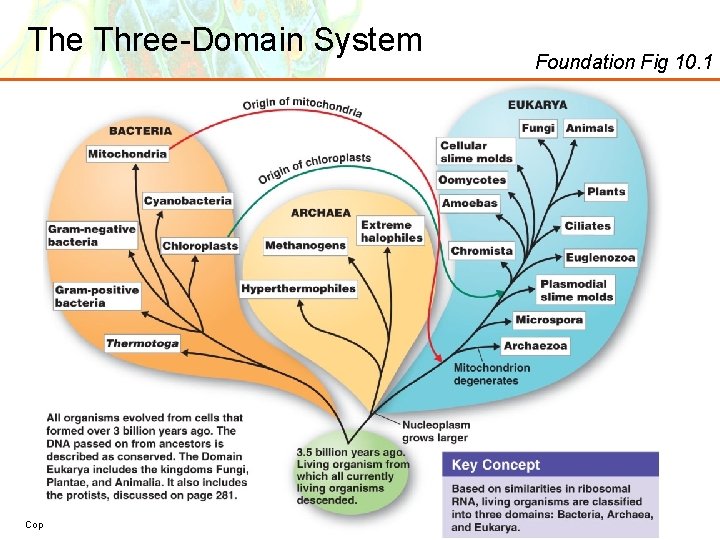
The Three-Domain System Copyright © 2006 Pearson Education, Inc. , publishing as Benjamin Cummings Foundation Fig 10. 1
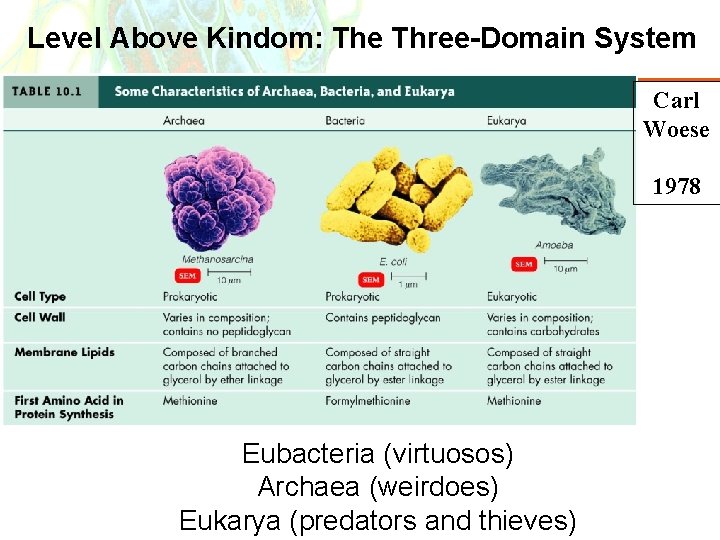
Level Above Kindom: The Three-Domain System Carl Woese 1978 Eubacteria (virtuosos) Archaea (weirdoes) Eukarya (predators and thieves) Copyright © 2006 Pearson Education, Inc. , publishing as Benjamin Cummings
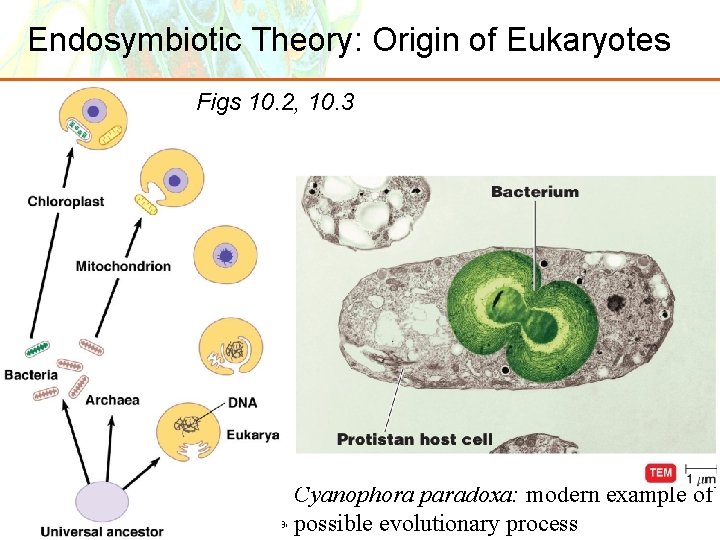
Endosymbiotic Theory: Origin of Eukaryotes Figs 10. 2, 10. 3 Cyanophora paradoxa: modern example of Copyright © 2006 Pearson Education, Inc. , publishing as Benjamin Cummings evolutionary process possible
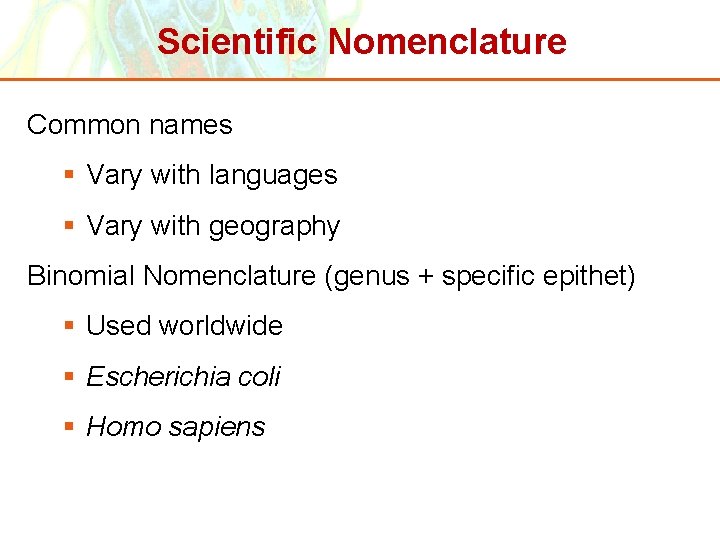
Scientific Nomenclature Common names § Vary with languages § Vary with geography Binomial Nomenclature (genus + specific epithet) § Used worldwide § Escherichia coli § Homo sapiens Copyright © 2006 Pearson Education, Inc. , publishing as Benjamin Cummings
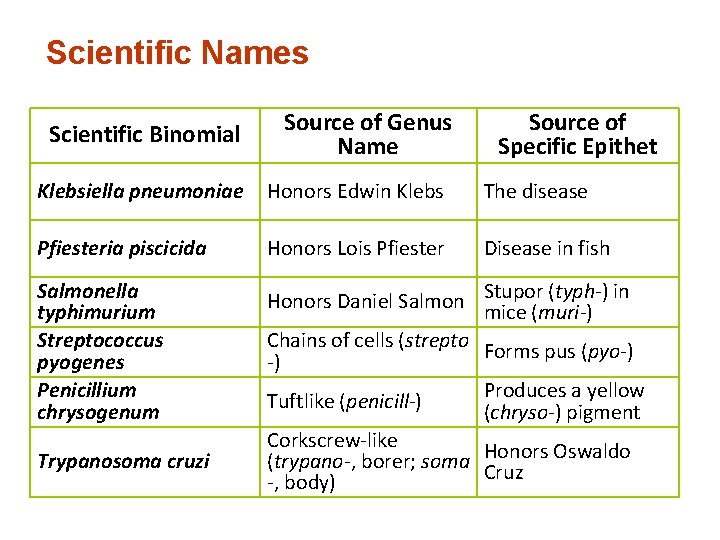
Scientific Names Scientific Binomial Source of Genus Name Source of Specific Epithet Klebsiella pneumoniae Honors Edwin Klebs The disease Pfiesteria piscicida Honors Lois Pfiester Disease in fish Salmonella typhimurium Streptococcus pyogenes Penicillium chrysogenum (typh-) in Honors Daniel Salmon Stupor mice (muri-) Chains of cells (strepto Forms pus (pyo-) -) Produces a yellow Tuftlike (penicill-) (chryso-) pigment Corkscrew-like Oswaldo (trypano-, borer; soma Honors Cruz -, body) Trypanosoma cruzi
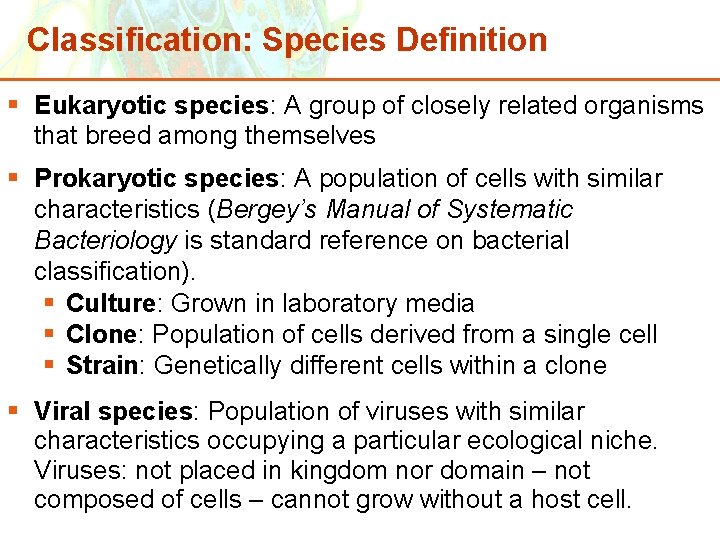
Classification: Species Definition § Eukaryotic species: A group of closely related organisms that breed among themselves § Prokaryotic species: A population of cells with similar characteristics (Bergey’s Manual of Systematic Bacteriology is standard reference on bacterial classification). § Culture: Grown in laboratory media § Clone: Population of cells derived from a single cell § Strain: Genetically different cells within a clone § Viral species: Population of viruses with similar characteristics occupying a particular ecological niche. Viruses: not placed in kingdom nor domain – not composed of cells – cannot grow without a host cell. Copyright © 2006 Pearson Education, Inc. , publishing as Benjamin Cummings
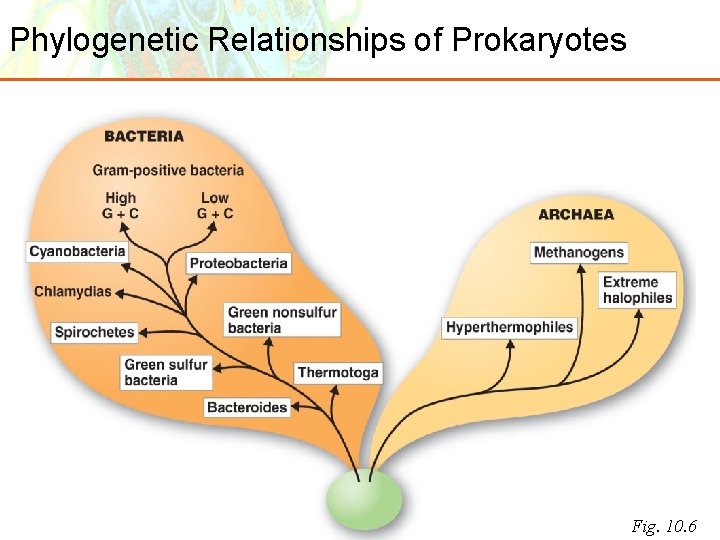
Phylogenetic Relationships of Prokaryotes Copyright © 2006 Pearson Education, Inc. , publishing as Benjamin Cummings Fig. 10. 6
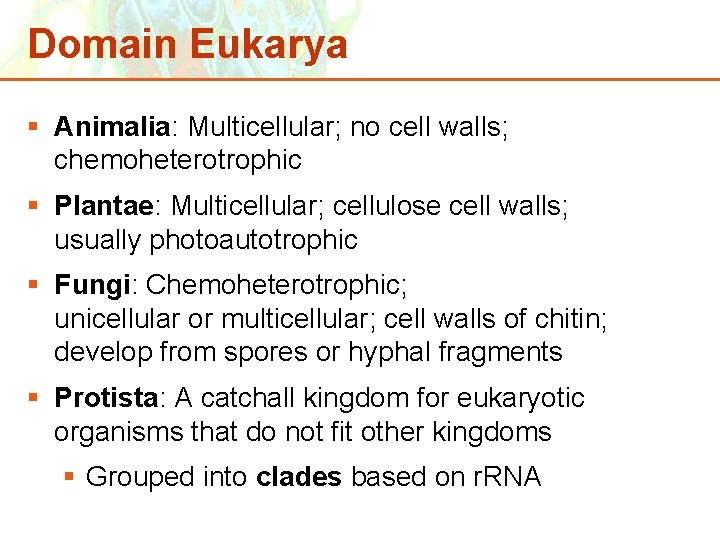
Domain Eukarya § Animalia: Multicellular; no cell walls; chemoheterotrophic § Plantae: Multicellular; cellulose cell walls; usually photoautotrophic § Fungi: Chemoheterotrophic; unicellular or multicellular; cell walls of chitin; develop from spores or hyphal fragments § Protista: A catchall kingdom for eukaryotic organisms that do not fit other kingdoms § Grouped into clades based on r. RNA Copyright © 2006 Pearson Education, Inc. , publishing as Benjamin Cummings
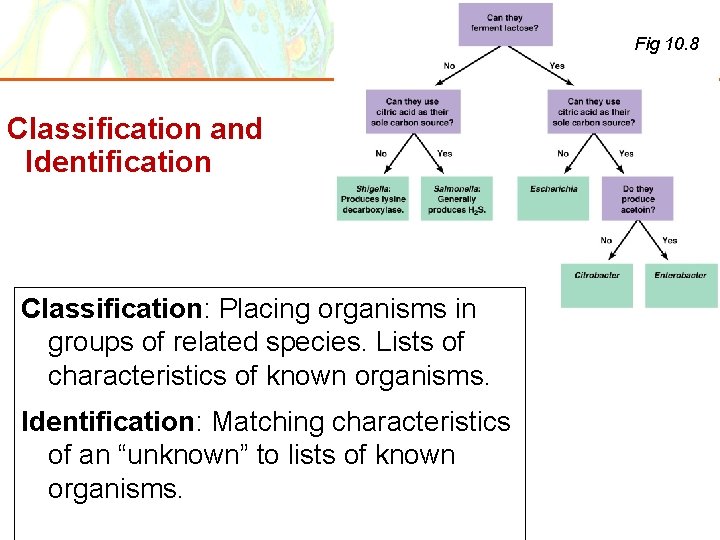
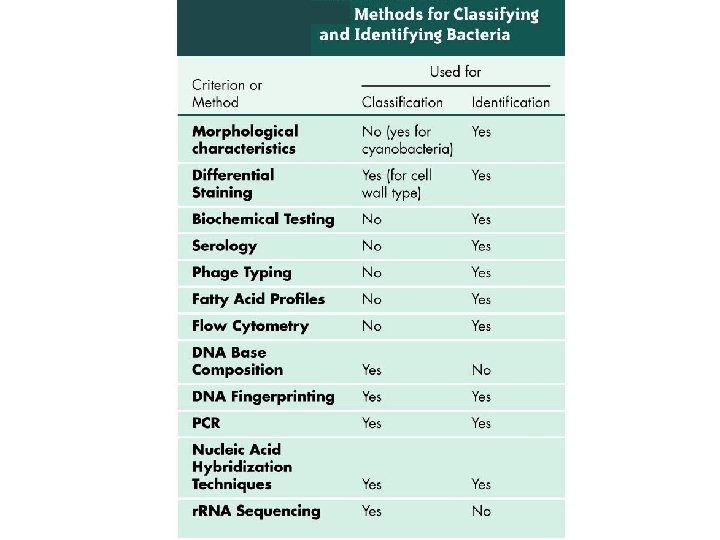
Fig 10. 8 Classification and Identification Classification: Placing organisms in groups of related species. Lists of characteristics of known organisms. Identification: Matching characteristics of an “unknown” to lists of known organisms. Copyright © 2006 Pearson Education, Inc. , publishing as Benjamin Cummings
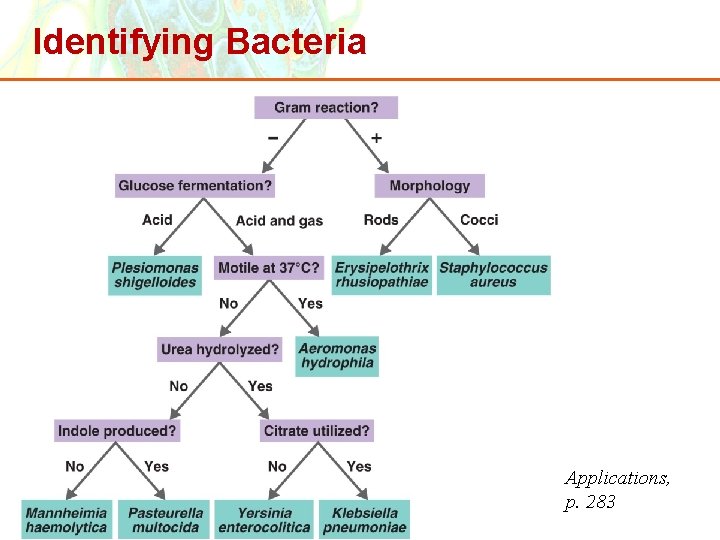
Identifying Bacteria Applications, p. 283 Copyright © 2006 Pearson Education, Inc. , publishing as Benjamin Cummings
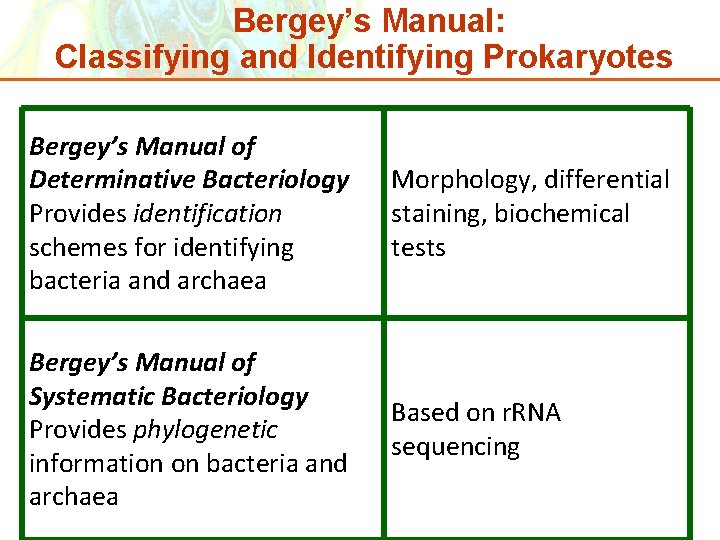
Bergey’s Manual: Classifying and Identifying Prokaryotes Bergey’s Manual of Determinative Bacteriology Provides identification schemes for identifying bacteria and archaea Morphology, differential staining, biochemical tests Bergey’s Manual of Systematic Bacteriology Provides phylogenetic information on bacteria and archaea Based on r. RNA sequencing Copyright © 2006 Pearson Education, Inc. , publishing as Benjamin Cummings
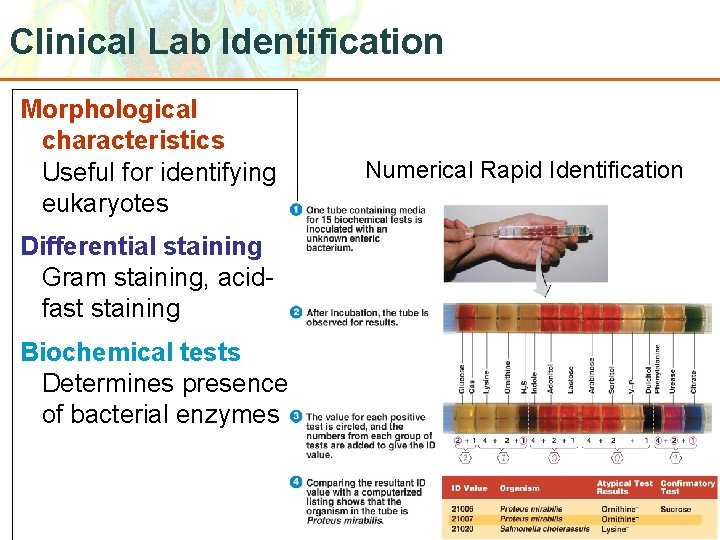
Clinical Lab Identification Morphological characteristics Useful for identifying eukaryotes Numerical Rapid Identification Differential staining Gram staining, acidfast staining Biochemical tests Determines presence of bacterial enzymes Copyright © 2006 Pearson Education, Inc. , publishing as Benjamin Cummings
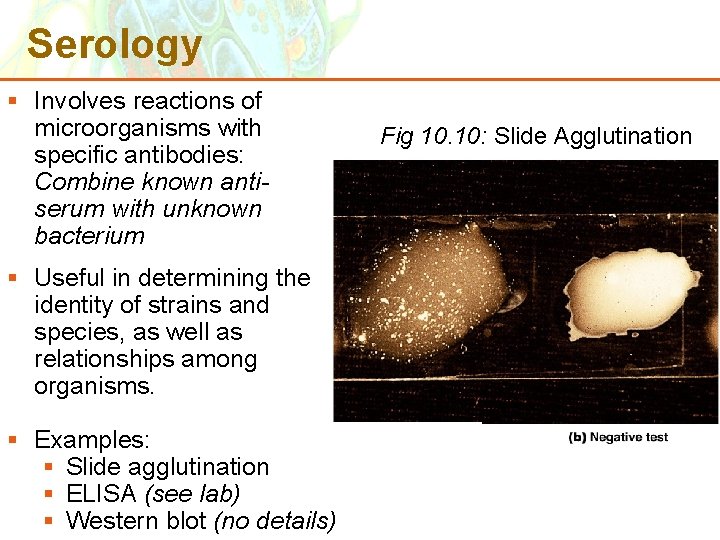
Serology § Involves reactions of microorganisms with specific antibodies: Combine known antiserum with unknown bacterium § Useful in determining the identity of strains and species, as well as relationships among organisms. § Examples: § Slide agglutination § ELISA (see lab) § Western blot (no details) Copyright © 2006 Pearson Education, Inc. , publishing as Benjamin Cummings Fig 10. 10: Slide Agglutination
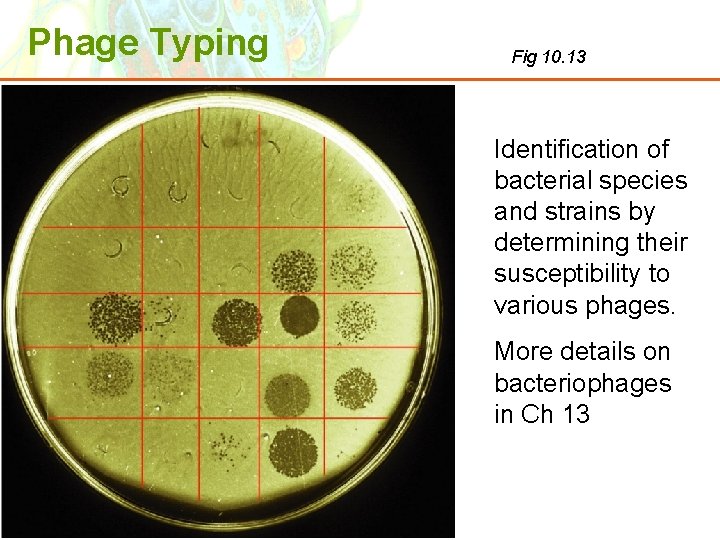
Phage Typing Fig 10. 13 Identification of bacterial species and strains by determining their susceptibility to various phages. More details on bacteriophages in Ch 13 Copyright © 2006 Pearson Education, Inc. , publishing as Benjamin Cummings
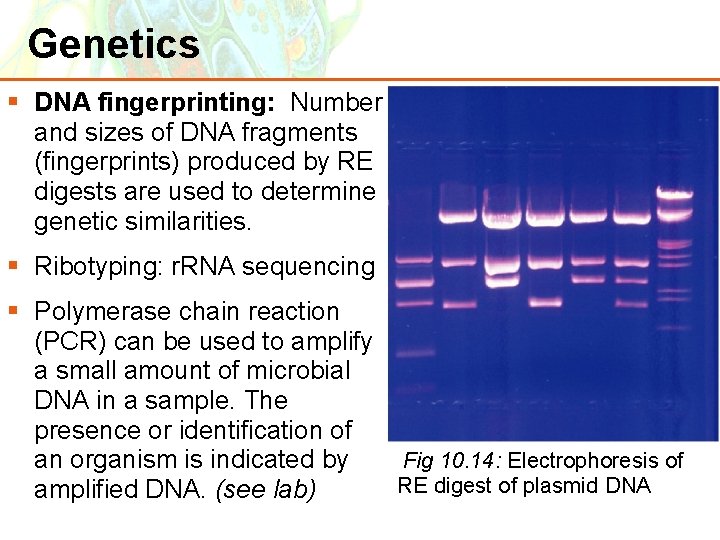
Genetics § DNA fingerprinting: Number and sizes of DNA fragments (fingerprints) produced by RE digests are used to determine genetic similarities. § Ribotyping: r. RNA sequencing § Polymerase chain reaction (PCR) can be used to amplify a small amount of microbial DNA in a sample. The presence or identification of Fig 10. 14: Electrophoresis of an organism is indicated by RE digest of plasmid DNA amplified DNA. (see lab) Copyright © 2006 Pearson Education, Inc. , publishing as Benjamin Cummings
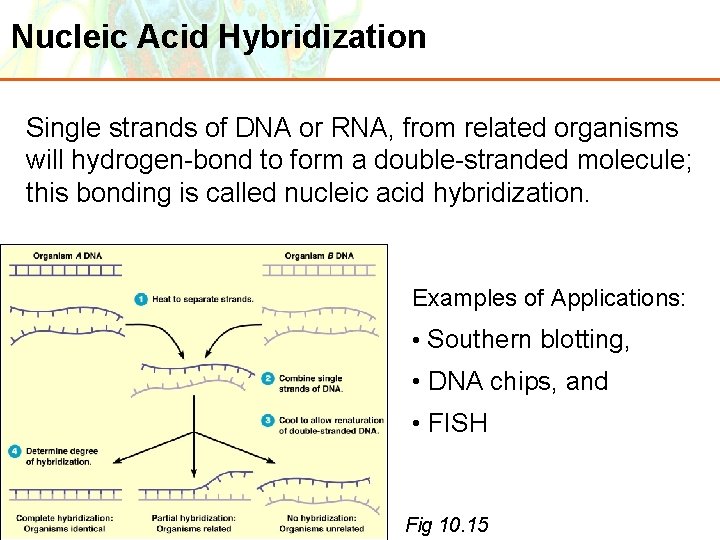
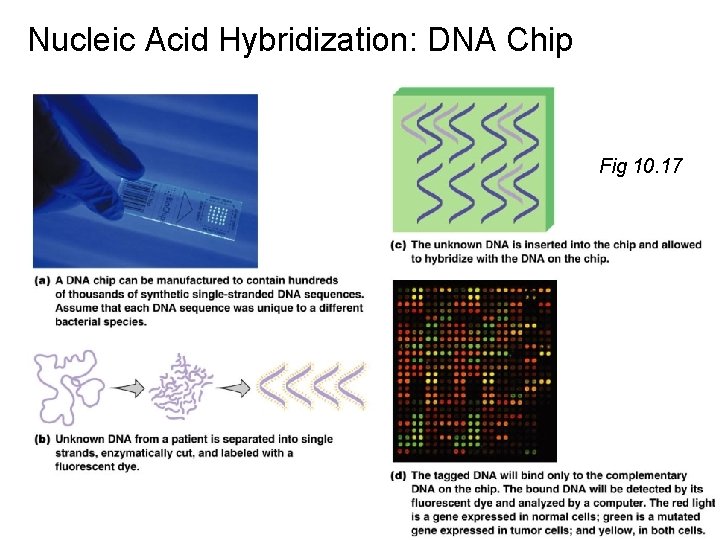
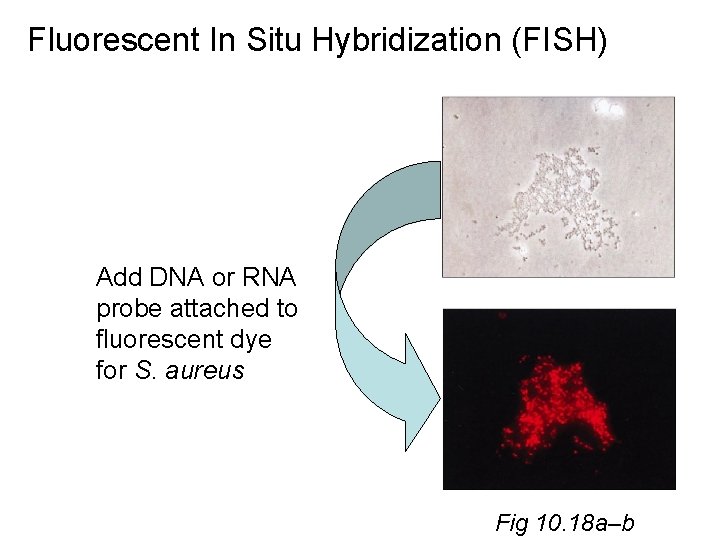
Nucleic Acid Hybridization Single strands of DNA or RNA, from related organisms will hydrogen-bond to form a double-stranded molecule; this bonding is called nucleic acid hybridization. Examples of Applications: • Southern blotting, • DNA chips, and • FISH Copyright © 2006 Pearson Education, Inc. , publishing as Benjamin Cummings Fig 10. 15
Nucleic Acid Hybridization: DNA Chip Fig 10. 17
Fluorescent In Situ Hybridization (FISH) Add DNA or RNA probe attached to fluorescent dye for S. aureus Fig 10. 18 a–b
Dichotomous Key ANIMATION Dichotomous Keys: Overview ANIMATION Dichotomous Keys: Sample with Flowchart ANIMATION Dichotomous Keys: Practice