
Ch 10 3 5 Epidemiology Microbiology 10 3

Ch. 10. 3 -5 Epidemiology Microbiology
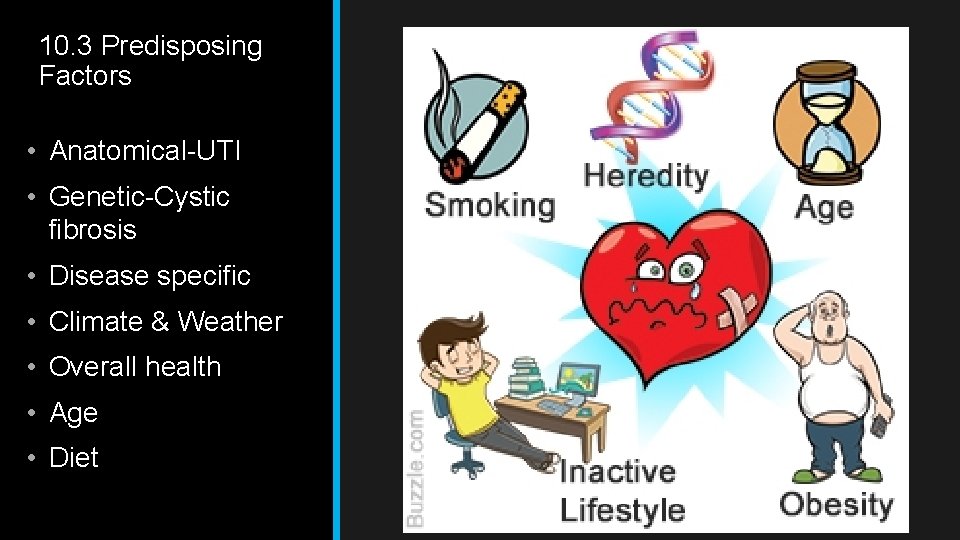
10. 3 Predisposing Factors • Anatomical-UTI • Genetic-Cystic fibrosis • Disease specific • Climate & Weather • Overall health • Age • Diet

10. 3 Disease Development Stage 1: Incubation period Stage 2: Prodromal period Stage 3: Acute period Stage 4: Convalescence period
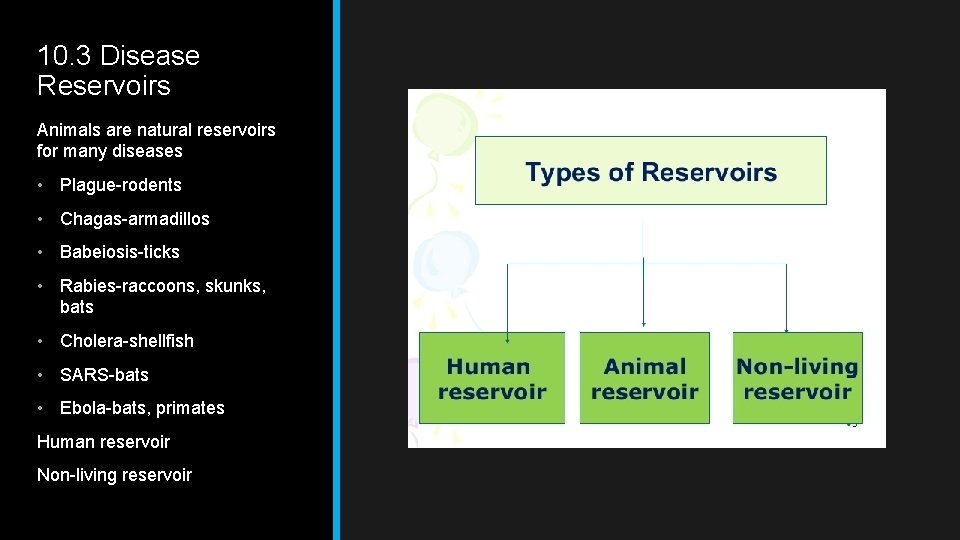
10. 3 Disease Reservoirs Animals are natural reservoirs for many diseases • Plague-rodents • Chagas-armadillos • Babeiosis-ticks • Rabies-raccoons, skunks, bats • Cholera-shellfish • SARS-bats • Ebola-bats, primates Human reservoir Non-living reservoir
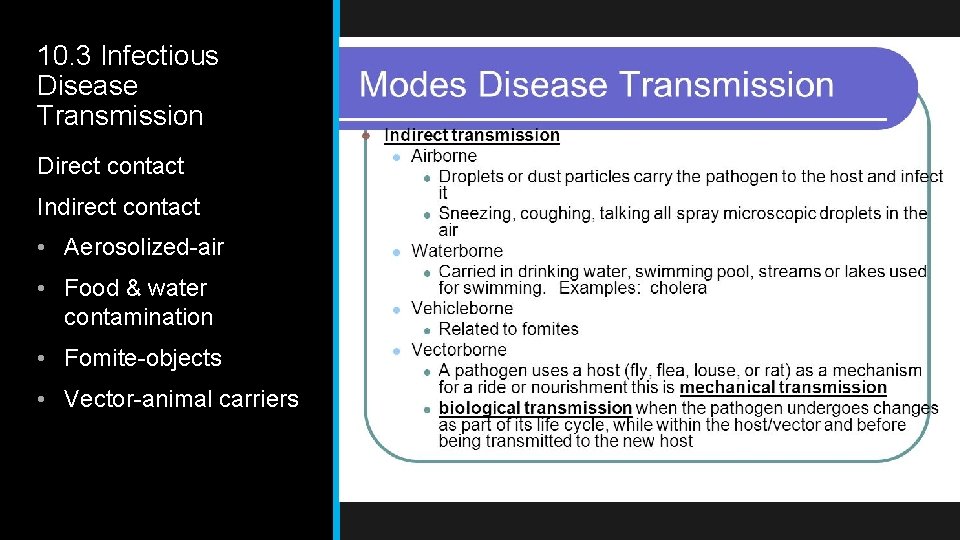
10. 3 Infectious Disease Transmission Direct contact Indirect contact • Aerosolized-air • Food & water contamination • Fomite-objects • Vector-animal carriers
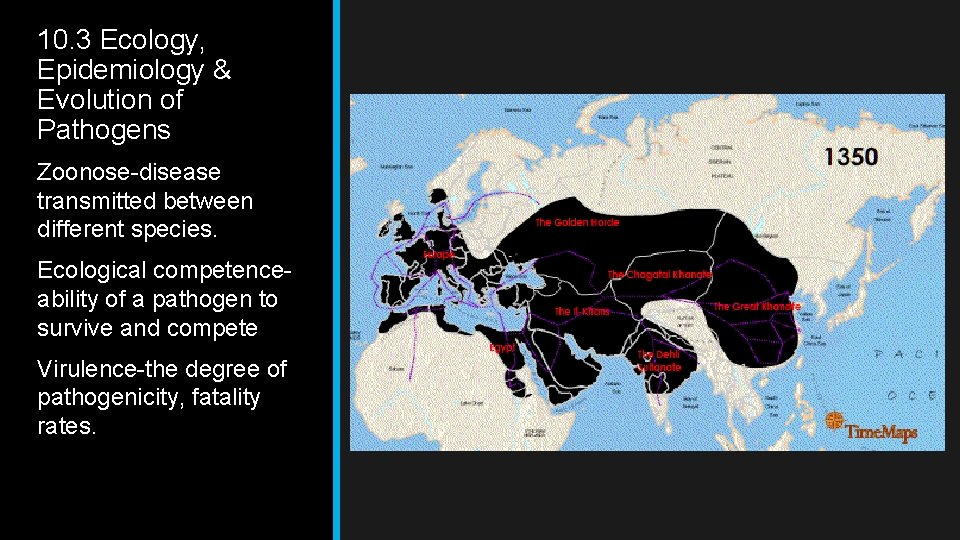
10. 3 Ecology, Epidemiology & Evolution of Pathogens Zoonose-disease transmitted between different species. Ecological competenceability of a pathogen to survive and compete Virulence-the degree of pathogenicity, fatality rates.
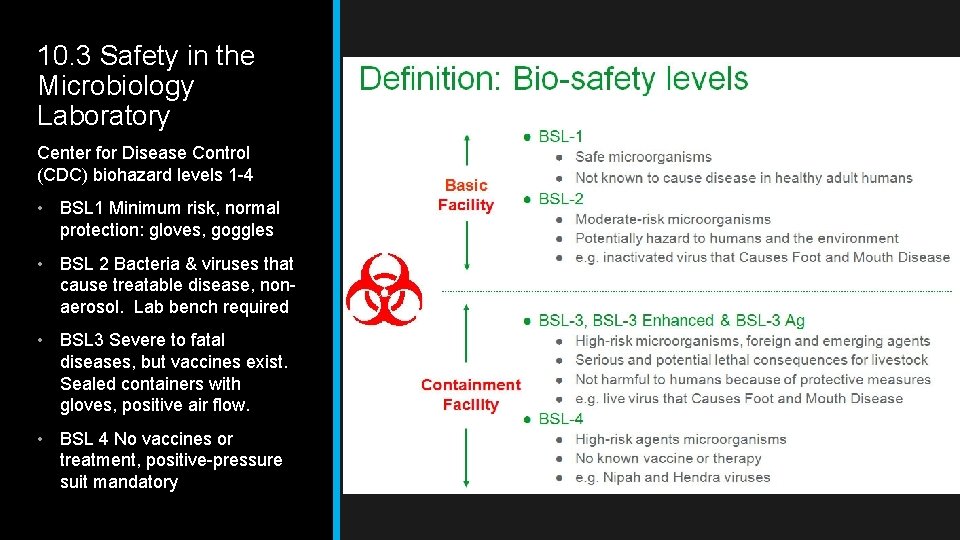
10. 3 Safety in the Microbiology Laboratory Center for Disease Control (CDC) biohazard levels 1 -4 • BSL 1 Minimum risk, normal protection: gloves, goggles • BSL 2 Bacteria & viruses that cause treatable disease, nonaerosol. Lab bench required • BSL 3 Severe to fatal diseases, but vaccines exist. Sealed containers with gloves, positive air flow. • BSL 4 No vaccines or treatment, positive-pressure suit mandatory
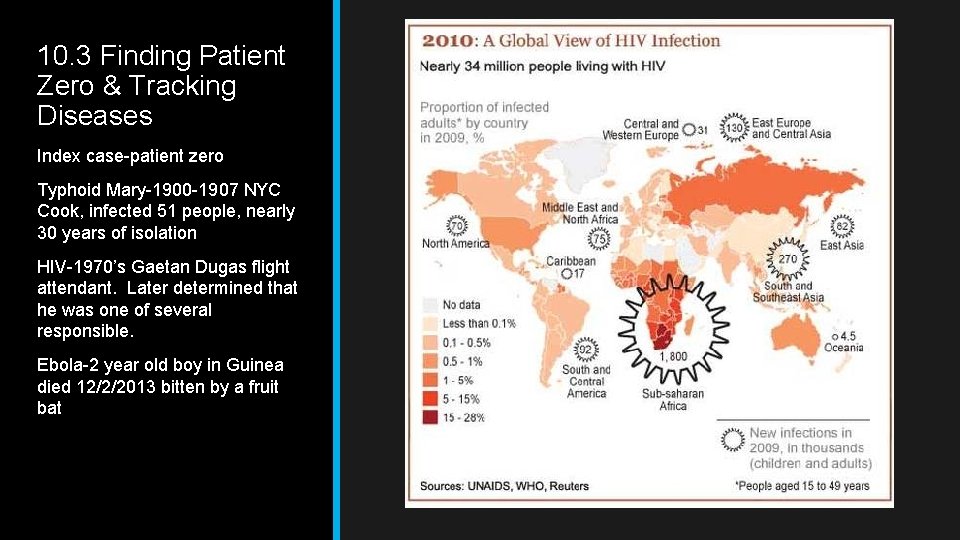
10. 3 Finding Patient Zero & Tracking Diseases Index case-patient zero Typhoid Mary-1900 -1907 NYC Cook, infected 51 people, nearly 30 years of isolation HIV-1970’s Gaetan Dugas flight attendant. Later determined that he was one of several responsible. Ebola-2 year old boy in Guinea died 12/2/2013 bitten by a fruit bat
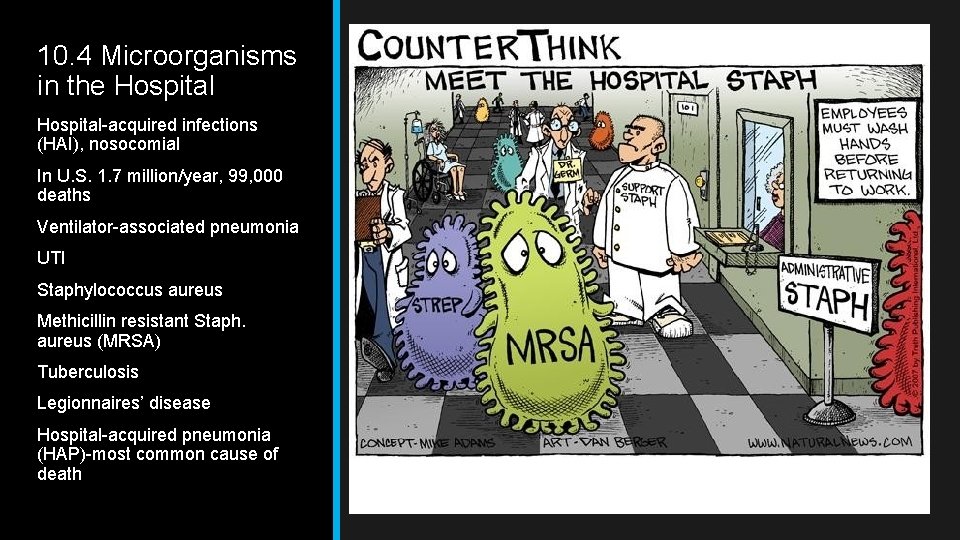
10. 4 Microorganisms in the Hospital-acquired infections (HAI), nosocomial In U. S. 1. 7 million/year, 99, 000 deaths Ventilator-associated pneumonia UTI Staphylococcus aureus Methicillin resistant Staph. aureus (MRSA) Tuberculosis Legionnaires’ disease Hospital-acquired pneumonia (HAP)-most common cause of death
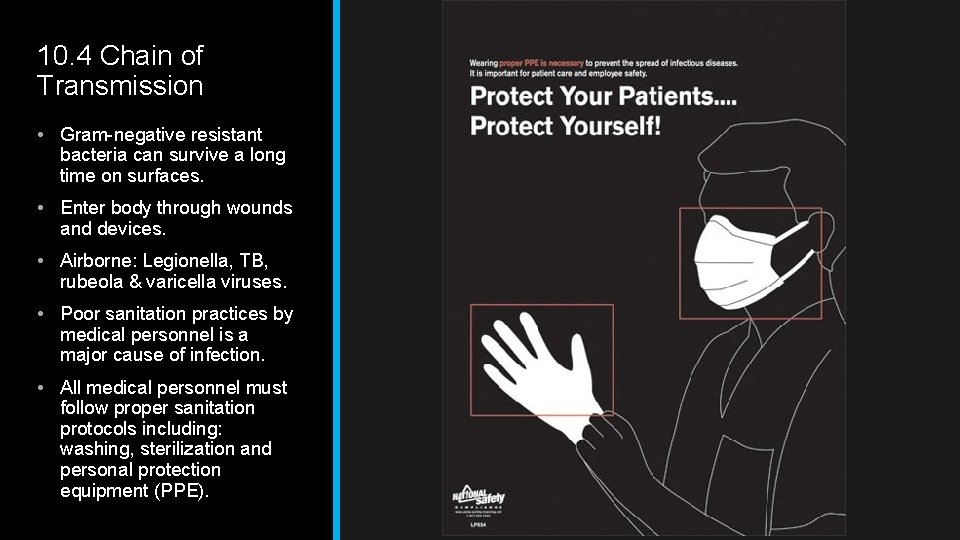
10. 4 Chain of Transmission • Gram-negative resistant bacteria can survive a long time on surfaces. • Enter body through wounds and devices. • Airborne: Legionella, TB, rubeola & varicella viruses. • Poor sanitation practices by medical personnel is a major cause of infection. • All medical personnel must follow proper sanitation protocols including: washing, sterilization and personal protection equipment (PPE).
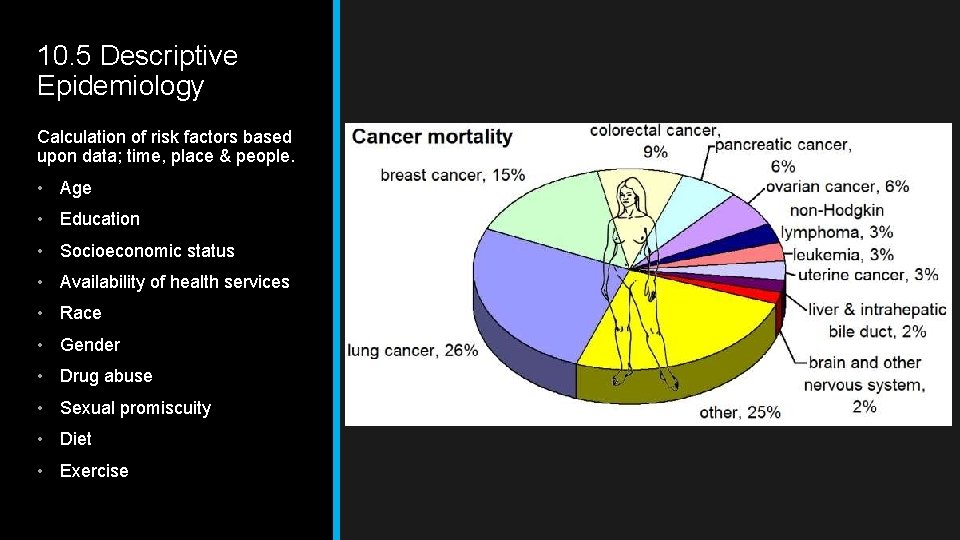
10. 5 Descriptive Epidemiology Calculation of risk factors based upon data; time, place & people. • Age • Education • Socioeconomic status • Availability of health services • Race • Gender • Drug abuse • Sexual promiscuity • Diet • Exercise
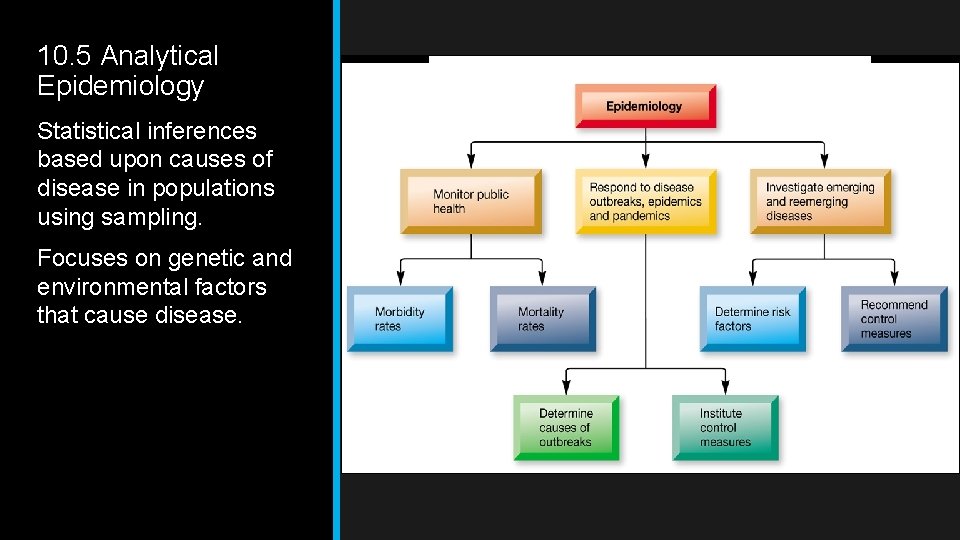
10. 5 Analytical Epidemiology Statistical inferences based upon causes of disease in populations using sampling. Focuses on genetic and environmental factors that cause disease.
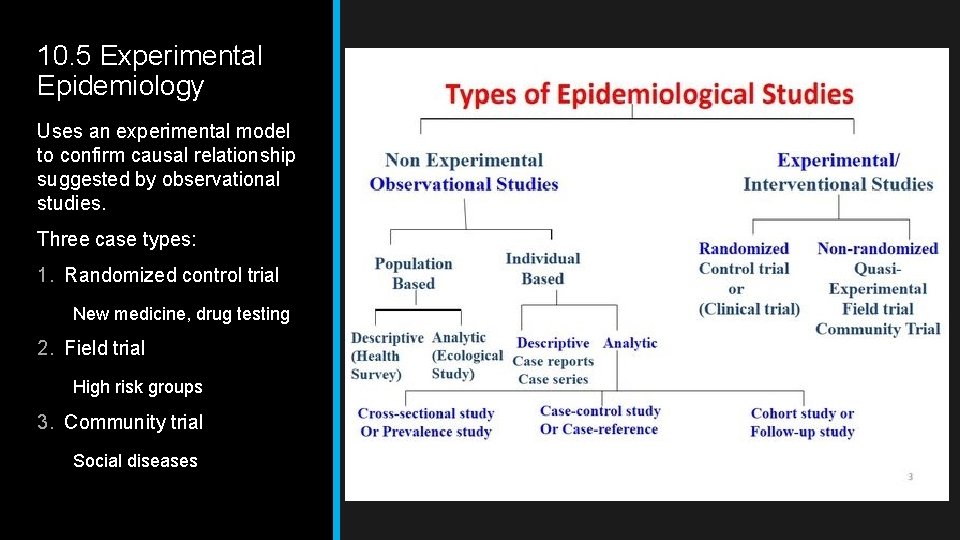
10. 5 Experimental Epidemiology Uses an experimental model to confirm causal relationship suggested by observational studies. Three case types: 1. Randomized control trial New medicine, drug testing 2. Field trial High risk groups 3. Community trial Social diseases
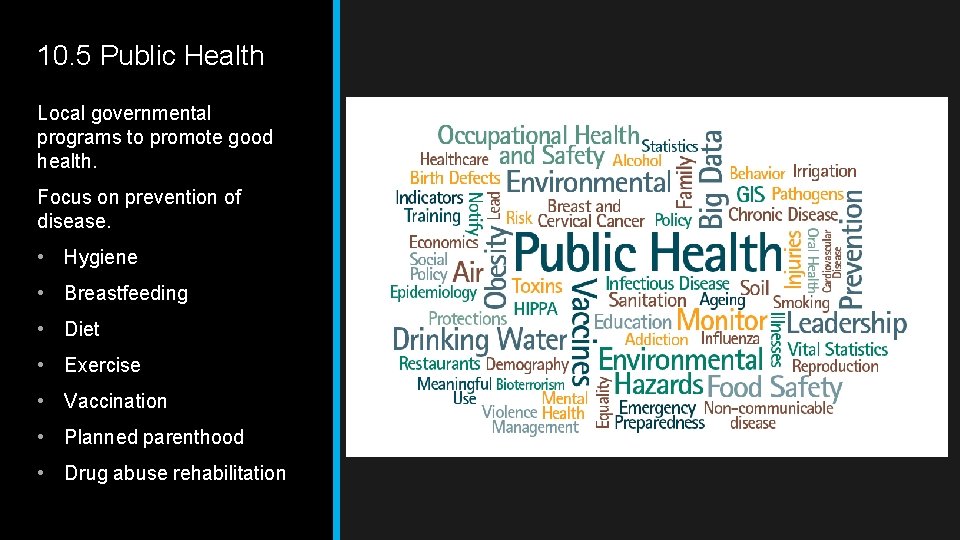
10. 5 Public Health Local governmental programs to promote good health. Focus on prevention of disease. • Hygiene • Breastfeeding • Diet • Exercise • Vaccination • Planned parenthood • Drug abuse rehabilitation
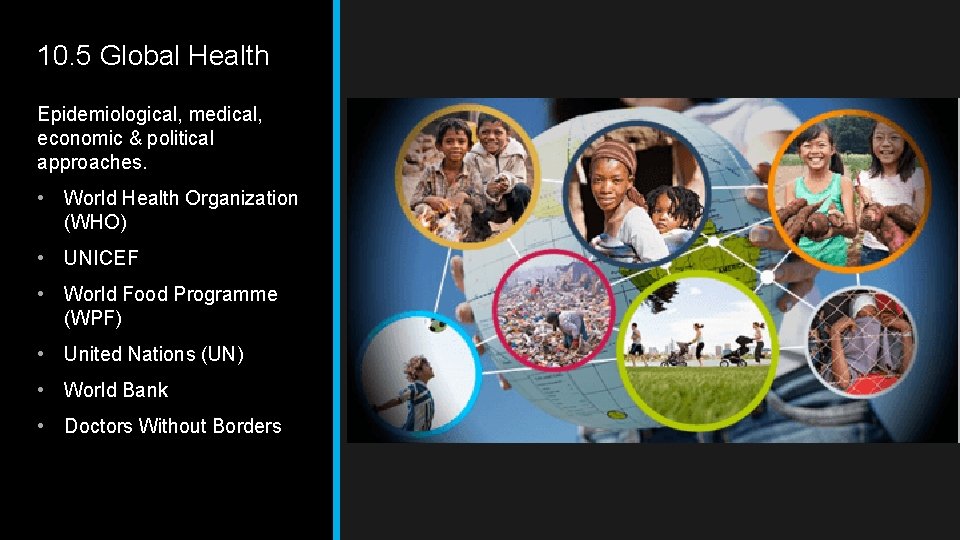
10. 5 Global Health Epidemiological, medical, economic & political approaches. • World Health Organization (WHO) • UNICEF • World Food Programme (WPF) • United Nations (UN) • World Bank • Doctors Without Borders
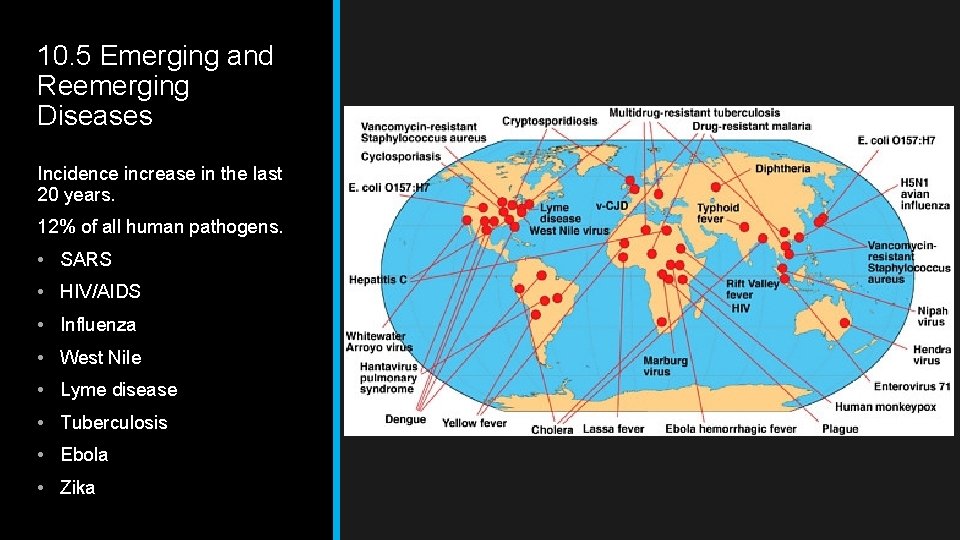
10. 5 Emerging and Reemerging Diseases Incidence increase in the last 20 years. 12% of all human pathogens. • SARS • HIV/AIDS • Influenza • West Nile • Lyme disease • Tuberculosis • Ebola • Zika
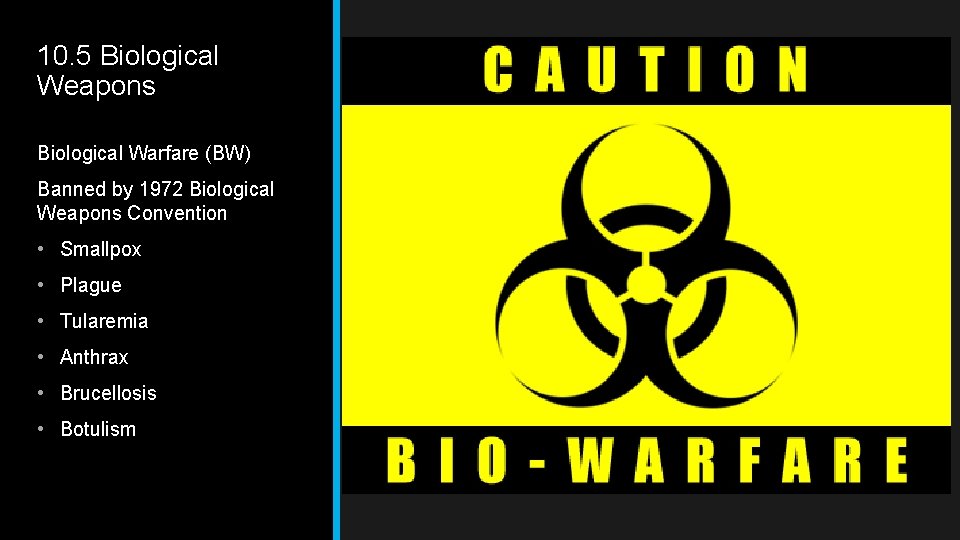
10. 5 Biological Weapons Biological Warfare (BW) Banned by 1972 Biological Weapons Convention • Smallpox • Plague • Tularemia • Anthrax • Brucellosis • Botulism
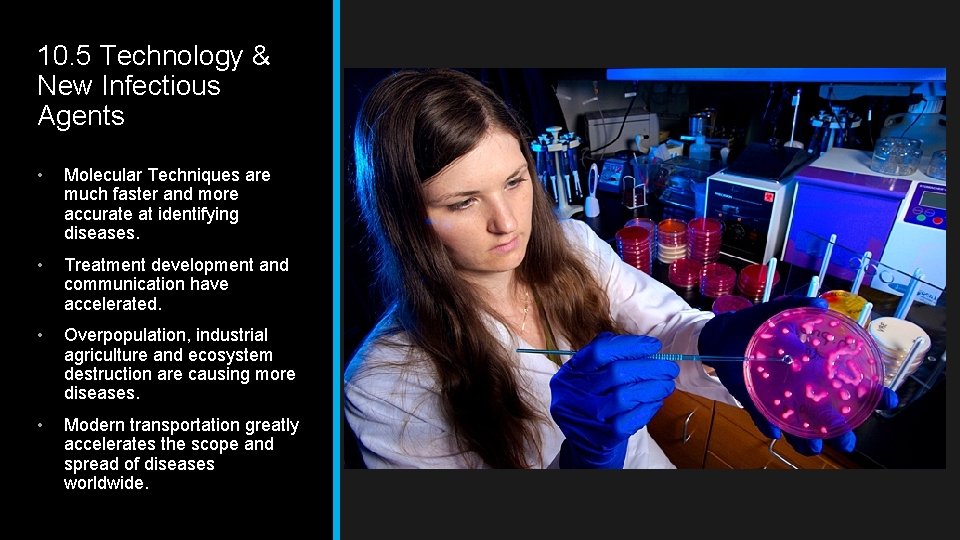
10. 5 Technology & New Infectious Agents • Molecular Techniques are much faster and more accurate at identifying diseases. • Treatment development and communication have accelerated. • Overpopulation, industrial agriculture and ecosystem destruction are causing more diseases. • Modern transportation greatly accelerates the scope and spread of diseases worldwide.
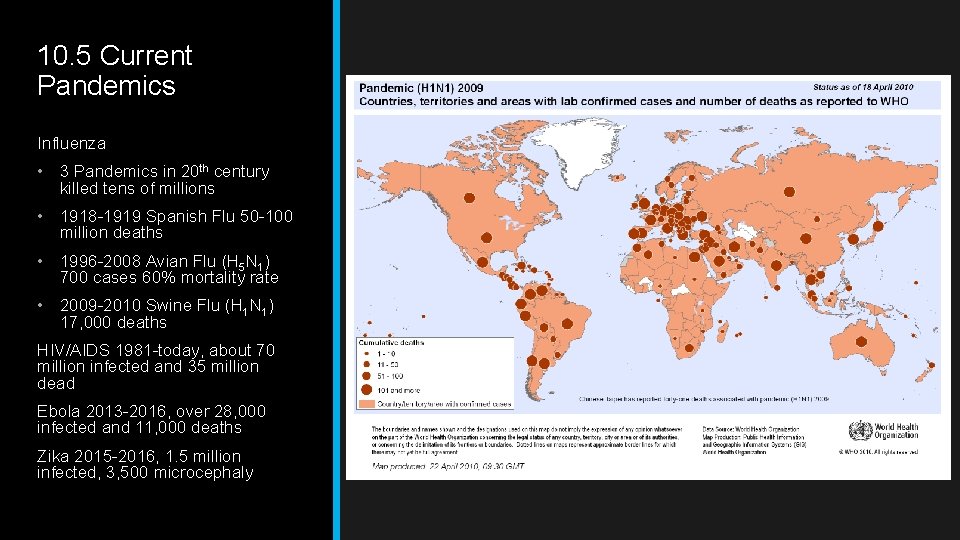
10. 5 Current Pandemics Influenza • 3 Pandemics in 20 th century killed tens of millions • 1918 -1919 Spanish Flu 50 -100 million deaths • 1996 -2008 Avian Flu (H 5 N 1) 700 cases 60% mortality rate • 2009 -2010 Swine Flu (H 1 N 1) 17, 000 deaths HIV/AIDS 1981 -today, about 70 million infected and 35 million dead Ebola 2013 -2016, over 28, 000 infected and 11, 000 deaths Zika 2015 -2016, 1. 5 million infected, 3, 500 microcephaly
- Slides: 19