
Ch 10 1 Energy Transfer Kinetic Molecular Theory
- Slides: 8
Ch. 10. 1 Energy Transfer Kinetic Molecular Theory • “Kinetic” = moving • “Molecular” = all matter is made up of atoms and molecules • So all matter is made up of tiny moving particles.
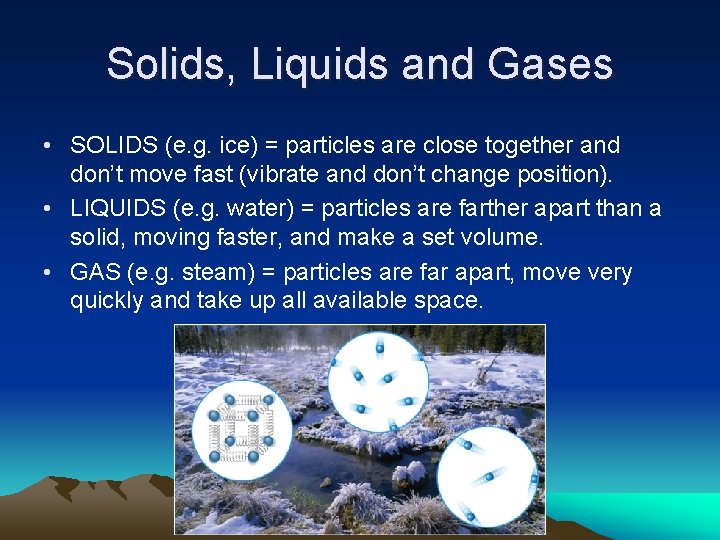
Solids, Liquids and Gases • SOLIDS (e. g. ice) = particles are close together and don’t move fast (vibrate and don’t change position). • LIQUIDS (e. g. water) = particles are farther apart than a solid, moving faster, and make a set volume. • GAS (e. g. steam) = particles are far apart, move very quickly and take up all available space.
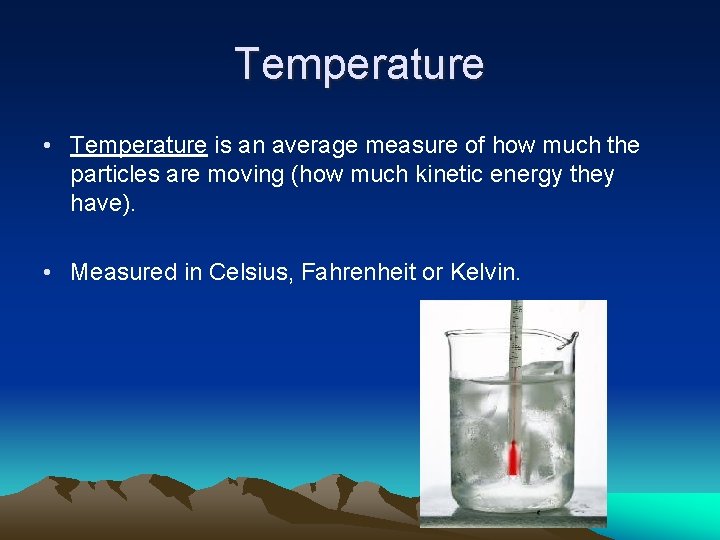
Temperature • Temperature is an average measure of how much the particles are moving (how much kinetic energy they have). • Measured in Celsius, Fahrenheit or Kelvin.
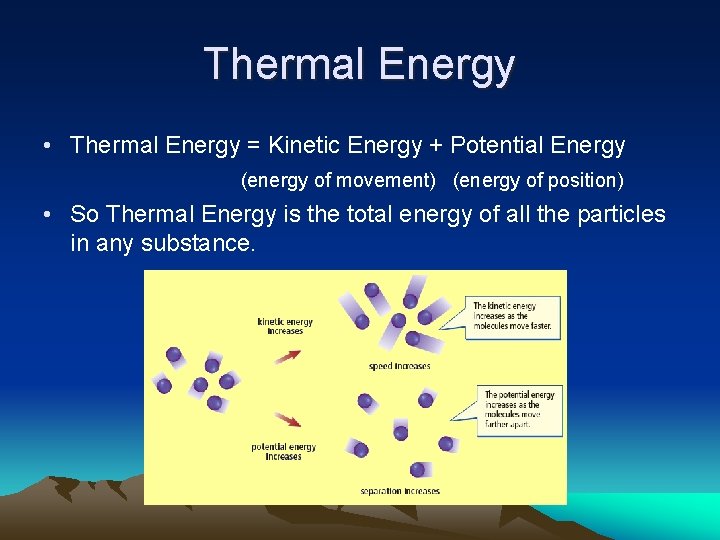
Thermal Energy • Thermal Energy = Kinetic Energy + Potential Energy (energy of movement) (energy of position) • So Thermal Energy is the total energy of all the particles in any substance.
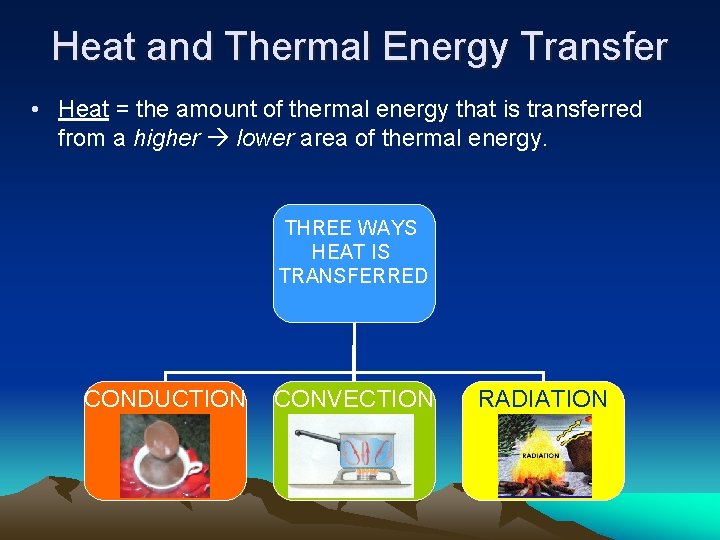
Heat and Thermal Energy Transfer • Heat = the amount of thermal energy that is transferred from a higher lower area of thermal energy. THREE WAYS HEAT IS TRANSFERRED CONDUCTION CONVECTION RADIATION
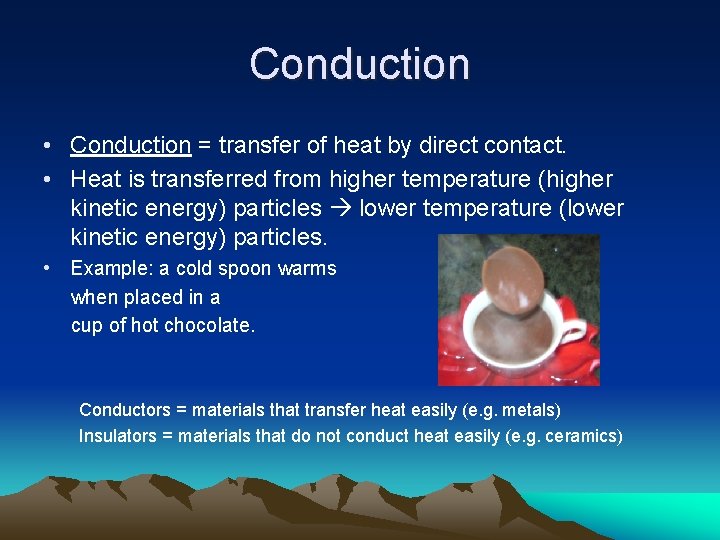
Conduction • Conduction = transfer of heat by direct contact. • Heat is transferred from higher temperature (higher kinetic energy) particles lower temperature (lower kinetic energy) particles. • Example: a cold spoon warms when placed in a cup of hot chocolate. Conductors = materials that transfer heat easily (e. g. metals) Insulators = materials that do not conduct heat easily (e. g. ceramics)
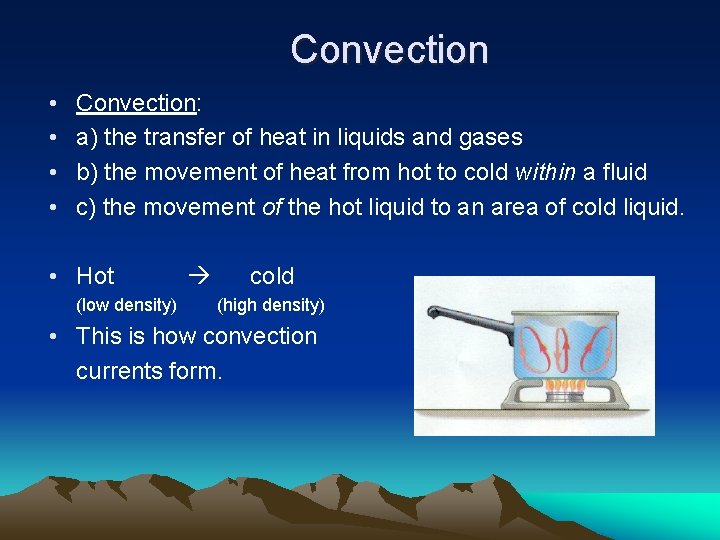
Convection • • Convection: a) the transfer of heat in liquids and gases b) the movement of heat from hot to cold within a fluid c) the movement of the hot liquid to an area of cold liquid. • Hot (low density) cold (high density) • This is how convection currents form.
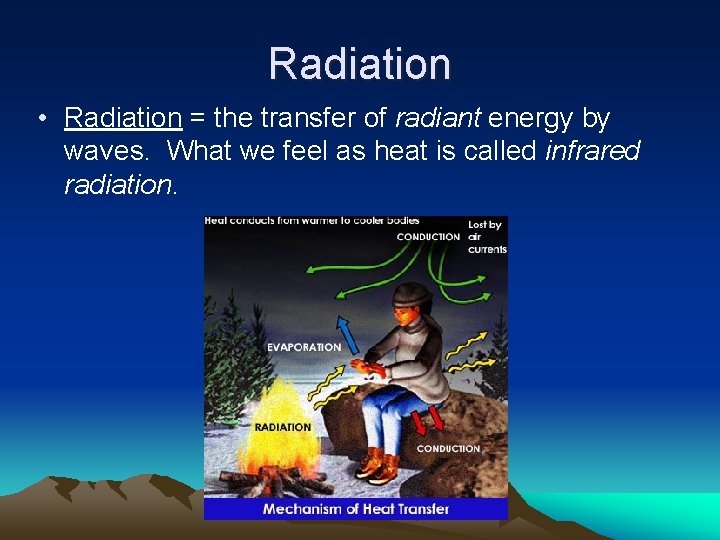
Radiation • Radiation = the transfer of radiant energy by waves. What we feel as heat is called infrared radiation.