
CH 1 The Science of Biology I Honors
CH 1 The Science of Biology I Honors
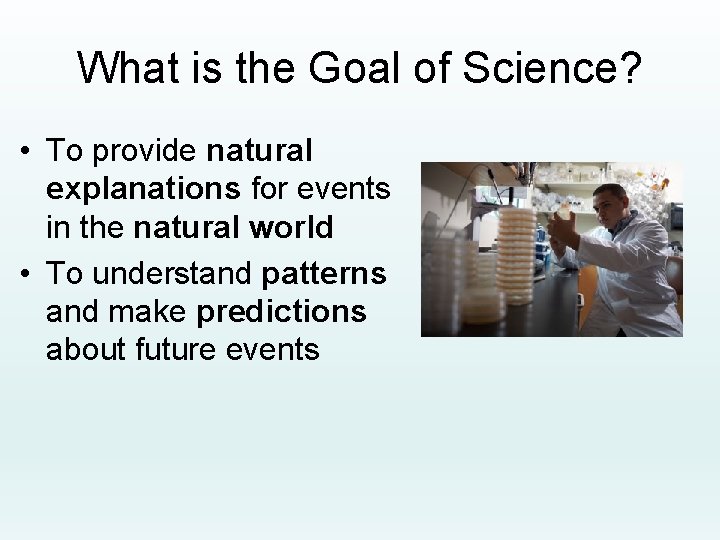
What is the Goal of Science? • To provide natural explanations for events in the natural world • To understand patterns and make predictions about future events
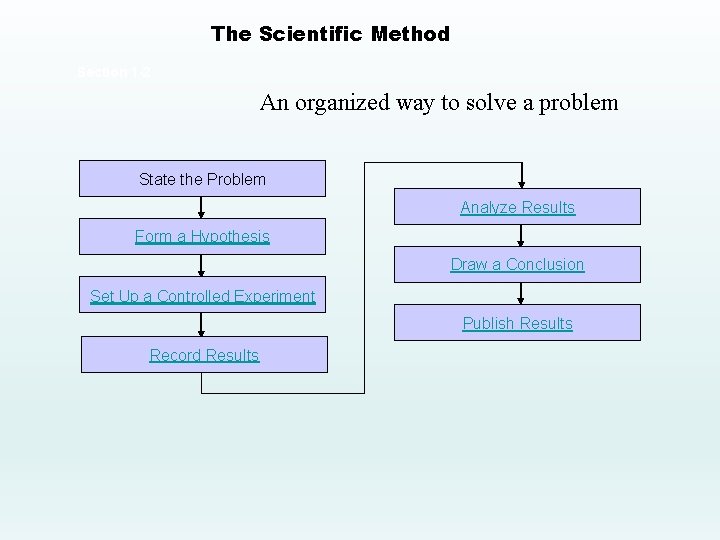
The Scientific Method Section 1 -2 An organized way to solve a problem State the Problem Analyze Results Form a Hypothesis Draw a Conclusion Set Up a Controlled Experiment Publish Results Record Results
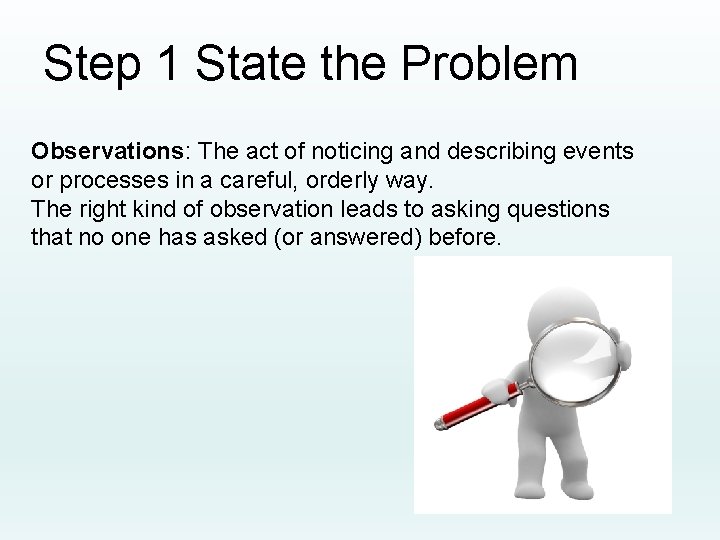
Step 1 State the Problem Observations: The act of noticing and describing events or processes in a careful, orderly way. The right kind of observation leads to asking questions that no one has asked (or answered) before.
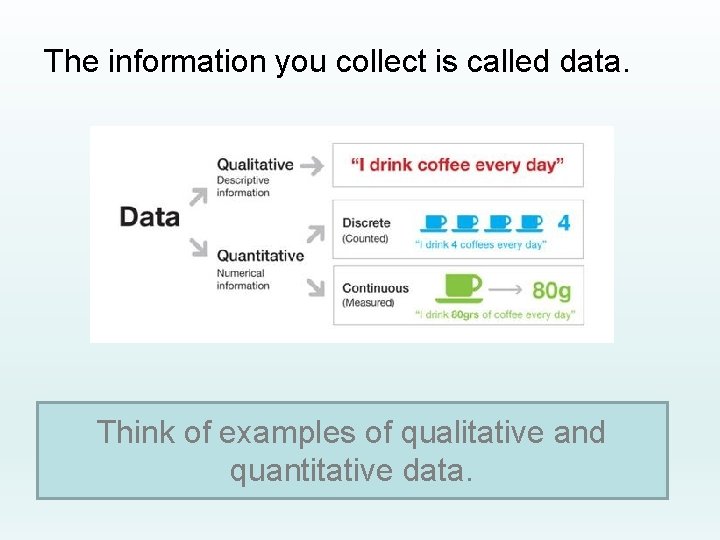
The information you collect is called data. Think of examples of qualitative and quantitative data.
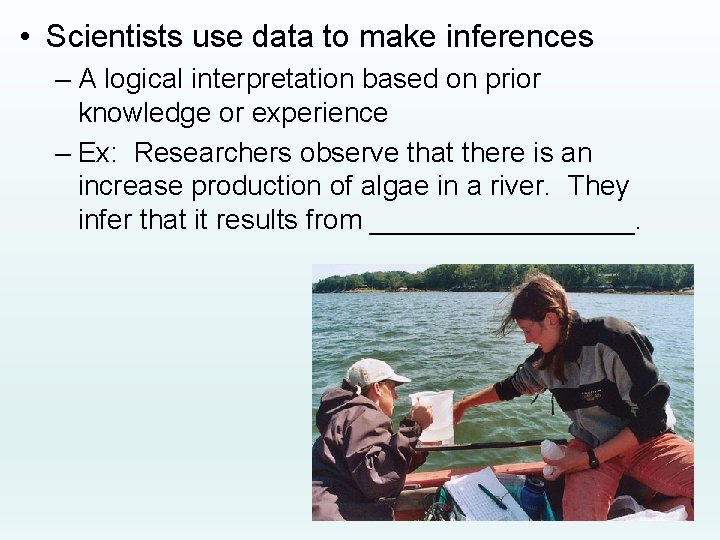
• Scientists use data to make inferences – A logical interpretation based on prior knowledge or experience – Ex: Researchers observe that there is an increase production of algae in a river. They infer that it results from _________.
Observation Vs. Inference • I saw a puddle on my way to school today… – It rained last night? – Some one left their sprinkler on last night?
Step 2 Develop a Hypothesis • A tentative scientific explanation that can be tested by further observation or by experimentation. • Must be testable.
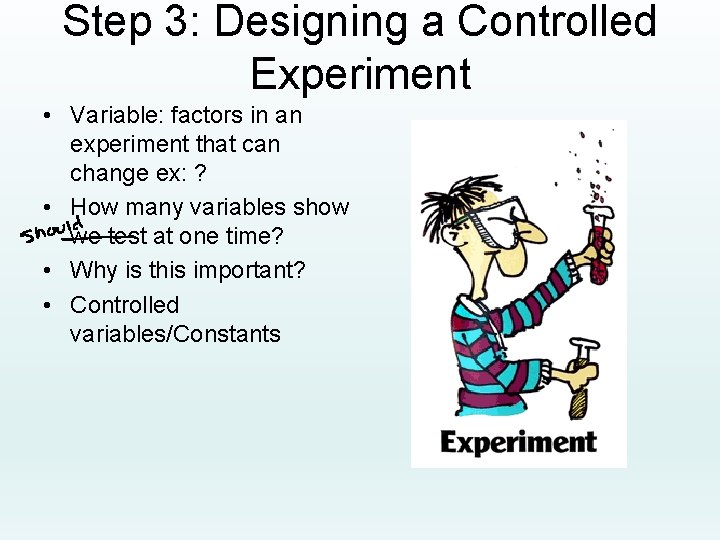
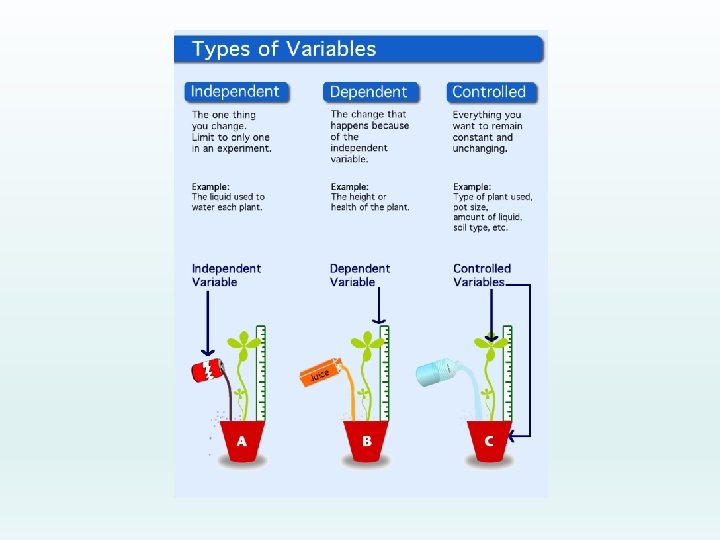
Step 3: Designing a Controlled Experiment • Variable: factors in an experiment that can change ex: ? • How many variables show we test at one time? • Why is this important? • Controlled variables/Constants
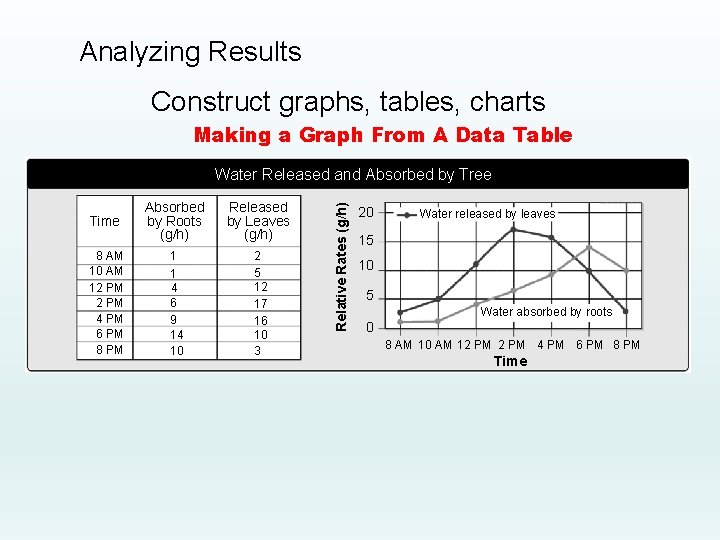
Analyzing Results Construct graphs, tables, charts Making a Graph From A Data Table Time Absorbed by Roots (g/h) Released by Leaves (g/h) 8 AM 10 AM 12 PM 4 PM 6 PM 8 PM 1 1 4 6 9 14 10 2 5 12 17 16 10 3 Relative Rates (g/h) Water Released and Absorbed by Tree 20 Water released by leaves 15 10 5 Water absorbed by roots 0 8 AM 10 AM 12 PM 4 PM 6 PM 8 PM Time
Draw a Conclusion • State if data collected supports or disproves hypothesis • You never say you proved your hypothesis
Example • Question: Where does life come from?

Francesco Redi
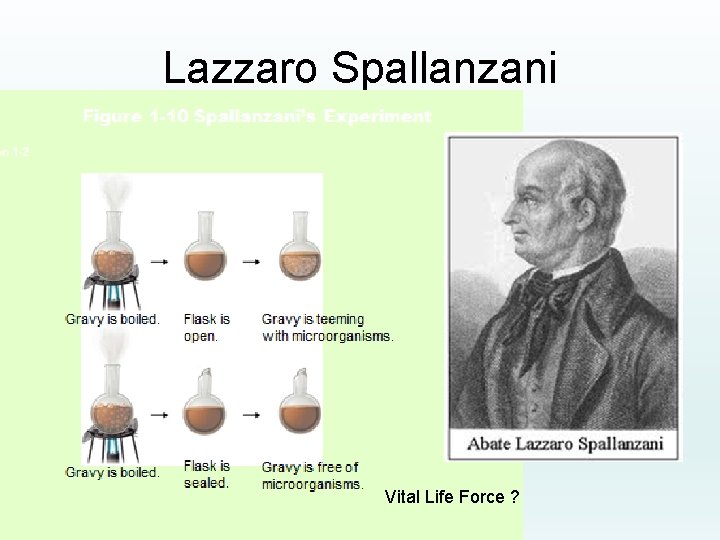
Lazzaro Spallanzani Vital Life Force ?
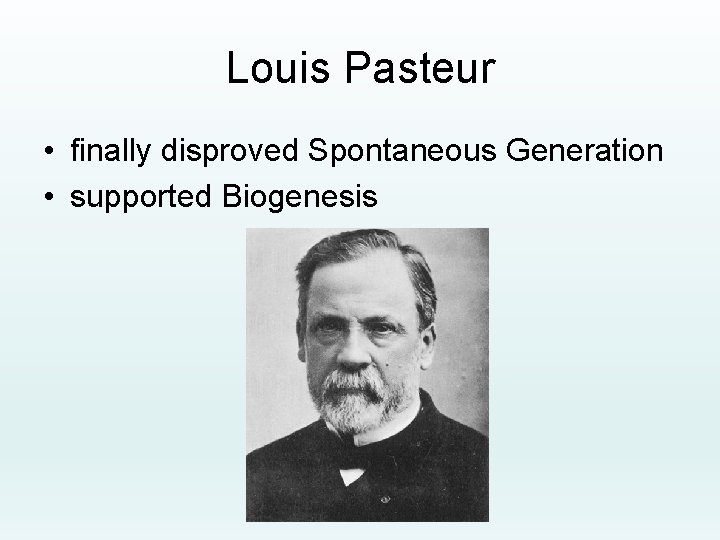
Louis Pasteur • finally disproved Spontaneous Generation • supported Biogenesis
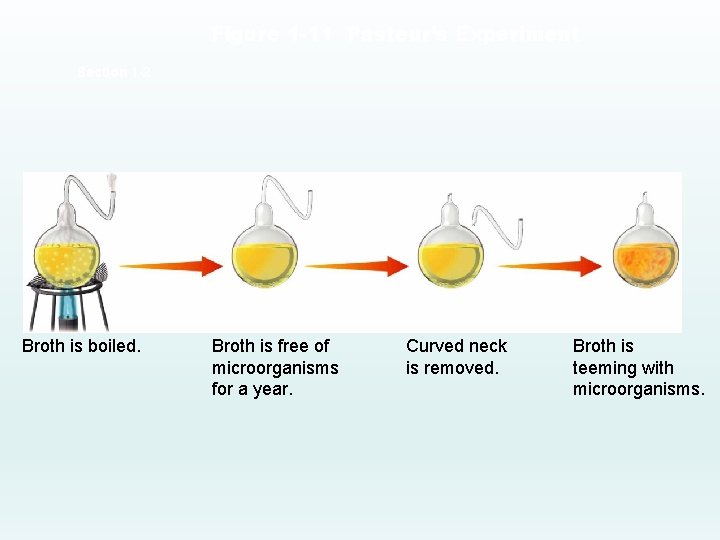
Figure 1 -11 Pasteur’s Experiment Section 1 -2 Broth is boiled. Broth is free of microorganisms for a year. Curved neck is removed. Broth is teeming with microorganisms.
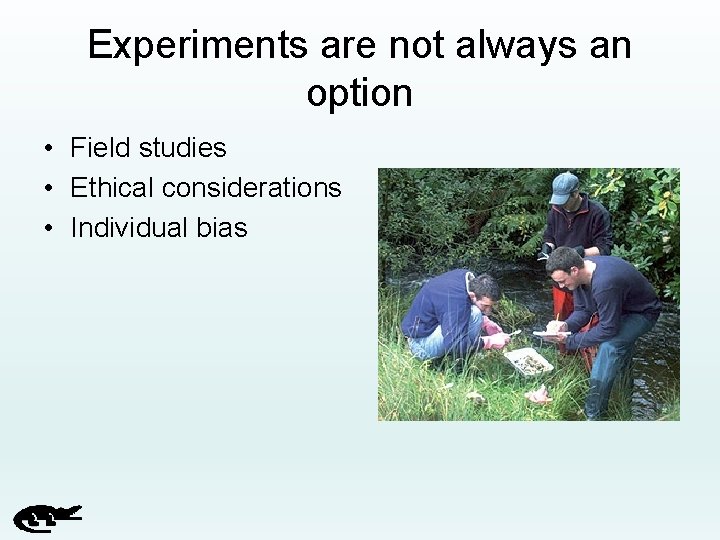
Experiments are not always an option • Field studies • Ethical considerations • Individual bias
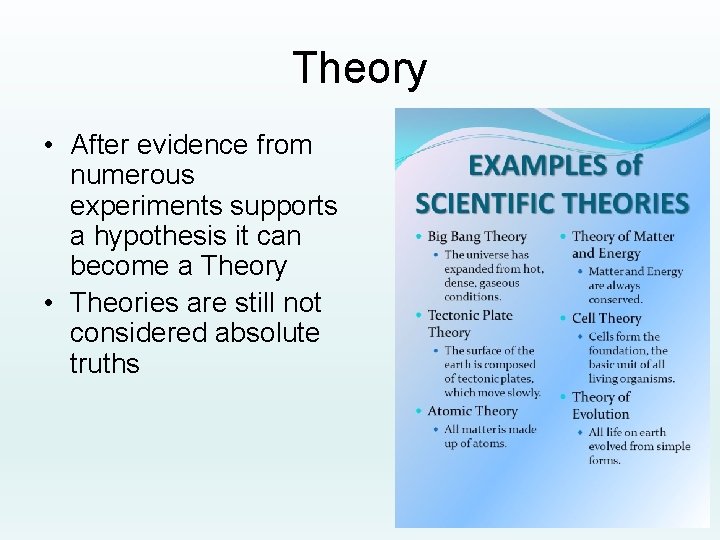
Theory • After evidence from numerous experiments supports a hypothesis it can become a Theory • Theories are still not considered absolute truths
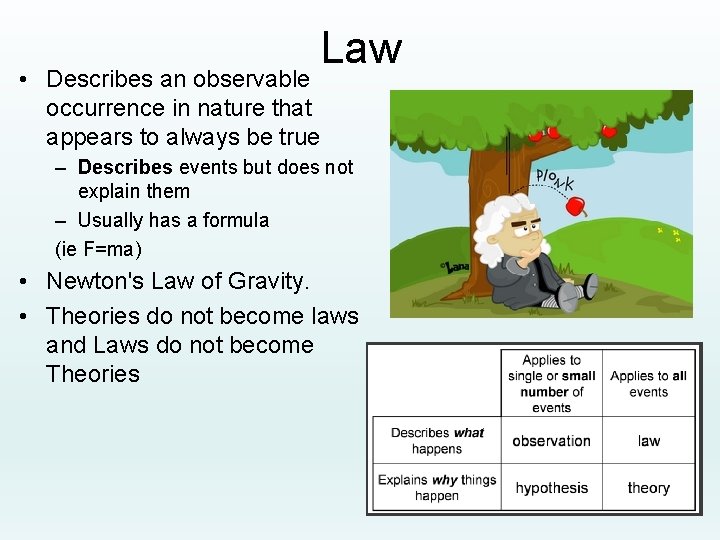
Law • Describes an observable occurrence in nature that appears to always be true – Describes events but does not explain them – Usually has a formula (ie F=ma) • Newton's Law of Gravity. • Theories do not become laws and Laws do not become Theories
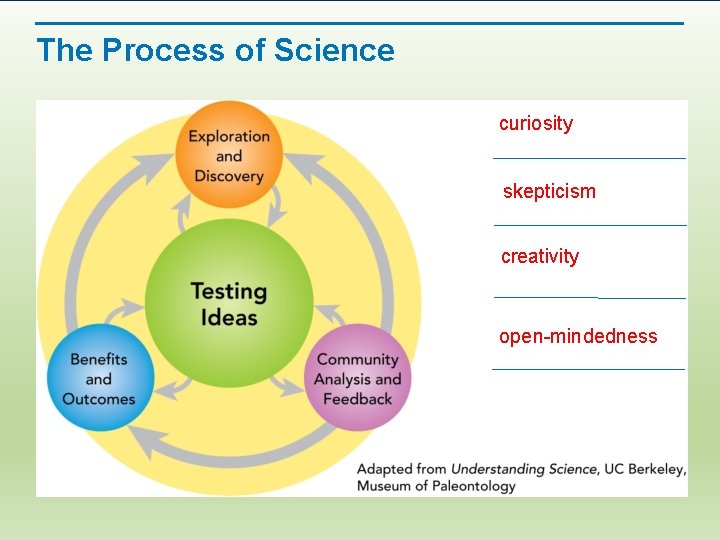
The Process of Science curiosity skepticism creativity open-mindedness
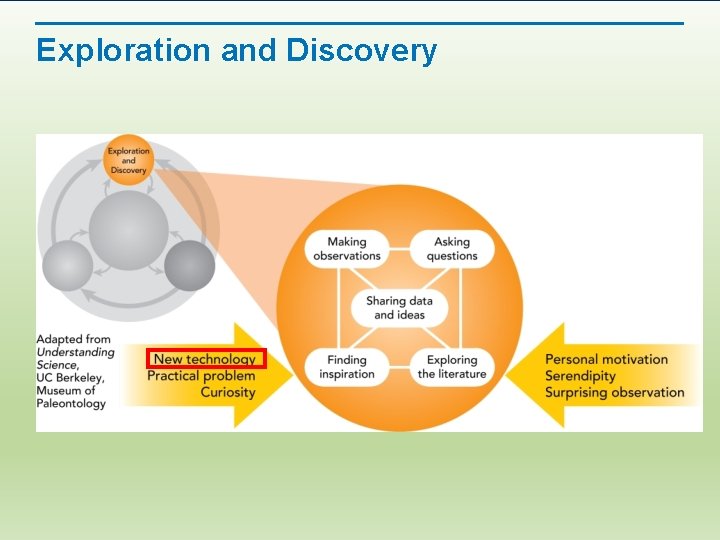
Exploration and Discovery
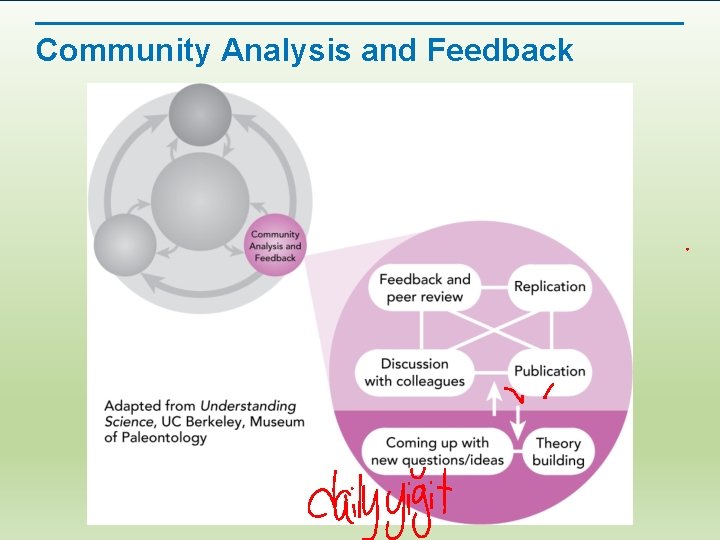
Community Analysis and Feedback
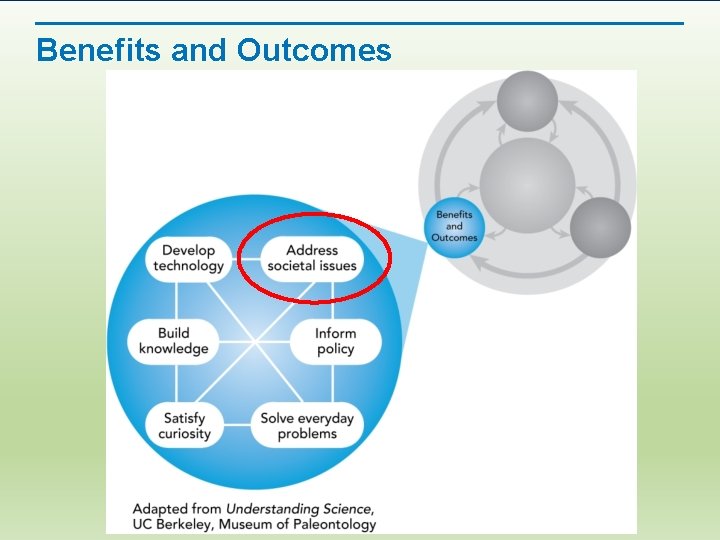
Benefits and Outcomes
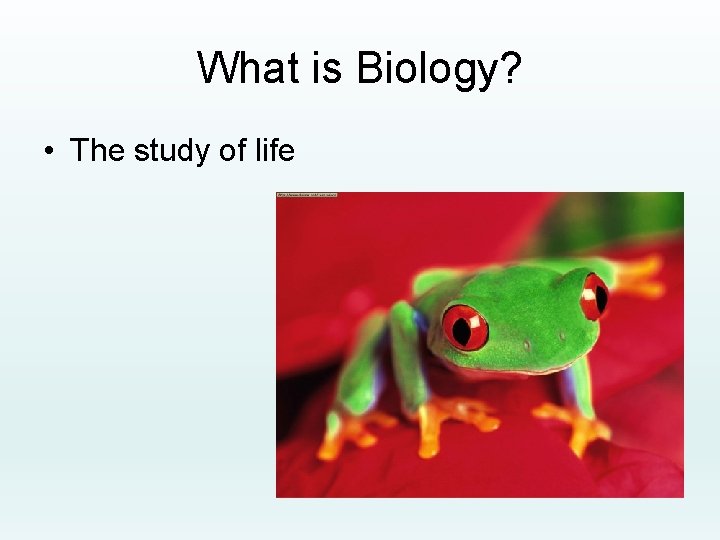
What is Biology? • The study of life
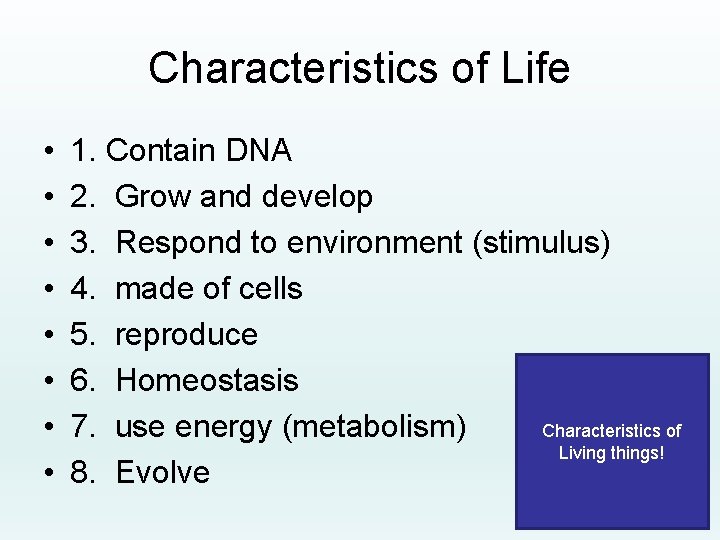
Characteristics of Life • • 1. Contain DNA 2. Grow and develop 3. Respond to environment (stimulus) 4. made of cells 5. reproduce 6. Homeostasis Characteristics of 7. use energy (metabolism) Living things! 8. Evolve
Crosscutting Concepts in Biology Cause and Effect: Mechanism and Explanation Systems and System Models Stability and Change Patterns Scale, Proportion, and Quantity Energy and Matter: Flows, Cycles, and Conservation Structure and Function
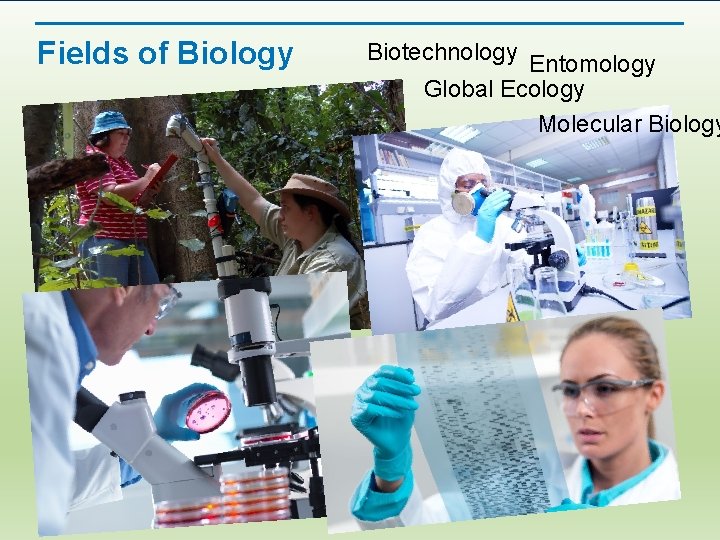
Fields of Biology Biotechnology Entomology Global Ecology Molecular Biology
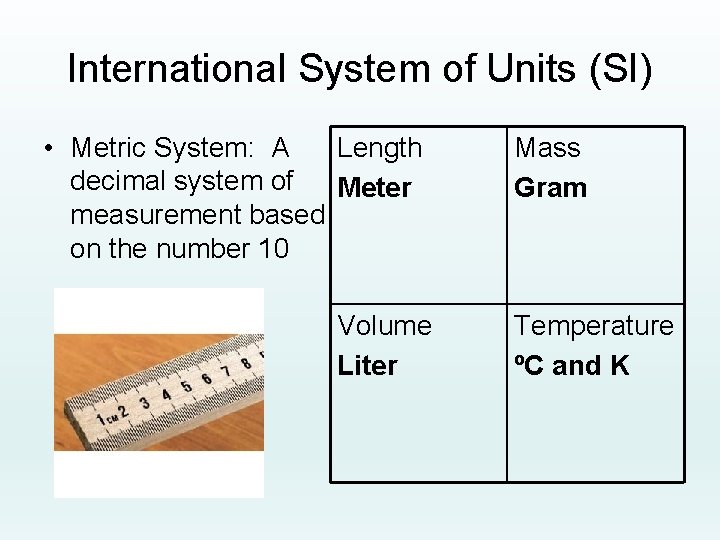
International System of Units (SI) Length • Metric System: A decimal system of Meter measurement based on the number 10 Volume Liter Mass Gram Temperature ºC and K
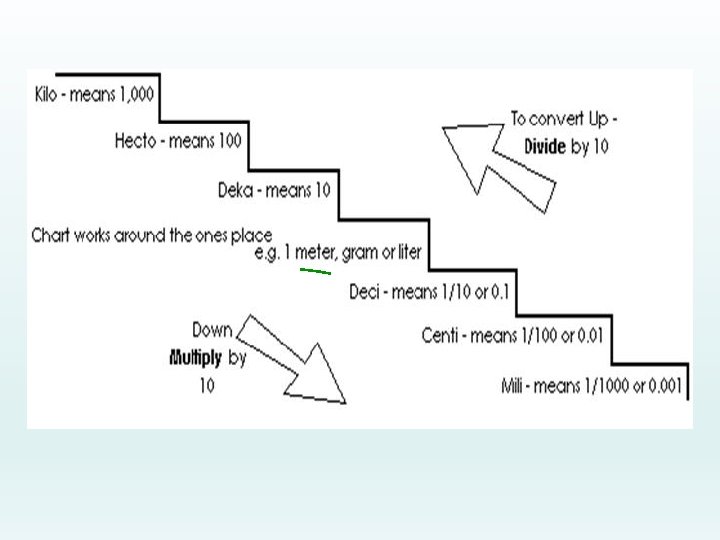
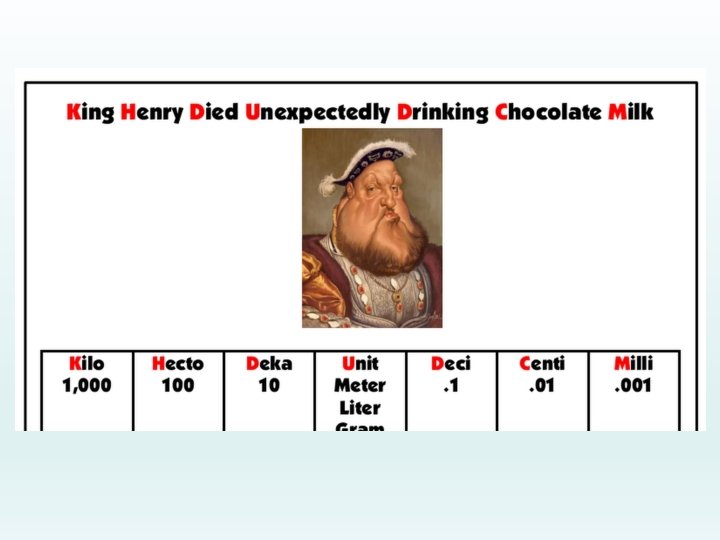
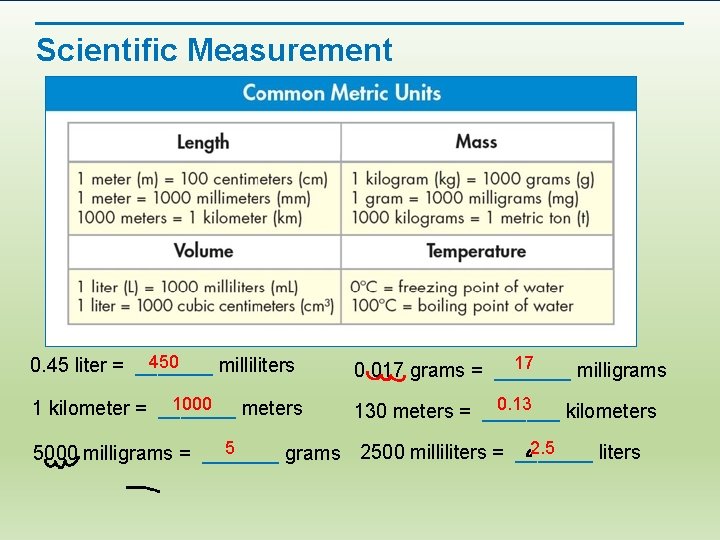
Scientific Measurement 450 0. 45 liter = _______ milliliters 17 0. 017 grams = _______ milligrams 1000 1 kilometer = _______ meters 0. 13 130 meters = _______ kilometers 2. 5 5 liters 5000 milligrams = _______ grams 2500 milliliters = _______
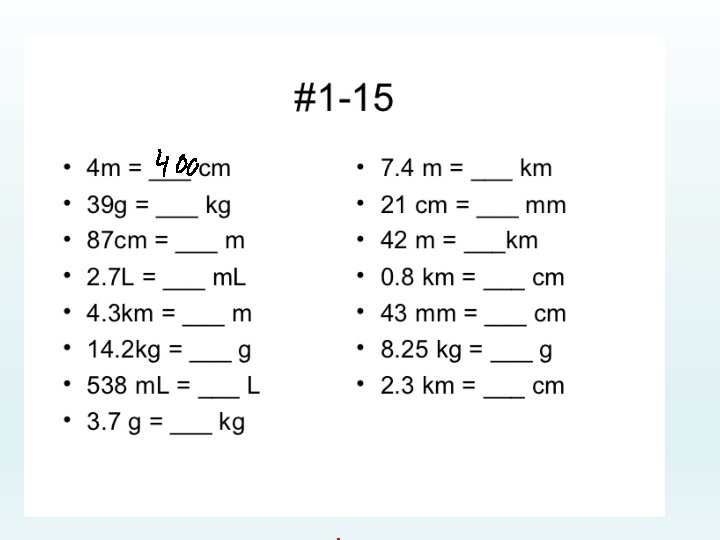
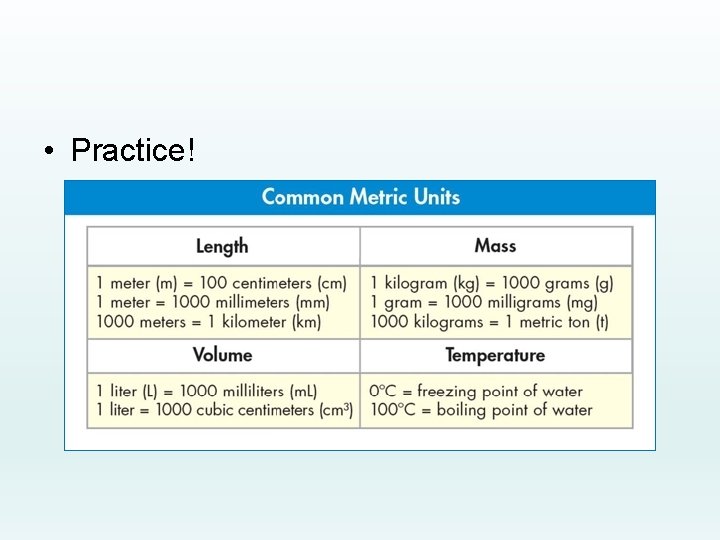
• Practice!
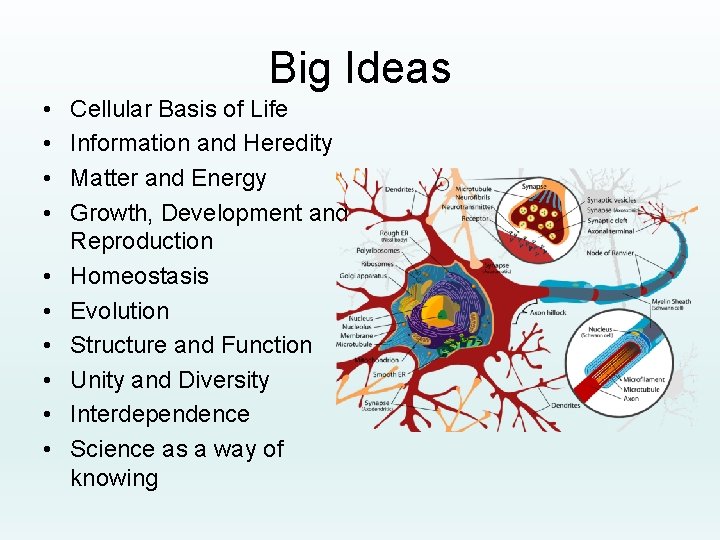
Big Ideas • • • Cellular Basis of Life Information and Heredity Matter and Energy Growth, Development and Reproduction Homeostasis Evolution Structure and Function Unity and Diversity Interdependence Science as a way of knowing
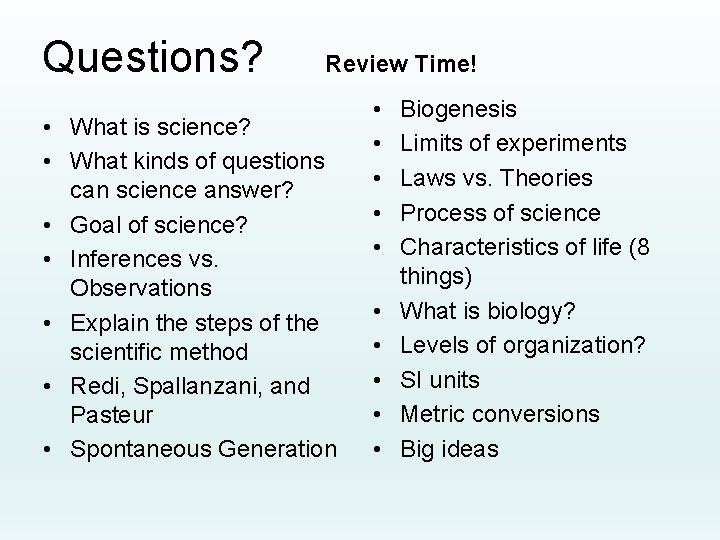
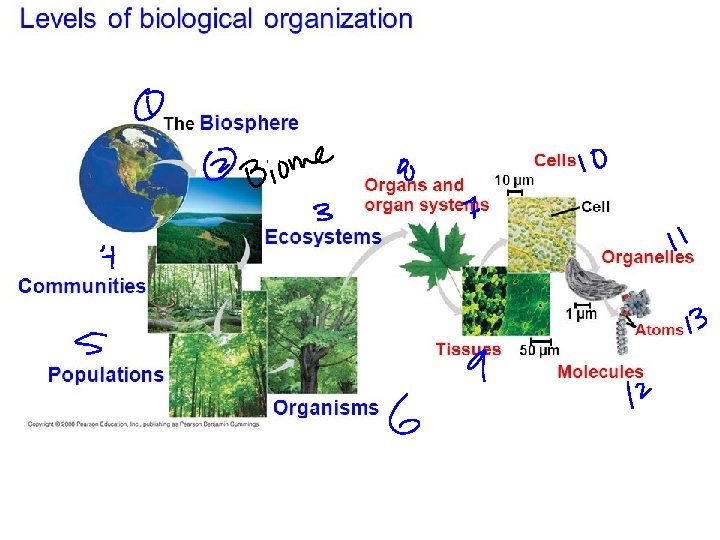
Questions? Review Time! • What is science? • What kinds of questions can science answer? • Goal of science? • Inferences vs. Observations • Explain the steps of the scientific method • Redi, Spallanzani, and Pasteur • Spontaneous Generation • • • Biogenesis Limits of experiments Laws vs. Theories Process of science Characteristics of life (8 things) What is biology? Levels of organization? SI units Metric conversions Big ideas
- Slides: 38